This site is supported by our readers. We may earn a commission, at no cost to you, if you purchase through links.
Your dog squeaks a toy at 7am, and within minutes your neighbor is banging on the shared wall. Sound familiar? In an apartment, every chew session turns into a test of thin drywall and thinner patience.
That’s the real challenge with dog chew toys for apartment living. It’s not just about durability. You need something that keeps your dog busy without turning you into the noisy unit everyone complains about.
The good news: quiet doesn’t mean boring. The right picks keep your dog satisfied, your walls calm, and your lease intact.
Table Of Contents
Key Takeaways
- Choose apartment toys made from soft impact materials like TPR or silicone, since their moderate Shore hardness absorbs bite force instead of creating a loud noise that travels through shared walls.
- Match the toy to your dog’s specific chewing style, whether that’s a power chewer needing high‑density rubber or an anxious dog needing soft, soothing plush.
- Keep only three to five toys in rotation, swapping them every few days to fight boredom without cluttering your small living space.
- Inspect toys weekly and remove damaged ones within hours, since ignoring cracks or loose seams can lead to choking hazards and costly emergency vet visits.
Best Apartment Dog Chew Toys
Apartment life comes with rules, and your dog’s toy box should follow them too. You want picks that hold up to real chewing without rattling the walls or your landlord’s patience. Here are five toys that check every box.
For a deeper dive into what makes each option apartment-friendly, check out this guide to interactive dog toys built for small-space living.
1. Indestructible Rubber Dog Chew Stick
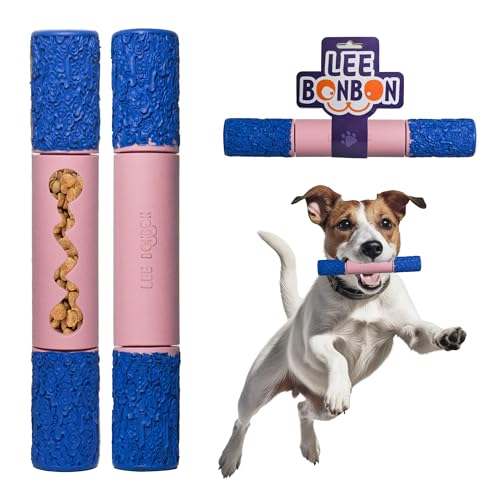
If your dog treats every toy like a weekend demolition project, this one’s built to keep up. Made from food-grade natural rubber, it resists punctures and tears for months, not days.
At 9 inches long, it’s sized right for medium to large breeds. Bonus: it’s dishwasher safe, odor-resistant, and BPA-free — so cleanup is quick and there’s nothing toxic lingering after chew sessions. Third-party tested and CPSIA compliant, too.
| Best For | This chew stick is best for owners of medium to extra-large dogs and aggressive chewers, like pitbulls, bully breeds, and Great Danes, who need a tough, long-lasting toy. |
|---|---|
| Material | Rubber |
| Chew Resistance | High |
| Best For | Aggressive Chewers |
| Noise Level | Quiet |
| Supervision Needed | Occasional |
| Indoor Suitable | Yes |
| Additional Features |
|
- One-piece molded rubber construction with no seams, glue, or nylon fibers for maximum durability
- Treat-fillable snack-hole channels provide extended play and mental stimulation, great for teething puppies
- Versatile for fetch, tug, and chew, and works well both indoors and outdoors
- Not dishwasher safe, so it requires manual cleaning to preserve the rubber’s integrity
- Even with its durability, extreme chewers may eventually damage it, so periodic inspection is needed
- If the toy starts to break down, small fragments could pose a choking risk, so use should stop immediately
2. Outward Hound Hide Squirrel Puzzle
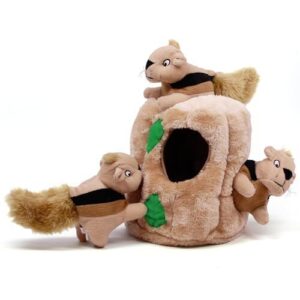
Not every dog needs to destroy something to feel satisfied. Some just want a job to do. This plush puzzle hides three squeaky squirrels inside a soft tree trunk, and your dog has to sniff, dig, and pull them out one by one.
It’s gentle on teeth and quiet compared to hard plastic puzzles. Great for nose-driven dogs or puppies still learning impulse control. Just supervise heavy chewers — the seams hold up well, but nothing plush is truly indestructible.
| Best For | Nose-driven dogs and puppies who enjoy a mental challenge more than a chew session. |
|---|---|
| Material | Polyester Plush |
| Chew Resistance | Low |
| Best For | Enrichment Play |
| Noise Level | Squeaky |
| Supervision Needed | Yes |
| Indoor Suitable | Yes |
| Additional Features |
|
- Dual play design combines a cuddly plush toy with a hide-and-seek puzzle
- Three removable squeaky squirrels engage natural hunting instincts and problem-solving
- Soft, quiet polyester plush is gentle on teeth compared to hard plastic puzzles
- Not built for heavy chewers and may tear under aggressive biting
- Needs regular supervision and inspection for loose or damaged parts
- Small squeaky pieces can be a choking hazard if the toy breaks
3. Chuckit Indoor Dog Fetch Ball
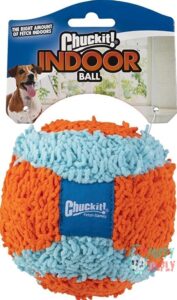
Puzzles keep the nose busy, but some dogs just want to chase something. This ball solves fetch without the wall damage. Its soft chenille exterior and lightweight foam center mean tosses stay quiet and gentle on floors.
At 4.7 inches and 2.4 ounces, it’s built for hallway or living room games. Bounceflex Hub Technology keeps bounces controlled, not chaotic. Just supervise strong chewers — it’s made for chasing, not gnawing.
| Best For | Small dogs and puppies who love indoor fetch and need a quiet, gentle way to burn energy without damaging floors or furniture. |
|---|---|
| Material | Wood/Chenille |
| Chew Resistance | Low |
| Best For | Indoor Fetch |
| Noise Level | Quiet |
| Supervision Needed | Yes |
| Indoor Suitable | Yes |
| Additional Features |
|
- Soft chenille covering offers a gentle feel that’s easy on dogs’ mouths
- Lightweight, durable multilayer build holds up to regular indoor play
- Quiet, low-impact design protects hardwood and laminate floors from marks and noise
- Not built for heavy or aggressive chewers, so supervision is a must
- Designed mainly for indoor use and may not hold up well outdoors on rough surfaces
- Soft materials can wear down faster if used for chewing or dropped repeatedly
4. Large Crinkly Chicken Squeak Toy
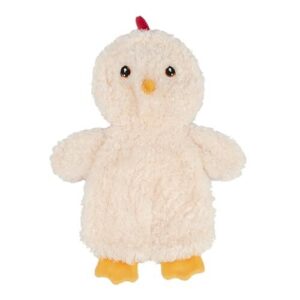
Some dogs don’t want to chase or gnaw — they want to shake something and hear a noise. This chicken toy fits that itch. The crinkle layers rattle on squeeze, and the squeaker adds a chirp, but both stay muted enough for thin walls.
Its flat plush body is easy to grip and carry, and reinforced seams hold up under moderate chewing. Best for large breeds over 45 pounds who like sound-based play without the racket of hard plastic toys.
| Best For | dogs who love squeezing, shaking, and hearing noise more than chewing or fetching, especially puppies, adults, and seniors looking for gentle sound-based play. |
|---|---|
| Material | Plush Fabric |
| Chew Resistance | Low |
| Best For | Cuddling & Play |
| Noise Level | Squeaky |
| Supervision Needed | Yes |
| Indoor Suitable | Yes |
| Additional Features |
|
- Six crinkly legs plus a squeaking head give layered sound feedback that keeps dogs engaged
- Soft, lightweight plush design is easy to grip, carry, and cuddle with
- Doubles as both a playtime toy and a comfy companion for resting
- Plush build isn’t made for aggressive chewers or dogs with strong bite force
- Small, lightweight size makes it easy to lose outdoors or leave in tight spots
- No scent or flavor, so appeal depends entirely on sound and texture
5. Bone Shaped Felt Toy Basket
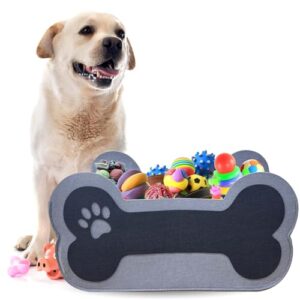
Not every apartment toy needs teeth. This bone-shaped felt basket gives your dog’s growing collection a home instead of a floor-wide mess. The open-top design makes grab-and-go play easy, while the collapsible frame folds flat for closets or travel.
At 15.5 x 9.7 x 9.7 inches, it holds plush toys and light chews comfortably. Felt won’t survive aggressive gnawing, so treat this as storage, not a chew target — tidy space, calmer home.
If your pup still needs to gnaw out some energy, pair this bin with sturdy chew toys, since understanding blue heelers’ chewing tendencies can help you pick durable options that satisfy that instinct safely.
| Best For | Dog owners in apartments or small spaces who want a stylish, portable way to corral toys, blankets, and treats without adding bulky storage. |
|---|---|
| Material | Felt |
| Chew Resistance | Not Chew-Proof |
| Best For | Toy Storage |
| Noise Level | Silent |
| Supervision Needed | N/A |
| Indoor Suitable | Yes |
| Additional Features |
|
- Open-top design makes it quick and easy to grab toys for playtime
- Collapsible frame folds flat, making it simple to store or take along while traveling
- Washable, stain-resistant felt keeps it looking tidy with minimal upkeep
- Felt material isn’t chew-proof, so it’s not suited for dogs who gnaw aggressively
- Lack of a rigid base means it supports lightweight items better than heavier gear
- May arrive partially folded, requiring some manual shaping before it’s ready to use
Why Apartment Dogs Need Quieter Toys

Apartment living comes with its own set of rules, and your dog’s toy box needs to follow them too. Noise travels fast through thin walls, and so does frustration from neighbors or landlords. Here’s what actually causes the trouble, and why it matters more than you might think.
Thin Walls and Neighbors
Sound travels straight through apartment walls, thanks to shared studs and thin drywall with little insulation between units. Squeaky toys and bouncing balls create vibrations neighbors feel, not just hear.
- A ball thudding against a shared wall
- Squeaky toys echoing through vents
- Nails scratching hard floors
- Barking triggered by hallway noise
Quiet toys for apartments protect neighbor relationships and prevent noise complaints before they start.
Lease Noise Concerns
Most leases include a quiet enjoyment clause, meaning loud toys could actually put your lease at risk.
| Lease Term | What It Means | Risk to You |
|---|---|---|
| Quiet hours | Set times, no noise | Fines |
| Complaint records | Neighbor reports | Warnings |
| Decibel limits | Max 40 dB indoors | Eviction risk |
Documentation adds up fast. That’s why quiet toys for apartments keep you in lease compliance and on good terms with neighbors.
Small-space Play Limits
A studio apartment doesn’t leave much room for a toy box, let alone a game of fetch. Compact footprint management matters here: pick toys under 8 inches, stackable bins, or overhead storage solutions for extras.
Choose multifunctional toys—chew, puzzle, and tug in one—to prevent floor clutter. Maximizing vertical space keeps small-space dog activities easy and mess-free.
Boredom and Chewing Behavior
A dog with nothing to do will find something to chew, and that something is often your baseboards. Boredom builds when mental stimulation for dogs is missing, especially after low-activity stretches.
A bored dog will always find something to chew, and it’s usually your baseboards
Monitoring behavioral indicators of boredom can help you catch early signs before damage occurs.
Chewing helps because it triggers endorphin release and lowers cortisol, easing stress naturally. Good outlets include:
- Quiet chew toys with texture variety
- Scented options for olfactory engagement
- Durable picks for teething puppies
What Makes Toys Apartment-Friendly
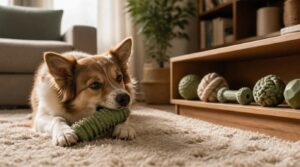
Not every toy is built for apartment life, and that’s okay to admit. A few simple traits separate the good picks from the ones that’ll get you a noise complaint. Here’s what to actually look for before you buy.
Soft Impact Materials
Every bite your dog takes gets absorbed, not amplified, when the toy is built right.
Soft impact materials like TPR and silicone flex instead of clacking. Shore hardness between 30 and 60 means firm enough to chew, soft enough to stay quiet.
| Material | Shore Hardness | Best For |
|---|---|---|
| TPR | 30-45 | Light chewers |
| Silicone | 40-60 | Daily gnawing |
| Foam-core | Low density | Gentle seniors |
That’s noise-free play worth investing in.
Low-noise Toy Design
Material only gets you halfway. Design decides where the sound actually goes.
Internal damping matters more than what’s on the surface. Mesh cavities break up resonance, rubber bushings isolate hard parts, and sealed air pockets stop squeaks from ringing. Look for:
- Rounded shapes (no bounce-slap corners)
- Sealed seams (no rattly parts)
- Solid cores (no hollow echo)
That’s real quiet indoor play, not just a quieter squeak.
Safe Indoor Sizing
Size matters as much as sound. Muzzle clearance safety means leaving 1.5 inches so jaws don’t strain, while shapes under 6 inches risk choking in tight rooms.
Bulkier, compact designs (3–5 inches) tuck behind furniture easily and soften impact distribution against walls.
Check sizing as your dog grows — what fit at five months won’t fit at fifteen.
Non-toxic Chew Materials
Fit and quiet matter little if the toy itself is a health risk. Look for food-grade silicone or natural rubber, both BPA-free and nontoxic.
Cheap recycled rubber can off-gas after sun exposure. Untreated hardwood resists splintering, while organic cotton-hemp blends add chew durability without dyes or coatings — safe materials your dog can trust.
Easy Storage Options
Safe materials mean nothing if toys clutter your floor.
Clear stacking bins (12x9x6") cut floor space by 30%, while floating shelves hold 15 lbs each near doorways. Under‑bed rollers fit 6‑8" gaps, hiding compact dog toys entirely. Foldable fabric bins collapse flat and wash easily.
Vertical space utilization keeps your toy rotation system tidy and apartment‑ready.
Best Toy Types for Apartments
Not every toy earns a spot in a small space. Some keep your dog busy for hours, others just keep them calm, and a few do both. Here’s a look at the categories worth having on hand.
Quiet Chew Toys

Quiet doesn’t mean boring. The best quiet chew toys use sound absorbing textures and rubberized cores, keeping noise under 40 dB.
Look for:
- Soft rubber or TPE build
- Muted squeak mechanisms
- Ultrasonic squeaker tech (dogs hear it, neighbors won’t)
- Vibration limiting weight
- Closed seams
These durable dog toys stay apartment-friendly without sacrificing engagement. Nonsqueaky toys keep chewing sessions calm and lease-safe.
Plush Comfort Toys

When your dog needs comfort more than action, a good plush dog toy earns its keep. Look for tactile fabric textures, reinforced seams, and weighted fillings that offer real anxiety relief.
| Feature | Why It Matters |
|---|---|
| Dense stitching | Resists tearing |
| Weighted fill | Grounding, calming |
| Machine washable | Easy upkeep |
| No squeaker | Nonsqueaky, quiet |
| Soft texture | Sensory comfort |
Treat-dispensing Toys
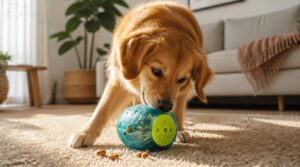
When your dog has to work for kibble, mealtime becomes mental exercise instead of a five-second gulp. Treat-dispensing toys use rotating discs or adjustable holes to control release rate, so you can match difficulty to skill level.
Look for BPA-free, dishwasher-safe materials for easy sanitation. This turns solo feeding into real dog boredom prevention, and it’s quieter than fetch—no bouncing, no crashing into walls.
Puzzle Enrichment Toys
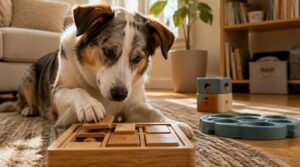
Puzzle toys turn playtime into a real workout for your dog’s brain. Grid compartments hide treats behind lids or sliding panels, using paw pressure mechanics to reveal rewards.
- Scent pocket enrichment adds nose work
- Adjustable difficulty levels match skill growth
- Nonporous material safety resists drool
- Portable puzzle storage fits small spaces
This mental stimulation curbs boredom-driven chewing, giving apartment dogs quiet, satisfying enrichment without extra floor clutter.
Indoor Fetch Toys

Fetch doesn’t have to mean chaos. Toys like the Chuckit Indoor Fetch Ball Dog Toy for Dogs Interactive use soft impact pads and gentle bounce calibration, so throws stay low-impact and controlled.
| Feature | Apartment Benefit |
|---|---|
| Foam pad | Quiet landings |
| Machine washable fabric | Easy cleanup |
| Ergonomic grip | Comfortable tosses |
| Scented variants | Renewed interest |
These indoor fetch alternatives make small-space dog activities safe, satisfying, and neighbor-friendly.
Choosing Toys by Dog Behavior

Every dog chews for a different reason, and your toy picks should match that reason. A tough gnawer needs something different than a nervous first-year pup or a slower senior. Here’s how to sort the right toy for your dog’s specific personality and habits.
Power Chewers
Some jaws just don’t quit. Power chewers can wear through a soft rubber toy in minutes, so look for high-density rubber built for dog chew durability.
Brands using material resistance testing and bite force measurement data hold up best.
Choose chew resistant toys with textured surfaces for texture-driven engagement, and always pick large or extra-large sizing to match their strength.
Anxious Dogs
Not every strong bite comes from strength. Some dogs chew to cope, not to test their jaws.
Identifying anxiety triggers matters first—thunder, separation, new spaces. Watch for pacing, trembling, or destructive chewing.
- Soft chew toys for self-soothing
- Quiet toys for thin walls
- Snuggle Puppy for separation anxiety relief
- Calming wraps alongside enrichment
For persistent cases, professional treatment options and behavior plans help most.
Bored Puppies
Puppies chew when they’re bored, plain and simple. Give them scent-based games and quiet chew toys to burn mental energy, not just physical.
| Puppy Need | Toy Type |
|---|---|
| Teething relief | Soft chew toys |
| Mental fatigue | Snuffle mats |
| Routine building | Rotating puzzles |
Chew-resistant options paired with structured play sessions curb destructive habits fast.
Gentle Seniors
Old dogs play by different rules. Their jaws tire faster, so low-impact chewing matters more than toughness now.
Soft plush companions and silent chew toys support dental care without jarring aching joints or startling sensitive ears. Gentle weight and edge-free textures ease stress relief and anxiety reduction, while predictable treat puzzles offer light enrichment that respects cognitive aging support—no frantic chasing, just calm, sensory engagement your senior dog can savor.
Food-motivated Dogs
Some dogs live for their next snack. If yours begs, sniffs, and hovers by the pantry, lean on treat-dispensing toys and slow licking mats to slow the gobbling down.
- Retriever and hound mixes often carry stronger food drive
- Watch for resource guarding around treats
- Count calorie-dense chews toward daily intake
Structured rewards build training reward balance without overfeeding.
Apartment Toy Rotation Strategy

More toys isn’t always better in a small space. Your dog’s floor space stays open and interesting when you manage what’s out and when. Here’s how to build a rotation that actually works for apartment living.
Keep Three to Five Toys
More toys don’t mean more fun—they mean more clutter. For apartment living with dogs, curating toy sets to three to five items sustains play interest without overwhelming small floors.
Choose one chew toy, one enrichment toy, and one comfort item. This mix enhances dog engagement while simplifying toy storage. Managing floor clutter this way keeps quiet indoor engagement easy to maintain, and toy rotation simple to plan.
Rotate Every Few Days
Every few days, swap a toy out and bring back an old favorite later. This simple habit keeps toy novelty alive without buying anything new.
Track it on a calendar so nothing sits forgotten. That’s Managing Chewing Anxiety, too—fresh stimuli at set intervals ease restless chewing and support real dog enrichment during apartment living with dogs.
Mix Chew and Enrichment
One chew toy alone won’t cover it—your dog needs a job for both jaw and brain. Balanced toy rotation pairs something to gnaw, like a rubber chew stick, with a puzzle feeder or snuffle mat for mental stimulation.
That’s the real difference between enrichment vs chewing: one wears down teeth, the other tires out the mind. Optimizing toy sets this way keeps quiet play interesting, not just occupied.
Remove Damaged Toys Quickly
A cracked toy is a hidden hazard waiting to happen. Once you spot damage, act fast: retrieve it within two hours, check for fragments, and quarantine it away from play.
- Bag and store separately
- Inspect your dog’s mouth for lodged pieces
- Photograph and date the damage for tracking
Skipping this step risks costly ingestion emergencies, so quick action always wins.
Store Extras Neatly
A tidy toy stash keeps small apartments sane. Use a labeled bin system like the RVEAFA Dog Toy Basket Bone Storage Box, tucking extras out of sight.
| Storage Item | Purpose |
|---|---|
| Bin | Rotation stock |
| Pegboard | Soft toys |
| Sealed case | Squeakers |
| Shelf | Vertical space |
| Basket | Weekly extras |
This keeps easy-to-store dog toys dust-free and pathways clear.
Common Apartment Toy Mistakes

Even good toy picks can go wrong with a few common slip-ups. Some mistakes seem harmless but end up costing you peace, space, or a vet visit. Here’s what to watch for before you fill that toy basket.
Choosing Loud Squeakers
That squeaky toy might be the reason your neighbor is knocking. Loud squeakers hit 85 to 95 decibels, loud enough to carry through thin walls.
Dual chamber designs make it worse, amplifying bite pressure into sharp bursts. Skip these for quiet squeaker technology instead.
Ultrasonic squeakers give dogs audible cues while staying silent to you, and embedded, frequency‑tuned squeakers keep play satisfying without inviting complaints.
Buying Hard Plastic Toys
Hard plastic sounds tough, but it’s often the worst pick for apartments. Impact noise runs 58–65 dB, loud enough to breach lease clauses.
Some budget versions skip non-toxic additive testing, risking phthalates or heavy metals. Rubber and TPE absorb bite pressure quietly and flex instead of cracking, which means fewer sharp fragments and calmer neighbors below you.
Ignoring Chewing Strength
Not every dog chews with the same force. Bite force variability depends on jaw muscle size, training, and even facial morphology, so a "durable" toy for one dog might not survive another.
Regular chewing conditions those muscles, building endurance over time. That’s why matching texture resistance to your dog’s actual strength matters more than trusting the label alone.
Overcrowding Floor Space
More toys don’t mean more fun—they mean less room to move. Walkway width matters; keep paths at least 2 feet clear.
- Trip hazards near doors
- Toys against shared walls muffle noise
- Clutter blocks easy cleaning
Try vertical storage, like wall bins, for compact, apartment-friendly organization. Easily stored dog toys keep floors calm and safe.
Skipping Safety Checks
Skipping safety checks turns a small tear into a big problem fast. A quick weekly glance catches loose seams before they become choking hazards—ingested fragments send dogs to the ER, often $2,000+ in vet bills.
Manufacturer warranties can void if damage goes unreported. Skipping checks also breaks your own accountability trail, letting latent defects worsen quietly until failure happens mid-chew.
Frequently Asked Questions (FAQs)
How many toys should one apartment dog own?
Three to five toys hit the sweet spot for a balanced toy setup. That’s enough variety for chew, plush, and puzzle needs, without turning your living room into a toy graveyard. Rotate weekly to keep things fresh.
Whats a safe budget per toy for beginners?
Don’t let sticker shock chew you up: start with a $20–$40 monthly budget, picking 5–7 mid-range toys ($8–$18 each) to test what actually holds your dog’s interest before spending more.
Are secondhand or hand-me-down dog toys safe?
Only with caution. Hand-me-downs can carry chemical residue risks or hidden toxins undetectable by sight. Wash thoroughly, inspect for cracks or structural failure signs, and verify materials before reuse—otherwise, ingestion hazards and hygiene issues outweigh the savings.
How do I clean chew toys between rotations?
A two-set system keeps hygiene simple: one for play, one soaking. Scrub rubber and nylon with mild soap, machine-wash plush on gentle cycle, then air dry fully before rotating back—damp toys invite mold fast.
Conclusion
A quiet apartment is like a calm lake; one squeaky splash and ripples hit every wall. Picking the right dog chew toys for apartment living keeps that water still.
Match the toy to your dog’s habits, rotate them often, and skip anything that turns chew time into a noise complaint.
Your dog stays busy, your neighbors stay unbothered, and your lease stays safe. That’s real peace, quiet you can actually trust.
- https://www.petmd.com/dog/general-health/enrichment-toys-dogs-and-puppies
- https://pawty.com/blogs/news/best-dog-toys-for-apartment-dogs
- https://ecofurball.com/what-materials-are-safest-for-dog-toys
- https://www.thesprucepets.com/best-interactive-dog-toys-8363714
- https://nontoxiclab.com/best-non-toxic-dog-toys