This site is supported by our readers. We may earn a commission, at no cost to you, if you purchase through links.

Your one-bedroom apartment doesn’t come with a backyard, and your dog’s bowl shouldn’t pretend otherwise. Small spaces mean less running, less digging, less natural water-seeking from puddles and grass. That shifts more responsibility onto the bowl in front of them.
Dogs on mostly dry diets often run low on daily moisture, which matters even more when they’re not romping around outside burning energy or panting near a hose. Wet dog foods for apartment dogs solve a problem kibble can’t: hydration built right into the meal, plus textures that suit smaller jaws and pickier appetites.
Below, you’ll find vet-backed picks, feeding guidance, and storage tricks that fit neatly into apartment life.
Table Of Contents
- Key Takeaways
- Best Wet Dog Foods for Apartments
- Why Apartment Dogs Benefit
- Apartment-Friendly Food Formats
- How to Choose Wisely
- Feeding Wet Food Indoors
- Wet Food Storage Tips
- Mixing Wet and Dry Food
- Frequently Asked Questions (FAQs)
- What is a healthy wet food for small dogs?
- What is the best dog food for pancreatitis?
- What is a really good wet dog food?
- What is the best diet for a dog with lymphoma?
- How long can unopened wet dog food be stored?
- Are shred textures higher in calories than pâté?
- What makes Tetra Paks different from cans or trays?
- Why do senior dogs benefit from pâté formulas?
- Conclusion
Key Takeaways
- Wet dog foods provide built-in hydration and easier-to-chew texture, which benefits apartment dogs that get less exercise and natural water intake than dogs with yard access.
- Always check for an AAFCO "complete and balanced" nutritional adequacy statement matched to your dog’s life stage before making any wet food a regular meal rather than just a topper.
- Proper portioning matters more than format—measure calories with a digital scale, split meals by calorie count (not volume) if mixing wet and dry, and adjust for your dog’s size, age, and activity level.
- Food safety in small kitchens requires refrigerating opened wet food below 4°C (40°F), discarding uneaten portions within 15 minutes, and washing bowls after every meal to prevent bacterial growth.
Best Wet Dog Foods for Apartments
Small living spaces call for smart feeding choices, and not every wet food fits that bill. Your dog’s digestion, skin health, and appetite all play a role in picking the right one. Here are three options worth putting on your radar.
If you’re weighing wet against dry, this guide to the best dog food for Havanese breaks down protein quality and ingredient standards for small breeds.
1. Chicken and White Rice Dog Food
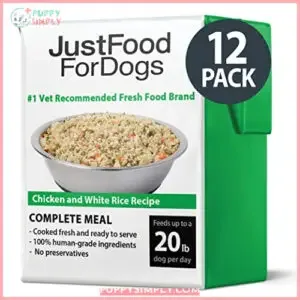
A gentle-on-the-gut classic, chicken and white rice formulas suit small apartment dogs prone to sensitive stomachs. Made with 100% human-grade ingredients like chicken breast, thighs, rice, carrots, and spinach, this pâté is gently cooked for nutrient absorption and packed in shelf-stable Tetra Paks, ideal for compact kitchens.
It’s 40% more digestible than kibble, helps with skin, coat, and weight, and works as a full meal or topper. The tradeoff? A higher price point than standard fare.
| Best For | Small apartment dogs with sensitive stomachs who need a gentle, nutrient-rich meal without much fuss. |
|---|---|
| Form | Pate |
| Life Stage | Not specified |
| Ingredient Quality | Human-grade whole foods |
| Sensitive Stomach Support | Yes |
| Serving Versatility | Meal or topper |
| Storage | Shelf-stable 2 years |
| Additional Features |
|
- Made with 100% human-grade ingredients and gently cooked to preserve nutrients
- 40% more digestible than kibble, supporting skin, coat, and healthy weight
- Shelf-stable Tetra Pak packaging makes it easy to store and great for travel
- Comes at a higher price point than standard dog food
- Best value when used as a topper rather than a full-time meal replacement
- Pate texture and shelf-stable format may not appeal to every dog or owner
2. Hills Prescription Diet Derm Complete
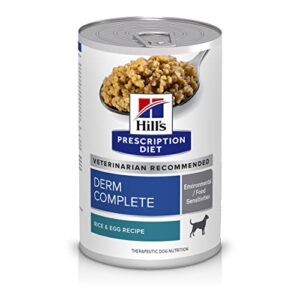
If your dog scratches through the night in your one-bedroom, this vet-prescribed rice and egg formula targets skin allergies and environmental sensitivities directly. Clinical testing shows visible healing in 21 days, meaning fewer 3 a.m. wake-ups.
It also discourages struvite and calcium oxalate crystals, a bonus for urinary health. Requires veterinary consultation, and the price runs higher than typical wet food. Some owners note inconsistent texture between cans, so check each one before serving.
| Best For | Dog owners dealing with a pet’s food or environmental allergies who want a vet-guided formula that calms itching, redness, and nighttime scratching. |
|---|---|
| Form | Wet canned |
| Life Stage | Adult |
| Ingredient Quality | Vet-formulated |
| Sensitive Stomach Support | Yes |
| Serving Versatility | Meal |
| Storage | Refrigerate after opening |
| Additional Features |
|
- Clinically shown to visibly reduce skin irritation and redness in as little as 21 days
- Helps discourage struvite and calcium oxalate crystal formation for added urinary support
- Developed by veterinarians and nutritionists, with a rice and egg formula suited to sensitive stomachs
- Requires a veterinary consultation and prescription before purchase
- Costs more than standard wet dog food
- Some owners report inconsistent texture between cans, plus occasional shipping damage like dented cans
3. Portland Pet Food Fresh Dog Pouches
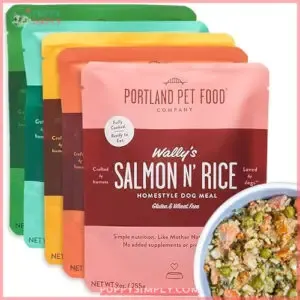
Not every apartment kitchen has room for a fridge full of open cans, and that’s where these pouches earn their keep. No refrigeration needed until opened, with limited ingredient recipes (11 or fewer per pouch) sourced and made in the USA.
Flavors like Salmon N’ Rice or Turkey & Yams work as a full meal, a mixer, or a topper. Microwave-safe packaging makes warming simple, and the easy portion control suits small city dogs without measuring cups.
| Best For | Dog owners in small apartments or with limited fridge space who want a convenient, no-thaw meal option for picky eaters or dogs with sensitive stomachs. |
|---|---|
| Form | Wet food pouch |
| Life Stage | All life stages |
| Ingredient Quality | Human-grade whole foods |
| Sensitive Stomach Support | Yes |
| Serving Versatility | Meal, mixer, or topper |
| Storage | Shelf-stable, no refrigeration |
| Additional Features |
|
- Shelf-stable until opened, so there’s no need to clear out freezer or fridge space
- Human-grade, whole food ingredients made in the USA with simple, limited ingredient recipes
- Versatile enough to use as a full meal, mixer, or topper for dogs of any size or life stage
- Once opened, the pouches likely still need refrigeration, which limits how long they last
- Pet parents with dogs that have specific allergies will need to check ingredients closely
- Only suitable for dogs, so households with cats will need a separate food option
Why Apartment Dogs Benefit

Small living spaces come with their own set of challenges, from limited exercise room to closer quarters with your dog’s habits. Wet food happens to line up well with those realities in ways that go beyond simple taste preference. Here’s what makes it a smart fit for apartment life.
Better Passive Hydration
Moisture-driven hydration matters most when your dog spends most of the day indoors with limited water breaks.
Adding wet food or water-rich treats to your dog’s routine can help bridge the gaps between refills, and if outdoor time is part of the mix, checking out dog food bowls designed for outdoor use can make staying hydrated a lot easier to manage.
- Steadier fluid intake between meals
- Reduced dehydration stress
- Support for kidney function
- Balanced electrolyte replacement
- Peace of mind for you
Fluid-dense recipes support cellular hydration quietly, meal after meal, without you having to think twice about it.
Easier Chewing Texture
Watching an older dog struggle with dry kibble tells you everything about why texture matters. Soft, pâté-style wet food needs far fewer chewing cycles, easing jaw fatigue and speeding bolus formation. Moisture softens each bite, so dogs with dental disease or sore gums swallow comfortably.
This gentler mastication aids better digestibility, and the smooth, palatable texture shift makes mealtime something your dog actually looks forward to. Proper texture management can assist in weight management by influencing satiety levels.
Stronger Picky-eater Appeal
Some dogs turn their noses up at the same old kibble day after day. Wet food’s stronger aroma wins them back—real chicken or turkey as the first ingredient, served near body temperature for better scent release.
Try wet food toppers, layer textures for interest, or rotate proteins occasionally. These palatability boosts often succeed where dry food alone falls flat for picky eaters.
Lower Calorie Density
Comparing wet vs dry food, wet formulas pack fewer calories per cup thanks to moisture volume balance—water adds bulk, not energy. That’s practical for weight management for dogs in tight apartment quarters with limited exercise room.
Using lean protein, satiety fibers, and vegetable bulk addition keeps caloric density low, supporting better caloric intake regulation without sacrificing fullness—smart pet nutrition for compact living.
Smaller Meal Portions
Small, single-serving pouches make portion perception simple—you’re not eyeballing scoops, so caloric intake stays consistent for weight management for dogs, especially small breed dogs with tight energy needs.
Feeding smaller meals more often helps with satiety management and steadier hunger cues, preventing the energy crashes that come with one large bowl. That’s meal frequency working in your favor, not against it, in a compact apartment routine.
Apartment-Friendly Food Formats
Not all wet food packaging works the same way in a small kitchen with limited cabinet space. Cans, trays, and pouches each solve a different apartment problem, from cost to mess to storage. Here’s how to match the format to your space and your dog’s needs.
Cans for Value
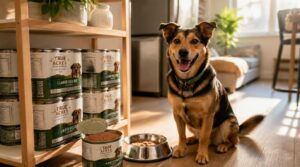
Cans for value stretch your budget without cutting corners: look for a recognizable meat as the first ingredient, check AAFCO’s complete-and-balanced label, and buy larger multi-packs to lower your cost per ounce.
Bulk buying trims daily feeding costs a lot, and stackable cans store easily in tight kitchen spaces. Quality protein sourcing still matters most, regardless of price point.
Trays for Single Servings
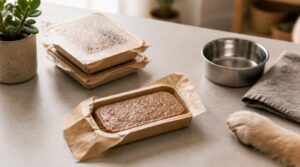
Ever notice how a single-serving tray fits your countertop the way your studio fits your life—compact, tidy, no waste?
A single-serving tray fits your countertop the same way your studio apartment fits your life: compact, tidy, no waste
These trays offer portion control features with 4-6 ounce fills, raised rims for spill prevention design, and stackable shapes for tight cabinets.
- Vented lids reduce condensation
- Kraft paper stays eco-friendly
- Lift tabs prevent mess
- Clear PET shows freshness
Vet recommended for single-dog households managing precise canine nutrition needs.
Pouches for Easy Storage
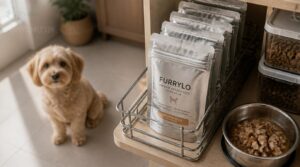
Trays win on portion size, but pouches take the prize for compact pantry organization in a studio kitchen. Multi-layer film resists tears, while a moisture barrier locks in freshness.
The resealable zipper means half-used pouches don’t clutter your fridge shelf. Stackable, lightweight, and space-smart—exactly what small apartments and busy pet owners managing canine nutrition need.
Pâté for Less Mess
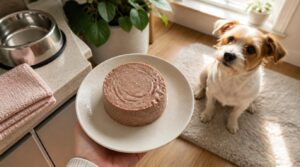
Pâté for less mess stays put, unlike shreds that skid off crackers. A thin fat seal locks in moisture, while egg yolk acts as an emulsifier for smoother, consistent texture. Chilled serving temperature keeps it firm on the plate.
For dogs with digestive sensitivities, this dense, uniform consistency helps with easier eating and steadier canine wellness in tight quarters.
Stews for Hearty Meals
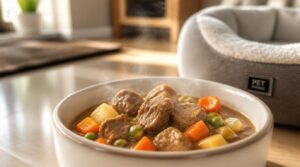
Where pâté offers simplicity, stew delivers nutritional density with texture variety your dog can actually taste. Look for meat chunk size around 1 to 2 inches, simmered in savory broth infusion for real umami flavor development. Vegetables should keep some bite, not turn mushy.
Store portions properly, and use gentle reheating methods so this complete and balanced wet dog food stays appealing without breaking down.
How to Choose Wisely
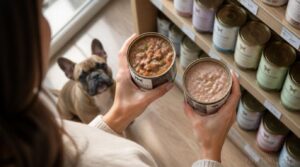
A good label can only tell you so much once you’re standing in the aisle comparing cans. You need a quick, reliable way to sort real quality from clever marketing. Here’s what to check before anything goes in your cart.
Complete and Balanced Label
Four words decide whether a food can be your dog’s only meal: "complete and balanced." Look for the nutritional adequacy statement on the panel, confirming AAFCO compliance for a specific life stage.
This phrase reflects real testing or formulation, not marketing. If it’s missing, or says "intermittent feeding only," that product isn’t meant as a sole diet.
AAFCO Nutrition Standards
Behind that label sits real science. AAFCO nutrient guidelines set minimums for protein, fat, and minerals, verified through either feeding trials or nutrient profile methods.
Guaranteed analysis breaks down protein, fat, fiber, and moisture, while ingredient weight transparency shows what’s actually inside. AAFCO-compliant formulas backed by feeding trial validity generally offer more confidence than profile-only claims for meeting genuine pet nutrition standards.
Life-stage Suitability
Age matters just as much as apartment size when picking a formula. Puppy growth needs call for higher protein and DHA, while senior cognitive health benefits from antioxidants and joint support.
| Life Stage | Key Nutrients | Texture Fit |
|---|---|---|
| Puppy | Protein, DHA | Pâté |
| Adult | Balanced maintenance | Stew/Loaf |
| Senior | Antioxidants, joint aids | Soft pâté |
Digestive enzyme maturation and micronutrient immunity support shift as dogs age—your dog’s bowl should shift too.
Small-breed Calorie Needs
Eight pounds of dog can burn through 40 to 50 kcal per pound daily, far more than a large breed pound-for-pound.
- Watch metabolic rate shifts with age and activity
- Adjust portions after neutering (10-20 kcal/lb less)
- Prevent hypoglycemia with consistent small meals
- Track weight weekly for stability
Puppies need calorie-dense formulas for growth; adults need balanced, complete nutrition matched to life stage.
Vet Diet Requirements
Some apartment dogs need more than a standard formula. Kidney disease, allergies, or GI disorders call for prescription diets that adjust protein, fat, and mineral levels precisely — not guesswork.
These veterinary nutrition plans rely on dry matter analysis to verify macronutrient balance and essential mineral levels meet your dog’s actual canine dietary requirements. Never switch to therapeutic food without your vet’s sign-off; the wrong balance can worsen existing conditions.
Feeding Wet Food Indoors

Feeding wet food in a small space calls for a bit more precision than in a house with a yard to burn off extra calories. You want your dog satisfied and healthy, not carrying a few sneaky extra pounds from portions that crept up over time. Here’s what actually matters once the food hits the bowl.
Measure Daily Calories
Guesswork is the enemy of a lean dog. Start with metabolic rate math to set a baseline, then verify portions on a digital scale—cups lie, grams don’t.
- Log grams per meal
- Note kcal per can or tray
- Track treats and toppers
- Review totals nightly
A daily food log paired with calorie density awareness keeps small apartment dogs, who need fewer total calories, from quietly creeping up in weight.
Prevent Overfeeding
Free feeding invites trouble in a small space—your dog’s bowl shouldn’t double as a snack bar. Stick to scheduled meals, watch for fullness cues like slowing chew rate or walking away, and resist topping off "just a little more."
Pair portion measurement tools with weekly weigh-ins. Complete and balanced nutrition only works if quantities match your dog’s actual needs, not their persistence at the bowl.
Use Clean Bowls
Portion control means little if the bowl itself breeds bacteria. Wash bowls with warm water and soap after every meal, then dry completely—damp surfaces invite microbial growth in tight apartment kitchens.
Nonporous materials matter here:
- Stainless steel resists odors and scratches
- Glass sanitizes easily but can chip
- Plastic harbors bacteria in worn grooves
Choose durable, easy-to-clean bowls for consistent dog food safety.
Remove Uneaten Food
A clean bowl won’t help much if leftovers sit out. Pull uneaten wet food within 15 minutes to curb odors and discourage pests in tight quarters.
Wipe sticky residue with a damp cloth, then a light vinegar solution neutralizes lingering smells naturally. Bag leftovers for disposal rather than tossing them loose—your apartment (and your dog’s digestive health) will thank you.
Track Weight Changes
Bowls and leftovers matter, but the scale tells the real story. Weigh your dog weekly, same time and conditions, to build reliable weight trends rather than reacting to daily fluctuations from hydration or bathroom timing.
Log meals alongside results—this caloric correlation reveals whether portions match activity. Rising weekly averages over 2–4 weeks? Reassess intake with your vet before small changes become bigger problems.
Wet Food Storage Tips
Small spaces make food safety and smell control non-negotiable, especially once a can or tray gets opened. A few simple habits keep your kitchen smelling fresh and your dog’s meals safe to eat. Here’s what you need to know before that next can gets opened.
Refrigerate Opened Food
Once you crack open a can of wet dog food, the clock starts ticking. Keep it at or below 4°C (40°F), and never leave it out more than two hours (one hour if your apartment runs warm).
If it’s canned, transfer contents to a non-metal container first—this avoids metallic taste transfer and curbs bacterial growth that shortens shelf life fast.
Use Airtight Containers
Grab a container with a tight gasket seal, not just a snap-on lid—that’s what actually locks moisture in and odors out.
Look for BPA-free materials, since leftover wet dog food shouldn’t sit near questionable plastics. Clear, stackable designs save shelf space and let you check contents fast, while snug lids double as your first line of pest deterrence against ants drawn to canned wet dog food residue.
Control Apartment Odors
Small spaces trap smells fast, so odor control deserves real strategy, not just wishful spraying.
Run a HEPA air purifier with activated carbon near feeding areas, and clean pet accidents immediately using enzymatic cleaners that break down odor compounds at the source.
Cross-ventilation—opening windows on opposite sides—helps too, along with routine HVAC filter changes every 1 to 3 months to stop smells from recirculating.
Wash Bowls After Meals
Wash bowls immediately after each meal—leftover residue from wet dog food turns into biofilm within hours, especially in humid apartment kitchens.
Stainless steel and glass resist bacterial buildup better than scratched plastic. Use warm soapy water or a dishwasher’s hot cycle, then air-dry fully; damp bowls trap odors and undermine the preventative veterinary care your hygiene routine is meant to support.
Check Expiration Dates
That "Best By" stamp isn’t a safety cutoff—it’s a quality estimate, so decoding pack dates matters more than you’d think. Compare it against any Julian batch code on the lid.
Toss cans past their date regardless of appearance. Rotate stock oldest-first (inventory rotation), inspect for dented or bulging packaging integrity, and stay alert to pet food recalls affecting shelf-stable products, since even trusted brands occasionally slip.
Mixing Wet and Dry Food
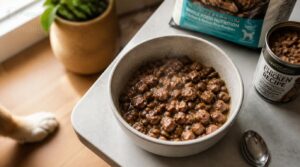
You don’t have to pick one or the other, since wet and dry food can work together in the same bowl. Combining them lets you balance hydration, palatability, and cost without overhauling your dog’s whole diet. Here’s how to make that mix work for your feeding routine.
Wet Food as Topper
A spoonful of wet food can turn a dry kibble bowl into something your dog actually races toward.
Broth-based toppers boost hydration by 5–15%, easing thirst gaps in small breeds. They add texture variety, richer aromas for picky eaters, and light nutrient supplementation—omega-3s, minerals—without overhauling calorie management or your feeding routine.
Dry Food as Base
Kibble isn’t just filler—it’s the nutritional backbone your dog’s bowl needs. Extrusion processing creates a dense nutrient matrix, delivering fortified vitamins and minerals with less than 14% moisture for lasting freshness.
Its carbohydrate structure maintains kibble integrity and steady energy. Consider:
- Dry matter conversion for comparing nutrients
- Calorie density suited to your dog’s size
- Consistent texture promoting digestive regularity
Morning Wet Meals
Morning wet meals work well right after your dog wakes up dehydrated overnight. Serve at room temperature—this releases aroma and boosts palatability for picky eaters.
For small breeds, portion 25-35% of daily calories. This moisture helps with hydration and kidney function early on. Discard uneaten food within 20-30 minutes to prevent spoilage in warm apartments.
Evening Kibble Meals
By nightfall, switch things up: dry kibble fed 6-8 hours after breakfast keeps digestion rhythmic. Small breeds need 150-350 calories per meal—use a digital scale, not guesswork.
Add a splash of water or low-sodium broth for hydration without bloating portions. Store kibble sealed, away from humidity, to preserve freshness in tight apartment cabinets.
Balanced 50/50 Feeding
Splitting meals 50/50 by calories, not just volume, keeps balanced nutrition on track. Wet food runs 60-90 kcal per 100g versus dry’s 350-400, so weigh portions rather than eyeball them.
- Rotate poultry, fish, and turkey for amino acid benefits
- Track stool consistency weekly
- Confirm both formats meet AAFCO standards
- Match life-stage labels (puppy, adult, senior)
- Recheck weight monthly with a kitchen scale
Frequently Asked Questions (FAQs)
What is a healthy wet food for small dogs?
A healthy option lists real meat as the first ingredient, meets AAFCO’s nutritional adequacy standards, and includes omega fatty acids, natural ingredients, and probiotics—while skipping artificial fillers small breeds don’t need for balanced, complete nutrition.
What is the best dog food for pancreatitis?
Your vet will likely recommend a prescription diet like Hill’s i/d Low Fat or Royal Canin Gastrointestinal Low Fat—both prioritize low-fat nutrition with moderate protein for pancreatitis dietary management, gentle digestion, and nausea-friendly textures, always switching over gradually to protect gastrointestinal health.
What is a really good wet dog food?
Simple yet demanding: a good wet dog food needs real chicken as the first ingredient, human-grade standards, and AAFCO-backed complete and balanced nutrition—
delivering high moisture, protein density, and flavor variety without fillers that undermine true dietary requirements.
What is the best diet for a dog with lymphoma?
A nutrient-dense diet favoring high-quality protein, omega-3s, and antioxidants, with limited simple sugars, can help dogs battling lymphoma. Since appetite often wavers, work with your vet to balance nutrition and palatability throughout treatment.
How long can unopened wet dog food be stored?
Unopened cans and pouches stay shelf-stable for 12 to 36 months, sometimes longer, when packaging integrity holds. Always check the printed expiration date, store in a cool, dry spot, and skip anything dented, bulging, or rusted before serving.
Are shred textures higher in calories than pâté?
Actually, pâté runs calorie-denser than shreds gram for gram—its compact paste packs fat and protein tightly, while shreds’ broth dilutes energy per bite.
For portion control in tight apartment spaces, that nutrient profile difference matters more than texture preference alone.
What makes Tetra Paks different from cans or trays?
Like a juice box built for jerky, a Tetra Pak’s layered barrier technology seals out light and oxygen.
This makes aseptic processing possible, keeping wet dog food shelf-stable without refrigeration—unlike cans or trays, though carton recycling remains trickier.
Why do senior dogs benefit from pâté formulas?
Pâté eases dental wear and boosts scent appeal for scent sensitivity, while its moisture aids kidney hydration support.
It maintains muscle mass and delivers joint mobility ingredients—making senior-friendly formulas ideal for aging dogs’ comfort and vitality.
Conclusion
Think of your apartment like a small boat: no wide ocean to roam, just careful rationing of what’s aboard. Water becomes precious, and so does every meal you pour.
That’s the quiet logic behind wet dog foods for apartment dogs—they replace what square footage can’t provide. Measure portions, watch the bowl, and rotate formats when appetite dips. Your dog won’t miss the yard if the food onboard truly nourishes. Small space, full care.