This site is supported by our readers. We may earn a commission, at no cost to you, if you purchase through links.
Your dog sits, you fumble for the treat bag, and by the time you hand over the reward, he’s already wandered off to sniff something else. That two‑second delay can break the connection between the behavior and the prize, turning a sharp pup into a confused one.
Treats are the fastest way to build trust and motivation in training, but most owners get the basics wrong—treats too big, too slow, too random. Knowing how to use treats effectively when training dogs comes down to timing, size, and value, and once those three click, your dog starts learning faster than you’d think.
Table Of Contents
Key Takeaways
- Timing is everything — reward your dog within two seconds of the correct behavior, or the connection between action and treat simply won’t stick.
- Treat size, value, and variety matter more than most owners realize; pea-sized, high-value pieces rotated regularly keep your dog focused and food‑motivated without overfeeding.
- Short sessions of five to ten minutes, repeated two to three times daily, beat one long training block every time because dogs learn best when they’re fresh and engaged.
- Once a behavior is solid, fade treats gradually by hiding them first, then shifting to variable rewards, praise, play, and real‑life reinforcers, so motivation outlasts the treat bag.
Choose Effective Training Treats
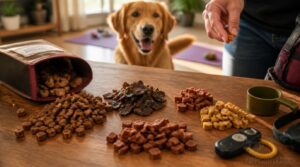
Your training treats can make or break a session, so picking the right ones matters more than you might think. Not every snack will hold your dog’s attention, especially once distractions creep in. Here’s what to look for, from the best options to keeping them fresh and exciting.
For calorie-conscious pet owners, checking out a guide to low-calorie dog training treats can help you reward generously without worrying about your pup’s waistline.
High-value Treat Options
Not every treat earns the same excitement—high-value treats turn food-motivated dogs into enthusiastic, focused learners. Picture options like:
- Cheese-based rewards, such as soft cheddar cubes
- Meat-based proteins, including chicken strips or liver bites
- Freeze-dried liver for strong, irresistible aroma
- Soft-texture treats for quick, mess-free chewing
- Allergy-conscious, low-calorie picks for sensitive stomachs
Remember to keep treats within the daily caloric intake limit to avoid overfeeding.
Choose whichever training treats excite your dog most.
Pea-sized Reward Pieces
Once you’ve chosen the right treat, size makes all the difference. Pea-sized pieces — roughly 1 to 3 millimeters — let you reward your dog quickly, keeping chewing delays under two seconds. That rapid delivery locks in the behavior-treat connection before your dog’s attention drifts.
Smaller bites also mean calorie control stays easy, so you can repeat rewards 50 or more times without overfeeding.
Taste-test Treat Preferences
Getting the size right matters, but flavor seals the deal. Dogs respond to flavor intensity, aroma-driven motivation, and texture preference testing—savory beats sweet for food motivation.
Run a quick high-value motivation assessment:
- Offer chicken, cheese, and liver separately.
- Watch which one gets instant attention.
- Note chewing speed and enthusiasm.
This builds your dog’s personal reward hierarchy, reflecting individual palate variation.
Rotate Flavors for Interest
Once you’ve found your dog’s favorites, rotate treats regularly to fight flavor fatigue and reward devaluation. Mix high-value treats—chicken, cheese, novel proteins like duck—and pair bold flavors with tougher cues.
| Day | Flavor | Texture |
|---|---|---|
| Mon | Chicken | Soft |
| Wed | Liver | Chewy |
| Fri | Cheese | Firm |
This variety maintains interest, resets your dog’s palate, and keeps calories balanced.
Store Treats Safely
Behind every successful training session is a well-organized treat stash.
Keep treats in an airtight storage container to lock in freshness and prevent mold. Store at 60–70°F, with humidity below 60% to avoid sogginess. Separate treats from cleaning supplies and label containers with dates for easy rotation.
Pack a portable treat pouch for your training toolkit, perfect for treat-hiding games.
Time Rewards for Better Learning
Picking the right treat is only half the job—timing matters just as much. Your dog learns fastest when the reward lands right after the behavior, not seconds later. Here’s how to nail that timing every single time.
Reward Within Two Seconds
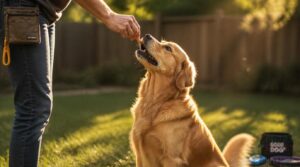
Timing is everything in dog training. If you reward your dog more than two seconds after the correct behavior, the learning signal fades fast — your dog simply can’t connect the treat to what it just did. Deliver the reward the instant the behavior happens, and you’ll strengthen that association immediately, making every session count.
Reward your dog within two seconds of the correct behavior, or the learning signal fades fast
Use a Clicker Marker

A clicker cuts through the noise like nothing else. That sharp, consistent audible bridge tells your dog the exact moment it got something right — no guesswork involved.
- Marker sound precision captures even quick reflex behaviors, like a lightning-fast sit
- Use successive approximation marking to reward small steps toward a bigger goal
- A clicker stays consistent where your voice can’t
Try a Marker Word

No clicker on hand? Your voice can work just as well. Choosing marker words like "Yes," "Yep," or "Good" builds a strong marker-clicker correlation, supporting clean reward timing and shaping new behaviors step by step.
| Marker Type | Best For | Example |
|---|---|---|
| Spoken word | Verbal cues, daily training | "Yes" |
| Tongue click | Quiet settings | Click |
| Thumbs up | Hearing-limited dogs | Visual signal |
Consistency in signaling beats clever phrasing every time—your dog just needs to know it nailed it.
Deliver at Nose Level
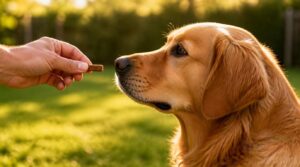
Ever notice your dog’s eyes glued to your hand? That’s nose-level engagement doing its job.
Hold treats two to four inches from your dog’s snout, using horizontal presentation instead of reaching upward. This setup prevents jumping and keeps your dog’s focus locked on the training cue.
Quick reward delivery here helps tight reward timing, giving immediate reinforcement while keeping arousal calm and steady throughout training sessions.
Keep Treats Ready
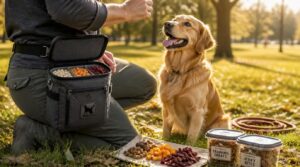
Your treat pouch is one of the most underrated training tools you own. Keep it clipped to your waist before every session starts — not scrambling for treats mid-cue.
- Use a water-resistant pouch with a quick-release opening
- Rotate flavors to prevent your dog tuning out
- Seal bags airtight to preserve scent and freshness
- Sanitize containers weekly for hygiene
- Store each flavor separately to prevent scent cross-contamination
Structure Short Training Sessions
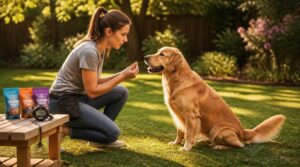
How you structure your training sessions matters just as much as what treat you use. A dog’s attention has a natural limit, and working within that window makes every minute count. Here’s what to keep in mind as you build your session routine.
Train Five to Ten Minutes
Short training sessions of five to ten minutes are the sweet spot for maximizing attention spans and preventing learner fatigue. Keeping session length tight also helps optimizing repetition frequency — your dog stays sharp enough to nail multiple reps per block. Always end on success, then repeat two to three times daily for real daily practice consistency.
| Session Length | Key Benefit | Ideal Scenario |
|---|---|---|
| Under 5 minutes | Quick intro repetitions | Introducing a brand-new cue |
| 5–7 minutes | Peak focus window | Building early reliability |
| 8–10 minutes | Full learning block | Practicing with mild distractions |
| Over 10 minutes | Fatigue and drift risk | Avoid for most training goals |
Reward Every Correct Response
Once your sessions are timed right, the next piece is simple: reward every correct response. During acquisition — the early learning phase — you want immediate reward for each success. This builds behavioral reliability fast. Here’s how reinforcement frequency works in practice:
- Reward every repetition until your dog hits roughly 90% accuracy.
- Deliver the treat within two seconds of the correct response.
- Shift gradually to rewarding every second or third correct response once reliability is solid.
- Use variable reward schedules to lock in the behavior long-term.
Consistent positive reinforcement at the right moment tells your dog exactly what earned the treat.
Practice Several Times Daily
Consistent rewarding only works if you actually show up consistently. Multiple short sessions spread across the day outperform one long block every time.
Aim for three to five sessions daily, each lasting five to ten minutes. Your dog stays fresh, focused, and enthusiastic — and you get more reinforcement opportunities without burning through your daily treat budget in one sitting.
Add Mild Distractions Gradually
Once cues stick at home, build a Distraction Intensity Ladder toward high distraction environments.
- Distance Positioning Strategies: keep distractions far away, then move closer.
- Visual Motion Timing: add slow movement during decisions.
- Auditory Distraction Control: introduce quiet sounds gradually first.
- Controlled Trigger Repeats: repeat the same cue for proofing.
- Practice under mild distractions builds desensitization to distractions.
That’s distraction training.
Use Treats for New Cues
When introducing new commands, treats aren’t optional — they’re essential.
High-value treats during the acquisition phase help your dog build strong behavior associations fast.
Reward every correct response early on, then gradually reduce frequency as the cue sticks.
Always give the treat after the behavior, never before, to avoid cue luring and keep your dog responding to you, not the food.
Manage Treat Calories Safely

Treats are powerful training tools, but they add up fast in ways you might not notice at first. Keeping your dog’s calorie intake in check protects their health without slowing down your progress. Here’s how to make every reward count without overdoing it.
Follow The Ten-percent Rule
Think of treats as part of your dog’s daily food budget, not a bonus on top of it. The ten-percent rule means training treats should never exceed 10% of your dog’s total daily caloric intake — so for a dog eating 1,000 calories a day, you’re working with roughly 100 treat calories.
- Track every treat you give, even tiny ones — they add up fast across multiple sessions
- Use your dog’s weight trends as feedback; gradual gain signals you’ve crept past the limit
- Swap to lower-calorie options like air-dried protein bites to reward often without busting the budget
Monitoring treat intake doesn’t need to be complicated. Weigh your dog every few weeks and adjust if needed.
Reduce Regular Kibble Portions
Once treats enter the picture, your dog’s daily caloric intake shifts — and something has to give. That something is kibble.
Reduce regular kibble portions proportionally whenever treat calories increase, using a kitchen scale to stay precise. Adjust gradually over several days to prevent digestive upset, while keeping meals nutritionally balanced and mealtime routines consistent.
Choose Low-calorie Rewards
Calories add up fast, so pick treats wisely. Low-calorie treats like freeze-dried chicken (2-4 calories) or carrot and apple bites (1-3 calories) pack flavor without the guilt.
Rotate proteins—turkey, chicken, fish—mixing in nutritious vegetable bites and single-ingredient snacks. Stick to low-salt options, under 0.1 grams per piece. Simple calorie tracking methods support weight management for dogs and prevent pet obesity.
Break Treats Into Pieces
Cutting treats to pea-sized treats — about 0.1-0.3 grams — boosts ideal portioning and keeps rewards as low-calorie treats. Uniformity benefits chewing speed, and freshness preservation in airtight storage locks in aroma.
- Bite-size treats vanish in seconds
- Small size means more rewards
- Handling techniques speed every training rep
- Reward variety keeps your dog excited
- A treat size of a pea feels generous
Monitor Weight Changes
Your scale tells the real story, so weigh consistently—same time, same scale, same routine, ideally before feeding. Log each date for tracking weight trends, and expect daily fluctuations even with steady calorie management.
Compare week-to-week averages, not numbers, while keeping training intensity stable. A clear upward pattern signals weight gain, your cue to adjust treats before pet obesity creeps in.
Fade Treats Without Losing Motivation
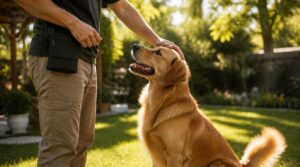
Once your dog nails a behavior reliably, it’s time to pull back on treats — without letting that hard-earned momentum slip.
The good news is that fading food rewards doesn’t mean motivation disappears; it just means you’re shifting to smarter, more varied ways to keep your dog engaged.
Here’s how to make that progression stick.
Replace Visible Food Lures
Hiding the treat changes everything.
Once your dog responds reliably, stop showing food beforehand, keep it tucked in your pocket, and deliver it only after marking the behavior.
A clear marker word tells your dog they nailed it, even without seeing the reward. This reduces lure dependence and eases the shift to toys later on.
Switch to Variable Rewards
Once your dog nails the cue without seeing food, shift to a variable reward schedule. Reward unpredictably—every second try, then every third. This approach:
- Maintains steady responding
- Prevents behavior pauses
- Keeps the average reward rate consistent
Variable reinforcement controls randomness while managing partial reinforcement, so your dog keeps working, unsure which attempt finally pays off.
Add Praise and Petting
While treats become less frequent, verbal praise should ramp up. Say "Good job" right when your dog succeeds, then add a quick neck scratch. Matching your energy to your dog’s mood keeps things calm, not chaotic.
Lean in, soft eyes, relaxed posture—your body language reinforces the moment. Pairing praise with brief petting creates a second reward, so food fades too.
Use Play as Reinforcement
Once petting clicks, bring in play—it taps your dog’s deeper motivation hierarchy.
Try this:
- Match toy to context—tug for arousal, fetch for distance
- Watch arousal levels during play bursts
- Use social play to deepen your bond
- Rotate games often to prevent fatigue
This balances treats with toy-based, real-life rewards, building motivation through treats, toys, and play for the long haul.
Try Real-life Rewards
Once your dog reliably responds, swap treats for real-life rewards—a sniff break, a game of fetch, or a warm verbal praise tone paired with petting—strengthens your social bond. Opening a door after a sit taps the same motivation hierarchy as food, turning life rewards into powerful secondary reinforcers.
This final step of reward fading keeps motivation strong for life.
Top 4 Treat Training Products
Treats aren’t the only tool that can make training easier. Sometimes the right gear or gadget makes a real difference in how smoothly things go. Here are four products worth knowing about as you build your training routine.
1. SportDOG FieldSentinel Remote Trainer
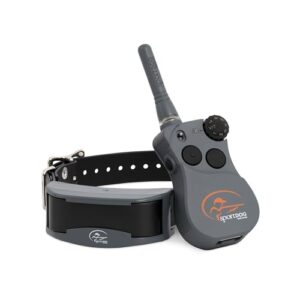
Off-leash control gets a serious upgrade with this remote trainer, built for handlers who need real reliability in the field. With a 1-mile range, you can keep your dog safe even at a distance.
The built-in health monitor tracks heart rate and exertion, flagging signs of overexertion before they become a problem.
Choose between static, tone, or vibration cues, and recharge the lithium‑ion battery in about two hours.
Its rugged build withstands mud and rain, supporting two dogs at once.
| Best For | Hunters and off-leash dog owners who need long-range control and want to keep an eye on their dog’s health while out in the field, especially if they’re working with two dogs at once. |
|---|---|
| Primary Material | Nylon & lithium-ion |
| Water Resistance | Water & mud resistant |
| Portability | Handheld remote unit |
| Durability Feature | Rugged field construction |
| Maintenance Required | Collar-remote sync |
| Color Option | Black standard finish |
| Additional Features |
|
- The 1-mile range means your dog can roam far and you’ll still have solid control.
- The health monitor flags overexertion early, so you can catch issues before they get serious.
- One remote handles two collars, which is a nice money-saver for multi-dog households.
- Syncing the collar to the remote takes a few minutes, which can be a hassle for quick outings.
- The audible tone is on the quiet side, so it might get lost near wind or water.
- Stim levels only go up to 7, which is less precise than trainers with 100-level settings.
2. Luxury Human Dog Beanbag Bed
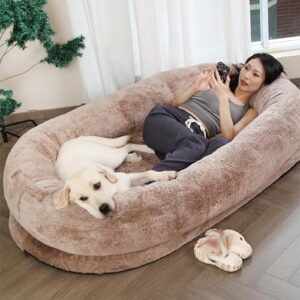
Comfort plays a bigger role in training than most people realize, and this beanbag proves it. Measuring 135 x 85 x 30 cm, it’s wide enough for you and your dog to relax together after a session.
The 12-inch raised rim offers head and neck support, while the soft faux fur surface feels like a reward in itself. A non-slip, waterproof bottom keeps things steady, and the removable cover washes easily for relaxed, shared bonding time after a long walk.
| Best For | Pet owners who love lounging with their dog (or even a little one) and want a shared space that’s cozy, easy to clean, and built to last. |
|---|---|
| Primary Material | Polyester faux fur |
| Water Resistance | Waterproof bottom layer |
| Portability | Built-in side handles |
| Durability Feature | Reinforced washable cover |
| Maintenance Required | Machine washable cover |
| Color Option | Multiple colorways |
| Additional Features |
|
- Big enough for you and your dog to stretch out together — no fighting for space
- The raised rim gives solid head and neck support, so it actually feels good to lie on
- Washable cover makes cleanup easy, which is a lifesaver for shared sleeping spots
- Not a great fit if your dog likes to chew or dig — the faux fur won’t hold up
- Colors might look a little different in person depending on your screen
- Might feel like overkill if you have a tiny breed — the size is really built for medium to large dogs
3. Prada Kristen Pink Mini Tote
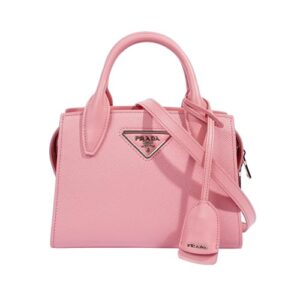
Not every item in a trainer’s kit is about the dog — and the Prada Kristen Pink Mini Tote is proof. This compact bag, built from scratch-resistant Saffiano leather in soft petalo pink, carries your daily essentials without sacrificing style.
At just 8.25" × 5" × 6", it fits your phone, keys, and cards easily.
The detachable crossbody strap keeps your hands free when you need them most — like mid-session.
| Best For | Trainers and dog moms who want a stylish, hands-free bag that keeps up with their busy day without looking like they tried too hard. |
|---|---|
| Primary Material | Saffiano leather |
| Water Resistance | Not specified |
| Portability | Dual carry options |
| Durability Feature | Scratch-resistant leather |
| Maintenance Required | Dust bag storage |
| Color Option | Petalo pink |
| Additional Features |
|
- Scratch-resistant Saffiano leather holds up well to daily wear and keeps looking sharp
- The detachable crossbody strap frees your hands when you’re on the move or mid-session
- Compact enough to carry everywhere, but still fits your phone, keys, wallet, and cards
- The interior is pretty bare-bones — no pockets or compartments to keep things organized
- That bright pink can show stains or scuffs more than a darker, neutral color would
- It’s a luxury piece, so the price tag reflects that — not exactly an everyday impulse buy
4. Rolex Daytona Yellow Gold Oysterflex
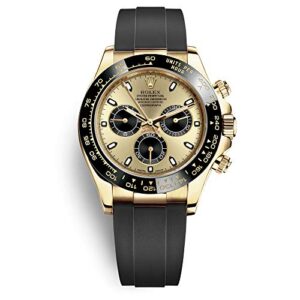
When precision matters, you want it on your wrist. The Rolex Daytona Yellow Gold Oysterflex (ref. 116518LN‑0048) isn’t just a luxury statement — it’s a functional chronograph built for accuracy.
The calibre 4130 movement delivers COSC‑certified timing, while the Oysterflex bracelet keeps it comfortable through long training days.
With 100 m water resistance and a 72‑hour power reserve, it accommodates whatever your sessions demand.
| Best For | Athletes and collectors who want a precision chronograph that can handle active days while still looking sharp for formal occasions. |
|---|---|
| Primary Material | 18K yellow gold & elastomer |
| Water Resistance | 100m (330ft) |
| Portability | Wrist-worn with clasp |
| Durability Feature | Sapphire crystal glass |
| Maintenance Required | Periodic professional servicing |
| Color Option | Champagne with black sub-dials |
| Additional Features |
|
- COSC-certified calibre 4130 movement gives you reliable, accurate timing you can count on.
- Oysterflex bracelet stays comfortable even through long days on your wrist.
- 100m water resistance and a 72-hour power reserve mean it keeps up with swimming, workouts, and busy schedules.
- The premium price tag puts it out of reach for most everyday buyers.
- The Oysterflex strap can wear down over time and may eventually need replacing.
- 100m water resistance is solid for daily life, but it won’t cut it for serious deep-sea diving.
Frequently Asked Questions (FAQs)
Can treats be used to train older dogs?
Treats absolutely work for older dogs. Senior pups can still learn new cues with positive reinforcement. Keep pieces fingernail-sized, choose easy-to-chew options like chicken or cheese, and watch those calories.
How do treats affect aggressive dog behavior?
Used correctly, treats can actually reduce aggressive behavior by giving dogs a reason to focus on you instead of a trigger. They build positive associations, replacing tension with calm, reward-seeking attention.
Should puppies use different treats than adults?
Yes, puppies need softer, smaller treats than adults. Their developing teeth can’t handle hard chews. Stick to pea-sized, easily breakable pieces to keep training smooth and safe.
Can treat training work for fearful or anxious dogs?
Absolutely — treat training works well for fearful dogs. Pairing a high-value reward like chicken with a fear trigger helps shift the dog’s emotional response from anxiety to calm anticipation over time.
How do you train multiple dogs with treats simultaneously?
Train one dog at a time while others wait tethered or crated. Mark and reward each correct response within two seconds, ensuring the treat goes only to the active dog.
Conclusion
What separates a dog that almost listens from one that responds reliably every single time? Usually, it’s the handler’s timing, not the dog’s natural intelligence.
Knowing how to use treats effectively when training dogs gives you a precise communication tool—one built on timing, value, and consistency. Get those three right, and every session deepens the bond between you. The treat bag is just the messenger; the real reward is a dog that truly understands.
- https://www.pantandwag.com/
- https://www.sciencedirect.com/science/article/abs/pii/S0168159111000876
- https://www.cambridge.org/core/journals/animal-welfare/article/abs/dog-training-methods-their-use-effectiveness-and-interaction-with-behaviour-and-welfare/B219F8FBE35C05DA269D02F310E38B66
- https://www.semanticscholar.org/paper/a0c5bff14cab3a731433d6dbb0427d29decc8bdb
- https://www.petmd.com/dog/general-health/can-you-teach-old-dog-new-tricks