This site is supported by our readers. We may earn a commission, at no cost to you, if you purchase through links.

Scratched plastic bowls harbor up to 43 colony-forming units per milliliter of bacteria after just two weeks of use—even after washing. Most dog owners focus on what goes into the bowl, never thinking twice about the bowl itself. That oversight matters more than you’d expect.
The material your dog eats from every single day affects chemical exposure, bacterial load, and long-term health in ways that vary greatly across options. Stainless steel, silicone, glass, ceramic, and plastic each carry a distinct safety profile—and not all of them hold up under daily use.
Knowing what material is safest for dog bowls means weighing durability, leaching risk, and how bacteria behave on each surface over time.
Table Of Contents
- Key Takeaways
- Safest Dog Bowl Materials Compared
- Why Stainless Steel Wins
- Materials to Avoid or Inspect
- Choosing Bowls for Your Dog
- Top 6 Safer Dog Bowls
- Frequently Asked Questions (FAQs)
- What material is best for dog bowls?
- What are the healthiest bowls for dogs?
- Should dogs eat out of stainless steel or ceramic bowls?
- Can dog bowls affect my pets allergies?
- How often should I replace my dogs bowl?
- Are elevated bowls safer for senior dogs?
- Do bowl materials impact food freshness or taste?
- Is it safe to share bowls between multiple dogs?
- Conclusion
Key Takeaways
- Scratched plastic bowls can harbor up to 43 colony-forming units per milliliter of bacteria after just two weeks — even after washing — making bowl material a real health concern, not just a preference.
- Stainless steel (304 or 18/8 grade) is the safest choice overall: it won’t leach chemicals, resists bacterial buildup on its nonporous surface, and lasts 5–10 years with simple dishwasher cleaning.
- Ceramic and food-grade silicone are solid alternatives, but ceramic must be certified lead-free and replaced immediately if chipped, while silicone tops out at a 3–5 year lifespan.
- Plastic bowls — even BPA-free ones — carry real risks from chemical leaching (BPA, phthalates, and their analogs) that worsen with heat, scratches, and age, making them the one material worth avoiding entirely.
Safest Dog Bowl Materials Compared
Not all dog bowls are created equal — some are genuinely safe, and some carry hidden risks you’d never expect. The material your dog eats from every single day matters more than most people realize.
From the finish on the bowl to how easy it is to scrub clean, every detail shapes your dog’s health — especially if you have a bigger dog with specific needs, like those covered in this guide to dog food bowls for large breeds.
Here’s how the five most common bowl materials stack up.
Stainless Steel Bowls
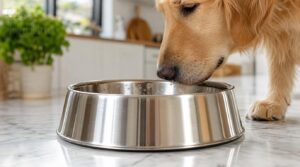
Food‑grade stainless steel — specifically 304 stainless steel — is the best option for dog bowls, and the evidence backs that up. Its nonporous surface resists bacterial adhesion, and stainless steel rust resistance means it won’t degrade after years of dishwasher cycles.
Manufacturing certifications like 18/8 confirm no BPA, lead, or phthalates. For most dogs, it’s simply the safest, most practical choice.
These bowls are usually made from high‑grade stainless steel and often feature a thicker‑than‑standard gauge for added durability.
Food-grade Silicone Bowls

If stainless steel isn’t your style, food-grade silicone bowls are a genuinely solid second choice. Platinum-cured, food-grade certification — often FDA or LFGB compliant — means minimal chemical leaching.
Their nonporous surface offers real odor resistance and easy cleaning.
Impressive silicone temperature extremes (−40°C to 230°C) guarantee heat resistance through any dishwasher cycle.
Collapsible silicone bowls fold flat for foldable storage, though longevity expectations top out around 3–5 years.
Tempered Glass Bowls
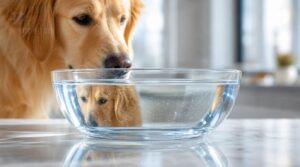
Glass bowls occupy an interesting middle ground. Tempered glass provides a transparent, odor-free, nonporous surface, significantly reducing bacterial growth compared to plastic. Its shatter-safe design breaks into blunt fragments, not jagged shards. For enhanced performance, seek borosilicate variants, which offer superior thermal shock resistance and compatibility with ovens and microwaves. However, glass bowl fragility makes it a poor travel choice.
- Chemically inert, foodgrade surface — zero leaching
- Resists odors, stains, and bacterial adhesion
- Withstands temperature swings up to roughly 300°F
Lead-free Ceramic Bowls
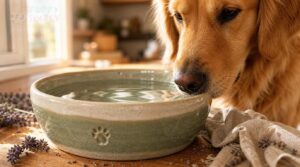
Ceramic bowls bring a warmth that glass simply can’t match — but not all ceramics are equal. Lead-free glazed ceramics, which use boron-based fluxes instead of lead oxide, meet FDA and LFGB certification standards. This matters because lead poisoning in dogs is cumulative and silent, posing serious health risks over time.
| Feature | Lead-Free Ceramic |
|---|---|
| Glaze durability | High with proper care |
| Dishwasher safety | Gentle cycles recommended |
| Thermal shock resistance | Oven/microwave safe (per manufacturer) |
| Color stability | Preserved after repeated washing |
Look for vet-recommended feeding bowls with documented glaze composition. Always inspect them regularly for chips, as even small cracks can compromise safety.
Plastic Bowl Concerns
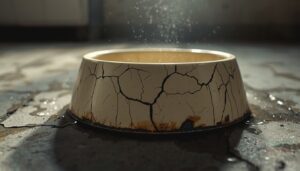
Plastic bowls appear harmless but pose significant risks due to chemical leaching—primarily BPA and phthalates—which intensifies with heat, scratches, and age. Microwave leaching dramatically accelerates this process.
Despite marketing claims, BPA-free plastic still carries false safety claims, as alternative compounds exhibit similar harmful behaviors.
Physically, scratched surfaces become bacterial breeding grounds, while durability fatigue ensures a typical lifespan of under 12 months.
Environmentally, plastic bowls contribute to waste landfill impact and microplastic release during degradation, compounding their ecological footprint.
Why Stainless Steel Wins
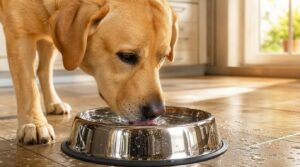
If there’s one material that consistently checks every box, it’s stainless steel.
The reasons go beyond just looks or popularity — there are real, measurable advantages that make it stand out. Here’s exactly what puts it ahead of the competition.
Non-toxic Food-grade Metal
Food-grade 304 stainless steel is one of the safest metals you can put in front of your dog. Here’s why it earns vet-recommended feeding bowl status:
- Chromium Passivation forms a protective oxide layer, preventing leaching into food or water
- Electro-Polished Finish keeps surfaces smooth, meeting strict material safety standards
- Regulatory Compliance aligns with FDA and EFSA food-grade stainless steel guidelines
- Thick Wall Durability prevents cracks where bacteria hide
- Nickel allergy risk stays low — reputable bowls minimize nickel content for sensitive dogs
Resists Scratches and Rust
Stainless steel bowls earn their reputation through real metallurgy. Food-grade stainless steel forms a self-healing oxide layer — minor scratches close themselves when exposed to oxygen, maintaining corrosion resistance without any effort on your part.
On the hardness scale, it outperforms most plastics and coated options.
Some premium bowls add PVD coating or DLC coatings and antimicrobial finishes, boosting durability even further. That’s a scratch-resistant bowl built to last.
Best Long-term Value
Think about what you actually spend over time. Plastic bowls demand replacement every 6–12 months. Food-grade stainless steel? It lasts 5–10 years.
That lifetime cost analysis tells the real story. Factor in replacement frequency savings, and stainless wins every material comparison hands down.
Its durability and safety rating make it the clear long-term investment — no warranty headaches, no eco-friendly savings required.
Easy Dishwasher Cleaning
Cleaning your dog’s bowl shouldn’t feel like a chore. Stainless steel bowls are fully dishwasher safe — simply place them on the top rack and let the heat handle the work.
Maintain your dishwasher’s filter, seal, sanitizing, spray arm care, and descaling routine monthly. This ensures odor neutralization happens automatically, eliminating the need for scrubbing or guesswork.
This effortless cleaning routine keeps your dog’s meals consistently safe and hygienic.
Lower Bacteria Buildup
Bacteria don’t need much — a tiny scratch is enough to set up camp. Food-grade stainless steel’s nonporous surface stops that from happening.
- Hot water sanitizes daily to disrupt bacterial colonies
- Micro-scratch prevention keeps biofilm from taking hold
- Full drying between meals reduces the moisture bacteria need
- Bowl rotation schedule reduces prolonged exposure to residue
- No antimicrobial additives needed — the nonreactive feeding surface does the work
Materials to Avoid or Inspect
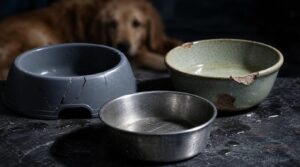
Not every bowl on the shelf deserves a spot in your kitchen. Some materials carry real risks — chemicals that leach, surfaces that harbor bacteria, and glazes that hide heavy metals.
Here’s what to watch out for before your next purchase.
BPA in Plastic Bowls
BPA in plastic bowls poses a real concern for dog feeding safety. This chemical migrates into food, and heat amplification makes it worse. Even products labeled "BPA‑free" can be misleading, as BPA analogues exhibit similar behavior.
The table below compares risk factors between standard plastic and BPA‑free alternatives:
| Risk Factor | Standard Plastic | BPA‑Free Alternatives |
|---|---|---|
| Migration Rates | High when heated | Lower, but not zero |
| Third‑Party Testing | Rarely verified | Sometimes certified |
| Plastic Contamination | Common over time | Reduced with care |
Phthalate Exposure Risks
Phthalates are another concern hiding in plastic bowls — even some BPA-free alternatives contain them. These chemicals act as hormone disruptors, interfering with your dog’s endocrine system over time.
Chronic disease risk increases with early-life exposure, and urine metabolites confirm the body absorbs them. Regulatory guidelines lag behind the science, making safer choices critical.
Choosing phthalate-free, food-grade silicone is the smarter move to avoid these hidden dangers.
Lead in Ceramic Glazes
Ceramic bowls carry a risk that’s easy to overlook: lead in the glaze. Lead oxide is commonly used in glaze formulation to create that smooth, glossy finish — but acidic leaching pulls it into your dog’s food and water over time.
Watch for these red flags:
- No safety labels or lead-free ceramic safety certifications
- Bright or irregular colors, which often signal risky glaze formulation
- Imported bowls with unknown ceramic glaze toxicity testing methods
- Missing compliance with regulatory limits for heavy metal toxicity
- No mention of lead-free glazed ceramics on product packaging
Always verify before you buy.
Chipped Bowl Dangers
A chipped bowl poses more than an aesthetic issue—it creates serious hazards. Sharp Edge Injuries risk cutting a dog’s lips or gums during meals, while Micro Shard Ingestion allows tiny fragments to contaminate food unnoticed. Over time, Structural Failure becomes likely, as chips weaken the bowl’s integrity, increasing the risk of sudden breakage.
These dangers escalate beyond immediate physical harm. Bacterial Harboring thrives in damaged crevices, which cannot be fully sanitized, even in bowls initially deemed safe. Cleaning Challenges further compound this risk, as compromised surfaces resist thorough washing.
| Hazard | What Happens | What to Do |
|---|---|---|
| Sharp Edge Injuries | Cuts lips, gums, or fingers | Replace immediately |
| Micro Shard Ingestion | Fragments contaminate food | Discard the bowl |
| Bacterial Harboring | Bacteria colonize crevices | Can’t be fully sanitized |
| Structural Failure | Bowl cracks or breaks in use | Don’t wait — replace now |
| Cleaning Challenges | Damaged surfaces resist thorough washing | Switch to a safer material |
Even bowls labeled lead-free glazed ceramics lose critical protections once the surface cracks. Damaged glaze reintroduces ceramic glaze toxicity and heavy metal toxicity concerns, including lead exposure, while exacerbating bacterial growth risks.
Scratched Surface Bacteria
Scratching a plastic bowl doesn’t just wear it down — it turns it into bacterial breeding grounds. Micro-scratches’ niches trap bacteria that standard washing can’t reach, directly reducing cleaning efficacy. Surface roughness impact is real: increased texture means more contact points for biofilm formation.
Research confirms plastic bowls reached 43.26 CFU/ml after two weeks. A smooth, nonporous, scratch-resistant bowl isn’t optional — it’s basic food safety for pets.
Plastic bowls harbor 43.26 CFU/ml of bacteria within two weeks — a smooth, nonporous bowl isn’t optional, it’s basic pet safety
Follow regular inspection protocols and replace damaged bowls immediately.
Choosing Bowls for Your Dog
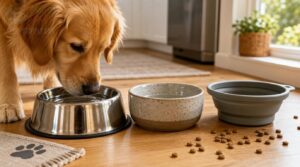
Picking the right bowl isn’t just about looks — it’s about matching your dog’s size, eating habits, and lifestyle.
A few practical features can make a real difference in safety and daily convenience.
Here’s what to keep in mind before you buy.
Size and Capacity
Daily Portion Matching means your bowl should hold at least 20% more than your dog’s typical meal. Getting dog bowl capacity right matters more than most owners realize.
Standard Diameter Ranges run 12–14 cm for small breeds, 15–19 cm for medium dogs, and 22–28 cm for large breed dog bowls.
For Puppy-to-Adult Scaling, start smaller and resize as your dog grows.
Non-slip Base Design
A sliding bowl is more than an annoyance — it can stress anxious eaters and scatter food across your floor.
Nonslip base design solves this through three proven approaches:
- Suction Pad Mechanics lock onto tile using flexible silicone cups
- Weighted Ring Stability prevents tipping on wood or vinyl
- Dual-layer Grip combines Microtextured Rubber with Edge Rim Integration for anti-spill edges
Look for BPA-free nonslip bases on all nonslip pet accessories.
Slow-feeder Safety
Slow feeders do more than slow your dog down — they reduce bloat risk and support better digestion. But the bowl material matters just as much as the design.
| Feature | Stainless Steel | BPA-Free Plastic |
|---|---|---|
| Insert Stability | Excellent | Moderate |
| Feeding Speed Control | Consistent | Varies |
| Dental Health Benefits | High | Low |
| Chew-Resistant Design | Yes | No |
| Material Compatibility | Food-grade stainless steel | Check BPA-free label |
Vet-recommended feeding bowls use food-grade stainless steel — non-porous surfaces mean bacterial growth in bowls remains minimal, even in slow-feeder ridges.
Travel-friendly Silicone
Food-grade silicone bowls are the clear choice for travel. Collapsible silicone bowls fold flat and weigh under 200g — your bag barely notices them. BPA-free alternatives resist heat and cold without warping or leaching chemicals.
Leak-proof lids prevent spills in transit, while quick-air drying keeps things moving between meals. These functional features ensure practicality during travel.
Accessory integration — carabiner clips, snap-on lids — makes fold-flat portability genuinely practical for travel and collapsible dog bowl setups.
Breed-specific Bowl Shapes
Your dog’s anatomy should drive your bowl choice. Long-eared breeds like Beagles require narrow ear bowls with steep, inward-angled sides to keep ears clean and dry. Snout-aligned bowls match muzzle depth — deep for Greyhounds, shallow for Bulldogs.
Elevated feeding stands reduce joint strain in seniors and large breeds. Height-matched bowls, whether made of food-grade stainless steel or lead-free glazed ceramics, ensure every meal is comfortable.
Top 6 Safer Dog Bowls
Now that you know what to look for, let’s put it into practice.
These six bowls check the right boxes — safe materials, solid construction, and designs that work for real dogs and real routines.
Here’s a closer look at each one.
1. Loving Pets Dolce Bamboo Pet Bowls
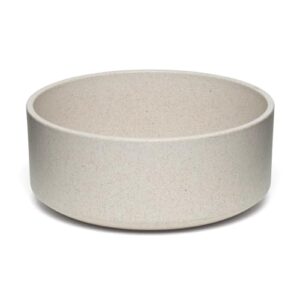
The Loving Pets Dolce Bamboo Bowl is worth a look if sustainability matters to you. Made from real bamboo composite, it’s BPA-free and food-grade — solid basics for safe feeding.
The rubber base keeps it steady during mealtime, and it’s top-rack dishwasher safe (remove the base first). Sizes range from 18 oz up to 76 oz, ensuring fitting isn’t an issue.
A caution: Bamboo isn’t ideal for dogs that chew their bowls.
| Best For | Pet owners who care about sustainability and want a stable, easy-to-clean bowl for cats or small-to-medium dogs. |
|---|---|
| Material | Bamboo |
| Dishwasher Safe | Yes (top rack) |
| Non-Slip Base | Rubber silicone base |
| Non-Toxic | Natural bamboo, food-safe |
| Capacity | 18–76 oz (varies by size) |
| Pet Suitability | Dogs and cats |
| Additional Features |
|
- Made from real bamboo — renewable, BPA-free, and food-safe
- Non-slip rubber base keeps the bowl in place during feeding
- Top-rack dishwasher safe for quick, easy cleanup
- Not a good fit for dogs that chew their bowls — bamboo won’t hold up
- Rubber base has to be removed before dishwashing, which is a small but easy-to-forget step
- Sold as a single unit, so outfitting multiple pets adds up fast
2. Havniva Ceramic Non Slip Dog Bowls
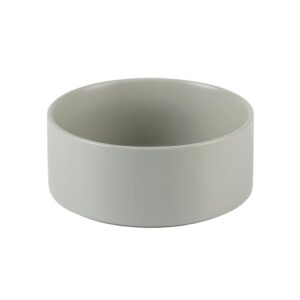
The Havniva Non Slip Ceramic bowl is worth considering for ceramic without bamboo trade-offs. It delivers lead-free, non-toxic, and dishwasher-safe fundamentals, ensuring safety and convenience. The integrated anti-slip strip provides stability, even for enthusiastic eaters, while its smooth glaze resists staining and wipes clean effortlessly.
With a capacity of roughly 4 to 5 cups, this bowl suits small to medium dogs effectively.
Ceramic chips if dropped, so regular inspections for cracks are essential to maintain safety and durability.
| Best For | Small to medium dog owners who want a safe, stylish, and easy-to-clean ceramic bowl that stays put during mealtime. |
|---|---|
| Material | Ceramic |
| Dishwasher Safe | Yes |
| Non-Slip Base | Full-ring rubber padding |
| Non-Toxic | Lead-free, cadmium-free |
| Capacity | 28 oz (3.5 cups) |
| Pet Suitability | Dogs and cats |
| Additional Features |
|
- Lead-free, non-toxic ceramic keeps your pup safe with no risk of harmful chemicals leaching into food or water.
- The rubber base grips the floor well, so even excited eaters won’t be chasing their bowl across the room.
- Dishwasher safe and stain-resistant — cleanup is genuinely low effort.
- Ceramic chips or breaks if dropped, so you’ll want to handle it with care and check for cracks regularly.
- At nearly 1.7 lbs per bowl, it’s a bit hefty if you’re moving it around often.
- The 3.5-cup capacity won’t cut it for bigger dogs or heavy eaters who need more food or water at once.
3. Mora Small Vanilla Ceramic Pet Bowl
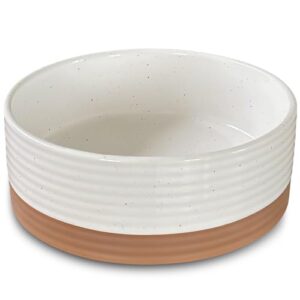
The Mora Small Vanilla Ceramic Pet Bowl offers an elegant solution for pet owners. Crafted from porcelain with a lead-free, all-natural glaze, it ensures a genuinely food-safe experience for daily use.
Thoughtful design features include rounded interior corners to minimize food residue and a weighted base for stability, even during vigorous meals.
With an 11 oz capacity, it’s ideally sized for small dogs, cats, or pocket pets.
Cleaning is effortless, as the bowl is dishwasher-safe; however, top-rack placement is recommended to protect the glaze long-term.
| Best For | Small pet owners who want a safe, sturdy, easy-to-clean bowl for dogs, cats, or pocket pets like rabbits and guinea pigs. |
|---|---|
| Material | Porcelain |
| Dishwasher Safe | Yes (top rack recommended) |
| Non-Slip Base | Weighted heavy base |
| Non-Toxic | Lead-free natural glaze |
| Capacity | 11 oz (2 cups) |
| Pet Suitability | Dogs, cats, small animals |
| Additional Features |
|
- Lead-free glaze means no sketchy chemicals near your pet’s food or water
- Heavy base stays put even when your dog goes full chaos mode at dinner
- Rounded corners make it easy for pets to clean the bowl — and easy for you to wash too
- Only comes in one small size, so bigger dogs will need a different option
- The interior sticker can leave sticky residue that needs extra scrubbing before first use
- The weight is great for dogs but might feel bulky for tiny pets like hamsters
4. Wellbro Ceramic Non Slip Bowls
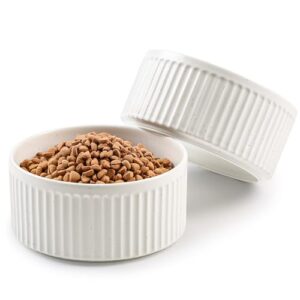
If you need something a bit more substantial, the Wellbro Ceramic Non Slip Bowls step up in both size and stability. The lead-free, food-safe glaze keeps heavy metals out of your dog’s meals, and the thick silicone base grips tile, wood, and hardwood floors without shifting.
Capacity runs from 350 ml to 900 ml, covering most medium to large dogs comfortably. The non-porous ceramic surface resists bacteria buildup, ensuring a hygienic feeding environment.
Cleanup is straightforward—a quick dishwasher cycle takes care of most messes, making maintenance effortless.
| Best For | Small-to-medium pet owners who want a stylish, stable bowl that won’t slide around or get knocked over during feeding. |
|---|---|
| Material | Ceramic |
| Dishwasher Safe | Yes |
| Non-Slip Base | Built-in silicone ring |
| Non-Toxic | 100% food-grade glaze |
| Capacity | 32 oz (4 cups) |
| Pet Suitability | Dogs, cats, small animals |
| Additional Features |
|
- Weighted, flip-proof design with a silicone base ring keeps the bowl firmly in place on tile, wood, or hardwood floors
- 100% food-grade ceramic glaze is non-toxic, microwave safe, and dishwasher safe—cleanup takes almost no effort
- Clean, minimalist look fits right in with your home décor instead of clashing with it
- At 32 oz, it may be too small for large-breed dogs, especially as a water bowl in a multi-pet home
- The 3.48 lb weight per bowl makes it a bit of a hassle to move or reposition regularly
- Ceramic chips and cracks if dropped, and there’s no stand included—you’ll need to make sure your feeding area handles moisture well to avoid mildew buildup
5. PetBonus Silicone Collapsible Dog Bowl

For dogs always on the move with you, the PetBonus Silicone Collapsible Bowl is worth keeping clipped to your bag. It’s made from 100% food-grade, BPA-free silicone, ensuring no chemical leaching or toxic residues.
Each bowl holds 20 fl oz, which works well for small to medium dogs. It folds flat to just 0.5 inches, attaches securely via a carabiner, and rinses clean in seconds.
One honest limitation: The flexible walls can tip during vigorous eating, so larger dogs may need sturdier options.
| Best For | Small to medium dogs who travel often with their owners — whether it’s hiking, road trips, or a day at the park. |
|---|---|
| Material | Silicone |
| Dishwasher Safe | Yes (top rack) |
| Non-Slip Base | Flexible silicone walls |
| Non-Toxic | BPA-free food-grade silicone |
| Capacity | 20 oz (2.5 cups) |
| Pet Suitability | Dogs and cats |
| Additional Features |
|
- Folds flat to just 0.5 inches and clips right to your bag with the included carabiner — super easy to carry
- Made from 100% food-grade, BPA-free silicone, so it’s safe for your pet and easy to rinse clean
- Adjustable rim height makes it a solid pick for short-chin dogs and cats too
- Flexible walls can shift or tip during eating, which gets messy with bigger or more enthusiastic dogs
- The bowl sometimes pops back open instead of staying flat after you collapse it
- At 20 fl oz, it’s a bit small for large breeds who need more water on the go
6. Gorilla Grip Stainless Steel Dog Bowl
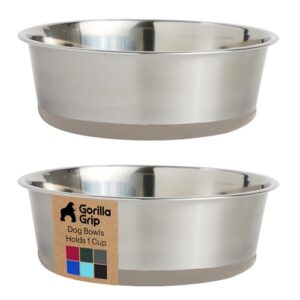
For home feeding, the Gorilla Grip Stainless Steel Dog Bowl is one of the more reliable everyday options you’ll find. Constructed from 304 food-grade stainless steel, it is BPA-free, rust-resistant, and dishwasher safe, effectively minimizing bacterial buildup over time.
The silicone base securely grips tile and hardwood floors without scratching surfaces, ensuring stability during use.
It is sold as a set of two, available in sizes from 1 to 8 cups. One important note: the silicone base isn’t replaceable once it wears down.
| Best For | Pet owners with multiple small-to-medium dogs or cats who want a low-maintenance, easy-to-clean feeding setup. |
|---|---|
| Material | Stainless Steel |
| Dishwasher Safe | Yes |
| Non-Slip Base | Silicone rubber base |
| Non-Toxic | BPA-free, FDA-compliant |
| Capacity | 8–64 oz (varies by size) |
| Pet Suitability | Dogs, cats, small mammals, birds |
| Additional Features |
|
- Made from 304 food-grade stainless steel — rust-resistant, BPA-free, and dishwasher safe for easy daily cleaning.
- The silicone base grips tile and hardwood floors well, cutting down on sliding and mealtime mess.
- Comes as a set of two, so you always have a clean bowl ready while the other runs through the dishwasher.
- Very enthusiastic eaters can still nudge the bowl around despite the grippy base.
- The silicone base wears down over time and can’t be replaced on its own.
- Size options may not work well for large breeds or very tiny pets — picking the right fit matters.
Frequently Asked Questions (FAQs)
What material is best for dog bowls?
Stainless steel is your best bet. It’s non-porous, chemical-free, and resists bacteria better than any alternative. Food-grade 304 or 18/8 steel won’t leach toxins and lasts 5–10 years with simple dishwasher cleaning.
What are the healthiest bowls for dogs?
The healthiest bowls are stainless steel, food-grade silicone, tempered glass, and lead-free ceramic.
Each resists bacteria, avoids toxic chemicals like BPA or lead, and remains easy to clean.
These features directly support your dog’s long-term health.
Should dogs eat out of stainless steel or ceramic bowls?
Both are solid choices. Stainless steel resists bacteria better and lasts longer.
Ceramic works well too — just make sure the glaze is certified lead-free, and replace it immediately if it chips.
Can dog bowls affect my pets allergies?
Yes, they can. Scratched or porous bowls trap bacteria and food residue that trigger skin flare-ups. Plastic bowls may leach BPA, worsening sensitivities.
A smooth, non-porous stainless steel or glass bowl greatly reduces that risk.
How often should I replace my dogs bowl?
Replace plastic bowls every 6–12 months — sooner if scratches appear.
Stainless steel and ceramic last 2+ years with proper care.
Inspect monthly and swap immediately if you spot cracks, chips, or lingering odors.
Are elevated bowls safer for senior dogs?
Think of an elevated bowl as a small act of kindness for aging joints.
Yes, raised bowls reduce neck and spine strain, making meals more comfortable.
This is especially helpful for senior dogs with arthritis or stiffness.
Do bowl materials impact food freshness or taste?
Bowl material does affect taste. Plastic can leach chemicals that alter flavor, while stainless steel, glass, and silicone stay chemically inert — so your dog’s food tastes exactly as intended.
Is it safe to share bowls between multiple dogs?
Sharing bowls looks harmless, but it quietly opens the door to stress, bullying, and cross-contamination between dogs. For safety and peace, give each dog its own bowl.
Conclusion
Like a cracked foundation in an otherwise solid home, the wrong bowl quietly undermines everything you do right for your dog’s health.
Answering what material is safest for dog bowls comes down to one clear winner: stainless steel holds up, stays clean, and doesn’t leach chemicals over time.
Replace scratched or chipped bowls now—don’t wait for symptoms. Your dog eats from that surface every day, and that daily contact adds up faster than you’d think.
- https://www.barneysranch.com/the-perfect-dog-food-bowl
- https://www.seaportanimalhospital.com/blog/should-i-use-a-ceramic-plastic-or-stainless-steel-food-bowl-for-my-pet
- https://bestoneinc.com/best-material-for-dog-bowls-safety-guide
- https://www.dogsnaturallymagazine.com/best-dog-bowls-evaluated
- https://www.nicetystainless.com/ceramic-vs-stainless-steel-dog-bowl