This site is supported by our readers. We may earn a commission, at no cost to you, if you purchase through links.
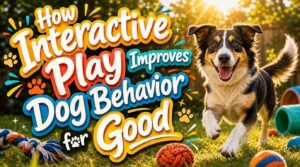
Most behavior problems in dogs aren’t discipline problems — they’re energy problems wearing a costume. The dog who shreds your couch cushions isn’t acting out of spite; he’s burning off mental and physical fuel the only way he knows how. Redirect that energy through the right kind of interactive play, and the destruction often stops on its own.
Understanding how interactive play improves dog behavior changes how you see the whole relationship. Play isn’t a reward you give after good behavior — it’s a tool that shapes behavior from the inside out, building impulse control, confidence, and calm in ways that commands alone rarely can.
Table Of Contents
- Key Takeaways
- Interactive Play Improves Dog Behavior
- Why Dogs Need Interactive Play
- Best Play Types for Behavior
- Play-Based Training Strategies
- Using Toys as Rewards Instead of Relying Only on Treats
- Practicing “sit,” “stay,” and “leave It” During Games
- Teaching Turn-taking to Reduce Pushy Behavior
- Keeping Sessions Short to Prevent Overstimulation
- Rotating Toys to Maintain Motivation and Engagement
- Ending Play Before Your Dog Becomes Too Excited
- Daily Play Routine Tips
- Frequently Asked Questions (FAQs)
- Conclusion
Key Takeaways
- Most dog behavior problems aren’t about disobedience — they’re unspent energy looking for an exit, and structured interactive play gives it an outlet before it becomes destructive.
- Play isn’t just a reward; it’s a training tool that builds impulse control, confidence, and calm from the inside out — things commands alone rarely achieve.
- Matching the right play type to your dog’s age, breed, and energy level matters more than how much time you invest — short, consistent sessions beat long, chaotic ones every time.
- Ending play at the right moment, rotating toys regularly, and reading your dog’s body language are what separates a routine that reduces behavioral issues from one that creates them.
Interactive Play Improves Dog Behavior

Interactive play does more than burn off energy — it actually shapes how your dog behaves day-to-day. When play is structured and consistent, it starts working on some of the most common behavior problems from the inside out.
The right tools make all the difference — interactive dog toys for high-energy dogs can help you build that consistent, structured play routine that actually sticks.
Here’s how it makes a real difference.
Redirects Chewing, Barking, and Digging Into Healthy Outlets
Chewing the wrong things, barking at everything, digging up your yard — these aren’t random acts of chaos. They’re your dog asking for an outlet. Interactive play gives them one.
Scent distraction drills and playful dig redirects steer energy toward a designated dig zone or varied chew items instead. Add bark quiet cues mid-game, and behavioral redirection becomes part of the routine naturally.
Providing a designated digging pit gives dogs a legal outlet for their natural digging urges.
Reduces Boredom-related Destruction Around The Home
Boredom-related behaviors don’t appear out of nowhere — they fill the space you leave empty. A solid Enrichment Rotation Plan keeps puzzle toys and a snuffle mat feeling fresh, so your dog stops treating your couch like a chew zone.
Pair that with Barrier Supervision and Timed Destruction Checks, and interactive play naturally replaces destructive behaviors with Post-Play Calm.
Helps Release Pent-up Energy Before It Becomes Hyperactivity
Pent-up energy doesn’t stay quiet — it finds an outlet, and not always a good one. That’s where interactive play earns its place in energy management.
Using Brief Energy Bursts and a Predictable Play Tempo keeps arousal from snowballing into hyperactivity before you even notice it building.
- Short fetch rounds act as an Energy Dump with Rules — stop after a set number of throws
- Controlled Sensory Load activities like scent games slow your dog’s body naturally
- Toggling movement with brief pauses teaches your dog to settle instead of escalating
- A Post-Play Cooldown, like a chew or lick mat, prevents the frantic rebound
Builds Confidence in Nervous or Fearful Dogs
Nervous dogs don’t need pressure — they need predictable routines and choice-driven play that let them set the pace.
Safe distance games, like tossing treats toward a puzzle toy, give your dog control over how close it gets to something unfamiliar.
Controlled exposure through interactive toys builds trust gradually, fostering success one small win at a time. That’s real confidence building.
Encourages Calmer Behavior Through Structured Engagement
Structure is what separates play that calms from play that unravels. When you use predictable timing — same toy, same space, same start cue — your dog learns what’s coming and settles into it.
Calm cue integration, like pausing for a "sit" mid-game, builds impulse control without killing the fun.
Controlled play environment and intensity modulation keep arousal low, turning interactive play into genuine behavioral therapy.
Why Dogs Need Interactive Play

Play isn’t just something dogs enjoy — it’s something they genuinely need.
Play isn’t a luxury for dogs — it’s a biological need that shapes how they learn, communicate, and thrive
From their first weeks of life, play shapes how they learn, communicate, and handle the world around them.
Matching activities to their development stage—including knowing how often dogs should play with puzzle toys—keeps stimulation healthy without tipping into overstimulation.
Why it matters so much.
Supports Healthy Puppy Development and Social Learning
The first 12 to 16 weeks of a puppy’s life are a narrow window you genuinely can’t afford to miss. During this puppy socialization period, their brain is wired to absorb early social cues, new environments, and human interactions like a sponge.
Puppy sensory play and interactive toys build confidence through novelty, hitting key developmental play milestones that shape social skills development and cognitive stimulation for life.
Teaches Bite Inhibition and Appropriate Play Boundaries
Every bite that goes too hard is actually a teaching moment. When you end the game immediately — a clear play stop signal — your dog learns that bite pressure feedback has real consequences. Toy redirection techniques and gentle mouth cues guide them toward appropriate contact.
Boundary release commands and turn-taking games build impulse control naturally through social play.
Provides Mental Stimulation Beyond Basic Exercise
A walk covers the body, but what about the mind? Puzzle toys and memory retention games activate cognitive challenge circuits that a standard jog simply can’t reach. Decision-making drills — like treat-dispensing toys with adaptive difficulty scaling — push your dog to think, not just move.
Sensory discrimination tasks and cognitive enrichment through interactive toys keep the brain genuinely sharp. This mental stimulation ensures behavioral therapy becomes far more effective long-term.
Helps Prevent Stress, Frustration, and Anxiety-driven Behavior
A dog with too much pent-up energy and nowhere to put its energy is a dog heading toward trouble. Predictable Play Cues and Structured Pause Intervals provide a reliable outlet before frustration builds. These methods ensure controlled arousal levels, enabling stress reduction to occur naturally.
Low Pressure Engagement and Calm Shifting Techniques maintain steady, manageable energy states. By preventing escalation, these approaches foster a calmer environment and reduce anxiety.
Interactive toys, when used as play therapy for dogs, offer powerful anxiety management and behavioral enrichment. This prevents issues through purposeful engagement, addressing root causes of distress.
Strengthens Communication Between Dogs and Owners
Play is one of the clearest conversations you’ll ever have with your dog. Through Cue Consistency and Signal Clarity — using the same toy, the same gesture, the same word — your dog learns to predict what comes next.
Feedback Timing and Turn Taking during fetch or tug sharpen Understanding Dog Body Language During Play, strengthening owner-dog bond via interactive play far beyond what a treat alone can build.
Best Play Types for Behavior
Not all play is created equal — and the type you choose matters more than you might think. Some games build impulse control, others sharpen focus or calm an anxious mind, and a few do all three at once.
Here are the best play types for shaping real, lasting behavior changes in your dog.
Tug Games for Impulse Control and “drop It” Practice

Tug-of-war is one of the most underrated training tools you have. With a solid Start Cue Protocol — asking your dog to sit before the toy even moves — you’re already building impulse control.
Practice Release Timing Drills mid-game, not just at the end. Use the Impulse Pause Technique: freeze, wait, reward compliance by restarting play.
Structured beats chaotic every time.
Fetch for Recall, Focus, and Energy Release

Fetch does more than burn energy — it’s a structured recall drill every single time. Each throw-and-return cycle reinforces Cue Consistency, and the Return Timing moment is your dog’s clearest chance to practice coming back reliably.
- Use Throw Rhythm and brief pauses for an Attention Reset before each launch
- Power Sprint retrieval channels drive, preventing behavioral issues from pent-up energy
- Controlled rounds deliver mental stimulation without energy burnout
Scent Games for Calming Mental Enrichment

Unlike fetch, scent games slow everything right down. Olfactory focus gives your dog a single, clear goal — find it. Through calm sniff sessions, scent trail mapping, and container search exercises, your dog burns real mental energy without escalating into rough play.
Air scent puzzles and snuffle mats offer powerful stress reduction for dogs. These tools make scent work and detection training surprisingly effective mood-setters, providing structured mental stimulation that calms anxious or hyperactive behavior.
Puzzle Toys for Problem-solving and Reduced Boredom
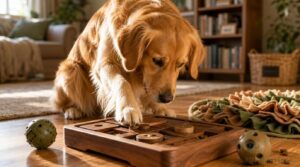
Scent games calm the mind — puzzle toys sharpen it. Problem-solving toys and puzzle feeders take the olfactory reward cue your dog just used and build on it with adjustable difficulty levels and multi-step challenges.
- Start simple, then progress
- Use senior-friendly puzzles for older dogs
- Prioritize hygiene and durability — washable parts matter
Interactive toys are genuinely effective at reducing boredom and destructive behavior in dogs, delivering real mental stimulation fast.
Hide-and-seek for Confidence and Attention-building

Hide-and-seek builds real confidence, especially in anxious or easily distracted dogs. Start simple — hide a toy in plain sight, say "find it," then reward immediately when they succeed.
Cue Consistency and Reward Timing matter more than the hiding spot itself.
| Element | Beginner | Expert |
|---|---|---|
| Gradual Difficulty | Same room | Multiple rooms |
| Owner Role Rotation | Owner hides toy | Dog searches solo |
| Environmental Control | Quiet space | Mild distractions |
Supervised Dog-to-dog Play for Social Skills

When dogs play together under proper supervision, the benefits go far beyond burning energy. Structured Introductions and Energy Matching help prevent mismatches before they start. Staff and owners watch for signal recognition cues—ear position, tail tension, body stiffness—enabling quick Conflict De-escalation.
Playgroup monitoring keeps interactions balanced and safe, supporting genuine dog social skills. This fosters Social Development Through Canine Play without negative experiences setting them back.
Play-Based Training Strategies

Training doesn’t have to feel like a chore — for you or your dog. When you weave learning into play, your dog stays engaged and actually wants to cooperate.
Here are some practical strategies to make that happen.
Using Toys as Rewards Instead of Relying Only on Treats
Treats aren’t the only currency your dog works for. Many dogs lose interest in food mid-session but stay fully engaged when a favorite toy appears.
Toy Preference and Motivation Shifts change everything. Using interactive toys as rewards — a quick tug right after a correct response — combines Reward Timing, Immediate Marker clarity, and Calorie Management into one clean, effective approach within reward-based training methods.
Practicing “sit,” “stay,” and “leave It” During Games
Play is the perfect classroom for impulse control training. Before you toss the toy, ask for a "sit" — that’s Cue Timing in action.
Hold the toy just out of reach, building Incremental Difficulty with a "stay," then release only on your signal. Arousal Management matters here; if your dog surges forward, reset and simplify.
Distraction Scaling and Signal Clarity keep play-based dog training honest, consistent, and effective.
Teaching Turn-taking to Reduce Pushy Behavior
Pushy dogs aren’t being bad — they just haven’t learned that waiting works better than grabbing. Turn-taking fixes that through clear Pause Signals and Boundary Reset moments built into every round.
- Use Cue Timing to mark exactly when your dog’s turn starts
- Reward Timing matters — reinforce the wait immediately, not after
- Reset calmly when pushing happens; don’t scold, just pause
- Impulse Wait practice during interactive toys builds lasting impulse control training
Keeping Sessions Short to Prevent Overstimulation
More isn’t always better — especially with play. Short, timed play intervals work with your dog’s natural attention span, not against it. Most dogs stay engaged for 5–15 minutes before arousal starts climbing past a comfortable level.
| Signal Type | What to Watch For |
|---|---|
| Early warning | Lip licking, slowing down |
| Rising arousal | Jumping, ignoring cues |
| Off-ramp needed | Snapping, frantic pacing |
| Cooldown working | Soft eyes, settled breathing |
| Ready again | Calm, focused attention |
Arousal cue recognition helps you catch the moment before things tip. Use off-ramp signals — step back, lower your energy, redirect to sniffing — rather than an abrupt stop. Structured cooldown time, with water and quiet, resets the session cleanly. Environment distraction management matters too; fewer stimuli means faster recovery and smarter behavior modification overall.
Rotating Toys to Maintain Motivation and Engagement
Your dog’s toy box can work against you if everything’s always available. A limited toy pool cuts decision fatigue and makes each item feel worth engaging with.
Scheduled toy swaps bring back fresh scent cues and texture variety rotation keeps your dog’s nose and brain genuinely interested.
Rotate every few days — that’s often enough to sustain motivation without overcomplicating your playtime enrichment routine.
Ending Play Before Your Dog Becomes Too Excited
Rotating toys keeps sessions fresh — but knowing when to stop them matters just as much. Overarousal breaks and clear start-stop cues give your dog a predictable structure. When excitement spikes, a lower-value switch or pause until calm resets the mood fast.
- Use a calm exit routine every time, not just when things go sideways
- Watch for zoomies or mouthing — those are your cues to stop before it escalates
- Avoiding overstimulation and play-related mistakes starts with ending on a quiet note
Daily Play Routine Tips

Getting play right isn’t just about showing up with a ball and hoping for the best. The details — timing, toy choice, and reading your dog’s signals — are what turn daily play into real behavioral progress.
Here’s what to keep in mind as you build a routine that actually works for your dog.
Matching Play Style to Your Dog’s Age and Breed
Your dog’s age and breed shape everything about how they play. A Border Collie pup riding developmental energy curves needs movement-based games, while a senior Basset Hound calls for age-adjusted intensity—such as gentle fetch instead of chase.
Lifecycle play planning means matching breed motivation and size-based toy choice to each life stage. Age-appropriate play with the right interactive toys can actually prevent destructive behavior before it starts.
Scheduling 5–15 Minute Sessions Throughout The Day
Matching play to your dog’s breed and life stage is the first step. Once achieved, timing becomes your next lever.
Two to four Scheduled Play Slots spread across the day — anchored by routines like after breakfast or a walk — work far better than one long session. These Predictable Play Intervals provide Timed Play Breaks that satisfy without overstimulation.
By implementing consistent dog playtime scheduling and mental stimulation, this approach effectively reduces behavioral issues.
Combining Physical Games With Mental Enrichment
Think of your dog’s ideal session as a circuit: start with a warm-up fetch, then shift to Nose Work Circuits or Interactive Retrieve Puzzles that demand real problem-solving.
Obstacle Course Challenges and Agility Memory Drills blend physical exercise with mental stimulation in one flow.
This combo — fundamentally Play as Behavioral Therapy for Dogs — resolves behavioral issues far more effectively than either activity alone ever could.
Choosing Safe Interactive Toys for Your Dog’s Size
Size matters more than you’d think when choosing appropriate toys for different life stages. Follow Toy Size Guidelines: small dogs need 2–3 inch toys, medium dogs 3–5 inches, large breeds 5–7 inches.
Match Material to Chewing Intensity: aggressive chewers need solid rubber; gentle chewers do well with softer textures.
Factor in Noise Sensitivity too, and always apply your supervision protocol the first time any new interactive toys and puzzles are introduced.
Watching Body Language for Stress or Overexcitement
Even during the best play sessions, your dog is constantly telling you how they feel. Watch for stiff body posture, tail tension, lip licking, or yawning — these disengagement cues mean arousal is climbing.
Catching them early is key to avoiding overstimulation and play-related mistakes that fuel behavioral issues.
Pausing when you spot these signs is genuine stress reduction for dogs, managing energy before it tips into hyperactivity or anxiety.
Adjusting Play for Puppies, Adults, and Senior Dogs
A five-year-old Lab and a twelve-year-old one aren’t the same dog at playtime.
Puppies need short energy bursts with frequent breaks — their stamina runs out fast. Adults handle more structured sessions with age-appropriate intensity.
For seniors, joint-friendly games with softer, correctly scaled interactive dog toys keep behavioral issues at bay without strain.
Match the cognitive load to where your dog actually is.
Frequently Asked Questions (FAQs)
What is the 7 7 7 rule for dogs?
The 7 7 7 rule maps your dog’s adjustment in three phases: a Decompression Week, seven weeks of Routine Learning, and seven months of Trust Building — a quiet framework for realistic bonding expectations.
Can interactive play help dogs with separation anxiety?
Yes, interactive play can help dogs with separation anxiety. Predictable play intervals and soothing toy associations give anxious dogs a calming focus, making your absence feel less threatening over time.
How does play affect a dogs sleep quality?
Active play leads to faster sleep onset and increased NREM sleep. It lowers cortisol levels and reduces nighttime restlessness, helping your dog settle deeply.
This results in your dog waking up calmer, steadier, and ready to engage.
What role does play have in weight management?
Play doubles as physical exercise, driving calorie burn, metabolic boost, and fat reduction.
It substitutes sedentary time with movement, supporting obesity prevention and helping your dog maintain a healthy weight while meeting daily exercise needs.
How often should play sessions happen each week?
Aim for 3 to 5 sessions per week. Puppies need daily play, adults do well with a consistent weekly routine, and seniors benefit from shorter, gentler sessions a few times weekly.
Can play improve bonding between dogs and children?
Cooperative games and family play rituals naturally build bonding with dogs, while teaching child body language awareness strengthens socialization and keeps safety guidelines front and center for everyone involved.
Conclusion
Take Max, a Border Collie who destroyed two sofas before his owner introduced daily tug sessions and scent games. Within three weeks, the chewing stopped — not because Max learned a rule, but because he finally had somewhere to put his energy.
That’s how interactive play improves dog behavior for good: it works from the inside out.
Give your dog the right outlet, and the dog you’ve always wanted is already there.
- https://dogcatranch.com/unleashing-the-fun-exploring-the-top-benefits-of-interactive-playtime-for-dogs-and-cats/
- https://shopyomp.com/blogs/magazine/how-interactive-dog-toys-can-improve-your-dogs-behavior-and-mental-health?srsltid=AfmBOooyD4N5euED4zYzIUQkbaj2FwXfezKgoe6dwjT8gmMftXyhAx_L
- https://caninecountryclubwdm.com/the-positive-impact-the-advantages-of-enrichment-activities-for-dogs/
- https://www.halocollar.com/blog/dog-health/the-power-of-play-how-playing-can-improve-your-puppys-mental-and-physical-health/?srsltid=AfmBOooUmLWNQBSnP9CyXf4IXstmzZKHPAx4za1K7W-gtcO-9VzFwHcN
- https://www.happystaffyco.com/blogs/news/interactive-dog-toys-how-they-can-help-reduce-anxiety-and-boredom-in-dogs?srsltid=AfmBOoq254VvCysMfRQveJ9fZ_Npdb2URxorDfQTbtgbqgBiqBYxfm1Y