This site is supported by our readers. We may earn a commission, at no cost to you, if you purchase through links.
Most dogs left alone with a plain chew toy will lose interest within minutes. But hand them a treat-dispensing puzzle, and something different happens—they work at it, figure it out, and come back for more.
That shift isn’t just about novelty. Interactive dog toys tap into how dogs are wired: they forage, problem-solve, and earn rewards through effort.
Understanding how interactive dog toys work helps you pick the right ones, use them well, and give your dog the kind of mental workout that a walk alone can’t always provide.
Table Of Contents
- Key Takeaways
- What Are Interactive Dog Toys?
- They Reward Action With Stimulation
- Dogs Push, Paw, Roll, Lick, Sniff, Tug, or Chase The Toy
- The Toy Responds With Food, Movement, Sound, Texture, or Access to Hidden Rewards
- Repeated Cause-and-effect Teaches Dogs How to Engage
- Rewards Keep Dogs Mentally Focused and Physically Involved
- Difficulty Levels Prevent Boredom While Avoiding Frustration
- Main Types and Mechanisms
- Puzzle Toys Use Sliders, Lids, Mazes, or Compartments to Hide Treats
- Treat-dispensing Toys Release Kibble When Rolled, Nudged, or Tipped
- Lick Toys Hold Spreadable Food for Slow, Calming Licking
- Snuffle Mats Hide Food in Fabric Folds for Scent-based Searching
- Electronic Toys Move, Vibrate, Flash, or Make Sounds to Trigger Chasing
- Fetch Toys Encourage Running, Retrieving, and Owner-guided Play
- Squeaky and Plush Toys Use Sound and Texture to Mimic Prey or Comfort Behaviors
- Why Dogs Stay Engaged
- Toys Activate Natural Instincts Like Foraging, Chewing, Chasing, and Problem-solving
- Food Rewards Encourage Persistence and Repeat Play
- Unpredictable Movement or Treat Release Increases Excitement
- Scent-based Toys Make Dogs Use Their Strongest Sense
- Licking and Chewing Can Support Self-soothing
- Owner Participation Strengthens Bonding and Controlled Play Habits
- Using Them Safely and Effectively
- Choose The Right Toy Size for Your Dog’s Weight, Mouth, and Chew Strength
- Start With Easy Difficulty Before Adding Harder Puzzles or Frozen Fillings
- Supervise Toys With Squeakers, Small Parts, or Food Compartments
- Remove Cracked, Broken, or Heavily Worn Toys Immediately
- Clean Food-based Toys Regularly to Prevent Residue and Bacteria Buildup
- Rotate Toys Weekly to Keep Them Interesting
- Use Interactive Toys as Enrichment, Not Replacements for Walks, Training, or Social Time
- Frequently Asked Questions (FAQs)
- Conclusion
Key Takeaways
- Interactive dog toys work by turning your dog’s natural instincts—foraging, chasing, problem-solving—into a reward loop, so every nudge or sniff leads to something worth repeating.
- The secret to keeping your dog hooked is unpredictability: variable treat release and moving targets trigger the same brain chemistry as a real hunt.
- Matching toy difficulty to your dog’s skill level matters more than the toy itself—start easy, build confidence, then gradually raise the bar.
- Interactive toys are a powerful enrichment tool, but they can’t replace walks, training, or social time—they work best woven into a balanced daily routine.
What Are Interactive Dog Toys?
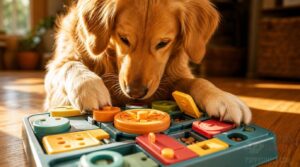
Interactive dog toys aren’t just something to keep your pup busy — they’re designed to make your dog think, move, and work for a reward. Unlike a basic chew bone that sits there waiting, these toys actually respond to what your dog does.
Curious how that actually works in your dog’s brain? How interactive toys boost mental stimulation breaks it down in a way that makes total sense.
Here’s a look at what makes them different and why your dog can’t help but stay hooked.
Definition of Interactive Dog Toys
Interactive dog toys aren’t just playthings — they’re tools built to engage your dog’s brain and body at the same time. Through reward mechanics and cognitive challenge, they turn treat time into interactive play that promotes mental stimulation and physical exercise.
Most rely on:
- Sensory engagement through smell, taste, and touch
- Material durability suited to your dog’s chew strength
- Safety guidelines baked into the design
Consider adding puzzle toys for mental stimulation to boost cognitive engagement.
How They Differ From Regular Chew Toys
A regular chew toy does one thing — it takes the bite. Interactive dog toys go further.
They ask your dog to think, sniff, or roll before the reward shows up.
That’s the real difference: one is passive, the other is a tiny puzzle.
Here’s a quick side-by-side:
| Feature | Regular Chew Toy | Interactive Dog Toy |
|---|---|---|
| Challenge level | None — just chew | Complexity scaling built in |
| Reward system | Texture only | Treat-dispensing or hidden reward |
| Mental stimulation | Minimal | Active problem-solving required |
Why They Require a Dog’s Active Participation
Unlike a chew toy that just sits there, your dog has to work for the payoff here. That’s the whole point — Cognitive Engagement isn’t optional; it’s baked into the design.
Your dog builds real Skill Development through:
- Sensory Exploration of textures, scents, and sounds
- Physical Effort to nudge, paw, or roll the toy
- Problem solving to reveal hidden rewards
- Motivation Loop that strengthens owner interaction and mental stimulation over time
Common Goals: Problem-solving, Movement, Chewing, Licking, Sniffing, and Fetching
Every interactive toy is built around a specific goal.
Puzzle toys sharpen Cognitive Persistence by rewarding careful thinking. Movement toys build Physical Endurance through chasing and retrieving.
Durable rubber chews support Jaw Strength during satisfying gnaw sessions. Calming Lick Sessions settle anxious pups, while Olfactory Enrichment through snuffle mats taps their nose power.
Ball launchers and treat-dispensing toys made from Safe Materials and NonToxic Toy Design round it all out.
They Reward Action With Stimulation

Every interactive toy is built around one simple idea: your dog does something, and something good happens. That back-and-forth loop is what makes these toys so different from a plain chew or squeaky ball sitting in the corner.
Here’s how the action-and-reward cycle actually plays out.
Dogs Push, Paw, Roll, Lick, Sniff, Tug, or Chase The Toy
Your dog isn’t just playing — they’re working. Every nudge, lick, sniff, and tug is a physical conversation between your dog and the toy. This full-body engagement, sometimes called sensory motor integration, is what makes interactive dog toys so effective.
Before tossing your pup a new chew or snack during playtime, it’s worth knowing what dogs can and can’t safely eat, including pork.
Here’s what that looks like in action:
- Puzzle toys get noses and paws working together
- Treat-dispensing toys reward persistent rolling and nudging
- Tug of war builds tug strength progression through controlled pulling
- Ball launchers fire up chase motivation triggers instantly
- Lick rhythm conditioning keeps anxious dogs calm and focused
The Toy Responds With Food, Movement, Sound, Texture, or Access to Hidden Rewards
Once your dog takes action, the toy fires back a response — and that’s where the magic happens. Sensory Feedback Loops kick in through food, movement, sound, or texture.
Treat-dispensing toys drop kibble. Electronic toys dart and flash. Sound-activated toys chirp on contact. Puzzle toys reveal hidden treats through Multi-Modal Stimulation.
Variable Reward Patterns and Adaptive Difficulty Settings keep your dog guessing — and playing longer.
Repeated Cause-and-effect Teaches Dogs How to Engage
Think of it as a conversation between your dog and the toy. Every time they paw, nudge, or roll it, and something happens, that cause-effect cycle clicks a little deeper. Learning through repetition builds the feedback loop development your dog needs to stay curious and confident.
- Action anticipation grows with each successful try
- Reinforcement timing shapes smarter, faster responses
- Behavior modification happens naturally through puzzle solving
- Mental stimulation sharpens cognitive functions session by session
Rewards Keep Dogs Mentally Focused and Physically Involved
Rewards are the engine behind every successful play session. When your dog earns a treat through timed treat release or interactive praise, their brain and body stay fully switched on.
Mixing scented reward variations with low-calorie treats and rotating reward types keeps motivation fresh. Both puzzle toys and treat-dispensing toys combine mental stimulation with light physical exercise — making reward based training feel easy.
| Reward Type | Mental Stimulation | Physical Exercise |
|---|---|---|
| Timed Treat Release | High | Moderate |
| Scented Reward Variations | Very High | Low |
| Interactive Praise | Moderate | Low |
| Low-calorie Treats | High | Moderate |
| Rotating Reward Types | Very High | Moderate |
Difficulty Levels Prevent Boredom While Avoiding Frustration
Getting the difficulty just right is like tuning a guitar — too tight and it snaps, too loose and it sounds flat.
Puzzle toys and treat-dispensing toys work best with progressive challenge scaling built in.
Watch your dog’s body language as your motivation metric tracking guide:
- Start simple to build confidence fast
- Raise difficulty only after a clear success rate threshold
- Use custom puzzle steps to match your dog’s pace
- Adjust feedback loop timing so rewards come quickly enough to encourage
- Practice toy rotation for ongoing engagement and reducing destructive behavior with toys
Main Types and Mechanisms
Not all interactive toys work the same way, and that’s actually the point. Each type is built around a different instinct — sniffing, chasing, licking, fetching — so your dog stays genuinely engaged instead of bored after five minutes.
Here’s a look at the main types and how each one works.
Puzzle Toys Use Sliders, Lids, Mazes, or Compartments to Hide Treats
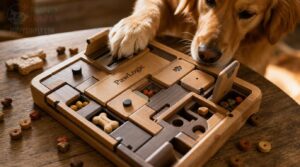
Puzzle toys are basically tiny treasure hunts for your dog. They use sliders, flip lids, maze paths, and hidden compartments to tuck treats out of easy reach — delivering real mental stimulation that keeps your dog genuinely thinking.
| Feature | How It Works | Why It Matters |
|---|---|---|
| Slider Mechanics | Dog pushes panels with its nose or paw | Builds problem-solving persistence |
| Lid Reset | Spring-loaded lids close after each try | Extends engagement and challenge |
| Maze Path Complexity | Treats are hidden at dead ends | Encourages trial-and-error exploration |
| Compartment Visibility | Clear sections show treat location | Motivates without causing frustration |
| Material Durability | High-density polymer or wood construction | Ensures smooth, snag-free movement |
The benefits of interactive dog toys like these go beyond entertainment — they redirect restless energy into focused effort. Start with wider openings before gradually increasing difficulty.
Treat-dispensing Toys Release Kibble When Rolled, Nudged, or Tipped

puzzle toys challenge your dog’s brain, treat-dispensing toys get the whole body involved.
Rolling release designs let kibble fall through an adjustable opening as your dog bats the toy around.
simple nudge activation or tilt mechanism does the rest — gravity manages delivery.
BPA-free plastics and hold up to two cups of kibble, making mental stimulation part of mealtime.
Lick Toys Hold Spreadable Food for Slow, Calming Licking

Not every dog needs action to feel enriched. Lick toys hold spreadable food like peanut butter or plain yogurt across a textured surface, slowing things down on purpose. That texture design forces your dog’s tongue to work through ridges and channels, stretching licking duration from seconds to minutes.
It’s quiet, calming enrichment — and the therapeutic benefits, including stress reduction in dogs, are genuinely impressive.
Snuffle Mats Hide Food in Fabric Folds for Scent-based Searching

Snuffle mats take a different approach than lick toys. Instead of smooth surfaces, their fabric fold texture creates a micro maze design that hides kibble deep in the folds.
Your dog has to sniff and root through each layer to find rewards — tapping directly into hunting instincts.
Fold depth variation adjusts challenge, washable materials keep things hygienic, and treat size selection prevents choking.
Electronic Toys Move, Vibrate, Flash, or Make Sounds to Trigger Chasing

Where snuffle mats tap scent, electronic toys go a step further — triggering your dog’s chase instinct through automatic movement, sound, and light working together.
- Motor Speed Settings shift between 0.5 and 2.5 m/s
- LED Flash Sequences and Sound Cue Synchronization mimic real prey
- Sensor Pauses reverse direction when your dog gets close
Vibration Pattern Variations keep moving toys unpredictable, so your dog never loses interest.
Fetch Toys Encourage Running, Retrieving, and Owner-guided Play

Fetch toys bring you directly into the game, which makes them unlike most other interactive dog toys. Whether you’re using a simple ball launcher or an automatic ball thrower, the key is owner cue consistency — teaching your dog to retrieve, drop, and wait.
Add Distance Variation and Obstacle Integration to build real endurance, and try Water Fetch for full-body movement. Owner guidance on interactive play sessions keeps Energy Management on track.
Squeaky and Plush Toys Use Sound and Texture to Mimic Prey or Comfort Behaviors

Squeaky and plush toys tap directly into your dog’s instinctual drives — the high-pitched squeak mimics Prey Sound Mimicry of small animals, triggering that natural stalk-and-pounce response. Textural Stimulation from varied plush fabrics keeps them mouthing and investigating longer.
- Sound-activated toys with Customizable Squeaker Volume suit both sensitive and bold dogs
- Comforting Heartbeat Squeak designs help anxious dogs self-soothe during alone time
- Reinforced Stitching keeps tactile stimulation intact through vigorous play
Why Dogs Stay Engaged

Dogs don’t stay glued to a toy by accident — there’s real instinct driving every sniff, paw, and nibble. The right toy connects with what your dog is wired to do, and that’s exactly why it holds their attention.
Here’s what keeps them coming back for more.
Toys Activate Natural Instincts Like Foraging, Chewing, Chasing, and Problem-solving
Your dog isn’t just playing — they’re following instincts baked in over thousands of years. Interactive dog toys are built around this truth.
Scent Driven Foraging, chasing, chewing, and problem-solving aren’t random behaviors; they’re hardwired drives. That’s why Cognitive Challenge Scaling, Chew Resistance Levels, and Chase Stimulus Design matter in toy construction.
Good Mental and Physical Enrichment for Dogs starts by working with your dog’s nature, not against it.
Food Rewards Encourage Persistence and Repeat Play
Think of food rewards as your dog’s "why." When treat-dispensing toys deliver a snack for the right action, your dog’s brain locks in.
Variable Reward Schedules — where treats come sometimes, not always — tap directly into Reward Anticipation, keeping engagement strong.
Pair that with Gradual Difficulty Scaling and Timing Consistency, and you’ve got a tool that genuinely enhances dog cognition, behavioral enrichment, and meaningful mental and physical enrichment for dogs.
Unpredictable Movement or Treat Release Increases Excitement
Unpredictability is what keeps your dog hooked. When treat-dispensing toys or electronic toys release rewards at random moments, dopamine spikes naturally — your dog’s brain stays in full "what happens next?" mode.
Variable reward timing and irregular bounce patterns trigger a startle chase response that feels instinctive. Sensory surprise cues make every session feel fresh, sustaining excitement far longer than predictable play ever could.
Scent-based Toys Make Dogs Use Their Strongest Sense
Your dog’s nose is 100,000 times more powerful than yours — so scent-based toys hit differently. Nose-driven enrichment through snuffle mats and scent trail design turns mealtime into real mental exercise.
Your dog’s nose is 100,000 times more powerful than yours — so scent-based toys don’t just entertain, they truly enrich
Aroma layering and scent retention keep each session fresh, while scent rotation prevents habituation. As dog training aids and dog puzzle and treat-dispensing toys go, nothing delivers canine enrichment quite like sensory stimulation through scent.
Licking and Chewing Can Support Self-soothing
While scent keeps your dog’s nose busy, it’s the mouth that does the calming work. Licking and chewing create Calming Oral Rhythms that support Stress Reduction through repetitive, self-directed motion.
That steady jaw movement triggers Endorphin Release, naturally easing tension.
For aggressive chewer toys or indestructible squeaky dog toys, that Mouth Sensory Grounding keeps your dog settled.
Used consistently, this chewing behavior becomes a powerful Settling Routine Signal.
Owner Participation Strengthens Bonding and Controlled Play Habits
Your presence changes everything. When you step into play, it becomes more than a game — it becomes a connection. Guided Play Routines and Owner Cue Consistency turn fetch or tug into Joint Training Sessions your dog actually learns from.
- Use Positive Reinforcement Timing right after task completion
- Practice Trust Building Exercises through calm, predictable cues
- Apply Owner Guidance on Interactive Play Sessions for controlled mouthiness
- Rotate toys to support Owner Dog Bonding Through Interactive Play
Using Them Safely and Effectively
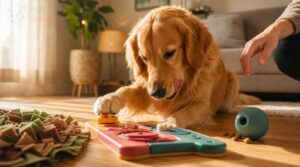
Getting the most out of interactive toys comes down to a few simple habits. The right choices keep your dog safe, engaged, and coming back for more.
Here’s what to keep in mind before you hand over that next puzzle or treat dispenser.
Choose The Right Toy Size for Your Dog’s Weight, Mouth, and Chew Strength
Getting the size right is everything.
For dogs under 10 pounds, look for toys around 2.5 to 3 inches wide. Medium dogs need 3.5 to 5 inches, and large dogs over 40 pounds need 6 to 8 inches.
Always measure the widest part of your dog’s jaw, then factor in chew rating and toy density — heavier chewers need reinforced rubber and thicker walls for real durability.
Start With Easy Difficulty Before Adding Harder Puzzles or Frozen Fillings
Once you’ve nailed the right size, think about difficulty the same way. Start with a Simple Compartment Intro — one flap, one treat, easy win. From there, use Progressive Difficulty Steps to build confidence:
- Offer toys with one or two open compartments
- Try Gentle Movement Initiation with slow-rolling dispensers
- Introduce Light Frozen Treats at a semi-thawed stage
- Use Reward Path Mapping so each action pays off fast
- Gradually close gaps or freeze fillings longer over time
Supervise Toys With Squeakers, Small Parts, or Food Compartments
Even the best toys need a watchful eye. During any session with squeaky toys or treat-dispensing toys, do a quick Squeaker Inspection and check seams for wear. Small Part Testing helps catch anything that might detach.
Food Compartment Hygiene matters too — rinse compartments after every use. Supervision Timing is simple: stay close until you’re confident your dog plays safely.
Remove Cracked, Broken, or Heavily Worn Toys Immediately
A cracked toy isn’t just worn out — it’s a hazard waiting to happen. Sharp edges cut gums, loose pieces become choking risks, and weakened material can splinter mid-chew.
Run through a quick Inspection Checklist after every few sessions:
- Check for Damage Indicators: cracks, frayed seams, or exposed stuffing
- Follow Replacement Timing: retire anything deformed or heavily worn
- Practice Safe Disposal: seal and bag damaged toys immediately
Durability Considerations for Aggressive Chewers make material safety for pets especially important.
Clean Food-based Toys Regularly to Prevent Residue and Bacteria Buildup
Food-based toys get grimy fast. After every use, wash treat-dispensing toys with warm water and mild unscented dish soap — it cuts through fats without leaving residue on nontoxic materials.
For rubber and silicone, a quick hydrogen peroxide soak sanitizes thoroughly.
Scrub textured grooves with a soft brush, rinse completely, and air dry before storing.
consistent cleaning frequency protects your dog’s dental hygiene and keeps bacteria from building up.
Rotate Toys Weekly to Keep Them Interesting
Think of toy rotation as your dog’s weekly novelty cycle — same concept as updating a playlist. Pull out four or five toys, tuck the rest into themed toy bins, and swap them on a fixed day each week.
Use rotation cue signals like a short play phrase to spark curiosity. Track what holds attention in simple engagement tracking logs, and consider seasonal toy swaps to keep variety and exploration alive year‑round.
Use Interactive Toys as Enrichment, Not Replacements for Walks, Training, or Social Time
Interactive toys are excellent, but they’re not a one-stop solution. Your dog still needs walks for cardiovascular health, training sessions for impulse control, and social time for emotional balance.
Scheduled Enrichment Sessions work best after walks, bridging Walk Toy Balance naturally into your routine.
- Use toys between walks for Mental Fatigue Prevention
- Pair puzzles with Training Integration to reinforce cues
- Treat toys as a Social Play Complement, not solo babysitters
- Practice Owner Guidance on Interactive Play Sessions to build focus
- Balance Mental and Physical Enrichment for Dogs to support Energy Management and prevent destructive behavior
Frequently Asked Questions (FAQs)
Can interactive toys help dogs with separation anxiety?
Yes, they genuinely help. Lick-based calming toys and scent-focused soothing mats give anxious dogs something purposeful to do, easing stress through predictable play routine and gradual desensitization during alone time.
How often should puzzle toy difficulty increase?
Bump up the difficulty every two to four solved puzzles. Watch for mastery indicators like quick, confident solving. If frustration signs appear, step back a level and rebuild momentum gradually.
Do senior dogs benefit from interactive toys?
Absolutely. Senior dogs thrive with interactive toys.
Puzzle and lick toys support cognitive decline mitigation and anxiety reduction.
Low-impact activity from treat-dispensers aids joint health support while delivering sensory enrichment and mental stimulation without strain.
Which toys work best for high-energy breeds?
High-energy breeds thrive with durable rubber toys, freezer-safe chews, and variable reward toys.
Textured grip surfaces handle rough play, while high-impact chase toys provide the energy outlet these dogs genuinely need.
How many toys should dogs have access to?
Most dogs do best with 3 to 6 toys available at once. Too many leads to overstimulation, while too few causes boredom. That sweet spot keeps your dog focused and genuinely engaged.
Conclusion
A simple rubber ball entertains for a moment. A well-chosen interactive dog toy builds something lasting—a sharper mind, a calmer dog, and a stronger bond between you two.
Understanding how interactive dog toys work means you’re not just buying a distraction; you’re creating real enrichment. Start simple, watch your dog closely, and rotate what you offer.
The right toy doesn’t just keep your dog busy—it gives them a reason to think.