This site is supported by our readers. We may earn a commission, at no cost to you, if you purchase through links.

Most first-time dog owners spend more time picking a collar than they do choosing food—and that’s a problem, because what goes in the bowl shapes almost everything: coat quality, gut health, bone development, and energy levels for years to come. Puppy nutrition isn’t complicated once you know what to look for, but the pet food aisle wasn’t designed to make that easy.
Hundreds of bags compete for your attention with words like "premium," "natural," and "wholesome," none of which carry any legal meaning. The right dry dog foods for first-time dog owners share a short list of measurable, evidence-based traits—and that’s exactly what this guide breaks down.
Table Of Contents
- Key Takeaways
- 10 Best Dry Puppy Foods
- 1. Honest Kitchen Puppy Chicken Oats Clusters
- 2. Open Farm Puppy Ancient Grains Dog Food
- 3. Blue Buffalo Puppy Dry Dog Food
- 4. ACANA Grain Free Puppy Dry Food
- 5. Instinct RawBoost Puppy Dry Dog Food
- 6. Stella Chewy Puppy Raw Coated Chicken Salmon
- 7. Royal Canin Small Puppy Dry Food
- 8. Eukanova Large Breed Puppy Dry Food
- 9. Primal Puppy Freeze Dried Kibble
- 10. Natural Balance Puppy Lamb Rice Formula
- Choose Kibble With Confidence
- Match Food to Puppy Size
- Compare Formula Types and Value
- Feed, Switch, and Store Properly
- Frequently Asked Questions (FAQs)
- Conclusion
Key Takeaways
- The AAFCO nutritional adequacy statement is the single most important thing to check on any puppy food bag — without it, there’s no guarantee the formula meets minimum growth requirements.
- Named animal protein (like chicken, salmon, or lamb) must appear first on the ingredient list, and DHA from fish oil or algae oil is non-negotiable for healthy brain and eye development.
- Puppy food isn’t one-size-fits-all — small breeds need calorie-dense kibble with smaller bites, while large breeds require controlled calcium and phosphorus levels to prevent joint and bone problems.
- Marketing words like "premium" and "natural" carry no legal weight, so skip the front of the bag and go straight to the ingredient list and guaranteed analysis panel.
10 Best Dry Puppy Foods
Picking the right kibble for your puppy doesn’t have to feel overwhelming.
A quick look at top-rated dry dog foods for puppies can help you narrow down options based on your pup’s size, breed, and age.
These ten options cover different sizes, sensitivities, and budgets — so there’s a solid starting point no matter what kind of pup you’re raising. Here’s what made the cut.
1. Honest Kitchen Puppy Chicken Oats Clusters
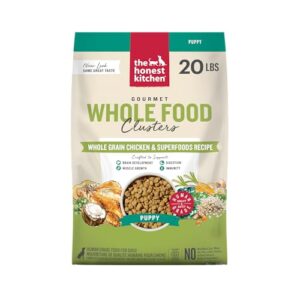
Honest Kitchen’s Chicken & Oats Clusters stand out among puppy foods for their human-grade standards, produced in facilities adhering to the same regulations as human food. This ensures every ingredient meets exceptional quality benchmarks.
The recipe prioritizes chicken as the primary ingredient, followed by oats, barley, and nutrient-dense whole foods like broccoli and eggs. This blend provides a balanced foundation for growing puppies.
With 25% protein and 467 kcal per cup, the food supports rapid development while maintaining nutritional integrity. Enhanced with double the probiotics and added DHA, it specifically targets the needs of young, developing pups for optimal health.
| Best For | Puppy owners who want human-grade, minimally processed food that supports brain development, digestion, and muscle growth — including large-breed pups and nursing moms. |
|---|---|
| Target Life Stage | Puppy |
| Primary Protein | Chicken |
| DHA Included | Yes |
| Artificial Preservatives | None |
| Digestive Support | Probiotics |
| Price (USD) | $93.00 |
| Additional Features |
|
- Made in a human food facility with zero feed-grade ingredients or artificial preservatives — that’s a rare standard in pet food.
- Packed with DHA, double the probiotics, and high-quality protein to cover all the bases for a growing pup.
- The clusters work great as training treats or in puzzle toys, so you’re getting more versatility out of one bag.
- At around $93 for 20 lbs, it’s a serious investment — not the easiest on a tight budget.
- The clusters can get crumbly and dusty, so you might need to add water or a wet topper to keep things tidy.
- Has oats and barley, so it’s not a good fit for dogs with grain sensitivities.
2. Open Farm Puppy Ancient Grains Dog Food
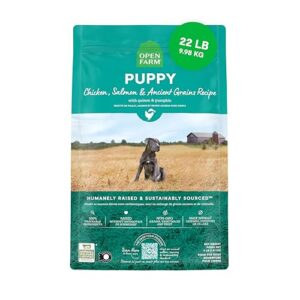
Open Farm takes a different approach — instead of human-grade certification, they offer something equally compelling: full ingredient traceability. You can scan a lot code and see exactly where each ingredient came from, down to the farm or fishing regions.
The formula packs 26% protein from chicken, wild-caught salmon, whitefish meal, and herring. Ancient grains like oats, quinoa, and millet add fiber and slow-burning energy.
At 425 kcal per cup, it promotes healthy puppy growth without overloading developing joints.
| Best For | Puppy owners who want full transparency on where their dog’s food comes from, especially those dealing with sensitive stomachs or digestive issues. |
|---|---|
| Target Life Stage | Puppy |
| Primary Protein | Chicken & Fish |
| DHA Included | Yes |
| Artificial Preservatives | None |
| Digestive Support | Sensitive stomach formula |
| Price (USD) | $86.99 |
| Additional Features |
|
- Full ingredient traceability lets you scan a lot code and see exactly where every ingredient was sourced — rare in the pet food world.
- 90% animal-based protein blend supports healthy muscle growth, and the ancient grains give steady energy without the legume/pea concerns tied to heart issues.
- Third-party certified with no artificial anything — plus owners report real wins like shinier coats and fewer skin flare-ups.
- At $86.99 for a 22 lb bag, it’s a noticeable investment compared to most mainstream puppy foods.
- The kibble can be tough for tiny breeds or puppies with weaker jaws — not ideal if you’ve got a toy poodle or a very young pup.
- Multiple proteins and grains mean more allergy triggers; if your dog is sensitive to chicken, salmon, or grains specifically, this one might still cause issues.
3. Blue Buffalo Puppy Dry Dog Food
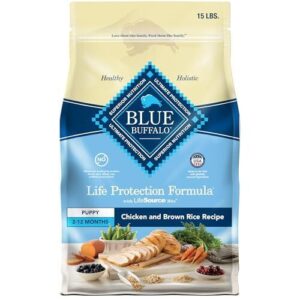
If traceability matters to you, Open Farm delivers. But if you’re after a brand most vets have recommended for years, Blue Buffalo’s Life Protection Formula is hard to overlook.
Real deboned chicken leads the ingredient list, followed by brown rice and oatmeal for steady energy. What sets it apart are the LifeSource Bits — a cold-formed antioxidant blend with blueberries, cranberries, and kelp. At $43.97 for 15 lb, you also get added DHA and ARA to support your puppy’s developing brain and eyes.
| Best For | Puppy owners who want a vet-trusted, nutrient-rich food with real ingredients to support their pup’s brain, eyes, and overall growth through the first 12 months. |
|---|---|
| Target Life Stage | Puppy |
| Primary Protein | Chicken |
| DHA Included | Yes |
| Artificial Preservatives | None |
| Digestive Support | Probiotics & prebiotics |
| Price (USD) | $43.97 |
| Additional Features |
|
- Real deboned chicken is the first ingredient, with no by-product meals, corn, wheat, or soy
- LifeSource Bits add a solid antioxidant boost from blueberries, cranberries, and kelp for immune support
- DHA and ARA support healthy brain and eye development during those fast-growing puppy months
- Contains grains, so it’s a no-go for puppies on a grain-free diet
- Includes common allergens like chicken, eggs, and peas — worth watching if your pup has sensitivities
- Pricier than basic puppy formulas at $43.97 for 15 lb
4. ACANA Grain Free Puppy Dry Food
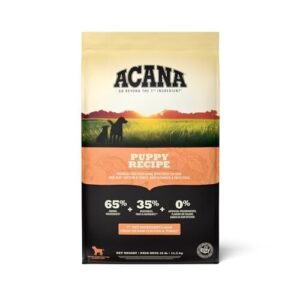
ACANA’s Grain Free formula caters to puppies needing more than basic chicken and rice. It’s 65% animal ingredients—fresh chicken, turkey, flounder, and eggs—providing a robust foundation for growth.
This formula delivers 33% crude protein and 20% fat to support rapid development. The freeze-dried coating enhances palatability, appealing even to picky eaters.
Additionally, the recipe includes DHA from fish oil for cognitive development and a probiotic blend to promote digestive health.
Priced at $78.99 for a 25-lb bag, the quality justifies the cost, offering premium nutrition for thriving puppies.
| Best For | Puppy owners who want a high-protein, grain-free diet packed with real animal ingredients to fuel healthy growth from the start. |
|---|---|
| Target Life Stage | Puppy |
| Primary Protein | Chicken & Turkey |
| DHA Included | Yes |
| Artificial Preservatives | None |
| Digestive Support | Probiotic blend |
| Price (USD) | $78.99 |
| Additional Features |
|
- 65% animal ingredients (chicken, turkey, eggs, flounder) give puppies a solid protein and fat foundation for muscle development and rapid growth
- Freeze-dried coating makes it a hit with picky eaters, and the probiotic blend keeps digestion running smoothly
- DHA from fish oil supports brain development, and the grain-free formula works well for puppies with sensitivities to corn, wheat, or soy
- At $78.99 for a 25 lb bag, it’s a premium price that adds up fast, especially for larger breeds
- The strong fishy smell is a dealbreaker for some dogs—and honestly, most humans in the room too
- Contains eggs, fish, and legumes, so puppies with allergies may not tolerate it well, and some vets flag the legume content as a concern
5. Instinct RawBoost Puppy Dry Dog Food
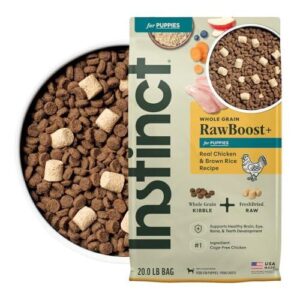
Instinct Raw Boost takes a hybrid approach — crunchy kibble paired with freeze-dried raw bites in every bag. Cage-free chicken leads the ingredient list, backed by 28% crude protein and 15% fat to fuel your puppy’s rapid growth.
Before committing to this formula, it’s worth weighing the pros and cons of dog harnesses vs. collars so your pup’s nutrition and gear work together from day one.
It delivers 0.1% DHA for brain and eye development, plus a solid calcium-to-phosphorus ratio safe for large breeds. At 411 kcal per cup, portions are easy to manage.
The Autoship price on Chewy drops it to around $85 for 20 pounds.
| Best For | Puppy owners who want a raw-style diet without the mess of handling fresh meat, especially those with picky eaters or dogs in rapid growth phases. |
|---|---|
| Target Life Stage | Puppy |
| Primary Protein | Chicken |
| DHA Included | Yes |
| Artificial Preservatives | None |
| Digestive Support | Fermentation-derived probiotics |
| Price (USD) | $84.99 |
| Additional Features |
|
- Cage-free chicken is the first ingredient, and the kibble-plus-raw combo adds real texture variety that fussy puppies tend to love
- Packed with DHA, calcium, and phosphorus to support brain, eye, and bone development during those critical early months
- Free from corn, wheat, soy, peas, and lentils — a cleaner label than most puppy foods at this price point
- At $85 for a 20 lb bag, it’s on the pricier end compared to standard dry puppy formulas
- Contains multiple grains and animal meals, so it’s not a fit for dogs with grain or poultry sensitivities
- Some customers have flagged issues with heat-damaged deliveries and slow customer service responses
6. Stella Chewy Puppy Raw Coated Chicken Salmon
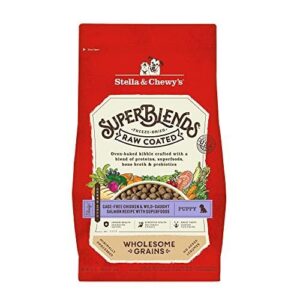
Stella & Chewy’s SuperBlends takes the raw-food concept and makes it genuinely practical. Oven-baked kibble gets a freeze-dried raw coating plus real bone broth — so your puppy gets more flavor and nutrition without the mess of a full raw diet.
Cage-free chicken leads the ingredient list, with wild-caught salmon adding omega-3s for brain and eye development.
At 36% crude protein and 438 kcal per cup, it’s built for real puppy growth. A 3.5-pound starter bag runs about $21.99.
| Best For | Puppy owners who want the benefits of a raw diet without the hassle — especially great for picky eaters or small breeds with sensitive stomachs. |
|---|---|
| Target Life Stage | Puppy |
| Primary Protein | Chicken & Salmon |
| DHA Included | Yes |
| Artificial Preservatives | None |
| Digestive Support | Pre & probiotics |
| Price (USD) | $21.99 |
| Additional Features |
|
- Raw-coated kibble with real bone broth and freeze-dried meat makes it way more appealing to fussy puppies
- Packed with 20 superfoods, probiotics, and quality proteins (cage-free chicken wild-caught salmon) for solid all-around nutrition
- No corn, peas, potatoes, soy, or artificial preservatives — a cleaner ingredient list than most kibbles in this price range
- Hard to find in stores; you’ll likely need to order it online and plan ahead
- Pricier than conventional puppy food, so it can add up fast as your pup grows
- Contains barley and oatmeal, so it’s not an option if you’re specifically looking for grain-free
7. Royal Canin Small Puppy Dry Food
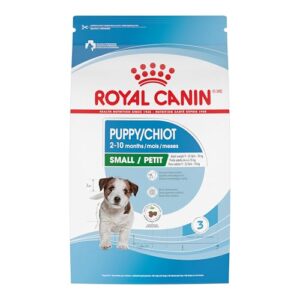
Few brands have studied small-breed physiology as closely as Royal Canin. Their Small Puppy formula is built specifically for puppies between 2 and 10 months old with an expected adult weight of 9–22 lb.
The kibble shape fits tiny jaws, encouraging chewing. Inside, the formula provides 29% protein, 18% fat, and DHA from algal and fish oil for brain development. Prebiotic fibers support firm stools, while 500 mg/kg of Vitamin E bolsters immunity.
A 30 lb bag runs $109.99.
| Best For | Small-breed puppy owners who want a vet-trusted, science-backed formula tailored to tiny dogs during their critical growth window (2–10 months). |
|---|---|
| Target Life Stage | Puppy |
| Primary Protein | Chicken |
| DHA Included | Yes |
| Artificial Preservatives | None |
| Digestive Support | Prebiotic fiber |
| Price (USD) | $109.99 |
| Additional Features |
|
- DHA from fish and algal oil supports brain development right when it matters most
- Prebiotic fiber and digestible protein keep digestion smooth and stools consistent
- Kibble size and shape is designed for small mouths, making mealtime easier
- At $109.99 for 30 lb, it’s a premium price compared to most dry puppy foods
- Contains corn, wheat gluten, and chicken by-product meal — not ideal for pups with grain or by-product sensitivities
- Very small puppies may need careful portion monitoring to avoid digestive overload
8. Eukanova Large Breed Puppy Dry Food
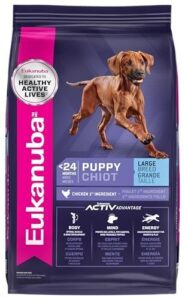
Big dogs grow fast — and that’s exactly where things can go wrong. Eukanuba’s Large Breed Puppy formula addresses this by maintaining calcium at 1.1% and phosphorus at 0.9%, a ratio designed to slow bone growth to a safer pace for puppies expected to exceed 55 lb.
Chicken is the first ingredient, ensuring high-quality protein, while fish oil delivers 0.18% DHA to support early brain development. Additionally, the prebiotic fiber blend — combining beet pulp and FOS — promotes steady digestion.
A 30 lb bag retails for $74.99.
| Best For | Owners raising large-breed puppies (expected to exceed 55 lb) who want a vet-backed formula built around bone and brain development. |
|---|---|
| Target Life Stage | Puppy |
| Primary Protein | Chicken |
| DHA Included | Yes |
| Artificial Preservatives | None |
| Digestive Support | Prebiotic fiber blend |
| Price (USD) | $74.99 |
| Additional Features |
|
- Chicken is the first ingredient, and the DHA level is clinically tested to support early brain development.
- Calcium and phosphorus are dialed in specifically for large breeds — helps bones grow at a safer, steadier pace.
- The prebiotic fiber blend (beet pulp FOS) keeps digestion gentle, which matters a lot during those fast-growth months.
- Contains corn, wheat, and chicken by-product meal — not a great fit if your pup has food sensitivities or you prefer grain-free.
- At $74.99 for 30 lb, the cost adds up fast since large-breed puppies eat a lot.
- Some owners have noticed their dogs get bored with the flavor over time and need a little something extra to stay interested.
9. Primal Puppy Freeze Dried Kibble
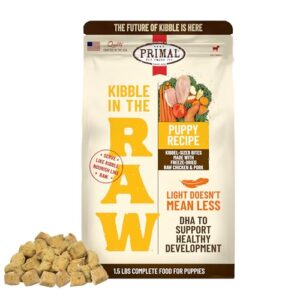
Primal’s Freeze-Dried Kibble skips high-heat extrusion entirely, preserving nutrients conventional kibble typically loses. This minimal processing approach ensures a higher retention of natural vitamins and minerals, setting it apart from most puppy foods.
The formula delivers 38% crude protein from cage-free chicken, crate-free pork, and salmon — significantly exceeding the 26–35% range required for optimal lean muscle development in puppies.
Organic carrots, kale, and sweet potato provide balanced nutrition, while live probiotic cultures actively support digestive health from the earliest stages of life.
At $29.98 per 1.5 lb bag, this premium option demands a higher budget but delivers exceptional quality and nutritional integrity.
| Best For | Puppy owners who want raw-diet quality without the prep work and don’t mind spending a bit more for cleaner ingredients. |
|---|---|
| Target Life Stage | Puppy |
| Primary Protein | Chicken & Pork |
| DHA Included | Yes |
| Artificial Preservatives | None |
| Digestive Support | Probiotic cultures |
| Price (USD) | $29.98 |
| Additional Features |
|
- Freeze-dried raw meat keeps nutrients intact — no high-heat processing stripping things out
- Scoop and serve straight from the bag, no soaking or mixing required
- Packed with organic whole foods and live probiotics to support digestion from day one
- At roughly $20 per pound, it adds up fast as a daily staple
- Some pups aren’t fans of the texture or taste, so results can vary
- A few buyers have reported packaging issues like torn or unsealed bags
10. Natural Balance Puppy Lamb Rice Formula
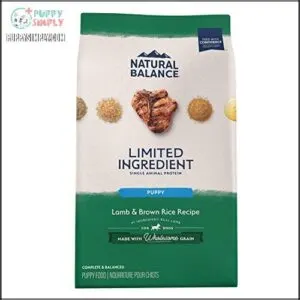
Natural Balance keeps things simple — and sometimes that’s exactly what a sensitive puppy needs. Real lamb leads the ingredient list as the sole animal protein, making this formula a smart pick if your pup reacts to chicken or beef.
At 24% crude protein and 365 kcal per cup, it hits solid growth targets without overloading a young digestive system. Brown rice adds gentle fiber, supporting digestive health during this critical developmental stage.
Added DHA aids brain development, while the overall formula maintains a balanced approach. At $72.98 for 24 lb, it’s a reliable, no-fuss option for growing puppies with sensitivities.
| Best For | Puppies with sensitive stomachs or protein allergies to chicken and beef who need a simple, single-protein diet built for healthy growth. |
|---|---|
| Target Life Stage | Puppy |
| Primary Protein | Lamb |
| DHA Included | Yes |
| Artificial Preservatives | None |
| Digestive Support | Digestive-friendly grains |
| Price (USD) | $72.98 |
| Additional Features |
|
- Lamb is the only animal protein, making it easy to pinpoint and avoid common allergens like chicken or beef
- Supports brain development with added DHA and includes antioxidants for overall health
- Free from corn, wheat, soy, and artificial additives — a clean formula for sensitive pups
- At $72.98 for 24 lb, it runs pricier than a lot of comparable dry puppy foods
- Only comes in dry kibble — no wet food option if your pup needs variety or extra moisture
- Bags have been reported to arrive damaged, which can be frustrating for the price
Choose Kibble With Confidence
Reading a dog food label for the first time can feel like decoding a foreign language.
But a few key markers on the bag tell you almost everything you need to know about quality.
Here’s what to look for before you buy.
Look for The AAFCO Adequacy Statement
Every bag of puppy food should carry an AAFCO-compliant nutritional adequacy statement — this is non‑negotiable. Look for the Life‑stage Declaration confirming the formula meets AAFCO Dog Food Nutrient Profiles for growth. Feeding Trial Proof carries extra weight over formulation alone.
Understanding the standard feeding trial requirements can help verify the food’s proven suitability. The Verbatim Wording and Placement Guidelines guarantee its official status.
Without these, Minimum Nutrient Levels aren’t guaranteed, and AAFCO regulations exist precisely to protect your puppy’s development.
Prioritize Named Animal Protein First
Once you’ve confirmed that AAFCO statement, flip the bag over and scan the ingredient list. Ingredient Order Insight matters here: labels run heaviest to lightest.
Protein Source Transparency is your next checkpoint — look for these four signals:
- A named animal protein (chicken, salmon, lamb) listed first
- Species-specific labeling, not vague "meat meal"
- digestibility advantages from animal-based proteins over plant blends
- flavor appeal indicators like humanely raised chicken or organic chicken near the top
Check Puppy-safe Protein and Fat Levels
After spotting that crude protein, check the numbers. AAFCO-compliant puppy food requires at least 22.5% crude protein and 8.5% fat on a dry-matter basis. A solid protein-fat ratio features 26–30% digestible protein with 12–16% fat, providing sufficient metabolizable energy for steady growth without excessive weight gain.
Anything above 30% crude protein ceiling offers no proven extra benefit for healthy pups.
Look for DHA, Omega-3s, and Omega-6s
Fatty acids are where brain and eye development truly come together. DHA source clarity is critical—prioritize products explicitly listing salmon oil or algae oil, avoiding vague terms like "omega blend." Puppies poorly convert plant-based ALA, making direct EPA and DHA sources essential for optimal development.
Skip vague omega blends — puppies need direct DHA from salmon oil or algae oil to develop healthy brains and eyes
When evaluating supplements, focus on three key factors:
- Fish oil purity — Verify named sources like DHA from salmon oil.
- Omega ratio balance — Ensure omega-3 fatty acids are balanced against omega-6 for skin and coat health.
- Brain development and DHA supplementation — Algae oil inclusion confirms essential fatty acids without fish-based sourcing concerns.
Favor Probiotics, Prebiotics, and Digestible Fiber
Probiotics introduce beneficial bacteria, while prebiotic fibers like inulin feed and sustain them — which provides the real fermentation benefit.
Together, they improve microbial balance, support immune function, and produce noticeably better stool quality.
Look for named strains like Lactobacillus on the label, paired with a named prebiotic supplement, ensuring digestive health support is effective.
Avoid Artificial Preservatives and Fillers
The ingredient list is your first line of defense. Chemical preservatives like BHA, BHT, and ethoxyquin must be named on the label — so scan it before reading any marketing claims. Heavy grain fillers and byproducts can quietly crowd out real nutrition.
Look for:
- Mixed tocopherols or Rosemary extract instead of artificial additives
- Simplified ingredient lists with clear, named proteins
- Limited ingredient formula or grain-free options if the list feels overwhelming
Match Food to Puppy Size

Not all puppy food is created equal — and size is a big part of why.
A tiny Chihuahua and a growing Great Dane have very different needs for calories, calcium, and kibble shape. Here’s what to know before you buy.
Small-breed Calorie and Kibble-size Needs
Small breed puppies burn calories fast — a 10-pound dog may need around 218 calories daily, sometimes up to 60 per pound. That’s why energy density matters so much in small breed puppy nutritional requirements.
Bite-sized kibble and mouth-friendly shapes make eating easier for tiny jaws. Spread meals into three or four frequent meals daily to keep calorie requirements met without overwhelming a small stomach.
Large-breed Calcium and Phosphorus Balance
For large breed puppies, getting the calcium-to-phosphorus ratio right isn’t optional — it’s the foundation of healthy skeletal development. The ideal calcium-phosphorus ratio sits between 1.1:1 and 1.4:1.
Too much calcium reduces phosphorus utilization, disrupting large breed growth rates and joint formation.
Target 0.8–1.2% calcium on a dry matter basis, and never add calcium supplements to a complete diet — that’s where supplement risks quietly cause real harm.
Breed-size Formulas for Safer Growth
One formula doesn’t fit all growing dogs — and that gap matters. AAFCO defines large breed puppies as dogs expected to exceed 70 pounds at adulthood. Their foods require optimized mineral ratios, controlled energy intake, and balanced vitamin D to support slower, steadier growth.
Small breed nutrition requirements lean the other way: higher calorie density per cup. Always match the label to your puppy’s projected adult size.
Joint-support Nutrients for Bigger Puppies
Bigger dogs carry more weight on developing joints — and that stress starts early. Large breed puppies benefit most from foods that include:
- Glucosamine Levels and Chondroitin Ratio for cartilage protection
- Mussel Extract (green-lipped mussel) for natural anti-inflammatory support
- Collagen Peptides to reinforce connective tissue
- Vitamin D Balance to prevent calcium oversupply
Together, these nutrients form your puppy’s first line of defense against hip dysplasia and long-term joint health support.
When All Life Stages Formulas Make Sense
All that joint-support work pays off — but what if you have a puppy and an adult dog eating together? That’s where Household Mix Feeding makes real sense. An AAFCO-compliant ‘all life stages’ formula covers Growth-safe Minerals for your puppy while working for your adult dog too.
It’s budget-friendly, reduces Adjustment Flexibility headaches, and follows life stage feeding guidelines without buying two separate bags.
Compare Formula Types and Value
Not all kibble is created equal, and the differences go beyond fancy packaging or price tags.
From grain-free blends to freeze-dried raw coatings, each formula type comes with real trade-offs worth knowing before you buy.
Here’s a breakdown of what’s out there and how to figure out which one actually makes sense for your puppy and your wallet.
Grain-inclusive Versus Grain-free Puppy Food
Choosing between grain-free vs. grain-inclusive puppy food involves more than marketing labels. Both options influence carbohydrate sources and nutritional roles differently, with distinct implications for puppy health.
Grain-inclusive diets provide B vitamins, digestible starch, and fiber, supporting steady energy. These formulas derive key nutrients from ingredients like oats and rice. In contrast, grain-free alternatives replace cereals with legumes, but legume-associated risks are a real concern: over 90% of FDA DCM-flagged foods are grain-free. This substitution alters the starch binding role and carbohydrate profile.
Key differences include:
- Grain-inclusive: Adds B vitamins from oats and rice.
- Grain-free: Relies on peas and lentils for starch binding.
- Neither guarantees better nutrition without a complete, AAFCO-verified formula.
Ultimately, optimal puppy nutrition depends on a balanced, certified formula—not grain content alone.
Limited-ingredient Options for Sensitive Stomachs
If grain-free didn’t settle your puppy’s stomach, a limited ingredient diet might be the better fit. These recipes use a single protein source — like salmon or lamb — paired with gentle starches such as rice or oatmeal, keeping the ingredient list short and easy to monitor.
| Feature | Why It Helps |
|---|---|
| Single protein source | Reduces allergic triggers |
| Low-fat formulas | Eases digestion |
| Minimal additives | Fewer irritants |
| Gentle starches | Steadier gut response |
Allergy-friendly and limited-ingredient options work best when combined with digestive enzymes and prebiotic fiber.
Raw-coated and Freeze-dried Enhanced Kibble
Sometimes a short ingredient list isn’t enough — your puppy just won’t eat it. That’s where raw coated puppy formulas shine.
Raw coating technology applies freeze-dried raw or fat-based blends after cooking, delivering a serious palatability boost without the mess of a full raw diet.
You get nutrient density from concentrated animal ingredients, freeze-dried raw chicken bits, and shelf-life safety through low-moisture processing techniques — plus full ingredient transparency on the label.
Budget-friendly Picks for First-time Owners
Most first-time owners don’t need to spend a fortune to feed their puppy well. Plain, grain-inclusive kibble from discount retailers like Costco or Chewy often delivers solid nutrition at a lower price per pound — and bulk purchase savings add up fast.
Budget-friendly dry puppy food recommendations to explore:
- Choose larger bag sizes for better value bundle options
- Prioritize affordable protein sources like chicken or lamb meal
- Read dog food reviews and consumer reviews before buying
- Stick to AAFCO-compliant formulas — budget-friendly doesn’t mean nutritionally incomplete
- Start with a small bag to confirm palatability before committing to bulk
Premium Features Worth Paying For
Human-Grade Ingredients, Cold-Pressed Processing, and Sustainable Sourcing — including humanely raised chicken or organic chicken — preserve more nutrients than standard extrusion. These features genuinely justify a premium price tag.
An Enhanced Antioxidant Blend boosts immunity, while Omega-3 fatty acids fuel brain development, delivering measurable health advantages.
Eco-Friendly Packaging reflects responsible sourcing standards. Any AAFCO-compliant premium dry puppy food with these attributes ensures tangible, real-world benefits.
How to Compare Cost Per Cup
Price tags can be deceiving, so don’t stop at the sticker. Bag Size Economics matter — a 30-pound bag cuts cost per cup by 20–30% over smaller sizes.
Factor in Calorie Cost Ratio and Cup Weight Variation, since calorie density and portion sizing for dogs shift your real daily spend.
Subscription Savings add another 5–10% monthly, making budget-friendly dry puppy food recommendations easier to act on.
Feed, Switch, and Store Properly
Getting the right food is only half the battle — how you feed, switch, and store it matters just as much. A few simple habits can mean the difference between a thriving puppy and one with an upset stomach or wasted kibble.
Here’s what every first-time owner should know before filling that bowl.
Follow Life-stage Feeding Guidelines

Feeding frequency and Age-Related Portioning shift as your puppy hits key Growth Milestones. Under 3 months, this means 4–6 small meals daily. By 6 months, twice a day is sufficient.
Stage-specific Nutrients and Calorie Tracking matter just as much as timing — life stage specific feeding guidelines for puppies guarantee AAFCO compliance at every phase. Life stage nutrition isn’t guesswork; it’s built into the bag.
Use a 7-day Food Transition Plan
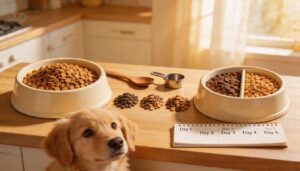
Switching foods cold turkey is a recipe for an upset stomach. A 7-day gradual mixing plan protects your puppy’s digestion: start with 25% new food for days 1–2, reach 50/50 by days 3–4, then 75% new by days 5–6.
Stool monitoring is your best feedback tool. Soft stools mean slow down.
For sensitive pups, a vet consultation helps adjust changeover strategies before problems escalate.
Measure Portions by Body Condition

The bag’s feeding chart is a starting point, not a rule. Your puppy’s body tells the real story.
Use Body Condition Scoring to guide portions:
- Rib Feel Check: ribs should be easy to feel, not buried
- Waist Visibility: a visible tuck means healthy weight
- Gradual Portion Adjustments: shift 10% at a time, not all at once
- Scale-Based Tracking: weigh food for consistent calorie content daily
Start With Small Bags First
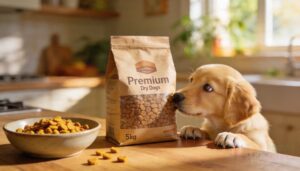
Starting small — think 4 to 6 pounds — is a smart trial for cost analysis and waste reduction in one move. Resist the urge to buy a large sack right away. A smaller purchase lets you monitor freshness and catch reactions early, while confirming the formula fits your puppy’s current growth stage before committing.
Keep the bag for recall record keeping, too.
Store Kibble for Freshness and Safety
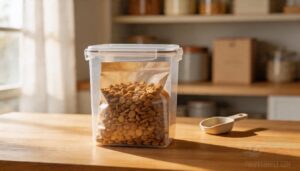
Once you’ve settled on the right bag size, proper storage keeps that food safe and fresh all the way to the last scoop. Follow these five steps:
- Keep kibble in its original bag inside an airtight container
- Store in a cool, dry environment below 80°F
- Clean your container between bags with hot, soapy water
- Watch for spoilage detection signs — odors, clumping, or mold
- Use opened bags within 4–6 weeks
Signs Your Puppy is Thriving on The Food

Good storage ensures the food reaches the bowl safely — but how do you know it’s actually working? Watch your puppy. Bright eyes, a shiny coat, and healthy skin signal the diet is covering protein and fat needs. Firm stools confirm strong kibble digestibility.
Playful energy demonstrates the food meets energy requirements for active puppies.
A healthy appetite, steady growth and development, and normal weight complete the picture of optimal nutrition.
Frequently Asked Questions (FAQs)
What’S The BestDry Dog Food For Puppies?
The best dry puppy foods balance digestible protein, DHA, and proper calcium ratios.
Look for AAFCO-compliant kibble listing a named animal protein first — chicken, salmon, or beef — to support healthy puppy growth biomarkers.
When should puppies switch to adult food?
Switch timing depends more on size than age. Small breeds are ready around 9–10 months; large breeds need puppy food until 14–24 months. Watch for slowing height growth as your clearest cue.
Can puppies eat homemade food instead of kibble?
Yes, but it’s trickier than it sounds. Homemade meals often miss key nutrients, and without recipes verified by veterinarians, gaps in nutrient completeness are common. Kibble with AAFCO standards for puppy growth is safer and easier.
How often should puppies eat each day?
Most puppies need 3 to 4 meals daily. Younger pups under 12 weeks do best with 4 small meals. By 6 months, twice a day usually works well.
Is wet food better than dry food for puppies?
Neither wins outright. Wet food offers Hydration Benefits and Texture Ease for puppies’ teeth.
Dry dog food promotes Dental Health and Cost Efficiency.
Both can meet AAFCO nutritional standards for growing puppies.
What vaccines does my new puppy need?
Your puppy needs core vaccines covering distemper, parvovirus, adenovirus, and rabies. Most vets follow an 8-, 12-, and 16-week vaccination timeline.
Ask your vet about extra-risk vaccines based on your dog’s lifestyle.
Conclusion
You don’t need to memorize every ingredient panel to feed your puppy well—you just need to know what actually matters. The best dry dog foods for first-time dog owners share a few non-negotiable traits: real protein first, an AAFCO statement, and nutrients matched to your puppy’s size.
Start there, watch how your dog responds, and adjust as they grow. Good nutrition isn’t a one-time decision—it’s a habit you build together.
- https://www.akc.org/expert-advice/nutrition/choosing-healthy-dry-dog-food/
- https://www.businessinsider.com/guides/pets/best-dry-dog-food?IR=T&r=US
- https://www.forbes.com/sites/forbes-personal-shopper/article/best-dry-dog-food/
- https://www.houndsy.com/blogs/modern-tails/what-to-look-for-in-dry-dog-food-a-comprehensive-guide-for-pet-owners
- https://linkinghub.elsevier.com/retrieve/pii/S0041010122002471