This site is supported by our readers. We may earn a commission, at no cost to you, if you purchase through links.

Not every wavy coat behaves the same way—and that distinction matters more than most people realize when choosing a dog. A Havanese’s silky ripples behave nothing like a Portuguese Water Dog’s dense, moisture-resistant waves, even though both breeds fall under the broad "wavy coat" label.
Coat structure shapes everything: how often you’ll be brushing, whether seasonal shedding buries your furniture, and how a dog’s skin stays healthy through seasonal shifts.
Knowing your wavy coat dog types by their actual coat biology—not just aesthetics—puts you in a far better position to match the right breed to your home, schedule, and lifestyle.
Table Of Contents
Key Takeaways
- Wavy coats aren’t one-size-fits-all — the difference between a Havanese’s silky ripple and a Portuguese Water Dog’s dense, moisture-resistant wave affects everything from brushing frequency to skin health.
- Whether a breed carries a single or double coat matters more than most owners realize, since double coats drive seasonal shedding and heat retention in ways that directly shape your grooming routine.
- No wavy-coated breed is truly hypoallergenic — while low-shedding dogs reduce airborne dander, saliva proteins still cling to the coat, so allergy management requires clean-home habits alongside the right breed choice.
- Matching a wavy-coated dog to your lifestyle means honestly weighing space, daily exercise commitment, and grooming time — a Bichon Frise can thrive in an apartment, while a Gordon Setter needs vigorous outdoor activity to stay balanced.
What Counts as a Wavy Coat?
Not every wavy coat looks the same up close, and that distinction matters more than most people realize. Before you can confidently identify or care for a wavy-coated dog, it helps to understand what separates a true wave from a curl, a single layer from a double, and a silky strand from a coarser one.
Once you know your dog’s specific wave type, you can build a smarter routine using targeted wavy coat brushing techniques that actually match the texture you’re working with.
Here’s what you need to know.
Loose Waves Vs Tight Curls
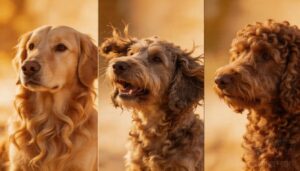
At the heart of understanding wavy coat dog breeds is one key distinction: loose waves versus tight curls. Loose waves form gentle S-shaped patterns with natural movement, while curly coat dogs display springy coils with stronger curl definition. Hair porosity, humidity resistance, and product weighting all influence how each coat behaves.
Key differences include:
- Wave patterns relax under humidity; tight curls resist flattening.
- Styling techniques vary by texture and coat density.
- Low porosity coats hold waves longer.
- Heavy products collapse loose waves faster than tight curls.
Single Coats and Double Coats
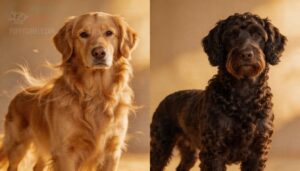
Beyond texture, coat structure matters just as much. Wavy coat dog breeds come in either a single layer or a double layer — and that distinction shapes everything from undercoat insulation to seasonal molting patterns.
A double coat’s dense underlay drives heat retention and coat density impact on skin health, while single coats shed gradually year-round, demanding consistent dog coat grooming regardless of breed size variations.
Puppy Coat Changes in Adulthood

Puppy coats rarely hint at what’s coming. For many wavy coat dog breeds, that soft, frizzy fluff gives way to a more structured texture between four and eighteen months — a Texture Evolution shaped by Hormonal Changes, Nutrition Influence, and genetics.
You might notice a Coat Color Shift too, as pigmentation deepens. Tracking these Growth Milestones helps you adjust your coat maintenance schedule before matting becomes a problem.
Wavy, Curly, and Silky Coat Differences

Once your dog’s adult coat sets in, the differences between a wavy coat, curly coat, and silky coat become genuinely easy to spot — and they matter more than you’d think.
- Coat Texture Impact: Wavy coats offer soft waves with moderate heat retention properties; curly coats trap more warmth but need intensive grooming tool choices; silky coats lie flat with minimal insulation.
- Seasonal Shedding Patterns: Silky coats shed most visibly spring through fall; curly and wavy coats shed less dramatically overall.
- Coat Longevity Factors: Dog coat texture directly influences how quickly mats form and how long your grooming routine stays manageable.
Common Care Needs for Wavy Fur

Caring for a wavy coat comes down to consistency in a few key areas.
Daily brushing with flexible bristles, working end-to-tip in small sections, is your best detangling technique for mat risk monitoring before tangles tighten against the skin.
Use a moisturizing shampoo, condition thoroughly, and always finish with low-heat drying to preserve wave pattern and support skin irritation prevention long-term.
Small Wavy-Coated Dog Types

Small dogs with wavy coats pack a surprising amount of personality and coat variety into a compact frame. Whether you’re drawn to a silky lap dog or a spirited terrier, there’s more range here than most people expect.
Here are some of the most notable small wavy-coated breeds worth knowing.
Many of these breeds also share traits like webbed feet and water-resistant coats, which can explain why dogs sometimes act strange after a swim.
Havanese
Few wavy coat dog breeds pack as much personality into such a small frame as the Havanese. Weighing just 7 to 13 pounds, this hypoallergenic dog breed thrives on family bonding and rarely strays far from your side.
Dental health and weight management require consistent attention, as does eye health and monitoring vocal tendencies through early training.
Coton De Tulear
The Coton de Tulear brings cheerful personality and compact size into one remarkably gentle package. Standing just 9 to 11 inches tall, this hypoallergenic, family‑friendly, active dog’s cotton-soft wavy coat sheds minimally but still needs brushing several times weekly.
Training intelligence makes early routines easy to establish.
Prioritize dental care consistently, since lifespan longevity—often reaching 16 years—depends heavily on preventive habits you build from puppyhood.
Bedlington Terrier
Few breeds carry history as visibly as the Bedlington Terrier, originally bred in the mining town of Bedlington, England. Its lamb-like coat—wavy, pale, and upright—conceals a surprisingly bold, spirited dog beneath.
This breed’s whip gait and strong prey drive reflect its working roots.
The wavy coat requires regular grooming every six to eight weeks, and health screening for copper toxicosis risk is non‑negotiable.
Bichon Frise
The Bichon Frise packs surprising substance into a small size. Its dense, continuously growing curly coat delivers genuine hypoallergenic benefits through low shedding tendencies — a real advantage if allergies are part of your household equation.
Weighing 12–18 pounds with lifespan expectations reaching 14–16 years, this breed rewards attentive ownership. Don’t overlook dental health issues, weight management, and separation anxiety, as all three quietly shape long-term wellbeing.
Best Small Breeds for Apartments
If apartment living is your reality, the Havanese and Bichon Frise genuinely check most boxes. Both carry low shedding tendencies that satisfy hypoallergenic dog breeds’ requirements, and their manageable energy levels suit compact spaces well.
Noise tolerance stays reasonable, rental policies rarely flag them, and health concerns remain moderate with routine care. They’re legitimately family-friendly dog breeds that adapt without demanding an active lifestyle.
Medium Wavy-Coated Dog Types

Medium-sized wavy-coated dogs hit a sweet spot that a lot of dog owners don’t realize they’re looking for until they find it. They’re substantial enough to keep up with an active lifestyle, yet manageable enough for most home setups.
Here are four standout breeds in this category — plus a look at how their temperaments compare.
Soft Coated Wheaten Terrier
The Soft Coated Wheaten Terrier, rooted in Irish agricultural history, earned its place as an adaptable farm dog long before becoming a beloved family‑friendly dog. Its wavy coat — single‑layered, silky, and ranging from pale to golden wheat — sits close to the body with minimal shedding.
Here’s what defines this dog breed size category:
- Historical Origin: Rural Ireland, 18th‑century farm work
- Coat Color: Pale wheaten to warm golden
- Temperament Profile: Playful, spirited, and affectionate
- Health Concerns: Protein‑losing nephropathy and enteropathy
Wavy coat maintenance means brushing several times weekly to prevent matting, and training methods should start early — Wheatens respond well, but test your patience cheerfully.
Portuguese Water Dog
Where the Wheaten’s coat stays close and silky, the Portuguese Water Dog wears its wavy, water‑resistant coat like armor built for the Atlantic. Historically, these dogs herded fish and retrieved gear from cold seas — their webbed feet and rudder tail were not accidental; they were engineered.
| Trait | Detail |
|---|---|
| Historical Role | Portuguese fishing courier |
| Swimming Performance | Enhanced by webbed feet and rudder tail |
| Addison’s Disease | Notable hereditary screening priority |
| Best Fit | Active individuals with outdoor lifestyles |
That working heritage runs deep — if you’re active, this wavy coat breed matches your pace naturally.
Kerry Blue Terrier
Unlike the Portuguese Water Dog’s seafaring roots, the Kerry Blue Terrier earned its reputation on Irish land — hunting, herding, and keeping pace with working families.
This medium-sized breed’s Coat Color Evolution is genuinely fascinating: puppies are born black, gradually shifting to that signature blue-gray by 18 months.
Smart, loyal, and built for activity, Kerry Blues balance Intelligent Playfulness with Family Loyalty beautifully.
Lagotto Romagnolo
The Lagotto Romagnolo carries its Marshland Heritage proudly — born in Italy’s Delta del Po wetlands, this medium-sized truffle hunter pivoted from water retrieving to scent detection after 19th-century drainage transformed its homeland.
Its Square Build, dense, wavy-coated dog breed coat variations, and iconic Facial Beard are instantly recognizable.
Key traits to know:
- Excellent Scent Work ability makes Truffle Hunting second nature
- Tight woolly curls are water-resistant and hypoallergenic
- Weighs 11–16 kg with a balanced, athletic frame
- Highly trainable through positive reinforcement
- Prone to digging without adequate mental stimulation
Family-friendly Vs High-energy Temperaments
Among medium wavy-coated dog breeds, temperament varies more than most owners expect. Family-friendly dog breeds like the Portuguese Water Dog balance social compatibility with manageable energy requirements, thriving in busy homes through consistent training methods and positive reinforcement.
Breeds with high energy levels, such as the Kerry Blue Terrier, demand structured exercise needs and behavioral predictability through early socialization — otherwise, that clever mind finds its own entertainment.
Large Wavy-Coated Dog Types

Large wavy-coated breeds bring a different kind of presence — they’re built for wide-open spaces, long days in the field, and weather that would send smaller dogs running for cover. If you’ve got the room and the lifestyle to match, these dogs will reward you in ways few others can.
Here are the large wavy-coated breeds worth knowing about.
Irish Setter
The Irish Setter’s mahogany wavy coat turns heads in the show ring, but this large breed’s real appeal runs deeper than show ring standards.
Standing up to 28 inches tall with a friendly, high-energy dog breed temperament, they’re strong on family compatibility, yet present real training challenges given their independent streak.
Dog grooming twice weekly, solid nutrition guidelines, and daily vigorous exercise all support longevity factors.
Gordon Setter
The Gordon Setter earns its Noble Appearance through striking Coat Color Patterns — glossy black with rich mahogany markings across a powerful frame weighing up to 85 pounds. That wavy coat demands brushing several times weekly.
Five essentials to know:
- Field Performance built for rugged terrain
- Family Bonding deepens with consistent training
- Longevity Factors average 10–12 years
- Seasonal shedding requires proactive grooming
- Daily vigorous exercise is vigorous exercise non‑negotiable
English Setter
The English Setter brings elegance and endurance in equal measure — a large sporting dog standing up to 28 inches tall with wavy coats that drape in soft, silky feathering across the chest and legs.
Feathered Coat Maintenance requires brushing several times weekly to manage its Seasonal Shedding Cycle.
Its Field Hunting Heritage shapes a Calm Indoor Temperament when exercised daily, and Hip Dysplasia Screening remains essential for this breed.
Chesapeake Bay Retriever
Built for the roughest retrievals, the Chesapeake Bay Retriever carries a distinctive wavy coat with an oily, water-resistant coat that sheds cold water almost effortlessly. Double Coat Insulation keeps this large breed working through icy conditions where other dogs would quit.
Their Water Retrieval Instinct runs deep, but Family Guarding Behavior means early socialization matters. Watch for Hip Dysplasia Risk and Lifespan Health Issues as they age.
Flat-Coated Retriever
Few breeds carry joy quite as visibly as the Flat-Coated Retriever—this is a dog that seems genuinely delighted to exist. Among large weight dogs built for retrieval work, their weather-resistant coat delivers real Coat Weather Resistance through a dense, flat-lying outer layer backed by seasonal Undercoat Insulation.
Key traits worth knowing:
- Coat colors: Solid black or liver only
- Build: Males reach 65–75 lbs with Long Ground Strides and buoyant movement
- Sociable Personality: Excellent with children, making them standout family-friendly active dogs
- Hip Dysplasia Risk: Monitor joints with annual veterinary checkups
- Dog sports: Their athleticism and trainability make them natural competitors
Exercise Needs for Sporting Breeds
Sporting wavy coat dog breeds like these thrive on roughly 90 minutes of purposeful daily movement—not just a backyard wander. Daily Retrieval Sessions and Swimming Conditioning keep their bodies fit and minds sharp.
Build in Structured Warm-ups before harder work, add Mental Enrichment Games throughout, and respect Pacing and Rest afterward.
Dog sports participation is a natural fit for owners committed to an active lifestyle.
Choosing The Right Wavy Breed

Picking the right wavy-coated breed comes down to more than just looks — your daily routine, living space, and tolerance for grooming all play a real role.
The good news is there’s a wavy-coated dog that fits almost every lifestyle, once you know what to look for. Here are the key factors worth weighing before you decide.
Grooming Time and Coat Maintenance
Keeping a wavy coat in top shape takes more planning than most new owners expect. Your grooming frequency directly shapes how manageable the coat stays day to day.
- Brush Frequency: Brush 2–3 times weekly; long coats need daily brushing.
- Detangling Techniques: Work conditioner through underlayers, not just the surface.
- Bathing Routine: Dry thoroughly post-bath to prevent moisture-set mats.
- Trim Timing: Schedule trims before peak seasonal shedding to reduce mat buildup.
Shedding and Allergy Considerations
Grooming keeps mats at bay, but shedding affects something less visible: airborne dander. No breed is truly a hypoallergenic dog — that’s one of the most persistent hypoallergenic myths.
No dog is truly hypoallergenic — that’s one of the most persistent myths in pet ownership
Wavy coated dog breeds do shed less, reducing allergen accumulation on furniture, but saliva proteins still hitchhike on low shedding dog breeds’ fur.
Allergy-friendly dogs become genuinely manageable only when you pair smart cleaning protocols with consistent pet-free zones.
Size, Space, and Lifestyle Fit
Beyond dander, size shapes your daily reality. A Bichon Frise thrives in 400 square feet; an Irish Setter needs room to breathe. Match your lifestyle honestly:
- Apartment Square Footage — small wavy coated dog breeds under 20 lb adapt well
- Outdoor Yard Requirements — large vs small wavy coat breeds differ considerably
- Energy Level Matching — active companion dogs need structured outlets
- Travel Size Constraints — smaller family-friendly dogs fit car travel naturally
Trainability and Daily Exercise Needs
Train your wavy-coated dog the way their breed was built—with purpose. Poodles and Portuguese Water Dogs thrive on positive reinforcement training paired with dog agility sports, while Bichon Frises respond best to short, consistent sessions.
Reward timing matters: mark the behavior, then treat. Daily exercise and mental stimulation through scent games prevent boredom-driven setbacks.
Consistency cues and smart exercise scheduling keep energy management working in your favor.
Professional Grooming Vs At-home Care
Professional grooming every 6–8 weeks covers the heavy lifting—high-velocity drying, precision trimming, and built-in skin checks that catch early issues you might miss at home.
Between appointments, daily brushing or a thorough weekly brush keeps tangles from setting in.
Tool safety matters too; sharp clippers in untrained hands cause nicks.
Combine both approaches, and you’ll have dog grooming for wavy coats covered from every angle.
Frequently Asked Questions (FAQs)
What dog breeds have a wavy coat?
Several dog breeds with wavy coats exist across small, medium, and large sizes — from the Havanese to the Irish Setter — shaped by coat genetics, regional climate adaptation, and water resistance needs.
Which wavy-coated breeds live the longest?
Small wavy-coated breeds consistently outlive larger ones. Havanese routinely reach 14–16 years, while Portuguese Water Dogs average 12–14 years, and large sporting breeds like setters normally fall below that range.
Do wavy-coated dogs get along with cats?
Yes, wavy-coated dogs can get along with cats — but temperament matching, controlled introductions, and energy level balance matter far more than coat type when building a peaceful multi-pet household.
Are wavy coats more common in certain climates?
Wavy coats do show up more often in temperate humidity zones, where moderate moisture enhances natural wave definition.
Breeds originating in coastal regions tend to carry denser, cold climate density coats by design.
Can wavy-coated dogs compete in dog shows?
Absolutely — many wavy-coated breeds compete and win, provided their coat meets Judge Coat Standards and Breed Standard Compliance. Show Ring Penalties apply only when Grooming Regulations aren’t followed correctly.
What health issues affect wavy-coated breeds most?
Skin irritation, ear infections, hidden parasites, and matting inflammation top the list.
Dense, moisture-trapping fur creates the perfect storm for recurring issues — making consistent grooming needs for wavy-coated dogs non-negotiable for long-term dog health and skin wellness.
Conclusion
If you’re drowning in a sea of wavy-coated dog breeds, finding the perfect match can feel like searching for a needle in a haystack.
But, armed with knowledge of wavy coat dog types, you can navigate these waters with confidence.
By understanding the nuances of coat structure, size, and temperament, you’ll discover a breed that fits seamlessly into your lifestyle.
Make an informed decision and enjoy a lifelong friendship with your perfectly suited companion, designed to thrive in your world.
- https://www.pets4homes.co.uk/dog-breeds/lagotto-romagnolo/
- https://lagottoromagnoloclubofamerica.org/lagotto-romagnolo-breed-standard/
- https://dogtime.com/dog-breeds/lagotto-romagnolo
- https://lagottoamerica.com/history/
- https://www.houndsy.com/blogs/modern-tails/understanding-lagotto-romagnolo-temperament-a-comprehensive-guide