This site is supported by our readers. We may earn a commission, at no cost to you, if you purchase through links.
Most dog owners brush the surface and call it done—but with a double-coated breed, that barely touches the problem. Beneath those sleek guard hairs sits a dense, woolly undercoat that sheds constantly, clumps silently, and mats without warning. A regular brush skims right over it.
Knowing the best way to brush a double coat dog means understanding what you’re actually working with: two distinct layers that shed differently, tangle differently, and need different tools. Get that right, and you’ll spend less time vacuuming fur off your couch—and your dog will be far more comfortable year‑round.
Table Of Contents
- Key Takeaways
- What Makes Double Coats Different
- Brushes That Work Best
- Choose The Right Brush
- Prepare Your Dog for Brushing
- Brush a Double Coat Step by Step
- Handle Mats and Sensitive Areas
- Set a Shedding Season Routine
- Top 9 Brushes for Double-Coated Dogs
- 1. Hartz Dual Side Grooming Brush
- 2. JW Pet GripSoft Double Row Undercoat Brush
- 3. FURminator Dog Undercoat Deshedding Brush
- 4. Burt Bees Double Sided Dog Brush
- 5. Hertzko Self Cleaning Pet Grooming Brush
- 6. FURminator Dog Cat Grooming Rake
- 7. Hertzko Double Sided Pet Dematting Comb
- 8. Coastal Pet Safari Dematting Comb
- 9. Coastal Pet Safari Self Cleaning Slicker Brush
- Frequently Asked Questions (FAQs)
- What not to do with double coated dogs?
- How do groomers deshed a dog with a double coat?
- How often should you bathe a double-coated dog?
- Can grooming reduce dog allergies in your home?
- At what age should puppies start regular brushing?
- Do professional groomers charge more for double coats?
- Should you brush before or after a walk?
- Conclusion
Key Takeaways
- double coat has two distinct layers—a woolly undercoat and smooth guard hairs—that shed differently, so you need specific tools like an undercoat rake, slicker brush, and wide-tooth comb to actually reach both layers.
- Brushing order matters: start with the undercoat rake to pull out loose fur, follow with a slicker brush to smooth the topcoat, and finish with a wide comb to catch anything hiding near the skin.
- Never shave a double-coated dog—it doesn’t reduce shedding and actually destroys the coat’s ability to regulate temperature and protect skin from sun and moisture.
- Short, consistent grooming sessions (10–15 minutes, a few times a week) work better than occasional marathon brushes, and bumping to daily during shedding season keeps double coat from getting out of hand.
What Makes Double Coats Different
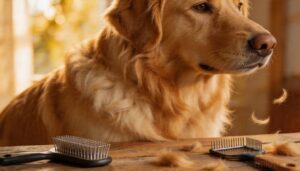
double coat isn’t just "more fur" — it’s actually two distinct layers doing completely different jobs. Understanding how they work together explains why shedding can feel so out of control and why most brushes don’t cut it.
Each layer has a specific role, and understanding how Beagles shed and why makes it much easier to stay ahead of the mess.
Here’s what sets double coats apart.
Undercoat Vs. Guard Hair Roles
Think of your dog’s coat as a two-layer system, each layer with its own job.
- The undercoat provides thermal insulation and moisture management, trapping air close to the skin.
- Guard hairs provide water repellency and UV shielding.
- Together, they balance warmth and protection.
- Seasonal shedding refreshes the undercoat naturally.
- Double coat maintenance means caring for both layers separately.
Their guard hairs have hollow medulla enhance insulation.
Why Double Coats Trap Loose Fur
Now that you know each layer has a job, it’s easier to see why loose hair doesn’t just fall away.
The dense undercoat structure acts as an airflow barrier — shed strands get caught between layers instead of dropping off. Moisture retention makes it worse, clumping loose hair near the skin.
| Why Fur Gets Trapped | What It Means for You |
|---|---|
| Catch point density | More snag spots for loose hair |
| Seasonal blowcoat build-up | Faster accumulation during spring/fall |
| Moisture retention | Damp fur mats quicker |
| Airflow barrier effect | Loose hair hides under guard hairs |
double coat maintenance needs an undercoat rake, slicker brush, or deshedding tool — not just any brush.
Breeds With Thick Double Coats
Some breeds carry far more undercoat than others. The Siberian Husky, Alaskan Malamute, Bernese Mountain Dog, Chow Chow, and Akita Inu are classic examples — all heavy shedders with dense, layered coats that demand the right tools.
For these double coat breeds, your brush selection guide starts with an undercoat rake, slicker brush, and deshedding tool working together.
Why Regular Brushes Often Fail
Regular brushes just aren’t built for the job. Bristle wear happens fast, and once those pins lose their spring, they glide over dense undercoat without grabbing anything.
Inadequate spacing between bristles traps knots instead of clearing them. Poor material durability means grips crack and ferrules loosen after a few months.
The result? Surface smoothing — but the thick underlayer stays packed, tangled, and ignored.
Brushes That Work Best
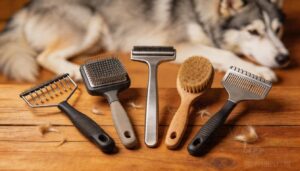
Not every brush is built for a double coat, and using the wrong one can feel like sweeping sand with a feather duster. The right tools actually reach the undercoat, pull out loose fur, and keep the topcoat healthy.
Here are the five brushes that get the job done.
Undercoat Rake for Dense Shedding
An undercoat rake is your first line of defense against heavy shedding.
Its Double Row Teeth and Curved Head Contours follow your dog’s body naturally, pulling loose undercoat without disturbing guard hairs.
Adjustable Pin Spacing lets you match the tool to coat density, while a Lightweight Aluminum Frame and Quick-Release Hair Tray keep sessions efficient.
For double-coated dogs, this deshedding tool makes undercoat maintenance manageable.
Slicker Brush for Topcoat Smoothing
Once the undercoat rake has done its job, a slicker brush steps in to finish things off. For double-coated dogs, this tool manages topcoat smoothing — and it does it well.
Its Pin Angle Optimization lets fine bent pins glide through outer fur without snagging. The Plate Curvature Impact follows your dog’s body naturally. A Self-Cleaning Retractor saves cleanup time.
Work it into your regular grooming schedule to keep the top coat polished:
- loose surface hairs that land on your couch
- Delivers an Oil Redistribution Boost, spreading natural oils evenly
- Applies a Friction Minimization Strategy to prevent frizz and breakage
- Detangles the outer coat after deeper raking
- Leaves a smooth, clean finish that actually lasts
Dog grooming doesn’t have to feel like a chore when your tools work with the coat, not against it.
Deshedding Tool for Blow Coat
When blow coat season hits, a deshedding tool like the FURminator Deshedding Tool becomes your best ally.
Its Blade Angle Optimization and Stainless Steel Teeth reach deep to reduce shedding without harming guard hairs.
The Ergonomic Handle Design keeps your grip steady, while the Self‑Cleaning Mechanism makes cleanup fast.
Build a simple Tool Maintenance Routine, and it’ll outperform any undercoat rake or slicker brush during peak shedding.
Wide-toothed Comb for Hidden Tangles
After you’ve worked through the coat with an undercoat rake, a wide-tooth comb is what catches what everything else misses.
Its Anti-Static Teeth and Flexible Tooth Angle make Accessing Deep Undercoat simple, while the Ergonomic Grip Design keeps your hand comfortable.
Use it to detangle fur and achieve Gentle Knot Release in a double coat — especially where tangling hides close to the skin.
Rubber Brush for Daily Touch-ups
Think of a rubber curry brush as your everyday maintenance tool — light, forgiving, and easy to clean. For double coat dogs, it earns a spot in any regular grooming schedule:
- Cushion Flexibility follows your dog’s body curves naturally.
- Skin Irritation Prevention through even, gentle pressure.
- Oil Distribution Boost keeps the coat naturally shiny.
- Quick Rinse Cleaning makes this pet grooming accessory nearly maintenance-free.
Durable rubber material resists rust, making brush selection simple.
Choose The Right Brush
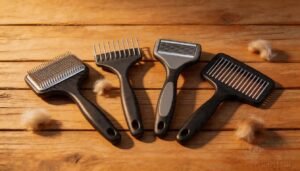
Not every brush works for every dog, and picking the wrong one makes grooming harder than it needs to be. A few key factors — coat thickness, dog size, and skin sensitivity — will point you to the right tool fast.
Here’s what to look for before you buy.
Match Tools to Coat Thickness
Not every brush works for every coat — and using the wrong one is like trying to rake wet leaves with a fork.
For thicker coats, an undercoat rake with longer pin length variation reaches deep without skipping layers.
A slicker brush suits lighter density.
Match bristle stiffness scale and coat density index together: stiffer bristles for denser fur, a wide-tooth comb for everything underneath.
Pick Brush Size by Dog Size
Size matters more than you’d think. A Small Dog Brush runs about 1–1.5 inches wide — enough coverage without overwhelming a tiny frame. Step up to a Medium Dog Brush (1.5–2 inches) for mid-sized breeds, then a Large Dog Brush at 2.5–3 inches for bigger bodies. An Extra Large Brush (3–4 inches) manages massive coats efficiently.
- Match brush width to your dog’s body surface area
- Factor in coat length alongside dog size — a longer coat needs better pin length ratio
- Use selecting brush size based on dog breed and coat length as your starting guide
- Pick an ergonomic handle that fits your hand comfortably
- Pair size with coat thickness for best results
Stainless Steel Pins Vs. Nylon Bristles
Beyond size, the material of your brush pins matters a lot. Stainless steel pins offer real pin durability — they resist rust, hold their shape through heavy shedding sessions, and power through dense undercoats without bending.
Nylon bristles bring bristle softness instead, bending gently to avoid skin irritation on delicate areas.
For double-coated dogs, stainless wins on cleaning ease and cost-effectiveness long-term.
Non-slip Handles and Hand Comfort
Handle comfort matters more than most people expect. A ergonomic handle shape keeps your wrist neutral, so sessions don’t leave your hand aching.
Look for TPE slip resistance and Grip Texture Patterns that stay grippy even when your hand gets damp.
Antimicrobial Grip Coating helps with hygiene, and proper Weight Distribution Balance means the brush feels natural — not like a workout.
Soft Options for Sensitive Skin
Some dogs just don’t love being brushed — and if your pup has reactive or delicate skin, the wrong tool makes it worse.
A Rubber Massage Glove distributes pressure evenly, while a Silicone Bristle Brush glides without pulling. Look for Hypoallergenic Materials and a Gentle Deshedding Blade for sensitive coats.
Eco-friendly bamboo shafts with nonslip grips keep skin irritation prevention front and center.
Prepare Your Dog for Brushing
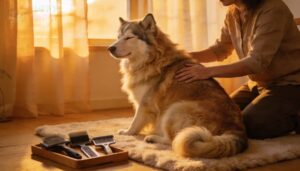
Before you even pick up a brush, a little prep goes a long way. Relaxed dog makes the whole session easier — for both of you.
Here’s what to do before you get started.
Pick a Calm Grooming Space
Where you groom matters as much as how you groom. quiet, clutter-free space with soft lighting and temperature stability between 60–75°F sets the tone for reducing grooming stress and anxiety. Noise minimization is essential — sudden sounds spike grooming anxiety fast.
Good spatial layout keeps tools within reach, and a pet-safe air purifier captures dander. Consistency is key: same spot, every time.
Start With Treats and Reassurance
Before you even pick up a brush, let your dog know this is safe. Offer a small, soft treat the moment you approach — that’s your Calm Treat Timing in action.
Use Gentle Voice Cues to stay steady and low. Watch for Body Language Signals like lip licking or wide eyes.
Safe Touch Initiation, paired with positive reinforcement, eases grooming anxiety and turns your dog grooming routine into genuine bonding.
Check Coat Condition Before Brushing
Before reaching for any brush, run your hands slowly through the coat.
You’re looking for a few key things: Odor Inspection catches any sour or yeasty smell that signals skin trouble, while an Oiliness Check reveals buildup that dulls the undercoat.
Feel for Skin Warmth, spot Tangled Fur Detection trouble zones, and do a quick Debris Identification sweep to protect both coat health and skin health.
Mist Coat Lightly if Needed
A dry, static-heavy coat can make brushing frustrating for both of you. Lightly misting your dog’s fur with water or a detangling spray before reaching for the undercoat rake or slicker brush improves surface absorption and helps detangle fur more easily.
Keep the dilution ratio light — just enough dampness to prevent matting and distribute natural oils. Topcoat compatibility matters too, so let it dry briefly before brushing.
Gather All Tools Before Starting
Before you even call your dog over, set up your prep station layout. Lay out your brush types — undercoat rake, slicker brush, and a self-cleaning brush design — on a non‑slip surface where everything stays put.
Keep a brush cleaning kit within reach so you’re not stopping mid‑session.
A solid tool checklist and good hand grip comfort make the whole process smoother.
Brush a Double Coat Step by Step
Now that your dog is calm and your tools are ready, it’s time to put them to work. Brushing a double coat isn’t complicated, but the order and technique really do matter.
Here’s how to work through it from start to finish.
Start at The Neck
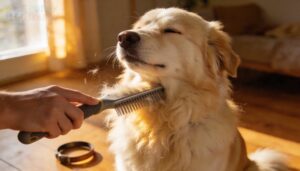
The neck is your starting point — and for good reason. It’s the most accessible area, and brushing here first helps you read your dog’s coat before working deeper. For double-coated dogs, the neck reveals shedding density fast.
Follow these neck-first steps:
- Early Mat Spotting — Lightly catches forming tangles before they tighten
- Neck Pressure Tips — Use gentle strokes; neck skin is thinner and more sensitive
- Collar Line Care — Brush around, never directly over, hardware to avoid snags
Use your undercoat rake with an ergonomic handle here, applying Hair Growth Alignment strokes downward toward the chest. Watch for Skin Fold Management around smaller dogs’ neck creases. Then follow with a slicker brush to smooth the topcoat before moving on.
Work in Hair-growth Direction
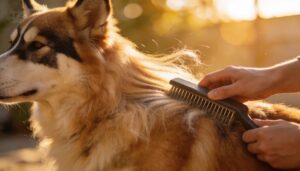
Once you’ve worked through the neck, keep that same rhythm going — always brushing with the grain, not against it.
Follicle angle alignment matters more than most people realize. Grain following strokes reduce breakage and help you detangle fur without fighting the coat.
Think of growth direction mapping as reading a map: sectional hair flow guides each pass, and directional pressure control keeps your slicker brush and undercoat rake gliding smoothly.
Use The Undercoat Rake First
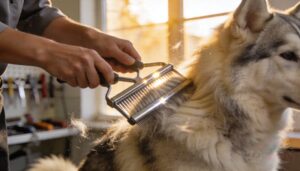
Now that you’re moving with the coat’s natural flow, grab your undercoat rake — this is where the real work begins.
Tools like the JW Pet GripSoft Double Row Undercoat Rake or FURminator Dog Grooming Rake reach past the guard hairs to pull loose undercoat out at the root.
Use a gentle stroke rhythm with careful pin angle control, and keep sessions short.
Bump your seasonal rake schedule to daily during blow coat for a real skin circulation boost.
Follow With a Slicker Brush
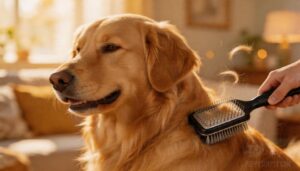
Once the rake has cleared the undercoat, your slicker brush takes over to smooth everything out.
Its bristle angle efficiency lets you glide across the topcoat without digging in — great for a post-bath smoothing pass too.
- Lifts remaining loose fur that the rake missed
- Delivers a real coat shine enhancement
- Boosts skin circulation with each stroke
- The self-cleaning function makes your brush cleaning routine quick
Finish With a Wide Comb
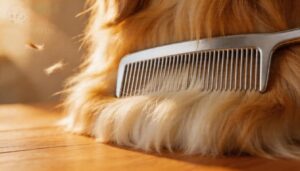
After the slicker brush, a wide-toothed metal comb is your final check. Use gentle comb strokes in the direction of directional hair flow to catch anything hiding near the skin. Comb pressure control matters here — light pressure works best.
Post-comb inspection tells you if any tangles remain. Keep your comb cleaning routine simple: remove fur, rinse, dry.
Use Gentle, Section-by-section Strokes
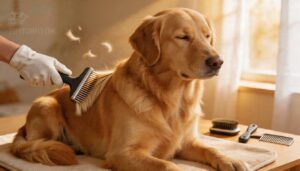
Think of each section as its own small task. Work a 2–4 inch area at a time, moving from neck to tail in steady, even passes.
- Section Timing — Pause between sections to check for loose fur and reset your grip.
- Brush Angle & Pressure Control — Keep a shallow angle with light, consistent pressure to detangle fur without scratching.
- Rhythm Breaks — Brief pauses protect skin sensitivity and keep your dog calm.
Keep Sessions Short and Consistent
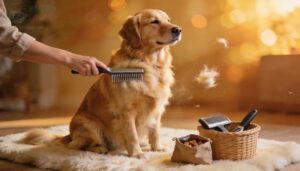
Short, frequent sessions beat one long marathon every time. Aim for 10–15 minutes, three times a week — and stick to it.
| Element | What to Do | Why It Helps |
|---|---|---|
| Timed Grooming Sessions | Set a consistent grooming schedule | Dog learns what to expect |
| Predictable Treat Schedule | Reward before restlessness sets in | Keeps cooperation high |
| Tool Cleaning Routine & Progress Checkpoints | Clean brush after each session; note problem areas | Faster, focused work next time |
short break intervals between sections, plus short strokes through the coat, make regular brushing something your dog tolerates — maybe even enjoys.
Handle Mats and Sensitive Areas
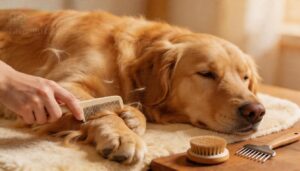
Mats and tender spots are where grooming gets tricky — and where most dog owners slow down for good reason. Some areas on your dog’s body need a gentler touch and a little more patience than the rest.
Here’s how to handle the spots that need extra care.
Check Behind Ears and Armpits
Behind the ears and under the armpits are where hidden ear mats love to hide.
Ear skin moisture builds up fast in those folds, and armpit odor can sneak in even on a freshly bathed dog.
Part the hair gently, watch for sensitive skin signs like redness or flakes, and always do a quick lymph node check — any swelling means stop and call your vet.
Brush Tail Base and Under Legs
The tail base and under legs are two spots that catch a lot of groomers off guard. The tail base curvature means fur lies at odd angles, and the under leg pocket traps moisture fast — both prime spots for mats and base skin irritation. Use your undercoat rake here with calm, upward strokes.
- Follow the joint fur direction — brush outward from the limb, not against it
- Switch to a slicker brush or self‑cleaning slicker brush to smooth the topcoat after raking
- Keep pressure light near the tail base; the skin is thinner than along the back
- Focus on moisture trapping prevention by clearing debris and damp fur from under leg folds
- An ergonomic handle gives you better control in tight spots around double‑coated dogs’ hind legs
Tease Knots From Tip to Base
Always work a knot from tip to base — never yank straight through from the root. Use a fine-tooth comb to tease the very ends first, then slowly work inward.
Section isolation keeps surrounding fur out of the way.
A quick mist of detangling spray reduces friction considerably.
Finish with a slicker brush using gentle vertical motions, then do a quick skin irritation check underneath.
Use Lighter Pressure on Thin Skin
Thin skin areas — ears, armpits, belly, and inner thighs — need a light touch technique that many owners underestimate.
Identify sensitive zones before you start, then adjust your brush angle slightly flatter so the pin brush glides through the undercoat instead of scraping skin.
Use a gentle stroke rhythm, monitor comfort signals like flinching, and keep pressure minimal.
This protects natural oils and promotes long-term skin health.
When to Use a Dematting Comb
Once gentle pressure isn’t enough, that’s your cue to reach for a dematting comb. Use it when deep fur knots or dense undercoat mats span multiple strand tangles that a slicker brush simply can’t separate.
high friction areas like armpits and chest are prime spots.
The Hertzko Dog Cat Dematting Comb and Safari DeMatting Dog Comb both work well on double-coated dogs — work in short, five-minute intervals.
When Stubborn Mats Need Extra Caution
Some mats go beyond what a dematting comb can fix alone. If the mat feels tight against the skin or traps moisture underneath — that’s mat moisture management territory, and aggressive brushing will only cause pain.
Watch for pain indicator monitoring signs: flinching, growling, or pulling away.
Apply tool lubrication using a detangling spray, then follow a sectional brushing strategy using the Safari DeMatting Dog Comb in short passes.
If skin looks red or raw, that’s your emergency vet consultation moment — don’t push through it.
Set a Shedding Season Routine
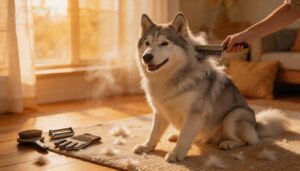
Shedding season can feel like a losing battle, but having a solid routine makes all the difference. Your dog’s coat needs more attention during spring and fall blow coat, and a few consistent habits will keep things manageable.
Here’s what a good shedding season routine looks like.
Weekly Brushing in Normal Periods
Outside of shedding season, a weekly schedule keeps undercoat build-up control manageable before it becomes a real problem. Stick to this simple Coat Maintenance Schedule:
- Use an undercoat rake for undercoat removal
- Follow with your preferred brush types to smooth the topcoat
- Finish with a wide comb for Skin Health Checks
Regular brushing with a gentle pressure technique keeps everything balanced.
Daily Brushing During Coat Blow
When coat blow hits, daily grooming becomes your best tool. Switch from weekly sessions to brushing every day — a double coat dog brush, like the FURminator Deshedding Tool, pulls loose undercoat fast, giving you real Hair Loss Reduction within two weeks.
Daily strokes support Oil Distribution and Skin Circulation Boost naturally.
Stress Free Sessions with smart Timing Strategy keep your dog cooperative.
Bathing and Drying Before Deshedding
Before you reach for any deshedding tool, bath time sets the stage.
Lukewarm Bath Water loosens debris and relaxes the coat so hair releases more easily.
A Complete Shampoo Rinse prevents residue buildup that causes dryness.
Towel Drying Technique removes surface water first, then Warm Airflow Drying — using drying techniques for thick coats — fully separates the layers.
Dry Coat Prep makes drying and brushing far more effective.
Leave-in Sprays for Easier Brushing
A good detangling spray or leave-in conditioner can change your brushing sessions completely. These sprays offer Slip Enhancement that helps your brush glide through without tugging.
Look for a Skin Soothing Formula with Fragrance-Free Options if your dog has sensitive skin.
A Hydration Boost formula promotes coat health year-round, while Odor Control blends keep your double coat dog smelling fresh between baths.
Why Shaving Double Coats is Harmful
Shaving might seem like a quick fix for shedding, but it causes real harm to doublecoated dogs. Removing the undercoat and top coat triggers Temperature Regulation Loss, leaving your dog vulnerable to both heat and cold.
Shaving a double-coated dog doesn’t reduce shedding — it destroys the coat’s ability to regulate temperature
You also risk Sun Protection Reduction, Skin Barrier Compromise, Waterproofing Decline, and Uneven Coat Regrowth.
Let the natural oils and coat structure do their job.
Nutrition That Supports Coat Health
What your dog eats shows up in their coat.
A protein-rich diet gives hair follicles the keratin building blocks they need, while Omega-3 supplementation — especially fish oil — keeps skin from drying out between brushing sessions.
Zinc-rich foods support skin renewal, biotin enrichment aids keratin production, and antioxidant vitamins protect against cell damage.
A high-quality diet genuinely makes grooming easier.
Top 9 Brushes for Double-Coated Dogs
Not every brush pulls double-coat duty well, so the right pick really does matter. These nine tools cover everything from daily maintenance to peak shedding season, with options for every coat type and dog size.
Here’s what’s worth keeping in your grooming kit.
1. Hartz Dual Side Grooming Brush
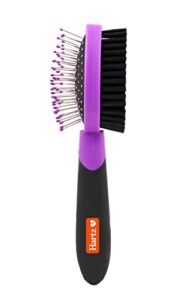
The Hartz Dual Side Grooming Brush pulls double duty without doubling your effort. One side holds stainless-steel pins with protective tips for detangling and lifting loose fur. Flip it over and the nylon bristles redistribute natural oils for a healthy shine.
It’s compact and lightweight — easy to handle during short sessions — making it a solid pick for cats and small-to-medium dogs. Just know that dense undercoats on larger breeds may need more passes to get fully through.
| Best For | Cat owners and small-to-medium dog owners who want a simple, everyday grooming tool that handles shedding and coat health in one brush. |
|---|---|
| Handle Material | Metal |
| Coat Suitability | All coat types |
| Shedding Reduction | Yes |
| Skin Safety | Protective pin coating |
| Pet Compatibility | Cats and dogs |
| Cleaning Method | Manual |
| Additional Features |
|
- Two sides in one — steel pins detangle while nylon bristles spread natural oils for a healthier-looking coat
- Lightweight and easy to grip, so short grooming sessions stay stress-free for you and your pet
- Small enough to toss in a bag and use on furniture or clothing when pet hair gets out of hand
- Straight pins don’t dig deep into thick undercoats, so heavy shedders will need a lot more passes
- The nylon bristle side clogs up fast and is a pain to clean after repeated use
- Too small for large dogs, and it won’t do much against seriously matted fur
2. JW Pet GripSoft Double Row Undercoat Brush
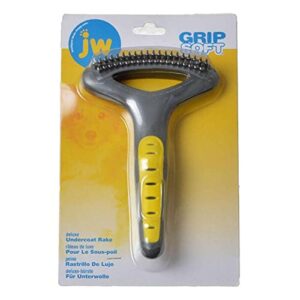
Two rows of round-tipped teeth — that’s the quiet advantage of the JW Pet GripSoft Double Row Undercoat Brush. double-row design lifts dead undercoat efficiently while leaving your dog’s guard hairs undisturbed.
The teeth sit at 90 degrees from the skin, so you’re not raking sensitive areas.
Its rubber-sheathed GripSoft handle keeps your hand steady through longer sessions without fatigue.
Best suited for medium to large breeds like Huskies or German Shepherds, it’s gentle enough for frequent use.
| Best For | Medium to large dog owners — think Huskies, German Shepherds, and Golden Retrievers — who want a gentle, affordable tool for keeping heavy shedding under control. |
|---|---|
| Handle Material | Plastic |
| Coat Suitability | Dense undercoat |
| Shedding Reduction | Yes |
| Skin Safety | Round-tipped teeth |
| Pet Compatibility | Dogs only |
| Cleaning Method | Manual |
| Additional Features |
|
- The double row of round-tipped teeth pulls out dead undercoat without roughing up the top coat, so your dog’s fur stays looking neat.
- The ergonomic handle is comfortable to hold, even during longer grooming sessions — no hand cramps mid-brush.
- It’s gentle enough to use regularly, which means less fur on your couch and fewer mats to deal with down the road.
- The shorter teeth can snag on really dense patches, so you may need to slow down and use a lighter touch in those spots.
- It’s not a great fit for small or toy breeds — the brush head is just too big and the teeth too coarse for dogs under 20 lbs.
- The plastic handle gets the job done, but it might not feel as sturdy as metal alternatives if you’re grooming a heavy shedder every single day.
3. FURminator Dog Undercoat Deshedding Brush
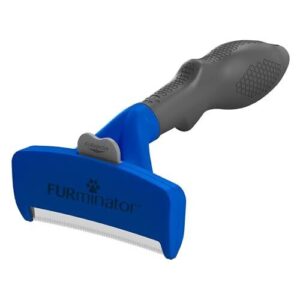
If you want serious shedding control, the FURminator Dog Undercoat Deshedding Brush is hard to beat. Its stainless-steel deShedding edge reaches through the topcoat and pulls loose undercoat without cutting guard hairs or scratching skin.
The built-in FURjector button releases collected hair with one press — no picking clumps off the teeth by hand.
It’s sized for large dogs over 50 lbs, and with regular use, it can cut visible shedding by up to 90 percent.
| Best For | Large dog owners (50+ lbs) with heavy shedders who want to cut down on fur around the house without irritating their dog’s skin. |
|---|---|
| Handle Material | Metal |
| Coat Suitability | Long hair |
| Shedding Reduction | Yes, up to 90% |
| Skin Safety | No skin cutting |
| Pet Compatibility | Dogs only |
| Cleaning Method | FURjector button |
| Additional Features |
|
- The stainless-steel edge digs into the undercoat and pulls loose hair before it ends up on your couch — up to 90% less shedding with regular use.
- The FURjector button clears the collected hair in one click, so cleanup is quick and painless.
- Gentle enough for sensitive skin — it won’t cut guard hairs or leave scratches.
- Only works well on large, long-haired dogs — if your pup is small or short-haired, this isn’t the right tool.
- You have to use a light touch; pressing too hard can irritate the skin or cause minor scratching.
- The metal head picks up dander fast and needs a good cleaning after every session.
4. Burt Bees Double Sided Dog Brush
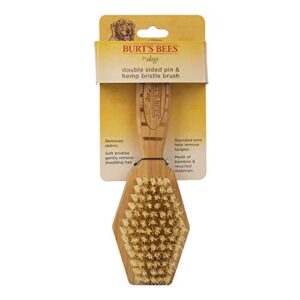
Not every grooming session calls for heavy-duty tools. The Burt Bees Double Sided Dog Brush is a gentler option — bamboo handle, rounded metal pins on one side, hemp bristles on the other.
The pin side loosens tangles and lifts debris without scratching. Flip it over, and the hemp bristles smooth the topcoat while distributing natural oils for a healthy shine.
It’s lightweight and eco-friendly, making it a solid everyday brush for medium-coated dogs or lighter maintenance days.
| Best For | Medium-coated dogs and eco-conscious pet owners who want a gentle, everyday brush for light detangling and coat maintenance. |
|---|---|
| Handle Material | Bamboo |
| Coat Suitability | Medium to large |
| Shedding Reduction | Yes |
| Skin Safety | Rounded metal pins |
| Pet Compatibility | Dogs and cats |
| Cleaning Method | Manual |
| Additional Features |
|
- Dual-sided design handles both detangling (pin side) and smoothing (hemp bristles) in one tool
- Bamboo and hemp construction makes it one of the more sustainable grooming options out there
- Lightweight and gentle enough for brush-averse dogs or those with sensitive skin
- Small brush head means more passes for bigger, fluffier dogs
- Hemp bristles tend to trap hair, so cleaning it takes a little extra effort
- Not the right tool for heavy shedders — you’ll likely need something more heavy-duty alongside it
5. Hertzko Self Cleaning Pet Grooming Brush
Sometimes you want something even simpler.
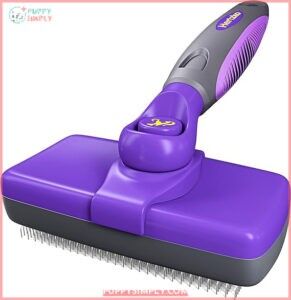
The Hertzko Self Cleaning Pet Grooming Brush keeps things quick and tidy — fine angled metal bristles handle loose fur and light tangles, while the push-button retraction drops the collected hair without you digging through bristles.
At $15.99, it’s budget-friendly and easy to hold.
It works well for routine touch-ups on dogs and cats alike.
Just know it’s better for maintenance brushing than tackling a full blow-coat session.
| Best For | Pet owners who want a no-fuss, everyday brush for light shedding and coat maintenance on dogs or cats. |
|---|---|
| Handle Material | Plastic |
| Coat Suitability | Long and short |
| Shedding Reduction | Yes |
| Skin Safety | Soft angled bristles |
| Pet Compatibility | Dogs and cats |
| Cleaning Method | Self-cleaning button |
| Additional Features |
|
- Push-button cleaning clears the bristles in seconds — no picking out hair by hand.
- Soft angled bristles are gentle enough for sensitive pets while still grabbing loose fur.
- At $15.99, it’s an easy buy that won’t stress your wallet.
- The retract button can feel clunky and may not hold up well with heavy daily use.
- Less effective on very short-coated breeds and can irritate skin if you press too hard.
- Heavy shedders will find it slow going — it picks up hair in small batches, so thick blow-coats take a while.
6. FURminator Dog Cat Grooming Rake
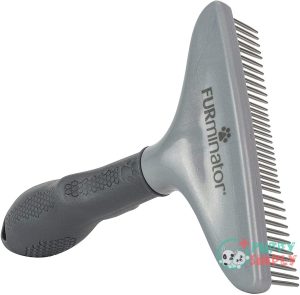
If your dog has a particularly dense undercoat, the FURminator Dog Cat Grooming Rake is worth a close look. Its rotating stainless-steel teeth reach past the topcoat to pull out loose undercoat without snagging guard hairs.
The rounded tooth edges keep skin irritation to a minimum, and the ergonomic non-slip handle gives you real control during longer sessions.
At $8.99, it’s an easy addition to your grooming kit for dogs and cats with thick, double-layered coats.
| Best For | Dogs and cats with thick, double-coated or long fur — especially breeds like German Shepherds, Huskies, and Shih Tzus that shed heavily. |
|---|---|
| Handle Material | Plastic |
| Coat Suitability | Double or long coat |
| Shedding Reduction | Yes |
| Skin Safety | Rounded tooth edges |
| Pet Compatibility | Dogs and cats |
| Cleaning Method | Manual |
| Additional Features |
|
- Rotating stainless-steel teeth dig into the undercoat and pull out loose hair without catching the topcoat.
- Rounded edges make it gentle enough for regular use without irritating your pet’s skin.
- At $8.99, it’s a solid, budget-friendly grooming tool that gets the job done.
- Not self-cleaning — you’ll need to pull the hair off the teeth manually after each use.
- Too much pressure can cause discomfort, so you have to stay mindful with sensitive pets.
- Won’t work well on short or fine-coated animals — it’s really built for dense, thick fur.
7. Hertzko Double Sided Pet Dematting Comb
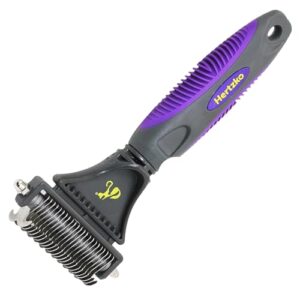
Mats don’t stand much of a chance against the Hertzko Double Sided Pet Dematting Comb. One side handles stubborn knots with wider-spaced teeth, while the finer side thins and desheds once the tangles are gone.
You won’t need to swap tools mid-session, which keeps things moving smoothly. The non-slip handle stays secure even when your hands are tired, and the rounded stainless-steel teeth work without scratching skin.
At $13.99, it’s a practical pick for thick double coats.
| Best For | Pet owners with dogs or cats that have thick, long, or double coats prone to heavy matting. |
|---|---|
| Handle Material | Plastic |
| Coat Suitability | All coat lengths |
| Shedding Reduction | Yes |
| Skin Safety | Safety-rounded teeth |
| Pet Compatibility | Dogs and cats |
| Cleaning Method | Manual |
| Additional Features |
|
- Dual-sided design handles both tough mats and light shedding without needing a second tool.
- Non-slip ergonomic handle makes longer grooming sessions way more comfortable.
- At $13.99, it’s an affordable option that works for both cats and dogs.
- Hair clears the teeth fast, so you’ll need to stop and clean it every few strokes.
- Not great for very fine or short coats — think Yorkies or some labradoodles.
- Too much pressure can cause pulling, so you have to keep your strokes light and gentle.
8. Coastal Pet Safari Dematting Comb
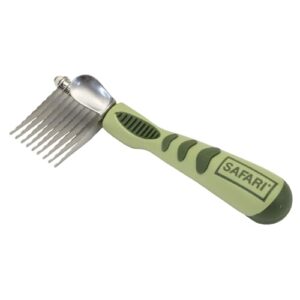
The Coastal Pet Safari Dematting Comb is built for the tough jobs. Its serrated stainless-steel teeth cut through heavy mats instead of yanking at them, which makes a real difference on long, coarse coats.
It works well on breeds like Goldendoodles and long-haired retrievers, especially after a romp through burrs or brush.
At $13.99, it’s an affordable tool to keep handy. Just go slow, use multiple shallow passes, and always keep the protective cover on between sessions.
| Best For | Dog owners with medium-to-long or coarse-coated breeds like Goldendoodles, Bernedoodles, or long-haired retrievers who deal with heavy matting and tangles. |
|---|---|
| Handle Material | Plastic |
| Coat Suitability | Medium to long |
| Shedding Reduction | Yes |
| Skin Safety | Protective cover included |
| Pet Compatibility | Dogs only |
| Cleaning Method | Manual |
| Additional Features |
|
- Serrated stainless-steel teeth cut through tough mats instead of yanking, making grooming way less stressful for your dog
- Works across small, medium, and large dogs, so it’s versatile enough to handle the whole household
- At $13.99, it’s a genuinely affordable tool that punches above its price
- The teeth are seriously sharp — one slip and you can cut your hand, so careful handling is a must
- Left-handed users will find the grip awkward and a bit of a hassle to adapt
- Fine tangles can slip through the tooth spacing, so you’ll still need a regular brush for finishing work
9. Coastal Pet Safari Self Cleaning Slicker Brush
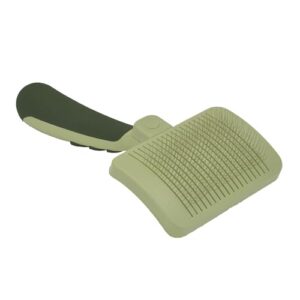
Finishing up a grooming session has never been easier than with the Coastal Pet Safari Self-Cleaning Slicker Brush.
Its retractable stainless-steel pins pull loose hair from the topcoat, and one push of the button drops the collected fur right off — no picking, no fuss.
The non-slip handle keeps your grip steady even mid-session.
It works best on short to medium coats and sensitive skin.
At a budget-friendly price, it’s a smart everyday brush for maintaining that polished, tangle-free finish between deeper grooming sessions.
| Best For | Dog owners who want a quick, easy-to-clean brush for regular maintenance grooming on short to medium coats. |
|---|---|
| Handle Material | Plastic |
| Coat Suitability | Short to long |
| Shedding Reduction | Yes |
| Skin Safety | Minimizes skin irritation |
| Pet Compatibility | Dogs only |
| Cleaning Method | Self-cleaning button |
| Additional Features |
|
- The self-cleaning button drops collected hair in seconds — no picking fur out of the bristles by hand.
- Stainless-steel pins are gentle enough for sensitive skin and work well on a range of coat types.
- The non-slip handle makes it easy to hold steady, even during longer grooming sessions.
- Too aggressive with pressure and the sharp pins can irritate or nick thin, delicate skin.
- Struggles with very short or tightly-packed fur — it just doesn’t grab well.
- The pins can bend or shift out of place over time with regular use.
Frequently Asked Questions (FAQs)
What not to do with double coated dogs?
Don’t cut corners — or coats. Avoid shaving, skipping undercoat removal, overbathing, using wrong tools, and brushing through mats. Each mistake traps moisture, damages coat texture, or irritates skin.
How do groomers deshed a dog with a double coat?
Groomers start with a bath to loosen dead hairs, blow-dry with high velocity air to push out undercoat, then work section by section using a rake, slicker, and wide comb.
How often should you bathe a double-coated dog?
Bathe your double-coated dog every 6 to 10 weeks. Bathing too often strips natural oils and dries out the skin.
If your dog stays clean and you brush regularly, that schedule works well.
Can grooming reduce dog allergies in your home?
Yes, grooming can help. Regular brushing removes loose, dander-carrying fur before it spreads through your home.
It won’t eliminate allergens completely, but it’s one of the most practical steps you can take.
At what age should puppies start regular brushing?
Start them young — ideally at 8 weeks old. Even brief 1–2 minute sessions build comfort and routine before shedding ramps up around 6 months, when brushing becomes truly essential.
Do professional groomers charge more for double coats?
Most professional groomers do charge more for double coats — usually 30 to 50 percent above a standard groom. The extra time, specialized tools, and deshedding work all factor into that higher price.
Should you brush before or after a walk?
Both work, but timing matters.
Brush after a walk if your dog rolled in debris or is damp.
Brush before if you want to loosen fur before outdoor activity stirs it up.
Conclusion
With every brush stroke, you’re not just grooming your dog, you’re strengthening your bond. Mastering the best way to brush a double coat dog takes patience, practice, and the right tools.
As you work through tangles and shed fur, remember that a well-brushed coat is a happy coat. Your dog will thank you for the extra effort, and so will your furniture.
With these tips, you’re on your way to a stress-free grooming routine.
- https://pangovet.com/talk-to-a-vet-online-dog-preventative-wellness/?utm_source=dogster&utm_medium=article&utm_campaign=dog-preventative-wellness&utm_content=best-brushes-for-double-coated-dogs
- https://dosty.co/en/blog/article/double-coated-breeds-managing-shedding-and-grooming-challenges
- https://digital.groomertogroomer.com/issue/march-2024/a-deeper-dive-into-defining-the-double-coat/
- https://www.k9anytime.com/single-post/the-double-coated-dog-who-is-it-and-how-to-care-for-them
- https://enviroliteracy.org/why-you-should-never-shave-a-double-coated-dog/