
This site is supported by our readers. We may earn a commission, at no cost to you, if you purchase through links.

Most dog owners brush their dog when the fur situation gets out of hand—clumps on the couch, tangles behind the ears, a coat that’s lost its shine. But brushing isn’t a rescue mission.
It’s maintenance, and the schedule that works for a Labrador will leave a Bernese Mountain Dog in knots within days.
Coat type, shedding cycles, age, and even where your dog sleeps all change how often the brush needs to come out.
Get the frequency right, and you’re doing more than managing fur—you’re catching skin problems early, keeping oils distributed, and making grooming something your dog actually tolerates.
Table Of Contents
- Key Takeaways
- Why Regular Brushing Matters
- How Often Should You Brush Your Dog?
- What Changes Brushing Frequency?
- Which Brush Should You Use?
- How Should You Brush Correctly?
- When Should You Brush More Carefully?
- Frequently Asked Questions (FAQs)
- How often should I brush my dog?
- How much brushing does a dog need?
- How often should a short haired dog be brushed?
- Should you increase your dog’s brushing routine?
- What is the 7 7 7 rule for dogs?
- Can brushing help reduce my dogs anxiety?
- How long should each brushing session last?
- Is it safe to brush a wet dogs coat?
- What treats work best during grooming sessions?
- How do I brush a dog that wont sit still?
- Conclusion
Key Takeaways
- Brushing frequency isn’t one-size-fits-all — short-haired dogs need once a week, long-haired breeds need three to four times a week, and double-coated dogs like Huskies do best with two to three sessions.
- Every brushing session doubles as a health check, letting you catch fleas, ticks, skin bumps, and early mats before they turn into real problems.
- Using the wrong brush can damage your dog’s coat or cause discomfort — rubber curry brushes suit short coats, slicker brushes handle long coats, and undercoat rakes are essential for dense double coats.
- During spring and fall shedding seasons, you’ll need to brush daily for six to eight weeks to stay on top of the blowout and keep loose fur under control.
Why Regular Brushing Matters
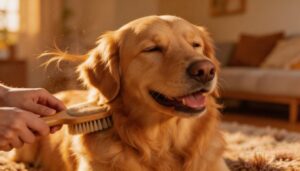
Brushing your dog does a lot more than keep their coat looking nice. It’s one of the simplest ways to support their overall health, and the benefits add up quickly.
Using the right dog hair brushing techniques for your pup’s specific coat type makes every session more effective and far less stressful for both of you.
Here’s what regular brushing actually does for your dog.
Reduces Loose Hair and Household Shedding
Every time you brush your dog, you’re pulling loose hair out before it lands on your couch or floors. Using a deshedding brush during seasonal de‑shedding periods — especially for different coats with thick undercoats — dramatically reduces shedding around your home.
Pair that with furniture covers, solid vacuum techniques, air filtration, and bathing products designed to loosen coat, and you’ll manage brush frequency by coat type far more effectively.
FURminator shedding reduction can be as high as 90%.
Prevents Mats, Tangles, and Skin Irritation
Beyond shedding, regular brushing is your best defense against matting and tangling. Mats pull tight against the skin, trapping moisture and causing real skin irritation.
A consistent mat detection routine — checking hotspot friction areas like the armpits and behind the ears — catches early knots before they worsen.
Use detangling products for moisture control between grooms, and adjust brushing frequency to your dog’s coat type.
Spreads Natural Oils Through The Coat
Brushing doesn’t just tidy the coat — it moves sebum, your dog’s natural skin oil, from root to tip. That oil distribution is where real benefits stack up:
- Shine Enhancement – Even coverage makes the coat glossier and smoother.
- Moisture Retention & Barrier Protection – Natural oils in your dog’s coat resist dryness and environmental dryness defense.
- Elasticity Boost – Conditioned strands tangle less and feel softer.
When the brush reaches all the way down to the skin, every stroke counts.
Helps Spot Fleas, Ticks, Bumps, or Wounds Early
Each grooming session doubles as a full skin inspection. As you work through the coat, you’re doing tick detection, flea dirt checks, and bump palpation all at once.
Ticks hide near thin-skin spots like ears and underarms — they feel like small, firm lumps.
Flea dirt looks like black specks that turn reddish when wet.
Early wound spotting prevents minor scrapes from becoming real problems.
Supports Healthier Skin and Coat Growth
Regular brushing does more than tidy up your dog’s coat — it actively promotes healthy skin by stimulating circulation and spreading natural sebum. That oil layer is your dog’s built-in skin hydration strategy.
Combine consistent brushing with high-quality protein, omega-3 fatty acids, zinc supplementation, and proper vitamin and mineral balance, and you’re giving your dog’s skin and coat everything it needs to truly thrive.
How Often Should You Brush Your Dog?
The right brushing schedule really comes down to your dog’s coat type. A Beagle and a Husky have very different needs, and treating them the same way won’t work.
Here’s a simple breakdown by coat type so you know exactly what your dog needs.
Short-haired Dogs: at Least Once a Week
Short-haired breeds like Beagles and Boxers don’t demand much — brush once a week, and you’re covered. That single weekly session takes care of shedding control, coat shine tips, and owner bonding all at once.
It’s also your built-in grooming checklist moment: check for fleas, feel for bumps, and keep brush cleaning simple. For shorthaired dogs, brushing frequency by coat type really is this straightforward.
Long-haired Dogs: 3 to 4 Times Weekly
Long-haired dogs need brushing every 2 to 3 days — three to four times weekly keep things manageable. Breeds like Golden Retrievers and Shih Tzus tangle fast, especially in trouble spots:
- Behind the ears (Ear Hair Management)
- Around the tail base (Tail Base Care)
- Under the legs where friction builds
Follow dog coat brushing frequency guidelines: brush in the direction of hair growth, use Detangling Spray on knots, and treat each session as an Owner Bonding moment that also helps Home Air Quality by reducing loose hair indoors.
Double-coated Dogs: 2 to 3 Times Weekly
Double-coated dogs — think Huskies and German Shepherds — carry two layers of fur, and that dense undercoat sheds constantly. Brush every 2 to 3 days to stay ahead of it.
| Coat Layer | Tool | Frequency |
|---|---|---|
| Outer coat | Slicker brush | 2–3x weekly |
| Undercoat | Undercoat Rake Usage | 2–3x weekly |
| Problem areas | Wide-tooth comb | As needed |
Following dog grooming frequency guidelines and double coat care standards also give you regular chances for Skin Health Monitoring — catching bumps or irritation early.
Heavy Shedding Seasons: Brush Daily if Needed
Spring and fall are the big ones. Most dogs blow their coat in April–May and again in September–October — classic shedding seasons where a 2–3x weekly routine simply won’t cut it.
Ramp up to a Daily Brush Routine during these 6–8 week windows. It’s your best tool for shedding management, Pet Allergy Mitigation, and Grooming Stress Reduction — for both of you.
Curly or Low-shedding Coats: Weekly to Daily
Curly-coated and nonshedding dogs don’t shed much, but that doesn’t mean they’re low-maintenance.
Brushing frequency for these coats runs from brushing once a week to brushing once a day, depending on hair length. Curl Preservation and Frizz Control both depend on careful, section-by-section brushing.
Mat Detection Zones, like behind the ears first.
leave-in conditioner — Conditioning Frequency and Wet Grooming Tips make a real difference.
Wire-coated Dogs: Weekly Brushing Plus Hand-stripping Every 6 to 8 Weeks
Wire-coated dogs like Schnauzers and Westies need a different two-part approach. Brush once a week to clear loose surface hair and keep tangles from forming.
Then, every 6 to 8 weeks, hand stripping removes dead strands and preserves that signature Wire Coat Texture. Without regular hand stripping, the coat softens and loses its rough feel.
When in doubt, a Groomer Consultation keeps everything on track.
What Changes Brushing Frequency?
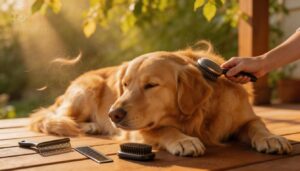
Coat type is only part of the picture. Several other factors can push your brushing schedule up or down, sometimes considerably. Here’s what actually drives the frequency your dog needs.
Coat Length and Texture
Coat length and texture directly shape how often you need to brush.
Shorthaired dogs stay tangle-free longer thanks to low surface friction, while longhaired dogs face real length distribution challenges — longer fur collects debris and knots faster.
Curl shape makes curly coat grooming especially demanding, since tight loops trap loose hair near the skin.
Hair thickness matters too: finer textures tangle quickly, making brush frequency by coat type a practical necessity, not a preference.
Shedding Level and Undercoat Thickness
Shedding level ties directly to undercoat density. Double-coated breeds like Huskies carry a thick insulating layer that follows genetic shedding patterns — when seasonal blowout timing hits, triggered by daylight shifts and temperature changes, that undercoat releases fast.
Undercoat trapping issues make things worse: loose hair gets packed beneath the topcoat. During heavy shedding seasons, daily use of an undercoat rake keeps grooming frequency recommendations realistic and your floors cleaner.
Breed-specific Grooming Needs
Beyond undercoat density, your dog’s breed shapes the whole grooming picture. A Bulldog needs regular facial fold hygiene and paw pad grooming — skin folds trap moisture quickly. Spaniels demand ear canal care and tail brush prevention. Schnauzers need muzzle hair trimming to stay tidy.
- Brush frequency by coat type matters, but anatomy matters too
- How often to brush short-coated dogs differs from double-coated dogs
- How often to brush wire-coated dogs includes hand‑stripping, not just brushing
Age-related Coat Changes
As your dog ages, their coat quietly changes. Puppy coats give way to adult fur, and senior dogs often face a thinning coat, grey hair around the muzzle, dry skin, and increased matting — especially in low-mobility areas. Slower hair growth means buildup lingers longer between sessions.
| Age Stage | Common Coat Change | Adjust Your Schedule |
|---|---|---|
| Puppy | Soft, fine texture | Short daily sessions |
| Adult | Full density | Breed-standard frequency |
| Senior | Thinning, dryness, mats | 2–3 times weekly minimum |
Dog grooming schedule for seniors should prioritize gentle, consistent sessions. Dog coat maintenance and dog grooming frequency by breed still apply — but age adds nuance. Updated guidelines for brushing frequency by breed and coat type keeps your senior comfortable, mat-free, and easier to monitor skin-to-skin.
Indoor Lifestyle and Household Shedding Control
Indoor dogs shed just as much — you just notice it more on your couch. hair collects faster on furniture, bedding, and carpets.
Bump up your dog grooming schedule and brush frequency by coat type during shedding seasons. Pair sessions with an undercoat rake to prevent mats, then layer in Vacuuming Strategies, HEPA Filtration, Bedding Laundering, Humidity Management, and Hotspot Cleaning for real control.
Skin Conditions, Allergies, or Mobility Issues
When your dog has allergies or inflamed skin, brushing frequency guidelines shift fast. Aggressive strokes spread allergens and worsen irritation, so gentle, controlled passes become your new standard for allergy skin care and skin health maintenance.
For mobility-friendly brushing with senior dogs, keep sessions short — two to three times weekly. Always use each session as parasite inspection time, and never force painful mat removal on reactive skin.
Which Brush Should You Use?
The right brush makes a bigger difference than most people realize. Using the wrong one won’t just miss the mark — it can actually cause discomfort or damage your dog’s coat over time.
Here’s a breakdown of which tools work best for each coat type.
Rubber Curry or Bristle Brushes for Short Coats
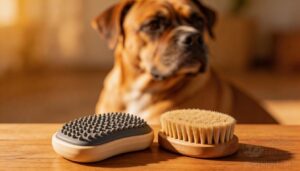
For shorthaired breeds like Beagles and Boxers, two tools cover almost everything.
A rubber curry brush loosens dead hair and massages the skin with every stroke — boosting circulation without scratching.
Follow it with a bristle brush to smooth the coat and distribute natural oils.
Both clean up quickly, and the ergonomic grip design keeps sessions quiet, calm, and comfortable for your dog.
Slicker and Pin Brushes for Long Coats
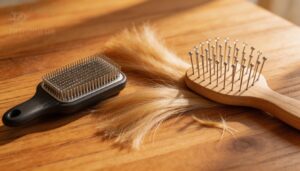
Long coats need two tools working together. A slicker brush uses fine metal bristles to break up mats and pull dead undercoat loose. A pin brush — especially long pin variants — glides through the outer layer without harsh tugging.
For long-coated dogs, grooming brush selection matters as much as brushing frequency. Self-cleaning mechanism models and ergonomic handle design make the whole maintenance schedule noticeably easier.
Undercoat Rakes for Double-coated Breeds
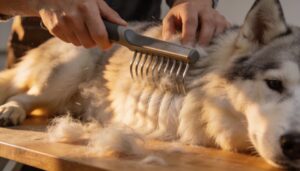
Double-coated breeds like Huskies and German Shepherds carry a dense insulating layer that standard brushes simply can’t reach. That’s where an undercoat rake earns its place.
Fine curved teeth with 1–2 mm spacing and a penetration depth of 6–12 mm pull loose fibers from deep without scratching skin.
An ergonomic handle reduces hand fatigue, and a modular head makes your cleaning protocol simple.
During shedding seasons, this tool is non-negotiable.
Wide-tooth Combs for Detangling Problem Areas
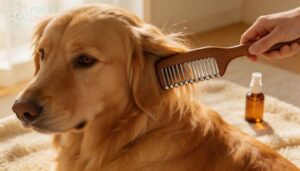
Once the rake pulls that loose undercoat free, you’ll often find stubborn tangles hiding near the ears, collar area, or legs.
That’s where a wide-tooth comb steps in.
Tooth spacing benefits include gliding through knots without yanking, and rounded tips protect the skin.
Pair it with a detangling spray to prevent mats before they tighten.
Ergonomic handle design and material durability make a real difference during longer sessions.
Slicker or Pin Brushes for Curly Coats
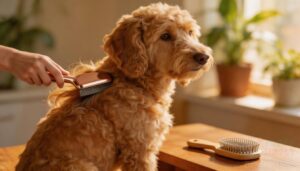
Curly coats — think Poodles or Labradoodles — need a smart tool combination strategy to stay mat-free.
- Use a slicker brush to reach tangles near the skin without flattening curl pattern preservation.
- Follow with a pin brush to smooth the outer layer and distribute oils.
- Apply gentle pressure control tips: short strokes, no digging.
Always brush in the direction of the fur’s growth.
Stripping Tools for Wire-coated Dogs

Wire-coated dogs like Schnauzers and West Highland Terriers need handstripping, not just brushing. Stripping knives with heat-treated, antistatic blades are your go-to for wire coat care — tool material choice matters here.
Use the sectional stripping method, holding skin taut and following hair growth. Blade angle technique keeps it comfortable.
Maintain your tools, and consider safety gloves usage when handling sharper blades.
Grooming frequency guidelines suggest every 6–8 weeks.
How Should You Brush Correctly?
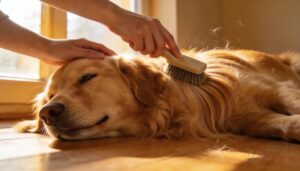
Knowing how often to brush is only half the equation — technique matters just as much. small adjustments to how you hold the brush and where you start can make the whole session easier on your dog.
Here’s what to do.
Brush in The Direction of Hair Growth
Always brush in the direction of your dog’s fur growth — this simple grain alignment benefits everything from oil distribution efficiency to skin comfort. Following the natural lay reduces tangling, keeps the coat smooth, and moves sebum evenly along each hair shaft.
Your dog’s coat isn’t uniform, though. Direction changes at the armpits, neck, and legs, so adjust your brushing technique as you go.
Work in Sections From Legs Upward
Starting at the legs gives you a smart body control strategy right from the first stroke. Work in sections — one front leg, then the other, then up to the chest and shoulders.
This sectional grooming flow uses paw exposure technique to clear debris and tangles early. Leg-first sequencing pushes upward hair removal naturally toward the back, so loose coat never migrates into areas you’ve already finished.
Use Short, Gentle Strokes
Pressure control makes all the difference. Short strokes give you better tool glide and let you feel what’s happening under the coat — loose fur, bumps, or tender spots. Skin sensitivity varies across your dog’s body, so keep stroke length small and consistent.
- Brush gently from root to tip in each small pass
- Work in sections, never dragging across large areas at once
- Light pressure prevents brushing too roughly over inflamed skin
- For puppy comfort, short, gentle strokes build trust fast
Start at The Tips, Then Move Inward
Think of it like combing out a knotted necklace — you’d never yank from the clasp end. Start at the ends of the fur, clearing loose debris before working inward.
Just like a knotted necklace, always start at the ends and work your way in
This tip-to-root sequencing uses gradual section coverage and pressure modulation to protect the skin. Growth-aligned strokes combined with the tangent release technique keep knots from tightening.
| Step | Action | Why It Helps |
|---|---|---|
| 1 | Start at tips | Clears loose hair first |
| 2 | Work inward gradually | Avoids forcing knots deeper |
| 3 | Adjust pressure near skin | Reduces irritation on sensitive areas |
Line Brush Long or Dense Coats
Line brushing is a significant improvement for long-coated and double-coated dogs. Part the fur into narrow sections and work through each one with steady, controlled strokes — that’s how you get real undercoat exposure instead of just skimming the surface.
Good pin flexibility and deep entry reach let the brush separate hair for true airflow separation without irritating the skin.
every two or three days, always brush in the direction of the fur’s growth, and keep brush pressure light near the skin.
Brush Before Bathing to Loosen Tangles
Always brush before a bath — water turns loose mats into tight knots that are nearly impossible to remove. Pre-bath detangling through loose hair removal makes bath time noticeably faster because you’re not wrestling knots while your dog is wet.
Use a wide-tooth comb or detangling spray, brush in the direction of the fur’s growth, and you’ll cut skin stress reduction considerably. Mat prevention tips like this one save everyone trouble.
When Should You Brush More Carefully?
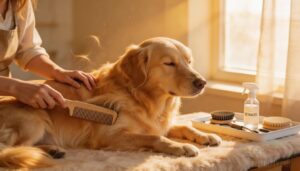
Brushing frequency and technique matter, but so does knowing when to slow down and pay closer attention.
Some situations call for a gentler touch, a little more patience, or even a different approach entirely. Here’s when you’ll want to be more careful with your dog during grooming sessions.
During Seasonal Coat Blowouts
Twice-a-year shedding seasons can feel like your dog is falling apart — fur everywhere, clumps loosening daily. This is coat blowout, and it demands more frequent brushing for proper fur load management and seasonal shedding management.
Switch to daily undercoat brush sessions, keep grooming session length short to protect skin hydration, and consider a post-blowout bath once the heavy shed slows.
Frequency matters here — your coat type determines how intense that is.
When Your Dog is a Puppy
Puppies are a different story. Their skin is sensitive, their coats are still developing, and everything is new.
Start your puppy grooming routine early — even brief, two-minute sessions build positive associations fast. Use gentle brush selection suited to their soft coat, pair each session with treats, and keep it calm.
Early brush socialization now makes every future grooming schedule much easier.
If Your Dog Dislikes Grooming
Some dogs just hate being brushed. If yours pulls away or panics the moment tools appear, dog anxiety during grooming is real — and worth addressing calmly.
Try gradual exposure: let your dog sniff the brush first, then reward calm behavior with treats.
Short sessions in a quiet, calm environment, paired with consistent positive reinforcement and tool desensitization, make a real difference.
Persistent fear may need professional assistance.
Signs You May Be Over-brushing
Overbrushing risks are easy to miss. Red Skin Irritation along the neck and back, Patchy Fur Loss from repeated passes, and Excess Dander are clear signals you’ve gone too far.
Brush Marks or small scabs point to brushing too roughly. Ironically, Increased Matting can follow — rough handling breaks hair, creating new tangles.
If your dog’s coat looks worse, not better, ease off.
When Mats Are Too Tight to Remove Safely
tight mats cross a line where home removal becomes a dog grooming safety concern. When you can’t fit a finger between the mat and skin, stop. Forcing it risks:
- Skin tears and inflammation from repeated dragging
- Moisture trapping dangers that breed hidden infections
- Real pain that your dog can’t tell you about
Use gentle detangling techniques first — fingers, then a wide-tooth comb. If it won’t budge, leave it.
When to Call a Professional Groomer
Some situations call for more than a brush and good intentions. If your dog shows signs of skin infections, ear infections, nail overgrowth, or dental issues, a professional groomer can flag what’s happening before it worsens. Behavioral stress during grooming is another real signal — growling or freezing means it’s time to hand things off.
Knowing when professional grooming services beat at-home dog grooming is half the battle.
Frequently Asked Questions (FAQs)
How often should I brush my dog?
It depends entirely on your dog’s coat type. Short-haired breeds like Beagles need once weekly, while long-haired dogs need 3–4 times. Double-coated breeds like Huskies do best with 2–3 sessions.
How much brushing does a dog need?
Your dog’s brushing needs depend on coat type.
short-coated dogs need weekly sessions.
long-coated breeds need three to four times weekly.
double-coated dogs benefit from two to three sessions per week.
How often should a short haired dog be brushed?
Think of your short-haired dog’s coat like a low-maintenance lawn — it still needs tending.
Brush once a week as your baseline, or every two or three days if shedding picks up.
Should you increase your dog’s brushing routine?
Yes — seasons, health changes, and lifestyle shifts can all signal it’s time to adjust your dog brushing frequency.
When shedding spikes or a health condition emerges, regular brushing needs to flex with it.
What is the 7 7 7 rule for dogs?
The 7 7 7 rule breaks early adjustment into three stages: 7 seconds for first impression timing, 7 minutes for sensory exploration, and 7 days for routine adaptation — helping owners pace introductions calmly.
Can brushing help reduce my dogs anxiety?
It can.
Gentle, consistent brushing acts as a Calm Touch Routine that builds trust over time.
Many dogs experience real Stress Relief and Bonding Benefits when grooming feels safe, predictable, and paired with positive reinforcement.
How long should each brushing session last?
Most sessions run 5 to 15 minutes. Short-haired dogs need about 5 to 10 minutes. Long or dense coats take closer to 10 to 20 minutes. Stop if your dog shows stress indicators.
Is it safe to brush a wet dogs coat?
Skip brushing right after a bath. Wet fur swells, breaks more easily, and tangles faster.
Towel-dry first, then brush gently from root to tip once the coat is just damp.
What treats work best during grooming sessions?
Soft Bite Treats and Low Odor Options work best. Safe Ingredients matter — avoid anything toxic.
Timed Rewards, the moment your dog stays still. Task-specific Rewards, treats, and praise build a positive experience fast.
How do I brush a dog that wont sit still?
Some dogs turn grooming into a full Olympic event.
Use a non-slip mat, keep short sessions, offer treat rewards, and stay calm. Positive handling and desensitization training make brushing a positive experience, fast.
Conclusion
Some may think regular brushing is a hassle, but think of it as a few minutes of bonding time with your dog. By getting into a routine, you’ll just keep their coat healthy, but also strengthen your connection.
Remember, how often you brush your dog depends on their coat type and needs.
So, grab the right brush and get brushing – your dog will thank you. Brushing is a simple way to show love and care.