This site is supported by our readers. We may earn a commission, at no cost to you, if you purchase through links.

Most dog owners notice their dog sheds. Few realize that how their dog sheds—and what that hair actually consists of—tells them almost everything about the coat underneath.
A German Shepherd losing clumps of soft, woolly fur twice a year and a Beagle leaving fine hairs on your couch year-round aren’t just different breeds; they’re operating with fundamentally different coat architectures.
Understanding the double coat versus single coat distinction changes how you groom, how you manage climate comfort, and which breed genuinely fits your lifestyle.
Table Of Contents
- Key Takeaways
- Single Coat Vs Double Coat Basics
- How to Identify Each Coat Type
- Shedding and Grooming Differences
- Climate and Protection Benefits
- Choosing The Right Coat Type
- Frequently Asked Questions (FAQs)
- What is the difference between single coat and double coat?
- How to tell single vs double coat?
- Can double-coated dogs be safely shaved?
- Do coat types affect swimming ability in dogs?
- How does diet influence coat health and texture?
- Do puppies change coat types as they mature?
- Are certain coat types more prone to skin conditions?
- Conclusion
Key Takeaways
- A double coat has two layers — a soft undercoat for warmth and guard hairs that repel water and dirt — while a single coat has just one layer, making it less insulating but easier to maintain.
- Your dog’s coat type directly shapes their grooming needs: double-coated breeds require brushing 2–4 times a week and daily attention during seasonal blowouts, whereas single-coated dogs usually need just one or two sessions a week.
- Climate fit matters more than looks — single-coated breeds handle heat better thanks to better airflow, while double-coated dogs are built for cold climates with natural insulation that works like a built-in down jacket.
- Dander, not fur, is the real allergy trigger, so don’t assume a single-coated dog is automatically a safer choice — managing your home environment with HEPA filters and regular cleaning matters just as much as breed selection.
Single Coat Vs Double Coat Basics
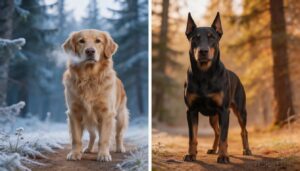
Before you can make the best choice for your dog, it helps to understand what you’re actually working with. Coat structure affects everything from your grooming routine to how your dog manages a cold morning walk.
Digging into the differences between smooth and rough coat dogs can help you see exactly how coat structure shapes your dog’s comfort through every season.
Here’s what you need to know about the basics.
What a Single Coat Means
A single coat means your dog has just one hair layer — guard hairs that lie flat against the skin, with no dense underlayer beneath. This hair layer simplicity keeps coat maintenance straightforward.
Here’s a quick breakdown:
| Feature | Single-Coated Dog |
|---|---|
| Hair Layers | One |
| Shedding Style | Steady, year-round |
| Weather Sensitivity | Higher in cold |
Less fur doesn’t always mean fewer allergens — allergy impact depends on dander and saliva too.
What a Double Coat Means
A double coat goes one layer further. Your dog has both a soft, dense undercoat and a coarser topcoat working together — think of it as built-in thermal layering. This two-layer system manages air trapping, moisture management, and seasonal adaptation all at once.
| Feature | Detail | Owner Impact |
|---|---|---|
| Insulation Efficiency | Undercoat traps warm air | Less cold-weather risk |
| Shedding Patterns | Seasonal blowouts | Expect heavy fur periods |
| Moisture Management | Topcoat repels water | Skin stays relatively dry |
| Coat Insulation | Two protective layers | Better all-weather comfort |
| Seasonal Adaptation | Undercoat thickens or thins | Coat self-adjusts naturally |
Guard Hairs Vs Undercoat
Those two layers in a double coat aren’t doing the same job.
Guard hairs carry a natural oil coating that repels moisture and provides sun shielding, while the undercoat provides dog coat insulation through air pocket formation close to the skin.
Understanding these dog coat layers helps explain the shedding patterns of double coated dogs — coat density shifts seasonally, pushing loose undercoat out in waves.
| Layer | Primary Function |
|---|---|
| Guard Hairs | Moisture and sun protection |
| Undercoat | Warmth through trapped air |
| Combined Coat Density | Seasonal temperature regulation |
Why Coat Structure Matters
Coat structure shapes more than just how your dog looks — it directly affects their thermal regulation, skin health, and activity performance. A dog’s ability to conserve body heat without burning extra energy depends on what’s underneath that outer layer.
The undercoat’s insulating layer plays a surprisingly big role here, which is why shaving your dog can disrupt natural temperature control in ways most owners don’t expect.
| Coat Feature | Impact on Your Dog |
|---|---|
| Insulation Efficiency | Reduces heat loss in cold weather |
| Energy Conservation | Less shivering means more stamina |
| Skin Health | Proper layering protects against debris and UV |
| Dog Coat Shedding Patterns | Signals seasonal coat transitions |
| Dog Coat Grooming Requirements | Varies by layer count and density |
How to Identify Each Coat Type
Knowing your dog’s coat type starts with a simple hands-on check — no grooming expertise required. A few visual and physical cues can tell you a lot about what’s underneath that fur.
Here’s what to look for.
Signs of a Single-coated Dog
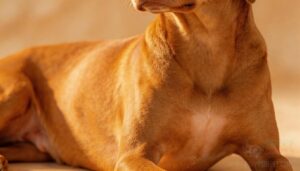
Spotting a single-coated dog is simpler than you’d think. The fur lies flat, showing Smooth Surface Hair with a Uniform Color Tone throughout — no fluffy underlayer breaking the silhouette.
- Skin is more visible, creating Visible Skin Patches under thin areas.
- Baseline Shedding Rate stays steady year-round, never dramatic.
- Low Matting Tendency keeps dog coat grooming manageable.
Your single coat dog coat types rarely surprise you.
Signs of a Double-coated Dog
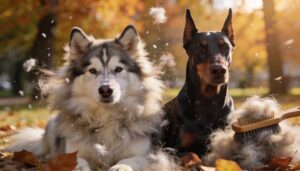
Unlike single-coated breeds, a double‑coated dog has a noticeably puffier silhouette — especially heading into winter. That Puffy Winter Appearance comes from Dense Undercoat Presence beneath longer Guard Hair Length on top.
During seasonal blowouts, Fur Layer Volume increases dramatically, and you’ll find clumps on bedding.
| Sign | What You See | When It Happens |
|---|---|---|
| Seasonal Blowout Signs | Large fur clumps releasing | Spring and fall |
| Topcoat appearance | Smooth guard hairs on surface | Year-round |
| Undercoat texture | Soft, woolly underlayer | Always present |
| Double coat shedding | Heavy, dense amounts | Peak shedding weeks |
| Shedding patterns of double coated dogs | Clumps during brushing | Blowout periods |
How to Check for an Undercoat
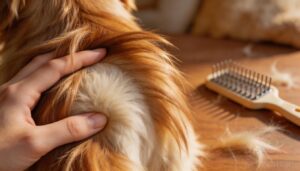
Want to know if your dog has an undercoat? Try the Finger Parting Method: gently separate the fur down to the skin in three steps.
- Part the coat and run your fingers toward the roots.
- Check Skin Visibility — dense, woolly fur near the base signals a double-coated dog.
- Do a Brushing Undercoat Reveal using an undercoat grooming rake; extra fluffy, fine hair means undercoat removal is needed.
Seasonal Thickness Clues and the Undercoat Density Test confirm it further.
Common Breed Examples
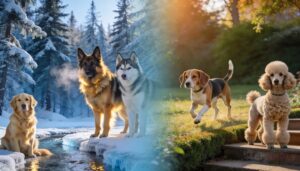
Some breeds make identification easy. German Shepherds and Siberian Huskies are classic double-coated dogs — their dense undercoats drive both German Shepherds’ protection in tough terrain and Siberian Huskies’ insulation in freezing temperatures. Golden Retrievers add water resistance to the mix.
On the single-coated side, Beagle’s low-maintenance grooming makes them a practical choice, while Poodle coat care focuses on curl management rather than undercoat removal.
Shedding and Grooming Differences
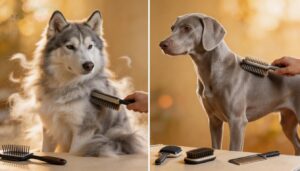
Shedding and grooming needs vary quite a bit depending on whether your dog has one coat or two. The differences show up in how often you’ll need to brush, what tools actually work, and how much hair ends up on your couch.
Here’s what you need to know about each coat type.
Year-round Shedding Vs Seasonal Blowouts
Shedding tells two very different stories depending on your dog’s coat.
Single-coated dogs shed gradually year-round — a steady, manageable trickle that rarely demands much extra attention.
Double-coated breeds follow intense seasonal shedding cycles, with Temperature Trigger Effects driving dramatic Seasonal Hair Clusters each spring and fall.
These blowouts cause Indoor Hair Accumulation and sharp Vacuum Frequency Spikes — plus Stress-Related Shedding can make it worse.
Brushing Needs by Coat Type
Brushing frequency shapes the entire health of your dog’s coat. Follow these grooming frequency recommendations by coat type:
- Single-coated dog — brush once or twice weekly using soft bristle or slicker brushes
- Double-coated dog — brush 2–4 times weekly during normal periods
- Seasonal Adjustments — daily brushing during blowouts keeps loose undercoat manageable
- Area Specific Care — apply lighter Pressure Levels near the belly and armpits
Matting and Undercoat Buildup
Even with consistent grooming frequency, matting can sneak up on you — especially with double coat dogs.
Undercoat density is the main culprit. Dense, soft undercoat fibers tangle easily, and friction point mats form fastest at collars, armpits, and elbows.
Moisture retention makes it worse; a damp coat clumps as it dries. Shampoo residue can bind hairs together, and once mats tighten, dematting pain becomes a real concern for your dog.
Best Grooming Tools for Each Coat
The right dog grooming tools make all the difference. For your single-coated dog, a rubber curry brush lifts loose hair and stimulates oils without irritation, while a soft bristle brush finishes the job.
For your double-coated dog, undercoat rake benefits shine during blowouts — pair it with a slicker brush for mat-prone areas and a deshedding tool to manage surface shedding efficiently.
Deshedding tools can reduce shedding by 90% in short‑coat breeds.
Climate and Protection Benefits
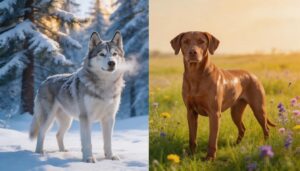
Your dog’s coat does more than just look good — it’s their first line of defense against the elements. Whether your dog has a single coat or a double coat makes a real difference in how well they handle cold snaps, summer heat, rain, and more.
Your dog’s coat is their first line of defense against cold snaps, summer heat, and everything in between
Here’s what you need to know about climate and protection, broken down by what matters most.
Cold-weather Insulation
Think of a double coat like a down jacket — it works because the undercoat traps air close to your dog’s skin, creating an insulation air layer that slows heat loss. Here’s how cold-weather adaptation actually works:
- Loft collapse effects weaken warmth when matting flattens the undercoat.
- Wind resistance mechanism — guard hairs block cold airflow before it reaches skin.
- Undercoat drying rate affects insulation; wet coats lose warmth fast.
- Cold shock prevention improves when the coat stays clean and fully intact.
- Single coat advantages don’t include this layered thermal insulation in dogs.
Heat Tolerance and Overheating Risk
While a double coat shields your dog from cold, it can work against them in heat. Dogs cool mainly through panting — coat thickness affects how well body heat radiates away from the skin.
| Sign | What It Means |
|---|---|
| Rapid panting indicators | Early cooling struggle |
| Dark or red tongue | Heatstroke signs progressing |
| Lethargy after exercise | Heat stress building |
| Excessive drooling | Temperature regulation failing |
| Stumbling or weakness | Emergency cooling needed |
Shade utilization, smart exercise timing, and consistent hydration needs management matter most for double‑coated dogs in warm weather.
Water, Dirt, and Sun Protection
A dog’s outer guard coat does more than you might think — it naturally repels water, sheds dirt, and shields skin from UV rays.
That’s dog coat moisture management built right into biology.
To support it:
- Waterproof membranes and quick-dry linings in dog gear reinforce top coat water resistance
- Dirt-resistant textures and bootie traction soles reduce ground-level exposure
- UV-blocking fabrics protect areas where the outer guard coat is thinnest
When Dogs Need Extra Gear
Even the best natural coat has its limits. Single coated dogs lose heat fast in cold snaps, so winter dog apparel like insulated winter harnesses and rain jackets aren’t optional — they’re practical tools.
Meanwhile, double coated dogs benefit from cooling vests on hot days to counter their dog coat insulation properties.
Protective boots and sun shields round out climate suitability planning for both coat types.
Choosing The Right Coat Type
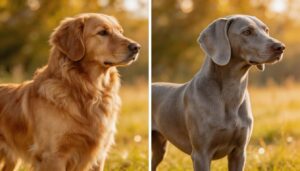
Picking the right coat type comes down to your lifestyle, not just your preferences. A few key factors will help you figure out which coat actually fits your day-to-day life.
Here’s what to think through before you decide.
Best Fit for Warm Climates
If you live somewhere hot, a single-coated breed is your best match. Their short guard hairs and minimal undercoat advantage let air move freely across the skin, keeping your dog cooler with less effort. Light color coats with heat‑reflective pigments also help reduce heat absorption.
Look for these warm‑climate‑friendly traits:
- Breathable textures with little to no undercoat
- Short, smooth fur that dries fast and doesn’t trap heat
- Light Color Coats that reflect sunlight rather than absorb it
Best Fit for Cold Climates
Cold climates call for a double coat — it’s built for exactly this. Breed thermal adaptation in Arctic and mountain breeds means their layered fur traps air efficiently, cutting heat loss substantially even in subzero wind chill.
Coat cycle timing naturally thickens the undercoat each winter. For sustained outdoor activity, coat insulation properties in double-coated dogs far outperform what any single coat can offer.
Time Commitment for Grooming
Grooming time adds up fast — especially with a double-coated dog. Here’s what to expect:
- Daily Brushing Time runs 10–20 minutes for double-coated breeds; single-coated dogs need just 5–10 minutes.
- Deshedding Session Length hits 15–40 minutes during peak seasons.
- Professional Grooming Interval lands every 6–12 weeks for double coats, 4–8 weeks for single coats.
Plan your schedule honestly before choosing.
Shedding Tolerance at Home
Hair on the couch, on your clothes, in your coffee — that’s life with a double-coated dog during the dog shedding cycle.
Seasonal shedding management for double coated breeds means committing to Scheduled Vacuuming, Air Filtration systems, and Furniture Safeguards like washable covers.
Single coats shed steadily but lightly.
Know your Family Sensitivity to fur before deciding — your home environment matters just as much as breed preference.
Allergy Considerations for Owners
Allergies add another layer to this decision. Many people assume single coat dogs are safer, but dander — not fur — is the real trigger. Both coat types produce it.
That said, dander management is easier with lower‑shedding breeds. HEPA filtration, bedroom exclusion, and bedding hygiene all help.
If reactions are a concern, allergy testing before committing to any breed is worth it.
Frequently Asked Questions (FAQs)
What is the difference between single coat and double coat?
Think of a dog’s coat like a house — some have just walls, others have walls plus insulation.
A single coat has one fur layer; a double coat adds a dense undercoat beneath.
How to tell single vs double coat?
Run your fingers through your dog’s fur and press gently toward the skin. A soft, plush layer beneath the outer coat confirms a double coat.
Uniform texture from root to tip? That’s a single coat.
Can double-coated dogs be safely shaved?
Shaving a double coat isn’t recommended. Removing guard hairs causes thermal insulation loss, increases skin’s sun exposure, and disrupts the regrowth timeline.
Deshedding alternatives like undercoat rakes protect the coat far more safely.
Do coat types affect swimming ability in dogs?
Yes, coat types do affect swimming ability.
A dog’s coat thickness influences buoyancy impact, drag reduction, heat loss in water, and recovery time after swimming — all factors that shape how comfortably your dog moves through water.
How does diet influence coat health and texture?
Diet shapes your dog’s coat from the inside out. Essential fatty acids, high-quality protein, and micronutrient balance all affect dog’s coat texture and shine.
Without proper hydration support and digestive health, even good nutrition won’t fully reach the skin.
Do puppies change coat types as they mature?
Puppies don’t switch coat types, but their coats do mature.
Breed genetics lock in the final structure — what changes are density and texture as the adult coat replaces softer puppy fur over several months.
Are certain coat types more prone to skin conditions?
Double-coated dogs do face a higher skin irritation risk.
Moisture trapping in the undercoat creates conditions where dermatitis prevalence increases, and fungal infection susceptibility rises when damp fur stays pressed against the skin too long.
Conclusion
It may seem counterintuitive, but understanding your dog’s coat type—specifically the double coat versus single coat distinction—holds the key to a harmonious pet‑parent relationship. By recognizing the unique needs of your dog’s coat architecture, you’ll open a world of effective grooming, climate comfort, and breed suitability.
This knowledge enables you to provide the best possible care, ensuring a happy, healthy companion that thrives in their environment and in yours.
- https://www.lovetoknowpets.com/life-with-pets/most-allergy-friendly-pets
- https://www.aaaai.org/conditions-treatments/allergies/pet-allergy
- https://www.mayoclinic.org/diseases-conditions/pet-allergy/symptoms-causes/syc-20352192
- https://pure.johnshopkins.edu/en/publications/household-pet-exposure-allergic-sensitization-and-rhinitis-in-the/
- https://vcahospitals.com/know-your-pet/the-importance-of-your-pets-skin-and-coat-and-the-role-of-diet