This site is supported by our readers. We may earn a commission, at no cost to you, if you purchase through links.
Training a dog in an apartment isn’t harder than training one in a house—it’s just different. The space is smaller, the neighbors are closer, and a single barking episode at 11 p.m. can strain relationships fast.
Most general training advice doesn’t account for that reality.
The best dog training apps for apartment living do. They’re built around short sessions, noise control, and routines that work within four walls.
The five apps reviewed here were tested against those exact conditions, so you can skip the trial-and-error and start with what actually works.
Table Of Contents
- Key Takeaways
- How We Chose These Apps
- Best Dog Training Apps Reviewed
- Features Apartment Owners Should Prioritize
- Pricing, Trials, and Overall Value
- Using Training Apps in Small Spaces
- Frequently Asked Questions (FAQs)
- Are mobile dog training apps worth it?
- What is a good dog training app?
- What are the benefits of using a dog training app?
- Which dog app is best for a puppy?
- How to potty train a dog while living in an apartment?
- Can apps help with dog-to-dog aggression?
- Are training apps suitable for senior dogs?
- How do apps handle fear-based behavior issues?
- Can apps support rescue dogs with trauma histories?
- Do training apps work for high-energy breeds?
- Conclusion
Key Takeaways
- Apps built for apartment life—like Dogo, Woofz, and GoodPup—tackle real challenges like barking, door triggers, and potty timing that generic training tools simply ignore.
- Short sessions of five to seven minutes work better than long ones in small spaces, so look for apps with built-in timers and one-tap access to keep routines easy to stick to.
- Live trainer support is worth paying for when your dog isn’t improving on basics alone, but free tiers and budget apps like Pupford and EveryDoggy handle sit, stay, and crate training just fine.
- Progress tracking, behavior charts, and weekly reviews are what turn daily app use into real results—pick an app that shows you trends, not just completed sessions.
How We Chose These Apps
Not every training app cuts it for apartment life, so we put a clear set of standards in place before making any recommendations. Each app on this list was measured against six criteria that matter most to owners working with limited space, shared walls, and unpredictable schedules.
Treat choice matters more than most owners realize, and the right indoor apartment training treats can make a real difference when you’re working in close quarters.
Here’s what we looked at.
Apartment-specific Training Needs
Apartment living comes with a unique set of training demands.
Your dog needs Doorbell Desensitization, Staircase Navigation Drills, and Elevator Etiquette Training, just to get through a normal day.
Limited Space Agility work, Noise Masking Strategies, and pet behavior management near shared walls all shape what a good app must cover.
Benefits of dog training apps for apartment dwellers only show up when the app actually understands your space.
Positive-reinforcement Training Standards
Every app we reviewed had to use positive reinforcement techniques — no exceptions. That means reward timing matters: your dog gets the treat right after the correct behavior, not three seconds later.
Cue consistency keeps things clear, and variable reinforcement builds lasting habits. We also checked for ethical reward balance and welfare monitoring, because apartment living with behavioral issues demands training consistency that’s kind, not just effective.
Trainer Credentials and Expert Access
Kind training methods only get you so far if the person teaching them isn’t qualified. That’s why we checked for certification badges, trainer background checks, and credential renewal cycles on every app.
Live video consultations, expert chat support, and live chat 24/7 let you access certified dog trainers when you need real answers — not guesswork — fast.
Ease of Use for Busy Owners
Credentials matter, but so does picking up your phone at 7 a.m. before work. That’s where convenience becomes a real factor. We tested how fast each app gets you training — from Quick Setup and onboarding to One‑Tap Sessions mid‑afternoon.
- Sync Across Devices so progress doesn’t reset when you switch phones
- Minimal Navigation with three-tab menus reduces daily friction
- Smart Reminders and Push notification alerts keep routines on track
- Progress tracking shows weekly trends at a glance
IPhone and Android Availability
All the apps reviewed here work on both iPhone and Android, so your device isn’t a barrier. Most require iOS 12 or later and Android 6.0 or later, and App Store Listings confirm compatibility before you download.
Cross-Platform Sync keeps your progress intact if you switch devices, and Universal Sign-In makes that smooth.
Update Frequency stays consistent — Android builds follow iOS releases within days.
Value for Price and Free Trials
Not every app offers the same deal, so comparing the cost‑benefit ratio before committing matters.
- Trial Length Impact — Most apps offer 3–7‑day free trials; a few extend to 7–14‑day trials.
- Feature Access Limits — Free trials often exclude live trainer sessions.
- Upgrade Incentives — Premium and weekly subscription plans provide customized feedback.
- Value Per Session — Ad-supported apps work for simple goals; paid tiers suit behavior support.
Best Dog Training Apps Reviewed
Not every dog training app is built with apartment life in mind, but the ones below come pretty close. Each pick was tested for real-world usability, positive-reinforcement quality, and how well it manages the specific challenges of small-space living.
Here’s what stood out.
Dogo for All-around Apartment Training

Dogo works like a personal trainer that fits inside your pocket. It builds an individualized plan around your dog’s age and skill level, then adapts difficulty as they improve.
The app even suggests starting with foundational cues like sit, stay, and move before layering in more complex commands as your dog gains confidence.
Session timers keep drills short — ideal for small spaces.
The reward marker system reinforces commands clearly, and the owner insight loop tracks progress over time.
For apartment dwellers, these virtual lessons make consistent positive reinforcement genuinely manageable.
Puppr for Tricks and Advanced Skills

Puppr is built for owners who want more than just sit and stay. Its Extensive Trick Library organizes 70 tricks and games by complexity using a Bone Rating system, so you always know what’s next.
Three features make apartment training practical:
- Photo Progression guides each cue step-by-step
- Practice Timer structures short, focused sessions
- Bookmark Feature saves in-progress tricks for quick access
Positive reinforcement techniques run through every lesson. The app also includes a built‑in clicker feature for instant feedback during training.
GoodPup for Live Trainer Support
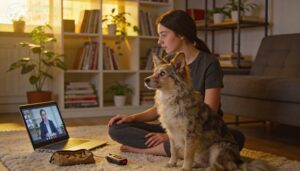
GoodPup connects you directly with certified dog trainers through Weekly Video Coaching — a real human watching your dog, not an algorithm. Each session includes Real-time Cue Adjustment and Custom Goal Setting designed for apartment dog care.
Between calls, Trainer Chat Access and live chat 24/7 keep you supported.
Session Recording Review lets you revisit guidance anytime, making positive reinforcement training consistent and practical.
Woofz for Barking and Routine Help

Woofz is built around the two things apartment dogs struggle with most — barking and routine.
- The Wellness Dashboard tracks daily activity and flags upcoming sessions using Trigger-based Scheduling and Behavioral Data Insights.
- Audio Cue Customization helps you monitor progress on quiet commands through step-by-step bark control programs.
- Training schedule reminders keep potty, meals, and positive reinforcement training consistent in tight spaces.
Pupford for Beginners and Free Lessons
If routine is Woofz’s strength, Pupford’s is accessibility.
The 30-day Starter Course Overview gives beginners a real foundation — no card needed to get started.
Each video runs just 5–10 minutes, making the Video Length Tips easy to fit between walks.
The Beginner Feedback Loop keeps you on track, and Cross-Device Sync means your progress follows you everywhere.
It’s a solid free app download for first-time apartment owners.
Budget-friendly Options Like GoDog and EveryDoggy

Not every budget stretches to premium pricing — and it doesn’t need to. GoDog and EveryDoggy both offer solid starter plans under $5–$10 per month, with free trials to test things out first.
- Seasonal promotions cut costs by around 20%.
- Family sharing covers multiple profiles.
- Budget tier features include sit, stay, and crate modules.
- Ad-supported app access keeps basics free.
EveryDoggy’s subscription discounts on annual plans make consistent training genuinely affordable.
Features Apartment Owners Should Prioritize

Not every app feature matters the same in an apartment. When space is tight and neighbors are close, certain tools pull more weight than others.
Here’s what to look for when choosing an app that actually fits your living situation.
Barking and Quiet-cue Lessons
Barking tops the list of behavioral issues apartment dogs develop, and for good reason — shared walls leave zero margin for error.
Good apps address this through Quiet Cue Timing, Noise Graded Exposure, and Trigger Desensitization, using positive reinforcement and clicker training techniques in short training sessions. Woofz does this well.
Just maintain Family Cue Consistency and practice Reward Fading as silence becomes reliable.
Potty Training Reminders and Logs
Once barking is under control, potty training becomes your next apartment hurdle.
Scheduled Potty Notifications take the guesswork out of timing — apps like Dogo log each outing by type, tag accidents versus successes, and use Accident Pattern Analysis to spot when mistakes cluster.
Custom Cue Alerts and Reward Prompt Integration reinforce the routine, while Log Export Options let you share progress with your vet or trainer.
Crate Training Modules
Crate training in an apartment works best when you follow a clear training program from the start. Apps like Dogo walk you through Gradual Door Desensitization, Cue Consistency Strategies, and Anxiety Reduction Techniques step by step.
Their built-in Crate Size Guide and Comfortable Bedding Tips remove the guesswork.
Short, consistent sessions address behavioral issues early — and mobile dog training apps make that easy, even in tight spaces.
Built-in Clicker and Whistle Tools
A built-in clicker or whistle puts precise cue timing right at your fingertips — no extra gear needed. Apps like the Dog Training Clicker App and Whistle GO Explore make clicker training simple for apartment dwellers:
- Sound Customization lets you swap click variants per session
- Volume Limiting keeps neighbors comfortable
- Offline Cue Functionality works without Wi‑Fi
- Accessibility Features add visual cues alongside sound
Progress Tracking and Behavior Charts
Tracking progress turns guesswork into a clear picture of what’s working. Color-coded Status indicators show at a glance whether your dog is improving or plateauing, and Custom Chart Types let you visualize barking frequency, leash reactivity, or impulse control your way.
| Feature | What It Does |
|---|---|
| Threshold Alerts | Flags regression before it becomes a bigger behavioral issue |
| Data Export Formats | Shares CSV reports with your trainer instantly |
| Multi-dog Filtering | Isolates each dog’s behavior modification journey |
| Line/Bar/Radar Charts | Matches chart style to the behavior you’re tracking |
| Color-coded Status | Shows improving or plateauing trends at a glance |
Benefits of dog training apps for apartment dwellers really shine here — consistent progress tracking keeps your routine accountable without ever leaving home.
Multi-dog Profiles and Shared Access
Managing two dogs in one apartment means two schedules, two sets of goals, and two training timelines. Multidog management features let you build separate profiles with individual milestones, cue histories, and behavior logs.
Profile Permissions and Family Caregiver Roles keep everyone on the same page — Cross-Device Sync and cloud backup and synchronization for pet data mean updates reach all caregivers instantly.
Activity Audits and Secure Data Sharing round out the picture for urban pet owners.
Pricing, Trials, and Overall Value
Dog training apps range from completely free to around $30 a week, so knowing what you’re actually getting before you commit matters. Most apps offer trials, but they’re not all created equal.
pricing breaks down across the top picks.
Free Vs Premium App Experiences
Free tiers get you started, but they come with trade-offs: limited lesson depth, ad-supported interfaces that interrupt sessions, and no direct trainer access. Premium plans provide an ad-free interface, offline video library, and premium analytics that track real behavioral trends.
apartment dogs dealing with barking or anxiety, the subscription flexibility — and the richer content — is usually worth it.
Monthly, Yearly, and Weekly Plans
Most apps offer three subscription models: monthly, yearly, and weekly.
Monthly plans run $10–$30 and auto-renew, giving you plan flexibility without a long commitment. Annual subscriptions cut costs substantially — Dogo drops to $99.99 yearly versus $120 monthly.
Weekly plans work for short-term testing but cost more per week.
Cancellation terms are straightforward: cancel before your billing cycle renews and you won’t be charged again.
What Free Trials Actually Include
Most trials give you solid Core Module Access — video lessons, exercise libraries, and reminders work right away. That said, Limited Trainer Chat is common; expect a few messages per day, not unlimited back-and-forth.
Watch for Auto Renewal Alerts before your 7-day free trial ends, since most plans bill automatically.
Device Login Limits and Progress History Caps may also apply until you upgrade.
When Live Trainer Feedback is Worth Paying For
Live trainer feedback pays off when your dog’s barking, reactivity, or crate anxiety isn’t improving on its own. Real-time correction catches mistakes the moment they happen, and custom coaching adjusts for your specific dog and apartment setup.
When barking or anxiety stalls progress, live trainer feedback delivers real-time correction no generic video can match
behavior accountability built into scheduled check-ins, you’ll notice faster progress.
premium subscription with live chat 24/7 and virtual assistance from certified dog trainers delivers real-time one-on-one training — a clear cost benefit when generic videos aren’t cutting it.
Best Low-cost Apps for Simple Training Goals
Not every training goal needs a premium price tag. If you’re working on basics — sit, stay, potty timing — budget feature sets from apps like GoDog and EveryDoggy cover the essentials well.
- Simple cue systems with mini lesson formats keep sessions under 10 minutes
- Offline video access lets you practice without burning data
- User community tips surface real apartment-tested advice
- Free trial or ad-supported app options let you test before committing
Set clear goals first, then pick accordingly.
Best Premium Apps for Behavior Support
When behavioral issues like reactivity or anxiety are involved, premium apps earn their cost.
Dogo delivers Expert Video Feedback and Adaptive Difficulty Levels, while GoodPup’s live chat 24/7 connects you with certified trainers on demand.
Both offer Customizable Behavior Plans and Behavioral Data Insights built on positive reinforcement — real benefits of dog training apps for apartment dwellers who need Individualized Reinforcement, not generic advice.
Using Training Apps in Small Spaces

Training your dog in an apartment doesn’t require a big yard or a dedicated training room. A few smart habits can make even the tightest space work in your favor.
Here’s how to get the most out of your app-guided sessions at home.
Creating a Distraction-free Training Area
Your training space doesn’t need to be fancy — just consistent. Carve out a dedicated Quiet Corner Setup, ideally a 4×6 foot area with Acoustic Dampening from heavy curtains or a white noise machine.
Lighting Control matters too; warm, glare‑free light keeps your dog calm. Material Organization and clear Training Boundaries to signal session time.
Consistency here directly helps Tracking Progress through your app.
Planning Short Daily Indoor Sessions
Short sessions work better than long ones in a small space. Aim for two to three five-to-seven-minute blocks daily, using Fixed Start Times to build Consistency for you and your dog. A Mini Drill Rotation keeps things fresh:
- Focus on one command per session
- Use Small Treats to maintain drive
- End with Quick Recap Rewards
- Check Tracking Progress via Push Notification Alerts
Pairing App Cues With Treats and Praise
Timing is everything when you pair app cues with rewards. Cue Timing Precision matters — deliver your treat within seconds of the correct behavior, or the connection weakens. Treat Size Scaling: small pieces for simple commands, larger ones for complex tasks. Praise Modulation means matching your energy to the difficulty level.
| Behavior | Treat Size | Praise Level |
|---|---|---|
| Sit | Small | Calm, brief |
| Stay | Medium | Moderate |
| Recall | Large | Enthusiastic |
Reward Diversity keeps your dog engaged — rotate food, toys, and petting to prevent satiation. Consistency across every session builds the clearest learning pathway.
Managing Hallway Noise and Door Triggers
Hallway sounds are one of the trickiest behavioral issues that apartment dogs face. Mobile training platforms like Woofz and Dogo use positive reinforcement methods to build calm responses — but your setup matters too.
- Run Sound Desensitization Drills in 5–15 minute sessions, starting at low volume
- Use Distance Gradual Exposure — begin 10+ feet from the door
- Assign a Place Mat Station 6–10 feet back for a predictable retreat
- Apply Leash Management Techniques to prevent door-rushing rehearsal
- Add White Noise Masking to soften unpredictable hallway sounds
Combining App Lessons With Walks and Socialization
Your apartment sessions are just the starting point. Outdoor Cue Transfer means repeating those same skills outside, where distractions are real.
Start with easy cues like sit or name response, then build up.
Loose Leash Practice works best in short 10–20 step segments.
Social Exposure Steps, parallel dog walks, and Reward Timing Outside all strengthen dog socialization.
Mobile training platforms support this through walking trackers and online community tools.
Reviewing Progress and Adjusting Routines Weekly
Weekly Data Review turns guesswork into a real plan. Each week, pull up your Behavior Trend Charts and look for patterns — morning barking, door reactions, crate whining. Then adjust.
- Count repeat behaviors by day and time
- Reset one goal using Goal Reset Planning
- Apply Timing Shift Adjustments in 15-minute increments
- Run Accountability Check-ins with your co-trainer
Consistent training progress tracking keeps customizable training programs for dogs, pet activity tracking, and dog behavior modification moving forward through steady habit formation.
Frequently Asked Questions (FAQs)
Are mobile dog training apps worth it?
Yes — for daily practice and basic obedience, they’re genuinely worth it. Apps keep training consistent, track progress, and fit small spaces.
For severe behavior issues, though, you’ll still need a professional.
What is a good dog training app?
A good dog training app balances User Interface Simplicity with Customization Options, offers Offline Access, protects Data Privacy, and connects you to an Online Community — all while fitting your dog’s specific needs.
What are the benefits of using a dog training app?
Dog training apps keep cue timing consistent, deliver remote rewards, and generate behavioral insight reports.
They let you personalize your training program, use flexible scheduling, and adjust routines through data-driven adjustments based on real progress.
Which dog app is best for a puppy?
Dogo is the best all-around pick for a puppy. Its User Interface Simplicity, structured lessons, and Reward System Design cover basics fast. GoodPup adds live support; Pupford keeps costs low.
How to potty train a dog while living in an apartment?
Apartment potty training takes extra planning. Use consistent schedule reminders, practice signal recognition, and account for elevator timing.
Reward timing matters — treat within 2 seconds.
Clean accidents with enzymatic cleaner to prevent repeat spots.
Can apps help with dog-to-dog aggression?
Apps can guide you through Counterconditioning Techniques and Desensitization Steps using Distance Threshold Training and Video Feedback Loops.
For urban dog behavior, these tools support behavior modification techniques and Safety Management Protocols, but severe behavioral problems require in-person help.
Are training apps suitable for senior dogs?
Yes, training apps can work well for senior dogs. Focus on low-impact exercises, sensory adaptations, and pain-aware cueing.
Use veterinary oversight alongside health monitoring integration to guarantee safe, positive reinforcement techniques throughout every short session.
How do apps handle fear-based behavior issues?
Most apps tackle fear-based issues using Anxiety Trigger Logs, Fear Exposure Gradients, and Calmness Reward Timing to support behavioral conditioning — helping you address separation anxiety and other concerns through structured, Safe Space Guidance at home.
Can apps support rescue dogs with trauma histories?
Yes, apps can help — but with limits. Short sessions, positive reinforcement techniques for canine behavior, and trauma-specific lessons work best.
Always pair app use with professional support for serious separation anxiety or complex histories.
Do training apps work for high-energy breeds?
They can, with the right setup. Short sessions, strong motivation techniques, and exercise integration before training keeps energy manageable. Trainer feedback helps when focus breaks down fast.
Conclusion
As you start your dog’s training journey, consider this: effective training is like managing a small apartment – it’s all about harmony and balance. By choosing the right dog training apps for apartment living, you’ll set yourself and your pet up for success.
These tools offer custom guidance, helping you address specific challenges like barking and potty training. With patience and the right resources, you can create a peaceful living environment, proving that even small spaces can become happy homes.