This site is supported by our readers. We may earn a commission, at no cost to you, if you purchase through links.

Your dog spots a cyclist half a block away, and the leash goes tight before you can blink. That lunge—sudden, powerful, completely predictable once you know your dog—is the signature move of a reactive dog, and it happens to millions of owners every single walk.
Reactivity isn’t disobedience. It’s an emotional response your dog hasn’t learned to manage yet, and the right collar can give you the control to redirect it before it escalates.
Choosing the best dog training collar for reactive dogs on walks comes down to understanding your dog’s triggers, size, and what kind of correction actually works for them.
Table Of Contents
- Key Takeaways
- Top 10 Training Collars for Reactive Dogs on Walks
- 1. Starmark Pro Training Dog Collar
- 2. Halti Reflective Adjustable Dog Headcollar
- 3. PetSafe Gentle Leader Headcollar No Pull
- 4. KJKZO Smart Bark Collar
- 5. Xqpetlihai Adjustable Tactical Dog Collar
- 6. Herm Sprenger Ultra Plus Prong Collar
- 7. Reactive Not Aggressive Dog Bandana
- 8. Safiman Adjustable Prong Training Collar
- 9. Canine Friendly No Dogs Bark Patch
- 10. PetsProMax No Pull Dog Head Collar
- What Makes a Dog Reactive on Walks?
- Key Features to Look for in Reactive Dog Collars
- How Different Collar Types Help Reactive Dogs
- Collar Alternatives Worth Considering for Reactive Dogs
- How The Right Collar Supports Training Success
- Best Practices for Introducing a Collar to a Reactive Dog
- Safety and Maintenance Tips for Training Collars
- Buying Guide for Reactive Dog Training Collars
- Frequently Asked Questions (FAQs)
- What are the biggest mistakes in reactivity training?
- Do calming collars work on reactive dogs?
- How long should each training walk session last?
- Can reactive dogs wear collars unsupervised at home?
- At what age should reactivity training begin?
- Should collar type change as training progresses?
- How do vets view correction collars for reactivity?
- Conclusion
Key Takeaways
- Reactivity isn’t defiance — it’s an unmanaged emotional response triggered by specific stimuli like sudden movement, loud noises, or unfamiliar faces, and the right collar helps you redirect it before it escalates.
- No single collar works for every dog — head collars steer through nose redirection, prong collars distribute pressure evenly, and e-collars use tone or vibration, so matching the tool to your dog’s size, trigger type, and temperament is what actually drives results.
- Hardware and fit make or break safety on reactive walks — metal buckles outperform plastic under real pulling stress, and the two-finger rule ensures the collar stays snug without restricting airflow or inviting escape.
- A collar alone won’t fix reactivity; pairing it with consistent cues, gradual trigger exposure, and rewards timed within one to two seconds of a calm response is what builds lasting change across every family member who holds the leash.
Top 10 Training Collars for Reactive Dogs on Walks
Finding the right collar for a reactive dog isn’t one-size-fits-all — the best pick depends on your dog’s triggers, size, and how they respond on a leash. Each collar below provides a specific purpose, from redirecting lunging to signaling other walkers to give you space.
If you’re unsure where to start, this guide to best prong collars for reactive dogs breaks down sizing and fit so you can match the right tool to your dog’s specific needs.
Here are the top 10 training collars worth considering for reactive dogs in 2026.
1. Starmark Pro Training Dog Collar
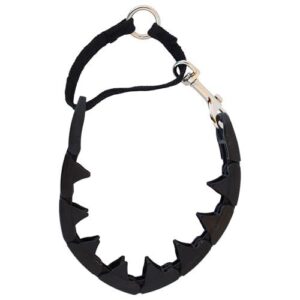
The Starmark Pro Training Dog Collar is a solid starting point if your dog pulls hard or lunges at triggers like bikes or other animals. Its linked watchband design lets you add or remove sections for a precise fit around a 20‑inch neck.
The blunted polymer prongs apply pressure only when tension hits the leash, then release immediately.
At $12.77, it’s affordable, lightweight, and comes with a nylon backup collar — a smart safety feature for reactive walks.
| Best For | Dog owners with medium to large pullers who need an affordable, humane training collar for reactive walks. |
|---|---|
| Price | $12.77 |
| Material | Plastic & metal |
| Size Options | Adjustable links |
| Training Type | Pressure correction |
| Age Range | All life stages |
| Weight | 5.29 oz |
| Additional Features |
|
- Pressure releases the moment your dog stops pulling — no lingering discomfort
- Easy to size with add/remove links, and simple to clean
- Comes with a nylon backup collar right out of the box
- Plastic build won’t hold up as well as metal under heavy daily use
- Not the best fit for aggressive dogs or breeds with thick, long coats
- You really need to watch the instructional video — fit matters a lot here
2. Halti Reflective Adjustable Dog Headcollar
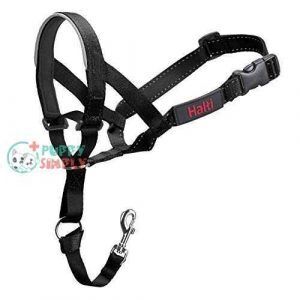
If prong collars feel like too much for your dog, the Halti Reflective Adjustable Dog Headcollar takes a completely different approach.
Instead of pressure on the neck, it steers your dog’s head — so where the head goes, the body follows.
The padded neoprene noseband keeps things comfortable, and the safety link clips to your dog’s regular collar as a backup.
At $26.99, it’s lightweight, reflective for low-light walks, and adjustable to fit medium breeds snugly.
| Best For | Dog owners dealing with pullers, lungers, or reactive dogs who want a humane, pressure-free alternative to traditional collars. |
|---|---|
| Price | $26.99 |
| Material | Nylon & neoprene |
| Size Options | 6 sizes |
| Training Type | Head steering |
| Age Range | All life stages |
| Weight | 2.4 oz |
| Additional Features |
|
- Steers the head instead of the neck — gives you immediate control without harsh corrections
- Padded noseband is comfortable enough for daily use, and the reflective accents are a nice bonus for evening walks
- Safety link clips to the existing collar, so there’s a backup if the headcollar ever slips
- Some dogs push back hard against wearing a head collar — you’ll likely need a slow, treat-based intro
- Fit really matters here; the wrong size makes it way less effective (measure carefully)
- Won’t fix pulling on its own — consistent training is still part of the deal
3. PetSafe Gentle Leader Headcollar No Pull
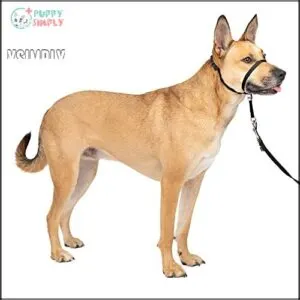
Another head collar worth keeping on your radar is the PetSafe Gentle Leader — and at $15.99, it costs nearly half as much as the Halti.
The nose loop sits high on the snout, redirecting your dog’s head toward you the moment tension builds on the leash. Your dog can still pant, drink, and eat normally.
The quick-snap neck strap makes it easy to put on and take off, which matters when your dog is already scanning the environment before you’ve even stepped outside.
| Best For | Medium-sized dogs (20–50 lbs) that pull on leash and haven’t responded well to traditional collars or harnesses. |
|---|---|
| Price | $15.99 |
| Material | Nylon & neoprene |
| Size Options | Multiple sizes |
| Training Type | Head steering |
| Age Range | All life stages |
| Weight | 1.44 oz |
| Additional Features |
|
- Redirects pulling without putting pressure on the throat — much gentler than a choke or prong collar
- Dogs can still eat, drink, and pant normally while wearing it
- Super lightweight and easy to put on fast with the quick-snap strap
- Not a fit for flat-faced breeds like pugs or bulldogs
- Takes some getting used to — many dogs will try to paw it off at first
- On its own, it may not be enough for very strong pullers; pairing it with a harness is often the safer bet
4. KJKZO Smart Bark Collar
Not every reactive dog barks constantly — but when yours does, it can derail a walk fast.
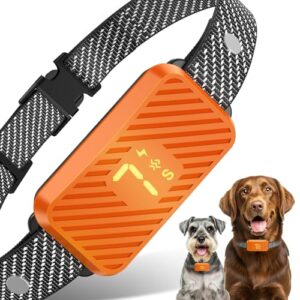
The KJKZO Smart Bark Collar (Model TC007, $25.99) uses dual sensors to catch both sound and vocal cord vibration, so it targets your dog’s actual barks rather than a neighbor’s dog two yards over.
You get three correction modes — beep, vibration, and shock — across seven sensitivity levels. The smart pause after seven consecutive barks prevents over-correction, and the IP65 waterproof rating means rain won’t stop your training.
| Best For | Dog owners in apartments or shared spaces who need a reliable, adjustable bark collar that won’t misfire on outside noise. |
|---|---|
| Price | $25.99 |
| Material | Nylon strap |
| Size Options | One size |
| Training Type | Bark correction |
| Age Range | All life stages |
| Weight | 3.84 oz |
| Additional Features |
|
- Dual-sensor tech actually targets your dog’s bark — not the neighbor’s — so false corrections are way less likely.
- Three correction modes mean you can start with just beep or vibration and skip shock entirely if you want.
- 20-day battery life and IP65 waterproofing make it easy to use daily without babysitting it.
- The setup process is trial-and-error, and the manual doesn’t make it much easier — expect some fiddling at first.
- The strap can feel bulky on smaller dogs and may need extra adjusting to fit right.
- A handful of users have reported the unit cutting out unexpectedly, which means a warranty claim might be in your future.
5. Xqpetlihai Adjustable Tactical Dog Collar
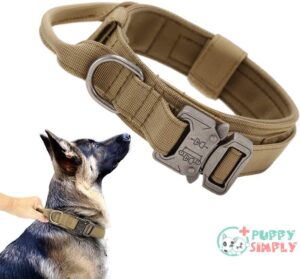
At $9.59, the Xqpetlihai Tactical Dog Collar punches well above its price.
Built from 1000D reinforced nylon with a heavy-duty metal buckle, it’s made for dogs that pull hard and test gear quickly.
The integrated control handle gives you instant close-range guidance when a trigger appears — no fumbling, just a firm, calm redirect.
Padded lining keeps your dog comfortable on longer walks, and the dual-security buckle-plus-Velcro system means the collar stays put even mid-lunge.
| Best For | Medium to large dog owners who need a tough, affordable collar for training, walks, or high-distraction environments. |
|---|---|
| Price | $9.59 |
| Material | Reinforced nylon |
| Size Options | 3 sizes |
| Training Type | Control handle |
| Age Range | Adult dogs |
| Weight | 3.53 oz |
| Additional Features |
|
- 1000D nylon and a metal buckle hold up well against strong pullers and daily wear
- The built-in control handle makes it easy to redirect your dog quickly without grabbing the leash
- Padded lining keeps things comfortable even during longer outings
- The Velcro can fray over time and may not feel reliable enough for very strong dogs
- The "large" sizing runs small — bigger breeds like German Shepherds may not get a great fit
- Only comes in brown, so color options are pretty limited
6. Herm Sprenger Ultra Plus Prong Collar
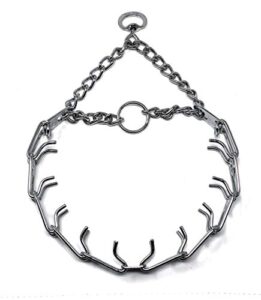
Few prong collars are built with the precision of the Herm Sprenger Ultra Plus. Made in Germany from chrome-plated steel, its center plate aligns every link symmetrically — so pressure spreads evenly around the neck instead of concentrating in one spot.
Unlike plastic alternatives that can snap under pressure, chrome-plated steel makes it one of the most durable training collars for large dogs on the market.
At 22 inches with removable links, you can fine-tune the fit snugly behind the ears where it belongs.
Blunt, beveled prong tips reduce skin irritation, and the rust-resistant steel holds up in rain or mud.
At $34.99, it’s a serious tool for serious training.
| Best For | Medium-sized dogs that pull on leash or need clearer communication during obedience training. |
|---|---|
| Price | $34.99 |
| Material | Chrome-plated steel |
| Size Options | Adjustable links |
| Training Type | Prong correction |
| Age Range | All life stages |
| Weight | 7.05 oz |
| Additional Features |
|
- Center plate distributes pressure evenly, making it safer than a traditional choke collar
- Removable links let you dial in an exact fit as your dog grows or changes
- Chrome-plated steel resists rust, so it holds up in rain, mud, or humidity
- Not suitable for puppies, small dogs under 15 lbs, or any dog with a neck injury
- Prongs can occasionally loosen over time and may need manual adjustment
- Requires proper fitting and technique — wrong use can cause discomfort or harm
7. Reactive Not Aggressive Dog Bandana
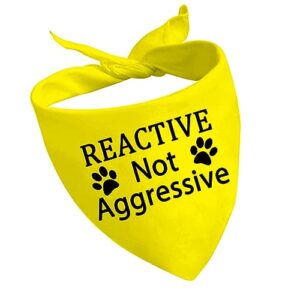
Not every tool on this list goes around your dog’s neck. At $12.89, this yellow polyester bandana does something most collars can’t — it talks to the people around you.
Measuring about 27.6 × 13.4 inches with a bold REACTIVE Not Aggressive message, it signals strangers to back off before an interaction starts. It won’t stop a lunge, but paired with a proper collar and training plan, it cuts down on the surprise encounters that set your dog off in the first place.
| Best For | Dog owners with reactive (but non-aggressive) pups who want a simple, low-cost way to signal strangers before an unwanted interaction happens. |
|---|---|
| Price | $12.89 |
| Material | 100% polyester |
| Size Options | One size |
| Training Type | Visual cue |
| Age Range | All life stages |
| Weight | 0.32 oz |
| Additional Features |
|
- Cheap and effective communication — $12.89 to quietly tell strangers "give us space" without saying a word
- Easy to clean and lightweight, so it’s no hassle to throw on before a walk
- One-size design works for most breeds, no measuring or fitting required
- Too big for tiny dogs, potentially too snug for giant breeds — fit isn’t guaranteed
- The print can fade over time with regular washing, which defeats the whole purpose
- It’s a signal, not a solution — reactive behavior still needs real training behind it
8. Safiman Adjustable Prong Training Collar
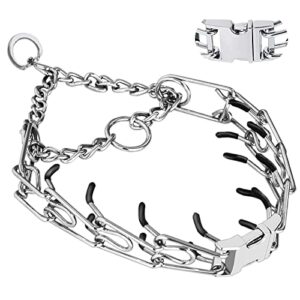
At $19.99, the Safiman Adjustable Prong Training Collar delivers firm, even pressure without concentrating force on the trachea — a common problem with flat collars on strong pullers.
The rounded stainless steel prongs, fitted with rubber caps, mimic a corrective pinch rather than a sharp dig.
You can remove or add links to dial in the fit, and the quick-release buckle makes it easy to get on and off fast.
Just inspect the caps regularly — they can detach with heavy use.
| Best For | Dog owners dealing with strong pullers or dogs that need leash training, especially those who want a pressure-based collar that’s easy to fit and quick to put on. |
|---|---|
| Price | $19.99 |
| Material | Stainless steel |
| Size Options | S/M/L/XL |
| Training Type | Prong correction |
| Age Range | All life stages |
| Weight | 12.6 oz |
| Additional Features |
|
- Rounded prongs with rubber caps spread pressure evenly and reduce skin irritation
- Removable links make it easy to get a snug, custom fit for different dogs
- Quick-release buckle is a genuine convenience, especially for anyone with limited hand strength
- Rubber caps can pop off during heavy use and need to be checked regularly
- Chrome plating has been known to wear and rust after about a year
- Chain links aren’t interchangeable between sizes, so replacements have to match exactly
9. Canine Friendly No Dogs Bark Patch
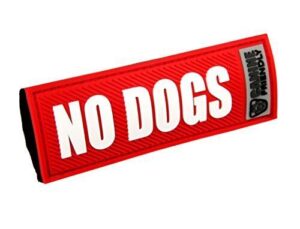
Sometimes the simplest tool does the heaviest lifting.
Canine Friendly No Dogs Bark Patch attaches to your dog’s collar via hook-and-loop fastener in seconds, sending a clear "No Dogs" message before anyone gets close enough to cause a reaction. Its waterproof label holds up through rain and daily walks, and the neoprene backing keeps it snug without irritating your dog’s neck.
At just 0.56 oz, it won’t slow anyone down — it just quietly does its job.
| Best For | Dog owners whose pup gets reactive or anxious around other dogs and wants a quick, no-fuss way to give strangers a heads-up before they get too close. |
|---|---|
| Price | $12.99 |
| Material | Neoprene & plastic |
| Size Options | 1in & 3/4in |
| Training Type | Visual cue |
| Age Range | All life stages |
| Weight | 0.56 oz |
| Additional Features |
|
- Attaches and swaps between collars or leashes in seconds thanks to the hook-and-loop fastener
- Waterproof and tough enough for daily walks, hikes, and rainy days without fading or peeling
- Lightweight at just 0.56 oz — your dog won’t even notice it’s there
- Small size means it’s only readable up close, so fast-moving strangers might miss it entirely
- The one-sided design can flip or rotate on a leash, hiding the message when you need it most
- May not grip well on wider leashes or larger collars, and the price runs higher than similar patches on the market
10. PetsProMax No Pull Dog Head Collar
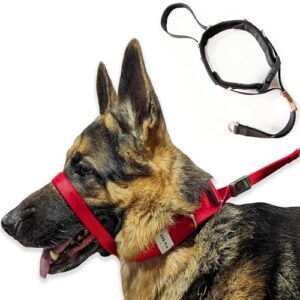
Head control is one of the most effective ways to manage a reactive dog — and that’s exactly where the PetsProMax No Pull Dog Head Collar earns its place. The padded nose loop redirects your dog’s momentum sideways instead of forward, so lunging becomes physically harder to execute.
Adjustable neck and nose straps mean you can dial in the fit for almost any breed, and the solid metal hardware won’t buckle under pressure when your dog spots a trigger mid-walk.
| Best For | Dog owners who struggle with pullers or reactive dogs on walks and want more control without resorting to a prong or choke collar. |
|---|---|
| Price | $19.99 |
| Material | Soft fabric & metal |
| Size Options | Size chart provided |
| Training Type | Head steering |
| Age Range | All life stages |
| Weight | 7.05 oz |
| Additional Features |
|
- The padded nose loop redirects pulling instantly — no choking, no pinching
- Solid metal hardware holds up under real pressure, unlike flimsy plastic clips
- Fully adjustable straps work across a wide range of breeds and sizes
- First-time fitting can be tricky — the buckles and straps take some figuring out
- Tends to slip on short-nosed breeds, which really limits how well it works
- It’s not a training tool on its own — without consistent leash pressure, don’t expect results
What Makes a Dog Reactive on Walks?
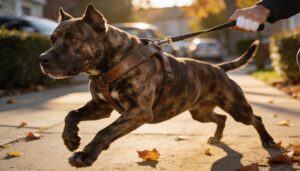
Reactivity on walks doesn’t come out of nowhere — there’s always something behind it.
Whether it’s fear, frustration, or just a breed wired to stay alert, the root cause shapes how you respond.
Here’s what’s actually driving that behavior.
Common Triggers That Cause Reactive Behavior
Your dog isn’t choosing chaos — something in the environment flipped a switch. Reactive dog behavior almost always traces back to a specific trigger, not a bad attitude. Watch for these four most common ones:
Reactive dog behavior isn’t defiance — it’s always a trigger, never a bad attitude
- Sudden Movement — bikes, joggers, or scooters catch dogs off guard.
- Unfamiliar Faces — strangers approaching directly spike dog anxiety quickly.
- Loud Noises — traffic or construction overwhelms sensitive dogs instantly.
- Crowded Spaces — tight sidewalks plus leash tension accelerate leash pulling prevention failures.
Fear Vs. Frustration-Based Reactivity
Not all reactive dog behavior looks the same — and that difference matters for choosing the right behavior correction approach.
| Factor | Fear-Based | Frustration-Based |
|---|---|---|
| Behavioral Indicators | Tucked tail, wide eyes, retreat | Lunging, snapping, body tension |
| Physiological Arousal | Withdrawal then sudden flight | Sustained, elevated heart rate |
| Cognitive Appraisal | Threat detection, escape focus | Goal-blocked, barrier fixation |
| Training Strategies | Gradual desensitization, distance | Predictable cues, achievable steps |
| Recovery Patterns | Faster with distance from trigger | Slower, needs successful outcome |
Research shows that majority of behavior problems are fear‑based, highlighting the importance of distinguishing fear from aggression. An adjustable fit headcollar helps redirect either type, improving comfort during walks.
How Breed and Socialization History Influence Reactivity
Breed instincts play a real role here. Herding breeds track movement obsessively, guarding breeds scan for threats, and sighthounds chase anything that darts. That’s Genetic Reactivity baked in before a single walk happens.
Layer in a missed Socialization Window — those critical early weeks for Puppy Exposure — and even Maternal Stress during pregnancy, and your dog’s temperament arrives at leash training already primed to react.
Key Features to Look for in Reactive Dog Collars
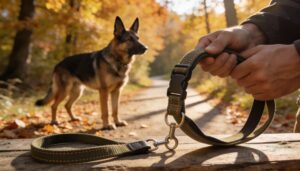
Not every collar works the same way for a reactive dog, and the wrong one can make walks harder, not easier. Before picking one off the shelf, it helps to know what actually separates a reliable collar from one that’ll let you down mid-walk.
Here are the key features worth paying attention to.
Why Adjustability Matters for a Secure Fit
A collar that doesn’t fit right is basically useless when your dog hits the end of the leash. The Two-Finger Rule keeps things snug without restricting airflow.
Adjustable design with quick-release buckle and double security fastenings lets you adapt fast — especially with layered clothing compatibility in colder months. Better pressure distribution means fewer escape attempts and more consistent training cues.
How Collar Material Affects Comfort and Durability
Material isn’t just about looks — it directly affects how your dog feels wearing the collar all day.
Nylon offers UV stability and lightweight construction that holds up through daily walks.
Leather conditioning keeps natural options supple and skin-friendly over time.
Biothane skin friendliness and waterproof design suit wet environments easily.
Faux leather softness, padded lining, and stitching reinforcement all contribute to durable construction that won’t irritate your dog’s neck.
Importance of Metal Hardware Over Plastic Buckles
When your dog lunges hard at another dog, you need hardware that won’t fail. Metal buckles deliver tensile strength and safety under stress that plastic simply can’t match — they won’t crack under a sudden pull or warp in summer heat.
- Heavy-duty metal buckles and chrome-plated steel resist corrosion and maintain locking integrity in rain or mud
- Temperature resilience keeps metal clasps secure in freezing cold or intense heat
- Quick-release metal buckle designs combine speed with durable construction that holds firm under pressure
- Aesthetic premium aside, metal hardware genuinely outlasts plastic by years with basic care
Reflective and High-Visibility Elements for Night Walks
Night walks with a reactive dog demand more than just control — they demand visibility. Reflective material types like reflective strips, reflective accents, and high visibility embroidery keep you and your dog seen from all directions.
360° visibility design and weather-resistant reflectivity that holds up in rain or mist. Adjustable visibility straps and LED integration options add another layer of safety when low light makes every second count.
How Different Collar Types Help Reactive Dogs
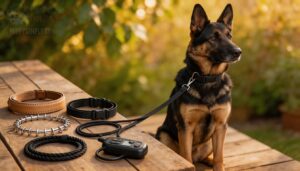
Not every collar works the same way, and for reactive dogs, that difference really matters. The right design can mean the difference between a stressful walk and one where your dog actually listens.
Here’s a look at how each collar type does its job.
How Head Collars Redirect Lunging and Pulling
Think of a head collar as a steering wheel for your dog’s attention.
When your reactive dog lunges, nose bridge pressure gently guides the head sideways, and the body naturally follows — that’s redirected body alignment in action.
Steering head mechanics work through leash attachment angle, so the pull turns into a redirect.
Pressure release timing matters: the moment your dog settles, tension drops instantly.
Both the HALTI Headcollar Medium Black Adjustable Reflective and PetSafe Gentle Leader No-Pull Head Collar use this same principle, making head collars for no-pull training genuinely effective for the reactive dog who needs calm, clear guidance on walks.
What Martingale Collars Offer for Escape Prevention
A martingale collar’s slip-stop design uses dual-loop control to tighten just enough when your reactive dog backs away or bolts — then releases the moment tension drops. That proportional pressure prevents escape without choking.
It’s especially useful for slender-neck suitability, making it ideal for Greyhounds or Whippets.
With adjustable fit and durable construction, it’s worth escape-prevention testing before your first reactive walk.
When Prong Collars Are Appropriate and How to Use Them Safely
A prong collar for dogs isn’t a punishment tool — it’s a last resort for reactive dog behavior management when gentler options haven’t worked. Used correctly, pressure distribution stays even around the neck, making corrections clear without choking.
- Only use under professional supervision
- Never use on dogs under one year (age restrictions apply)
- Avoid with neck injuries or fear-based aggression (medical contraindications)
Correction timing matters most: quick, calm, and brief.
How Electronic Collars Work for Reactivity Training
Electronic collars take a different approach than prong collars. A handheld remote sends a signal to the receiver on your dog’s collar — that’s the signal transmission in action.
Contact point placement matters: the unit sits high on the neck, not at the throat. You choose from stimulus types like tone, vibration, or static.
Safety calibration starts low. Short sessions, paired with "look at me," keep reactive dog behavior correction training humane and effective.
Battery life of training collars generally runs 12–48 hours, so battery management before every walk prevents mid-session failure.
Collar Alternatives Worth Considering for Reactive Dogs

Collars aren’t the only option for managing a reactive dog on walks. Sometimes a different type of gear fits your dog’s needs — or your training goals — better.
Here are a alternatives worth adding to your toolkit.
Front-Clip Harnesses and How They Reduce Pulling
Front-clip harnesses work by attaching at your dog’s chest, so when your reactive dog lunges forward, the leash redirects their momentum sideways — that sideways steering effect naturally turns their focus back to you.
Chest pressure distribution keeps force off the neck and shoulders comfortable. Most models include reflective visibility integration and smart leash attachment points for leash tangling prevention, making them solid anti-pull equipment for daily walks.
Anxiety Vests and Calming Pheromone Collars
Some reactive dogs need more than physical control — they need a calmer starting point. Anxiety vests use pressure distribution across the chest to reduce visible stress like shaking or panting.
Pheromone-based calming collars work through continuous pheromone diffusion, mimicking soothing scents dogs recognize naturally.
Look for:
- Breathable fabric with adjustable straps for a snug, comfortable fit
- Calming scent blends like lavender or chamomile for added effect
- Calming Collar for Dogs 4Pack options that rotate across training phases
Communication Accessories That Signal Reactivity to Others
Sometimes a simple visual cue does more than any correction tool. Color-Coded Tags, a Reactive Dog Bandana, or the CENWA doesn’t Pet Reactive Dog Collar tell strangers to give your dog space before they get close.
Options like Tacticollar doesn’t PET add reflective accents and LED Warning Lights for dusk walks, while Audible Alert Modules and Proximity Beacons help manage buffer zones proactively.
How The Right Collar Supports Training Success

A collar alone won’t fix reactivity, but paired with the right training habits, it becomes a real major improvement. The way you use it matters just as much as which one you choose.
Here’s what actually moves the needle regarding building lasting results on walks.
Pairing Collar Cues With Positive Reinforcement
The collar is just a tool — what actually changes behavior is the moment after.
Reward your reactive dog within one to two seconds of a correct response, and that cue clarity becomes a real signal. Keep rewards consistent, then shift to variable reinforcement once the behavior holds.
Short, stress-free sessions with a reliable training collar build the communication your dog needs.
Gradual Trigger Exposure and Leash Control
Distance Threshold Management is the backbone of any solid desensitization plan. Start far enough away that your reactive dog notices the trigger without reacting — then hold that distance until calm behavior is consistent.
Use these Stepwise Exposure Planning checkpoints:
- Reward the moment your dog spots the trigger
- Loosen leash tension before it spikes
- Back up when early stress signs appear
- Pair headcollar or antipull equipment with a "watch me" cue
- Only move closer after repeated calm responses
Leash Tension Monitoring and Cue Timing Strategies keep each session productive.
Keeping Training Consistent Across All Family Members
When everyone in the house uses different commands, your dog gets confused quickly. That’s why building a Family Cue Language matters — one word per behavior, used by everyone.
Assign Rotating Training Roles so each person manages leash time. Keep a Shared Training Log, run a Weekly Progress Review, and follow a Unified Reward System to reinforce the same behavior every single walk.
Best Practices for Introducing a Collar to a Reactive Dog
Introducing a collar to a reactive dog isn’t something you want to rush. How you start matters just as much as which collar you choose.
Here are the key practices that make the process smoother and less stressful for both of you.
Using Desensitization Before Fastening The Collar

Rushing a reactive dog into a collar is like skipping the foundation of a house — everything shaky after that. Touch Desensitization starts before the buckle ever clicks.
Let your dog see the collar, then use Hand Approach Training near the neck with treats flowing the whole time.
- Let the collar touch the body without fastening — reward immediately
- Keep Predictable Collar Movement slow and deliberate, never sudden
- Apply your Treat Timing Strategy during the clip, not after
- Practice Gradual Clip Exposure across short sessions, increasing duration one small step at a time
This builds genuine comfort and safety during dog walks.
Signs of Anxiety to Watch for and When to Pause

Your dog’s body tells you when to stop — you just have to listen. Rapid panting, a trembling body, or stiff posture during collar introduction are clear anxiety signals.
Watch for lip licking, whale eye, or sudden freezing.
If your reactive dog stops taking treats or escalates, pause immediately.
Dog anxiety reduction depends on reading these cues early and protecting comfort and safety during dog walks.
Safety and Maintenance Tips for Training Collars

A good good collar only works if it’s in good shape and fits correctly every single time you clip it on. Skipping basic upkeep is one of the easiest ways to end up with a broken buckle or a dog who slips free mid-walk.
Here’s what to stay on top of.
How to Check Fit Using The Two-Finger Rule
A properly fitted collar can mean the difference between control and chaos on walks. The two-finger rule is your go-to check: slide two fingers between the collar and your dog’s neck while they’re standing relaxed.
- Finger Space Measurement: Two fingers fit snugly — not loose, not tight.
- Neck Positioning: Check high on the neck, just below the jawline.
- Material Compression Effects: Leather and nylon compress differently; recheck after movement.
- Adjustment Timing: Test fit after calm settling, not during excitement.
Reconsider fit rechecking frequency after weight changes or coat growth.
Inspecting Buckles, Stitching, and Hardware Regularly
Fit alone won’t keep your dog safe if the collar itself is failing. Make Buckle Integrity Checks part of your weekly routine — run your thumb across the surface, feeling for cracks or burrs.
Stitching Condition Review catches frayed threads before they snap under pressure.
Check Hardware Wear Indicators like D-rings, for bending, and trust your Replacement Readiness Criteria: rust, pitting, or softened metal means retire it now.
Caring for Electronic Collar Batteries and Waterproofing
Electronic collar care goes beyond fit checks. Your rechargeable battery works best when you follow a consistent Charging Cycle Management routine — avoid overcharging and always use the manufacturer’s dock.
- Store with Battery Storage Tips in mind: cool, dry, away from sunlight
- Run a Seal Inspection Routine after wet walks; waterproof design ratings like IPX8 don’t last forever
- Temperature Effects matter — cold drains battery life of training collars fast
Buying Guide for Reactive Dog Training Collars

Picking the right collar for a reactive dog isn’t just about style — it’s about finding what actually works for your dog’s size, temperament, and the conditions you walk in. A few key factors will help you cut through the options and land on something safe, effective, and built to last.
Here’s what to think about before you buy.
Matching Collar Type to Your Dog’s Size and Energy Level
Size and energy level shape every collar decision you make.
Small Dog Fit means choosing narrower widths around ½ to ¾ inch to prevent chafing.
Medium Breed Adjustability works best with an adjustable design offering multiple holes for a snug collar fit adjustment.
Large Dog Control and High Energy Durability demand wide, reinforced nylon on medium and large dogs.
Puppy Growth Collar, recheck fit every few weeks.
Evaluating Waterproofing and Weather Resistance
Once you’ve matched size and energy level, weather resistance is the next box to check.
If your reactive dog walks in rain or mud, look for IP67 waterproof receiver ratings or IPX8 waterproof construction — both signal real water resistance, not just splash protection.
Biothane and reinforced nylon handle temperature cycling performance well, staying flexible in cold and heat without cracking or stiffening on you.
What Customer Reviews Reveal About Real-World Performance
Customer reviews cut through the marketing fast. Most owners report strong fit accuracy right out of the box, with three in four noting secure restraint during walks.
Hardware breakage shows up almost exclusively in plastic buckles — metal holds.
Reflective features earn consistent praise for night safety.
Battery reliability is the weak spot on e-collars, so check waterproof ratings before buying.
Humane Considerations When Choosing Correction-Based Collars
Correction-based collars can be humane training tools when used thoughtfully.
Look for smooth edge design to prevent chafing, a quick release mechanism for fast removal if your dog shows distress, and stress-free fitting with two-finger clearance.
Always pair collar cues with positive reinforcement pairing — gentle pressure works best alongside reward-based training, especially for prong collar safety considerations and ethical electronic collar use.
Frequently Asked Questions (FAQs)
What are the biggest mistakes in reactivity training?
The biggest mistakes in reactivity training include Too Fast Exposure, Rewarding Reactivity, Inconsistent Cues, Ignoring Stress Signs, and Skipping Management Plan — errors that can make even the most promising progress collapse overnight.
Do calming collars work on reactive dogs?
Pheromone-based calming collars can lower baseline arousal in some reactive dogs, creating a counterconditioning window for training.
Individual response variability means results differ, so pair them with consistent work rather than relying on them alone.
How long should each training walk session last?
Think of it like a campfire — small, controlled, and easy to manage. Start with 10 to 30 minutes, scale intensity carefully, and always stop before your reactive dog crosses threshold.
Can reactive dogs wear collars unsupervised at home?
Most reactive dogs shouldn’t wear training collars unsupervised.
Indoor snag risks are real — a quickrelease metal buckle or breakaway collar with adjustable design, comfort, and padding is safer if removal isn’t possible.
At what age should reactivity training begin?
Start the moment you notice it.
Puppy impulse control and early trigger exposure matter more than waiting for the "right" age — developmental readiness, not a birthday, signals when behavioral assessment and desensitization techniques begin.
Should collar type change as training progresses?
Yes, collar type should evolve with your dog’s progress.
A progressive collar strategy moves from head collars in early training phases to lighter martingale or flat collars as control improves through gradual gear evolution.
How do vets view correction collars for reactivity?
Most vets raise veterinary ethical concerns and welfare impact issues with correction collars, preferring evidence-based recommendations and humane training approaches instead. Legal restrictions also apply in some regions.
Conclusion
Ironically, the moment you need control is when your reactive dog needs compassion. Finding the right collar isn’t about restriction, but about guiding your dog through triggers safely.
When choosing from the top dog training collars for reactive dogs on walks, prioritize comfort, adjustability, and your dog’s unique needs.
A well-chosen collar isn’t just a tool, but a bridge to calmer walks and a stronger bond. Take control, not just of the leash, but of your walks.