This site is supported by our readers. We may earn a commission, at no cost to you, if you purchase through links.
Most new puppy owners obsess over the training schedule—when to go outside, how long to wait, what command to use—and completely overlook the one thing that makes or breaks the whole process: what’s in their treat pouch.
The treat you hand your puppy the moment their paws hit the grass isn’t just a snack, it’s the signal that fires a connection in their brain between "doing the thing" and "something wonderful happens."
Get that reward wrong—too big, too slow, too boring—and you’re basically whispering when you need to shout.
The best puppy training treats for housebreaking and potty training work fast, smell irresistible, and fit your puppy’s tiny stomach without packing on unnecessary calories.
Knowing which treats actually deliver that response, and how to use them at exactly the right moment, turns a frustrating guessing game into a process that genuinely works.
Table Of Contents
Key Takeaways
- The treats you use for housebreaking matter as much as the schedule, because small, soft, extra‑tasty rewards given within 1–3 seconds of pottying are what actually make the “go outside” lesson stick.
- The most effective potty‑training treats are pea‑sized, very low‑calorie, soft and quick to swallow, strongly scented, and made from simple, puppy‑safe ingredients that are easy on the stomach.
- Fast, consistent rewards paired with a steady routine (same cue, same potty spot, same timing) and positive reinforcement help your puppy understand exactly what earns the treat and stay focused even around distractions.
- When accidents or regressions happen, it usually means something is off with timing, supervision, crate size, or consistency, so you tighten the routine, clean old smells, track patterns, and keep using high‑value treats to get progress back on track.
Why The Right Treats Matter for Housebreaking
The treats you use for potty training can make the difference between a lesson that sticks and one that just confuses your puppy.
Pairing the right treats with patience and positive reinforcement is what makes the whole process click—just like the approach behind how long it takes to potty train a Corgi.
The right rewards help your pup understand, “This is what I’m supposed to do,” and stay focused even when the world is full of distractions.
Let’s look at some specific options that make housebreaking clearer, faster for both of you and less stressful for both of you.
Impact of Treats on Potty Training Success
The right puppy training treats can make or break your housebreaking progress. Here’s what treats actually do for potty training:
- Puppy Motivation spikes immediately after a successful potty moment
- Reward-based training links the bathroom spot to positive feelings
- Treat consistency helps your puppy predict what earns the reward
- Size optimization keeps calories low during frequent reinforcement
- Flavor variety sustains engagement across longer training periods
positive reinforcement technique helps puppies associate the potty spot with praise.
Positive Reinforcement and Puppy Learning
Once you see how Puppy Training Treats spark motivation, Positive Reinforcement turns Potty Training into a clear game. Reward Timing plus Marker Consistency, Cue Association, Engagement Frequency, and step‑by‑step Shaping Steps form the backbone of effective Housebreaking and RewardBased Training.
Using positive reinforcement strengthens human-dog bond during training.
| Cue | Pup | Focus |
|---|---|---|
| "Go potty" | Pees outside | Reward Timing |
| "Yes" | Looks to you | Marker |
| "Treat given fast" | Happy wait | Calm |
Common Mistakes With Training Treats
Once your pup understands Positive Reinforcement, the biggest issues usually come from us: Overfeeding Rewards, Inconsistent Timing, and relying on high‑value treats for every tiny win.
During Puppy Training, using Training Treats with a wrong aroma, treat size mismatch, or ignoring allergens can stall progress.
Smart Housebreaking Strategies keep treats tiny, tasty, and customized to your dog—and your sanity.
Key Features of Effective Puppy Training Treats
Not every treat makes the cut when you’re trying to teach a puppy where to do their business.
key features separate the treats that actually work from the ones that slow your progress down. what to look for before you stock up.
Ideal Treat Size for Rapid Rewards
Think of treats like punctuation — the smaller and snappier, the better the message lands. Pea‑Sized Bites are your secret weapon for rapid reinforcement timing during reward‑based training.
- Keep each piece under 1 calorie for calorie‑light rewards, your puppy training schedule won’t outgrow
- Soft texture consistency means no chewing delays — just quick swallowing and back to focus
- Uniform bite weight keeps positive reinforcement fair and predictable across every high‑value treats session
Importance of Aroma and Flavor
Because dogs live in a world of scent first, the right aroma in your Training Treats can flip a mental switch for fast Positive Reinforcement.
Strong Scent Intensity and smart Flavor Pairing create Palate Stimulation and Aroma Memory, turning high‑value treats and simple Puppy Treats into powerful Olfactory Cueing tools that keep Potty Training motivation sky‑high during every single session.
Texture: Soft Vs. Crunchy for Quick Eating
Let’s zoom in on texture, because it quietly controls Swallowing Speed and focus.
Just like understanding a puppy’s stage helps you follow realistic Goldendoodle potty training timelines, matching texture to readiness keeps eating calm and focused.
Soft Training Treats vanish in about two to three seconds, boosting Positive Reinforcement during Potty Training.
Crunchy pieces take longer to chew, giving jaw work and supporting Dental Health, but slowing rewards.
For Puppy Training Tips and Housebreaking Tips, prioritize Mouth Comfort, Moisture Retention, and Packaging Freshness.
Healthy, Puppy-Safe Ingredients
Every ingredient in your puppy treats matters more than you’d think. During housebreaking, your puppy’s digestive comfort directly affects training consistency — and that starts with what’s inside the treat.
Look for these markers of a truly puppy-safe, high-value treat:
- Single-ingredient protein like chicken or turkey as the first listed item
- Digestible fiber sources such as pumpkin or oats for tummy support
- Natural fruit additives like blueberries — no added sugar, ever
- Omega-3 fats from salmon oil to boost aroma and coat health
- Additive-free formulation — no xylitol, onion powder, or artificial flavors
Balancing Calories and Frequency
Housebreaking success isn’t about luck; it’s about Calorie budgeting and thoughtful Reward pacing with puppy treats. Aim for Portion control that protects dog nutrition while keeping your pup enthusiastic, not stuffed. Use Meal adjustment and Weight monitoring when potty training demands many highvalue treats to power positive reinforcement. Check body shape weekly, adjust slowly.
| Feeling | Habit | Support |
|---|---|---|
| Hopeful | Tinywins | Caloriebudgeting |
| Guilty | Pauseovereating | Portioncontrol |
| Proud | Steadypractice | Weightmonitoring |
| Relieved | Balancedmeals | Positivereinforcement |
Top 7 Puppy Training Treats for Housebreaking
Now that you know what makes a treat worth using, let’s get to the good stuff. These seven options consistently deliver on size, smell, and palatability — everything your puppy needs to connect the dots between going outside and something great happens.
Each one brings something a little different to the table, so you’re bound to find a match for your pup.
1. Zukes Mini Naturals Chicken Training Treats
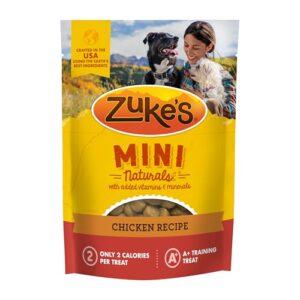
Zuke’s Mini Naturals are basically the reference point for housebreaking treats — and for good reason. Each piece is tiny, soft, and chewy, so your puppy can gobble it down in seconds and stay focused on you.
At just 2 calories per treat, you can reward frequently without worrying about overfeeding. They’re made with real chicken, free from corn, wheat, and soy, and you can even break them into smaller pieces for tinier pups.
Simple, effective, and puppy-approved.
| Best For | Dog owners who want a reliable, low-calorie treat for training puppies or small breeds. |
|---|---|
| Category | Training treats |
| Primary use | Training rewards |
| Age range | All life stages |
| Allergy friendly | No corn wheat soy |
| Origin | Made in USA |
| Form | Soft treats |
| Additional Features |
|
- Only 2 calories per treat, so you can reward often without overfeeding
- Made with real chicken and no corn, wheat, or soy — great for sensitive pups
- Soft and chewy, easy to break into even smaller pieces for tiny dogs
- Can dry out quickly if the bag isn’t sealed after each use
- Some dog owners would prefer human-grade meat ingredients
- Delivery can take up to three weeks depending on where you order from
2. Blue Buffalo Beef Training Dog Treats
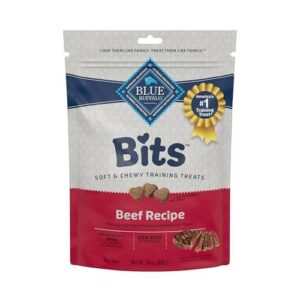
Think of Blue Buffalo Beef Training Dog Treats as your “upgrade” option when you want extra motivation outside. Made with real beef as the first ingredient and boosted with DHA, they’re great for brain development and focus, especially in young puppies.
The soft, moist, heart‑shaped bites are tiny enough for rapid-fire rewards and easy to digest. They’re also free from corn, wheat, soy, and poultry by-products, though the higher price and rich recipe may not suit very sensitive dogs well.
| Best For | Puppy owners and trainers who want a high-quality, grain-free treat with real beef to motivate and reward dogs of all sizes. |
|---|---|
| Category | Training treats |
| Primary use | Training rewards |
| Age range | All life stages |
| Allergy friendly | No corn wheat soy |
| Origin | Not specified |
| Form | Soft treats |
| Additional Features |
|
- Real beef is the first ingredient, with added DHA to support brain development and skin health in puppies
- Soft, bite-sized, heart-shaped pieces make them perfect for rapid training sessions without overfeeding
- Free from corn, wheat, soy, and poultry by-products — a cleaner option for dogs with common sensitivities
- Pricier than most training treats, which adds up fast if you’re using them daily
- The small size might frustrate owners of larger dogs who prefer a meatier reward
- The rich beef recipe may not work well for dogs with sensitive stomachs or specific dietary restrictions
3. Wellness Grain Free Puppy Treats
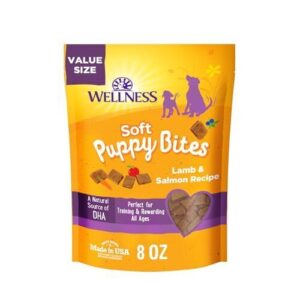
If beef isn’t your puppy’s thing, Wellness Grain Free Puppy Treats might be the better fit.
Made with real lamb and salmon, they’re soft, bite-sized, and easy for tiny mouths to chew and swallow fast — exactly what you need during rapid-fire potty sessions.
The DHA from salmon aids brain development, which means your pup is literally learning better while earning rewards.
No corn, wheat, or soy, either, making them a solid pick for puppies with sensitive stomachs.
| Best For | Puppies under one year old who need a soft, grain-free training treat — especially those with sensitive stomachs or a preference for fish and lamb over beef. |
|---|---|
| Category | Puppy treats |
| Primary use | Puppy training |
| Age range | Puppies only |
| Allergy friendly | Grain free recipe |
| Origin | Made in USA |
| Form | Soft treats |
| Additional Features |
|
- Real lamb and salmon give your pup a protein-packed snack with DHA to support brain development
- Soft and bite-sized, so they’re perfect for quick rewards during training without slowing things down
- No corn, wheat, or soy — a cleaner option for puppies with food sensitivities
- Some buyers have reported finding hard, translucent shards in the bag, which is a real safety concern
- Only suitable for puppies under one year, so you’ll need to switch things up as your dog gets older
- Globally-sourced ingredients mean quality control can vary from batch to batch
4. Merrick Power Bites Beef Dog Treats
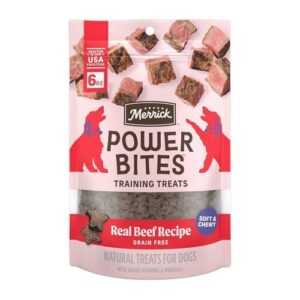
For puppies who need a little extra motivation, Merrick Power Bites are worth keeping in your treat pouch. Real deboned beef is the first ingredient, so the smell alone gets most dogs moving.
They’re soft, chewy, and small enough to eat fast — no lingering mid‑training.
The grain‑free formula is gentle on sensitive stomachs, and added flaxseed helps skin and coat health.
You can even break them in half to stretch the bag further during longer training sessions.
| Best For | Dogs of all sizes who need a tasty, high-value treat for training sessions or everyday rewards. |
|---|---|
| Category | Dog treats |
| Primary use | Training rewards |
| Age range | Adults |
| Allergy friendly | Grain free recipe |
| Origin | Cooked in USA |
| Form | Soft treats |
| Additional Features |
|
- Real deboned beef is the first ingredient, so even picky dogs tend to go crazy for them
- Soft and chewy texture means dogs eat them fast — no training interruptions
- Grain-free formula is easy on sensitive stomachs, and flaxseed supports skin and coat health
- Some bags have shown up without a Best By date, and the zip lock feels a bit flimsy
- Pricier than a lot of other treat options on the shelf
- Product size or shape has changed for some buyers, which caught a few loyal customers off guard
5. Cloud Star Cheddar Training Treats
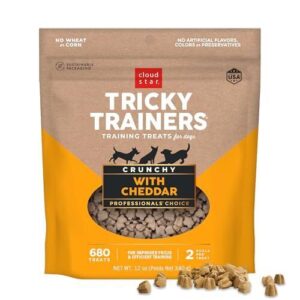
Sometimes beef isn’t your puppy’s thing — and that’s where Cloud Star Tricky Trainers Cheddar comes in. That real cheddar cheese smell is surprisingly powerful, even outdoors.
At just 2 calories per treat, you can reward your pup dozens of times without guilt. Each bag holds around 680 tiny bites, so one bag goes a long way. They’re wheat-, corn-, and soy-free, which makes them a solid pick if your puppy has a sensitive stomach.
| Best For | Puppy parents and dog owners who want a tiny, low-calorie, super-smelly cheddar treat that keeps dogs focused during frequent training sessions, even outdoors. |
|---|---|
| Category | Training treats |
| Primary use | Training rewards |
| Age range | All life stages |
| Allergy friendly | No wheat corn soy |
| Origin | Not specified |
| Form | Small treats |
| Additional Features |
|
- Low-calorie at just 2 calories per treat, so you can reward heavily without blowing your dog’s diet.
- Real cheddar cheese makes them very smelly and motivating, great for training and teaching new tricks.
- Free from wheat, corn, dairy, and soy, with no artificial flavors, colors, or preservatives, so they’re a good option for sensitive stomachs.
- The strong cheddar smell that dogs love can be unpleasant for some humans.
- Not ideal for dogs with specific ingredient sensitivities to grains like barley or oats.
- Easy to overdo in long sessions if you’re not watching how many tiny treats your dog gets.
6. Fruitables Skinny Mini Dog Training Treats
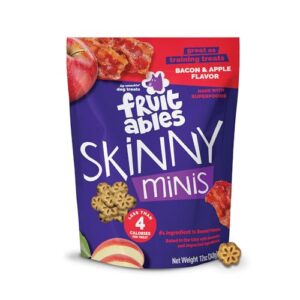
If your pup isn’t wild about cheese either, Fruitables Skinny Mini treats might just hit the sweet spot.
Made with real sweet potato, apples, and superfoods, these little bites pack serious flavor without the calorie overload — just 3 calories each.
They’re soft, chewy, and free from wheat, corn, and soy, so sensitive stomachs stay happy.
The bacon and apple combo smells delightful to dogs, which really helps outdoors when your puppy’s nose is pulling in every direction.
| Best For | Pet parents looking for low-calorie, allergy-friendly training treats that still smell and taste exciting enough to keep their dog’s attention. |
|---|---|
| Category | Training treats |
| Primary use | Training rewards |
| Age range | All life stages |
| Allergy friendly | No wheat corn soy |
| Origin | Made in USA |
| Form | Soft treats |
| Additional Features |
|
- Low-calorie (about 3 calories each), great for frequent training without packing on extra weight.
- Made with sweet potato, apples, and other superfood ingredients, plus no wheat, corn, or soy for sensitive pups.
- Soft, chewy texture and bacon-and-apple smell make them extra tempting, even in distracting outdoor settings.
- Bag size can feel small for the price, especially if you train often.
- Limited flavor options, so picky dogs might not find a favorite.
- Very soft texture may not suit dogs who prefer crunchier treats or have specific dietary restrictions.
7. PureBites Beef Liver Dog Treats
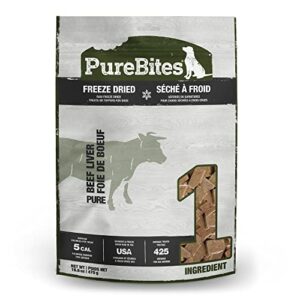
For many owners, PureBites Beef Liver feels like a “cheat code” for focus outside.
These freeze‑dried bites are made from one simple ingredient—100% beef liver—so they’re excellent for sensitive stomachs, allergies, or even diabetic dogs.
Each piece is high in protein and about 5 calories, and the firm, meaty texture breaks easily into tiny potty‑training rewards.
Just remember they’re very high‑value, so use small pieces, watch total calories, and expect your dog to beg for more on every single outing.
| Best For | Dogs with allergies, diabetes, or sensitive stomachs who need a clean, high-protein treat for training or daily rewards. |
|---|---|
| Category | Single-ingredient treats |
| Primary use | Training and topper |
| Age range | All life stages |
| Allergy friendly | Single-ingredient beef |
| Origin | Freeze-dried in USA |
| Form | Freeze-dried treats |
| Additional Features |
|
- Just one ingredient—100% beef liver—so you always know exactly what your dog is eating.
- Only 5 calories per treat, making it easy to reward without worrying about weight gain.
- Freeze-dried in the USA with no fillers, colors, or preservatives—great for picky owners and picky dogs alike.
- Treat sizes aren’t uniform, so you may need to break them up for consistent training rewards.
- The price can run higher than comparable treats on the market.
- Some buyers felt the packaging was misleading about how much product they were actually getting.
How to Use Treats for Potty Training Success
Treats don’t just reward your puppy; used well, they actually teach your puppy where and when to go.
The timing, routine, and clear communication so your pup can connect the feeling of going potty with the reward that follows.
In the next section, we’ll walk through simple ways to use treats that make potty training faster and less stressful for both of you.
Timing Rewards for Maximum Effect

Timing is everything. The immediate reward window is tiny — you’ve got about 1 to 3 seconds after your puppy finishes to deliver that treat.
Wait longer, and they’ll associate the reward with trotting back inside, not going potty outside. Stay in the reward location, marker word ready ("Yes!"), treat in hand.
Consistent age-based timing builds the clearest connection for young learners.
Creating a Consistent Potty Routine

Building a steady potty training rhythm starts with a simple training schedule, your puppy can trust.
- Use Schedule Rhythm: out after waking, meals, and play.
- Aim for Cue Consistency with the same times.
- Blend Crate Training with frequent, supervised trips outside.
- Keep Potty Area Setup calm; use puppy treats as positive reinforcement.
- Add Bell Communication later to support lasting housebreaking.
Using Verbal Cues With Treats

Think of your verbal cue as a spotlight telling your puppy, “Do it now.”
Good Cue Timing looks like: say “Go potty,” pause a beat, then wait.
When the squat starts, use Marker Word (“Yes!”) and follow with puppy treats or training treats.
That sequence facilitates rewardbased training, Lure Shift, Cue Consistency, Overcue Prevention, and potty training with positive reinforcement.
Adjusting Treats to Your Puppy’s Preferences
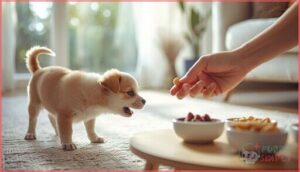
Start by watching Sensory feedback: tail wags, fast chewing, enthusiastic sniffing. Use Preference tracking to note which puppy treats disappear in under two seconds.
Add Flavor rotation so high-value treats stay exciting, and adjust Reward pacing when motivation dips. Let those Motivation cues guide your positive reinforcement and reward-based training during potty training sessions, for calmer, cleaner days at home.
Troubleshooting Housebreaking Challenges

Even the most consistent training hits a rough patch sometimes, and that doesn’t mean you’re doing it wrong.
Every puppy is different, and a few common snags tend to trip up even the most dedicated owners.
Here’s what to watch for and how to get things back on track.
When Accidents Keep Happening
Ever feel like your puppy missed the memo on potty training and housebreaking? When accidents keep happening, it’s usually about Cue Timing, Crate Size, or weak Schedule Consistency, not “stubbornness.”
When potty accidents keep happening, your puppy isn’t stubborn—something’s off with timing, crate setup, or routine consistency
Owner Supervision must be close, because subtle cues are easy to miss. Clean old Scent Markers, then use tiny puppy treats and positive reinforcement training for real accident prevention success.
Quick Troubleshooting Checklist
When accidents still happen after tightening your routine, run through this quick Problem Identification checklist before assuming the worst.
- Isolation Steps: Test one variable — schedule, crate size, or supervision level — at a time
- Common Quick Fixes: Refresh scent-eliminating cleaner and shrink the crate
- Preventive Measures: Log accidents by time to spot patterns
- Escalation Process: Consult a trainer if nothing shifts within two weeks
Recognizing and Preventing Regression
Regression sneaks up on you — one day your pup’s doing great, the next there are puppy accidents everywhere. Keeping a stash of high-value puppy training treats on hand makes it much easier to snap your pup back on track when regression hits.
Watch for early warning signs like sniffing corners or circling indoors.
Stress triggers like a new schedule or environment are often the culprit.
Stick to a consistent schedule, keep reward frequency steady with high-value treats, and lean on familiar environmental cues to reset quickly.
Frequently Asked Questions (FAQs)
What is the 10-10-10 rule for puppy potty training?
Think of it like ten‑minute signals: in daily Potty Training, Housebreaking, 10-10-10 uses Trigger Timing and Proactive Scheduling—Wake‑Up Routine, post‑meal, and Post‑Play Potty—improving Accident Prevention with Puppy Training Techniques, high‑value treats, and Reward‑Based Training Methods.
How do I choose treats for sensitive stomachs?
Single-Protein Options, Low-Fiber Choices, and Additive-Free Formulas in Dog Treat Selection to better support overall Canine Health and Nutrition.
Digestive Enzyme Treats, Calorie-Conscious Portions, high-value treats matching Puppy Development Stages and Potty Training Challenges.
Can I use kibble instead of training treats?
Like paying change, kibble as training treats works when Calorie budgeting and Kibble portioning align.
Flavor intensity motivates, Digestive safety holds, and Reward consistency keeps potty training, housebreaking, and puppy development stages, rivaling high‑value treats.
How should I store treats for outdoor training?
Use Airtight Containers for training treats, with Temperature Control in shade and Odor Preservation; carry high‑value treats in Portable Pouches.
Practice Shelf‑Life Monitoring of dog training products.
Refresh at the potty spot—potty training tips.
What treats work best for nighttime potty trips?
Ever wonder why midnight potty trips feel hit-or-miss?
Grab soft chewy consistency treats with strong meaty aroma, cut to pea-size portions.
Low-calorie bites keep reward-based training methods effective without upsetting your puppy’s stomach overnight.
How do I manage treats with multiple puppies?
Keep sessions separate using visual barriers and rotate who goes first. Fair treat distribution and preference tracking make positive reinforcement training smoother when housebreaking multiple pups at once.
Conclusion
step outside with a plan, step outside with patience, step outside with a pocket full of purpose.
The right puppy training treats for housebreaking and potty training turn each bathroom break into a clear conversation instead of a confusing guess.
Watch your puppy, reward fast, stay consistent, and let the treats do quiet, powerful work in the background.
One day soon, you’ll realize the “training phase” is over—and your routine simply works. You both exhale.
- https://akc.jotform.com/252115238925860?source=16
- https://www.akc.org/expert-advice/training/how-to-potty-train-a-puppy/
- https://southernagriculture.com/products/merrick-power-bites-real-texas-beef-recipe
- https://naturallyunleashed.com/products/merrick-power-bites-real-beef-recipe-dog-treats-6-oz-pouch
- https://www.pawdiet.com/reviews/merrick-power-bites-big-bites-real-beef-recipe-dog-treat/