
This site is supported by our readers. We may earn a commission, at no cost to you, if you purchase through links.

Most puppies spend their first night home crying at 2 a.m. — and their owners spend it second-guessing every decision they made that day. It’s exhausting, and it usually happens because nobody told them that a crate isn’t a punishment. It’s a den.
Dogs are den animals by instinct. A properly introduced crate becomes the one place your puppy feels genuinely safe — not trapped, not isolated. The difference between those two outcomes comes down entirely to how you set it up and what you do in the first two weeks.
Crate training a puppy doesn’t require special talent. It requires the right crate, a consistent routine, and a clear plan for each stage of the process.
Table Of Contents
- Key Takeaways
- Choose The Right Puppy Crate
- Set Up a Cozy Crate
- Build Positive Crate Associations
- Follow a Step-by-Step Schedule
- Solve Common Crate Problems
- Frequently Asked Questions (FAQs)
- How do you know if your puppy is crate training?
- How long does it take to crate train a dog?
- What is crate training a puppy?
- Should you crate train your dog?
- How long should crate training realistically take?
- Can older or rescue dogs be crate trained?
- Should you crate train multiple dogs together?
- Is it okay to crate a puppy while at work?
- At what age can dogs stop using a crate?
- How long does crate training typically take?
- Conclusion
Key Takeaways
- Size your crate to your puppy’s full-grown dimensions and use a divider panel to shrink the space now, preventing accidents while saving you from buying multiple crates.
- Crate training succeeds or fails on positive association — feeding meals inside, using treat trails, and stuffed KONGs teach your puppy the crate means good things, not punishment.
- Follow a structured two-week schedule: start with open-door exploration, progress to short closures, then extend sessions gradually until your puppy handles overnight stays without distress.
- Whining, accidents, and bedding destruction are normal but fixable — the root cause is almost always too much time inside too soon, so shorten sessions and adjust your routine before problems compound.
Choose The Right Puppy Crate
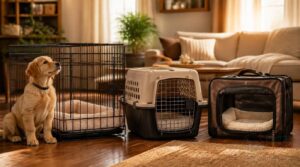
The right crate sets the foundation for every step that follows. Size, material, and placement all matter more than most new owners expect. Here’s what to check before you bring one home.
Getting both right starts with understanding which crate materials are actually safest for your dog — a detail that shapes everything from daily comfort to long-term training success.
Correct Crate Size
One size won’t fit your puppy forever, so size for the dog they’ll become.
Measure your puppy in a natural standing position—nose to tail, then shoulder height—and add 1 to 2 inches of clearance. They need room to stand, turn around, and lie flat without brushing the top or sides. Small breeds often settle around 24 inches; large breeds may need 36 to 42 inches at full growth. Using a puppy divider functionality can help adjust the space as your pet grows.
Adjustable Divider Panels
Buying one crate that grows with your puppy saves money and hassle. Adjustable divider panels let you shrink the space now and expand it later, using full-length metal hinges spaced every four inches for steady hinge durability. Storage latches lock each panel in place, preventing accidental separation during panel reconfiguration.
Self-leveling casters keep the divider stable on uneven floors, supporting caster stability while resisting material corrosion for long-term pet confinement safety.
Wire, Plastic, or Fabric
Once your crate size and dividers are set, pick the right material. Wire dog crates offer airflow and visibility, while metal and plastic crates resist chewing and odors and add moisture-resistant coatings for lasting durability.
Choose non-toxic, safety-tested wiring for crate training to always avoid hazards. Fabric crates offer decorative aesthetics and portability but provide less secure pet confinement long-term.
Safe Crate Placement
Where you place the kennel matters as much as the crate size itself. Ideal airflow and stable surfaces keep your puppy safe and comfortable.
- Set it on a non-slip mat on flat flooring
- Keep 2–3 inches of clearance around all sides
- Stay between 18–26°C (64–79°F)
- Position within sight of family activity
- Avoid direct sunlight and heat vents
That balance of proximity and calm makes pet confinement feel like a safe space, not a penalty box.
Proximity and calm transform a puppy’s crate from a penalty box into a genuine safe space
Items to Avoid
Several everyday items turn a safe confinement space into a hazard zone.
Skip heavy bedding, scented pads, and loose fabric—each raises chewing and suffocation risks. Choose puppy-safe toys without choking parts, and keep electrical devices unreachable.
| Avoid | Risk | Safer Choice |
|---|---|---|
| Heavy bedding | Suffocation | Thin mat |
| Scented liners | Irritation | Unscented pad |
These swaps prevent crate fear and curb destructive behavior.
Pairing these routines with a calm, confident presence—especially important for powerful guardian breeds like those compared in this Bullmastiff vs Boerboel temperament and training guide—helps pups feel safe rather than stressed.
Set Up a Cozy Crate
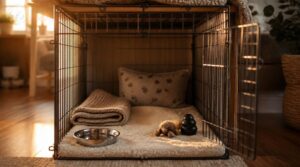
You’ve picked the right crate. Now it’s time to make it feel like home. Here’s what goes inside, and where everything belongs.
Comfortable Bedding Options
Think of the crate as your puppy’s first bedroom — it should feel safe and soft from day one. A memory foam mattress pad adds 2 to 3 inches of cushioning and helps distribute weight evenly across small joints. Look for gel-infused or open-cell foam to prevent heat buildup.
Choose covers made from washable, hypoallergenic fabrics so cleanup stays simple throughout puppyhood.
Safe Chew Toys
A few puppy-safe toys can turn the crate into the highlight of your dog’s day, not just a holding pen.
- Durable rubber toys resist heavy chewing
- Nylon weave chews clean teeth safely
- Interactive puzzles reward problem-solving
Stuff a KONG toy with peanut butter for mental stimulation, or add dental chews for plaque control. Rotate these for lasting dog enrichment.
Water and Meal Placement
Good hydration habits start outside the crate, not inside it. Keep water bowls 6 to 12 inches from the entrance, set on a non-slip mat to stop spills.
For the first few days, serve meals outside the crate, then ease the bowl closer as part of your daily routine. Offer fresh water every 2–3 hours for steady hydration monitoring.
Quiet but Nearby Location
Where you place the crate matters almost as much as the crate itself. Pick a quiet, low-traffic spot—a bedroom corner or family room nook works well, away from slamming doors or blaring TVs.
Skip total isolation, though. Your puppy still needs you nearby for comfort and consistency. This balance builds a true safe space, supporting positive associations without overwhelming young ears or triggering separation worries.
Door-open Introduction
Watch your puppy decide, on their own terms, that the crate isn’t scary at all. Voluntary crate entry beats forcing anything.
- Toss treats just inside the door.
- Let exploration happen at their pace.
- Prop the door open to avoid accidents.
This gradual training program builds genuine confidence, turning the crate into a true safe space.
Build Positive Crate Associations

Your puppy needs to see the crate as a good place, not a bad one. That takes a little strategy, not just luck. Here are five simple ways to turn that crate into your puppy’s favorite spot.
Treat Trails Inside
Lay a short trail of soft treats from the crate door to a cozy mat—effective trail design turns crate training into a calm game. Space rewards evenly for best reward timing, choosing safe puppy treats like small peanut butter bits to prevent rushing behavior.
Rotate treats (trail rotation strategies) for fresh, reward-based positive reinforcement and lasting positive association.
Meals in The Crate
Treat trails spark curiosity. Mealtime takes it further. Feeding your puppy inside the crate builds a positive association with the space faster than almost anything.
- Bowl placement: push the bowl toward the back wall
- Offer 1/4–1/2 cup per meal, 3–4 times daily
- Choose a nutrient-dense puppy formula
- Keep meal times consistent — same hours each day
- Remove leftovers within 15 minutes
Stuffed KONG Rewards
Once your puppy eats meals inside the crate comfortably, a stuffed KONG toy takes that progress even further. Pack it with peanut butter or soft kibble, then freeze it overnight. The chewing keeps your puppy calm and focused — sometimes for 20 minutes straight.
KONG’s Stuffed Rewards loyalty program lets you earn points on eligible purchases, redeemable for discount vouchers. Bonus points are earned through reviews and membership milestones.
Crate Games and Praise
Games turn crate time into something your puppy looks forward to. Try quick hide-and-seek rounds, tossing treats inside for them to find.
Reward each entry with a high-value treat, paired with calm praise within five seconds. Keep sessions short and upbeat, then gradually fade treats while praise stays — your puppy learns the crate means good things, not isolation.
Calm Puppy Entry
Often, the best entries happen quietly. Wait until your puppy is calm, not wound up from play, then guide them toward the crate using voluntary entry methods like a treat trail. Dim lights and reduce noise to lower sensory stimuli.
This low-energy timing builds confidence, turning the crate into a genuine safe space. Never rush an excited, wound-up puppy inside.
Follow a Step-by-Step Schedule

Now it’s time to put everything together. Crate training works best when you follow a clear timeline, not guesswork. Here’s how the next two weeks should unfold, day by day.
Days 1–2: Exploration
Your first two days are about calm curiosity, not commands. Leave the door open and let your puppy sniff freely, rewarding each peek with a treat. Sit close, speak softly.
Watch for tucked tails or yawning — early stress cues — and pause sessions if they appear. Keep exploration windows to 5–10 minutes, noting how fast your puppy approaches each time.
Days 3–6: Short Closures
Now it’s time for real closures. Pick one cue — something like "crate time" — and use it every single time before shutting the door.
Keep sessions short: 15 to 45 minutes. Let your puppy out between closures to move around. Watch for pacing or whining; if distress shows up, shorten by 5–10 minutes. Praise calmly after each one. Consistency builds trust.
Days 7–11: Longer Sessions
Your puppy’s stamina is growing — so it’s time to stretch those sessions further. Once each day, push crate time to 15–30 minutes, always starting with the same cue word.
- Add a 5–10 minute break mid-session for potty checks
- Use small, soft treats to keep focus without overfeeding
- Keep noise low and lighting steady — consistency builds calm
By Day 11, expect quiet settling, no whining.
Days 12–14: Brief Departures
This is the real test: can your puppy handle being alone? Start with departures of 10–20 minutes, leaving right after a play and bathroom break.
Add 2–5 minutes each session. Watch for pacing or frantic whining — signs of separation anxiety — and shorten sessions if needed.
Log each outing. Behavior tracking reveals patterns fast, helping you adjust before small stress becomes a bigger problem.
Day 14+: Nighttime Training

Nights are their own challenge. Place the crate near your bedroom so your puppy catches your scent — it cuts anxiety fast.
Stick to a consistent bedtime routine:
- Final potty break right before crating
- Offer a stuffed KONG at the door
- Say a calm cue like "good night"
- Remove collars to prevent snagging
If whining starts, wait briefly before responding.
Solve Common Crate Problems

Even with the best setup, most puppies will test your patience at some point during crate training. The good news is that the most common problems have straightforward fixes once you know what’s causing them. Here’s how to handle each one.
Crying or Whining
Most puppies whine before they cry. Whining is shorter, nasal, and attention-seeking. Crying is louder, more urgent — often tied to a real need like hunger or a bathroom break.
Don’t respond to whining with comfort or play. Wait for a pause, then calmly check for physical needs. Consistent silence from you teaches that quiet behavior earns attention, not noise.
Potty Accidents
Accidents inside the crate almost always point to one thing: too long inside. Young puppies can’t hold it. Follow the age-plus-one rule — a 2-month-old can stay about three hours, maximum.
Watch for:
- Rushed schedule changes
- Constipation causing bladder pressure
- UTIs triggering sudden urgency
- Anxiety from new environments
- Missed pre-crate potty breaks
When accidents happen, clean thoroughly and adjust timing.
Chewing Bedding
Bedding destruction is common in puppyhood. It usually signals teething or anxiety, not bad behavior.
| Cause | Solution |
|---|---|
| Teething discomfort | Offer a frozen KONG or rubber chew toy |
| Anxiety-driven chewing | Build crate routine slowly with positive reinforcement |
Switch to a chew-resistant crate mat if fabric gets destroyed. Avoid cedar or scented bedding — both irritate sensitive noses.
Separation Anxiety Signs
Some puppies go beyond normal fussing. If yours panics at your departure cues — keys jingling, shoes going on — that’s a red flag. Watch for relentless whining, frantic escape attempts, and accidents despite a recent bathroom break.
Clinginess between sessions matters too. A puppy glued to your side all day often struggles hardest when the crate door closes.
When to Get Help
Some situations go beyond what training alone can fix. If your puppy injures itself trying to escape, shows signs of heat stress, or can’t calm down after you’ve ruled out hunger and bathroom needs, contact a vet or certified behavior professional right away.
Regression after weeks of consistent work, or panic that disrupts your household, signals it’s time for expert eyes.
Frequently Asked Questions (FAQs)
How do you know if your puppy is crate training?
Your puppy is crate training when it voluntarily enters the crate, stays calm without excessive whining, and resumes normal activity quickly after release. These behavioral cues signal genuine comfort, not just tolerance.
How long does it take to crate train a dog?
Crate training takes 2 to 4 weeks for most dogs, though full comfort can take 1 to 4 months. Individual training paces vary — some dogs settle in days, others need six months.
What is crate training a puppy?
Teaching your puppy that the crate is a safe space — not a punishment — is the foundation of crate conditioning. Done right, it works with your puppy’s natural den instinct.
Should you crate train your dog?
Yes, you should. A crate gives your puppy safety and security, helps with housetraining, reduces anxiety, and prevents destruction. It creates a calm, den-like space your dog can genuinely call its own.
How long should crate training realistically take?
Most puppies settle into crate comfort within 2 to 4 weeks. With patience and a consistent crate training schedule, some reach overnight readiness by day 10 to 14.
Can older or rescue dogs be crate trained?
Yes. Older and rescue dogs can absolutely learn to use a crate. Slow, pressure-free introductions matter most. Many adult dogs settle well when they choose to enter for rewards rather than being forced inside.
Should you crate train multiple dogs together?
No — each dog needs its own crate. Sharing raises resource guarding risks and slows individual potty training. Exceptions exist for bonded, low-arousal dogs under expert supervision, but separate crates are always the safer default.
Is it okay to crate a puppy while at work?
It depends on age. Puppies under 6 months shouldn’t be crated longer than 2–4 hours without a break. If your workday runs long, hire a dog walker or consider doggy daycare.
At what age can dogs stop using a crate?
Most dogs can stop using a crate between 12 and 24 months. Readiness depends on house-training reliability, chewing control, and calm behavior when alone — not a fixed birthday.
How long does crate training typically take?
Most puppies settle into a crate routine within 2 to 4 weeks. Some take up to 6 to 8 weeks. Consistency is the biggest factor in how fast your puppy adjusts.
Conclusion
Old dog trainers used to say:
- earn the den, earn the dog.
That wisdom still holds. When you learn how to crate train a puppy the right way — gradually, consistently, without shortcuts — you’re not just teaching your dog where to sleep. You’re teaching them the world is safe.
Stick to the schedule. Reward calm. Stay patient when nights feel long. Your puppy isn’t fighting you. They’re learning to trust you.
- https://www.humaneworld.org/en/resources/crate-training-101
- https://www.animalhumanesociety.org/resource/crate-training-your-dog-or-puppy
- https://k9connoisseur.com/blogs/news/how-to-crate-train-an-adult-dog
- https://www.guidedog.org/gd/events-and-news/Crate_Training_A_Puppy.aspx
- https://telltaildogtraining.com/crate-training-a-quick-start-guide