This site is supported by our readers. We may earn a commission, at no cost to you, if you purchase through links.
Your dog slips the collar, and for one stomach-dropping second, you’re watching them bolt toward traffic. It happens faster than you’d expect—one backward scramble, and they’re free.
Dogs back out of collars for reasons that are equal parts physics and psychology: wrong fit, fear response, or a negative association they’ve been quietly rehearsing every walk.
The frustrating part? Most escapes are preventable. Understanding why your dog does it points directly to the fix—whether that’s a different collar design, a simple strap adjustment, or retraining the whole collaring routine from scratch.
Table Of Contents
- Key Takeaways
- Common Reasons Dogs Escape Harnesses
- How Improper Fit Leads to Escapes
- Behavioral Triggers for Backing Out
- Dog Breeds Prone to Escaping Harnesses
- Harness Types That Prevent Escapes
- Key Harness Features for Security
- Proper Harness Fitting and Adjustment
- Training Tips to Prevent Harness Escapes
- When to Replace or Upgrade Your Harness
- Top 9 Products for Harness Security
- 1. Plutus Pet Reflective Martingale Collar
- 2. Bojafa Durable Rubber Dog Chew Toys
- 3. Shawnco Essential Dog Harness
- 4. SparklyPets Double Dog Bungee Leash
- 5. Haapaw Martingale Dog Collar
- 6. Joytale No Pull Dog Harness
- 7. Crown Paws Retractable Dog Leash
- 8. Spytec GPS Vehicle Tracker
- 9. Ladoogo Reflective Neoprene Dog Collar
- Frequently Asked Questions (FAQs)
- Conclusion
Key Takeaways
- Most harness escapes trace back to one of four fixable causes: poor fit, fear response, physical discomfort, or a reinforced escape habit your dog has quietly been practicing on every walk.
- Fit is your first line of defense — if you can slip more than two fingers under any strap, your dog can back right out the moment leash tension hits.
- Breed shape matters as much as size; deep-chested dogs like Greyhounds and blocky breeds like French Bulldogs rarely match standard sizing charts, so measure your dog’s actual chest girth and go from there.
- Training the harness routine matters just as much as the gear itself — pair every buckle click with a high-value treat, keep sessions short, and you’ll break the fear-escape cycle before it gets hardwired.
Common Reasons Dogs Escape Harnesses
Dogs don’t back out of harnesses by accident — something’s always driving the behavior. Most of the time, it comes down to one of four culprits: fit, fear, physical discomfort, or a bad association the dog has built over time.
For anxious dogs especially, the harness itself matters — choosing a harness designed for anxious dogs can remove one of those culprits before it ever becomes a problem.
Here’s a closer look at each one.
Poor Harness Fit
Poor strap fit is the number one escape route. When the neck opening is too wide or the chest girth runs larger than your dog’s actual measurements, the whole strap shifts and rotates during movement. Vest fit, body shape, strap design — they all matter. A neck strap that clears four fingers? That’s an open door.
Proper sizing and consistent strap adjustment close it. To prevent escape, consider an escape proof strap for added security.
Anxiety and Fear Responses
Fit isn’t always the problem. Sometimes the strap fits perfectly — and your dog still backs out. Fear triggers like sudden traffic noise, unfamiliar dogs, or a startling sound can send even a confident dog into full reverse.
Watch for these anxiety signs:
- Flattened ears and a low, tucked posture
- Freezing, then bolting backward
- Refusing to let you buckle the strap
- Trembling or panting before walks even start
Calm training and consistent emotional support can shift this pattern over time. Understanding strap fear causes is essential to addressing the root of the issue.
Discomfort or Pain
Sometimes the issue isn’t fear — it’s physical. A rough nylon strap rubbing the armpit for 30 minutes causes real skin irritation. Tight straps restrict circulation, leading to cold paws or even pressure sores over weeks.
Poor strap fit can compress nerves, causing trembling or limping. Bad strap design forces unnatural movement, straining shoulder muscles.
Discomfort teaches dogs one thing: escape works.
When a harness causes pain, dogs learn one lasting lesson: escape works
Negative Associations
Pain teaches escape — but so does experience. If your dog got yanked, scolded, or dragged through a scary situation while harnessed, that gear now signals trouble. Punishment effects run deep in canine behavior.
Environmental fears, overhandling consequences, even rushed buckle routines — all become anxiety triggers. Negative reinforcement locks in the pattern fast: back out once, pressure disappears, lesson learned.
How Improper Fit Leads to Escapes
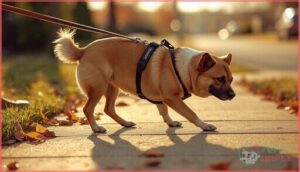
A collar that doesn’t fit right isn’t just uncomfortable — it’s practically an open door. Even small issues like loose straps or the wrong size for your dog’s build can make escape surprisingly easy.
Here’s how improper fit creates those weak points.
Loose or Incorrectly Tightened Straps
A loose collar isn’t just uncomfortable — it’s an open door. If you can slip more than two fingers under multiple straps, your dog can back right out the moment leash tension hits. Strap adjustment is your first line of escape prevention.
- Loose girth straps let the collar ride forward, creating shoulder gaps
- Uneven strap tension causes the collar to rotate, loosening one side completely
- Slack chest straps drop the D-ring, pulling the entire collar off-center
Check collar security before every single walk.
Wrong Size for Body Shape
Body type issues catch a lot of owners off guard. Standard saddle sizing is built around average proportions — so a Greyhound’s deep chest and narrow waist, or a French Bulldog’s broad chest proportions, rarely match off-the-shelf charts.
Poor vest fit caused by breed-specific shape mismatches means straps float, gaps open at the shoulders, and your dog reverses right out. Saddle size must follow actual body shape, not just chest girth.
Lack of Regular Adjustments
Gear fit drifts — and most owners never notice until their dog is already free. Build these weekly checks into your routine:
- Run two fingers under every strap after each walk
- Recheck gear straps following grooming appointments
- Re-evaluate fit after any weight change
- Check for strap adjustments after storage
- Have every walker confirm proper fit before heading out
Consistent gear maintenance closes escape gaps before they open.
Behavioral Triggers for Backing Out
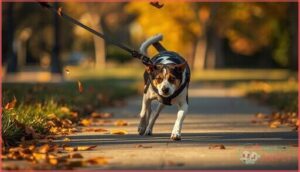
Fit isn’t always the culprit — sometimes your dog’s own behavior is what sets an escape in motion. Certain triggers can cause even a well-fitted collar to fail in seconds. Here’s what to watch for.
Nervousness and Startle Responses
A sudden car door slamming, a skateboard rattling past — that’s all it takes. Nervousness and startle reflex work together to trigger instant escape behavior in anxious dogs. You’ll often spot anxiety signs first: tucked tail, pinned ears, backward weight shift.
Fear triggers like loud noises or visual surprises escalate fast. Calming techniques and recognizing early anxiety triggers can interrupt that panic spiral before your dog slips free.
Pulling, Lunging, or Sudden Movements
Prey drive is basically a loaded spring — and a squirrel can pull the trigger instantly. When your dog lunges, the force dynamics shift fast: up to 200 Newtons of backward pull, straps riding up the shoulders, restraint fit gone in seconds.
Common sudden movement triggers that cause restraint escapes:
- Squirrel or bike chases launching explosive forward darts
- Excited spins that rotate chest plates loose
- Hard pulling mechanics stretching nylon straps over time
- Downward-posture lunges dropping shoulders beneath straps
- Leash-jerk reactions causing dog slipping out of restraint mid-walk
Test your restraint fit before every walk — that’s non-negotiable lunge prevention.
Reinforcement of Escape Behavior
Once a dog backs out successfully, that single escape rewires everything. Freedom from anxiety triggers acts as instant negative reinforcement — the pressure disappears, the reward lands, and the behavioral chain locks in.
These reinforcement cycles are brutally efficient. Each repeated escape tightens the pattern until you’re dealing with a dog that’s practically engineered its own escape triggers. Consistent collar fit breaks the cycle before it calcifies.
Dog Breeds Prone to Escaping Harnesses
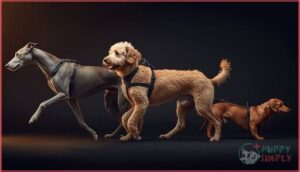
Some dogs are just built to wiggle free — and breed plays a bigger role than most owners realize. Body shape, temperament, and instinct all factor into how likely a dog is to slip out of a standard collar.
Here are the three main types of dogs that give collars the hardest time.
Deep-Chested and Lanky Breeds
Some builds just refuse to cooperate with standard strap design. Greyhounds, Whippets, and Vizslas share deep chest challenges — a dramatically deep ribcage paired with a narrow waist — that turns poor fit into a genuine escape route.
Breed specific straps built for this shape are non-negotiable. Here’s why:
- Deep chest challenges cause girth straps to slide or rotate mid-walk
- Lanky breed considerations demand four-plus adjustment points
- Chest measurement tips start behind the shoulder blades, not at the armpits
- Adjustable strap solutions with a low belly strap block backward exits
High-Anxiety or Rescue Dogs
Body shape isn’t always the issue. Sometimes it’s what’s happening inside the dog’s head. Rescue dogs dealing with anxiety triggers — trucks, crowds, sudden noises — often throw their weight backward the moment leash pressure hits.
Fear responses this intense need more than a tighter buckle. Chest strap fit matters, but so does rescue training paired with calming techniques that address the underlying stress management and canine behavior modification piece.
Strong or Stubborn Escape Artists
Then there’s the dog who’s turned escaping into a sport. Huskies, Beagles, and Jack Russell Terriers lead the pack here — high drive motivation runs deep, and strap escapes aren’t accidents for these dogs. They’re calculated. A quick reverse-hop, shoulders tucked, chest pulled inward — and they’re out.
Stubborn breed handling demands escape-proof, no-escape strap designs with zero slack. Training strong dogs starts with eliminating every gap.
Harness Types That Prevent Escapes
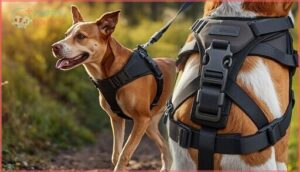
Not all straps are created equal, and the right design can make all the difference for an escape-prone dog. Some styles are built specifically to close off the backing-out route before it even becomes an option.
Here are the strap types worth knowing about.
Escape-Proof and No-Escape Harnesses
Some dogs treat a standard restraint like a puzzle they’re determined to solve. That’s why escape-proof and no-escape restraint designs exist. These use three-strap layouts, reinforced restraint materials, and secure buckles that resist sudden lunges.
Multiple strap adjustments keep the fit snug against the sternum and ribcage — stopping dogs from slipping out of the restraint cold. Solid escape prevention is built right into the design.
Harnesses With Belly Straps
A belly strap changes everything for escape artists. That extra anchor point sits on the ribcage — not the soft abdomen — so secure fitting relies on bone, not tissue.
Rigging design with a rear belly strap makes backing out nearly impossible by locking rig straps against the torso.
Check strap adjustment weekly. Two fingers of space is your target for belly strap safety without sacrificing escape prevention.
Front-Clip and Head Halter Designs
Two smart restraint design choices can stop escape artists cold. A front-clip restraint shifts the leash attachment to your dog’s chest — so lunging pivots them sideways instead of forward, breaking that straight-back escape line.
Head halters work differently, controlling the head directly, but require slow acclimation.
Both rely on precise strap adjustments and proper restraint fit to actually deliver those front clip benefits and halter safety.
Key Harness Features for Security
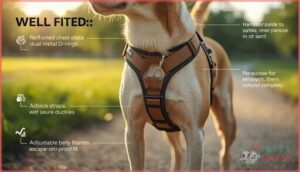
Not all harnesses are built the same, and the difference often comes down to a few specific features. Once you know what to look for, choosing the right one gets a lot easier.
Here’s what actually matters regarding keeping your dog secure.
Adjustable Straps and Locking Buckles
A secure restraint lives or dies by its adjustment system. Four to six strap points — neck, chest, belly — let you dial in restraint fit for almost any body shape. Locking mechanisms matter just as much: standard buckles can pop open mid-lunge.
Key features to prioritize for escape prevention:
- Buckle security: locking side-release buckles requiring a second motion to open
- Strap adjustment: snug enough for two fingers between restraint straps and skin
- Restraint customization: multiple sliders accommodating weight changes over time
- Restraint size range: wide adjustment spans for narrow waists without over-tightening the chest
Durable, Chew-Resistant Materials
Material makes or breaks equipment quality. Ballistic nylon resists chewing better than thin decorative fabric, while ripstop weaves stop small punctures from spreading into full tears. Heavy webbing holds firm under backing pressure, and neoprene padding protects against chafing at high-contact points. Metal hardware won’t snap mid-lunge like plastic buckles can.
Worn-out gear fails quietly — inspect for fraying, stretched webbing, or cracked hardware regularly.
Reflective Strips and Safety Handles
Visibility isn’t optional — it’s a safety layer that good strap design builds in from the start.
- Reflective Materials using 3M micro-prismatic strips make dogs visible up to 600 feet away
- Visibility Enhancement covers all angles with 360-degree reflective bands
- Safety Grips with padded grips give you instant control during sudden lunges
- Emergency Lifting distributes force evenly across chest and shoulders
- Strap Durability keeps reflective piping bright through repeated washes
Proper Harness Fitting and Adjustment
Even the best strap fails if it doesn’t fit right. Getting the measurements correct and adjusting the straps properly is what actually keeps your dog secure. Here’s exactly how to do it.
Measuring Chest and Neck Correctly
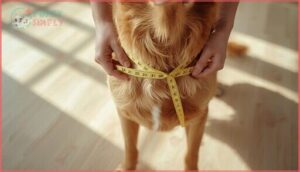
Getting strap sizing right starts with two measurements: chest girth and neck fitting.
For chest measurement, wrap a soft tape just behind your dog’s front legs at the widest rib point. For neck, place the tape at the base where a collar naturally rests.
Use the two-finger rule for proper tape placement — snug, never tight. Always measure standing.
Using Sizing Charts and Manufacturer Guidelines
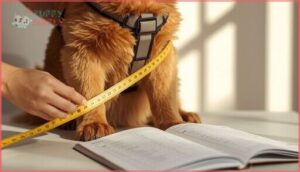
Those measurements mean nothing without the right chart. Every brand sizes differently — one brand’s "medium" covers 18–23 inches of chest girth while another’s stretches to 29 inches.
Always check manufacturer guidelines for your exact model, since vest fit tolerances vary between front-clip and step-in designs. When chest measurements land between two strap sizes, size up and use fit adjustments to tighten strap length down to snugness.
Step-by-Step Strap Adjustment
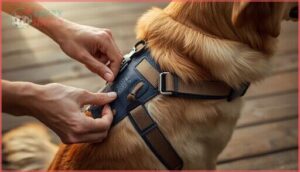
Once you’ve confirmed the right strap size, loosen every strap completely before putting it on your dog. Start with the neck strap — slide it into position above the shoulders, then tighten until two fingers fit snugly underneath. Repeat that two-finger rule for chest and girth strap adjustment.
After secure fastening, tug the leash in multiple directions. Any shifting means buckle safety needs another pass.
Training Tips to Prevent Harness Escapes
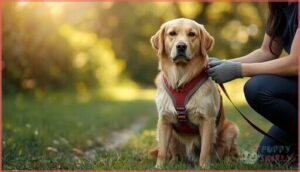
A well-fitted collar only solves half the problem — your dog’s behavior around it matters just as much.
The good news is that a few focused training habits can make escapes a thing of the past. Here’s what actually works.
Positive Reinforcement Techniques
Consistency is everything here. Clicker training works because reward timing is precise — mark the exact second your dog holds still for buckling, then follow with high value rewards like chicken or freeze-dried liver. Verbal praise keeps the momentum between clicks.
Build those positive associations fast with:
- "Yes!" the instant the strapping slides on calmly
- Jackpot incentives (a cheese handful) for first full fastenings
- Short, daily 5-minute sessions using the same reward sequence
- Quiet praise during strap adjustments to avoid over-excitement
Gradual Desensitization to Harness
Positive reinforcement sets the foundation, but rushing the strap introduction undoes that work fast. Desensitization techniques work in phases: place the strap on the floor, let your dog sniff voluntarily, then reward calming signals like relaxed ears or slow approaches.
Your reward system and phased training build real tolerance. This is how you stop dog strap problems before they become full strap escapes.
Rewarding Calm Harnessing Behavior
Timing is everything. Reward calm behavior within one to two seconds of your dog standing still — any longer and the connection breaks. Use a marker cue like "yes" the moment their feet plant and body relaxes, then follow immediately with a high-value treat. This clear communication teaches canine behavior patterns fast.
End each session with a walk, and calm harnessing becomes its own reward.
When to Replace or Upgrade Your Harness
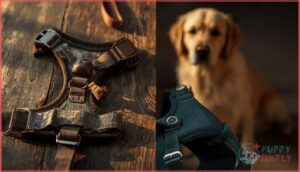
Even the best collar has a shelf life. Whether your dog has grown, worn through the straps, or keeps slipping free no matter what you try, these are all signs it’s time for an upgrade.
Here’s what to watch for across three key areas.
Signs of Wear and Tear
A safety belt doesn’t fail all at once — it gives you warnings first. Learn to spot them.
- Frayed straps lose up to 50% of their strength as nylon fibers unravel along edges.
- Weakened stitching shows gaps wider than 2mm, especially at the chest.
- Stretched webbing sags and ruins safety belt fit entirely.
- Rusted hardware and worn buckles compromise every clip point.
Don’t ignore worn-out gear.
Outgrowing Current Harness
Growth Monitoring matters more than most owners realize. Puppies can gain several centimeters of chest girth in just weeks, turning a proper fit into a dog strap problem almost overnight.
Check Strap Sizing monthly using the two-finger rule at the chest and neck. If straps hit maximum length, Replacement Guidelines say move up immediately — don’t wait for escapes to confirm what the measurements already tell you.
Persistent Escape Attempts
Some dogs perfect their backing techniques so fast it stops being a fluke — it becomes a strategy. Dog anxiety amplifies escape triggers, and two or three successful gear escapes wire the behavior in for good.
If your dog is slipping out of gear regularly despite secure fitting, that gear has failed. At that point, you’re not adjusting — you’re replacing. Upgrade to an escapeproof, no-escape gear before the habit gets bulletproof.
Top 9 Products for Harness Security
The right gear can make a real difference when your dog keeps slipping free. These nine products cover everything from escape-proof harnesses and martingale collars to GPS trackers for worst-case moments.
Here’s what’s worth your attention.
1. Plutus Pet Reflective Martingale Collar
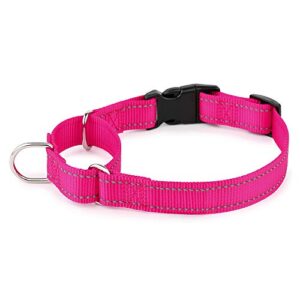
The Plutus Pet Reflective Martingale Collar is one of those tools that actually solves two problems at once. The martingale loop tightens just enough when your dog pulls or backs up — then releases automatically when they settle. No choking, no slipping free.
It’s made from durable nylon, weighs under 2 ounces, and the reflective stitching keeps your dog visible up to 500 yards away at night. Available in XS through L, it fits most breeds with adjustable sizing built right in.
| Best For | Dog owners who need a secure, escape-proof collar for training or daily walks — especially with dogs that pull or slip out of regular collars. |
|---|---|
| Material | Nylon |
| Size Suitability | Small to Large |
| Safety Feature | Reflective stitching |
| Primary Use | Training/Daily wear |
| Weight | 1.76 oz |
| Adjustability | Adjustable tightness |
| Additional Features |
|
- The martingale loop tightens just enough to prevent escapes without choking — then releases on its own when your dog relaxes.
- Reflective stitching is a nice safety bonus for early morning or nighttime walks.
- Light as a feather at under 2 ounces, so your dog probably won’t even notice it’s on.
- Not a great fit for dogs with unusually small heads or very thick necks — sizing can get tricky.
- Strong pullers might overpower the martingale mechanism, so it’s not a substitute for serious leash training.
- The reflective stitching works best with direct light, so don’t count on it in low-light conditions without a headlamp or car headlights hitting it.
2. Bojafa Durable Rubber Dog Chew Toys
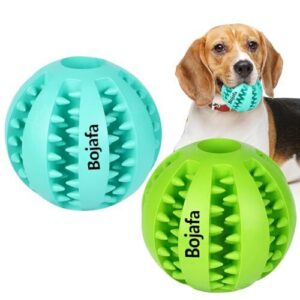
Anxiety doesn’t stop at the leash — it follows your dog indoors, too. That’s where the Bojafa Durable Rubber Dog Chew Toys earn their place in this list.
Keeping a leash-anxious dog calm starts with managing their overall stress levels, and structured chewing does exactly that. These 1.8-inch natural rubber balls are non-toxic, BPA-free, and tough enough for daily use without crumbling.
Stuff them with peanut butter or treats to redirect nervous energy into something productive — and give those teeth a workout while you’re at it.
| Best For | Small breed dogs and puppies who deal with anxiety, boredom, or need a little extra help keeping their teeth clean. |
|---|---|
| Material | Natural Rubber |
| Size Suitability | Small/Puppies |
| Safety Feature | Non-toxic material |
| Primary Use | Indoor/Outdoor play |
| Weight | 0.08 kg |
| Adjustability | Treat fill amount |
| Additional Features |
|
- Made from non-toxic natural rubber that holds up to daily chewing without falling apart
- Treat-dispensing design keeps dogs mentally engaged and helps redirect nervous energy
- Doubles as a dental tool — regular chewing helps reduce plaque and tartar build-up
- Not a great fit for large dogs or heavy chewers who could tear through it quickly
- The mint scent can be a bit strong for some dogs, which may put them off the toy
- Cleaning it out after stuffing with peanut butter or treats can be a bit of a hassle
3. Shawnco Essential Dog Harness
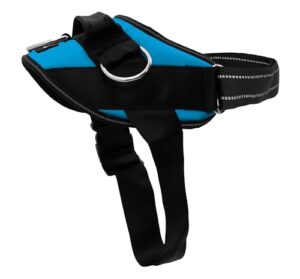
Once your dog is calmer indoors, the real work happens outside — and that’s where the Shawnco Essential Dog Strap earns its keep. Three leash attachment rings give you genuine steering control: use the side rings for heel training, the center ring for relaxed walks.
Fully adjustable chest and belly straps mean no more guessing on fit. Reflective trim adds nighttime visibility, and the breathable mesh keeps things comfortable on longer outings. On and off in under three seconds.
| Best For | Dog owners who need a reliable, everyday harness for walks, runs, or hikes — especially if their pup tends to pull or has neck sensitivities. |
|---|---|
| Material | Mesh/Nylon |
| Size Suitability | Small to Large |
| Safety Feature | Reflective chest strap |
| Primary Use | Walking/Training/Hiking |
| Weight | 5.29 oz |
| Adjustability | Fully adjustable straps |
| Additional Features |
|
- Three leash attachment points give you real control whether you’re training or just cruising around the block
- Breathable mesh and adjustable straps make it comfortable for dogs of all sizes
- Reflective trim and a quick 3-second on/off make it practical for early mornings or late-night walks
- Determined pullers can still pull — it’s not a guaranteed fix for every dog
- The buckle runs stiff, which can be a hassle if you have weaker hands
- Fit has to be dialed in precisely, or a strong dog might back right out of it
4. SparklyPets Double Dog Bungee Leash
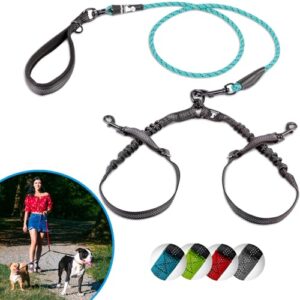
Walking two dogs who both pull? That’s a different challenge entirely. The SparklyPets Double Dog Bungee Leash manages it with a 360° tangle-free swivel that keeps both dogs moving independently without crossing leads.
Built-in bungee sections absorb sudden lunges, so you’re not getting jerked off your feet when one dog spots a squirrel. Each coupler adjusts from 21 to 25 inches, letting you customize spacing for dogs of different sizes.
Reflective accents and a padded ergonomic handle round it out nicely.
| Best For | Dog owners who walk two small dogs at once and are tired of constantly untangling leashes mid-stride. |
|---|---|
| Material | Nylon |
| Size Suitability | Small Dogs |
| Safety Feature | Reflective handle accents |
| Primary Use | Dual dog walking |
| Weight | 9.2 oz |
| Adjustability | Adjustable couplers |
| Additional Features |
|
- The 360° swivel actually does its job — leads stay separated even when both dogs are moving in different directions.
- Bungee sections take the sting out of sudden pulls, so a reactive dog won’t yank your arm off.
- Reflective accents make evening walks a lot safer without any extra effort on your part.
- "Tangle-free" is more of a goal than a guarantee — determined dogs can still find a way.
- The heavy-duty build adds some weight, which you’ll notice on longer walks.
- Dogs with very different sizes may need some fiddling to get the coupler lengths just right.
5. Haapaw Martingale Dog Collar
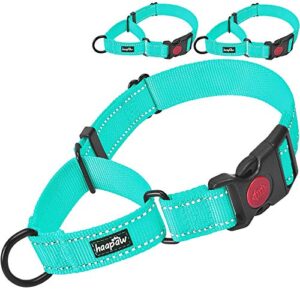
If you’ve got a solo escape artist instead of a double handful, the Haapaw Martingale Dog Collar is worth a serious look. Its two-loop design gently cinches when your dog pulls back — closing off that classic reverse-and-slip exit — without choking.
The quick-release buckle snaps on and off fast, which matters at the vet or groomer. Heavy-duty 1-inch nylon webbing holds up to daily use, and reflective piping keeps your dog visible on evening walks.
| Best For | Dog owners who struggle with pullers or escape artists — especially those working with rescue or shelter dogs that haven’t been leash trained yet. |
|---|---|
| Material | Nylon |
| Size Suitability | Small to Large |
| Safety Feature | Reflective piping |
| Primary Use | Training/Walking |
| Weight | 5.61 oz |
| Adjustability | Adjustable sizing |
| Additional Features |
|
- The martingale design gently tightens when a dog pulls back, making it much harder to slip out compared to a standard flat collar
- Reflective piping is a nice touch for early morning or evening walks when visibility matters
- The quick-release buckle makes it easy to get on and off fast, which is a lifesaver at the vet or groomer
- Not safe for puppies — the tightening mechanism poses a choking risk for young dogs
- Always needs a human on the other end; it shouldn’t be left on an unsupervised dog
- The turquoise color runs more sky blue in person, so don’t expect an exact match to the photos
6. Joytale No Pull Dog Harness
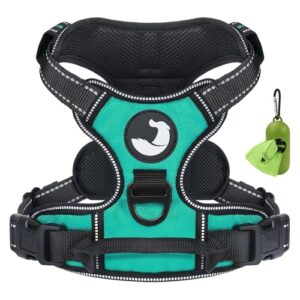
For dogs that need more than a collar fix, the Joytale No Pull Dog Support covers the full picture. Four adjustable straps let you dial in a snug, custom fit — no more loose shoulders or chest gaps your dog can wriggle through.
The front-clip redirects pulling without pressure on the neck, while 360° reflective strips keep visibility strong after dark.
Quick-release buckles mean fast on-and-off, and the padded interior manages long walks without rubbing raw.
| Best For | Medium-sized dogs that pull on walks, making it a solid pick for active owners who walk or jog with breeds like Beagles, French Bulldogs, or Boston Terriers. |
|---|---|
| Material | Nylon/Polyester |
| Size Suitability | Medium Dogs |
| Safety Feature | 360° reflective strips |
| Primary Use | Training/Walking/Hiking |
| Weight | 255 g |
| Adjustability | 4 adjustable straps |
| Additional Features |
|
- Front and back clip options give you real flexibility — use the front clip to curb pulling during training or the back clip for relaxed daily walks
- 360° reflective strips are a genuinely useful safety feature if you’re out early in the morning or after sunset
- Quick-release buckles and four adjustable straps make fitting and removing the harness fast and hassle-free
- The leash rings run small, so if you use a heavy-duty or wider leash, they might feel a little cramped
- The handle isn’t padded, which could get uncomfortable if you need to hold it for extended periods
- Nylon doesn’t have any give, so getting the fit right matters — too snug and it’ll restrict movement, too loose and your dog might slip out
7. Crown Paws Retractable Dog Leash
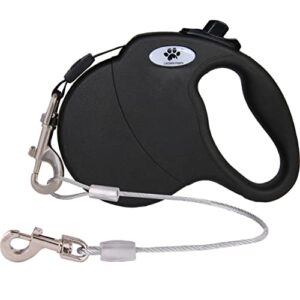
Once your dog slips free, recapturing that freedom fast matters. The Crown Paws Retractable Dog Leash extends to 16 feet, enough roam for a large dog without losing control.
It accommodates dogs up to 110 lbs, so Labs and German Shepherds aren’t a problem. The chew-proof steel wire extender is a smart touch for determined biters, and the tangle-free tape design keeps walks clean.
One-hand braking gives you instant lockdown when things go sideways.
| Best For | Owners of large breed dogs (up to 110 lbs) who want more freedom on walks without giving up control. |
|---|---|
| Material | Aluminum/Nylon/Plastic |
| Size Suitability | Large Breeds |
| Safety Feature | Braking system |
| Primary Use | Large dog walking |
| Weight | 14 oz |
| Adjustability | Extender wire ropes |
| Additional Features |
|
- 16-foot reach gives big dogs real room to explore while you stay in charge
- Chew-proof steel wire extender holds up against dogs that love to gnaw
- One-hand braking makes it easy to lock things down fast when you need to
- The extender can drag on the ground, which gets annoying fast
- The retracting mechanism runs slow for some users — not ideal in a quick-reaction moment
- A few owners found it didn’t hold up long-term against stronger, more determined dogs
8. Spytec GPS Vehicle Tracker

Even the best leash won’t help if your dog slips free and bolts before you can react. That’s where the Spytec GPS Tracker earns its spot on this list.
It delivers real-time location updates every 5 seconds, so you’re not guessing — you’re tracking. Battery life stretches up to 14 days, and geofencing alerts you the moment your dog crosses a boundary.
Compact, weatherproof, and subscription-based starting at $22.95/month, it’s a serious safety net for serious escape artists.
| Best For | Dog owners with escape-prone pets who want real-time location tracking and instant boundary alerts for added peace of mind. |
|---|---|
| Material | Plastic |
| Size Suitability | Universal |
| Safety Feature | Real-time GPS tracking |
| Primary Use | Asset tracking |
| Weight | 14.4 oz |
| Adjustability | Custom geofence boundaries |
| Additional Features |
|
- Updates location every 5 seconds, so you always know where your dog is
- Up to 14-day battery life means fewer recharges and more consistent coverage
- Geofencing alerts you the moment your dog crosses a set boundary
- Requires a monthly subscription starting at $22.95, which adds up over time
- Battery life can vary depending on how often it’s pinging location updates
- Signal accuracy can lag in low-coverage areas, which matters most in a real emergency
9. Ladoogo Reflective Neoprene Dog Collar
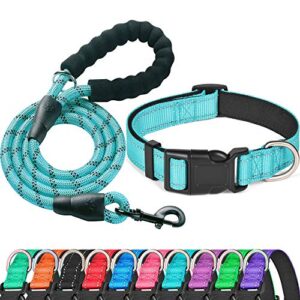
The Ladoogo Reflective Neoprene Dog Collar won’t stop an escape on its own — but pair it with a secure leash and it pulls serious weight. Soft neoprene padding protects sensitive necks from rubbing, while the durable nylon webbing holds firm under pressure.
Reflective threads boost visibility up to 500 meters at night — a real advantage for early morning or late-evening walks. The quick-release buckle withstands up to 300 pounds of pull force, and it’s fully machine washable. Practical, comfortable, and built to last.
| Best For | Dog owners who walk their pup early in the morning or late at night and want a comfortable, reflective collar that’s easy to clean and adjust. |
|---|---|
| Material | Nylon/Neoprene/Metal |
| Size Suitability | Small to Large |
| Safety Feature | Reflective threads |
| Primary Use | Daily walks/Training |
| Weight | 9.9 oz |
| Adjustability | Quick release buckle |
| Additional Features |
|
- Soft neoprene padding keeps sensitive necks comfy, even on long walks
- Reflective threads make your dog easy to spot at night — a genuine safety win
- Comes with a free 5ft leash and fits small, medium, and large dogs
- The collar runs a bit thick, which might not suit very small dogs
- The chrome on the leash attachment can wear off with regular use
- The closure has failed for at least one user, so it’s worth double-checking the fit before every walk
Frequently Asked Questions (FAQs)
Can medical conditions cause harness escape behavior?
Yes, absolutely. Pain from arthritis, skin allergies, or nerve compression can all trigger escape behavior. Your dog isn’t being difficult — they’re telling you something hurts.
How does dog age affect harness security?
Age matters more than most owners realize. Puppies wriggle out constantly — their joints are hypermobile and they grow fast.
Seniors lose muscle, causing straps to loosen over time. Check fit regularly at both life stages.
Are double-clip leashes safer for escape artists?
Double-clip leashes are genuinely safer for escape artists. Connecting to both the chest plate and collar simultaneously means if your dog slips one point, the other holds — zero single-point failure.
Should harness routines differ for rescue dogs?
Absolutely. Rescue dogs often carry trauma that makes strap routines feel threatening. Go slower, keep sessions under five minutes, and pair every touch with high-value treats before you ever clip the buckle.
Can weather or temperature affect harness fit?
Weather absolutely affects fit. Nylon straps stretch up to 5% when wet, and winter fur growth can add 2–4 inches to your dog’s chest girth — both create dangerous slack overnight.
Conclusion
The ball is in your court now. You know why dogs back out of straps—poor fit, fear, discomfort, or a behavior pattern that’s quietly been reinforced over time.
Every escape attempt is your dog communicating something specific. Listen to it. Adjust the strap, address the anxiety, and build a routine your dog can trust.
The right gear plus the right training doesn’t just prevent escapes—it makes every walk safer for both of you.
- https://www.petliveliest.com/blogs/tips/how-to-prevent-your-dog-from-escaping-their-harness
- https://gentlecreatures.co/blogs/tailtips/hidden-dangers-of-dogs-escaping-harnesses
- https://perfect-fit-dog-harness.com/blog/post/how-to-prevent-your-dog-from-escaping-a-harness
- https://topdogharnesses.co.uk/blogs/news/how-to-stop-dog-slipping-out-of-harness
- https://www.courteousk9s.com/post/when-harnesses-are-harmful