This site is supported by our readers. We may earn a commission, at no cost to you, if you purchase through links.
Most dog owners pour food until it “looks right”—and that guesswork quietly adds up. Overfeeding by just 10% of daily calories can add meaningful weight within months, increasing the risk of joint problems, diabetes, and a shorter lifespan.
The bag guidelines don’t help much either; they’re built for the average dog, and yours probably isn’t average. Age, weight, activity level, and breed all shift the numbers in ways that matter.
Getting dry food portions right isn’t complicated once you know what to look for—and the difference it makes to your dog’s long‑term health is worth every bit of the attention.
Table Of Contents
- Key Takeaways
- How Much Dry Food Should Dogs Eat?
- Factors Influencing Your Dog’s Food Quantity
- Feeding Puppies, Adults, and Senior Dogs
- Measuring and Portioning Dry Dog Food
- Using Dog Feeding Charts and Calculators
- Monitoring Your Dog’s Weight and Health
- Adjusting Dry Food Amounts for Special Needs
- Best Practices for a Healthy Feeding Routine
- Frequently Asked Questions (FAQs)
- Conclusion
Key Takeaways
- Your dog’s dry food needs depend on age, weight, activity level, and breed, so start with a feeding chart, but adjust portions based on your dog’s body condition and health.
- Using a kitchen scale to weigh dry food is more accurate than measuring by cups, since calorie content varies by brand and cup size.
- Most adult dogs do best with two measured meals per day, and treats should never make up more than 10% of their total daily calories.
- After spaying, neutering, illness, or as your dog ages, you should cut calorie intake by 10–30% and monitor weight every two weeks to keep your dog healthy.
How Much Dry Food Should Dogs Eat?
Figuring out how much dry food your dog needs doesn’t have to be a guessing game.
A dog’s age, weight, and activity level all play a role, so using a dog food portion calculator by breed and size takes the guesswork out of mealtime.
A few key guidelines can point you in the right direction before you ever open a bag.
Here’s what you need to know to get started.
Standard Dry Food Feeding Guidelines
Most dry dog foods are built around a simple starting point: roughly 10 grams per kilogram of your dog’s body weight daily. But calorie density varies widely between brands, so portion ratios aren’t one-size-fits-all. A dog’s metabolic rate, breed size scaling, and body condition all shift the feeding amount.
Always treat any feeding chart as a starting estimate, not a final answer. Nearly 59% of U.S. dogs are overweight, highlighting the importance of proper portion control as overweight dog statistics.
How to Interpret Feeding Charts
Feeding charts organize your dog’s needs into rows and columns. Weight row selection comes first — find your dog’s current weight on the left. Then move across activity columns to match their lifestyle.
Age brackets split puppies from adults and seniors, so life stage matters too. Breed adjustments for large or toy dogs should be factored in. Think of it as a starting grid, not a strict rule.
Proper nutrition for puppies requires high quality protein sources.
Typical Serving Sizes by Dog Size
Once you’ve matched your dog’s weight on the chart, the numbers get practical fast.
Toy breed portions start small — around ¼ to ¾ cup daily for dogs under 10 pounds.
Small dog cups range from ⅓ to 1⅓ cups.
Medium breed cups land at 1⅓ to 2⅔ cups.
Large dog cups run 2⅔ to 4¼ cups, while giant dog cups climb higher based on weight range.
Factors Influencing Your Dog’s Food Quantity

No two dogs eat the same amount, and that’s not a flaw in the system — it’s just how it works.
Several key factors shape how much dry food your dog actually needs each day. Here’s what to look at before you measure out that next scoop.
Age and Life Stage Considerations
Your dog’s age shapes everything about how much they eat.
Puppy Growth Curve need calorie‑dense food — at least 22.5% protein — to fuel rapid development.
Adult dogs shift to Adult Maintenance Needs, generally 1 to 4 cups daily.
Then the Senior Metabolism Shift kicks in, cutting calorie needs by roughly 20%.
A feeding chart or calorie calculator makes these Life‑Stage Calorie Adjustments and Age‑Specific Nutrient Ratios easy to track.
Weight and Body Condition Score
Weight alone doesn’t tell the whole story. Body condition score — a hands‑on check rating fat coverage from 1 to 9 — gives you a clearer picture.
Ideal BCS Range of 4 to 5 out of 9 is your target. Use BCS Assessment Tools alongside a calorie calculator and Weight Trend Analysis monthly to fine‑tune dog feeding guidelines and keep Calorie Adjustment Strategies and Obesity Prevention Tips working in your favor.
Activity Level and Lifestyle
Your activity levels shape caloric needs more than most owners expect.
A mostly indoor dog may stay lean on minimum label portions, while outdoor dogs or working dogs can need two to six times more.
Routine feeding schedules help match intake to output across seasons — winter cold and summer heat both shift feeding amounts, making consistent dog weight management easier year‑round.
Breed-Specific Dietary Needs
Breed shapes everything.
A Great Dane’s Giant Breed Metabolism demands calorie‑dense kibble — up to 8 or 9 cups daily — while Brachycephalic Digestion in Bulldogs works best with Low Calorie Bulldog portions split twice daily.
High Energy Retrievers need up to 4.5 cups, and Small Breed Sensitivities mean Chihuahuas thrive on just ¼ to 1 cup.
Breed‑specific needs aren’t optional in dog feeding guidelines — they’re foundational.
Feeding Puppies, Adults, and Senior Dogs

A dog’s nutritional needs shift quite a bit from puppyhood through the senior years. Getting the portions right at each stage makes a real difference in long-term health.
Here’s what you need to know for each life stage.
Puppy Dry Food Requirements
Puppies aren’t just small dogs — they’re growing machines that burn through calories fast. They need roughly 2 to 3 times more calories per kilogram than adults, so calorie density and meal frequency both matter.
Use a puppy feeding chart matched to your puppy’s expected adult size, and follow breed size guidelines carefully.
The calcium‑phosphorus ratio directly shapes healthy growth rate and bone development.
Adult Dog Portioning
Once dog hits adulthood, the guessing game should stop. Most adult dogs need about 2 to 3 percent of their ideal body weight in dry food daily, split across two meals for better meal timing and digestion.
Use feeding tools like a kitchen scale for accurate dog food portioning — calorie density varies by brand. Monitor body condition and adjust portions every week or two.
Senior Dog Feeding Adjustments
Senior dogs aren’t just older adults — their caloric requirements drop 20 to 30 percent as metabolism slows. Smart adjustments keep them lean and comfortable:
- Calorie Reduction – Feed 2 percent of ideal body weight daily
- Meal Frequency – Split into 2 to 3 smaller meals
- Dental Softening – Soak kibble 10 to 15 minutes in warm water
- Weight Monitoring – Check body condition weekly; adjust portions by 10 percent
Veterinary nutrition advice and steady protein maintenance protect aging muscles while supporting healthy weight management.
Measuring and Portioning Dry Dog Food
Getting the portion right matters just as much as choosing the right food.
Even small measuring errors can add up over time and affect your dog’s weight.
Here’s what you need to know to portion dry food accurately.
Using Cups Vs. Weighing Food
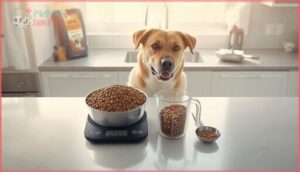
kitchen scale takes the guesswork out of measuring dry dog food. Cup density variability means one cup can weigh 80 to 130 grams depending on the brand, so calories per cup shift without warning. Scale precision benefits your dog’s weight and portion control directly.
Brand gram conversions on labels make this easy. Hybrid measuring method — weigh once, mark your scoop — keeps portions consistent daily.
Accurate Portion Control Techniques

Once you know your food’s calories per cup, calorie density matching keeps portions accurate. Check the label, multiply cups fed by calories per cup, and compare that to your dog’s daily target. Track treat calories separately — treats shouldn’t exceed 10% of daily intake.
Slow feeder bowls stretch meals naturally. Keep a portion adjustment log to catch weight creep early.
Common Portioning Mistakes to Avoid

Even with careful measuring, a few habits quietly undo your efforts.
Bag Guideline Overreliance is one of the biggest — manufacturers assume average activity, so less active or neutered dogs often get 20–25% too many calories.
Free‑feeding Risks compound this fast.
Treat Calorie Miscount adds another 200–300 hidden calories daily.
Seasonal Activity Adjustments matter too — winter couch time means smaller portions.
Using Dog Feeding Charts and Calculators
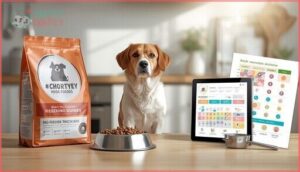
Feeding charts and calculators take the guesswork out of portioning — but only if you know how to use them correctly.
The label on your dog’s food bag is actually your first and best starting point.
Here’s what to look at and when to make adjustments.
How to Read Dog Food Labels
Dog food labels hold more answers than most people realize.
The Guaranteed Analysis section lists your dog’s Protein Minimum, crude fat, Moisture Content, and fiber — all key to understanding nutritional needs.
Check the Ingredient Order too; the first item carries the most weight.
The Nutritional Adequacy statement confirms AAFCO approval for your dog’s life stage.
| Label Section | What It Shows | Why It Matters |
|---|---|---|
| Guaranteed Analysis | Protein minimum, fat, moisture | Confirms basic nutrient levels |
| Ingredient Order | Heaviest ingredient first | Reveals primary protein source |
| Nutritional Adequacy | AAFCO life stage approval | Validates complete nutrition |
Online Dog Food Calculators Explained
Online dog food calculators take the guesswork out of portioning. You enter Calculator Input Variables — dog weight, age, and activity level — and the tool applies Metabolic Rate Formulas like RER (70 × kg⁰·⁷⁵) to estimate daily calories. Breed Adjustment Factors and Activity Slider Impact enhance results further.
Always cross‑reference with your food’s calories per cup for accurate feeding guidelines.
| Calculator Feature | What It Does |
|---|---|
| Dog Weight Entry | Sets your baseline daily calories |
| Activity Slider Impact | Adjusts multiplier from 1.2× to 2.0× |
| Breed Adjustment Factors | Accounts for metabolic size differences |
| Calories Per Cup Input | Converts calories to real portions |
| Result Interpretation Tips | Splits totals into 2–3 daily meals |
When to Adjust Chart Recommendations
Charts are starting points, not permanent rules. Adjust when your dog’s body condition score climbs above 6 (cut 20%) or drops below 4 (add 10–15%).
CS Score Alerts, Health Issue Alerts, and Vet Guidance Triggers all signal it’s time to reassess.
| Situation | Adjustment |
|---|---|
| Maturity Phase Shifts (7+ years) | Reduce 10–15% |
| Weather-Driven Intake (winter hikes) | Increase 10–20% |
Monitoring Your Dog’s Weight and Health

Feeding your dog the right amount isn’t a one-time decision — it’s something you revisit as your dog grows and changes.
The scale and a few simple observations are your best tools for staying on track.
Here’s what to watch for.
Signs of Underfeeding or Overfeeding
Your dog’s body tells you everything — if you know what to look for.
Too little food shows up fast: visible ribs, a dull coat, excessive shedding, and lethargic behavior that dims their usual spark. Too much causes loose stools and steady weight creep. Watch for these red flags tied to feeding amount, calories per cup, body condition score, and dog health conditions:
Visible ribs, dull coat, and lethargy warn of too little food — loose stools and weight creep signal too much
- Visible ribs or hip bones with no fat padding
- Dull coat, dry skin, or excessive shedding
- Lethargic behavior and low stamina during short walks
- Loose stools or bloating after meals
- Constant food-seeking or begging between feedings
Using Pet Scales for Accurate Weigh-Ins
A reliable pet scale is your best ally in dog weight management. Consistent weigh-ins catch small shifts before they affect body condition score or feeding amount decisions.
| Feature | Why It Matters |
|---|---|
| Wiggle-Proof Technology | Locks reading despite fidgeting |
| Platform Size Matching | Ensures safe, stable footing |
| Digital Calibration Tips | Maintains long-term accuracy |
| Pre-Weighing Routine | Builds positive reinforcement habits |
Pair your scale with a dog feeding calculator for smarter adjustments.
Adjusting Portions for Optimal Health
Portions aren’t set-and-forget — your dog’s feeding amount should evolve with their life. Calorie density tuning, age-based portion scaling, and seasonal metabolism shifts all influence how many calories per cup your dog actually needs. Here’s how to stay ahead:
- Adjust by 10% every two weeks based on body condition changes.
- Account for stress-related appetite changes and medication interaction adjustments during health events.
- Follow updated dog feeding guidelines as your dog ages for long-term dog health and nutrition.
Adjusting Dry Food Amounts for Special Needs

Some dogs have needs that go beyond standard feeding charts.
A recent surgery, a food sensitivity, or an ongoing health condition can all change how much your dog actually needs to eat.
Here’s how to adjust dry food amounts for three common situations.
Feeding Spayed or Neutered Dogs
Spaying or neutering changes your dog’s metabolism overnight. Most dogs need 25 to 30 percent fewer calories after surgery — that’s a real shift in caloric density needs.
Start with 10 percent less food, then adjust every two weeks using weight monitoring tools and body condition checks. Fiber benefits help here: high-fiber kibble keeps them full on smaller portions. Aim for 30 minutes of daily exercise to support dog health and nutrition long‑term.
Managing Food for Allergies or Sensitivities
Food allergies show up as itching, ear infections, or stomach issues — and dry food ingredients are often the culprit. Chicken triggers reactions in nearly 30% of sensitive dogs, so switching matters.
- Novel Protein Trials — feed venison or rabbit for 8–12 weeks
- Limited Ingredient Kibble — one protein, simple carbs, grain‑free or gluten‑free options
- Hydrolyzed Formulas — broken‑down proteins, your dog’s immune system won’t recognize
- Allergy Symptom Monitoring — track itching, stool changes, and coat condition weekly
Veterinary Allergy Testing confirms triggers. Always read dog food labels and standards carefully.
Customizing Diets for Health Conditions
Beyond allergies, specific health conditions call for precise adjustments.
For dog obesity, reduce portions to 1–2% of ideal body weight daily — obesity portion control done gradually works best.
Diabetic carb management means consistent low-carb meals twice daily.
Renal low-phosphorus kibble protects kidney function, while cardiac sodium limits protect the heart.
For dog orthopedic issues, joint anti-inflammatory formulas with omega-3s ease discomfort noticeably.
Best Practices for a Healthy Feeding Routine

Knowing how much to feed your dog is only half the equation.
How and when you feed matters just as much as the portion itself.
A few simple habits can make a real difference in your dog’s long-term health.
Establishing a Consistent Feeding Schedule
Dogs thrive on routine — and a consistent feeding schedule does more than just keep hunger at bay. Predictable Meal Times reduce begging, support house training, and help you maintain a Consistent Portion Size every day.
Follow these dog feeding best practices:
- Serve meals in a Calm Feeding Environment, free from distractions
- Practice Training Before Feeding with a simple sit command
- Apply Bowl Removal Timing: pick up uneaten food after 15–20 minutes
- Use your dog feeding chart to stay within daily feeding guidelines
Transitioning Between Dog Foods
Just like a good routine keeps your dog calm, a slow food swap keeps their stomach happy. Rushing it? That’s where trouble starts.
Mixing Ratios Schedule:
| Days | Old Food | New Food |
|---|---|---|
| 1–2 | 75% | 25% |
| 3–4 | 50% | 50% |
| 5–7 | 25% | 75% |
Watch for Digestive Monitoring Signs — loose stools, vomiting, or refusal to eat signal you’re moving too fast.
A Protein Source Swap or Gradual Texture Shift between dry food vs wet food requires a minimum of 10 days. For any Allergy Sensitivity Check, extend to 14 days.
Consulting Your Veterinarian for Guidance
Nothing replaces a veterinarian when dog health gets complicated.
Schedule a consult for any of these:
- After spaying or neutering — metabolism drops 20–30%, so dog feeding guidelines need updating fast
- Puppies under 12 months needing growth‑calibrated dog nutritional requirements
- Senior health checks for dogs over 7 years
- Weight loss plans when body condition scores exceed 6
- Medication interactions, allergy testing, or pre‑surgery nutrition adjustments
Veterinary nutrition advice turns guesswork into precision.
Frequently Asked Questions (FAQs)
Can dry food be mixed with wet food?
Yes, you can mix dry and wet food. It boosts hydration, improves texture, and helps with calorie balance. Just adjust portions so total daily calories stay on target.
How many meals per day should dogs have?
Most dogs do best with 2 meals per day — one in the morning, one in the evening.
This simple routine promotes digestive health and keeps their metabolic rate steady throughout the day.
Should dogs have access to food all day?
Leaving food out all day, or freefeeding, raises obesity risks, disrupts house training, and complicates multi-dog dynamics.
A set feeding schedule with portion control enhances food safety, better health monitoring, and reinforces the dog health and diet connection.
Does stress or anxiety affect a dogs appetite?
Stress acts like a storm cloud over appetite, with Cortisol Suppression and Anxiety‑Induced Skipping leading to Separation‑Related Refusal and Stress‑Triggered Nausea.
Chronic Appetite Loss can harm dog health, so seek veterinary advice for practical dog feeding tips.
How does pregnancy change a dogs food needs?
Pregnancy triggers a calorie boost, protein rise, and fat increase.
Nutrient timing matters—by week five, you’ll need to increase meal frequency and switch to puppy food.
Follow dog feeding guidelines, adjust calories per cup, and monitor dog food measurement closely.
Conclusion
Guesswork feels simple, but precision is what protects your dog’s health. Measuring how much dry food should dogs eat isn’t about strict rules—it’s about reading your dog’s needs, not just the bag.
A cup too much or too little shapes years of energy, comfort, and disease risk. You hold the power to tip the scales toward a longer, happier life.
Feed with intention, check often, and let your choices reflect the love you feel every day.
- https://www.petmd.com/dog/nutrition/are-you-feeding-your-dog-right-amount
- https://www.pawlicy.com/blog/how-much-to-feed-a-puppy/
- https://www.kurgo.com/dog-calorie-calculator
- https://perfectlyrawsome.com/raw-feeding-knowledgebase/activity-level-canine-calorie-calculations/
- https://www.primadog.com/dog-nutrition/feeding-active-dog