This site is supported by our readers. We may earn a commission, at no cost to you, if you purchase through links.
A puppy’s first year of life builds the biological foundation it carries for the next decade or more. What goes into the bowl during those months isn’t just fuel—it shapes bone density, brain development, immune strength, and joint health before most owners even think to question the bag on the shelf.
The problem is that the puppy food aisle doesn’t make this easy. Dozens of options, overlapping claims, and ingredient lists that read like chemistry homework. Picking the right dry dog foods for puppies comes down to knowing what the numbers and names actually mean—and which ones move the needle.
Table Of Contents
- Key Takeaways
- Key Nutritional Needs for Growing Puppies
- How to Choose Quality Dry Puppy Food
- Top 10 Dry Dog Foods for Puppies
- 1. Honest Kitchen Whole Food Puppy Dog Food
- 2. Open Farm Ancient Grains Dog Food
- 3. Blue Buffalo Puppy Food
- 4. Acana Grain Free Puppy Dog Food
- 5. Instinct Raw Boost Puppy Food
- 6. Stella And Chewy’s Puppy Food
- 7. Royal Canin Small Puppy Food
- 8. Eukanuba Large Breed Puppy Food
- 9. Primal Freeze Dried Dog Food
- 10. Natural Balance Lamb Puppy Food
- Special Considerations by Puppy Size and Breed
- Storing and Serving Dry Puppy Food Safely
- Frequently Asked Questions (FAQs)
- What is the best dry dog food for puppies?
- Is dry dog food okay for puppies?
- What do you feed a 3 month old puppy?
- How often should puppies eat each day?
- Can puppies eat adult dry dog food?
- When should puppies switch to adult food?
- Is wet food better than dry kibble?
- What treats pair well with dry puppy food?
- Conclusion
Key Takeaways
- The best dry puppy foods meet AAFCO growth standards, include at least 22.5% protein, and contain DHA for brain and eye development.
- Ingredient lists should show named proteins like chicken or salmon first, avoid fillers and artificial additives, and use natural preservatives.
- Large breed puppies need careful calcium-to-phosphorus ratios and moderate calories, while small breeds thrive on calorie-dense foods and frequent meals.
- Gradual food transitions, proper storage in airtight containers, and portion control are key for healthy digestion and steady growth.
Key Nutritional Needs for Growing Puppies
Puppies grow fast, and what you put in their bowl matters more than most people realize. The right dry food covers several key nutritional bases — each one playing a specific role in how your pup develops.
Getting those early choices right is a big deal — this puppy nutritional needs guide breaks down exactly what’s at stake for their long-term health.
Here’s what to look for.
Essential Proteins and Amino Acids
Protein is the foundation of puppy development. AAFCO standards require at least 22.5% crude protein on a dry matter basis — and for good reason.
Your puppy needs all ten essential amino acids for muscle growth, tissue repair, and immune function. High-quality protein sources like chicken, fish, and egg deliver the amino acid balance your pup’s nutritional requirements actually demand.
Importance of DHA and Fatty Acids
Beyond amino acids, fatty acid balance shapes how your puppy’s brain and eyes form. DHA makes up over 90% of the long-chain fats in a puppy’s brain — so skimping here has real consequences for brain development and trainability.
DHA is vital for puppy brain and eye development, and lacking it can seriously impact trainability and growth
Look for these in your puppy’s dry food:
- Salmon oil or fish oil — direct DHA and EPA sources
- Omega3 fatty acids — support joint comfort and coat health
- Omega6 fatty acids — maintain skin barrier and immune function
- Named fat sources (chicken fat, fish meal) over vague “animal fat”
- Marine-derived DHA supplements — especially valuable for grain-free formulas lacking fish ingredients
Puppies whose mothers ate DHA-rich diets during pregnancy benefit from fetal nutrition head starts, but post-birth puppy nutrition still matters most.
Vitamins and Minerals for Healthy Development
Fatty acids set the stage, but vitamin balance and mineral supplements carry the build. Calcium levels and phosphorus ratio work together — AAFCO requires at least 1.0% calcium and 0.8% phosphorus for skeletal development.
Vitamins A and E protect cells and support immunity. Nutrient absorption depends on adequate vitamin D too.
Get puppy nutrition right here, and your dog builds a stronger foundation from day one.
Role of Probiotics and Antioxidants
Vitamins do a lot, but probiotics and antioxidants quietly handle two other big jobs — gut health and oxidative balance.
- Probiotics support immune function, since 70% of immune cells live in the gut
- Antioxidants like vitamins E and C neutralize free radicals from rapid growth
- Probiotic benefits include firmer stools and easier food transitions
- Antioxidant role extends to protecting developing organs
- Both appear in quality grain-free and grain-inclusive puppy foods
How to Choose Quality Dry Puppy Food

Picking the right dry puppy food doesn’t have to feel overwhelming. A few key factors — like AAFCO standards, ingredient quality, and formula type — make the decision a lot clearer.
Here’s what to look for before you buy.
Understanding AAFCO Standards
Not every bag that says “complete and balanced” actually earns it. AAFCO Standards require dry puppy food to meet strict Nutrient Profiles for growth — at least 22.5% crude protein on a dry matter basis.
Here’s what those label terms actually mean for Pet Food Safety:
| Label Statement | What It Means |
|---|---|
| Formulated to meet AAFCO | Recipe meets nutrient minimums on paper |
| Passed AAFCO Feeding Trials | Tested on live puppies with real growth data |
AAFCO Compliance isn’t a certification — it’s a standard your puppy’s food must meet.
Identifying High-quality Ingredients
The ingredient list is your first clue. Look for named protein sources — “chicken,” “salmon,” or “chicken meal” — sitting at the top, not buried under corn fractions.
High-quality dry puppy food leans on lean proteins, whole food ingredients, and natural preservatives like mixed tocopherols. Ingredient transparency matters: vague terms like “meat derivatives” tell you almost nothing about what’s actually inside.
Grain-free Vs. Grain-inclusive Formulas
The grain-free debate isn’t simple. Here’s what actually matters when choosing a puppy formula:
- Grain-inclusive foods use rice, oats, or barley — reliable carb sources with solid nutrient profiles.
- Grain-free diets swap grains for peas or lentils, which shifts fiber content and digestion issues can follow.
- DCM risks tied to grain-free diets remain under FDA review — especially relevant for large breed puppies.
- Sensitive stomach puppies may do better on rice-based formulas than legume-heavy grain-free diets.
- Grain-free diets aren’t automatically better — formulation quality matters more than the label.
Avoiding Fillers and Artificial Additives
Fillers like corn gluten meal and soybean hulls bulk up kibble without supporting real growth. Artificial colors — Red 40, Yellow 5 — add nothing your puppy needs. Skip synthetic additives like BHA, BHT, and ethoxyquin; look for natural preservatives like mixed tocopherols instead.
For puppies with sensitive stomachs or food allergies and sensitivities, limited ingredients and AAFCO-compliant healthy alternatives make a measurable difference.
Top 10 Dry Dog Foods for Puppies
Finding the right food for your puppy doesn’t have to feel overwhelming.
These ten options cover a range of needs, from small breeds to large, grain-free to grain-inclusive. Here’s what made the cut for 2026.
1. Honest Kitchen Whole Food Puppy Dog Food
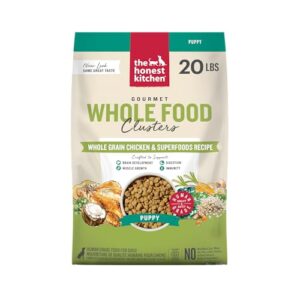
If you want human-grade nutrition in a dry kibble, Honest Kitchen Whole Food Clusters is worth a serious look. Every ingredient meets human food standards — no meat meals, no fillers, no feed-grade shortcuts. It’s cold-pressed and slow-roasted to preserve nutrients, and the recipe includes chicken, chicken liver, oats, and salmon oil.
DHA helps brain and eye development, while double-dose probiotics keep digestion on track. It’s AAFCO-confirmed for all life stages, including large breed puppies over 70 pounds.
| Best For | Puppy owners who want human-grade, whole food nutrition and don’t mind paying a premium for quality ingredients. |
|---|---|
| Brand | The Honest Kitchen |
| Form | Dry |
| Age Range | Puppy |
| Primary Protein | Chicken |
| DHA Support | Yes |
| Weight (lbs) | 20 |
| Additional Features |
|
- Made with real, human-grade ingredients like chicken, chicken liver, and oats — no fillers or mystery meals
- Includes live probiotics and DHA to support digestion and brain development in growing pups
- Crafted by a vet nutritionist in a human food facility, so you know exactly what’s going into your dog
- It’s pricier than most dog foods, which can be tough on a tight budget
- Bags can produce a lot of dust, making it frustrating to use with puzzle feeders or food toys
- Switching puppies over from other foods may take some time and a slow transition
2. Open Farm Ancient Grains Dog Food
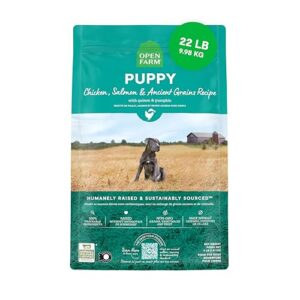
Open Farm’s Ancient Grains formula is one of the more transparent options on the market. At least 90% of the protein comes from animal sources — wild-caught Pacific salmon and Certified Humane chicken — not plant fillers or unnamed meat meals.
The ancient grains blend (oats, quinoa, millet, brown rice) is corn-, wheat-, and soy-free, giving sensitive stomachs a cleaner carb source. Crude protein sits at 26%, fat at 16%, and DHA at 0.11% — solid numbers for brain and coat development in growing puppies.
| Best For | Puppies with sensitive stomachs or food sensitivities who need a high-protein, grain-inclusive diet from clean, traceable ingredients. |
|---|---|
| Brand | Open Farm |
| Form | Pellet |
| Age Range | Puppy |
| Primary Protein | Chicken & Salmon |
| DHA Support | Yes |
| Weight (lbs) | 22 |
| Additional Features |
|
- 90% animal-sourced protein from real chicken and wild-caught salmon — no mystery meat meals
- Ancient grains like oats and quinoa are easier on digestion than corn, wheat, or soy
- Strong nutrient profile with DHA to support brain development and a healthy coat
- Premium price tag that adds up fast, especially for bigger breeds
- Some puppies may experience loose stools during transition or ongoing
- Not the safest pick for pups with severe allergies since it does contain multiple protein and grain sources
3. Blue Buffalo Puppy Food
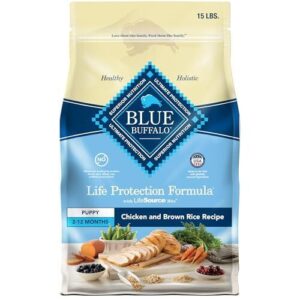
If you’re looking for a puppy food that balances science and safety, Blue Buffalo stands out. Deboned chicken leads the ingredient list, backed by brown rice and oatmeal for steady energy. DHA and ARA support brain and eye development, while LifeSource Bits add antioxidants and vitamins.
No corn, wheat, or soy — just straightforward nutrition. The formula suits puppies with sensitive stomachs, and feeding guidelines make portioning easy. You’ll find small-breed options and bag sizes for multi-dog homes, all without artificial preservatives.
| Best For | Puppy owners who want clean, high-quality ingredients and don’t mind paying a bit more for a formula that supports brain, eye, and immune system development. |
|---|---|
| Brand | Blue Buffalo |
| Form | Pellet |
| Age Range | Puppy |
| Primary Protein | Chicken |
| DHA Support | Yes |
| Weight (lbs) | 15 |
| Additional Features |
|
- Real deboned chicken is the first ingredient — no fillers like corn, wheat, or soy
- DHA and ARA give puppies a solid foundation for brain and eye development
- LifeSource Bits pack in antioxidants and vitamins to keep the immune system on track
- It’s pricier than a lot of other puppy food options on the market
- Some puppies may experience gas when switching to this food
- Not the right fit for pups with specific allergies or dietary restrictions — always check with your vet first
4. Acana Grain Free Puppy Dog Food
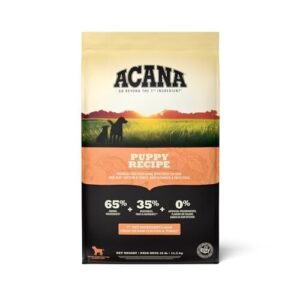
Acana Grain Free Puppy Dog Food builds on solid nutrition with 65% animal ingredients—deboned chicken, turkey, and eggs lead the mix. You get a grain-free formula rich in protein, DHA, and omega fatty acids for brain, skin, and coat health.
Probiotics and pumpkin help digestion, while fish oil boosts cognitive development. It’s made in the USA, and the fat-to-protein ratio fits active puppies. If your puppy has allergies or needs high protein, Acana offers a practical, science-backed option.
| Best For | Puppies with food sensitivities or allergies who need a high-protein, grain-free diet to support healthy growth and development. |
|---|---|
| Brand | Orijen |
| Form | Kibble |
| Age Range | Puppy |
| Primary Protein | Chicken & Turkey |
| DHA Support | Yes |
| Weight (lbs) | 25 |
| Additional Features |
|
- 65% animal ingredients with free-run chicken, turkey, and eggs—real food your pup can actually use
- Supports brain development, digestion, and muscle growth all in one bag
- Freeze-dried coating adds flavor, so even picky eaters tend to dig in
- It’s pricier than most options on the shelf, which adds up fast with a growing pup
- The fishy smell can be pretty strong—not everyone’s favorite thing to scoop every morning
- Stock can be inconsistent, so finding it reliably might take some extra effort
5. Instinct Raw Boost Puppy Food
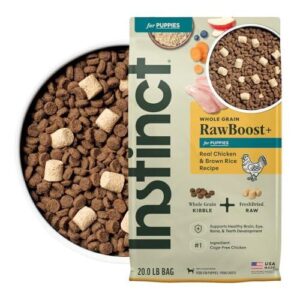
Instinct Raw Boost Puppy Food stands out for its blend of crunchy kibble and freeze-dried raw meat pieces. You get cage-free chicken as the first ingredient, plus DHA for brain and eye development.
The formula avoids corn, wheat, soy, and artificial preservatives, focusing on whole grains like brown rice for fiber. It’s made in the USA, and guaranteed probiotics help digestion.
If your puppy needs high animal protein and you want a more natural feeding style, this option covers both bases.
| Best For | Puppy owners who want a natural, high-protein diet with the benefits of raw feeding without going fully raw. |
|---|---|
| Brand | Merrick |
| Form | Kibble |
| Age Range | Puppy |
| Primary Protein | Chicken |
| DHA Support | Yes |
| Weight (lbs) | 20 |
| Additional Features |
|
- Cage-free chicken is the first ingredient, so you know real meat is leading the pack
- The kibble and freeze-dried raw combo gives your pup variety and nutrition in one bag
- No corn, wheat, soy, or artificial preservatives — clean eating for your dog
- It’s pricier than a lot of other puppy foods on the market
- Not a good fit for puppies with grain sensitivities since it does include whole grains
- There have been some reports of quality control issues, which is worth keeping in mind
6. Stella And Chewy’s Puppy Food
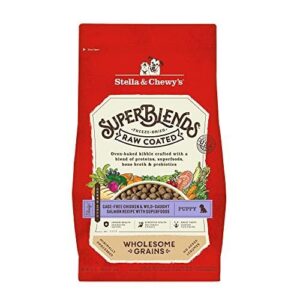
If you want a puppy food that’s packed with quality ingredients, Stella and Chewy’s stands out. Their kibble is oven-baked, raw-coated, and loaded with responsibly sourced chicken, salmon, and superfoods like kale and pumpkin.
You’ll see DHA for brain growth, probiotics for digestion, and antioxidants for immune support. For puppies needing joint care, glucosamine and chondroitin are included. It’s grain-inclusive, avoids artificial preservatives, and suits sensitive stomachs.
If your puppy’s appetite needs encouragement, this formula’s rich flavor usually does the trick.
| Best For | Puppies with sensitive stomachs who need a nutrient-rich, flavorful meal made with responsibly sourced proteins and superfoods. |
|---|---|
| Brand | Stella & Chewy’s |
| Form | Pellet |
| Age Range | Puppy |
| Primary Protein | Chicken & Salmon |
| DHA Support | Yes |
| Weight (lbs) | 3.5 |
| Additional Features |
|
- Oven-baked and raw-coated kibble made with real chicken, salmon, and wholesome grains like oatmeal and quinoa
- Packed with probiotics, prebiotics, and antioxidants to support digestion and immune health
- Includes glucosamine and chondroitin for hip and joint support as your pup grows
- Can be too rich for some dogs, leading to stomach upset
- The puppy version can be hard to find in local stores
- May not meet every dog’s needs on its own, so some pups might need additional supplements or food mixing
7. Royal Canin Small Puppy Food
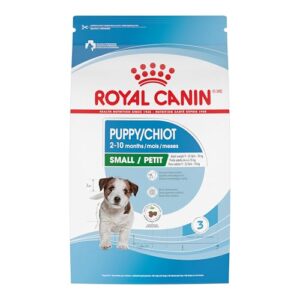
Precision matters when you’re feeding a small breed puppy. Royal Canin Small Puppy Food targets pups from 2 to 10 months old, weighing 9 to 22 pounds as adults.
The kibble’s size fits tiny jaws, and its protein content (29%) promotes muscle growth. Antioxidants and prebiotics boost immune and digestive health, while measured fat (18%) fuels energy needs.
If your puppy’s stools are irregular or coat looks dull, this formula often brings improvement. It’s complete, balanced, and easy to portion for daily meals.
| Best For | Small breed puppy owners looking for a targeted formula that supports growth, digestion, and immune health during those critical first 10 months. |
|---|---|
| Brand | Royal Canin |
| Form | Pellet |
| Age Range | Puppy |
| Primary Protein | Chicken |
| DHA Support | Yes |
| Weight (lbs) | 32.9 |
| Additional Features |
|
- Kibble size is designed for tiny mouths, making it easy for small breeds to chew and digest
- Supports brain development, coat health, and energy levels all in one formula
- Prebiotics and antioxidants help keep digestion smooth and immunity strong
- Pricier than a lot of comparable puppy foods on the market
- Some puppies may experience vomiting or an upset stomach when starting out
- Ingredient quality may not satisfy owners looking for a more premium, whole-food recipe
8. Eukanuba Large Breed Puppy Food
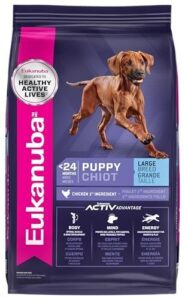
Big paws need steady nutrition. Eukanuba Large Breed Puppy Food is built for pups expected to top 55 pounds as adults. You get high-quality chicken as the first ingredient, with 26% protein and 14% fat to fuel muscle growth and play.
DHA from fish oil aids brain development and trainability. Calcium and phosphorus levels are tuned for strong bones, while prebiotics and beet pulp aid digestion. It’s a complete, balanced formula—no extra supplements needed for healthy large breed puppies up to 15 months.
| Best For | Large breed puppy owners who want a complete, balanced food for pups expected to grow past 55 lbs. |
|---|---|
| Brand | Eukanuba |
| Form | Pellet |
| Age Range | Puppy |
| Primary Protein | Chicken |
| DHA Support | Yes |
| Weight (lbs) | 30 |
| Additional Features |
|
- Real chicken is the first ingredient, giving your pup solid animal protein for muscle and bone growth
- DHA from fish oil supports brain development, which can make training a little easier
- No need for extra supplements—it’s a fully balanced formula for large breed puppies up to 15 months
- It can get pricey if you have a big dog or multiple puppies eating through bags quickly
- Contains fillers like corn and wheat, so it’s not ideal for pups with grain sensitivities
- Some dogs lose interest in it over time, which can make mealtime a bit of a hassle
9. Primal Freeze Dried Dog Food
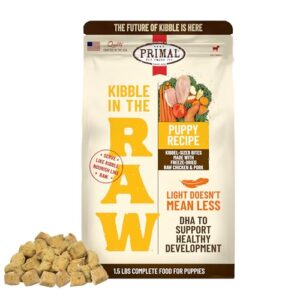
Freeze-dried nutrition offers your puppy a raw-style meal without the mess. Primal Freeze Dried Dog Food uses cage-free chicken, pork, and wild-caught salmon, plus organic fruits and veggies, to support healthy growth.
The formula skips grains, fillers, and synthetic additives, relying on real food and added oils for balanced nutrients. Probiotics boost digestion, while DHA and calcium support brain and bone development.
Scoop, rehydrate, and serve—no prep needed. It’s gentle on digestion and suitable for all puppy breeds.
| Best For | Puppy owners who want a raw-style diet that’s easy to serve and packed with real, whole-food ingredients. |
|---|---|
| Brand | Primal Pet Foods |
| Form | Kibble |
| Age Range | Puppy |
| Primary Protein | Chicken & Pork |
| DHA Support | Yes |
| Weight (lbs) | 1.57 |
| Additional Features |
|
- Made with cage-free chicken and crate-free pork—no synthetic vitamins, fillers, or grains
- Gentle on digestion and supports healthy growth with DHA, calcium, and probiotics
- Super easy to serve—just scoop and go, no prep or hydration required
- Price point is on the higher end and may not fit every budget
- Can leave a lot of powder at the bottom of the bag
- May not work for puppies with specific allergies or health conditions
10. Natural Balance Lamb Puppy Food
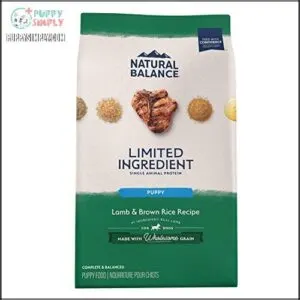
If your puppy has a sensitive stomach, Natural Balance Lamb & Brown Rice is worth a close look. Lamb is the first and only animal protein, which helps cut down on common food reactions. There’s no chicken, turkey, corn, wheat, or soy — a clean slate for pups with ingredient sensitivities.
Brown rice aids easy digestion, while added DHA promotes healthy brain development. Small-bite kibble makes chewing easier for young dogs, and taurine helps heart health as they grow. Brown rice also facilitates easy digestion, and the formula is designed to help with digestion.
| Best For | Puppies with sensitive stomachs or ingredient sensitivities who need a simple, single-protein diet to avoid common food reactions. |
|---|---|
| Brand | Natural Balance |
| Form | Pellet |
| Age Range | Puppy |
| Primary Protein | Lamb |
| DHA Support | Yes |
| Weight (lbs) | 24 |
| Additional Features |
|
- Lamb is the only animal protein, making it a great option for pups prone to food allergies or digestive issues
- Brown rice and a clean ingredient list make it easy on young, sensitive stomachs
- Small-bite kibble and added DHA support both physical and brain development in puppies
- Not a fit for puppies with a lamb allergy or sensitivity
- It runs pricier than a lot of other puppy food brands on the market
- Canned food options are limited if your pup prefers wet food or needs variety
Special Considerations by Puppy Size and Breed

Not all puppies have the same needs — a Great Dane pup and a Chihuahua pup are basically playing different nutritional ball games. Size, breed, and even sensitivities can change what “good food” actually means for your dog.
Here’s what to keep in mind when picking the right fit for yours.
Large Breed Puppy Nutritional Needs
Large breed puppies grow fast, and that speed is exactly what makes their diet so critical. Controlling growth rates protects developing joints and bones from long-term damage.
- Keep calcium balance tight — aim for 1.1:1 to 1.4:1 calcium-to-phosphorus ratio
- Choose dry puppy food with moderate nutrient density, around 350–400 kcal per cup
- Prioritize joint health with omega-3s and DHA from fish oil
- Follow puppy dietary guidelines — skip extra calcium supplements entirely
Small Breed Puppy Dietary Requirements
Ever notice how your small breed puppy burns energy like a hummingbird? Their Puppy Nutrition hinges on calorie-dense foods—380–450 kcal per cup, with small kibble for easy chewing. Stick to Feeding Schedules of three to four meals daily, and use Growth Monitoring to adjust portions.
GrainFree or sensitive stomach Puppy Foods can help, but always follow Puppy Dietary Guidelines.
| Puppy Foods | Calorie Needs | Feeding Schedules |
|---|---|---|
| GrainFree Formula | 420 kcal/cup | 4 meals/day (0–6 mo.) |
| Sensitive Stomach | 400 kcal/cup | 3 meals/day (6–12 mo.) |
| Small Breed Blend | 450 kcal/cup | 3–4 meals/day |
Adjusting Food Choices for Sensitivities
If your puppy’s Sensitive Stomach or Food Sensitivities show up as Allergy Symptoms—itching, ear infections, or Digestive Health issues—Dietary Changes can help. For instance, swapping to GrainFree or Novel Proteins often eases Allergies.
Structured Elimination Diets give clarity. You’ll want to:
- Switch protein sources
- Try limited ingredient formulas
- Use hydrolyzed diets
- Avoid common triggers
Monitoring Growth and Development
Once you’ve dialed in your puppy’s food for sensitivities, staying on top of their growth is the next step. Regular Weight Tracking, Body Scoring, and Growth Charts give you real data to work with.
| Monitoring Tool | What to Watch |
|---|---|
| Weight Tracking | Check every 1–2 weeks |
| Body Scoring | Ribs easy to feel, visible waist |
| Growth Charts | Compare to breed benchmarks |
| Vet Visits | Every 3–4 weeks until 16 weeks |
Storing and Serving Dry Puppy Food Safely
Picking the right food is only half the job — how you store and serve it matters just as much.
Poor storage can cause nutrients to break down fast, and bad feeding habits can throw off your puppy’s growth.
Here’s what you need to know to get both right.
Proper Storage for Maximum Freshness
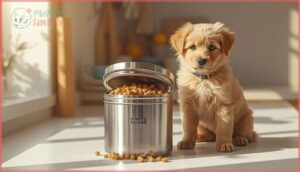
Storing dry puppy food correctly is one of the easiest wins for puppy health and development. Use airtight containers made of food-grade plastic or stainless steel, and always keep the original bag inside for moisture control. Shelf life drops fast once opened — most bags are best within four to six weeks.
- Store below 80°F, away from heat sources
- Keep food off damp floors for proper storage of pet food
- Practice food rotation — empty the bin before refilling
- Mark your open date to track shelf life and freshness
Portion Control and Feeding Guidelines

Once your food is stored right, the next step is making sure your puppy gets the right amount. Most puppies need 40 to 60 calories per pound of body weight daily — meal frequency matters too.
Younger pups do best on three to four small meals, while older ones shift to two. Always use a measuring cup, not a random scoop, to keep portion sizes accurate and nutrient balance on track.
Transitioning Between Puppy Foods

Switching dry puppy food too fast is one of the most common mistakes owners make.
For smoother changeover tips, spread the change over 5 to 7 days — start with 75% old food, then gradually shift the ratio every two days. This gradual switching approach aids puppy digestion, protects nutrient balance, and respects canine dietary needs as your puppy’s gut bacteria adjust to the new formula.
Signs of Food Intolerance or Allergies

Even after a smooth handover, watch your puppy closely. Digestive issues and skin reactions can signal food sensitivities worth catching early.
- Gut health red flags: loose stools, gas, or bloating after meals
- Skin reactions: itching, paw chewing, or dull coat
- Allergy symptoms: vomiting, hives, or facial swelling
- Sensitive stomachs: symptoms easing when a trigger ingredient is removed
Persistent food allergies and sensitivities need vet-guided allergy management.
Frequently Asked Questions (FAQs)
What is the best dry dog food for puppies?
There’s no single perfect answer, but the best dry puppy food meets AAFCO growth standards, delivers at least 5% protein, and includes DHA.
Your puppy’s size, breed, and canine dietary needs matter most.
Is dry dog food okay for puppies?
Yes, dry puppy food is completely safe and nutritious when it meets AAFCO growth standards.
Look for “complete and balanced” on the label — that confirms your puppy’s canine dietary needs are fully covered.
What do you feed a 3 month old puppy?
At 3 months, feed your puppy a dry puppy food labeled for growth or all life stages, three to four times daily, following portion guides based on current weight and expected adult size.
How often should puppies eat each day?
Little and often” goes a long way with puppies. Meal frequency depends on age — 4 daily rations under 12 weeks, 3 meals by 6 months, then 2 as part of long-term puppy feeding schedules.
Can puppies eat adult dry dog food?
Puppies can eat adult dry dog food occasionally, but it’s not ideal long-term.
Adult formulas lack the protein, fat, and DHA levels growing puppies need, raising real growth risks and nutrient deficits.
When should puppies switch to adult food?
Most dogs are ready around 12 months, but breed size matters. Small breeds switch at 9–12 months; large breeds often need puppy food until 18–24 months to support slower bone and joint development.
Is wet food better than dry kibble?
Neither wins outright.
Wet food offers higher moisture content for digestive health, while dry puppy food aids nutrient absorption and easier portioning.
Your puppy’s preferences and needs should guide the choice.
What treats pair well with dry puppy food?
Low calorie options like freeze dried mix-ins, fresh fruit snacks such as blueberries, and dental chews pair well with dry puppy food.
Keep all dog treats under 10 percent of daily pet nutrition calories.
Conclusion
Funny how the bag with the loudest health claims often has the least to back them up. Choosing the right dry dog foods for puppies doesn’t require a veterinary degree—just the habit of reading past the marketing.
Protein source, calcium-to-phosphorus ratio, AAFCO growth standards: these details decide what your puppy’s joints, brain, and immune system are built from. The first year passes fast. What you put in the bowl right now stays with your dog for life.
- https://open-farm-pet.pxf.io/c/2442109/2832567/12719
- https://sites.tufts.edu/petfoodology/2020/12/28/what-is-guaranteed-about-the-guaranteed-analysis/
- https://www.fda.gov/animal-veterinary/animal-health-literacy/fdas-regulation-pet-food
- https://www.ncbi.nlm.nih.gov/pmc/articles/PMC4494379/
- https://academic.oup.com/jn/article/136/7/2021S/4664805