This site is supported by our readers. We may earn a commission, at no cost to you, if you purchase through links.
Your dog circles their food bowl, sniffs once, and walks away—a behavior that might save their life. Dogs possess roughly 300 million olfactory receptors compared to our mere 6 million, making them remarkably skilled at detecting what we often miss: spoiled food that’s gone dangerously bad.
Yet many pet owners rely solely on expiration dates or assume that kibble sitting in the pantry stays fresh indefinitely. The truth is, dog food degrades faster than most people realize, and feeding contaminated food can lead to serious digestive upset, nutritional deficiencies, or even mycotoxin poisoning.
Recognizing the signs dog food has gone bad protects your furry friend from preventable illness and helps you make informed decisions about what goes into their bowl.
Table Of Contents
Key Takeaways
- Dogs possess 300 million olfactory receptors—50 times more than humans—which allows them to detect spoiled food through smell changes like rancid odors, mold, or bacterial breakdown long before visible signs appear.
- Spoiled dog food poses serious health risks ranging from immediate digestive upset and food poisoning to long-term consequences like liver damage from mycotoxins, immune suppression, and reduced lifespan from accumulated organ damage.
- Proper storage in cool, dry locations using airtight containers with the original packaging intact can extend dry kibble’s shelf life to 6-8 weeks after opening, while preventing moisture, pest infestation, and fat oxidation that cause spoilage.
- Trust your dog’s refusal to eat familiar food as a critical warning sign—combined with checking for unusual odors, texture changes, mold, packaging damage, or expired dates, this behavior often signals contamination before human senses can detect it.
Common Signs Dog Food Has Gone Bad
Knowing when your dog’s food has spoiled isn’t always obvious, but catching the warning signs early protects your pet from serious health issues. Your nose, eyes, and even your dog’s behavior can alert you to problems before they turn into a trip to the vet.
Understanding how long dry dog food stays fresh helps you establish safe storage practices and know when it’s time to toss that half-empty bag.
Here are seven clear signs that it’s time to toss that bag or can.
Unusual or Rancid Odor
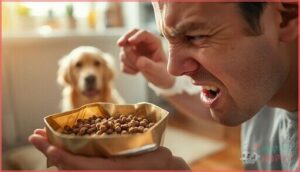
Your nose is one of the sharpest spoilage indicators you have. If your dog’s kibble smells sour, like old frying oil, or gives off a chemical tang instead of a mild grain-and-meat aroma, those are clear fermentation signs and rancidity warnings.
Storing your dog’s food in an airtight container can slow down oxidation and help preserve that fresh scent longer.
Stale food risks increase with each day after opening, so trust your instincts—when odor intensity changes suddenly, it’s time to discard spoiled food immediately.
If you’re selecting fresh meals for your pet, choosing high-quality ingredients that resist spoilage helps minimize waste and keeps their diet safe.
Mold or Mildew Presence
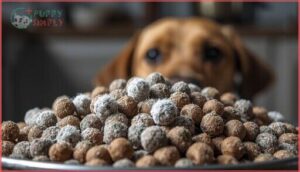
White or gray dusty coatings that weren’t there when you opened the bag signal fungal growth—a serious toxicity risk.
Mold detection involves checking for fuzzy tufts, black or green patches, and flat powdery areas that indicate mildew control has failed.
Spore prevention depends on proper food storage and shelf life monitoring, but once mold appears, discard spoiled food immediately to protect your dog from mycotoxin exposure that threatens food safety beyond any expiration date.
Investing in airtight dog food storage containers for travel keeps kibble fresh and mold-free during road trips or camping adventures.
To better understand the dangers and symptoms, learn about mold poisoning in dogs.
Changes in Color or Texture
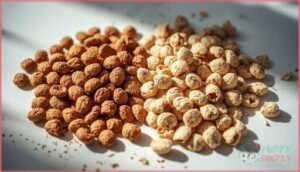
Beyond mold, discoloration signs and texture changes serve as early spoilage indicators you shouldn’t ignore. Fading kibble that looks paler than usual often means vitamins and fats have oxidized, compromising shelf life and food safety. Watch for these texture changes that signal spoiled food:
- Pieces that crumble into powder instead of holding their firm shape
- Hardened kibble that sounds brittle when poured into the bowl
- Soft, spongy chunks clumping together from moisture effects
- Dark spots or uneven coloring across individual pieces
Proper food storage helps maintain quality past the expiration date.
Slime, Oil, or Moisture on Food
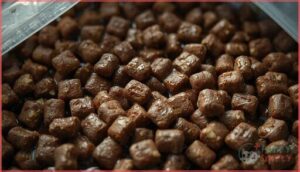
Slippery surface slime or a greasy oil coating often signals bacteria breaking down fats and proteins in spoiled food. It’s important to recognize key causes of surface slime because bacteria thrive especially on high-moisture foods.
You’ll notice damp kibble feels spongy and clumps together instead of staying crisp. Watch for moisture levels inside storage containers—condensation or wet spots create perfect conditions for microbes to multiply.
Proper dog food storage prevents these texture changes and keeps expiration date quality intact for food safety.
Visible Insects or Infestation
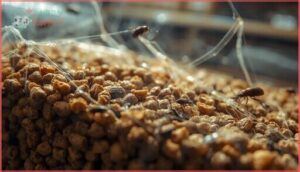
Small crawling beetles, tiny off-white worms, or fine webbing across kibble are telltale infestation signs that your dog’s food has become a breeding ground for pests. Common dog food pests include Indian meal moths, grain weevils, and copra beetles, all of which compromise pet food safety.
Watch for these clear markers of spoiled food:
- Fine silk strands clumping kibble together in bag corners
- Tiny brown beetles crawling on food surfaces
- Small worms appearing in the bowl or storage container
- Adult moths flying near storage areas
Discard the entire bag immediately and vacuum shelves thoroughly—pest control starts with swift action to prevent food poisoning risks.
Following proper dog food storage guidelines keeps kibble fresh and safe from contamination year-round.
Damaged or Swollen Packaging
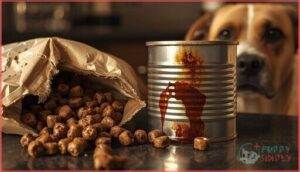
Tears, punctures, or broken seals in dog food packaging let in moisture and bacteria, fast-tracking spoilage. Swollen cans or puffy pouches signal dangerous gas buildup from microbial activity—classic signs of spoiled food.
Check for greasy stains, leaks, or dents near seams; these packaging damage markers compromise pet food safety.
Always inspect the expiration date and discard anything with compromised storage safety before your furry friend gets sick.
Refusal by Dog to Eat

A dog’s sudden refusal to eat trusted kibble often reveals Food Aversion Signs linked to spoiled food. Dogs detect rancid fats and off smells long before you do, triggering Refusal Behavior that protects them from food poisoning.
When dogs suddenly refuse familiar food, they’re often detecting spoilage signs like rancid fats that humans can’t yet smell
When Eating Habit Changes appear—sniffing but walking away, or accepting treats while ignoring their bowl—check pet food expiration dates and inspect for spoilage immediately.
Health Risks of Spoiled Dog Food

When your dog eats spoiled food, the consequences can range from mild stomach upset to serious health emergencies. The risks don’t just affect your pet’s digestive system—they can impact everything from their skin to their long-term wellbeing.
Here’s what you need to watch for if you suspect your dog has consumed bad food.
Digestive Upset and Food Poisoning
When your dog eats spoiled food, the body reacts swiftly to eliminate harmful bacteria and toxins. Gastrointestinal issues like vomiting and diarrhea are the primary toxicity symptoms of foodborne illness, often appearing within hours. Without prompt veterinary care, canine dehydration can escalate quickly, especially in puppies and smaller breeds.
Key signs of food poisoning include:
- Sudden, repeated vomiting within hours of eating
- Watery or bloody diarrhea with mucus
- Abdominal pain shown through hunching or whining
- Excessive drooling and lip licking from nausea
- Lethargy, weakness, or refusing meals entirely
Allergic Reactions and Skin Issues
Spoiled dog food can trigger intense skin reactions that go far beyond a simple upset stomach. Allergic rash, itchy skin causes, and hair loss reasons often stem from contaminated kibble, especially when storage mites or mold invade poorly stored bags.
Your dog’s persistent paw licking, red belly patches, or recurrent skin infections may signal food intolerance rather than seasonal allergies, making proper dog food storage essential for pet health.
Nutritional Deficiency Risks
Even if spoiled food doesn’t make your dog immediately sick, it can quietly rob them of essential nutrients. Vitamin loss accelerates once bags open, protein degradation reduces amino acid availability, and mineral decline hampers absorption—all before the expiration date.
Over weeks, this calorie shortage and nutritional gap can weaken immunity, dull coats, and sap energy, undermining canine nutrition despite a “complete” label.
Long-term Health Consequences
Beyond immediate illness, feeding spoiled food can trigger serious long-term damage to your dog’s health. Chronic liver damage from aflatoxins builds over time, increasing cancer risk and immune suppression that leaves your pet vulnerable to infections. Gut disruption alters beneficial bacteria, while oxidized fats fuel inflammation—all contributing to reduced lifespan despite following the expiration date on seemingly safe food.
- Liver injury from mold toxins accumulates silently
- Immune function weakens, inviting frequent infections
- Gut bacteria shift, causing persistent digestive trouble
- Lifespan shortens as organ damage compounds
How to Check Dog Food for Spoilage
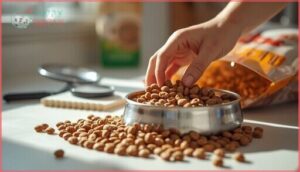
You can’t rely on guesswork regarding your dog’s food safety. A quick inspection using your senses and a few simple checks can tell you whether that kibble or canned food is still good to go.
Here’s how to evaluate your dog’s food before every meal.
Inspecting Appearance and Smell
Your first line of defense against spoilage signs starts with a quick sniff and look. Fresh kibble smells mildly nutty or meaty, while a rancid smell signals degraded fats.
Check for food color changes—darkening, fading, or mold patches mean trouble.
Run your fingers through the bag: proper kibble texture feels firm and dry, never sticky, crumbly, or dusty.
Checking Expiration and Best-by Dates
After checking smell and texture, flip the bag and locate the date code—it’s your expiration management roadmap. Dog food expiration date rules vary: some brands stamp MM-DD-YYYY near the seal, while others use six-digit codes or Julian day formats.
Understanding these date code formats and shelf life guidelines helps you follow storage best practices:
- Dry food usually stays fresh 12–16 months unopened
- Canned varieties last 2–5 years in cool storage
- Open bags lose quality after 30–60 days
- Best-by dates mark peak nutrition, not immediate spoilage
- Always check labeling requirements before your first scoop
Examining Packaging Integrity
Once you’ve confirmed the expiration date falls within safe shelf life, run your hands along every seam and corner for Seal Inspection and Leak Detection. Torn bags, swollen cans, or pinholes in Packaging Materials compromise Storage Conditions and let in moisture that breeds mold.
Container Damage—dents near rims, bulging pouches—signals bacterial growth inside, making even fresh-dated kibble unsafe for your furry friend.
Monitoring Dog’s Reaction to Food
Your dog’s own reactions offer Veterinary Guidance that even the sharpest expiration date can’t provide. Watch how Pet Feeding Habits shift when you introduce a new bag—canine health depends on reading those behavioral cues alongside proper Canine Nutrition and Dog Meal Plans.
- Sudden refusal of familiar dog food may mean your dog smells rancidity before you do
- Vomiting or diarrhea within hours signals possible food poisoning from spoiled kibble
- Excess drooling or lethargy after meals warrants Food Allergy Tests and immediate pet health evaluation
Proper Storage to Prevent Spoilage
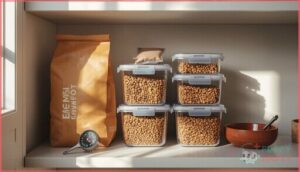
The best defense against spoiled dog food is preventing it from happening in the first place. Proper storage doesn’t require fancy equipment or complicated routines—just a few smart habits that protect your dog’s meals from heat, moisture, and air exposure.
Let’s walk through the key storage strategies that’ll keep your pup’s food fresh and safe.
Ideal Storage Conditions and Locations
Would you trust your furry friend’s health to a bag left in a hot garage? For best food safety and shelf life, keep dog food in cool, dry places indoors—think pantries or closets, away from sunlight and humidity.
Smart dog food storage tips include choosing locations with stable temperatures, low humidity control, and using clean storage containers off the floor.
Using Airtight and Original Packaging
By combining original packaging materials with airtight containers, you create a dual barrier that slows oxidation and blocks moisture—two key threats to shelf life. This layered approach to food preservation and food safety keeps kibble fresher longer:
- Reduced oxygen contact limits rancid fat development and preserves vitamins.
- Moisture barriers prevent mold growth and bacterial multiplication.
- Pest protection stops insects and rodents from contaminating food.
- Intact labels preserve best-by dates and lot codes for recalls.
- Less exposure to household dust and fridge odors maintains food quality.
Follow these dog food storage tips for proper storage and freshness maintenance.
Cleaning and Maintaining Storage Containers
Even the best food storage strategy falls short if your container sanitation routine isn’t solid. Wash and fully dry storage containers every time you empty them using warm soapy water, because residual oils and crumbs turn rancid and cut shelf life.
Follow regular cleaning schedules, inspect bins for cracks or rust that trap bacteria, and maintain storage hygiene to protect both food safety and freshness preservation.
Labeling and Dating Dog Food Supplies
Clear labeling guidelines prevent expired dog food from slipping through the cracks in your storage safety routine. Write the opened date on every bag or container to track shelf life, because that “best by” marking on the original package no longer applies once you break the seal.
- Mark dry kibble with “Opened” plus the date—it’s usually good for about six weeks
- Label wet food cans stored in the fridge and use within three to seven days
- Rotate supplies using first-in, first-out food rotation to avoid spoilage
Identifying expired dog food becomes straightforward when you maintain consistent date marking, and noting the sell-by date alongside your opened date aids smarter food expiration and spoilage monitoring throughout your dog food storage and handling routine.
When to Discard Dog Food
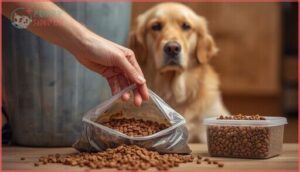
Knowing when to toss your dog’s food isn’t always a clear-cut decision, especially when you’re trying to balance safety with waste. Some signs demand immediate action, while others might leave you wondering if the food is still okay to use. Here’s what you need to know to make the right call every time.
Identifying Irreversible Signs of Spoilage
Some spoilage signs mean the food can’t be saved, no matter how much remains in the bag. Rancid smells from lipid oxidation, visible mold growth, slime formation, or infestation signs all demand immediate disposal. Packaging damage like swelling or leaks also signals irreversible contamination. When identifying expired dog food, trust your instincts—if it seems off, discard it completely to prevent food poisoning.
| Spoilage Sign | What It Means | Action Required |
|---|---|---|
| Rancid smell or chemical odor | Fats have oxidized; rancidity present | Throw out entire bag immediately |
| Mold growth (any color or texture) | Mycotoxins may have spread throughout | Discard all food; don’t pick out spots |
| Slime, moisture, or oil separation | Bacterial breakdown or water intrusion | Dispose of product; can’t be reversed |
| Live insects, larvae, or droppings | Pest infestation and contamination | Trash the whole container right away |
Guidelines on Expiration and Use-by Dates
Beyond checking for visible spoilage, you’ll want to understand what expiration dates actually mean. A best by date on dog food marks when freshness and nutrients start declining, while an expiration date signals the last safe day to feed. Don’t confuse either with a sell by date—that’s just for retailers managing stock rotation.
- Unopened dry kibble usually lasts 12 to 26 months from manufacturing when stored below 80°F
- Opened bags stay fresh about 6 to 8 weeks if you reseal tightly after each use
- Canned food keeps 2 to 3 years unopened, but only 3 to 4 days refrigerated once opened
- Natural preservative formulas spoil faster than synthetics, even with similar printed dates
- Storage temperature affects shelf life more than the date code interpretation alone suggests
Consulting a Veterinarian if in Doubt
When expiration dates confuse you or your dog shows signs of illness after eating questionable food, a quick call to your veterinarian can save hours of worry. Emergency care becomes necessary if you notice bloody diarrhea, repeated vomiting, or lethargy within hours of a meal—pet poisoning from spoiled food risks serious organ damage without prompt vet guidance.
| Symptom | Action Timeline | Contact |
|---|---|---|
| Vomiting, diarrhea with blood | Same day emergency | Emergency clinic or poison hotline |
| Lethargy, refuses water | Within 2–4 hours | Regular vet or urgent care |
| Mild stomach upset | Monitor 12–24 hours | Call vet if worsens |
Share what your dog ate, how much, and when symptoms started so your veterinarian can assess whether activated charcoal, fluids, or other treatments are needed.
Frequently Asked Questions (FAQs)
How do I know if my dog’s food is spoiled?
Your dog won’t eat breakfast—that’s often the first red flag.
Trust your nose: spoiled dog food gives off a sour, rancid, or chemical smell indicating bacterial growth and fat oxidation.
What happens if a dog eats spoiled dog food?
Eating contaminated food can trigger food poisoning symptoms like sudden vomiting and diarrhea within hours.
Canine health risks range from mild digestive upset to dehydration, bacterial infection, or veterinary emergency requiring immediate professional care.
How does humidity affect dry kibble shelf life?
Humidity control plays a vital role in protecting dry kibble. High moisture levels accelerate mold growth and fat oxidation, often cutting shelf life from 12–18 months down to 6–12 months after opening.
Are homemade dog foods more prone to spoilage?
Yes, homemade recipes spoil faster than commercial kibble due to higher moisture control challenges, fresh ingredient vulnerability, and lack of preservatives.
Following food safety guidelines and proper food handling becomes essential for your dog’s nutrition.
What preservatives are safest for extending dog food?
Natural preservatives like mixed tocopherols (vitamin E) and rosemary extracts are safest for your dog food. These vitamin antioxidants meet pet food safety guidelines without synthetic alternatives, effectively extending shelf life while preventing rancidity.
Conclusion
Protecting your pup’s plate takes practice, but once you’ve mastered the signs dog food has gone bad, you’re equipped to prevent preventable illness. Trust your nose, watch your dog’s behavior, and store kibble correctly—these simple habits form your first line of defense.
When doubt creeps in, discard questionable food without hesitation. Your dog depends on you to make safe choices, and now you’re ready to deliver exactly that with confidence.
- https://www.rover.com/blog/know-dog-food-spoiled-prevent/
- https://www.fitbark.com/blog/can-dogs-eat-spoiled-food/
- https://www.akc.org/expert-advice/nutrition/does-dog-food-expire/
- https://www.reddogbluekat.com/post/how-to-tell-when-my-dog-or-cats-raw-meat-has-gone-bad
- https://www.poochandmutt.co.uk/blogs/nutrition/dry-dog-food-how-long-does-it-last