
This site is supported by our readers. We may earn a commission, at no cost to you, if you purchase through links.

Your dog’s chew toy seems harmless until you notice the cracked molar or the chunk missing from what was supposed to be “indestructible” rubber. Veterinary clinics see fractured teeth and intestinal blockages from poorly designed chew toys more often than you’d expect, yet pet stores overflow with options that prioritize profit over safety.
What makes a good chew toy isn’t about brand recognition or clever marketing—it’s about material composition, appropriate sizing for your dog’s jaw, and flexibility that protects dental health while satisfying the biological need to chew.
Understanding these fundamentals helps you avoid costly vet visits and keeps your dog safely entertained, whether you’re managing puppy teething or redirecting an adult dog’s destructive habits.
Table Of Contents
Key Takeaways
- The thumbnail test is your fastest safety check—if you can’t indent the material with your nail, it’s too hard for your dog’s teeth and risks fractures, especially during the teething phase when enamel is still developing.
- Match chew toy hardness to your dog’s bite strength using Shore A ratings: soft chewers need 20-30A flexibility, moderate chewers require 50-60A, and aggressive chewers demand 70-85A durability, but anything above 80A threatens dental damage.
- Weekly inspections catch dangerous wear before it becomes a crisis—look for cracks, missing chunks, frayed rope strands, or sharp edges that signal immediate replacement time, with power chewers needing checks every few days.
- Proper sizing prevents choking deaths: small breeds need toys at least 1.5 inches across, medium dogs require 2-inch minimums, and large breeds should have 3+ inch toys that can’t compress into their mouths or lodge in their throats.
What Makes a Chew Toy Safe
You can’t choose a good chew toy without putting safety first. The wrong toy can splinter, break apart, or contain materials that harm your dog’s health.
Here’s what you need to check before bringing any chew toy home.
The best chew toys for heavy chewers are built to handle serious bite force while keeping your dog safely entertained.
Non-Toxic and BPA-Free Materials
When you’re picking chew toys, prioritize those labeled BPA-free and phthalate-free—these exclusions matter because plasticizers and endocrine-disrupting chemicals can leach during intensive chewing. Look for FDA food-grade polymers or thermoplastic elastomers like Zogoflex, which meet human food-contact standards and avoid lead, cadmium, and vinyl additives.
Pet safety starts with verifying material disclosures, so choose manufacturers who transparently list what’s not in their products. It’s also essential to understand the risks associated with toxic chemical exposure to make informed decisions.
Appropriate Size to Prevent Choking
Beyond checking chemical labels, you need to match toy dimensions to your dog’s mouth size—choking hazards are real. A toy should be large enough that your puppy can’t swallow it whole or lodge it in their throat. For puppy chew toys, follow this guideline:
- Small breeds need toys at least 1.5 inches in diameter
- Medium puppies require 2-inch minimum dimensions
- Large breeds should have toys 3 inches or larger
- Avoid detachable parts that break off during play
- Test by ensuring you can’t compress the toy into your dog’s mouth
Proper toy dimensions are your best choke prevention strategy for pet safety. Understanding dog choking risks is essential for selecting the right toys.
Avoiding Hard Materials That Damage Teeth
Sizing matters, but so does hardness. Chew on materials harder than tooth enamel, and you’re inviting tooth fracture and enamel damage during the critical teething phase.
Look for toys specifically designed for teething puppies, like the options in this guide to essential Australian Shepherd puppy products, which highlights safe materials that won’t damage developing teeth.
Veterinary dental safety guidelines recommend the thumbnail test: if you can’t indent the chew material with your nail, it’s too hard for canine dental care.
For Chihuahuas specifically, look for chews that pass this test while being appropriately sized for their best toys for Chihuahuas to prevent choking risks.
If you can’t indent a chew toy with your thumbnail, it’s too hard for your dog’s teeth
Steer clear of antlers, weight-bearing bones, and rigid nylon that threaten tooth development and dental health through excessive chew material hardness.
Regular Inspection and Replacement
A good toy today can become a hazard tomorrow. Weekly safety checks catch toy wear signs before they threaten your dog—cracks, fraying, or exposed stuffing all signal replacement time.
Power chewers demand more frequent damage inspection, sometimes every few days. Watch for:
If you’re shopping for best dog toys for aggressive chewers, prioritize cross-linked rubber formulations that balance eco-friendly materials with serious chew resistance.
- Visible holes, missing chunks, or unraveled rope strands
- Sharp edges or deep grooves that threaten gums
- Persistent odors despite cleaning, indicating bacterial buildup
Chew toy hygiene and timely replacement schedules protect your companion from choking, obstruction, and dental injury.
Key Features of Quality Chew Toys
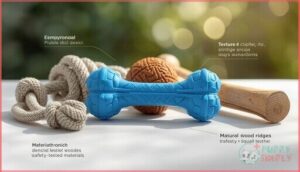
Not all chew toys are created equal, and the difference between a good one and a poor one often comes down to a few critical design elements. The best toys don’t just survive your dog’s jaws—they actually support their dental health, provide relief during teething, and keep them engaged without putting them at risk.
Here are the key features you should look for when choosing a quality chew toy for your pup.
Durability for Different Chewing Strengths
Not every dog chews the same way, so matching toy durability to your dog’s chewing strength is essential. Soft chewers do fine with flexible rubber around Shore A 20–30, while moderate chewers need mid-range materials (Shore A 50–60). Aggressive chewers require tough toys in the Shore A 70–85 range—brands like KONG and Benebone design heavy-duty options specifically tested to withstand high jaw pressure without breaking down quickly.
| Chewer Type | Recommended Material Hardness | Best Chew Toy Materials |
|---|---|---|
| Soft / Gentle | Shore A 20–30 | Soft silicone, flexible rubber |
| Moderate | Shore A 50–60 | Standard rubber, reinforced fabric |
| Heavy / Aggressive | Shore A 70–85 | Heavy-duty rubber, reinforced nylon |
| Senior / Dental Issues | Shore A 40–60 | Mid-range rubber with slight give |
Durable toys for strong chewers balance toughness with tooth safety—materials harder than 80A can fracture teeth, so prioritize toys that yield slightly under bite force. Size matters too: choose extra-large options with thick walls and solid cores to distribute chewing forces and prevent your dog from swallowing pieces.
Texture and Design for Gum Relief
Ridges, nubs, and grooves on quality chew toys deliver gum stimulation by increasing contact with gingival tissue—this texture variety removes plaque while promoting healthy blood flow during the teething phase. Freezable designs offer teething solutions through cold-induced comfort, and proper chew toy ergonomics guarantee puppies reach all gum zones safely for complete dental health support.
Choose toys that pass the thumbnail test for dental relief without damaging emerging teeth.
Interactive and Treat-Dispensing Options
Puzzle toys and treat-dispensing designs transform mealtime into cognitive stimulation, with many trainers recommending you feed up to 50–100 percent of daily kibble through KONG-style interactive food puzzles.
These canine enrichment tools reduce boredom-related destruction by requiring your dog to roll, nudge, or manipulate the toy for each portion—extending meal duration while promoting species-typical foraging behaviors that support ideal welfare and behavioral health.
Flexibility and The Thumbnail Test
Before handing your dog any chew toy, apply the thumbnail test: press your nail firmly into the surface. If the material yields and shows a slight indent, it passes—meaning the toy offers chew durability without risking tooth fractures during the teething phase.
- Thumb pressure should create a visible dent in safe toy materials like flexible rubber or softer nylon
- Rigid toys that resist all flex fail dental safety standards and increase premolar fracture risk
- Flexibility tests help you screen chew toy recommendations before your dog ever bites down
- Prioritizing give over hardness protects dental health while still satisfying your dog’s need to chew
Top 4 Chew Toys for Dogs
After reviewing hundreds of chew toys, I’ve identified four standout options that consistently meet safety standards and deliver real relief for teething puppies.
Each toy below caters to different chewing needs, from soft rubber designs for gentle mouths to durable nylon for power chewers.
These picks represent the best combination of safety features, durability, and dental benefits you’ll find on the market.
1. Nylabone Textured Teething Bone Toy
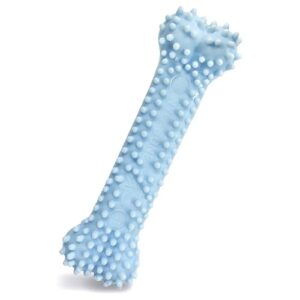
If your puppy is destroying everything in sight, the Nylabone Textured Teething Bone Toy offers targeted teething relief during those rough early months. This soft nylon chew toy is made specifically for puppies up to 15 pounds and features raised nubs that massage sore gums while promoting dental health.
You can even freeze it for extra-soothing comfort during the teething phase. The chicken flavor keeps your pup engaged, redirecting those puppy teeth away from your furniture.
Just remember—this gentle chew toy materials design works only for baby teeth, not powerful chewers with adult teeth.
| Best For | Small-breed puppies under 15 pounds going through their teething phase who need a gentle, soothing chew toy to redirect destructive chewing habits. |
|---|---|
| Material | Soft nylon |
| Made in USA | Yes |
| Age Suitability | Puppies |
| Freezable | Yes |
| Durability Level | Gentle chewers |
| Interactive Use | Teething relief |
| Additional Features |
|
- Soft material with massaging nubs provides gentle relief for sore gums and can be frozen for extra comfort during active teething
- Chicken flavor infused throughout keeps puppies engaged and helps redirect chewing away from furniture and personal items
- Textured surface helps clean teeth and reduce early plaque buildup while establishing healthy chewing habits
- Only suitable for puppies with baby teeth—must be replaced once permanent teeth emerge
- Not appropriate for strong chewers or puppies over 15 pounds, limiting its useful lifespan
- Requires supervision and regular inspection to prevent ingestion of small pieces or worn fragments
2. Kong Natural Rubber Puppy Toy
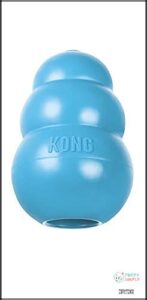
When teething pain hits, the KONG Puppy Chew Toys deliver gentle relief your pup actually craves. This rubber chew toy is made from soft natural rubber formulated specifically for those 28 baby teeth—not the rock-hard adult versions.
You can stuff it with treats or freeze it to soothe inflamed gums during the teething phase. The hollow design cushions every bite, preventing tooth fractures while redirecting destructive chewing.
Just remember: KONG durability works best with supervision, and you’ll need to size up around nine months when adult teeth arrive and chew safety demands change.
| Best For | Puppies under nine months old who are teething and need a soft, treat-stuffable toy that soothes gums while keeping them occupied during crate training or alone time. |
|---|---|
| Material | Natural rubber |
| Made in USA | Yes |
| Age Suitability | All life stages |
| Freezable | No |
| Durability Level | Aggressive chewers |
| Interactive Use | Fetch/stuffable |
| Additional Features |
|
- Soft natural rubber formula is gentle on baby teeth and gums, with the option to freeze for extra teething relief
- Hollow design lets you stuff treats or kibble inside to extend play sessions and redirect destructive chewing
- Erratic bounce pattern makes fetch more engaging while the toy holds up to typical puppy chewing under supervision
- Some owners find the treat-stuffing hole too small or the overall size doesn’t fit their puppy’s breed
- Not durable enough for aggressive chewers or dogs older than nine months—you’ll need to upgrade to firmer Kong lines
- Requires supervision and regular inspection since no toy is truly indestructible, especially if your pup is a power chewer
3. West Paw Zogoflex Dog Tug Toy
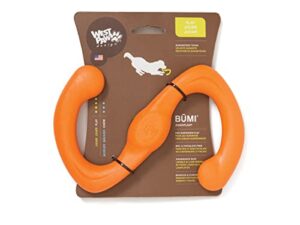
For dogs that love tug-of-war, the West Paw Zogoflex Bumi brings eco-friendly designs and outstanding dog toy durability together. This S-shaped tug toy stretches to twice its length, using proprietary Zogoflex technology that’s BPA-free, latex-free, and FDA-compliant.
The tug toy materials combine flexibility with strength—ideal for interactive play rather than solo chewing. You’ll appreciate the pet safety features: it’s dishwasher-safe, floats in water, and won’t fracture teeth during pulling games.
West Paw backs this chew toy with a one-time replacement guarantee, and their recycling program lets you return worn toys for remanufacturing.
| Best For | Dogs who love interactive tug-of-war games and owners who want an eco-friendly, durable toy that’s safe for gentle to moderate chewers. |
|---|---|
| Material | Natural rubber |
| Made in USA | Yes |
| Age Suitability | Puppy |
| Freezable | No |
| Durability Level | Moderate chewers |
| Interactive Use | Fetch/stuffable |
| Additional Features |
|
- Stretches to twice its length for engaging tug sessions and won’t hurt your dog’s teeth or gums thanks to the flexible Zogoflex material
- Made from non-toxic, BPA-free, latex-free materials that are dishwasher-safe and backed by a one-time replacement guarantee
- Fully recyclable through West Paw’s program and manufactured in the USA with virtually zero waste
- Not designed for aggressive chewers or dogs that constantly gnaw on toys unsupervised—it’s built for interactive play, not solo chewing sessions
- May get damaged or broken into large pieces if your dog chews intensely rather than tugs during play
- Requires some supervision to make sure it lasts and your pup stays safe during rougher play
4. Petstages Cool Teething Stick Toy
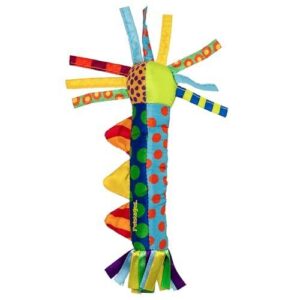
While tugs work great for play sessions, teething puppies need something gentler. The Petstages Cool Teething Stick offers freezable toys with genuine cooling functions—soak it in water, freeze it, and the cotton-poly shell becomes a soothing chew for inflamed gums.
This lightweight puppy chew toy measures roughly 6 inches and uses non-toxic, phthalate-free chew toy materials. Pet safety and precautions matter here: it’s designed for light chewers only, so supervise closely and remove it once thawed.
Reviews show mixed dog toy safety results—some seams split quickly under determined chewing.
| Best For | Teething puppies and small dogs who need gentle, temporary gum relief and aren’t aggressive chewers. |
|---|---|
| Material | Zogoflex |
| Made in USA | Yes |
| Age Suitability | All ages |
| Freezable | No |
| Durability Level | Gentle chewers |
| Interactive Use | Fetch/tug |
| Additional Features |
|
- Freezable design provides 10-15 minutes of cooling relief for sore, inflamed gums during teething
- Made with non-toxic, phthalate-free materials that are safe for puppies
- Lightweight and easy for small puppies to carry, with fun streamers for added texture
- Not durable enough for heavy or aggressive chewers—seams can split quickly
- Cooling effect only lasts about 10-15 minutes, requiring frequent refreezing
- Must be supervised and removed once thawed, limiting unsupervised play time
Benefits of Using Chew Toys

Chew toys aren’t just about keeping your dog busy—they actually serve several important health and behavioral purposes. From soothing painful gums during teething to protecting your furniture from becoming your pup’s next target, the right chew toy makes a real difference.
Here are four key benefits that make chew toys essential for your dog’s wellbeing.
Soothes Teething Pain and Discomfort
Discomfort from erupting teeth drives much of your puppy’s restless behavior between 12 and 24 weeks. Chew toys offer genuine pain management by delivering cooling relief to sore gums and providing counter pressure that interrupts pain signals.
Textured surfaces massage inflamed tissue, while the act of chewing itself triggers calming pathways and natural endorphin release—your puppy’s built-in oral comfort system working exactly as nature intended.
Promotes Dental Health and Hygiene
Beyond soothing sore gums, regular chewing actively protects your dog’s teeth by scraping away soft plaque before it hardens into tartar.
Studies show daily dental chews reduce plaque by 14–15% and calculus by up to 35% over two months—meaningful improvements in oral hygiene that support gum health and freshen breath between professional cleanings your veterinarian provides.
Provides Mental Stimulation and Prevents Boredom
Puzzle toys and treat-dispensing chews deliver cognitive engagement that tires your dog’s brain as effectively as a long walk tires their body. Research shows mental stimulation from interactive play reduces boredom-driven behaviors like excessive barking and inappropriate chewing.
This supports canine enrichment that aligns with natural foraging instincts—key pet parenting tips for puppy development and overall mental fatigue that keeps dogs calm and satisfied.
Prevents Destructive Chewing Behavior
Redirecting your puppy’s energy to appropriate chew toys consistently breaks the cycle of rehearsing damage to furniture and belongings. Studies confirm that dogs given long-lasting chews show fewer stress-related oral behaviors and lower arousal during isolation.
- Satisfies natural chewing instincts without targeting household items
- Reduces boredom-driven destruction through behavioral enrichment
- Aids puppy training by reinforcing acceptable chewing habits
- Provides stress reduction and teething relief for aggressive chewers
Pair durable chew toy materials with supervision for best results.
Types of Chew Toys Explained
Not all chew toys are created equal, and understanding the different types helps you match the right option to your dog’s needs. Each material offers distinct benefits—from natural rubber that bounces back after aggressive chewing to soft plush designs that comfort anxious puppies.
Here’s a breakdown of the most common chew toy types and what makes each one worth considering.
Rubber Chew Toys for Durability

Rubber chew toys offer exceptional durability for dogs who love to gnaw. Look for high natural rubber composition with a Shore hardness of 60–70A—this chew resistance protects your dog’s teeth while extending toy longevity.
Medical-grade, recyclable rubber passes material safety standards and durability tests that cheaper options fail. KONG and similar rubber chew toys with reinforced walls or nylon inserts survive even the toughest dog chew sessions.
Nylon Chew Toys for Strong Chewers
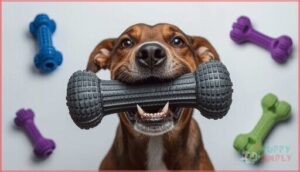
Nylon chew toys stand up to aggressive chewers who destroy softer materials in minutes. Power chewers need Nylabone and similar high-strength options engineered from petroleum-derived polyamides that resist rapid structural failure.
- Choose FDA-compliant, BPA-free nylon for material testing standards
- Monitor for sharp edges or large gouges that signal replacement time
- Watch for swallowed fragments that cause choking or intestinal blockages
- Balance chew durability against tooth fracture risk from overly hard surfaces
Rope Chew Toys for Dental Cleaning

Twisted cotton fibers act like dental floss, sliding between your dog’s teeth to disrupt soft plaque during tug sessions. Rope chew toys combine that scrubbing action with gum massage, supporting canine dental health when you supervise play.
Choose 100 percent natural rope material free from chemical dyes, and discard toys once fraying creates swallowable threads that pose serious intestinal risks.
Plush and Soft Toys for Gentle Chewers

If your dog carries, licks, and cuddles more than shreds, plush materials with soft textures suit that gentle chewing style perfectly. Look for reinforced seams and embroidered features instead of plastic eyes to boost fabric safety and toy durability.
Machine-washable puppy chew toys simplify hygiene, but inspect dog toys weekly for exposed stuffing—swallowed fiberfill blocks intestines, compromising pet safety and dog wellness fast.
Choosing The Right Chew Toy

Picking the right chew toy isn’t about grabbing whatever’s on sale—it’s about matching the toy to your dog’s specific needs and safety profile. Your dog’s age, size, and chewing habits directly determine which materials and designs will work best and which could pose risks.
Here’s how to make a smart choice that keeps your dog both happy and safe.
Consider Your Dog’s Age and Size
Your puppy’s life stage and breed size directly shape which chew toy keeps them safe. Puppies between 2 and 10 months need soft rubber or silicone options that won’t fracture their emerging permanent teeth, while adult large breeds require extra-large toys to prevent choking. Here’s how to match age factors and jaw strength to the right toy:
- Choose soft, flexible toys during teething stages when deciduous teeth fall out between 12 and 24 weeks
- Select toys larger than your dog’s snout to reduce airway risks
- Avoid hard chews like antlers for dogs under one year due to obstruction hazards
- Upsize at least one category for giant breeds like Great Danes
- Apply the thumbnail test—if your nail can’t indent it, skip it for puppies and seniors
Match Toy to Chewing Strength
Once you’ve nailed size, chew strength determines whether your dog destroys a toy in minutes or months. Behavioral surveys show 50 to 70 percent of dogs fall into moderate chewing styles, with smaller groups qualifying as gentle or aggressive chewers based on how fast they tear through household items and bite pressure applied during play.
| Chew Strength | Toy Durability | Recommended Materials |
|---|---|---|
| Gentle | Soft plush, light rubber | Compressible under fingernail |
| Moderate | Durable rubber, reinforced fabric | Flexes but resists tearing |
| Heavy/Aggressive | Ultra-tough rubber, nylon | Thick, labeled “power chewer” |
| Senior/Dental Issues | Soft rubber, silicone | Passes thumbnail test easily |
Match jaw force to material hardness—heavy chewers need Kong Extreme-rated options, while gentle mouths do well with soft hollow rubber. If your dog rips standard toys within hours, upsize to products designed for aggressive chewers. Dogs with prior tooth fractures should always use softer chew toys regardless of breed size to prevent dental trauma during chewing habits.
Research Before You Buy
Before you commit to purchase decisions, read dog chew toy reviews from verified buyers who’ve tested durability claims. Material selection matters—check that safe pet toys meet safety standards like ASTM certifications. Pet product reviews reveal whether marketing matches reality.
Compare buyer guidance across multiple sources when choosing the right chew toy, focusing on:
- Verified customer feedback on longevity
- Manufacturer recalls or safety warnings
- Independent testing results
- Veterinarian endorsements
Supervise Play and Monitor Safety
Even thorough research doesn’t eliminate chew toy hazards—active playtime supervision remains your strongest defense against accidents. Watch for choking signs like pawing at the mouth or sudden gagging, and inspect toys after each session for cracks or loose parts. Remove damaged items immediately, because toy inspection catches problems before they become emergencies.
These dog safety tips apply whether you’re managing puppy care and safety or preventing accidents in adult dogs.
Frequently Asked Questions (FAQs)
How often should I rotate my dogs chew toys?
Most dogs thrive on weekly toy rotation schedules, keeping four or five chew toys available at once.
Highly active dogs benefit from rotation frequency every three to five days to maintain interest and engagement.
Can chew toys help with separation anxiety in dogs?
Long-lasting chews can ease separation stress by keeping your dog occupied and mentally stimulated during short absences.
However, severe anxiety usually requires behavioral therapy and an extensive treatment plan beyond toys alone.
Are flavored chew toys better than unflavored ones?
Flavored chew toys can boost engagement—puppies spent more time with peanut butter-scented options in controlled studies—but they don’t guarantee better results.
Watch for allergies and match your dog’s preferences through careful palatability testing.
When should I introduce chew toys to new puppies?
You should introduce chew toys around six to seven weeks of age, when puppies start exploring their world.
This early introduction aids puppy development, establishes safe chewing habits, and readies them for the intense teething stages ahead.
Conclusion
An ounce of prevention beats a pound of cure—especially when that cure involves emergency dental surgery or foreign body removal. What makes a good chew toy comes down to material safety, proper sizing, and flexibility that protects rather than harms.
You now have the framework to evaluate products critically, choosing options that satisfy your dog’s chewing instinct without compromising their health. Skip the guesswork and apply these principles before your next purchase.
- https://vetdentistwi.com/best-chew-toys-for-my-pet/
- https://www.gqvet.com/is-your-dogs-chew-toy-safe-a-guide-for-gilbert-pet-owners/
- https://thekindpet.com/collections/sustainable-dog-toys
- https://www.westpaw.com/blogs/scoop/safest-dog-toys-0
- https://thebetterbone.com/products/betterbone-hard-durable-tough-sustainable-natural-ingredients-for-superchewers