This site is supported by our readers. We may earn a commission, at no cost to you, if you purchase through links.
Your puppy’s first sixteen weeks shape how they’ll see the world for the rest of their life. During this narrow window, their brain acts like a sponge, absorbing experiences that either build confidence or plant seeds of fear. A puppy who misses proper socialization during this period is markedly more likely to develop aggression, anxiety, or phobias that no amount of training can fully reverse later.
That’s where puppy kindergarten socialization comes in—structured classes designed to introduce your pup to new people, environments, and experiences in a safe, controlled way. The right program doesn’t just teach basic commands; it builds emotional resilience and social skills that prevent behavioral problems before they start.
Table Of Contents
Key Takeaways
- Your puppy’s first sixteen weeks represent a critical socialization window where their brain absorbs experiences that permanently shape their confidence, behavior, and emotional resilience—missing this period makes fear, anxiety, and aggression significantly harder to reverse later.
- Puppy kindergarten differs from basic obedience training by prioritizing early social exposure, handling practice, and confidence building through controlled interactions with people, environments, and other puppies rather than focusing solely on command mastery.
- Start socialization between 8 and 16 weeks old, balancing disease risk with behavioral needs by choosing low-risk settings like puppy-only classes with health screening while avoiding high-traffic areas until vaccinations are complete.
- Socialization doesn’t end after kindergarten—you’ll need to continue gradually expanding your puppy’s experiences at home through handling exercises, noise desensitization, and controlled greetings while watching for stress signals that indicate you’re moving too fast.
What is Puppy Kindergarten Socialization?
Puppy kindergarten socialization is your first step toward raising a confident, well-adjusted dog. It’s a structured approach that introduces your puppy to the world during their most impressionable weeks, building positive associations with new experiences.
Let’s break down what it means, why it matters, and how it differs from traditional training classes.
Definition and Purpose
Puppy kindergarten socialization is a structured program that introduces your puppy to different people, environments, and routines during the critical socialization period. It helps build behavioral foundations and confidence through gentle, controlled experiences with canine interaction and positive reinforcement.
The process shapes how your puppy reacts to handling, grooming, and new situations, laying groundwork for social learning that bolsters cooperative puppy training throughout life. Effective puppy training also relies on methodological rigor to guarantee consistent and reliable results.
Benefits for Puppy Development
Beyond just meeting new dogs, puppy socialization shapes every part of your puppy’s growth. Confidence training during the socialization period strengthens bite inhibition, emotional regulation, and cognitive flexibility through positive reinforcement. Early behavioral development reduces future aggression and anxiety, while social skill building improves how your puppy manages stress.
Key benefits include:
- Stronger problem-solving skills through age-appropriate mental challenges
- Better grooming tolerance that makes vet visits and baths easier
- Improved compliance with cues for safer, more efficient puppy training
- Early detection of issues so you can address concerns before they escalate
Differences From Basic Obedience Classes
While puppy kindergarten prioritizes early social exposure, basic obedience centers on command mastery. Understanding these training approaches helps you choose the right class for your puppy’s development stage.
| Focus Area | Puppy Kindergarten | Basic Obedience |
|---|---|---|
| Primary Goal | Build confidence through socialization methods and exposure | Master cues like sit, stay, and recall |
| Classroom Dynamics | Rotating stations with varied puppy interactions | Uniform drill-based format with instructor roles |
| Session Content | Handling, grooming, and positive reinforcement for novel stimuli | Precision behaviors under controlled conditions |
| Best For | Puppies 7-16 weeks in the socialization process | Dogs needing structured command training |
Socialization-focused puppy classes incorporate real-world scenarios your pup will encounter daily, while obedience emphasizes performance consistency. These puppy socialization class benefits extend far beyond simple commands, building confidence and emotional resilience that lasts a lifetime.
When to Start Socializing Your Puppy

Timing isn’t just important in puppy socialization—it’s everything. Start too late, and you might miss the window when your puppy’s brain is most open to new experiences.
Let’s break down exactly when to begin, what age is ideal for classes, and how to keep your pup safe before those final vaccinations kick in. Most experts recommend starting puppy training classes between 7–8 weeks old, right after your pup gets those first essential shots.
Understanding The Critical Socialization Window
Think of the socialization window as your puppy’s most receptive learning phase. Between 3 and 14 weeks, your puppy’s brain is wired for social learning and sensory exposure. During this period, puppies learn to interpret social cues and body language that help prevent reactive behaviors like snapping later in life.
Your puppy’s brain is most open to new experiences between 3 and 14 weeks—this is the critical socialization window
This critical developmental process shapes behavioral foundations and fear responses for life. Positive experiences during these fear periods build confidence, while negative ones can trigger lasting anxiety.
The socialization process matters most right now.
Age Guidelines for Kindergarten Classes
Most puppy kindergarten programs welcome pups starting at 8 weeks old, right when the socialization window opens. The enrollment process typically sets an upper limit around 16 to 20 weeks, though some facilities extend this to 4–6 months for puppies needing catch-up exposure. Pairing early enrollment with gradual sound desensitization training helps young pups build confidence before fear periods intensify.
When you’re evaluating class scheduling options, consider these age restrictions:
- Initial entry: Programs accept puppies as young as 8 weeks with partial vaccination requirements
- Prime window: Enrollment between 8 and 16 weeks maximizes critical puppy development opportunities
- Extended eligibility: Some trainers offer graduated entry for slightly older pups lacking prior socialization
Your puppy’s age directly impacts which activities they’ll experience during the socialization process. Younger puppies under 12 weeks need gentler exposure techniques, while older pups may require more structured puppy socialization window techniques to address emerging fear responses.
Risks and Safety Considerations Before Full Vaccination
Before your puppy completes their vaccination schedule, you’re walking a fine line between disease risks and puppy isolation. Veterinary guidance warns against high-risk environments like dog parks where contagious illnesses spread easily.
| Safe Socialization Settings | High-Risk Environments to Avoid |
|---|---|
| Home visits with vaccinated dogs | Public dog parks and beaches |
| Puppy-only classes with health screening | Pet stores with unknown animals |
| Controlled outdoor spaces you control | Areas with heavy dog traffic |
Supervised interactions in low-risk settings won’t compromise vaccine timing. You’ll want organizers verifying vaccination records before any group activities. Overstimulating environments can temporarily weaken your puppy’s immune defenses, affecting their response to vaccinations. During fear periods especially, stick with calm, controlled exposures that build confidence without overwhelming their developing system.
Balance remains key—the behavioral consequences of complete puppy isolation often outweigh carefully managed disease risks when you’re following proper protocols.
Key Elements of Puppy Kindergarten Socialization

A successful puppy kindergarten program focuses on three main areas that work together to build your pup’s confidence. Each element plays a unique role in helping your puppy become comfortable with the world around them.
Let’s look at what makes these socialization experiences effective and safe.
Exposure to New People and Environments
Your puppy’s world expands quickly when you introduce them to different people—tall, short, young, old, wearing hats or sunglasses. These interactions build social skills and reduce fear responses that can linger into adulthood. Pair each encounter with treats and praise to reinforce calm behavior.
Gradually expose your pup to pet stores, parks, and other public settings, using positive reinforcement techniques to strengthen confidence building and environmental adapt skills throughout their critical puppy socialization window.
Handling, Grooming, and Novel Experiences
Regular touch builds trust, so start gentle handling early—paws, ears, mouth—while your pup is calm. Brush their coat weekly to reduce shedding by up to 60% and catch skin issues fast. Introduce novel textures like grass, tile, and carpet in safe exposure sessions. Keep grooming quick and pair each step with treats.
- Use puppy-safe clippers with low heat to prevent burns
- Trim nails weekly to minimize scratches during puppy classes
- Clean ears with vet-approved solutions to stop infections
- Practice on non-slip surfaces for stability
- Watch for stress signals—yawning, stiff body—and pause
Positive Reinforcement Techniques
When your pup sits calmly near a stranger, mark that win instantly with a treat or praise. Clicker training sharpens timing—click the second they nail it, then reward. Use high-value treats like chicken bits during puppy classes to boost motivation.
Shape behaviors in small steps: reward eye contact, then calm sitting, building confidence through positive reinforcement techniques that make socialization feel like a game.
How to Prepare for Puppy Kindergarten

Getting your puppy ready for kindergarten doesn’t have to feel overwhelming. A little preparation goes a long way in helping both of you feel confident and comfortable on day one.
Here’s what you need to focus on before your first class.
Selecting a Reputable Program or Trainer
Choosing the right trainer can make or break your socialization efforts. You’ll want to verify trainer credentials from recognized canine behavior organizations and confirm they emphasize puppy socialization in small groups.
Request a curriculum outline and program safety policies upfront. Don’t skip facility inspection—observe puppy classes in action and read client reviews.
This research fosters responsible pet ownership and sets your pup up for success.
Vaccination and Health Requirements
Once you’ve found your trainer, you’ll need to tackle the health side of things. Most programs require proof of initial puppy vaccinations—typically distemper, adenovirus, and parvovirus—administered at 6–8 weeks.
Here’s what you’ll usually need:
- Documentation of your puppy’s vaccination schedule from your vet
- A health certificate confirming your pup’s wellness exam
- Proof of parasite control measures (internal and external)
- Medical exemptions in writing if vaccines are delayed
- Signed liability waivers acknowledging class participation risks
Your veterinarian’s guidance ensures your puppy’s development and care stay on track while meeting class entry requirements.
Essential Gear and Supplies
You’ll want to arrive at your first puppy kindergarten session prepared. Think of it as packing for summer camp—your pup needs the right tools to thrive.
Here’s what belongs in your puppy care kit:
| Category | Item | Purpose |
|---|---|---|
| Restraint & Control | Puppy leashes (4–6 ft adjustable nylon) | Controlled walks during training, clicker exercises |
| Restraint & Control | Dog harnesses (soft, non-slip) | Reduces neck strain during handling |
| Training Tools | Training clickers and treat pouch | Positive reinforcement during puppy training and socialization |
| Safety Equipment | Reflective collar or LED gear | Low-light visibility for indoor/outdoor activities |
| Grooming & Comfort | Pet grooming brush and puppy-safe wipes | Quick cleanups supporting puppy development and care |
Pack extras—a backup leash, fresh water, and current vaccination records. Safety equipment like a travel first aid kit gives you peace of mind during socialization activities.
Setting Realistic Expectations
With your gear ready, it’s time to adjust your mindset. Puppy development unfolds gradually—behavior tracking reveals small wins before big breakthroughs. Socialization goals should match your pup’s temperament, and progress monitoring shows realistic timelines.
Expect incremental changes through positive reinforcement training, not overnight transformations. Puppy kindergarten and classes work best when expectation management keeps you patient, celebrating each step in your socialization techniques journey.
What to Expect During Classes
Walking into your first puppy kindergarten class can feel like stepping into organized chaos, but there’s a method to the madness. You’ll see puppies learning, playing, and occasionally getting a little overwhelmed—all part of the learning process.
Here’s what happens during a typical class and how to help your pup make the most of it.
Typical Class Structure and Activities
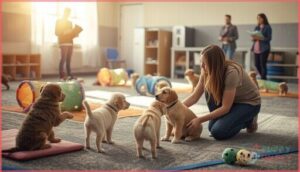
Most puppy kindergarten classes follow a gentle rhythm designed to optimize learning without overwhelming your pup. You’ll start with class warmups—brief health checks and calm introductions that set a safe tone.
Next comes social exposure through supervised play and sensory stations featuring different textures and sounds.
The training framework incorporates short, positive reinforcement sessions teaching basic cues. Handling techniques help your puppy accept grooming and touch, while class closures recap milestones and assign homework to reinforce progress at home.
Managing Puppy Stress and Overstimulation

Recognizing puppy stress signs keeps your little learner safe and engaged. Watch for lip licking, yawning, panting, or a tucked tail—these signals mean it’s time to pause.
Effective overstimulation prevention strategies:
- Limit novel stimuli to 2-3 per minute during socialization pace adjustments
- Schedule 5-10 minute sessions with calm transitions to support stress recovery methods
- Provide a quiet retreat space where your pup can decompress using calming techniques
High-value treats reinforce relaxed behavior during challenging moments within the socialization window.
Encouraging Confidence and Curiosity

Building confidence starts with small wins. Reward every brave step your puppy takes—sniffing a stranger’s hand, exploring new surfaces, or approaching unfamiliar objects.
These confidence boosters fuel curiosity building and fearless exploration during puppy socialization. Playful engagement with other pups creates social learning opportunities that strengthen self-assurance.
Consistent positive reinforcement during puppy training prevents fear and transforms hesitation into enthusiastic confidence building.
Involving The Whole Family

Often, training works best when everyone pitches in. Shared responsibilities mean your puppy hears the same household rules from every family member, which speeds up cooperative learning and reduces confusion.
Bring the whole crew to puppy class—parental involvement and family training tips from your trainer help everyone master puppy socialization techniques together. Consistent responses build better dog training and behavior outcomes through true teamwork.
Effective puppy training requires understanding of puppy class details to guarantee a strong foundation for your pet.
Continuing Socialization After Kindergarten

Graduating from puppy kindergarten doesn’t mean the work is done—it’s really just the beginning. Your puppy needs continued exposure to new experiences, people, and environments to maintain the confidence they’ve built.
Let’s look at practical ways to keep socialization going strong at home and beyond.
Gradually Expanding Social Experiences
Think of socialization like building a house—you need a solid foundation before adding the roof. After kindergarten wraps up, your puppy’s confidence building continues through carefully planned exposure:
- Introduce diverse people of different ages, clothing styles, and mobility levels across multiple sessions
- Rotate environments from quiet sidewalks to bustling parks, increasing complexity gradually
- Track your progress to spot patterns in stress signals and adjust pacing
- Mix up social partners to maintain novelty and prevent overreliance on familiar faces
Monitor your puppy’s body language closely. If you notice whale eye, tucked tails, or excessive panting, scale back the intensity.
Sensory exposure works best when you control the variables—one new element at a time prevents overwhelm. This systematic approach to environmental adaptation creates lasting confidence without pushing too hard, too fast.
At-Home Socialization Exercises
Your home is your puppy’s training ground for real-world confidence. Daily socialization exercises strengthen the foundation you built in kindergarten. Start with gentle handling routines—brush your puppy’s coat, inspect ears, and touch paws during 1–2 minute sessions. Pair household noises like the vacuum or doorbell with treats at low volume, gradually increasing intensity.
Family involvement makes socialization stick. Rotate who manages grooming tasks and greeting practice so your puppy learns trust isn’t tied to one person. Keep sessions short and positive—overstimulation derails progress faster than anything else.
Puzzle feeders during quiet time teach problem-solving skills that translate to calmer social encounters. This home-based social learning builds adaptability without overwhelming your growing pup, setting the stage for a lifetime of confident interactions.
| Exercise Type | How to Implement |
|---|---|
| Puppy Handling | Practice gentle ear checks, nail touches, and teeth inspections with high-value treats |
| Noise Desensitization | Play TV, vacuum, or doorbell sounds at low volume while your puppy eats or plays |
| Controlled Greetings | Invite calm visitors for brief supervised introductions, rewarding polite behavior |
| Novel Spaces | Take short car rides or stroller walks to pet-friendly stores and quiet indoor locations |
Monitoring Progress and Addressing Challenges
You’ll know your puppy’s socialization is on track when each week brings fewer stress signals and more curious exploration. Progress tracking doesn’t require fancy tools—just consistent observation. Watch for these socialization metrics:
- Reduced fearful responses to household noises and new visitors
- Increased play invitations toward unfamiliar dogs during controlled meetups
- Calmer reactions when handled or groomed by different family members
- Quicker recovery from startling experiences, returning to play within moments
When challenge identification reveals persistent anxiety or regression, behavior adjustment starts with slowing your pace. Puppy assessment shows most behavioral issues stem from rushing through puppy development stages.
Scale back novelty, reinforce calm behavior with high-value treats, and give your pup time to process. If fear persists beyond two weeks despite adjustments, professional puppy behavior modification may be needed.
When to Seek Professional Help
Sometimes adjustments aren’t enough. Professional guidance becomes necessary when aggressive behavior like persistent growling or biting endangers your household, or when puppy anxiety shows through extreme withdrawal and panic reactions.
Behavioral issues—chronic fear symptoms, house soiling after weeks of training, or reactivity that blocks puppy socialization progress—warrant dog behavior experts.
Puppy behavior modification specialists help with fear prevention before problems cement into adulthood.
Frequently Asked Questions (FAQs)
Can puppies attend multiple kindergarten sessions simultaneously?
Most puppy kindergarten programs recommend one session at a time. Multiple enrollment can lead to puppy overstimulation and conflicting training methods, increasing socialization risks and puppy stress rather than accelerating development.
How does puppy temperament affect socialization outcomes?
Your dog’s natural personality shapes how they respond to socialization. Bold puppies adapt quickly, while shy ones need gradual exposure. Tailoring socialization to puppy temperament prevents fear-based behaviors and builds lasting confidence.
What if my puppy shows aggression early?
Like a small fire that can quickly spread, early aggression demands immediate attention.
Contact your vet first to rule out pain or illness, then work with a certified behaviorist specializing in canine behavioral issues.
Are breed-specific socialization approaches necessary or helpful?
You don’t need rigid breed-specific socialization plans. While breed temperament influences fear responses and puppy personalities, general positive reinforcement strategies work effectively across all breed characteristics, with adjustments based on individual puppy development.
How do seasonal weather conditions impact socialization?
Weather effects shape your puppy’s comfort and engagement during socialization. Hot or cold extremes shorten sessions, while moderate temperatures (60–75°F) support longer outdoor walks and better learning through balanced arousal and sustained attention.
Conclusion
Some owners skip puppy kindergarten socialization, hoping their dog will “just figure it out.” Spoiler: they won’t. Your puppy’s brain doesn’t hit pause while you wait for the perfect moment.
Every day outside that critical window is a missed opportunity to shape a confident, well-adjusted companion. This puppy kindergarten socialization guide gives you the roadmap—now it’s your turn to walk it. Your future self, and your dog, will thank you.
- https://avsab.org/wp-content/uploads/2018/03/Puppy_Socialization_Position_Statement_Download_-_10-3-14.pdf
- https://images.akc.org/pdf/star_puppy/6_Weeks_Class.pdf
- https://www.apps.akc.org/cgc-evaluator/
- https://lclsonline.org/puppy-socialization-dont-miss-the-critical-window/
- https://www.akc.org/expert-advice/training/puppy-socialization/