This site is supported by our readers. We may earn a commission, at no cost to you, if you purchase through links.
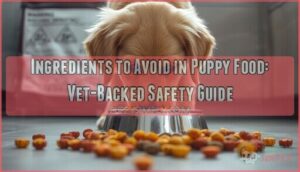
Your puppy’s kibble label reads like a chemistry textbook, and that’s not a good sign. While pet food manufacturers pack their products with cheap fillers and synthetic additives to boost profits, your growing pup pays the price with allergies, digestive problems, and long-term health risks.
The truth is, many popular puppy foods contain ingredients that have no business in a developing dog’s diet—from cancer-linked preservatives to mystery meat by-products that could be almost anything.
Learning to spot these red flags on ingredient lists isn’t just smart pet parenting. It’s the difference between raising a healthy dog and spending years managing preventable health issues.
Table Of Contents
Key Takeaways
- Avoid artificial preservatives like BHA, BHT, and ethoxyquin, along with propylene glycol and carrageenan, as these chemicals have been linked to toxicity concerns, digestive inflammation, and potential long-term health risks in growing puppies.
- Steer clear of vague protein sources such as “meat by-products” and “rendered meats,” and generic fats like “animal fat” or “poultry fat,” since these low-quality ingredients lack transparency about their origin and may contain contaminants or inadequate amino acids.
- Watch out for cheap fillers including corn gluten, wheat gluten, soybean meal, and added sugars (dextrose, corn syrup), which offer minimal nutritional value and can trigger allergies, digestive issues, or contribute to obesity and dental problems.
- Read labels carefully by prioritizing named protein sources (like chicken or turkey), whole grains (such as brown rice), and natural preservatives (vitamin E or rosemary extract), while choosing brands that provide transparent sourcing and meet AAFCO nutritional standards for puppy growth.
Harmful Preservatives in Puppy Food
Preservatives keep puppy food fresh on the shelf, but not all of them are safe for your growing dog. Some artificial preservatives have been linked to health concerns that range from mild irritation to more serious long-term effects.
Here are the three main preservatives you should watch out for when reading puppy food labels.
Artificial Preservatives (BHA, BHT, Ethoxyquin)
Artificial preservatives like BHA, BHT, and ethoxyquin keep fats stable in puppy food, but studies have raised red flags about toxicity levels and potential tumor links. Regulatory standards vary by region, and some jurisdictions have tightened restrictions. Many owners concerned about synthetic additives turn to grain-free or organic puppy foods for Goldendoodles that use natural preservatives like mixed tocopherols instead.
You’ll find natural alternatives like mixed tocopherols (vitamin E) in safer formulas. When pet safety risks matter most, choosing preservative-free options protects your growing pup. Ensuring the use of scientific study methods is vital for accurate assessments of puppy food ingredients.
Propylene Glycol
Propylene glycol isn’t approved for dog food in the U.S. under current FDA guidance, yet it still shows up in some formulas. This humectant poses toxicity risks to your puppy’s developing liver and kidneys.
Pet safety experts recommend skipping any product listing it and choosing safer humectant alternatives like glycerin instead. Always verify ingredient lists to protect your growing pup. Prioritizing natural puppy food ingredients ensures your growing companion gets wholesome nutrition without unnecessary additives or harmful substances.
Carrageenan
Carrageenan is a thickening agent from red seaweed that might trigger digestive issues in your puppy. While it’s approved in pet food at safe levels, some studies link it to gastro health concerns and inflammation. If you’re curious about other seaweed options, nori offers similar gut-friendly benefits without the same inflammation concerns linked to carrageenan.
Watch for these warning signs after switching foods: If you’re considering a transition, check out top-rated foods for Cavalier King Charles Spaniels to find options that support their unique nutritional needs.
- Loose stools or diarrhea
- Vomiting or appetite loss
- Visible stomach discomfort
Choose brands using guar gum or xanthan gum instead.
Artificial Additives to Watch For
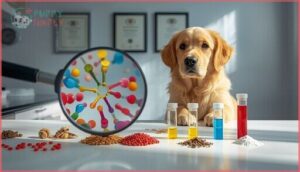
Beyond preservatives, puppy food can contain artificial additives that serve no nutritional purpose and may trigger unwanted reactions in your growing dog. These additives are generally used to make food look more appealing to you or taste better to your puppy—but they come with potential risks.
Here are the artificial additives you should watch for on ingredient labels.
Artificial Colors
You won’t find any nutritional value in those bright reds and yellows. Artificial dyes and food dyes are cosmetic additives—they make kibble look appealing to you, not your puppy. Pet food labels must list these color additives, and some dogs show allergic reactions or behavioral changes. Natural alternatives exist, but honestly, color-free formulations are your safest bet for avoiding these toxic ingredients in pet food.
| What to Avoid | Why It Matters |
|---|---|
| Red 40, Yellow 5, Blue 2 | Linked to sensitivities and allergic responses |
| Artificial preservatives with dyes | Combined exposure increases risk |
| Vague “color added” terms | Lacks transparency on specific dyes used |
Artificial Flavors
Many puppy foods rely on synthetic additives—chemical compounds designed to boost appeal without adding nutrition. These flavor enhancers mask low-quality ingredients and can trigger food sensitivities or allergies in vulnerable pups. Before choosing any store-brand treat, check whether common ingredients like gelatin are safe for puppies and align with your dog’s dietary needs.
You’re better off choosing natural alternatives with real meat flavoring. Skip formulas listing “artificial flavors” alongside artificial colors or preservatives.
Your puppy doesn’t need toxic ingredients or artificial sweeteners—just honest, wholesome nutrition.
Your puppy thrives on honest, wholesome nutrition—not toxic ingredients or artificial sweeteners
Monosodium Glutamate (MSG)
MSG is a flavor enhancer that can trigger glutamate sensitivity in some puppies, though long-term MSG toxicity at typical dietary exposure levels remains unproven. Still, high sodium content and uncertain dietary exposure make it worth avoiding.
Check labels for “monosodium glutamate” or “hydrolyzed plant protein”—both signal free glutamates. Choose whole-protein dog food ingredients to avoid instead of relying on artificial preservatives and food additives for taste.
Low-Quality and Unsafe Protein Sources
Not all protein in puppy food is created equal. Some ingredients that sound nutritious can actually be low-quality or even risky for your growing pup.
Let’s look at two protein-related ingredients you’ll want to steer clear of.
Meat By-Products and Rendered Meats
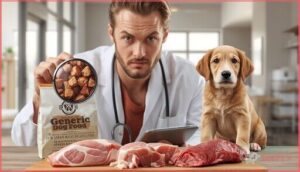
When you see “meat byproducts” or “rendered meat” on a label, you’re looking at vague protein sources that could include anything from organs to animal tissue of unknown origin. These byproducts often lack the amino acid quality your puppy needs for healthy growth.
Meat meal and rendered fat can also harbor contaminants from inconsistent processing. Choose foods listing specific proteins like chicken or beef instead.
Generic Animal Fats (“Animal Fat,” “Poultry Fat”)
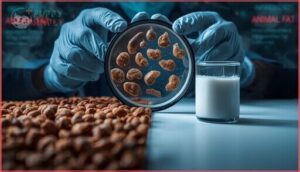
When you spot “animal fat” or “poultry fat” on the label without a named source, you’re dealing with rendered fat quality issues. These generic terms hide variability in fatty acid profiles and possible contaminants that pet food regulations still allow.
Poor fat source transparency can mask harmful ingredients like oxidized fats. Always choose brands with specific ingredient labeling—like “chicken fat”—over vague rendered fat or meat byproducts.
Problematic Fillers and Grains
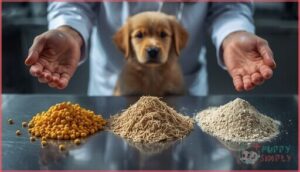
Not all grains and fillers are created equal regarding your puppy’s development. Some ingredients pad out the food without delivering the nutrients your growing pup actually needs—and a few can even trigger digestive problems or allergic reactions.
Let’s look at three common fillers you’ll want to skip when you’re reading those ingredient labels.
Corn and Wheat Gluten
You’ll often see corn and wheat gluten listed as cheaper protein sources in puppy food, but they come with real concerns. Some puppies develop wheat allergies or corn sensitivities that show up as itchy skin or upset stomachs. Here’s what matters:
- Corn and wheat gluten don’t provide complete nutrition like real meat does
- Gluten intolerance can trigger digestive issues in sensitive puppies
- These fillers may throw off carbohydrate balance in your pup’s diet
- Grain-free alternatives aren’t automatically better—ingredient quality still matters most
If you’re worried about limited ingredients or artificial preservatives, focus on formulas with identifiable whole proteins rather than just swapping to gluten-free diets.
Soy and Soybean Meal
Soy and soybean meal show up in 20–40% of some puppy formulas as budget protein, but they’re not ideal. Soy allergies can trigger itchy skin or stomach upset in sensitive pups. Phytoestrogen effects remain debated, and gut tolerance varies widely.
Protein quality from soy doesn’t match real meat meal. If your puppy shows soy sensitivity, consider limited ingredient diets without artificial preservatives.
Added Sugars
Beyond soy, watch for added sugars like dextrose, corn syrup, and molasses in puppy nutrition labels. These harmful ingredients spike energy and contribute to canine diabetes risk, obesity, and dental decay. Sugar content offers zero nutritional value.
Choose healthy dog food with natural sweeteners from fruit or skip sweeteners entirely. Pet nutrition thrives without artificial preservatives or added sugar—healthy alternatives deliver better results for growing pups.
Tips for Avoiding Harmful Puppy Food Ingredients

Now that you know which ingredients can harm your puppy, the next step is learning how to spot them before you buy. Reading labels might seem overwhelming at first, but it gets easier once you know what to look for.
Here’s how to become a smarter shopper and choose food that truly nourishes your puppy’s health.
How to Read Puppy Food Labels
Reading puppy food labels doesn’t have to feel like cracking a code. Start by checking the ingredient lists—components appear by weight, so the first few matter most. The Guaranteed Analysis shows minimum protein and fat percentages, while Label Claims like “complete and balanced” confirm nutritional adequacy. Feeding Guidelines help you portion correctly. Watch for Artificial Preservatives and Artificial Colors hiding in Nutrition Facts panels.
Key label sections to review:
- Ingredient lists ordered by weight—look for named proteins first
- Guaranteed Analysis displaying minimum protein and maximum moisture levels
- AAFCO statement confirming Food Safety standards for growth
- Feeding Guidelines customized to your puppy’s weight and age
- Ingredient Labeling and Regulation disclosures about sourcing practices
Ingredient Names to Prefer and Avoid
Once you’ve decoded the label, you need to know which names signal quality. Look for named protein sources like “chicken” or “turkey” instead of vague “meat by-products.” Whole grains such as brown rice beat corn gluten every time. Natural preservatives like vitamin E replace artificial preservatives (BHA, BHT). Avoid artificial colors, generic fats, and toxic ingredients that lack transparency—your puppy deserves natural ingredients for proper nutrient balance and healthy fats.
| Ingredient Type | Names to Prefer | Names to Avoid |
|---|---|---|
| Proteins | Chicken, turkey, beef, salmon | Meat by-products, rendered meats, unspecified “animal protein” |
| Fats | Chicken fat, beef fat, fish oil | Animal fat, poultry fat, generic oils |
| Grains/Carbs | Brown rice, oats, barley | Corn gluten, wheat gluten, soybean meal |
| Preservatives | Vitamin E, vitamin C, rosemary extract | BHA, BHT, ethoxyquin, propylene glycol |
| Additives | None or minimal natural flavors | Artificial colors, artificial flavors, MSG, added sugars |
Choosing Brands With Transparent Sourcing
Knowing what to prefer isn’t enough—you need brands that openly share where ingredients come from. Transparent sourcing means you can verify the quality yourself. Here’s what brand accountability looks like:
- Ingredient disclosure with specific supplier names or farm locations on their website
- Supply chain details published in sustainability or transparency reports
- Third-party certifications from AAFCO or independent auditors confirming natural ingredients
- Country-of-origin labels for primary proteins and avoiding artificial preservatives
- Accessible contact channels for ingredient awareness questions about pet nutrition and wellness
Choosing the right dog food starts with transparency standards you can trust.
Frequently Asked Questions (FAQs)
Can xylitol harm my puppy if ingested?
Yes—xylitol is a poison to puppies. Even tiny amounts trigger a dangerous insulin surge, causing life-threatening hypoglycemia within minutes. Sugar-free gum, peanut butter, and baked goods often hide this deadly sweetener.
Are onions and garlic toxic to puppies?
Absolutely—both onion toxicity and garlic poisoning damage your puppy’s red blood cells, triggering canine anemia. These toxic food ingredients cause symptoms within days, so keep harmful ingredients out of their puppy nutrition entirely.
How much sodium is safe for puppies?
Like a tightrope walker balancing energy and health, your puppy needs sodium intake carefully controlled—aim for 1% to 3% of their diet on a dry matter basis to maintain electrolyte balance and avoid excessive salt-related dog health risks and prevention issues.
What AAFCO standards should puppy food meet?
AAFCO requires puppy food to meet nutrient profiles for growth or pass feeding trials. Labels must confirm complete and balanced nutrition, with protein, fat, calcium, and phosphorus levels supporting healthy development.
Why is calcium balance important for puppies?
Calcium balance promotes proper bone growth and prevents skeletal disorders in puppies. Excess calcium can cause growth plate abnormalities, while deficiency weakens bones—both requiring careful nutritional balance and growth monitoring for ideal canine health.
Conclusion
Think of your puppy’s food bowl as their first line of defense. By learning which ingredients to avoid in puppy food, you’re not just preventing problems—you’re building a foundation for their healthiest life.
Skip the mystery meats, artificial chemicals, and cheap fillers. Choose transparent brands with named protein sources and natural preservatives.
Your pup can’t read labels, but you can. That simple act matters more than you might think.
- https://www.petmd.com/blogs/nutritionnuggets/jcoates/2012/dec/natural-artificial-preservatives-in-dog-foods-29523
- https://www.ncbi.nlm.nih.gov/pmc/articles/PMC7009650/
- https://www.sciencedirect.com/topics/immunology-and-microbiology/ethoxyquin
- https://pmc.ncbi.nlm.nih.gov/articles/PMC7009650/
- https://academichelpexpress.blog/2024/08/please-use-the-bulleted-points-and-the-rubric-below-to-guide-your-work-your-pa/