
This site is supported by our readers. We may earn a commission, at no cost to you, if you purchase through links.

A dog who refuses their crate isn’t being stubborn, they’re telling you something’s wrong with their space. Most crate aversion stems from physical discomfort, according to veterinary behaviorists who’ve studied thousands of cases.
The difference between a crate your dog tolerates and one they actually seek out often comes down to details most owners overlook: bedding thickness, air circulation, and strategic placement within your home.
When you understand how dogs experience confined spaces, from their temperature regulation needs to their instinct for den-like security, you can transform a metal box into a genuine retreat.
Getting the setup right means your dog will willingly enter their crate for naps, weathering storms, and downtime, turning what many see as a training tool into a comfortable living space they choose on their own.
Table Of Contents
Key Takeaways
- Crate aversion stems from physical discomfort rather than stubborn behavior, so addressing bedding thickness, air circulation, and strategic placement transforms a metal box into a genuine retreat your dog will choose on their own.
- Proper sizing requires measuring your dog’s length (nose to tail base plus 2-4 inches), height (1-2 inches of head clearance), and width (2-3 inches of side clearance) to ensure they can stand, turn, and stretch naturally without feeling cramped.
- Different life stages demand distinct setups—puppies need crates in family activity zones for socialization, adults require quiet spaces with comfortable turn room, and seniors benefit from orthopedic support with non-slip floors and accessible water.
- Safety depends on maintaining ambient temperatures between 60-80°F, leaving at least two crate sides fully open when using covers, and conducting weekly inspections of latches, sharp edges, and electrical cords to prevent injury or escape.
Choosing The Right Dog Crate
Your dog’s crate should feel like a safe retreat, not a cage, and that starts with picking the right one for their size, temperament, and daily routine. The material, dimensions, and design you choose can make all the difference in whether your dog views their crate as a cozy den or an uncomfortable box.
A dog’s crate should feel like a safe retreat, not a cage—the right size, material, and design transform it into a cozy den
Let’s look at the key factors you should think about when selecting a crate that truly works for your dog.
Size and Space Considerations
Getting crate size right is fundamental to your dog’s comfort and safety. A properly sized crate allows your dog to stand, turn around, and stretch out naturally without feeling cramped or insecure.
Measure your dog for the perfect fit:
- Length: Measure from nose to tail base, then add 2-4 inches for comfortable movement and proper crate ventilation.
- Height: Guarantee 1-2 inches of clearance above your dog’s head when standing to prevent crouching.
- Width: Allow 2-3 inches of side clearance around the chest for easy turning and ideal dog comfort.
For puppies, use dividers to adjust space as they grow—this aids house-training while maintaining crate comfort. Overly large crates can hinder training progress by allowing elimination away from sleeping areas.
When evaluating the effectiveness of crate training, consider the importance of methodological rigor in scientific studies.
Crate Types and Materials
Once you’ve determined the right dimensions, you’ll need to choose among crate types and materials that suit your dog’s temperament and your lifestyle.
Wire crates offer maximum airflow through welded wire sizes and collapsible crate frames, making them ideal for most dogs. Plastic variants provide a den-like feel with vented sides, while soft-sided crates work only for non-chewers. Metal options and composite materials deliver durability when standard crate design won’t hold up.
Accessibility and Placement Tips
After selecting the right crate type, you need to think about crate location and spatial arrangement. Place your dog crate setup in a quiet zone away from heavy foot traffic, ensuring doorway clearance of at least two to four feet for easy entry.
Keep the crate on a flat, non-slip surface out of direct sunlight, and position it where you can monitor your dog while maintaining dog comfort and safety through proper traffic control.
Selecting Comfortable Bedding and Mats
Your dog’s bedding can make or break their crate experience, and the right choice depends on their age, chewing habits, and physical needs. Some dogs settle happily on a simple mat, while others need extra support from orthopedic materials or seasonal adjustments to stay comfortable year-round.
Here’s how to pick bedding that keeps your dog cozy and safe.
Bedding Options for Chewers and Non-Chewers

Your dog’s chewing habits should drive your bedding choice. For chewers, look for durable fabric options like heavy-duty canvas or reinforced polyester blends that resist fraying and reduce ingestion risk. Non-chewers can enjoy plush, machine-washable covers that prioritize comfort over durability.
Consider a simple crate mat with chew-proof bedding and reinforced seams to balance dog comfort with dog bed safety, regardless of your pup’s destruction tendencies.
Memory Foam and Orthopedic Choices

Joint support matters, especially for older or larger breeds. Memory foam and orthopedic dog bed options conform to your dog’s body, easing pressure on hips and shoulders.
Look for foam density between 1.8 and 2.8 pounds per cubic foot—higher density means longer-lasting pet comfort. Gel-infused varieties combine orthopedic support with cooling benefits, keeping your pup’s comfortable crate from overheating while protecting aging joints.
Seasonal Bedding Adjustments

Thermal regulation shifts with the calendar, and your dog’s crate accessories should follow suit. You’ll want breathable materials like cotton or bamboo during warm months to prevent heat buildup, while moisture control becomes essential in humid conditions with machine-washable, wicking covers.
- Swap to cooling mats or elevated foam layers in summer for better airflow
- Add thicker winter bedding only if your dog tolerates it without overheating
- Rotate and clean soft bedding weekly to prevent odor and skin irritation
Adding Comfort Items and Accessories

Once you’ve got the right bedding in place, you can take your dog’s crate comfort to the next level with a few carefully chosen accessories. The items you add should keep your dog entertained, hydrated, and calm without creating safety hazards or overwhelming their space.
Here’s what to keep in mind when selecting comfort items that’ll make crate time something your dog actually looks forward to.
Safe Toys and Chew Items
Keep your dog entertained and safe with crate-appropriate enrichment. Choose non-toxic toys made from durable materials like rubber KONG toys or high-quality nylon chews, which resist splintering better than brittle plastics. Avoid rawhide alternatives for puppies and small breeds due to choking risks.
Rotate dog treats and enrichment puzzles regularly, inspect pet care and training supplies for wear, and discard damaged crate accessories immediately to prevent fragment ingestion.
Water Bowls and Dispensers
You’ll want to prioritize water quality with a stainless steel bowl that’s dishwasher-safe, reducing bacteria buildup in your dog’s crate while simplifying cleaning methods for pet care and training routines.
For larger breeds, elevated hydration systems minimize neck strain during crate training.
If you’re evaluating dispenser types, choose BPA-free automatic models, but inspect them weekly to prevent leaks that compromise dog health and wellness inside confined dog supplies.
Calming Scents and Sounds
You can transform your dog’s crate into a calming sanctuary using sensory tools that target separation anxiety and promote canine comfort through scientifically backed anxiety relief methods.
- Calming Oils: Use dog-safe essential oil diffusers sparingly after consulting your veterinarian about aromatherapy benefits for dog behavior.
- White Noise: Play low-volume soundscapes to mask startling environmental triggers.
- Soothing Music: Classical or species-specific tracks reduce stress indicators.
- Pheromone Therapy: Synthetic pheromone products mimic maternal comfort signals.
- Gradually introduce calming scents while monitoring your dog’s response to adjust intensity appropriately.
Creating a Safe and Relaxing Crate Environment
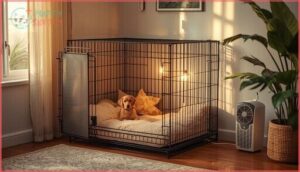
A comfortable crate isn’t much good if it’s not safe, and getting the environment right means paying attention to airflow, temperature, and potential dangers your dog might encounter.
You need to think about ventilation without creating drafts, using covers without trapping heat, and removing anything that could cause injury or distress.
These three areas form the foundation of a crate space where your dog can truly relax.
Proper Ventilation and Temperature Control
Your dog’s crate ventilation and temperature control form the foundation of a safe resting space. Place the crate in a well-ventilated area away from direct sunlight and heating vents, maintaining ambient temperatures between 60–80°F for most dogs.
Use breathable bedding to promote airflow and humidity control, and monitor your dog’s behavior regularly for signs of overheating or chilling, adjusting the environment accordingly.
Using Crate Covers and Fans Safely
Covers and fans can improve your dog’s comfort, but they require careful setup. Leave at least two crate sides fully open when using a cover to maintain ventilation, and position any fan to direct air across—not directly into—your dog’s face.
Secure all electrical cords out of reach, check regularly for wear, and use lightweight, breathable cover materials designed specifically for pet crates.
Preventing Hazards Inside The Crate
Beyond covers and fans, daily inspections keep your comfortable crate truly safe. Check latches and moving parts weekly for wear—a faulty lock means an escape risk.
Remove small objects, loose bedding fragments, or anything your dog might shred into hazards. Run your hand along interior surfaces to catch sharp edges before they catch your dog, and wash bedding regularly to stop mold from taking hold in this essential space.
Personalizing The Crate for Your Dog’s Needs
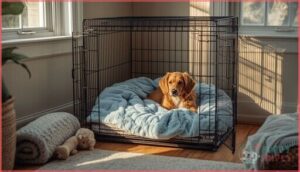
Your dog’s crate should feel like their own personal retreat, customized to their unique preferences and life stage. Small adjustments in design, layout, and comfort features can make a significant difference in how your dog reacts to crate time.
Here’s how to customize the space based on your dog’s age, temperament, and individual needs.
Custom Covers, Colors, and Patterns
A customized dog crate doesn’t just blend with your décor—it can genuinely support your dog’s emotional comfort through thoughtful crate aesthetics and design trends.
Selecting washable crate covers in neutral tones or subtle patterns masks wear while improving crate design and functionality. Fabric choices like durable 600D canvas withstand chewing, and color psychology suggests calming hues create a comfortable crate environment that eases anxiety during dog crate customization.
Adjusting Setup for Puppies, Adults, and Seniors
Your dog’s life stage shapes every detail of their crate setup, from puppy training through senior dog care.
Puppies thrive with crates sized 1-2 inches above their standing height, placed in family activity zones to support puppy socialization during crate training.
Adults need comfortable turn space in quieter spots, while seniors require orthopedic support, non-slip floors, and accessible water—all strategic crate placement strategies that honor dog life stages and improve dog comfort and safety.
Addressing Separation Anxiety With Comfort Features
Anxiety can transform a crate into a sanctuary when you pair comfort features with separation strategies that target your dog’s specific triggers. Build crate anxiety relief through:
- Gradual desensitization sessions that increase crate time incrementally while maintaining low-arousal environments
- Chew-resistant calming toys like snuffle mats to redirect nervous energy
- Orthopedic bedding that promotes deeper rest during separation
- White noise or soft music played at low volume to ease departure stress
Monitor progress through reduced vocalizations and longer calm periods.
Frequently Asked Questions (FAQs)
How often should I clean my dogs crate?
You don’t need to wait until you notice a smell. Clean your dog’s crate at least once weekly to maintain proper hygiene and odor control, increasing frequency after accidents to support ideal dog health.
Can I use a crate for multiple dogs?
Most experts strongly recommend against crate sharing for multi-dog households. Separate crates reduce resource guarding and stress, notes veterinary behaviorist Dr. Karen Overall, ensuring each dog’s crate training success and safety.
Should I move the crate to different rooms?
Stability builds security, so keep your dog crate in one consistent spot. Moving it disrupts environmental cues and crate familiarity, potentially increasing dog stress and undermining crate training progress, especially for dogs battling separation anxiety.
What if my dog refuses to enter the crate?
If your dog refuses to enter the crate, don’t force it—that only increases fear.
Instead, use gradual exposure with high-value treats near the crate, rewarding calm behavior to build positive associations slowly.
How long can dogs safely stay in crates?
Most adult dogs tolerate four to six hours of daytime crate training, though puppies need breaks every two to three hours.
These are critical crate time limits that prevent health risks and support dog safety.
Conclusion
Think of a crate like a bedroom: no one sleeps well in a room that’s too hot, too bright, or filled with uncomfortable furniture. When you learn how to make a dog crate comfortable through proper bedding, strategic placement, and thoughtful accessories, you’re building a space your dog will actually want to use.
The effort you invest in getting these details right pays off in reduced anxiety, better rest, and a dog who views their crate as sanctuary rather than confinement.