This site is supported by our readers. We may earn a commission, at no cost to you, if you purchase through links.

Your Shih Tzu’s floor-length coat can transform from silky excellence to a knotted disaster in less than a week without proper maintenance. This ancient breed’s double-layered hair grows continuously like human hair, which means it requires consistent grooming attention that goes far beyond a simple brush-through.
Most new Shih Tzu owners underestimate the commitment—daily brushing isn’t optional, and skipping even two days can create mats that pull painfully at the skin. Learning the right techniques with proper tools makes the difference between a relaxed bonding experience and a stressful wrestling match.
Master the fundamentals of coat care, bathing schedules, and trimming methods, and you’ll keep your companion comfortable while avoiding expensive emergency grooming appointments.
Table Of Contents
- Key Takeaways
- Essential Grooming Tools for Shih Tzus
- Preparing Your Shih Tzu for Grooming
- Brushing and Combing Techniques
- Bathing Your Shih Tzu Properly
- Trimming and Styling The Shih Tzu Coat
- Nail, Ear, and Dental Care Essentials
- Creating a Shih Tzu Grooming Schedule
- Troubleshooting Common Grooming Challenges
- Frequently Asked Questions (FAQs)
- How do you cut a Shih Tzu hair?
- Can a Shih Tzu be groomed at home?
- How to care for a Shih Tzu?
- How do you brush a Shih Tzu?
- Can I groom my Shih Tzu myself?
- How often should a Shih Tzu be groomed?
- How short to cut Shih Tzu hair?
- How often should a Shih Tzu be bathed?
- How can I reduce my Shih Tzus shedding?
- What is the best way to handle tear stains?
- Conclusion
Key Takeaways
- Daily brushing isn’t optional for Shih Tzus—skipping even two days creates painful mats that pull at the skin, so you’ll need quality slicker brushes, metal combs, and detangling spray to maintain their continuously-growing double coat.
- Bathe your Shih Tzu every 3-4 weeks using pH-balanced, sulfate-free dog shampoo paired with conditioner, then dry thoroughly with microfiber towels and low-heat dryers to prevent skin irritation and frizz.
- Trim nails every 2-4 weeks with guillotine clippers, clean ears weekly with enzymatic solutions, and brush teeth 3-5 times weekly with dog-safe toothpaste to prevent infections and dental disease common in this breed.
- Professional grooming every 4-6 weeks handles severe matting and complex cuts safely, but you can maintain puppy cuts or teddy bear styles at home with proper clippers, rounded-tip scissors, and consistent technique.
Essential Grooming Tools for Shih Tzus

You can’t groom your Shih Tzu properly without the right tools in your hands. Quality equipment makes the difference between a frustrating experience and a smooth grooming session that keeps your dog comfortable and safe. Investing in the right tools and understanding proper grooming techniques for small breeds will transform your Shih Tzu’s coat care routine.
Let’s walk through the essential items you’ll need to set up your home grooming station. Before you start, gather the right tools—here’s how to trim a dog’s nails safely with proper equipment.
Choosing The Right Brushes and Combs
The right grooming tools make all the difference when caring for your Shih Tzu’s luxurious coat. You’ll need specific brushes and combs designed for their unique double-coat structure to prevent matting and maintain coat health. With proper grooming and care, Shih Tzus can join the ranks of longest living dog breeds when their coat health is maintained consistently.
- Slicker brush with medium bristles removes loose undercoat without damaging the topcoat, making it your most multipurpose tool
- Pin brushes with rounded tips smooth and finish longer coat styles while preventing skin irritation
- Dematting combs with wide-tooth gaps tackle stubborn mats gently before brushing to minimize hair breakage
- Stainless steel combs with both wide and micro-tooth sections help you detangle thoroughly and check for hidden mats around ears, face, and legs
Regular grooming also involves checking for methodological flaws to guarantee the best results.
Selecting Quality Clippers and Scissors
Quality clippers and scissors separate stress-free grooming from frustrating sessions. Invest in professional-grade clippers with ceramic or stainless steel blades—they’ll stay sharp for 6–12 months with regular oiling. Choose quiet, low-vibration models to keep your Shih Tzu calm. For scissors, select 4-to-6-inch stainless steel shears with rounded tips and ergonomic grips to prevent hand fatigue and accidental nicks. Pair quality scissors with Shih Tzu eye care practices to maintain a well-groomed, healthy appearance.
| Tool Feature | Why It Matters |
|---|---|
| Adjustable blade guards | Prevent skin cuts during trimming |
| Convex-edge scissors | Deliver cleaner cuts on fine coats |
| Detachable blade systems | Simplify cleaning between sessions |
Must-Have Shampoos and Conditioners
Your clippers and scissors need proper support, so choose dog shampoo with pH balance designed for canine hygiene—human products disrupt your Shih Tzu’s skin barrier. While clippers and scissors are essential grooming tools, always use pH-balanced dog shampoo rather than human products on your dog to protect their skin barrier.
Select sulfate-free, gentle formulas that protect the double coat without stripping natural oils. Look for fragrance options labeled hypoallergenic or unscented to avoid facial irritation.
Always pair shampoo with matching conditioner for coat protection and easier detangling during grooming techniques.
Nail Trimmers, Ear Cleaners, and Dental Tools
Beyond coat care, nail care and canine hygiene tools protect your Shih Tzu’s well-being. Choose guillotine or scissor-style nail clippers sized for small breeds, and trim every 2–4 weeks to prevent overgrowth. For ear cleaning, use pH-balanced, enzymatic formulas once weekly—avoid cotton swabs deep in the canal.
Dental hygiene requires:
- Dog-safe toothpaste with soft-bristled brush
- Brushing 3–5 times per week minimum
- Regular veterinary dental check-ups every 6–12 months
Sanitize all tools before and after each session for pet safety.
Towels and Dryers for Safe Drying
After bathing your Shih Tzu, reach for a microfiber towel—it absorbs more water per pass than standard bath towels. Pat gently, don’t rub, to prevent frizz and tangles in that delicate double coat.
Then use a pet dryer or human dryer on cool or low heat settings, holding it 6–12 inches away to avoid scorching while ensuring even, gentle drying.
Preparing Your Shih Tzu for Grooming

Before you pick up a single brush or turn on the clippers, you need to set the stage for a successful grooming session. Your Shih Tzu will respond better when the environment feels safe and you’ve taken time to calm any nerves.
Let’s walk through the essential preparation steps that make grooming easier for both of you.
Setting Up a Safe Grooming Area
Your grooming station sets the tone for safe, effective sessions with your Shih Tzu. Position a sturdy grooming table at waist height to prevent back strain, and secure non-slip mats on the surface to keep your dog stable.
Guarantee proper ventilation systems and bright lighting so you can see every detail. Organize grooming tools within arm’s reach, and keep electrical cords away from water sources to maintain pet grooming safety throughout each session.
Calming Techniques for Anxious Dogs
Patience becomes your greatest asset when your Shih Tzu tenses at the sight of grooming tools. Use desensitization techniques by introducing tools gradually—let your dog sniff the brush before making contact. Apply calming aids like pheromone sprays and soft music to lower anxiety triggers during each session.
- Establish a predictable routine for grooming, feeding, and rest periods
- Offer high-value treats for calm behavior throughout the process
- Use gentle handling with slow, steady touches to avoid startling
- Create a quiet, low-traffic space to minimize sensory overload
- Monitor body language for stress signs and pause when needed
Stress reduction methods build trust, transforming canine hygiene from battle to bond. End each pet care session with praise and a favorite toy to reinforce positive associations with dog grooming techniques.
Pre-Grooming Brushing and Inspection
Check your Shih Tzu’s coat for mats, skin irritation, and debris before you reach for clippers.
Use a slicker brush with firm, even strokes, starting at the neck, working through each section while lifting layers to inspect underneath.
Focus mat removal efforts near ears and hind legs, applying detangler spray to loosen tangles from ends toward skin without pulling.
Gathering and Organizing Supplies
Set everything out within arm’s reach before you bring your dog to the grooming area—a scattered search mid-session stresses both of you. Use a labeled storage bin to keep your grooming kit organized, and wipe down tools with disinfectant spray after each use.
- Equipment checklist: Verify brushes, clippers, nail trimmers, and shampoos are present.
- Tool sanitizing: Clean blades and combs with mild soap between sessions.
- Supply storage: Keep replacements and consumables stocked for uninterrupted grooming.
Brushing and Combing Techniques

Brushing your Shih Tzu’s double coat isn’t just about keeping them pretty—it’s the foundation of preventing painful mats and maintaining healthy skin underneath all that flowing hair.
The right technique makes all the difference between a quick, pleasant session and a frustrating battle with tangles. Here’s what you need to know about establishing an effective brushing routine that works for both you and your dog.
Daily Vs. Weekly Brushing Schedules
Your Shih Tzu’s brushing frequency depends entirely on coat length and lifestyle. Active dogs with longer coats need daily attention, while short puppy cuts can go 2-3 days between sessions. Use your slicker brush first, then follow with a metal comb to check for hidden tangles you might’ve missed.
| Coat Style | Brushing Frequency |
|---|---|
| Full show coat (4+ inches) | Daily, 15-20 minutes |
| Medium length (2-4 inches) | Every other day, 10-15 minutes |
| Puppy cut (1-2 inches) | 2-3 times weekly, 5-10 minutes |
| Active/outdoor dogs | Daily regardless of length |
| Indoor/calm temperament | Follow length guidelines above |
Start each grooming session at the skin level, working outward in small sections to catch developing mats before they tighten. This systematic approach prevents the painful tugging that makes dogs resist future coat care and distributes natural oils that keep the double coat healthy and shining.
Removing Mats and Tangles Safely
When brushing doesn’t solve the problem, you’ll need specialized detangling tools and careful mat removal techniques.
Apply a pet-safe detangler spray directly to stubborn tangles, then work from the mat’s outer edges toward the center using a wide-toothed comb.
For severe matting that resists gentle combing, hold blunt-ended scissors parallel to the skin and carefully slice through the mat—never pull or cut perpendicular, which risks nicking your Shih Tzu’s delicate skin.
Brushing Methods for Double Coats
Your Shih Tzu’s double coat requires a two-phase approach that tackles both coat texture layers for effective shedding control and undercoat care.
- Start with a slicker brush to penetrate the dense undercoat, removing trapped hair before tangles form
- Switch to a pin brush for the longer outer coat, detangling without irritation
- Use a wide-tooth undercoat comb to loosen any remaining knots near the skin
- Work in short, systematic strokes from skin outward—this prevents pulling and discomfort during long hair maintenance
- Finish with a softer finishing brush to smooth the topcoat and reduce static in your breed specific grooming routine
Preventing Hair Breakage and Shedding
Proper grooming technique is your best defense against breakage and excessive shedding. Apply a detangling spray before brushing to reduce friction on long hair maintenance, and always work from tips to roots when removing mats.
Invest in a quality conditioner during coat conditioning sessions—moisturized hair breaks less easily.
Daily light brushing captures loose undercoat before it sheds throughout your home, giving you better shedding control.
Bathing Your Shih Tzu Properly

Bathing your Shih Tzu correctly keeps their double coat healthy and prevents skin irritation, but you’ll need to follow specific steps to avoid drying out their delicate skin.
The frequency, products, and techniques you use will directly impact your dog’s coat quality and overall comfort.
Let’s walk through the essential bathing guidelines that every Shih Tzu owner should follow.
How Often to Bathe Your Shih Tzu
You’ll want to bathe your Shih Tzu every 3 to 6 weeks to maintain prime coat condition and skin health. Weekly bathing strips natural oils, leading to dryness and irritation—overbathing is a common mistake in grooming routines.
Adjust bathing frequency based on activity level, odor, and seasonal factors, but always monitor your dog’s skin health. Consistent dog grooming practices prevent dermatitis while keeping your Shih Tzu clean and comfortable.
Dog-Safe Bathing Products
Selecting the right dog shampoo protects your Shih Tzu’s delicate skin barrier and keeps the double coat healthy during bathing. Choose pH balanced shampoos with gentle cleansers designed for sensitive skin, avoiding synthetic fragrances and sulfates that strip natural oils.
For ideal Shih Tzu grooming and dog health and beauty, prioritize products containing:
- Hypoallergenic formulas with natural ingredients like oat hydrogel or aloe vera derivatives
- Coat moisturizers featuring fatty acids and ceramides
- Grooming tools and supplies free from parabens, essential oils, and artificial dyes
Step-by-Step Bathing Process
Before you lather a single drop of dog shampoo, acclimate your Shih Tzu to lukewarm water starting at the neck and working toward the tail. Apply a small amount of pH-balanced cleanser along the spine, massage outward while avoiding the eyes and ears, then rinse completely until the water runs absolutely clear—no suds should remain in the double coat.
| Bathing Stage | Technique | Safety Note |
|---|---|---|
| Wetting | Lukewarm water from neck to tail | Test temperature on your wrist first |
| Shampooing | Apply along spine, work outward | Shield eyes with damp cloth |
| Rinsing | Downward motion until clear | No soap residue near ears or eyes |
Proper Rinsing and Drying Methods
Water temperature around 98–100°F keeps your Shih Tzu comfortable during bathing—test it on your wrist before rinsing downward from neck to tail until no shampoo residue clings to the double coat.
Blot excess hair moisture with grooming towels, then apply cool-to-warm air from a low-heat dryer at a safe distance, using comb-guided drying techniques for coat protection while preventing frizz and heat damage.
Trimming and Styling The Shih Tzu Coat
Now that your Shih Tzu is clean and dry, it’s time to shape and style their coat to keep them looking their best.
Trimming isn’t just about aesthetics—it prevents matting, keeps your dog comfortable, and makes daily maintenance much easier.
Let’s walk through the most popular coat styles, the right tools for each job, and how to safely trim those tricky spots.
Puppy Cut, Teddy Bear Cut, and Lion Cut

Three popular dog haircut styles define Shih Tzu grooming tips: the Puppy Cut, the Teddy Bear Groom, and the Lion Cut Maintenance.
The Puppy Cut keeps coat length variations at 1 to 2 inches across the body for minimal maintenance.
The Teddy Bear Groom rounds facial hair trimming into a plush ball shape at 1 to 1.5 inches.
The Lion Cut Maintenance involves shaving the torso short while preserving a fuller mane for dramatic contrast, requiring careful Shih Tzu care.
Using Clippers Vs. Scissors
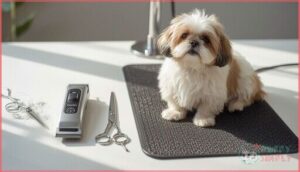
Choose electric hair clippers with a size 7 blade for faster, uniform coat texture across your Shih Tzu’s body, ensuring proper Clipper Safety and Blade Maintenance between sessions.
Grooming Tools and Equipment like scissors allow precise Scissor Techniques around the face, legs, and paws where hair cutting demands control.
Combine both for professional Dog Haircut Styles—Clippers handle bulk removal while scissors perfect Trimming Styles and shape delicate areas without nicking skin.
Trimming Sensitive Areas Safely
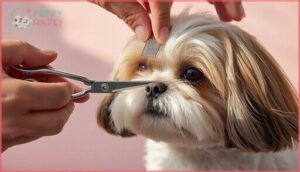
Safe Trimming around your Shih Tzu’s eyes, ears, and genital regions requires rounded-tip scissors and a steady hand to avoid nicks. Hold skin taut, lift hair with a comb, and snip only visible strands—never force tools near openings. If you spot redness or your dog resists, stop immediately.
Use Gentle Clipping and Precision Trimming to protect Delicate Cutting zones while maintaining canine hygiene.
Maintaining The Top Knot and Facial Hair
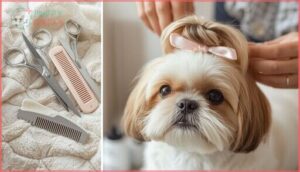
Beyond trimming delicate zones, your Shih Tzu’s top knot and facial hair demand daily attention to prevent matting and irritation. Secure the knot with soft elastics that won’t stress the scalp, then check for redness at the hairline each morning. Keep visibility clear by trimming eye-area hair, which reduces tear staining and debris buildup.
For effective Knot Styling and Facial Trimming in canine coat care, follow these dog grooming techniques:
- Apply lightweight leave-in conditioner for Frizz Control without weighing down the Hair Tying
- Use a wide-tooth comb in the direction of growth to detangle cheeks and crown gently
- Inspect the Scalp Care zone under elastics to catch hot spots before infection develops
Nail, Ear, and Dental Care Essentials

Grooming your Shih Tzu goes beyond brushing and bathing—you’ll also need to maintain their nails, ears, and teeth to keep them healthy and comfortable.
These tasks require careful attention and the right techniques, especially since Shih Tzus are prone to dental problems and ear infections.
Let’s walk through each essential care routine so you can handle these areas safely and effectively at home.
How to Trim Shih Tzu Nails Safely
With proper positioning, nail trimming becomes a manageable task that protects your Shih Tzu’s paw health and mobility. Use guillotine-style clippers designed for small breeds, trimming only 1-2 millimeters at a time to avoid the quick—the pink blood vessel inside each nail. Keep styptic powder ready in case of accidental nicks, and always reward your dog afterward to build positive associations with claw care.
| Tool Type | Purpose | Safety Note |
|---|---|---|
| Guillotine Clipper | Precise cuts on small nails | Trim in small increments |
| Styptic Powder | Stops bleeding from quick | Keep within reach always |
| Treat Rewards | Positive reinforcement | Give immediately after trimming |
| Non-slip Mat | Prevents sliding during grooming | Essential for canine hygiene sessions |
Cleaning Ears to Prevent Infection
After nail care, turn your attention to ear health maintenance, where moisture and debris can quickly lead to infections. Check your Shih Tzu’s ears weekly for ear infection signs like redness, odor, or discharge—early detection is your best infection prevention method.
Follow these ear cleaning tips:
- Apply veterinarian-approved ear cleaner to a gauze pad and wipe only the visible outer ear, never inserting swabs into the canal.
- Trim hair around the opening if a professional recommends it, improving airflow in this delicate dog ear anatomy.
- Dry ears thoroughly after baths to prevent bacterial growth that compromises pet health and hygiene.
Schedule a vet visit immediately if your dog shakes its head persistently or paws at its ears.
Brushing Teeth and Reducing Tear Stains
Daily tooth brushing with enzymatic dog toothpaste reduces plaque by up to 80%, protecting your Shih Tzu from painful dental disease. Use a soft-bristled brush angled 45 degrees at the gum line, working in small circular motions for two minutes—focus on outer surfaces where tartar accumulates.
For tear stain removal, trim facial hair around the eyes daily and wipe with a damp, gentle cloth to minimize discoloration.
Signs of Health Issues During Grooming
Watch for trembling or unusual vocalizations when touching your Shih Tzu’s ears, paws, or joints—these signal pain detection needs. Redness, swelling, or discharge around eyes, ears, or skin indicates infections requiring immediate attention. Excessive licking after grooming sessions reveals discomfort, while limping suggests joint problems.
Health monitoring during grooming catches eye problems, skin infections, and grooming anxiety early, ensuring your Shih Tzu’s health and wellness.
Creating a Shih Tzu Grooming Schedule

A consistent grooming schedule keeps your Shih Tzu’s coat healthy and prevents problems before they start. You’ll need to balance daily tasks with weekly maintenance and monthly deep-cleaning sessions.
Here’s how to build a routine that works for both you and your dog.
Frequency of Brushing, Bathing, and Trimming
Brushing your Shih Tzu weekly prevents mat formation and controls shedding, but daily sessions work best during heavy hair growth periods.
Bathing every 3 to 4 weeks maintains coat health without stripping natural oils.
Scheduling trimming every 4 to 6 weeks keeps facial hair manageable and preserves your chosen style, ensuring consistent grooming schedules support effective coat maintenance.
Setting Up a Monthly Grooming Routine
Mark your calendar for a full grooming session each month, and brush your Shih Tzu every other day to maintain coat health between those sessions. This consistent grooming frequency prevents matting while supporting seasonal adjustments as your dog’s coat changes throughout the year.
- Schedule mid-month quick checks for mats, ears, and tear stains
- Align coat maintenance tasks with your Shih Tzu’s activity level
- Perform health checks during each grooming session
- Keep simple grooming logs to track products and outcomes
When to Seek Professional Grooming Help
Sometimes even the most dedicated owner hits a wall—persistent matting that won’t budge, skin infections that flare up despite your best efforts, or a Shih Tzu who simply won’t cooperate. Recognize when professional help protects your dog’s safety and comfort.
Know when to call a professional groomer—persistent mats, skin issues, or an uncooperative dog mean it’s time to seek expert help
Trust your instincts—if you’re worried about causing harm, a professional groomer ensures your Shih Tzu receives proper care while teaching you better techniques for home maintenance.
| Grooming Emergency | Warning Signs | Professional Solution |
|---|---|---|
| Severe matting | Knots near skin, painful pulling | Expert advice on safe mat removal |
| Skin infections | Redness, odor, irritation | Veterinary-approved dog grooming techniques |
| Behavioral resistance | Biting, extreme anxiety | Breed specific grooming needs assessment |
| Tool limitations | Lack of proper clippers | Pet grooming tips from certified groomers |
| Sensitive area damage | Bleeding, exposed skin | Immediate professional intervention required |
Troubleshooting Common Grooming Challenges
Even with the best routine, you’ll hit bumps in the road—mats that seem impossible to untangle, tear stains that won’t budge, or a dog who suddenly won’t sit still. These challenges don’t mean you’re doing something wrong; they’re just part of grooming a long-haired breed.
Let’s walk through the most common problems you’ll face and how to solve them safely.
Dealing With Severe Matting and Tangles
Severe matting in your Shih Tzu’s coat demands immediate attention before it causes skin infections or painful pulling.
Start by applying a water-based detangler, then work from the mat’s edges toward the center using a dematting tool designed for pet fur.
If mats involve large body areas or cause visible distress, professional grooming under sedation ensures safe, humane coat maintenance without hair breakage or trauma.
Managing Tear Stains and Skin Irritation
Tear stains on your Shih Tzu reveal moisture buildup that breeds bacteria and stains facial hair through persistent contact with porphyrin-rich tear film. Daily eye hygiene using pet-safe wipes removes tear duct discharge and reduces bacterial growth near the lash line. Trim facial hair around your dog’s eyes every two weeks to minimize friction and moisture retention. When tear stain removal routines don’t resolve redness, swelling, or skin irritation within three weeks, consult your veterinarian to rule out entropion, conjunctivitis, or blocked tear ducts requiring medical intervention.
Key steps for managing tear stains and skin irritation:
- Gently cleanse around your Shih Tzu’s eyes daily with hypoallergenic dog eye wipes to remove crust and bacteria
- Apply sterile saline solution when significant crusting appears, avoiding direct contact with the inner eye surface
- Maintain a shorter facial trim (puppy cut style) to improve airflow and reduce tear-stain-prone moisture around the eyes
- Monitor your dog’s diet for food allergens or high mineral content that may intensify tear color and staining
- Schedule a veterinary ophthalmic exam if staining accompanies discharge, squinting, hair loss, or persistent lesions
Regular brushing of the muzzle area distributes natural oils and prevents matting that traps moisture against delicate skin. Professional grooming every four to six weeks ensures proper facial hair management and early detection of irritation. Adequate water intake promotes healthy tear film composition, while omega-3 fatty acids may reduce inflammation-induced tearing. Protective barrier products applied sparingly near the eye can minimize direct tear contact with coat fibers, but avoid chemical irritants formulated for human use that damage your Shih Tzu’s sensitive facial skin and worsen existing inflammation.
Handling Grooming Anxiety and Resistance
Grooming resistance in your Shih Tzu signals underlying fear that requires patience, not force, to resolve safely.
Begin with two-minute sessions using gentle handling and calming aids like familiar towels to reduce anxiety signs such as lip licking or trembling.
Introduce desensitization techniques by pairing each tool with high-value treats, gradually building trust through consistent routines that prioritize fear reduction over speed during every pet grooming encounter.
Preventing and Treating Coat Damage
Your Shih Tzu’s coat damage stems from aggressive brushing, heat exposure, and chemical treatments that weaken hair shafts over time.
Protect the coat by using detangling spray before removing mats, limiting blow dryer heat to warm settings, and feeding a balanced diet rich in essential fatty acids.
Regular trimming every six to eight weeks prevents split ends from spreading, while consistent brushing distributes natural oils for proper fur restoration and breakage control.
Frequently Asked Questions (FAQs)
How do you cut a Shih Tzu hair?
You’ll need sharp scissors and quality clippers with a size-4 or size-7 guard to achieve the puppy cut, teddy bear cut, or lion cut safely on your Shih Tzu’s double coat.
Can a Shih Tzu be groomed at home?
With proper tools and patience, you can maintain your Shih Tzu care routine at home—daily brushing, monthly bathing, and basic trimming prevent matting, while professional grooming every 4-6 weeks ensures coat health and Dog Hygiene.
How to care for a Shih Tzu?
Beyond Dog Grooming essentials, thorough Shih Tzu care includes balanced Shih Tzu Nutrition, regular veterinary check-ups, consistent Dog Training Methods, proper Shih Tzu Socialization, and considering Pet Insurance Options while learning basic Canine First Aid for emergencies.
How do you brush a Shih Tzu?
Like untangling delicate silk threads, you’ll brush your Shih Tzu daily using gentle strokes from hair ends toward the skin, working through each coat section methodically to prevent painful mats while distributing natural oils.
Can I groom my Shih Tzu myself?
You can groom your Shih Tzu at home with proper tools, patience, and technique. Many owners save on grooming costs while building trust, though professional help remains essential every 4-6 weeks for safety.
How often should a Shih Tzu be groomed?
You’ll want to schedule professional trims every 4 to 6 weeks while brushing daily at home. Bathe every 2 to 4 weeks, and trim nails every 2 to 3 weeks consistently.
How short to cut Shih Tzu hair?
Most owners keep their Shih Tzu’s coat between 1 to 2 inches for easy maintenance and minimal matting. Puppy cuts and teddy bear cuts work well, requiring professional trims every 4 to 6 weeks.
How often should a Shih Tzu be bathed?
Your dog’s bath schedule works like watering a plant—too much drowns the roots, too little leaves it thirsty.
Bathe your Shih Tzu every three to four weeks to balance skin health and coat maintenance.
How can I reduce my Shih Tzus shedding?
Daily brushing with a slicker dog brush removes up to 60% of loose undercoat, while omega-3s support coat health.
Consistent grooming frequency, proper hydration, and quality diet planning directly improve Shih Tzu hair reduction and shedding prevention.
What is the best way to handle tear stains?
Gently wipe beneath your Shih Tzu’s eyes daily with a damp, soft cloth or veterinary-approved wipe. Trim facial hair to reduce moisture retention, and use dog-safe tear stain removers following product instructions for consistent improvement.
Conclusion
Consistent care creates confident companions. When you learn how to groom a Shih Tzu with the right tools and techniques, you’re doing far more than maintaining appearance—you’re preventing painful mats, catching health issues early, and strengthening your bond through gentle handling.
Start with daily brushing, establish a bathing rhythm, and tackle nails and ears regularly. Your dedication transforms grooming from a chore into a ritual that keeps your dog healthy, comfortable, and beautifully maintained.
- https://bluepearlvet.com/pet-blog/these-common-household-cleaners-can-actually-harm-your-pet/
- https://www.vetmed.wsu.edu/outreach/Pet-Health-Topics/categories/procedures/dogs/bathing-your-dog
- http://www.theshihtzuclub.co.uk/care.htm
- http://www.allshihtzu.com/Shih_Tzu_Tear_Stains.html
- http://www.americanshihtzuclub.org/grooming_companion