This site is supported by our readers. We may earn a commission, at no cost to you, if you purchase through links.
Your golden retriever who once bounded into bath time now hesitates at the grooming table, and that stiff back leg makes everything harder. Senior dogs need grooming just as much as younger pups—maybe more—but their bodies can’t handle the same routines anymore.
Thinner skin bruises easier, arthritic joints protest certain stances, and a two-hour session that was no big deal at age three becomes exhausting at thirteen.
The good news? Dog grooming for senior dogs doesn’t mean skipping care or settling for a scrappy coat. It means adapting your approach—softer brushes, shorter sessions, warmer water, and a whole lot more patience. When you match your grooming routine to your dog’s changing needs, you’re not just keeping them clean. You’re keeping them comfortable, safe, and healthier in their golden years.
Table Of Contents
- Key Takeaways
- Key Grooming Considerations for Senior Dogs
- Safe and Comfortable Grooming Techniques
- Creating a Stress-Free Grooming Environment
- Tailoring Grooming Frequency and Services
- Monitoring Senior Dog Health During Grooming
- Frequently Asked Questions (FAQs)
- Should older dogs go to the groomer?
- How to groom a geriatric dog?
- Can you sedate an older dog for grooming?
- Is 7 years old for a dog a senior?
- How can I prevent stress during grooming?
- Can senior dogs be groomed if theyre aggressive?
- Is it safe to groom after vaccinations?
- How long should each grooming session last?
- Are there grooming services that avoid kenneling?
- What diet supports healthy coat in older dogs?
- Conclusion
Key Takeaways
- Senior dogs need gentler grooming because their skin is thinner, joints are arthritic, and they can’t tolerate long sessions—shorter appointments with softer brushes and padded surfaces prevent injury and exhaustion.
- Grooming sessions double as health checkpoints where you can catch early warning signs like skin infections, nail problems, ear issues, or pain signals that need immediate veterinary attention.
- Keep grooming sessions between 15-30 minutes maximum, use lukewarm water instead of hot, and trim nails gradually (just 2-3mm at a time) to match your aging dog’s reduced stamina and increased sensitivity.
- Professional groomers experienced with senior dogs know how to work around arthritis and anxiety, but at-home grooming gives you scheduling flexibility—either way, frequency depends on coat type and health conditions, typically every 6-10 weeks.
Key Grooming Considerations for Senior Dogs
Your senior dog’s body isn’t what it used to be, and grooming needs to adapt right along with it. Thinner skin, achy joints, and lower tolerance for long sessions mean the old approach won’t work anymore.
Here’s what you need to keep in mind to make grooming safe, comfortable, and actually enjoyable for your aging companion.
Skin Sensitivity and Gentle Handling
Your senior dog’s skin has changed. It’s thinner now, more delicate—think tissue paper instead of canvas. That’s why gentle touch matters so much in senior dog grooming. Before you begin, run your hands over their coat to check for skin irritation, hotspots, or sores that need gentle care.
Here’s how to protect sensitive skin:
- Use soft brushes with natural bristles to minimize pulling and skin conditions
- Avoid pressure on sensitive areas like the abdomen, elbows, and hips
- Create a calm environment that reduces stress during handling
- Apply minimal restraint techniques, letting your dog adjust gradually
- Keep your pace slow to prevent discomfort and anxiety
Skip aggressive scrubbing entirely. Your dog’s skin can’t handle it anymore. Ensuring the accuracy of information is vital, much like using scientific study methods to validate findings.
Managing Arthritis and Joint Pain
Arthritis changes how your dog stands and moves during grooming. Pain management means you’ll position them carefully—never forcing stiff joints into awkward angles. Gentle handling bears their weight while you work, reducing strain on hips and shoulders.
Consider joint supplements recommended by your vet, and watch for limping or reluctance to move. Those signs tell you when senior support matters most during senior dog grooming sessions.
Importance of Shorter Sessions
Long grooming sessions wear your senior dog out fast. Fatigue spikes stress, raises heart rate, and increases fall risk—especially on slick surfaces.
Keep sessions short to protect their comfort and safety. Brief appointments help you avoid overheating, minimize anxiety, and reduce strain on aging joints.
When you limit session length, you’re giving your dog gentle care that matches their current needs and stamina.
Recognizing When Grooming is Needed
Your dog’s coat tells you when it’s time. Matting, tangles, or a strong odor mean grooming can’t wait. Overgrown nails clicking on floors? That’s a clear signal.
Watch for red skin around the eyes, waxy ears, or visible dirt—these health indicators show your senior needs attention now. Mobility issues during handling also suggest a grooming schedule adjustment to keep them comfortable and safe.
Safe and Comfortable Grooming Techniques
Your senior dog’s comfort starts with the right tools and techniques. Small adjustments—like switching to softer brushes or using padded surfaces—can turn a stressful experience into one your dog tolerates, even enjoys.
Here’s what actually works when you’re working with aging joints, sensitive skin, and a pup who deserves the gentlest care possible.
Choosing Soft Brushes and Tools
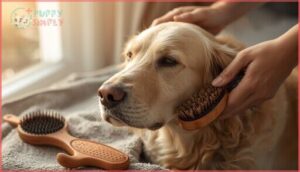
Your brush can make or break grooming for thin, delicate skin. Swap out stiff metal pins for soft bristle brushes or silicone-tipped slicker designs—they won’t scratch warts or fatty lumps. Rubber curry mitts work wonders on short coats, distributing pressure gently while massaging circulation.
Test any new tool on a small patch first, watching for flinching or redness before you commit. When dealing with senior dogs, consider using techniques for sensitive skin care to guarantee their comfort and safety.
Using Padded Surfaces and Non-Slip Mats

Footing matters more than you think. A slippery table turns bath time into a balancing act your arthritic dog doesn’t need. Here’s what works:
- Cushioned grooming mats distribute weight evenly across tender hips and elbows, cutting pressure on inflamed joints.
- Non-slip surfaces prevent scary slides when your dog shifts during nail trims or brushing.
- Sanitize between sessions to avoid skin irritants lurking in damp padding.
Secure mats properly—no sliding allowed.
Warm Water and Low-Speed Drying
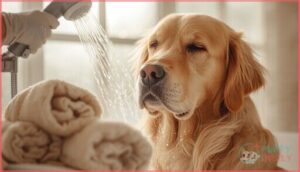
Temperature shock stresses aging skin. You want lukewarm water—think baby bath, not hot shower—to clean your senior dog’s coat without triggering sensitivity or joint discomfort.
Follow with low-speed, low-heat drying. High-velocity dryers create anxiety and can irritate delicate skin. Pat with soft towels first, then use gentle airflow in short passes, checking frequently for hotspots or overheating around arthritic joints.
Gradual Nail Trimming Methods
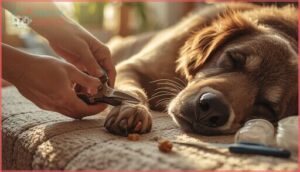
Overgrown nails clicking on tile? That sound tells you it’s time. For senior dogs, gradual nail trimming techniques prevent quick injury and reduce stress—trim just 2–3 mm per session, not the whole nail at once.
Your gentle handling checklist:
- Use clippers with safety guards to prevent overcutting and accidental bleeding
- File between trims to smooth edges and minimize splitting risk
- Watch for pale pink color signaling you’re near the quick—stop immediately
- Keep styptic powder ready for quick hemostasis if bleeding occurs
- Pair with treats to build positive associations and tolerance over time
Healthy nail trimming tips mean shorter sessions, calmer dogs, better senior dog health.
Creating a Stress-Free Grooming Environment
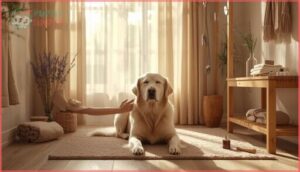
Your senior dog picks up on stress faster than you might think. A chaotic grooming space with loud noises, harsh lighting, or unfamiliar smells can send their anxiety through the roof—making an already uncomfortable experience even worse.
Here’s how to create an environment where your older pup feels safe, supported, and actually calm during grooming.
Quiet and Calm Surroundings
Your senior dog’s ears aren’t what they used to be, but loud noises still spike their stress. Create Peaceful Spaces by dimming harsh lights and keeping the area quiet—no vacuum cleaners or sudden clatter.
Soothing Sounds like soft music promote Relaxation Techniques that support Senior Dog Health.
Calming Environments combined with Gentle Touch transform grooming into StressFree Animal Comfort sessions your dog actually tolerates.
Safe Restraint and Support
Think of restraint as a gentle hug, not a wrestling match. Your senior dog needs security protocols that support, never compress.
Effective Senior Support includes:
- Soft harnesses distributing pressure evenly across the body for animal comfort
- Padded surfaces with non-slip mats preventing slides during gentle handling
- Quick-release clips providing immediate freedom if distress appears
Restraint methods should minimize strain while your gentle touch keeps sessions stress-free. Comfort techniques matter—watch for signs you’re pushing too hard.
Reducing Anxiety During Grooming
Beyond physical support, you need to tackle what’s happening in your dog’s mind. Anxiety triggers hit harder in older pets.
Desensitization Techniques work wonders:
| Method | Action | Result |
|---|---|---|
| Short sessions | 5-10 minute grooming | Lower cortisol levels |
| Calming Aids | Pheromone sprays, treats | Positive associations form |
| Gentle Touch | Soft strokes, slow pace | Relaxation Methods engage |
Your gentle approach transforms grooming from stressful to soothing.
Tailoring Grooming Frequency and Services
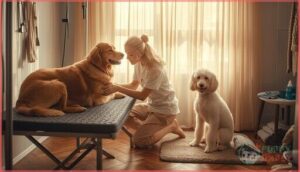
Your senior dog’s grooming needs aren’t one-size-fits-all. What works for a seven-year-old Golden Retriever won’t be right for a twelve-year-old Poodle with arthritis.
Let’s look at how to create a grooming plan that actually fits your aging companion’s unique situation.
Professional Vs. At-Home Grooming
You’ve got two paths here. Professional grooming offers specialized senior dog care with trained staff, proper grooming tools, and liability concerns covered—but cost comparison shows it’s pricier.
At-home grooming gives you scheduling flexibility and lower expenses, yet requires learning dog grooming techniques yourself.
Consider your comfort level, your pup’s anxiety, and what works for your routine and budget.
Adjusting Frequency Based on Coat and Health
Once you’ve chosen your grooming approach, frequency adjustment becomes the next piece of the puzzle. Short-haired breeds can stretch to 8 weeks between sessions, while long-haired senior dogs need grooming every 6–8 weeks to prevent matting.
Health issues like arthritis? Drop to 6–10 weeks. Coat type and senior care needs drive your grooming schedules—adjust as your pup’s comfort demands.
Finding Experienced Senior Dog Groomers
Your vet’s recommendation matters most when searching for the right groomer. Look for these five essentials:
- Groomer certifications in senior dog care and humane handling
- Proven experience with arthritic, anxious older dogs
- Veterinary advice from trusted sources or rescue groups
- Client reviews emphasizing gentle handling and patience
- Mobile grooming options for stressed pups who struggle with travel
Visit facilities first—watch how staff interact with graying muzzles.
Monitoring Senior Dog Health During Grooming
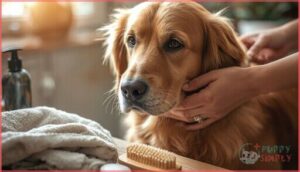
Grooming time isn’t just about keeping your senior dog clean—it’s one of the best chances you’ll get to check in on their overall health. Think of it as a mini wellness exam you can do every few weeks.
Let’s walk through what to watch for while you’re brushing, bathing, and trimming.
Checking for Skin Irritation and Infections
Grooming time doubles as a key health checkpoint for senior dogs. Run your fingers gently across your dog’s coat, feeling for lumps, warmth, or moisture that shouldn’t be there. Look for redness around the eyes, paws, and groin—areas prone to dermatitis in older pets.
| What to Check | Warning Signs | Action Needed |
|---|---|---|
| Skin texture | Hot patches, crusting, or oozing areas | Vet visit within 48 hours |
| Hair coat | Thinning patches, excessive shedding, or greasiness | Document and monitor closely |
| Odor | Foul smell from skin folds or lesions | Immediate veterinary evaluation |
| Behavior | Scratching, licking, or rubbing specific spots | Check for irritation or parasites |
Senior dogs have weaker immune systems, making them vulnerable to skin infections. That innocent-looking scab could signal a secondary infection brewing beneath the surface. Check between toes and under skin folds where moisture hides.
If you spot pus, dark crusts, or rapidly spreading rashes, don’t wait. These infection signs demand immediate veterinary care. Document changes between grooming sessions—your observations help your vet catch problems early, keeping your gentle senior comfortable and healthy.
Observing Changes in Coat, Nails, and Ears
Your grooming checks reveal hidden health shifts in senior dogs. Watch for coat dullness, patchy shedding, or darkened spots—these signal nutritional gaps or infections brewing beneath the surface.
Regular tactile checks during coat care help you catch dermatitis, hotspots, or fungal infections early—keeping your aging companion comfortable.
- Coat Condition: Frizzy texture or excessive oiliness reflects skin barrier changes; seasonal shedding may slow, requiring targeted brushing to prevent matting.
- Nail Health: Thickened or cracking nails suggest reduced activity or circulatory issues; measure carefully before nail trimming to avoid injury.
- Ear Infections: Redness, odor, or discharge points to inflammation; excess wax production often indicates allergies or hormonal shifts.
- Skin Lesions: Visible wounds at ear bases or canal openings need veterinary assessment for dermatologic disease.
Noting Signs of Discomfort or Health Issues
Pain signals like whimpering, tensing muscles, or guarding limbs during grooming reveal discomfort you can’t ignore. Watch for these health indicators: limping after sessions, reluctance to stand, or sudden behavioral shifts.
Discomfort signs in senior dogs—especially those with arthritis or skin conditions—demand immediate veterinary guidance. Your aging dogs depend on you catching subtle changes that signal deeper health issues brewing beneath their graying coats.
Senior dogs showing pain or behavior changes during grooming need veterinary care—you’re their first line of defense against hidden health problems
Frequently Asked Questions (FAQs)
Should older dogs go to the groomer?
Is your older pup still up for spa day? Absolutely—regular grooming for senior dogs catches early health issues, prevents painful matting, and uses gentle techniques that keep aging joints comfortable during shorter, tailored sessions.
How to groom a geriatric dog?
Start with soft-bristle brushes and 10–15 minute sessions. Use padded surfaces, warm water, and hypoallergenic shampoos for gentle bathing tips.
Monitor for discomfort—aging dog massage techniques can ease joint tension during canine comfort grooming.
Can you sedate an older dog for grooming?
Sometimes calming an anxious pet requires more than patience—it requires medicine.
Yes, sedation is possible for senior dogs during grooming, but veterinary involvement is essential due to anesthesia risks in older pets.
Is 7 years old for a dog a senior?
Yes, most veterinarians classify 7-year-old dogs as seniors, especially smaller breeds. Larger breeds age faster, reaching senior status around
Individual health status matters more than age alone when determining your dog’s needs.
How can I prevent stress during grooming?
Your rushed morning versus a slow Saturday brunch—grooming’s the same contrast.
Keep sessions short with breaks, use gentle touch and calming pheromone therapy, watch for stress signals, and maintain a predictable routine for canine comfort.
Can senior dogs be groomed if theyre aggressive?
Aggressive senior dogs can be groomed with professional help. A vet check rules out pain-related behavior.
Gentle grooming techniques, calming strategies, and behavior modification through positive reinforcement improve safety for everyone involved.
Is it safe to groom after vaccinations?
After your pup gets their shot, give them a day or two to bounce back.
Most senior dogs handle grooming fine once any post-vaccination soreness fades and their energy returns to normal.
How long should each grooming session last?
Keep sessions between 15 and 30 minutes for senior dogs. Watch for stress signs like panting or restlessness—those tell you it’s time to wrap up and schedule another short visit instead.
Are there grooming services that avoid kenneling?
Yes—mobile grooming and at-home pet grooming services bring gentle care directly to your door. These non-kennel options eliminate facility stress, offering senior dogs comfortable, in-home grooming customized to their needs.
What diet supports healthy coat in older dogs?
What fuels a lustrous coat as your dog ages? High-quality protein sources, omega benefits from fish oil, biotin role in skin health, and caloric control through nutrient balance support aging dog health and dog skin and coat vitality in senior dogs.
Conclusion
Remember the pup who used to shake off bath water like confetti? That same spirit still lives in your senior dog—even if the body moves slower now. Dog grooming for senior dogs isn’t about flawlessness. It’s about honoring their comfort while keeping them healthy.
Softer tools, shorter sessions, warmer surfaces. These small adjustments mean everything when joints ache and skin bruises easier. Your patience becomes their safety net. That’s the kind of care aging dogs deserve.
- https://houndtherapy.com/customer-reviews/
- https://www.fearfreehappyhomes.com/12-tips-to-caring-for-your-senior-dogs-coat/
- https://www.houndtherapy.com/blog/senior-dog-grooming-guide/
- https://www.zoomzoomgroom.com/blog/how-to-adapt-your-grooming-approach-for-senior-dogs-and-sensitive-skin/
- https://wagwonders.in/blogs/grooming-and-microbiome-tips-for-pets/the-ultimate-guide-to-grooming-senior-dogs-with-sensitive-skin