This site is supported by our readers. We may earn a commission, at no cost to you, if you purchase through links.

Your dog’s gut health shapes everything from their energy levels to their immune response, yet many commercial foods work against digestive wellness rather than supporting it. Dogs with grain sensitivities face an extra challenge—they need formulas that eliminate inflammatory triggers while actively rebuilding gut balance.
Grain-free dog food with probiotics tackles both needs simultaneously, removing common allergens while introducing beneficial bacteria that strengthen digestion from the inside out. The right combination delivers more than symptom relief; it creates a foundation for sustained vitality.
Choosing from the growing selection of probiotic-enhanced grain-free options requires understanding which strains matter most, how protein quality impacts results, and which formulas actually deliver on their promises.
Table Of Contents
- Key Takeaways
- Benefits of Grain-Free Dog Food
- Role of Probiotics in Dog Nutrition
- Why Combine Grain-Free and Probiotics
- Key Ingredients in Probiotic Grain-Free Foods
- Top 9 Grain-Free Dog Foods With Probiotics
- 1. Muenster Freeze Dried Chicken Dog Bites
- 2. Taste of the Wild High Prairie Food
- 3. Jinx Salmon Sweet Potato Dog Food
- 4. I and Love and You Beef
- 5. Nulo Adult Trim Cod and Lentil
- 6. Salmon Whitefish Grain Free Dog Food
- 7. Wellness Core Wild Game Dog Food
- 8. Solid Gold Small Breed Bison Food
- 9. Purina Pro Plan Chicken Rice Blend
- How to Choose The Best Food for Your Dog
- Transitioning to Grain-Free Probiotic Diets
- Addressing Special Health Needs With Diet
- Consulting Your Veterinarian for Dietary Advice
- Frequently Asked Questions (FAQs)
- Conclusion
Key Takeaways
- Grain-free dog food with probiotics addresses both food sensitivities and digestive health by eliminating inflammatory triggers while introducing beneficial bacteria that strengthen gut balance and immune function.
- Look for formulas with high-quality animal proteins (26-34% crude protein), specific probiotic strains at 80 million to 600 million CFU per pound, and omega fatty acids to support muscle maintenance, digestive harmony, and skin and coat health.
- Transition to grain-free probiotic diets gradually over 7-10 days by slowly adjusting the ratio of old to new food while monitoring stool quality, energy levels, and any changes in allergy symptoms or digestive responses.
- Always consult your veterinarian before switching foods, especially if your dog has existing heart conditions, breed-specific health risks, or documented food allergies, since not all grain-free formulas are appropriate for every dog.
Benefits of Grain-Free Dog Food
Grain-free dog food has gained attention for addressing specific dietary needs that traditional formulas may not fully meet. For dogs with sensitivities or those needing more targeted nutrition, removing grains can offer several meaningful advantages.
Let’s look at the key benefits that make grain-free options worth considering for your dog’s health.
Reduced Food Sensitivities and Allergies
Though grains aren’t the top culprits in dog food for allergies, they do trigger reactions in roughly 19% of food-sensitive dogs—wheat being the most common offender. Grain-free benefits shine when you’re eliminating food sensitivities tied to grains or switching proteins simultaneously.
Dietary trials show that removing grains while introducing novel proteins can reduce allergen exposure, offering meaningful allergy relief for dogs with confirmed grain sensitivities. Some dogs may require a hydrolyzed protein diet to manage their symptoms.
Improved Digestive Health
Grain-free dog food with probiotics can meaningfully improve your dog’s digestive health. Research shows probiotics reduce diarrhea incidence by over 8 percentage points in stressed dogs and improve stool consistency within 24 hours in some cases. They also improve nutrient absorption—studies report up to 10% better protein digestibility—while supporting balanced gut microbiota.
Grain-free dog food with probiotics can cut diarrhea by over 8% and boost protein absorption up to 10% while balancing gut health
A rotational feeding plan can provide a fuller spectrum of nutrients. The result? Better gastrointestinal comfort, firmer stools, and a happier, healthier companion.
Enhanced Skin and Coat Condition
Your dog’s skin and coat reflect what’s happening inside. Grain-free formulas with probiotics support healthy skin through the gut-skin axis—studies show probiotic strains reduce inflammation and itching in dogs with atopic dermatitis.
Omega fatty acids improve coat shine and skin hydration, while allergen avoidance and micronutrient impact address dryness and dullness.
The result? A noticeably softer, glossier coat and fewer skin issues.
Protein-Dense Nutrition for Muscle Support
Beyond skin and coat, your dog’s muscles need support—especially if they’re active or aging. High-protein grain-free dog food delivers complete amino acid profiles that fuel muscle protein synthesis and preserve lean mass.
Animal proteins in these formulas supply essential nutrients for performance enhancement and muscle development, while probiotics improve digestion so your pup absorbs every benefit. It’s nutrition that builds strength from the inside out.
Role of Probiotics in Dog Nutrition
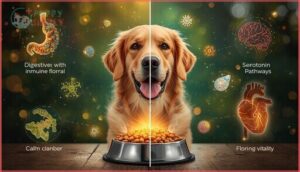
Probiotics do more than just help digestion—they play a surprisingly wide role in your dog’s overall health. These beneficial bacteria work behind the scenes to support everything from immune function to behavior.
Let’s look at four key ways probiotics contribute to canine nutrition and wellness.
Balancing Gut Microbiota
Think of your dog’s gut as a bustling ecosystem—when the right microbes thrive, everything works better. Probiotics introduce beneficial strains that boost microbial diversity and SCFA production, helping prevent dysbiosis. These live cultures support digestive health by enriching the microbiome with helpful bacteria.
Adding prebiotics creates a synbiotic effect, feeding good microbes and strengthening the gut-brain axis for whole-body wellness.
Strengthening Immune System
Bolstering immunity is where probiotics truly shine. Studies show these beneficial microbes notably increase IgG production and fecal IgA levels—both essential for fighting infections.
They activate immune cells, regulate cytokine balance to reduce inflammation, and improve vaccine response in your dog.
By boosting gut diversity and supporting gut health, probiotic-enriched grain-free dog food strengthens your pet’s immune system from the inside out.
Managing Gastrointestinal Issues
When acute diarrhea strikes, probiotics can shorten recovery time by about a day, helping your dog return to normal fecal consistency faster.
They’re equally valuable for chronic enteropathy and gluten sensitivity, where grain-free dog food with probiotics promotes gut health and digestive health.
Clinical monitoring shows probiotics even help dogs with comorbid diseases maintain better stool quality and nutrient absorption.
Supporting Mental Well-Being in Dogs
Your dog’s mental wellbeing hinges on the gut-brain axis, where beneficial bacteria influence mood and behavior. Probiotic benefits extend beyond digestion—grain-free dog food with probiotics can ease anxiety and support cognitive health.
- 90% of dogs show reduced anxious behaviors with targeted probiotic supplementation
- Behavioral improvements include less pacing, vocalization, and clinginess
- Cortisol levels drop in 83% of supplemented anxious dogs
- Enhanced cognitive function with measurable memory performance gains
- Better sleep patterns and higher morning energy levels
These anxiety and diet connections matter for your dog’s overall quality of life.
Why Combine Grain-Free and Probiotics

When you pair grain-free formulas with probiotics, you’re not just addressing one concern—you’re supporting your dog’s health from multiple angles. This combination works especially well for dogs with sensitivities or allergies, while also promoting overall wellness from the inside out.
Let’s look at three key reasons this nutritional approach makes sense for so many dogs.
Addressing Multiple Health Needs
When your dog struggles with allergies, digestive issues, and skin conditions all at once, you’re not juggling separate problems—you’re seeing connected symptoms. Grain-free dog food benefits include allergy management, while probiotics deliver immune support and digestive harmony. Together, they tackle inflammation, weight control, and skin health simultaneously.
| Health Need | Grain-Free Contribution | Probiotic Contribution |
|---|---|---|
| Allergy Management | Eliminates grain triggers | Reduces systemic inflammation |
| Digestive Harmony | Protein-dense, easy digestion | Balances gut microbiota |
| Immune Support | Nutrient-rich formulation | Elevates IgG and sIgA levels |
| Weight Control | Lean proteins support metabolism | Reduces body weight gain 17.3% |
| Skin Health | Omega fatty acids nourish coat | Lowers inflammatory markers |
This dual approach doesn’t just mask symptoms—it gets to root causes across multiple body systems.
Suitability for Sensitive or Allergic Dogs
If your dog scratches endlessly or battles recurring skin conditions, a grain-free probiotic formula might be the missing piece. Only 1-2% of dogs have true food allergies, but when grains trigger sensitivities, elimination matters. Probiotics strengthen gut barriers against inflammatory responses, while grain-free diets remove common allergens.
- 87% of owners report reduced itching with probiotics for dog allergies
- Grain-free formulations achieved 41-64% improvement in skin severity scores
- Veterinary confirmation through food elimination trials ensures proper diagnosis
Supporting Whole-Body Wellness
Whole-body wellness links every system in your dog’s health. Grain-free diets deliver higher amino acids to fuel muscle, immune, and organ function, while probiotics reshape the gut microbiome within four weeks—strengthening the digestive-immune axis.
Research shows targeted strains reduce anxiety through the gut-brain axis, improve skin-coat health by restoring barrier integrity, and boost nutrient absorption.
This integrative wellness approach considers physical, cognitive, and emotional dimensions simultaneously.
Key Ingredients in Probiotic Grain-Free Foods
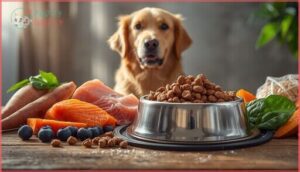
When you’re reading the label on a grain-free probiotic dog food, you’ll want to know what separates a quality formula from the rest.
The best products share a few core ingredients that work together to support your dog’s health from the inside out.
Here’s what to look for in a formula that truly delivers.
High-Quality Animal Proteins
When you choose grain-free dog food with probiotics, the foundation is protein—specifically, animal proteins like chicken, fish, and pork that dogs can actually use. Here’s why quality matters:
- Protein digestibility often exceeds 80% in well-processed animal sources, ensuring your dog absorbs what they eat.
- Complete amino acid profiles support everything from muscle maintenance to immune function.
- Marine proteins naturally deliver taurine for heart health.
- Meat-first formulas generally provide 26–34% crude protein, well above minimum requirements.
- Probiotic interaction remains effective even with high-protein diets, maintaining digestive health.
Essential Nutrients and Omega Fatty Acids
Beyond protein, your dog needs a careful balance of fats and micronutrients to thrive. AAFCO standards require at least 1.1% omega-6 and 0.12–0.3% omega-3 fatty acids for adult maintenance, aiding skin hydration, gut microbiome health, and cognitive development.
Grain-free dog food with adequate omega fatty acids delivers these essential nutrients—think shinier coats, calmer digestion, and sharper minds, especially when probiotics join the mix.
| Nutrient Role | Key Benefit |
|---|---|
| Omega-3 (EPA/DHA) | Lessens inflammation, aids heart and brain |
| Omega-6 (linoleic acid) | Maintains healthy coat and skin barrier |
| Balanced omega ratio | Enhances probiotic effectiveness in gut |
| Micronutrients (taurine, methionine) | Protects cardiovascular and metabolic health |
Absence of Grains, Gluten, and Artificial Additives
Ingredient alternatives like potatoes, peas, and lentils replace wheat and corn in many grain-free dog food recipes, appealing to consumer perceptions about “cleaner” eating—no grains, no gluten, no eggs, and zero artificial flavors or preservatives.
Regulatory oversight from AAFCO ensures nutritional balance, yet you’ll still want to check labels: a truly grain-free diet should support health outcomes, not just swap one filler for another.
Inclusion of Prebiotics for Synbiotic Benefits
When prebiotics join probiotics in your dog’s bowl, you create a synbiotic formulation that amplifies gut health benefits beyond either ingredient alone. These fermentable fibers—sourced from chicory root, vegetables, or yeast—feed beneficial bacteria, strengthening gut microbiome modulation and enhanced nutrient absorption.
Look for grain-free dog food with synbiotic formulation ratios that deliver long-term efficacy:
- Inulin-type fructans at 0.5–1.0% dietary inclusion
- Fructooligosaccharides (FOS) paired with probiotic strains
- Mannan-oligosaccharides (MOS) from yeast cell walls
- Prebiotic fiber sources like chicory root or pumpkin
- Combined probiotic counts of 10⁹–10¹⁰ CFU per day
This partnership fosters digestive health by creating an environment where probiotics thrive and protect your dog’s gut.
Top 9 Grain-Free Dog Foods With Probiotics
Now that you know what to look for in a grain-free probiotic food, it’s time to see which products deliver. The market offers a range of options, from freeze-dried bites to traditional kibble, each designed to support your dog’s gut health and overall wellness.
Here are nine grain-free dog foods with probiotics that stand out for their quality ingredients and proven benefits.
1. Muenster Freeze Dried Chicken Dog Bites
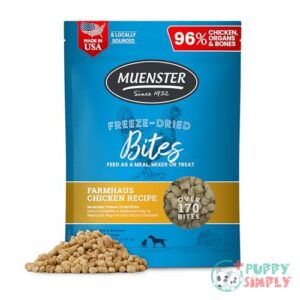
When you’re searching for a dog food that combines minimally processed nutrition with digestive support, Muenster Freeze-Dried Bites Farmhaus Chicken Recipe stands out. This grain-free dog food with probiotics delivers 42% protein from chicken and organs, freeze-dried to lock in nutrients while preserving 30 million CFU of beneficial bacteria per pound.
You’ll find it adaptable for all life stages and flexible enough to serve as a meal, topper, or training treat. The calorie-dense formula—about 4,827 kcal/kg—means you’ll need careful portion control, but its probiotic content benefits your dog’s gut health effectively.
Best For: Dog owners looking for a high-protein, grain-free food with added probiotics that works as a complete meal, topper, or training treat for dogs of all ages and sizes.
- High protein content (42%) from real chicken and organs, freeze-dried to preserve nutrients and probiotic viability
- Contains 30 million CFU of multi-strain probiotics per pound to support digestive health and gut balance
- Versatile usage as a complete meal, food topper, or low-calorie training treat (2.5 calories per bite)
- High caloric density (4,827 kcal/kg) requires careful portion control to avoid overfeeding
- Some bags reportedly contain excessive dust or powdered nuggets, reducing usable product and cost-effectiveness
- Limited to dogs that tolerate chicken-based ingredients and the specific protein sources in the formula
2. Taste of the Wild High Prairie Food
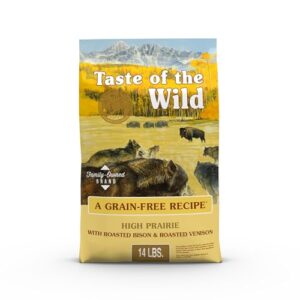
If you’re looking for a grain-free recipe that pairs protein-rich bison and venison with targeted digestive support, Taste of the Wild High Prairie delivers 28% protein and 80 million CFU of probiotic strains—including Lactobacillus acidophilus and Bifidobacterium animalis—per pound.
This caloric density of about 422 kcal per cup fuels active dogs, while prebiotics from chicory root help beneficial bacteria thrive.
With a clean recall history since 2012 and an AAFCO-compliant formulation, it’s a dependable choice for balanced dog nutrition and digestive health.
Best For: Active adult dogs who need high-protein, grain-free nutrition with digestive support from probiotics and prebiotics, especially those with sensitive stomachs or grain sensitivities.
- Delivers 28% protein from real bison and venison plus 80 million CFU of live probiotics per pound to support gut health and immune function
- Grain-free formula with sweet potatoes and peas provides 422 kcal per cup, ideal for energetic dogs who need sustained fuel
- Clean safety record with no recalls since 2012 and AAFCO-compliant formulation for complete, balanced nutrition
- Higher price point compared to conventional dog food brands may stretch budgets for multi-dog households
- Some customers report shipping damage or packaging issues when ordering online
- A few dogs may reject the taste or texture, and certain food sensitivities could still trigger reactions despite the grain-free formula
3. Jinx Salmon Sweet Potato Dog Food
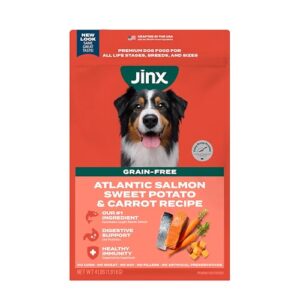
Real salmon anchors this grain-free dog food, delivering 27% crude protein alongside Bacillus coagulans probiotics at 20,000 CFU per pound for digestive health. Sweet potatoes and carrots add vitamin-rich carbohydrates, while omega-3 and omega-6 fatty acids support your dog’s skin and coat.
With a 4.8-star rating from 326 reviews, 84% of customers recommend it—though some dogs experience digestive upset or find the palatability mixed.
At a higher price point than many competitors, you’re paying for USA-made quality and probiotic strains backed by customer satisfaction data.
Best For: Dog owners seeking a premium, grain-free option with real salmon and probiotics, especially for pups with food sensitivities or those needing extra digestive and coat support.
- Real salmon as the first ingredient with 27% protein and omega fatty acids for healthy skin and coat
- Includes live probiotics (20,000 CFU/lb) and superfoods to support digestion and immune health
- High customer satisfaction with a 4.8-star rating and 84% recommendation rate
- Higher price point compared to many other dog food brands
- Some dogs may experience digestive issues like watery stool during transition
- Mixed palatability—not all dogs enjoy the taste without flavor enhancers or mix-ins
4. I and Love and You Beef
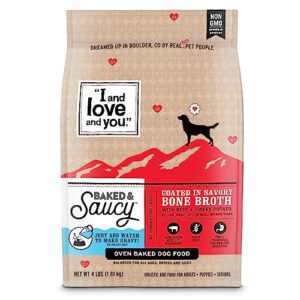
When beef quality meets probiotic science, you’ll find I and Love and You Beef sitting at that intersection. This grain-free dog food delivers 28% protein with beef as the first ingredient, enhanced by Bacillus coagulans probiotics to support a healthy gut. Non-GMO ingredient sourcing means no corn, wheat, or soy fillers.
Customer reviews reflect a solid 4.5-star rating across 4,423 evaluations, and the safety analysis shows no recalls for their beef formulations. At $17.99 for 4 pounds, you’re investing in AAFCO-compliant nutrition for all life stages.
Best For: Dogs with sensitive stomachs who need grain-free nutrition and digestive support through probiotics at all life stages.
- Beef as the first ingredient delivers 28% protein to support muscle development and energy levels
- Includes prebiotics and probiotics (Bacillus coagulans) with guaranteed CFU levels for better gut health and digestion
- Clean ingredient list with no corn, wheat, soy, or GMO proteins, plus no recall history for beef formulas
- Some users report kibble doesn’t soften well when water is added for wet feeding
- Limited to 4-pound bag size at $17.99, which may not be cost-effective for larger dogs or multi-dog households
- Occasional packaging complaints about bags arriving open or damaged with spilled contents
5. Nulo Adult Trim Cod and Lentil
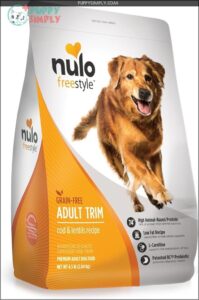
When your dog needs to shed a few pounds without sacrificing nutrition, Nulo Adult Trim Cod and Lentil offers smart weight management with 30% protein and just 7–9% fat. This grain-free dog food features cod as the lead protein source, backed by BC30 probiotic (80 million CFU per pound) for digestive harmony.
The formula excludes corn, wheat, and soy while incorporating lentils and chickpeas for fiber-rich satiety.
At approximately 368 calories per cup, you’re providing controlled-calorie nutrition that promotes lean muscle mass and overall wellness in adult dogs.
Best For: Adult dogs that need to lose weight or maintain a healthy weight while still getting high protein and digestive support from probiotics.
- High protein (30%) with lower fat (7-9%) helps dogs slim down while keeping muscle intact
- BC30 probiotic supports gut health and digestion, which is especially helpful during diet transitions
- Grain-free formula skips common allergens like corn, wheat, and soy, making it good for sensitive stomachs
- Lentils and legumes can cause gas in some dogs, so you might need to introduce it slowly
- Higher price point compared to standard dog foods, which can add up over time
- Not formulated for puppies or all life stages, so it’s strictly for adult dogs
6. Salmon Whitefish Grain Free Dog Food
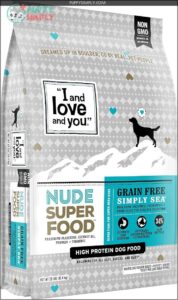
If you’re seeking a fish-forward option, I and Love and You Salmon Whitefish Grain Free Dog Food delivers 34% protein content with wild-caught fish as the #1 ingredient. This poultry-free formula helps dogs with food sensitivities while offering 500 million CFU probiotics per pound—double many competitors.
You’ll find omega fatty acids (0.8% omega-3, 3.2% omega-6) promoting lustrous coats, plus taurine and L-carnitine for heart health. At 421 calories per cup, monitor portions carefully.
The ingredient profile excludes all grains, using sweet potatoes and chickpeas instead for complete nutrition.
Best For: Dogs with poultry allergies or sensitive stomachs who need a high-protein, fish-based diet with strong probiotic support for digestive health.
- Fish as the #1 ingredient with 34% protein and added taurine and L-carnitine supports lean muscle and heart health
- 500 million CFU probiotics per pound plus prebiotics help with digestion and gut balance, especially for sensitive dogs
- High omega-3 and omega-6 levels (0.8% and 3.2%) promote healthy skin and a shiny coat
- Significantly more expensive than most mainstream dog food brands
- Some dogs experience digestive upset like diarrhea or vomiting during transition or continued feeding
- Palatability varies—certain dogs refuse to eat it or find the smell unappealing
7. Wellness Core Wild Game Dog Food
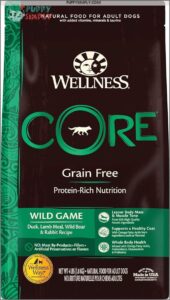
For those wanting exotic protein source quality, Wellness Core Wild Game dog food brings duck, lamb, rabbit, and wild boar together in a 34% protein formula. 80 million CFU probiotics per pound—Enterococcus faecium, Bacillus subtilis—support your dog’s digestive health alongside chicory root prebiotics.
Wild game benefits include novel proteins for sensitive stomachs, while omega fatty acids and glucosamine support joints. At 389 calories per cup, it’s energy-dense for active dogs.
The brand’s recall history shows transparency, though ingredient safety remains solid with US manufacturing and no grain-free-specific recalls.
Best For: Dogs with food sensitivities who need novel proteins, or active adults who thrive on high-protein, grain-free diets with digestive support.
- Exotic protein mix (duck, lamb, rabbit, wild boar) at 34% crude protein helps dogs with common protein allergies
- 80 million CFU probiotics plus prebiotic fiber support gut health in a shelf-stable kibble
- Energy-dense at 389 calories per cup with added glucosamine and omega fatty acids for joints and coat
- Higher price point compared to standard grain-free options
- Kibble size may not suit all dogs, and some are picky about the wild game flavor
- Requires gradual transition to avoid digestive upset, and brand has past recalls (though none for this specific formula)
8. Solid Gold Small Breed Bison Food
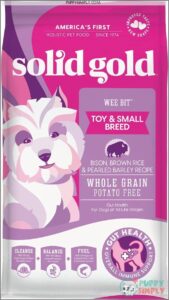
Small breed owners will find Solid Gold’s Small Breed Bison Food perfectly sized for tiny jaws. This grain-free dog food with probiotics delivers 28% protein from pasture-raised bison, a novel protein source that’s gentle on sensitive stomachs.
Three probiotic strains—Lactobacillus acidophilus, Enterococcus faecium, and Lactobacillus casei—work alongside prebiotic fiber to support digestion. Omega fatty acids (2.75% omega-6, 1.25% omega-3) promote healthy skin and coat.
At 200 mg/kg zinc and 250 IU/kg vitamin E, this ingredient analysis shows solid nutritional support for your small dog’s whole-body wellness.
Best For: Small and toy breed owners looking for a protein-rich, grain-inclusive formula with probiotics to support digestive health and coat quality.
- High protein content (28%) from pasture-raised bison is great for small dogs with sensitive stomachs or chicken allergies
- Three probiotic strains plus prebiotic fiber help with digestion and nutrient absorption
- Tiny, heart-shaped kibble makes it easy for small jaws to chew and digest
- Price has increased over time with no discounts or sales available
- Subscription pricing offers no savings compared to one-time purchases
- Contains grains (brown rice, barley), which may not work for dogs needing fully grain-free diets
9. Purina Pro Plan Chicken Rice Blend
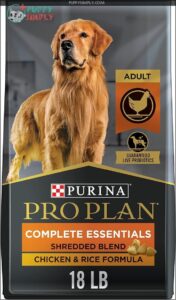
While bison suits sensitive small breeds, Purina Pro Plan High Protein Dog Food offers a different approach with its Chicken Rice Blend—and yes, that means it’s not grain-free. This formula features real chicken as the first ingredient, delivering 26% protein alongside hard kibble mixed with tender shredded pieces.
The standout? Probiotic Strain BC30 (Bacillus coagulans) at 600 million CFU per pound survives manufacturing to reach your dog’s gut.
Customer Review Analysis shows 96% recommend it, with Veterinary Recommendations praising its balanced Ingredient Breakdown for digestive and immune support.
Best For: Dogs that need high-protein nutrition with digestive support, especially if you’re looking for a vet-recommended formula that includes live probiotics and isn’t grain-free.
- Real chicken as the first ingredient delivers 26% protein to support strong muscles and heart health
- Contains 600 million CFU/lb of probiotic strain BC30 that actually survives manufacturing to reach your dog’s gut
- 96% of customers recommend it, with noticeable improvements in coat shine and energy levels within weeks
- Contains grains (chicken and rice), so it won’t work for dogs with grain sensitivities
- Shredded pieces can be messy and leave crumbs around the feeding area
- Some dogs may experience tummy issues or diarrhea during the transition period
How to Choose The Best Food for Your Dog

Choosing the right grain-free probiotic food for your dog isn’t just about picking the first bag you see on the shelf. You’ll need to look at the probiotic content itself, match the formula to your dog’s age and size, and consider any specific health issues they’re dealing with.
Let’s walk through the key factors that’ll help you make the best choice for your furry friend.
Evaluating Probiotic Strains and CFU Levels
When choosing probiotic dog food, strain specificity matters more than you might think. Look for products listing canine-origin strains with viable CFU counts between 1 and 10 billion per day—label accuracy ensures you’re getting what’s promised.
Storage stability is key, so verify the CFU guarantee extends through shelf life, not just at manufacture.
Benefits of probiotics for dogs depend on these details in grain-free dog food formulations.
Considering Life Stage and Breed Size
To meet your dog’s dietary needs, you’ll need to align grain-free dog food with probiotics to their life stage and breed size. Puppy growth formulas for large breeds control calcium to protect developing joints, while adult maintenance diets balance calorie density for steady weight.
- Small breeds burn more calories per pound, requiring energy-dense kibble
- Large-breed formulas moderate calories to prevent joint stress
- Senior diets adjust nutrients as metabolism shifts with age
- All-life-stage foods must meet stricter puppy growth standards
Dog nutrition depends on these factors.
Matching to Specific Health Concerns
Beyond basic nutrition, you’ll want to match grain-free dog food with probiotics to your dog’s specific challenges. Dogs with allergies and skin conditions benefit from formulas excluding common allergens, while probiotics stabilize gut immunity. For cardiac support, confirm adequate taurine and sulfur amino acids—especially critical in certain grain-free diets. Immune enhancement and digestion harmony improve with targeted probiotic strains, while weight management formulas adjust calorie density for metabolic needs.
| Health Concern | Key Dietary Features |
|---|---|
| Allergy Management | Grain-free formula, probiotics for immune modulation |
| Cardiac Support | Adequate taurine, sulfur amino acids, quality protein |
| Immune Enhancement | Specific probiotic strains, prebiotics for gut health |
| Weight Management | Controlled calorie density, high protein content |
Transitioning to Grain-Free Probiotic Diets
Switching your dog to a grain-free probiotic diet isn’t something you should rush. A careful, gradual shift protects your dog’s digestive system and helps you spot any issues early.
Here’s how to make the change safely and what to watch for along the way.
Steps for Safe Food Transition

Switching to grain-free dog food with probiotics isn’t something you want to rush. Veterinarians generally advise a 7–10 day adjustment timeline to protect your dog’s digestive health.
Start by mixing 25% of the new food with 75% of the old, then gradually shift those ratios every few days. This careful owner implementation minimizes GI side-effects like diarrhea while allowing the probiotic role to support your sensitive stomach pup’s adjustment.
Monitoring Digestive and Health Responses

Once you’ve started the switch, you’ll need to watch for real-world signs that the new dog food is working. Pay attention to stool quality daily—firm, consistent stools signal healthy digestion. Track any changes in allergy symptoms like itching or ear infections.
Some veterinarians recommend blood markers or microbiome analysis to assess gut health improvements. Owner reports of increased energy and reduced digestive upset are often the most telling indicators that probiotics are supporting your dog’s system.
Tips for Gradual Dietary Change

Adjustment timeframe matters more than you might think. Start with a 7- to 10-day schedule, mixing 25% new grain-free dog food with 75% old on days 1–2, then shift to 50:50.
Portion control and mixing strategies help your dog’s digestive health adapt smoothly. Add probiotics at reduced doses initially, then increase gradually.
Hydration support is essential—make sure your dog drinks about 30 mL per pound daily throughout the dog diet change.
Addressing Special Health Needs With Diet

If your dog faces ongoing allergies, heart concerns, or weight challenges, the right grain-free probiotic food can make a real difference. These diets aren’t just about eliminating grains—they’re designed to address specific health issues through targeted nutrition.
Let’s look at three key areas where diet can help support your dog’s unique needs.
Managing Allergies and Skin Conditions
Although food allergy prevalence is relatively low—accounting for about 1–5% of canine skin conditions—identifying dietary triggers through elimination diet trials remains essential for managing dog allergies and skin conditions.
When you suspect food sensitivities, a grain-free diet for dogs combined with omega-3 supplementation can improve skin health by reducing inflammation. Probiotics support the gut-skin axis, helping restore balance in dogs with allergies and enhancing overall tolerance to potential allergens.
Supporting Heart and Immune Health
Beyond managing allergies, the right diet can also protect your dog’s heart and immune system. A controlled 18-month study found that properly balanced grain-free dog food maintained normal cardiac function and taurine levels, addressing grain-free risks when formulations meet nutritional standards.
Meanwhile, probiotic strains boost immune modulation by increasing serum IgG and fecal IgA, strengthening gut health and systemic defenses—critical for overall dog health and long-term heart health.
Promoting Healthy Weight and Digestion
Weight loss and digestive health support go hand in hand when you combine grain-free dog food with probiotics. This diet synergy delivers measurable results: probiotics reduced body weight by 17.3% in overweight dogs while normalizing stool quality from 4.09 to 2.38 in just seven days. Improved gut flora enhances metabolic health, lowering triglycerides and cholesterol.
Key benefits include:
- Stabilized blood sugar from lower glycemic ingredients
- Better nutrient absorption through balanced microbiota
- Reduced inflammation markers like IL-6
- Enhanced fat metabolism without restricting calories
Consulting Your Veterinarian for Dietary Advice

Your veterinarian is your most valuable partner when choosing the right grain-free probiotic food for your dog. They can evaluate your pet’s unique health profile and help you navigate options that align with specific medical needs or dietary sensitivities.
Here’s how working with your vet ensures you make informed, safe decisions about your dog’s nutrition.
Assessing Suitability for Existing Health Conditions
Your dog’s health history is like a roadmap that guides food choices. Before switching to a grain-free diet with probiotics, your vet should evaluate cardiac risks, breed predispositions, digestive issues, immune disorders, and allergy considerations.
Some breeds face higher DCM concerns with certain dog food with probiotics formulas. Your veterinarian ensures the allergen-free, digestive health benefits outweigh potential risks, protecting your dog’s well-being through informed decisions.
Customizing Nutrition Plans
Your veterinarian tailors caloric requirements and macronutrient profiles to your dog’s life stage, breed, and activity level. They integrate grain-free formulations with probiotics based on your dog’s nutritional needs, ensuring adequate protein, essential amino acids, and digestive support.
This individualized approach considers weight goals, health conditions, and sensitivities—matching the right dog food with probiotics to your pet’s unique situation, so dog nutrition truly benefits your companion’s well-being.
Monitoring Long-Term Health Outcomes
Regular checkups track how grain-free dog food with probiotics affects your pet’s overall health. Your veterinarian monitors cardiac function, metabolic surveillance, and microbiome changes through clinical tracking and established veterinary protocols, ensuring the benefits of probiotics for dogs continue over time.
Extensive dog health and nutrition assessments include:
- Echocardiography and taurine levels every 6–12 months for gut health and heart monitoring
- Body condition scoring to detect weight changes
- Fecal quality evaluation using standardized systems
- Bloodwork to assess amino acid and metabolic status
Frequently Asked Questions (FAQs)
What foods are high in probiotics for dogs?
Ironically, your pantry may hide better probiotics than fancy supplements. Plain yogurt, kefir, and sauerkraut deliver billions of beneficial bacteria daily, while green tripe provides natural Lactobacillus that aids digestive balance without grains.
Why does my vet not recommend grain-free dog food?
Most vets cite FDA findings linking grain-free diets to DCM concerns, particularly taurine deficiency in breeds like Golden Retrievers.
Ingredient risks from legume-heavy formulations and veterinary views on dog health and nutrition drive these recommendations against grain-free dog food.
Is grain-free better for dogs with digestive issues?
It depends on the individual dog. Grain-free diets can help dogs with documented grain allergies or gluten sensitivity, but most digestive issues stem from protein sensitivities rather than grains, requiring individualized diets guided by veterinary evaluation.
Does any dog food have probiotics in it?
Yes, many dog foods now include probiotics. In 2024, 75% of U.S. pet owners who use probiotics provide them through pet food, making probiotic-containing foods the leading delivery format for digestive health support.
How much do probiotic grain-free foods cost?
Like comparing a neighborhood café to fine dining, probiotic grain-free dog food costs vary widely. Premium formulas run $67–$12 per pound, while standard options hover around $50–$3 per pound, depending on brand and retail channel.
Where can I buy these specialty dog foods?
You can find grain-free dog food with probiotics at veterinary clinics, specialty stores, independent pet retailers, and online retailers.
Brand availability varies, so check purchase criteria like probiotic strains and nutritional completeness before buying.
Conclusion
An ounce of prevention is worth a pound of cure, and selecting the right grain free dog food with probiotics sets that foundation. Your dog’s gut health drives immunity, energy, and longevity—choosing formulas that eliminate inflammatory triggers while delivering proven bacterial strains creates lasting change.
Review ingredient quality, match probiotic potency to your dog’s needs, and shift diets carefully. The investment you make in their nutrition today shapes the vibrant, comfortable years ahead.
- https://pmc.ncbi.nlm.nih.gov/articles/PMC12524077/
- https://www.sciencedirect.com/science/article/pii/S1756464623003444
- https://onlinelibrary.wiley.com/doi/10.1002/vms3.70290
- https://www.frontiersin.org/journals/immunology/articles/10.3389/fimmu.2019.00666/full
- https://www.petfoodindustry.com/pet-food-lawsuits-litigation/news/15678741/another-lawsuit-over-alleged-dcm-grainfree-dog-food-connection