
This site is supported by our readers. We may earn a commission, at no cost to you, if you purchase through links.

Most new dog owners underestimate the commitment by a long shot—not in affection, but in logistics. A dog needs consistent leadership, a safe environment, proper nutrition, and veterinary care that starts week one and doesn’t stop for the next 10 to 15 years.
That’s not a scare tactic; it’s just the math. The owners whose dogs thrive aren’t the ones who love their pets most—they’re the ones who prepared.
These 17 vet-approved tips will give you the foundation to become exactly that kind of owner.
Table Of Contents
- Key Takeaways
- The Importance of Being a Responsible Dog Owner
- Establishing Yourself as The Pack Leader
- Creating a Safe and Comfortable Home Environment
- The Basics of Dog Training and Discipline
- Understanding and Communicating With Your Dog
- The Importance of Regular Vet Visits
- Proper Nutrition and Feeding for Your Dog
- Grooming and Taking Care of Your Dog’s Physical Needs
- The Importance of Exercise and Playtime
- Planning for Holidays and Time Away From Your Dog
- Frequently Asked Questions (FAQs)
- Where should a dog sleep first night?
- How do I know if a dog is the right breed for me?
- What should I do if my dog has an accident in the house?
- How do I manage my dog’s energy levels?
- How do I know if my dog is in pain?
- How can I tell if my dog is feeling anxious?
- What vaccinations does my puppy need and when?
- How do I choose the right veterinarian?
- Should I spay or neuter my dog?
- What supplies do I need before bringing home?
- Conclusion
Key Takeaways
- Responsible dog ownership costs $2,500–$4,000 a year and runs 10–15 years, so budget honestly before you bring a dog home.
- Consistent commands, calm body language, and structured daily routines are what actually shape a well-behaved dog—not affection alone.
- Preventive vet care catches roughly 90% of health problems early, making annual checkups one of the highest-value habits you can build.
- Daily exercise isn’t optional—skipping it nearly doubles obesity risk and fuels anxiety and destructive behavior in dogs of any age.
The Importance of Being a Responsible Dog Owner

When you bring a dog home, you’re signing up for 10 to 15 years of real commitment — not just the fun parts.
Choosing a breed that naturally fits your family’s lifestyle — like one of these affable dog breeds suited for children — makes those years a whole lot easier on everyone.
Responsible dog ownership means staying current on pet licensing requirements, microchipping pets, and keeping vaccinations and parasite prevention on schedule.
It also means budgeting honestly: expect $2,500 to $4,000 annually for regular veterinary checkups, food, grooming, and emergency preparedness.
Consider scheduling a fall wellness visit to update vaccines and discuss preventive care.
Neighborhood courtesy matters too — cleaning up waste, controlling barking, and respecting shared spaces.
Some owners even look into insurance coverage to manage unexpected costs.
Get these fundamentals right, and you’re not just a good dog owner — you’re a good neighbor.
Establishing Yourself as The Pack Leader
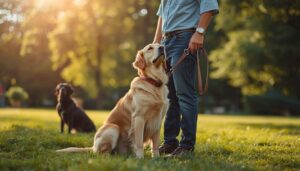
Budgeting and licensing are just the beginning. Once you’re home together, your dog immediately starts asking one quiet question: *Who’s in charge here?
*
That’s where calm confident pack leader energy comes in. Establishing pack leadership isn’t about dominance — it’s about clarity. Dogs feel safer when they know what to expect.
Start here:
- Use consistent commands every time to improve obedience by around 65%.
- Set clear boundaries early — jumping incidents drop roughly 55% within weeks.
- Practice consistent body language and a calm voice tone to reduce anxiety by up to 75%.
- Build structured routines around meals and walks to reinforce your role naturally.
- Apply controlled greeting rules paired with reward timing for lasting results.
Positive reinforcement dog training works because it builds trust, not fear.
When paired with the right gear, like these dog training collars for senior dogs, positive reinforcement becomes even more effective as dogs age.
Creating a Safe and Comfortable Home Environment

Once your dog knows you’re the calm one in charge, it’s time to turn your attention to the space itself. Dog proofing the home isn’t just a checklist — it’s how you prevent emergencies before they happen.
Start with hazard-free floors: secure loose rugs, cover electrical cords, and store trash in lidded bins. Chew proofing means shoes, remotes, and kids’ toys go into closed storage.
indoor air quality and temperature comfort matter too — avoid strong chemical fumes and keep rooms well-ventilated. Creating a safe environment using pet gates limits unsupervised access, while solid lighting safety ensures neither of you trips in the dark.
The Basics of Dog Training and Discipline

Now that your home is set up, it’s time to shape your dog’s behavior — and the science here is clear. Reward-based training outperforms punishment every time.
Three training basics that actually work:
- Timing rewards precisely — mark the moment the behavior happens, not seconds later.
- Consistent cues — one word, same tone, every time.
- Redirect unwanted behaviors — interrupt calmly, then reward the right choice immediately.
Positive reinforcement dog training, built on humane boundaries and consistent commands, is what obedience training looks like when it’s done right.
Understanding and Communicating With Your Dog

Your dog is talking to you constantly — you just need to learn the language. Understanding dog body language is one of the most valuable skills a first-time owner can develop.
Dog body language interpretation starts with the subtle stuff. A yawn during a hug, lip-licking while you pet them, or a slow head turn away — these are calming signals, not boredom. They mean your dog feels pressured and needs a little space.
Vocal cues matter just as much. A whine sounds nothing like a bark, and each carries a different message.
Here’s what to watch for daily:
- Eye contact — a soft mutual gaze builds trust; a hard stare signals tension.
- Calming signals — yawning or turning away means stress, not laziness.
- Dog anxiety signals — frozen posture, pinned ears, or panting at rest.
- Human tone — your voice pitch directly changes how your dog responds.
Read these behavioral cues consistently, and communication becomes natural.
The Importance of Regular Vet Visits

Think of regular veterinary checkups as your dog’s annual report card — except the stakes are much higher than a grade. Preventive veterinary care catches roughly 90% of health problems before they become serious, which means simpler treatment and lower costs for you.
Your puppy needs to follow a vaccination schedule every two to four weeks until 16 weeks old. After that, annual veterinary visits cover vaccination schedules, early disease detection, parasite prevention, and dental health checks that you simply can’t perform at home. Senior dogs — seven years and older — need twice-yearly exams.
Weight monitoring at each visit also matters more than most owners realize. Gradual weight gain is easy to miss day-to-day but straightforward to catch and address through consistent health screening and preventive care.
Proper Nutrition and Feeding for Your Dog

What goes into your dog’s bowl matters more than most first-time owners expect. A balanced diet built around complete and balanced food covers protein, fat, carbohydrates, and hydration importance — without needing supplements.
Nutrition and feeding guidelines for dogs shift by life stage, so follow age-appropriate recommendations carefully.
- Choose food with at least 18% protein content in dog food for adults
- Stick to a consistent feeding schedule — twice daily for adults
- Practice portion control to prevent weight gain
- Count treats toward daily calories for smart treat management
- Always provide fresh water
Grooming and Taking Care of Your Dog’s Physical Needs

Grooming isn’t just about appearances — it’s one of the clearest windows into your dog’s health. Regular Coat Brushing removes dirt, loose fur, and lets you feel for lumps or skin changes hiding beneath the fur. That’s why Grooming and hygiene for canine health belong right alongside Nutrition and feeding guidelines for dogs as a daily priority.
Here’s what a solid grooming routine covers:
- Bathing Safety: Use pet-safe shampoo every few weeks and rinse thoroughly to prevent skin irritation.
- Nail Trimming: Trim every three to four weeks before nails click on hard floors.
- Ear Cleaning: Check and gently clean ears regularly; persistent odor or discharge needs veterinary attention.
- Dental Care: Brush with dog-safe toothpaste to prevent plaque buildup and bad breath.
Start early, stay consistent.
The Importance of Exercise and Playtime

Daily exercise isn’t optional — it’s medicine. Dogs skipping regular activity face nearly double the obesity risk, plus increased anxiety and destructive behaviors. A solid dog exercise routine promotes Weight Management, Joint Mobility, and Cardiovascular Health simultaneously.
Daily exercise is not optional for dogs — skip it, and you double their obesity risk while inviting anxiety and destruction
| Breed Type | Daily Duration | Key Benefit |
|---|---|---|
| High-energy breeds | 60–120 min | Energy Outlet |
| Average adults | 30–60 min | Mental Stimulation |
| Senior dogs | 10–20 min | Joint Mobility |
Puzzle toys and training games count too — exercise and mental stimulation for dogs work together, keeping first-time dog owners and their pups thriving.
Planning for Holidays and Time Away From Your Dog

Leaving your dog behind is stressful — but it doesn’t have to be chaotic. Start with honest Pet Sitter Selection: choose someone your dog already trusts, or schedule a Boarding Trial Day so the facility feels familiar before you leave.
Planning holidays and travel with a dog means thinking ahead, not scrambling last‑minute.
Build an Emergency Contact Sheet with your vet’s number, a nearby emergency clinic, and a backup contact. Pack a Travel Gear Checklist covering food, medications, leash, and comfort items.
Above all, Routine Consistency matters most — keep feeding times and walks predictable. Dog daycare and boarding options work best when your dog knows what to expect.
Frequently Asked Questions (FAQs)
Where should a dog sleep first night?
Place your dog’s crate near your bed on night one.
A quiet room bed works too — just keep it in a draft-free zone on a slip-resistant surface with familiar comfort items nearby.
How do I know if a dog is the right breed for me?
Choosing the right dog breed starts with honest self-reflection. Think about your lifestyle, living space, and daily schedule.
The right match isn’t just about looks — it’s about compatibility that lasts a lifetime.
What should I do if my dog has an accident in the house?
Stay calm — accidents happen during housebreaking. Blot urine immediately using the blotting technique, then apply an enzymatic cleaner to fully eliminate odor.
Never punish your dog; it worsens dog anxiety management and slows progress.
How do I manage my dog’s energy levels?
Most dogs need 30 minutes to two hours of daily exercise, depending on breed. Pair structured walks with puzzle toys and planned rest periods, and you’ll have a calmer, happier dog.
How do I know if my dog is in pain?
Your dog can’t say "ouch." Instead, watch for posture changes, activity reluctance, or vocalizations signs like whimpering. Licking habits and body language cues often reveal pain before anything else does.
How can I tell if my dog is feeling anxious?
Your dog can’t say "I’m stressed," but their body does the talking.
Watch for whale eye, flattened ears, panting without cause, trembling, or hiding — classic dog anxiety signal identification starts here.
What vaccinations does my puppy need and when?
Your puppy needs core vaccines—distemper, parvovirus, and adenovirus—starting at 8 weeks, repeated at 12 and 16 weeks. Rabies follows at a minimum of 12 weeks.
Keep your vaccine record and ask your vet about optional lifestyle shots.
How do I choose the right veterinarian?
Trust, once earned, is worth more than gold. Walk through those clinic doors with purpose.
Check credentials and licensing, ask about specialty expertise, confirm emergency availability, and expect cost transparency — because great veterinary care feels like partnership.
Should I spay or neuter my dog?
For most first-time dog owners, spaying or neutering is a smart step in responsible dog ownership.
It promotes preventative veterinary care, reduces population control issues, and often improves behavioral changes like roaming and marking.
What supplies do I need before bringing home?
Before they arrive, have everything ready: a dog crate, dog food bowl, water fountain, pet ID tags, and dog grooming tools.
essential supplies for first-time dog owners make day one calmer for everyone.
Conclusion
Even Lassie had an owner who showed up every single day.
These 17 tips for first time dog owners aren’t just a checklist—they’re the groundwork for a relationship built on trust, consistency, and real care.
Your dog doesn’t need ideal.
It needs you prepared, present, and paying attention.
Start with one habit, build on the next, and before long, you won’t just have a well-behaved dog—you’ll have an unbreakable bond.
- https://www.companionanimalpsychology.com/2024/03/17-training-tips-for-first-time-dog.html
- https://www.thesprucepets.com/reading-your-dogs-body-language-1118279
- https://www.youtube.com/watch?v=8bg_gGguwzg
- https://www.dialavet.com/blog/dog-feeding-vet-approved-guides-diet-nutrition-tips
- https://pangovet.com/pet-nutrition/dogs/essential-nutrients-dogs-need/