
This site is supported by our readers. We may earn a commission, at no cost to you, if you purchase through links.

Watch a seasoned dog trainer work with a reactive dog in a busy park, and you’ll notice their hands stay on the leash and signals—never fumbling in pockets for treats. That split-second delay between a dog’s correct behavior and your reward can mean the difference between a major accomplishment and a missed opportunity, which is why trainers use treat pouches instead of pockets.
Pockets seem convenient until you’re wrestling with sticky linings, crushed biscuits, and the telltale rustling that sends every dog within earshot into anticipation mode. Professional trainers discovered long ago that dedicated pouches eliminate these frustrations while keeping rewards accessible at precisely the moment behavior happens. The right gear transforms training from a clumsy juggling act into a smooth, focused partnership where timing, consistency, and cleanliness work in your favor.
Table Of Contents
- Key Takeaways
- Why Do Trainers Prefer Treat Pouches?
- How Treat Pouches Enhance Training Efficiency
- What Makes Treat Pouches More Practical Than Pockets?
- How Do Treat Pouches Support Positive Reinforcement?
- Which Features Set Quality Treat Pouches Apart?
- What Types of Treat Pouches Do Trainers Use?
- How Do Trainers Use Treat Pouches Effectively?
- What Are The Hygiene Benefits of Treat Pouches?
- How to Choose The Right Treat Pouch
- What Challenges Do Treat Pouches Solve for Trainers?
- Frequently Asked Questions (FAQs)
- Conclusion
Key Takeaways
- Treat pouches deliver rewards within 1-2 seconds of desired behavior, maintaining the critical timing window that makes positive reinforcement effective, while pockets create delays that weaken the connection between action and reward.
- Professional-grade pouches solve practical problems through one-handed magnetic or elastic closures, waterproof materials that prevent mess and odor absorption, and multiple compartments that organize different treat types without cross-contamination.
- The immediate accessibility of waist-worn pouches keeps your hands free and eyes on your dog, eliminating the fumbling and rustling that breaks focus during training sessions and creates inconsistent reward delivery.
- Quality treat pouches maintain hygiene through removable washable liners and non-porous surfaces, preventing bacterial growth and keeping treats fresh while protecting your clothing from grease and crumbs that pockets can’t contain.
Why Do Trainers Prefer Treat Pouches?
When you’re training your dog, every second counts, and fumbling through your pockets for treats can cost you those critical moments of reinforcement.
A well-organized treat pouch worn during training sessions keeps rewards within instant reach, so you can mark the exact moment your dog gets it right.
Treat pouches solve practical problems that pockets simply can’t address, from quick access to cleanliness. Let’s look at the three main reasons trainers reach for a pouch instead of stuffing treats in their jeans.
Speed and Ease of Reward Delivery
Treat pouches deliver instant rewards with one-handed operation, cutting delivery time to under half a second from cue to treat.
You’ll maintain quick release through magnetic or elastic closures positioned at waist height, ensuring fast access during training sessions.
This speed strengthens positive reinforcement and aids clicker training by eliminating delays that weaken your reward system and timing precision.
Maintaining Focus During Training
When your hands stay free and your reward system remains within arm’s reach, you won’t break eye contact or shift attention away from your dog during training sessions.
Treat pouches eliminate fumbling with pockets or turning away, keeping your focus techniques sharp and your dog’s attention locked on you. This distraction control strengthens positive reinforcement through consistent mental preparation and optimized attention strategies throughout your training environment.
Preventing Mess and Odors
Beyond keeping your attention sharp, treat pouches offer exceptional odor control and moisture management compared to pockets. Their wipeable interiors and magnetic closure designs contain crumbs and grease, while proper cleaning tips—like wiping after each session and using airtight treat storage—prevent lingering smells.
A well-maintained dog treat pouch with regular sanitation methods keeps your training gear fresh and your clothing clean.
How Treat Pouches Enhance Training Efficiency
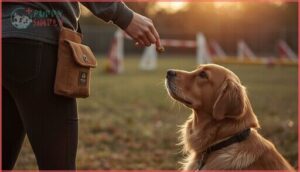
Training efficiency hinges on your ability to deliver rewards at the exact moment your dog performs the desired behavior, and that’s where treat pouches become indispensable. Unlike fumbling through pockets or walking back to a treat jar, a well-designed pouch keeps rewards within instant reach, ensuring you never miss that critical window of reinforcement.
The following factors demonstrate how treat pouches transform your training sessions from frustrating to fluid.
Timely Positive Reinforcement
When that one-second window opens after your dog sits perfectly, you need the treat in hand—not buried in your pocket. Treat pouches transform positive reinforcement into a precision tool, ensuring instant gratification that solidifies learning momentum:
- Reward timing within a second strengthens behavior marking and positive feedback
- One-handed access lets you maintain clicker training rhythm
- Immediate delivery prevents confusion between desired and unintended actions
- Consistent reward system strategies keep your dog engaged throughout sessions
Trainers rely on effective positive reinforcement techniques because such approaches increase desirable behaviors and foster faster learning.
Consistent Reward Access
Generally, your pouch keeps rewards at waist height throughout the entire session, ensuring you don’t scramble for treats mid-cue. Consistent reinforcement depends on access speed—those sealed compartments prevent moisture damage while magnetic closures let you grab rewards without fumbling.
This reliable reward system strategy enhances clicker training rhythm, maintains pet motivation, and boosts training efficiency by eliminating the variables that disrupt positive reinforcement timing. Trainers can facilitate long-term behavior change by understanding the benefits of consistent reward routines.
Reducing Missed Training Opportunities
Crucially, treat pouches eliminate the fumbling that causes you to miss fleeting teachable moments, ensuring timely reward delivery when your dog nails a recall or holds a stay.
With reward accessibility at your waistline, you won’t lose training consistency during fast-paced sequences—those seconds saved preserve positive reinforcement techniques that turn efficient training sessions into landmark progress, capturing missed cues before they fade.
What Makes Treat Pouches More Practical Than Pockets?

When you’re working with a dog in real time, every second counts, and your pockets just aren’t designed for the demands of professional training.
Treat pouches solve the practical problems that make pockets frustrating, messy, and inefficient during sessions. Here’s what sets them apart regarding everyday usability.
Design for One-Handed Access
Unlike fumbling through pockets while holding a leash, treat pouches feature ergonomic design principles that support one hand operation.
You’ll find closures positioned in the thumb zone—magnetic closures and clip systems that snap open with a single squeeze. This secure closure mechanism allows quick access while maintaining grip security, ensuring you deliver rewards without breaking stride or losing control during active training moments.
Hygiene and Cleanliness
Pockets trap grease and crumbs against fabric, turning your training pants into a breeding ground for bacteria—but treat pouches keep pet hygiene and food safety as a top priority with removable, washable liners.
Modern treat storage solutions offer distinct cleaning advantages:
- Waterproof materials allow quick rinses between sessions
- Removable inserts go straight into the washing machine
- Non-porous surfaces prevent odor absorption and bacterial growth
- Separate compartments reduce cross-contamination between treat types
- Quick-dry fabrics maintain freshness without lingering moisture
You’ll maintain proper hand washing routines more easily when treats aren’t coating your pocket linings, and cleaning pouches takes minutes compared to laundering entire garments—essential for maintaining dog training gear standards.
Treat Storage Capacity
Your pockets might hold a dozen treats before bulging awkwardly, while dedicated pouches store 50 to 150 rewards depending on pouch sizing and treat quantity needs.
That capacity difference transforms extended training sessions—no constant reloading interruptions, better treat organization across compartments, and enough storage solutions to support multi-dog scenarios. The right training pouch matches your session length, keeping treat capacity aligned with your consistency goals.
How Do Treat Pouches Support Positive Reinforcement?

Positive reinforcement training relies on split-second timing, and treat pouches give you the speed you need to mark good behavior the moment it happens. When your dog sits, stays, or recalls on command, you can’t afford to fumble through your pockets while the teachable moment slips away.
Here’s how treat pouches strengthen your positive reinforcement approach by keeping rewards accessible, your dog motivated, and your training sessions distraction-free.
Immediate Response to Behaviors
When your dog sits on command, you have a three-second window to deliver that treat before the connection fades.
You have just three seconds to deliver a treat after your dog obeys before the training moment is lost
Treat pouches enable this immediate response to behaviors, a cornerstone of reward-based training methods and positive reinforcement techniques.
By streamlining reward timing, you create stronger feedback loops that reinforce behavioral cues, building training consistency your dog can count on every single session.
Motivation and Engagement for Pets
When you keep high-value rewards close and deliver them quickly, you’ll notice your pet’s enthusiasm spike during every training game. Treat pouches support this canine motivation and feline engagement by pairing positive reinforcement techniques with instant gratification, transforming each session into an exciting opportunity rather than a chore.
Reward-based training thrives when your pet sees you as the source of great things, and pet reward systems built around accessible treats strengthen that bond naturally.
Minimizing Distractions
Training sessions run smoothly when you eliminate fumbling through pockets or hunting for treats that rolled away.
Treat pouches let you keep your hands free and your movements minimal, reducing interruptions that pull your dog’s attention from the cue. By delivering rewards with quiet efficiency, you create calm environments where focused training thrives and your dog’s eyes stay locked on you.
Which Features Set Quality Treat Pouches Apart?
Not all treat pouches deliver the same level of performance, and understanding what separates professional-grade options from basic models helps you make smarter training investments.
The difference often comes down to three critical design elements that directly impact your daily training routine. Let’s examine the specific features that distinguish quality treat pouches from their less effective counterparts.
Material Durability and Waterproofing

A quality treat pouch built from reinforced nylon or TPU-coated fabric endures thousands of training sessions without fraying, splitting, or losing water resistance. Material durability standards guarantee your dog training gear withstands rain, mud, and repeated washing while maintaining seal integrity.
Waterproof material keeps treats dry during outdoor work, and fabric testing confirms these pouches resist UV damage and temperature extremes year-round.
Multiple Compartments and Organization
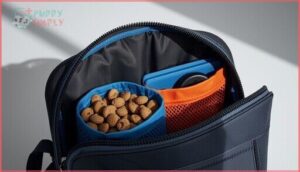
Beyond weather resistance, your training pouch needs smart compartment design to handle varied reward types without mixing flavors or crushing soft treats. Most quality training pouches offer three pocket zones—main storage holding 40 to 60 grams, a front snack pocket for high-value rewards, and a zippered divider for treat separation.
Look for these organizer features:
- Removable liners that preserve pocket layout and simplify cleaning
- Color-coded sections distinguishing treat types during fast sessions
- Mesh pockets securing accessories like clickers without contaminating your treat storage solutions
Secure Closures and Attachment Options
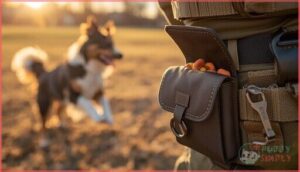
When you’re working with energetic dogs, closure systems become your safety net—a magnetic snap or locking clasp prevents treat spills during sharp pivots, while quick release belt attachments let you adjust positioning without breaking training flow.
| Closure Type | Key Advantage |
|---|---|
| Magnetic closures | Silent one-handed access with neodymium strength |
| Zipper systems | Waterproof seal for outdoor sessions |
| Snap mechanisms | Quick releases under load |
| Hook and loop | Adjustable clips with low profile grip |
| Secure straps | D-ring compatibility for modular attachment |
What Types of Treat Pouches Do Trainers Use?
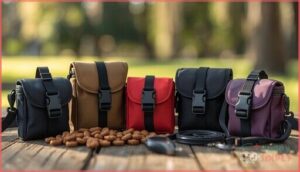
Treat pouches come in several distinct styles, each designed to meet different training environments and handler preferences. The two main categories—waist-worn and clip-on designs—offer different levels of accessibility and freedom of movement during sessions.
Beyond the attachment style, the closure mechanism and specialized features determine how well a pouch fits your specific training needs.
Waist-Worn Vs. Clip-on Styles
When selecting Treat Pouches for Dog Training, you’ll encounter two primary Attachment Styles: waist-worn and clip-on designs.
Waist-worn options feature a Waist Strap that distributes weight evenly across your hips, offering outstanding stability during movement and excellent Wear Comfort for extended Training Equipment use.
Clip-on styles attach directly to your waistband, providing rapid removal between sessions and minimal bulk that won’t interfere with your Pet Training Techniques.
Magnetic, Zippered, and Drawstring Closures
Each Closure Mechanism you choose determines how efficiently you’ll access treats during critical training moments. Magnetic Closures deliver silent, one-handed operation with impressive Magnetic Strength that resists accidental openings, while Zippered Pockets offer exceptional Secure Fastening for vigorous activity. Drawstring Pouches provide flexible capacity with reliable Drawstring Security when paired with quality cord locks.
- Magnetic systems enable quiet, tactile access without alerting your dog to upcoming rewards
- Zipper Durability ensures consistent performance across thousands of training repetitions and weather exposure
- Drawstring designs compress around irregular treat sizes while maintaining Secure Closure integrity
- Water-resistant zippers with coated teeth prevent moisture damage during outdoor Training Equipment use
- Hidden magnetic closures reduce rustling noise that can distract focus-sensitive dogs during Pet Training Techniques
Specialized Designs for Training Needs
You’ll find Customizable Pouches engineered for specific disciplines beyond general obedience.
Scent Work Accessories attach to Training Belt Designs with modular clips, while Reward Dispensers for agility include mesh pockets that drain water after obstacle courses.
Dog Training Gear like multi-compartment Treat Pouches facilitates Pet Accessory Integration—clickers, whistles, and leashes all connect to your Training Pouch, centralizing everything you need for efficient sessions.
How Do Trainers Use Treat Pouches Effectively?

Having the right treat pouch is only half the battle—using it effectively separates good training sessions from great ones.
The key lies in mastering reward timing, integrating your pouch with other training tools, and adapting your approach to different environments and situations. Let’s explore the specific techniques that professional trainers rely on to leverage their treat pouch’s potential.
Reward Timing Techniques
Treat pouches enable you to deliver rewards within 1–2 seconds of the desired behavior, cementing the feedback loop that positive reinforcement training depends on. This timing precision strengthens reward-based training by building clear learning cues your dog can rely on.
By adjusting reinforcement strategies—consistent early on, then gradually spacing intervals—you’ll maintain engagement while shaping reliable, long-term behavior.
Combining With Clicker Training
Pairing a clicker with your treat pouch turns behavior marking into a precision tool, because the click identifies the exact moment your dog nails the behavior while the pouch lets you deliver the reward instantly.
- Clicker Fusion bridges the gap between cue and treat, reinforcing positive reinforcement training with crystal-clear communication
- The clicker marks behaviors precisely while your pouch ensures reward timing stays under two seconds
- Training signals remain consistent when you don’t fumble for treats in pockets
- Verbal praise layered onto clicker training techniques deepens your dog’s understanding of correct responses
- Dog training methods improve dramatically when you synchronize clicks with immediate, pouch-delivered rewards
Multi-Dog and Outdoor Training Scenarios
When you’re working multiple dogs outdoors, pack dynamics shift fast—one dog’s recall can trigger the rest to bolt or crowd you.
That’s where treat pouches shine, letting you reward individuals without fumbling while managing training distractions like wildlife or passersby. Outdoor safety demands both hands free for leashes and cues, and efficient training sessions depend on reward strategies that don’t create competition or confusion among your canine communication partners.
What Are The Hygiene Benefits of Treat Pouches?
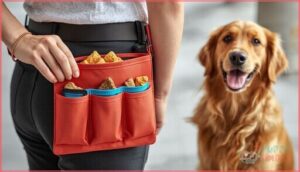
When you’re working with treats throughout the day, hygiene becomes a real concern that affects both you and your dog.
Treat pouches offer specific design features that keep your training setup cleaner and safer than stuffing treats into your pockets ever could. Let’s look at the key hygiene advantages that make treat pouches the smarter choice for professional trainers and dedicated pet owners alike.
Easy Cleaning and Maintenance
One major advantage you’ll notice with quality treat pouches is how effortlessly they maintain sanitary materials and support consistent cleaning protocols. Unlike fabric pockets, these pouches incorporate hygiene benefits through their design.
- Non-porous surfaces that wipe clean after every session, preventing bacterial growth
- Removable liners you can machine wash between training days
- Water-resistant fabrics that resist odor absorption and staining
- Quick-dry construction that passes durability tests for long-term use
Keeping Treats Fresh and Safe
Beyond keeping your pouch clean, proper treat storage and moisture control help your dog’s rewards stay fresh session after session. Airtight containers preserve nutrients and texture while preventing spoilage, a key element of dog treat pouch features and benefits trainers rely on daily.
| Storage Method | Freshness Tips |
|---|---|
| Airtight containers | Limit air exposure, prevent moisture softening |
| Refrigeration | Slow spoilage for high-moisture treats |
| Cool, dry location | Preserve texture, avoid heat and humidity |
| Label with date | Enable first-in, first-out rotation |
| Minimize headspace | Reduce air contact, slow moisture changes |
Safe handling starts with food-contact safety materials that won’t transfer odors or chemicals into your rewards.
Preventing Cross-Contamination
Treat pouches protect your rewards from cross contamination risks that plague pockets and shared bags. When you follow sanitation protocols designed for food safety, your dog’s training treats stay isolated from phones, keys, and everyday grime.
5 Hygiene Practices for Cleanliness Standards
- Use dedicated treat pouches exclusively for pet training rewards, never mixing with personal items or outdoor equipment.
- Wash your training pouch after each outdoor session using food-safe detergent to eliminate bacteria and residue.
- Sanitize hands for 20 seconds before refilling your dog treat pouch to prevent transfer from shared surfaces.
- Store different treat types in separate compartments to avoid flavor mixing and allergen cross contact.
- Replace worn pouches showing cracks or tears where contaminants can hide and multiply unseen.
How to Choose The Right Treat Pouch
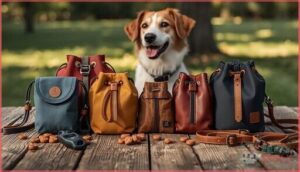
Choosing the right treat pouch depends on your specific training needs, your dog’s size and temperament, and how you prefer to work during sessions. You’ll want to think about factors like comfort during extended wear, the number of compartments you need for different treat types, and whether the closure style matches your pace of training.
Let’s break down the key considerations that will help you select a pouch that enhances your training effectiveness rather than becoming another piece of gear that sits unused.
Size and Comfort Considerations
You’ll want a treat pouch that balances comfort with stability throughout your training sessions. Look for adjustable waist strap adjustments that fit waists between 28 and 46 inches, ensuring proper weight distribution across your hip.
Ergonomic designs with contoured back panels and breathable pouch material selection prevent fatigue during extended work, while comfort features like soft linings enable one-handed access without chafing or restricting your movement.
Matching Pouch Features to Training Style
Your training modes determine which dog training pouch works best for you. Fast-paced sessions demand magnetic closures for rapid positive reinforcement techniques, while precision drills benefit from drawstring control.
Consider these treat pouch benefits:
- Slow-release openings suit frequent, short rewards during basic obedience
- Modular pockets adapt to varied reward systems for multi-dog sessions
- Water-resistant pouch material protects treats during outdoor training sessions
Brand and Product Recommendations
You’ll find five standout brands when selecting and using dog treat pouches, each excelling in material selection and feature prioritization. Product reviews consistently highlight these options for choosing the right dog training pouch:
| Brand | Key Strength |
|---|---|
| Brand A | Breathable 3D mesh, 6 oz capacity |
| Brand B | Rugged water-resistant nylon, magnetic closure |
| Brand C | Dishwasher-safe silicone lining, 14-day freshness |
Brand comparisons reveal that pouch sizing and features of effective treat pouches vary considerably—Brand D offers budget-friendly durability, while Brand E provides premium leather-canvas construction with two-year hardware warranties.
What Challenges Do Treat Pouches Solve for Trainers?

Training with treats in your pockets creates a cascade of frustrating problems that can derail even the most carefully planned session. From crumbled biscuits coating your clothes to that telltale crinkling sound that breaks your dog’s focus at the worst possible moment, pockets simply weren’t designed for the demands of effective training.
Let’s examine the specific challenges that treat pouches eliminate, making your training sessions smoother and more successful.
Eliminating Lost or Crushed Treats
You’ve probably dug into your pocket only to find a sad handful of crumbs where your treats used to be. A quality dog treat pouch solves this with crush protection through reinforced walls, secure closures like locking zippers that prevent spills, and organized storage that keeps treats intact.
Quick retrieval designs and material integrity mean your positive reinforcement training tools stay ready when you need them.
Avoiding Distracting Rustling Noises
Every rustle from your pocket can break your dog’s focus right when it matters most.
Treat pouches with noise reduction features—like soft inner linings, quiet closures, and rustle-free materials—offer silent access to rewards.
Magnetic clasps and secure clip systems minimize sound minimization concerns, while one-handed access designs prevent fumbling and fabric friction.
This allows timely reinforcement without the distracting soundtrack of crinkling plastic or zipper zing.
Supporting Consistency Across Sessions
Your dog reads your body language like a book, so consistency is everything. Standardized pouch placement ensures Body Language Uniformity across Training Sessions, while organized compartments support your Reward Strategy with repeatable sequences.
This Routine Repetition delivers Location Adaptability—you’ll maintain the same Reward-Based Training approach whether you’re in your backyard or a busy park, strengthening Positive Reinforcement Training methodologies through predictable, Effective Pet Training patterns.
Frequently Asked Questions (FAQs)
Are dog treat pouches just for training?
While you’ll hear their biggest wins happen during structured work, training pouches shine beyond formal sessions—they’re workhorses for casual walks, pet socialization outings, and daily pet care moments when you need quick reward storage and treat organization handy.
Why do dog show trainers eat the treats?
Actually, show handlers don’t eat treats—they hold them briefly in their mouths to keep hands free for presenting the dog while maintaining quick, smooth reward delivery and sustained eye contact during critical judging moments.
Can treat pouches be used for cats?
Just like teaching an old dog new tricks, feline training benefits from treat pouches designed for cat behavior.
You’ll need smaller compartments for cat treats, secure closures for reward timing, and wipeable pouch materials for hygiene during pet training sessions.
Do treat pouches work with homemade treats?
Yes, treat pouches work exceptionally well with homemade recipes, provided you choose food-safe pouch materials and size openings to match your snack dimensions, enabling quick reward delivery during training sessions while maintaining hygiene standards.
How often should you replace a treat pouch?
Think of your treat pouch like workout shoes—replace it every 12 to 24 months when zippers stick, fabric tears, or liners show wear patterns, preventing hygiene risks and maintaining closure durability during training sessions.
Are there treat pouches for service dog training?
Service dog training gear includes specialized treat pouches designed for disability support, featuring adaptive mounting options, silent closures, and durable construction.
These canine assistant training accessories provide reliable one-handed operation during extended training sessions.
Can you wear treat pouches while running?
You can wear treat pouches while running—most feature waist straps and handsfree dog walking designs that minimize bounce, offering secure treat storage and quick access without slowing your pace during pet fitness training sessions.
Conclusion
The smallest piece of equipment often makes the biggest difference in your training outcomes. That’s exactly why trainers use treat pouches instead of pockets—precision timing, clean hands, and smooth access turn every session into a fluid flow of communication between you and your dog.
Investing in a quality pouch isn’t about convenience alone; it’s about respecting the science behind positive reinforcement and giving your dog the consistent, immediate feedback that builds lasting behaviors.