This site is supported by our readers. We may earn a commission, at no cost to you, if you purchase through links.

Your dog’s pulling has yanked you forward mid-walk, and for a split second, you’ve heard that awful coughing sound as the collar tightens around their throat. It’s a sound that makes most dog owners wince, yet collars remain the default choice for millions of pets.
Here’s what veterinarians see regularly in practice: dogs with chronic tracheal damage, collapsed airways in small breeds, and persistent neck strain—all preventable injuries linked directly to collar use during walks.
Chest plates redistribute force across your dog’s chest and shoulders instead of concentrating pressure on the delicate structures of the neck, which matters enormously for dogs who pull, lunge, or simply get excited when they spot a squirrel. Understanding why body vests are better than collars isn’t just about comfort—it’s about protecting your dog from injuries that can develop gradually over months or appear suddenly during one hard pull.
The right body harness transforms daily walks from a potential health risk into the safe, enjoyable experience both you and your dog deserve.
Table Of Contents
Key Takeaways
- Dog harnesses protect your dog’s neck and airway by spreading pressure across the chest, preventing injuries like tracheal damage and collapsed airways that collars can cause.
- Vests and harnesses are especially important for small breeds, flat-faced dogs, and those with medical conditions, offering safer, more comfortable walks and better control.
- Using a harness reduces the risk of skin irritation and breathing problems, thanks to hypoallergenic materials and even force distribution.
- Properly fitted harnesses aid in leash training, behavior management, and make daily walks more enjoyable and secure for both you and your dog.
Harnesses Vs. Collars: Key Differences
Before you decide between a vest and a collar, you need to understand how each one works and what options are available.
If you’re still weighing the pros and cons, this guide breaks down the key differences between collars and harnesses to help you choose what works best for your dog.
Collars sit around your dog’s neck and attach to a leash at a single point, while vests wrap around the chest and distribute pressure across a larger area. Let’s break down the main types you’ll encounter so you can make an informed choice for your dog.
How Harnesses and Collars Work

The mechanics behind leash control boil down to where force lands on your dog’s body. A vest wraps around the chest and shoulders, spreading tension across a broad area when your dog pulls. Collars loop around the neck, concentrating pressure on the throat. Martingale collars tighten gently to prevent escape, while standard flat designs anchor directly at the neck.
Recent studies have highlighted the importance of choosing restraints that prioritize both dog welfare and public safety.
| Feature | Vest | Collar |
|---|---|---|
| Attachment Point | Chest or back | Neck |
| Tension Distribution | Across torso | Concentrated on throat |
| Primary Materials | Padded nylon, mesh | Nylon, leather, chain |
Types of Dog Harnesses

Leash options fall into five main categories, each addressing different walking challenges. Front-clip designs attach at the chest plate to redirect pullers, while back-clip styles suit calm dogs. No-pull vests feature dual leash attachments for flexible training. Step-in versions reduce stress for anxious pups, and jacket vests spread force broadly across the torso using padded straps and adjustable belts.
Vests can also help relieve neck strain, as explained in this helpful guide on.
| Leash Type | Best For |
|---|---|
| Front-Clip | Training pullers, medium to large breeds |
| Back-Clip | Well-trained dogs, puppies learning leash skills |
| Vest | Small breeds, flat-faced dogs needing airway protection |
Types of Dog Collars

Choosing leashes means understanding collar styles too. Flat collars with buckle styles or quick-release clasps hold ID tag options and work for daily wear, while martingale collars prevent slipping in narrow-headed breeds. Rolled collars suit sensitive skin, but pinch collars and chain collars demand professional supervision to avoid injury.
Getting the fit right matters just as much as picking the right style—here’s how to measure your dog for a harness to ensure comfort and safety on every walk.
Breakaway designs protect roaming cats, and reflective collars boost nighttime visibility during evening strolls.
| Collar Type | Primary Function | Safety Consideration |
|---|---|---|
| Flat | Everyday wear, ID tags | Can strain neck if dog pulls |
| Martingale | Secure fit for slip-prone breeds | Limited tightening prevents choking |
| Prong/Chain | Training correction | Risk of tracheal damage without expert use |
Why Harnesses Offer Better Safety

When you clip a leash to your dog’s collar, you’re putting their neck and throat at risk every time they pull or lunge.
Harnesses shift that pressure away from delicate airways and distribute it across stronger muscle groups instead.
Here’s why harnesses keep your dog safer on walks, especially for breeds that need extra protection.
Neck and Throat Injury Prevention
Your dog’s throat is more fragile than you might think. When a collar tightens during a walk, it can compress the trachea, damage the esophagus, or strain the spine.
Your dog’s throat is surprisingly fragile—collars can compress the trachea, damage the esophagus, or strain the spine when they tighten during walks
A vest offers critical neck safety by:
- Distributing leash tension across the chest instead of the throat
- Protecting the trachea from direct pressure and collapse
- Maintaining proper spinal alignment during sudden movements
- Ensuring airway security for safer leash training and walking
Even Force Distribution
A well-engineered vest spreads leash tension across the chest and shoulders, protecting your dog from concentrated force. Unlike a collar, which creates dangerous pressure points on the neck, proper vest design ensures load management through wider contact surfaces.
| Feature | Vest | Collar |
|---|---|---|
| Force distribution | Even across chest | Concentrated on neck |
| Pressure points | Minimal risk | High-stress zones |
| Tension control | Balanced pull | Direct throat pressure |
This balanced approach to canine equipment makes dog walking safer and more comfortable.
Protection for Small and Flat-Faced Breeds
If your pup has a smooshed snout or weighs under twenty pounds, you’re looking at extra vulnerability during leash walks.
Flat-faced breeds like Bulldogs and Pugs face serious respiratory risks when collars compress their already-narrow airways. A dog vest shifts tension away from delicate throats, safeguarding canine health while offering better control for small breed care and puppy protection during dog walking adventures.
Harness Benefits for Dog Health

Beyond keeping your dog safer on walks, vests offer real health advantages that collars simply can’t match. The way a vest distributes pressure protects your dog’s respiratory system, reduces skin problems, and provides vital support for dogs dealing with certain medical conditions.
Let’s look at three key ways vests directly benefit your dog’s physical health.
Reduced Risk of Breathing Issues
When your dog pulls against a collar, their windpipe takes the hit—but a dog vest shifts that pressure to the chest, protecting airway health and tracheal safety.
This matters especially for flat-faced breeds prone to breathing difficulties. Chest support from no-pull vests keeps airways open during walks, ensuring breathing comfort without the choking risk that leashes attached to collars can create.
Minimizing Skin Irritation and Allergies
Allergies and skin irritation often trace back to collars rubbing the same spot day after day, trapping moisture and allergens against your dog’s neck.
Harnesses made from hypoallergenic materials like breathable mesh distribute contact across the chest, reducing itching and allergic reactions. Washing harnesses frequently with fragrance-free detergent removes irritants, while soft fabrics prevent the chafing that worsens sensitive skin solutions.
Support for Dogs With Medical Conditions
If your dog lives with arthritis, hip dysplasia, or chronic pain, a properly fitted dog vest becomes essential medical equipment, not just a walking tool.
Veterinary support systems recommend vests with grip bars for canine rehabilitation, allowing you to assist mobility without straining recovering joints. Medical care plans often include vests for chronic condition guidance, providing gentle support that traditional collars simply can’t offer during dog pain management routines.
Harnesses Improve Walking and Training

Beyond safety and health, vests give you practical advantages when you’re actually out on walks with your dog. They make it easier to manage pulling, keep your dog comfortable on longer outings, and support better training outcomes.
Let’s look at how the right vest can transform your daily walks and help shape better leash behavior.
Better Control for Pulling Dogs
If your dog’s yanking you down the sidewalk like a sled team, a no-pull vest can be your lifesaver.
Front-clip designs redirect pulling force sideways instead of letting your dog drag you forward, making leash training far more effective.
Combined with positive reinforcement during dog walking, these pull reduction methods help you regain control without strain.
A proper fitting guide ensures the tool works as intended.
Enhanced Comfort During Walks
Beyond control, breathable designs make every walk genuinely enjoyable for your dog. Mesh padding and moisture-wicking liners prevent overheating, while soft edge binding stops chafing that collars often cause on sensitive skin.
Wide chest straps distribute pressure evenly across your dog’s torso, following natural contours so your pup can move freely without restriction. Comfort features like these transform leash walking from tolerable to pleasant.
Aid in Leash Training and Behavior Modification
A well-fitted vest transforms leash training from frustrating tug-of-war into focused learning sessions. Front-clip designs gently redirect your dog’s momentum toward you, making pulling counterproductive. This immediate feedback reinforces positive reinforcement techniques without harsh corrections.
Vests excel at behavior modification by:
- Giving you steady control during exposure to triggers without choking
- Reducing reactive incidents through clear canine communication cues
- Building loose-leash walking habits with consistent, comfortable guidance
Choosing The Best Harness for Your Dog
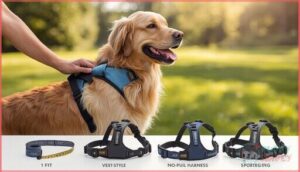
Once you’ve decided to make the switch, finding the right vest comes down to three simple things: getting the fit right, choosing a style that matches your dog’s needs, and making sure you’re using it correctly.
Measure carefully, because a vest that’s too loose won’t keep your dog safe, and one that’s too tight can rub and cause irritation. Let’s walk through exactly how to get this right.
Measuring for Proper Fit
Accurate body measurements are your roadmap to safe vest sizing. Use a flexible measuring tape to record the chest girth at the widest part behind the front legs, then measure from neck base to shoulder blade.
Allow one finger’s width of space between tape and skin—this wiggle room prevents breathing restriction and gives you room for fit adjustments later.
Selecting The Right Harness Type
Once you’ve nailed down measurements, you’ll find a world of vest options designed for different walking styles and behavior patterns. Back-clip vests attach at the shoulder blades, offering straightforward control for dogs that already walk calmly. Front-clip designs redirect pulling by steering your dog’s chest, making them effective no-pull vest choices for strong pullers.
Consider these factors when browsing vest materials and breed considerations:
- Sizing charts vary by manufacturer—cross-check your measurements against each brand’s specific dimensions rather than assuming medium always means the same thing
- Weather resistance matters for outdoor enthusiasts—look for UV-treated nylon or polyester webbing that won’t degrade during summer hikes or rainy walks
- Adjustment options expand longevity—multiple buckle points let you fine-tune fit as your dog grows or loses weight, protecting your investment
Smaller breeds and flat-faced dogs benefit from padded chest panels that cushion delicate airways, while active dogs need reinforced stitching at stress points where leash tension concentrates during play.
Tips for Safe and Comfortable Use
A perfect collar won’t help your dog if you’re not using it correctly. Check all buckles before every walk—loosened straps slip during pulling, while overtightened ones restrict breathing and cause chafing.
Attach your leash to the designated clip point, whether front or back, and inspect stitching monthly for fraying. Pair breathable materials with proper walking techniques to enhance dog comfort and safety.
Frequently Asked Questions (FAQs)
Can dogs wear harnesses all day long?
While many dogs tolerate daily vest wear, it’s not ideal for most.
Lightweight, breathable vest materials work best if your dog must stay geared up, but remove it during rest to protect skin health and dog comfort.
How do I transition my dog from collar to harness?
Start indoors with short vest sessions, rewarding calm behavior.
Practice loose leash training using a front-clip option, gradually increasing walk duration. Most dogs adapt within one to three weeks of consistent, gentle introduction.
Are harnesses safe for puppies and senior dogs?
Yes, vests are safe for both age groups when properly fitted.
Adjustable straps accommodate puppy growth and senior body changes, while quality vest material and padding protect sensitive skin throughout your dog’s life.
Do harnesses work for aggressive or reactive dogs?
A reactive dog is like a spring wound too tight—harnesses with front-clip designs let you redirect that explosive energy toward you instead of toward the trigger, protecting their throat while maintaining your control.
How often should I replace my dogs harness?
You should replace your dog’s vest every 6 to 12 months with daily use, inspecting for frayed straps, cracked buckles, or stretched D-rings that compromise pet safety during dog walking.
Conclusion
Think of your dog’s neck as you’d your own—vulnerable, precious, and deserving of protection. The evidence is clear: why vests are better than collars comes down to basic anatomy and physics.
Every walk should strengthen your bond, not risk your dog’s health. Choose the vest that fits your dog’s body and behavior, adjust it properly, and you’ve just transformed something as simple as a leash into a tool that protects the companion you love.