
This site is supported by our readers. We may earn a commission, at no cost to you, if you purchase through links.

Your dog just demolished another pair of shoes, and you’re left wondering what drives this relentless need to gnaw on everything in sight. The answer lies deep in canine biology—chewing isn’t bad behavior, it’s a hardwired survival instinct. Wild canids have always used their jaws to process food, strengthen muscles, and even self-soothe during stressful moments.
Without proper outlets for this natural urge, your dog’s teeth will find less appropriate targets like furniture legs and baseboards. Chew toys serve as more than simple distractions—they’re essential tools that support dental health, provide mental stimulation, and prevent anxiety-driven destruction.
Understanding why dogs need chew toys helps you channel their instincts productively while keeping both your belongings and your dog’s well-being intact.
Table Of Contents
Key Takeaways
- Chewing is a hardwired survival instinct in dogs that serves multiple purposes, including dental health, mental stimulation, stress relief, and anxiety management through natural self-soothing mechanisms.
- Proper chew toys can reduce plaque by 15-19% and tartar by up to 78% through mechanical scraping action, while also lowering stress hormones and preventing destructive behaviors targeting household items.
- Safe chew toy selection requires matching material firmness to your dog’s age and bite strength—puppies need soft textures (Shore A 20-40), average chewers need medium firmness (Shore A 50-60), and power chewers need very firm options (Shore A 60-80).
- Rotating toys every 7-10 days maintains novelty and engagement, but consistent supervision during the first 15 minutes and immediate replacement of damaged toys are essential to prevent choking hazards that cause roughly 200,000 annual veterinary incidents.
Why Do Dogs Need Chew Toys?
Dogs don’t just love chewing—they need it. This natural behavior fulfills several important purposes that directly affect your dog’s physical health, mental well-being, and behavior at home.
Let’s look at the key reasons why chew toys are essential for your dog’s overall quality of life.
Natural Chewing Instincts in Dogs
Chewing is hardwired into your dog’s DNA. Over thousands of years of canine evolution, dogs have developed natural instincts that make chewing essential to their daily routine. This species-typical behavior isn’t a bad habit—it’s how dogs explore their world, care for themselves, and interact with their environment.
Why your dog’s chewing mechanism matters:
- Puppies use oral exploration from the moment they can move around
- Young dogs chew more intensely during teething phases (3-6 months)
- Adult dogs continue natural chewing habits throughout their lives
- Free-ranging dogs spend significant time chewing various materials
- The importance of chewing for dogs goes beyond just entertainment
Dog chewing habits serve multiple purposes in their natural behavior patterns. Whether your pup is gnawing on chew toys or investigating new objects, this oral activity reflects millions of years of adaptation. Understanding this species typology helps you see that chewing isn’t something to eliminate—it’s a behavior you’ll want to redirect appropriately. Providing dogs with proper dental health tools can help support their overall well-being.
Mental Stimulation and Enrichment
Your dog’s brain needs a workout just as much as their body does. Problem-solving activities through puzzle toys engage working memory and create mental fatigue similar to a long walk. These brain games offer cognitive challenges that reduce boredom and foster emotional wellness.
When your pup manipulates a treat-dispensing toy, they’re practicing mental enrichment that keeps canine behavior healthy and minds sharp throughout their lives. Engaging in interactive dog toys can have a significant impact on their mental stimulation and overall well-being.
Stress Relief and Calming Effects
Beyond keeping your pup’s mind sharp, chewing acts as one of the most effective calming techniques for anxious dogs. Research shows that long-lasting chews markedly lower arousal during separation anxiety, promoting relaxation methods through parasympathetic activation.
This natural stress reduction bolsters emotional wellbeing by decreasing cortisol and fostering calm states. When your dog chews, they’re self-soothing—channeling nervous energy into anxiety relief that benefits both mind and body.
Providing durable chew toys designed for aggressive chewers gives your dog a safe outlet for this natural stress-relieving behavior.
Chewing naturally lowers stress hormones and helps dogs self-soothe through anxiety by channeling nervous energy into calming relief
Preventing Destructive Behaviors
That calming effect does more than soothe—it redirects energy away from your furniture. Surveys show dogs without chew toys target household items like shoes and remotes, especially during teething phases.
Providing chewing alternatives creates stress management pathways that curb anxiety and prevent destructive chewing. When boredom or stress strikes, appropriate chew toys become your first line of defense against unwanted dog behavior.
Rotating between durable toys and interactive puzzles keeps your dog engaged while addressing common wood-chewing triggers like teething discomfort or separation anxiety.
How Chew Toys Support Dental Health

You probably already know that brushing your dog’s teeth is important, but let’s be honest—most dogs don’t exactly line up for a toothbrush.
If you’ve got a small breed, check out this guide on dog grooming for small breeds for tips that make dental care way easier.
That’s where chew toys come in as a practical alternative. They work behind the scenes to keep your dog’s mouth healthier, and here’s how they do it.
Reducing Plaque and Tartar Buildup
Think of plaque as a sticky film that clings to your dog’s teeth after every meal. When it hardens into tartar, only professional cleaning can remove it. Daily chewing disrupts this cycle through mechanical scraping action.
Choosing the right chew toys for bored dogs ensures they’re safe, effective, and durable enough to keep plaque at bay.
Clinical trials show that dental chews recognized by the Veterinary Oral Health Council can reduce:
- Plaque accumulation by 15–19 percent
- Tartar buildup by up to 78 percent
- Calculus deposits by 26–28 percent
Consistent use keeps those teeth cleaner longer.
Promoting Healthy Gums and Fresh Breath
Healthy gums matter just as much as clean teeth. When plaque triggers inflammation, your dog’s gums swell and bleed—early signs of gum disease that threaten canine oral health.
Dental chews cut gingivitis by roughly 20 percent and lower the volatile sulfur compounds behind bad breath by up to 75 percent. Regular chewing keeps breath fresh, aids plaque control, and protects against serious dental issues down the road.
Mechanical Cleaning Action of Chew Toys
Ridges and textured surfaces create dental abrasion as your dog gnaws, scraping away plaque before it hardens into tartar. This mechanical stimulation massages gums and boosts saliva flow, washing away bacteria that fuel dental issues.
Chew toy texture matters—firm rubber and nylon offer the oral hygiene your dog needs, turning playtime into a natural plaque removal session that protects canine oral health.
Veterinary Recommendations for Dental Chews
Your vet can steer you toward dental chews that actually work—look for the VOHC Approval seal, which guarantees at least 15 percent plaque reduction in clinical trials.
Veterinary guidance emphasizes five essentials:
- Chew hardness—avoid bone-hard items that crack teeth
- Caloric intake—count treats as 10 percent of daily calories
- Daily use—once-a-day consistency matters most
- Size matching—choose chews labeled for your dog’s weight
- Regular dental exams—chews support but don’t replace veterinary care
Choosing Safe and Effective Chew Toys
Not all chew toys are created equal, and the wrong choice can lead to broken teeth, choking hazards, or worse. You’ll want to keep in mind a few key factors to find toys that keep your dog safe while satisfying their natural urge to chew.
Here’s what to look for when shopping for your pup.
Material Safety and Non-Toxic Options

When you’re picking out a chew toy, the material matters just as much as the design—your dog’s safety depends on what goes into their mouth. Always choose non-toxic materials like BPA-free plastics or safe rubber to avoid toxic material risks.
Pet-safe, eco-friendly options give you peace of mind, knowing your dog won’t ingest harmful chemicals during play.
Size and Durability Considerations

A toy that’s too small can slip down your dog’s throat in seconds, creating a dangerous choking hazard. Size guidelines from veterinary hospitals recommend choosing chew toys considerably larger than your dog’s mouth opening—think diameter, not just length.
For durability, look for material strength in rubber or reinforced nylon that resists fragmentation risks. Tough chewer dog toys should pass basic durability tests: firm pressure without breaking apart.
Appropriate Textures for Different Dogs

Your dog’s chewing strength determines which chew toy texture is right. Soft textures like silicone at Shore A 20–30 protect puppies’ developing teeth, while medium firmness (Shore A 50–60) satisfies average adult chewers without rapid shredding. Power chewers need firm surfaces in the 60–80 range for chew durability. Avoid overly rigid materials—they won’t yield under bite force and can fracture teeth. Texture variety with ridges improves dental health by scraping plaque during use.
Match texture to your dog’s bite:
- Gentle chewers and puppies – Ultra soft silicone (Shore A 20–40) compresses easily and won’t damage emerging teeth.
- Average adult dogs – Medium firmness rubber (Shore A 50–60) balances toughness with flexibility for daily chewing.
- Power chewers – Very firm textures (Shore A 60–80) resist tearing from strong jaws without excessive rigidity.
- All chewing styles – Textured surfaces with ridges or nubs mechanically remove plaque and extend engagement time.
- Safety threshold – Skip “indestructible” toys that don’t bend—they concentrate force on enamel and raise fracture risk.
Age-Appropriate Toys for Puppies and Adults
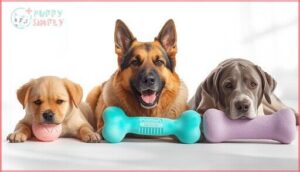
As your puppy grows, so do chewing needs. Soft rubber designed for puppy teething (12–24 weeks) cushions sore gums without fracturing emerging permanent teeth.
Once adult chewers reach about 24 weeks, you can graduate to standard durability toys matched to bite strength.
Senior dental health often demands softer options again—worn enamel can’t handle what younger jaws could.
Safety Tips for Chew Toy Use

Chew toys offer great benefits, but they aren’t risk-free without the right precautions. Even the best toy can become a hazard if it’s not used properly or monitored closely.
Here are four essential safety tips to help you protect your dog while they chew.
Supervision and Monitoring During Play
Closely watching your dog during chew sessions isn’t just helpful—it’s essential for pet safety. You’ll catch problems early, like aggressive tearing or gulping, which helps with choking prevention and toy inspection.
- Stay in the same room for at least the first 10–15 minutes with new toys
- Remove chew toys once they’re small enough to fit entirely in your dog’s mouth
- Watch for pawing at the mouth, gagging, or drooling as warning signs
- Separate dogs during chew sessions to prevent resource guarding and rapid gulping
Recognizing and Preventing Choking Hazards
Even with careful supervision, knowing what to watch for can save your dog’s life. Around 200,000 choking incidents reach veterinarians yearly, with balls and chew toys among the top culprits.
Look for dyspnea—rapid, shallow breathing or extended neck posture—and stridor, which sounds like loud, raspy breaths. Pale or bluish gums signal critical oxygen loss requiring immediate emergency response strategies.
Regular Toy Inspection and Replacement
Routine damage inspection tips keep your dog safe and your wallet happy. Weekly toy safety checks catch cracks, tears, and fraying before they become emergencies.
If you spot exposed stuffing, sharp edges, or missing pieces, toss it immediately—no toy is worth a vet visit.
Replacement schedules matter too: refresh high-use items monthly and sturdy chews every three to six months for ideal pet toy hygiene.
Consulting Your Veterinarian for Guidance
Before you hand over any new chew, veterinary advice can save you from costly mistakes. Your vet knows your dog’s dental history, chewing style, and health conditions that matter for chew safety.
Schedule a consultation to discuss:
- Safe materials and textures that won’t crack teeth or cause blockages
- Product recommendations bearing veterinary dental seals of approval
- Warning signs like choking, vomiting, or tooth pain that need immediate attention
- Customized dental guidance integrating chews into your dog’s overall pet wellness plan
Vet recommendations turn guesswork into smart canine behavior and training decisions.
Encouraging Healthy Chewing Habits

Building healthy chewing habits takes more than just tossing your dog a toy and hoping for the best. You need a clear plan that redirects unwanted behavior, keeps things interesting, and rewards your pup for making good choices.
Here’s how to set your dog up for success and avoid the mistakes that many owners make along the way.
Redirecting Inappropriate Chewing
When your dog targets shoes or furniture, interrupt calmly with “uh-oh” and immediately offer a durable toy instead. This redirecting technique stops destructive behavior without scolding.
Praise them when they accept the appropriate chew—positive reinforcement works wonders. Keep plenty of safe options nearby so supervised play becomes your go-to tool for managing dog behavior, building better habits one redirect at a time.
Rotating Toys to Maintain Interest
Dogs lose interest fast when the same toys sit out every day—it’s called habituation, and it drains mental stimulation. Toy rotation benefits keep chewing exciting through novelty stimulation and engagement strategies.
Try these rotation schedules for pet enrichment:
- Swap toys every 7 to 10 days to prevent boredom
- Store extras out of sight to maintain surprise
- Inspect during each rotation for damage
- Mix textures and shapes in your dog toy selection
This simple habit supercharges chew toys while supporting healthy dog training and behavior.
Positive Reinforcement and Training
Clicker training and other reward systems work because they mark the exact moment your dog chooses the right toy—that’s behavior modification in action. Training protocols using positive reinforcement techniques strengthen canine behavior patterns, making voluntary chewing more likely.
You’re teaching dog behavior through reinforcement techniques, not punishment, which builds trust while managing dog behavior effectively. Reward calm chewing, and you’ll see lasting results.
Avoiding Common Owner Mistakes
Even careful dog owners slip into habits that undermine chew toy safety. Avoiding these pitfalls protects your pup and saves emergency vet visits.
Here are the most critical supervision tips and safety guidance to follow:
- Never leave dogs unsupervised with new toys—choking prevention starts with watching the first 15 minutes closely
- Inspect daily for damage—cracks or missing chunks turn safe chew toys into hazards
- Match toy selection to your dog’s size and chewing style—power chewers need tougher materials than gentle nibblers
Frequently Asked Questions (FAQs)
Can chew toys help with separation anxiety?
Picture your pup pacing by the door, tail low. Chew toys can provide anxiety relief and emotional support during separation stress, offering mental stimulation and calming aids through olfactory comfort—but they’re not a cure-all.
How often should I replace my dogs chew toys?
Replacement frequency depends on chew intensity and toy inspection. Heavy chewers need new toys every 1-2 months, while light chewers can use toys longer. Replace immediately when you spot cracks, tears, or sharp edges.
Are edible chew toys better than rubber ones?
Neither chew toy type is universally better. Rubber toys offer durability and zero-calorie enrichment, while edible options provide dental benefits but carry obstruction and caloric risks.
Choose based on your dog’s health needs.
What if my dog refuses to chew toys?
Your dog’s toy refusal isn’t stubbornness—it’s a signal. Medical causes, stress factors, or plain boredom might be at play.
Try enrichment alternatives, behavioral solutions, and smarter chew toy selection and safety practices with pet parenting tips.
Do different breeds have different chewing needs?
Yes—breed size matters, chewing intensity varies widely, and skull shape affects jaw strength. Large dogs and brachycephalic breeds usually need tougher toys, while energy levels and individual personality also influence your dog’s chewing demands.
Conclusion
Think of chew toys as your dog’s personal stress ball—a simple tool that keeps their mind sharp, their teeth clean, and your furniture safe.
Now that you understand why dogs need chew toys, you can make informed choices that support their natural instincts while protecting your home. Choose wisely, supervise regularly, and watch destructive habits transform into healthy ones. Your dog’s well-being depends on it, and so does your sanity.
- https://www.petmd.com/dog/care/get-right-puppy-teething-toys-each-puppy-stage
- https://www.hillcrestpethospital.com/services/dogs/blog/what-veterinarians-want-you-look-chew-toy
- https://bayshore-vet.com/blog/teething-puppy-toys/
- https://www.expressvetscumming.com/blog/behavior-how-to-stop-dogs-from-destructive-chewing
- https://www.tribecavets.com/blog/destructive-chewing-by-dogs-and-puppies