This site is supported by our readers. We may earn a commission, at no cost to you, if you purchase through links.
Your dog’s skin is thinner than yours, about three to five cell layers compared to your ten to fifteen, which means what works perfectly well on you can wreak havoc on their delicate barrier. Human shampoo, formulated for our more acidic skin pH of around 5.5, clashes with your dog’s naturally alkaline surface, which hovers between 6.0 and 7.5.
This pH mismatch strips away the protective oils your dog’s skin desperately needs, opening the door to dryness, itching, and even infection. Understanding why special shampoo isn’t just about avoiding discomfort—it’s about preserving the complex balance that keeps their skin healthy and their coat vibrant.
Table Of Contents
- Key Takeaways
- Why Does My Dog Need Special Shampoo?
- How Dog Shampoos Protect Skin and Coat Health
- What Types of Dog Shampoos Are Available?
- Does My Dog’s Breed Affect Shampoo Choice?
- Can Special Shampoo Help With Allergies and Skin Issues?
- How Often Should I Bathe My Dog With Special Shampoo?
- Are There Shampoos for Puppies or Senior Dogs?
- What Safety Tips Should I Follow When Bathing My Dog?
- Frequently Asked Questions (FAQs)
- Conclusion
Key Takeaways
- Dogs have thinner skin (3-5 cell layers versus humans’ 10-15) and a more alkaline pH (6.0-7.5 compared to humans’ 5.5), making human shampoo strip protective oils and disrupt their natural barrier.
- Special dog shampoos preserve the essential oils and pH balance your dog needs to prevent dryness, itching, infections, and chronic skin irritation.
- Different formulas address specific needs—medicated shampoos treat infections and dermatitis, hypoallergenic options soothe sensitive skin, and breed-specific products match unique coat types and grooming requirements.
- Bathing frequency depends on your dog’s age, coat type, and lifestyle (typically every 4-6 weeks), but over-bathing weakens the skin barrier and strips away the protective microbiome that fights off bacteria and allergens.
Why Does My Dog Need Special Shampoo?
Your dog’s skin isn’t just different from yours—it’s built on an entirely different blueprint, and that matters more than most people realize. Using the wrong shampoo can strip away the protective barriers that keep your dog comfortable and healthy, turning bath time into a source of irritation rather than relief.
Understanding the differences between puppy and adult dog shampoo helps you choose formulas that work with your dog’s skin chemistry instead of against it.
Your dog’s skin is fundamentally different from yours, and using the wrong shampoo can strip away the protective barriers that keep them comfortable and healthy
Let’s look at why your dog’s skin needs its own specially designed care, starting with the fundamental differences between canine and human skin.
Differences Between Dog and Human Skin
Your dog’s skin is fundamentally different from yours. The canine epidermis is only 3 to 5 cells thick, compared to your 10 to 15 layers, making it more vulnerable to irritation.
Dogs also have fewer sweat glands, relying on hair follicle structure and lipid layers for protection. These differences in microbiome balance and skin conditions mean human products can disrupt your dog’s delicate skin health.
As a result, understanding the canine vs human skin structure is essential for proper pet care.
Importance of PH Balance for Dogs
Maintaining proper pH levels is the cornerstone of skin health in dogs. A pH range between 6.0 and 7.5 fosters Natural Oil Preservation and Skin Barrier Function, keeping moisture in while blocking bacteria and fungi.
pH balanced shampoos reinforce this protective shield, preventing Acidic Damage Prevention and reducing itchiness. When you use formulas designed for Canine Dermatology, you’re safeguarding coat condition and promoting long-term comfort.
For more information on the importance of dog skin pH balance, consult reputable canine health resources.
Risks of Using Human Shampoo
You might wonder what happens when you reach for your own bottle instead. Human shampoo contains harsh detergents that cause pH disruption on dog skin, stripping protective oils and triggering chronic dryness or itchiness.
Fragrances and preservatives act as allergen triggers, worsening skin conditions in sensitive pups. That’s why veterinary advice consistently warns against it—your dog’s pH balance deserves protection, not irritation.
How Dog Shampoos Protect Skin and Coat Health
Your dog’s skin works hard to stay healthy skin, but it needs the right support to do its job well.
Special dog shampoos are designed to protect the delicate balance that keeps your pup’s coat soft and their skin free from irritation.
Let’s look at three key ways these formulas make a difference.
Preserving Natural Oils
Your dog’s skin produces protective oils that act like a shield against irritation and dryness. Quality dog shampoos with natural ingredients and hypoallergenic formulas protect this barrier by using gentle cleansers instead of harsh detergents.
Pairing the right shampoo with proper grooming tools like combs suited to your dog’s coat type helps maintain healthy skin and fur between baths.
Natural antioxidants like vitamin E prevent rancidity and extend shelf life, while careful aroma preservation keeps these natural shampoos effective for treating skin conditions without stripping away those essential oils.
Preventing Skin Irritation and Dryness
Irritation develops when skin pH balance is disrupted, which sits between 6.2 and 7.4. That’s why hypoallergenic and natural shampoos use gentle cleansing agents that won’t trigger allergies or worsen skin conditions.
For dryness prevention, look for formulas with oatmeal or aloe, and consider medicated shampoos if redness or flaking appears within 48 hours after bathing.
Supporting a Healthy, Shiny Coat
A glossy coat reflects what’s happening beneath the surface—proper skin hydration, balanced nutrition, and gentle canine grooming all play a role. Natural shampoos and hypoallergenic formulas preserve the oils that give fur texture its best appearance, while ingredients like vitamin E and omega-3s work from the inside out.
Consider these shine enhancement strategies:
- Match shampoo to your dog’s coat type
- Support coat nutrition with quality protein
- Maintain consistent skin care routines
What Types of Dog Shampoos Are Available?
Dog shampoos aren’t one-size-fits-all, and choosing the right formula can make a real difference in your pet’s comfort and skin health.
Whether your dog experiences persistent itching, has extra-sensitive skin, or you simply prefer gentler ingredients, there’s a shampoo designed for that specific need. Let’s look at three common categories that address different situations you might encounter.
Medicated Shampoos for Skin Conditions
When your dog struggles with skin conditions like fungal infections, bacterial dermatitis, or skin allergies, medicated shampoos deliver targeted relief.
These veterinary dermatology formulas contain medicated ingredients such as ketoconazole, chlorhexidine, or antiparasitic treatments to address specific issues. You’ll usually apply them two to three times weekly during flare-ups, allowing the active ingredients to work for three to five minutes before rinsing thoroughly.
Hypoallergenic and Sensitive Formulas
If your dog shows signs of allergies or sensitivities, hypoallergenic shampoo offers a safer path forward. These gentle ingredients work without harsh preservatives or synthetic fragrances, providing allergy relief while protecting sensitive skin.
Look for fragrance free formulas with plant-based cleansers like oat extract or aloe vera, which calm irritation without triggering flare-ups that medicated shampoos target for more severe skin conditions.
Natural and Organic Options

You’ll find natural options that swap synthetic additives for plant-based surfactants and essential oils, creating biodegradable formulas that clean canine skin without harsh chemicals. These eco-friendly products often carry organic certifications, confirming ingredients come from farms avoiding synthetic pesticides.
When selecting natural ingredients, check for cruelty-free labels that align with your environmental values while protecting your dog’s coat.
Does My Dog’s Breed Affect Shampoo Choice?
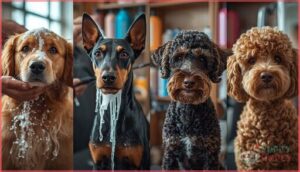
Your dog’s breed plays a significant role in choosing the right shampoo, since coat types vary widely from silky and straight to wiry and curly.
Different breeds have unique grooming requirements based on their fur texture, skin sensitivity, and natural oil production. Understanding these factors helps you select a formula that keeps your dog’s coat healthy and manageable.
Coat Type Considerations
Your dog’s coat type plays a bigger role in shampoo selection than you might expect. Different textures and lengths demand customized canine coat care to prevent skin problems and maintain shine.
Here’s how coat type influences grooming for different coat types:
- Short coats shed minimally but show oil buildup faster, requiring lighter pH-balanced formulas for effective coat maintenance.
- Curly or thick coats trap moisture and debris, benefiting from detangling shampoos that prevent matting while supporting shedding control.
- Wiry or silky textures need specialized breed-specific grooming products—conditioners for silky dog coat types, gentle cleansers for wire-haired breeds.
Breed-Specific Grooming Needs
Beyond coat texture, certain breeds have unique challenges that call for specific grooming practices. Bulldogs and wrinkly breeds need skin folding care with gentle, breed-specific shampoos to prevent moisture buildup. Floppy-eared dogs benefit from ear cleaning routines after baths, while heavy shedders require formulas supporting shedding control.
Dog grooming tips should match your breed’s structural needs—consult grooming tools designed for coat length and texture.
| Breed Feature | Grooming Challenge | Shampoo Recommendation |
|---|---|---|
| Facial folds | Moisture, infection risk | Gentle, hypoallergenic formulas |
| Long, floppy ears | Wax buildup, ear infections | pH-balanced, residue-free options |
| Double coat | Seasonal heavy shedding | De-shedding, moisturizing shampoos |
| Short, oily coat | Rapid oil accumulation | Lightweight, balancing cleansers |
| Curly, dense fur | Matting, debris trapping | Detangling, conditioning formulas |
Can Special Shampoo Help With Allergies and Skin Issues?
If your dog constantly scratches, licks their paws, or develops red patches, allergies or skin sensitivities might be the culprit.
The right shampoo can actually make a real difference in managing these issues, though it’s not always a cure-all. Let’s look at how to spot the problem and which ingredients genuinely help soothe irritated skin.
Identifying Allergies and Sensitivities
When should you suspect your dog has allergies or sensitivities? Watch for itchy skin, facial scratching, hives on paws or belly, sneezing, or digestive upset—these allergy symptoms can appear within minutes of exposure.
Common triggers include environmental allergens, food additives, and harsh shampoo ingredients. If reactions persist, consult your vet for diagnosis, possibly including a patch test to identify specific sensitivities.
Ingredients That Soothe Itchy Skin
Once you’ve identified allergies or sensitivities, look for shampoos with soothing ingredients. Colloidal oatmeal relief and aloe vera benefits calm irritated skin on contact, while chamomile effects reduce redness without heavy fragrance.
Niacinamide uses include strengthening your dog’s moisture barrier, and calendula extracts support healing. Choose hypoallergenic shampoo or medicated shampoo formulas with these ingredients to address specific skin conditions and allergies effectively.
How Often Should I Bathe My Dog With Special Shampoo?
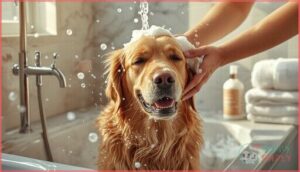
There’s no one-size-fits-all answer to how often your dog needs a bath, since the right schedule depends on several individual factors.
While most dogs do well with a bath every four to six weeks, your dog’s specific needs might be quite different.
Let’s look at what influences bathing frequency and why too many baths can actually backfire.
Factors Influencing Bath Frequency
Your dog’s unique needs determine how often you should reach for that bottle of dog shampoo. Age factors play a role—puppies and senior dogs often need gentler, less frequent baths.
Coat texture matters too, since oily or curly coats may require more attention than short hair. Environmental impact, like swimming or rolling in mud, and underlying health conditions also shape proper bath schedules for ideal canine hygiene.
Risks of Over-Bathing
Unfortunately, bathing too often weakens your dog’s skin barrier, stripping protective oils that defend against allergens and bacteria. Over-washing disrupts the skin’s microbiome, reducing beneficial microbes that ward off infections and inflammation.
Hot water and irritation factors like harsh dog shampoo exacerbate dryness, redness, and itching. Humidity risks after frequent baths can trap moisture in skin folds, promoting bacterial growth that undermines canine hygiene and overall dog health.
Are There Shampoos for Puppies or Senior Dogs?
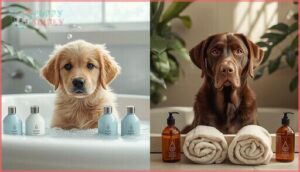
Your dog’s age matters when choosing the right shampoo, since puppies and senior dogs have different skin needs than adult dogs.
Puppies need extra-gentle formulas that won’t irritate their developing skin or sensitive eyes, while older dogs often benefit from moisturizing ingredients that address age-related dryness. Here’s what to look for at each life stage.
Gentle Formulas for Puppies
Your puppy’s delicate skin needs a gentler touch than adult dogs, with tear-free formulas designed to protect those curious eyes during bath time. Look for gentle cleansers that support puppy skin care without stripping natural oils or causing irritation.
Here’s what makes sensitive formulas essential:
- pH-balanced tearless shampoos prevent stinging while maintaining skin barrier health
- Natural ingredients like oatmeal and aloe soothe dry, itchy patches without harsh chemicals
- Hypoallergenic options minimize reactions in ultra-sensitive young pups
Special Care for Older Dogs
As your dog ages, thinner skin makes gentle grooming for different coat types essential for elderly dog grooming and aging skin issues prevention. Choose moisturizing formulas with oatmeal or aloe to soothe dry patches while supporting canine health.
Combine regular pet skin care with senior dog nutrition rich in omega-3s for ideal canine joint health, and maintain warm, shallow baths to protect fragile geriatric pet care needs.
What Safety Tips Should I Follow When Bathing My Dog?
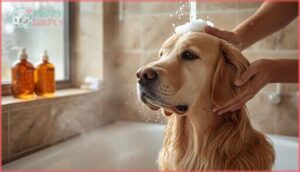
Bath time can go smoothly when you follow a few key safety practices that protect your dog’s skin and overall health.
Even the best shampoo won’t work properly if you’re not applying and rinsing it correctly, or if you ignore signs that something isn’t quite right. Let’s cover the essential techniques and when to reach out to your vet for guidance.
Proper Rinsing Techniques
After you’ve lathered your dog with the right shampoo, thorough rinsing becomes just as important as the wash itself.
Start with warm water between 90 and 110 degrees Fahrenheit to dissolve soap residue without irritating canine skin. Use a gentle spray technique to reach deeper fur layers, paying extra attention to sensitive area care around ears, eyes, and skin folds where leftover product can trigger itching or dryness.
Consulting Your Veterinarian
Even with the right shampoo, persistent itching or redness signals it’s time for veterinary advice. Your vet brings veterinary experience in pet health and wellness to uncover what’s happening beneath the surface.
- They’ll review your pet health history and may order diagnostic tests like skin scrapes or cultures
- Treatment plans can include veterinary dermatology-specific medicated shampoos you won’t find in stores
- Follow ups guarantee the approach works and adjust care as your dog’s skin responds
Frequently Asked Questions (FAQs)
Can dog shampoo help with excessive shedding?
Golden Retrievers often leave blankets of fur during seasonal changes.
While deshedding dog shampoo won’t stop shedding entirely, it can noticeably reduce loose hair by loosening undercoat during bathing and supporting overall coat health.
Do waterless shampoos work as well as regular ones?
Waterless options offer quick touch-ups for light dirt, but regular dog shampoo provides deeper cleansing by rinsing away oils and debris that dry shampoos can’t fully remove from your pet’s coat.
What ingredients should I avoid in dog shampoo?
Skip harsh chemicals like sulfates, parabens, and artificial fragrances that strip natural oils and disrupt pH balance.
Avoid toxic preservatives and petrochemical additives that irritate sensitive skin, especially when choosing medicated or moisturizing shampoo formulas.
Can I make homemade dog shampoo at home?
You can create DIY shampoo using castile soap, aloe vera, and natural oils, but avoid harsh ingredients like dish soap or tea tree oil.
Always patch test homemade solutions before full application.
How do I remove shampoo from my dogs ears?
Tilt your dog’s head slightly to one side and flush the ear cleaner with a veterinarian-approved cleaner, allowing the liquid to drain naturally while your dog shakes out loosened debris and residue.
Conclusion
Picture your dog’s skin as a living shield, one that thrives only when you respect its unique chemistry. Understanding why does my dog need special shampoo isn’t about indulging them—it’s about preventing the cascade of irritation, infection, and discomfort that follows when we treat their skin like our own.
Choose formulas that honor their pH, preserve their protective oils, and you’ll see the difference in every wag, every healthy shine.
- https://www.ncbi.nlm.nih.gov/pmc/articles/PMC7538790/
- https://www.avma.org/javma-news/2016-01-15/camphor-renewed-concern-toxicosis-pets
- https://www.sciencedirect.com/science/article/abs/pii/S0160412019338255
- https://www.thezebra.com/resources/research/pet-ownership-statistics/
- https://www.thewildest.com/dog-health/how-get-rid-fleas-dogs-naturally