This site is supported by our readers. We may earn a commission, at no cost to you, if you purchase through links.
Last week, a client rushed her golden retriever to my clinic after he developed severe gastrointestinal distress—the culprit turned out to be kibble stored in a garage bin where summer heat had turned the fats rancid.
Most dog owners don’t realize that improper storage doesn’t just affect palatability; it actively degrades nutrients and creates breeding grounds for mold, bacteria, and pantry pests that can make your pet seriously ill.
The location you choose matters just as much as the container you use, and both decisions hinge on understanding how temperature swings, humidity, and air exposure compromise your dog’s food long before any expiration date.
Getting storage right protects your investment in quality nutrition while safeguarding your dog’s health from preventable digestive issues and foodborne illness.
Table Of Contents
- Key Takeaways
- Best Places to Store Dog Food at Home
- Choosing The Right Dog Food Container
- Keeping Dog Food Fresh and Safe
- Organizing Dog Food Storage for Convenience
- Common Dog Food Storage Mistakes to Avoid
- Frequently Asked Questions (FAQs)
- Is it okay to store dry dog food in the garage?
- What is the 80/20 rule for dog food?
- Does dog food need to be in an airtight container?
- Where should I put my dog’s food?
- Can I freeze dry dog food long-term?
- How do I store homemade dog food?
- Should supplements be stored with dog food?
- Whats the shelf life of unopened dog food?
- How do I dispose of expired dog food?
- Conclusion
Key Takeaways
- Store dog food in cool, dry indoor spaces like pantries or kitchen cabinets between 50°F and 80°F, avoiding garages where temperature swings above 100°F cause fat oxidation, rancidity, and mold growth that can trigger serious digestive illness.
- Keep kibble in its original bag inside an airtight container with a silicone gasket seal to block oxygen and moisture—this dual-layer protection preserves nutrients and prevents pest infestations better than either method alone.
- Empty and wash storage bins with hot soapy water before refilling rather than topping off old food, since rancid oils coat fresh kibble and accelerate spoilage across the entire batch.
- Label containers with open dates and lot numbers for recall tracking, refrigerate wet food immediately at 40°F or below for 3-5 days maximum, and discard any food left at room temperature beyond 2 hours to prevent bacterial contamination.
Best Places to Store Dog Food at Home
The right storage spot for your dog’s food makes all the difference in keeping it fresh, safe, and nutrient-rich. You’ll want a cool, dry location that stays below 80 degrees Fahrenheit and keeps pests at bay.
Start by checking the nutritious ingredients in your dog’s food to understand which ones are most vulnerable to heat and humidity damage.
Let’s look at the best options in your home—and one place you should definitely avoid.
Before we dive into the safe spots, make sure you’ve reviewed the dog food brands to avoid so you know what to keep out of reach.
Pantry Storage Solutions
A walk-in pantry or tall cabinet gives you the perfect dog food storage spot because you can keep bags at waist height on a middle shelf, away from floor moisture and pests. Airtight containers or storage bins with the original bag inside protect kibble from pantry humidity.
A quality dog food storage container with a tight seal keeps nutrition locked in and makes scooping meals quick and mess-free.
Dedicate one corner for all pet food so you can rotate inventory and prevent overbuying. To further maintain food safety, be sure to follow proper storage and handling procedures to reduce the risk of spoilage and foodborne illness.
Kitchen Cabinets and Built-in Bins
If you’ve got spare base cabinets near your prep zone, a built-in bin with a pull-out drawer gives you quick access to dog food storage without sacrificing counter space. Custom cabinet designs can incorporate storage bins sized to hold a 30-pound bag—just slide the original packaging inside.
For kitchen layout planning that facilitates cabinet organization and storage accessibility, consider a roll-out unit next to your pantry for one convenient feeding station.
Laundry Room and Utility Areas
Laundry rooms and utility zones offer smart food storage solutions when cabinets or shelving options keep containers off the floor. Elevated shelving also keeps dog food storage separated from cleaning chemicals and reduces pest access.
Many utility layouts position pull-out cabinet storage near exterior doors, letting you scoop right after walks. These pet stations work well below 80 degrees and away from washers that raise humidity.
To see an example of how mudrooms balance clever storage and pet-friendly design, explore this detailed farmhouse guide.
Why Garages and Outdoor Spaces Are Not Ideal
While utility areas work well indoors, garages and outdoor spaces create serious food safety risks. Temperature extremes above 100 degrees speed fat oxidation and rancidity, while humidity issues from poor ventilation invite mold growth.
Spoiled food can trigger digestive issues similar to those caused by dairy intolerances, so always inspect stored kibble for unusual odors before feeding.
Pest infestation becomes likely through door gaps, and chemical contamination from stored fuels can permeate packaging.
Storage security also suffers when containers sit forgotten, making these spots poor pet food storage choices.
Choosing The Right Dog Food Container
The container you choose plays a surprisingly big role in how long your dog’s food stays fresh and nutrient-rich. You’ve got several options regarding materials and designs, each with its own perks and drawbacks.
Let’s break down what actually matters so you can pick the right setup for your home and your pup’s needs.
Airtight Vs. Non-Airtight Containers
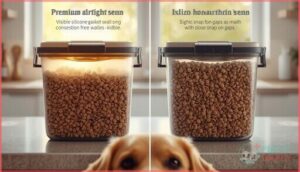
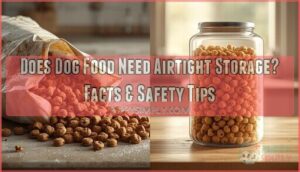
You’ll notice that airtight containers use gaskets—usually silicone—that press firmly against the rim to block airflow, while non-airtight bins simply snap or rest on top, leaving gaps.
This seal matters especially when storing ingredients for homemade Vizsla dog food, where freshness directly affects nutritional value and safety.
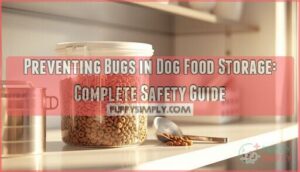
That seal quality makes all the difference for moisture control and freshness preservation. Airtight storage bins slow oxidation, keep pests like ants and moths away, and help your dog food stay crisp and flavorful longer than loose-lidded options.
Using The Original Packaging
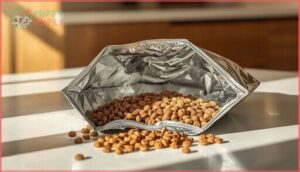
Your dog food’s original bag does more heavy lifting than you might think. Those multi-layer barriers protect against air, moisture, and light—all the troublemakers that spoil kibble and destroy vitamins.
Keeping food inside the bag before sliding it into your storage container adds a second shield for freshness preservation and helps you avoid cross-contamination from rancid oils that cling to bin walls.
Material Comparison: Plastic, Metal, Glass
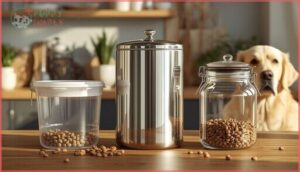
Each material brings strengths and compromises when selecting pet food storage containers. Plastic bins resist impact—they won’t shatter if dropped—but softer plastics absorb dog food oils and smells over time, even with regular washing.
Metal, especially stainless steel, wins durability tests and odor resistance while providing airtight seals that stay tight for years. Glass containers offer zero chemical concerns and spotless cleanup, yet they’re heavy and can break into sharp pieces if dropped.
For food storage safety and freshness, glass and metal generally outperform plastic on material safety and long‑term dog food storage tips, while plastic excels in weight handling and budget‑friendly convenience.
Size and Capacity Considerations
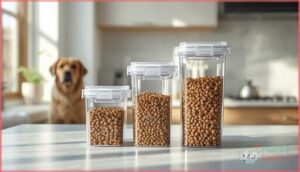
Picking the right bin capacity starts with your dog’s monthly food volume rather than shelf appeal. A 33-quart storage bin holds roughly 25 pounds of kibble, which suits medium-sized dogs eating around 2 cups daily.
Larger households with multiple pets often need 40 to 60-pound containers, but matching storage needs to pet consumption keeps food fresh and prevents stale crumbs hiding beneath new kibble.
Keeping Dog Food Fresh and Safe
You’ve picked the right container and found a good spot to store your dog’s food—now let’s talk about keeping it actually fresh and safe to eat. The conditions where you store that kibble matter just as much as the container itself, because heat, moisture, pests, and contamination can turn premium food into a health risk fast.
Here’s what you need to know to protect your investment and your dog’s health.
Temperature and Humidity Guidelines
Think of your dog food storage spot like a wine cellar—temperature and humidity matter more than you might expect. Ideal temperature for dog food storage hovers between 50°F and 80°F, with proper storage keeping fats from going rancid and vitamins intact.
For freshness preservation and storage stability, you’ll want to focus on three climate management essentials:
- Keep humidity low to prevent mold growth and moisture absorption
- Avoid heat sources like ovens, radiators, or sunny windowsills
- Use a simple thermometer to monitor your storage area year-round
High heat accelerates nutrient breakdown, while excess moisture invites spoilage—neither helps food safety tips become reality. Climate-controlled indoor spaces like pantries consistently outperform garages that swing from freezing to sweltering.
Preventing Pest and Insect Infestations
Ants, moths, and rodents can smell kibble through surprisingly small gaps, so proper storage and pest control methods matter as much as the bin itself. Choose pest-resistant containers with locking lids, store food on shelves instead of directly on floors, and check regularly for infestation signs like droppings or webbing.
Wiping spills immediately and using storage sanitation routines—cleaning bins before refilling—keeps insect repellents from becoming necessary and protects pet food safety long-term.
Limiting Air and Moisture Exposure
Oxygen and moisture are the twin enemies of dog food freshness preservation, so air-tight containers with gasketed lids become your best defense in food storage. Opening your bin only when necessary and closing it immediately cuts down on humidity management challenges, while keeping the original bag inside adds a second barrier for oxygen reduction.
You’ll notice kibble stays crunchier and smells fresher when moisture control is tight.
Avoiding Cross-Contamination
Clean handling starts the moment you touch that bag. Wash your hands for at least 20 seconds after scooping, and use a dedicated scoop instead of your dog’s bowl to keep germs from spreading.
Store kibble away from raw meat, unwashed produce, and human snacks to prevent cross contamination, and wipe down counters near the feeding zone so pet food particles don’t migrate into your cooking space.
Organizing Dog Food Storage for Convenience
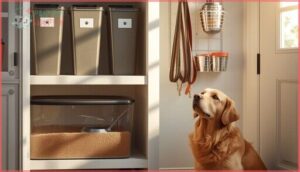
Smart storage isn’t just about keeping food fresh—it’s about making your daily routine easier. When you organize dog food thoughtfully, you’ll spend less time hunting for supplies and more time with your pup.
Let’s look at four practical strategies that’ll simplify feeding time and keep your space tidy.
Labeling and Date Tracking
A simple label can save your dog from stale kibble and help you catch recalls fast. Good labeling and date coding keep your pet food storage system running smoothly and safely.
- Write the open date directly on each bag or container so you’ll know when dry food hits that six-week mark and when refrigerated wet food needs tossing after five to seven days.
- Tape the original label with lot identification and expiration tracking details onto your storage bin to keep recall information and best-by dates right at your fingertips.
- Mark each container with your dog’s name and food type to prevent mix-ups if you’re managing multiple pets with different diets or allergies.
- Use waterproof markers or labels that won’t rub off during everyday handling, and practice food rotation by placing older bags in front for a simple first-in, first-out system.
Pre-Portioning Meals
Once you’ve labeled your containers and tracked those dates, meal planning gets even easier when you portion out servings ahead of time. Pre-portioning meals improves portion control and aids feeding schedules, because you measure exactly what your dog needs based on weight and activity.
Storing these pre-measured portions in small airtight containers under 80°F protects nutrient preservation and food safety while making proper food handling straightforward for everyone in your household.
Maintaining Cleanliness and Odor Control
Regular sanitation practices keep your dog food storage area fresh and pest-free. Wash containers with hot, soapy water every time you refill them to remove oily residue that turns rancid.
Wipe down shelves weekly and sweep up spilled kibble immediately, because hidden crumbs attract insects and create lingering odors.
Proper food handling and consistent cleaning schedules protect freshness preservation while maintaining storage hygiene.
Integrating Storage Into Kitchen Design
Modern kitchen design makes feeding stations and pet zones part of your overall layout so you don’t sacrifice counter space or create clutter.
Base cabinet pull-outs, toe-kick recesses, and dedicated pantry sections keep your storage bin hidden yet accessible near the feeding area.
Position dog food storage away from ovens and dishwashers to prevent heat buildup, and use waterproof mats under bowls to protect floors from spills.
Common Dog Food Storage Mistakes to Avoid

Even well-meaning dog owners can accidentally compromise their pet’s food quality through simple storage oversights. These common mistakes can lead to spoiled kibble, nutrient loss, or even health risks for your dog. Let’s walk through the pitfalls you’ll want to avoid to keep your pup’s meals safe and nutritious.
Storing Food Directly on The Floor
Placing dog food bags straight on the floor might feel like no big deal, but it’s actually one of the quickest ways to invite trouble into your dog’s diet. Floor Storage Risks include Moisture Damage from condensation seeping through concrete, Pest Infestation when rodents find an easy target, and Temperature Fluctuations that degrade nutrients faster than you’d expect.
Here’s what happens when Pet Food Storage sits at ground level:
- Floor Contamination from cleaning chemicals, mop water, or tracked-in dirt transfers directly to bags and scoops
- Humidity wicks upward through flooring, especially in basements, breaking down fats and shortening shelf life
- Curious dogs can chew into low bags and gorge themselves, risking bloat or digestive upset
- Rodents travel along walls where floor-level Dog Food becomes an irresistible buffet they’ll gnaw right through
Elevating your Dog Food Storage—even just six inches on a shelf or platform—creates a protective barrier that keeps kibble dry, pest-free, and safer for your pup.
Leaving Bags or Cans Unsealed
Leaving your dog’s food bag open is like rolling out the welcome mat for staleness, pests, and spoilage. Oxidation effects kick in fast once air hits kibble fats, causing nutrient loss well before the printed date.
Leaving dog food bags unsealed invites rapid oxidation, nutrient loss, pests, and spoilage long before the expiration date
Moisture control disappears in humid rooms, inviting mold that produces harmful toxins. Pest attraction spikes as scent escapes unsealed bags, and proper food preservation demands tight sealing after every scoop to protect your pup’s health.
Regularly “Topping Off” Old Food
Pouring new kibble over old crumbs might seem efficient, but you’re spreading rancid fats and inviting mold growth that threatens your dog’s health. Food spoilage risks multiply when oxidized oils coat fresh pieces, accelerating nutrient loss across the entire batch.
Container cleaning between bags is your best defense—empty completely, wash with hot soapy water, dry thoroughly, then refill. Freshness maintenance demands this simple reset for proper food quality and safety.
Storing Wet Food Improperly
Wet food spoilage happens faster than most owners realize, turning a nutritious meal into a bacterial contamination risk within hours. Food safety risks skyrocket when you skip basic refrigeration rules or leave opened cans exposed.
- Refrigerate leftovers immediately at 40°F or below and use within 3 to 5 days
- Cover opened cans tightly to prevent cross contamination dangers and odor absorption
- Discard wet food left at room temperature beyond 2 hours
- Never reuse food that sat out overnight regardless of appearance
- Store wet dog food away from raw meats in your fridge
Proper storage protects food quality and safety while preventing upset stomachs.
Frequently Asked Questions (FAQs)
Is it okay to store dry dog food in the garage?
Your garage might seem handy, but temperature swings past 80°F break down kibble nutrients fast. Moisture damage, pest infestation, and food spoilage make garages risky for dog food storage—stick with indoor pet food storage instead.
What is the 80/20 rule for dog food?
The 80/20 rule for dog food usually means 80 percent complete, balanced food and 20 percent extras like treats or fresh additions. This approach keeps the treat allowance reasonable while maintaining nutrient balance and proper diet composition.
Does dog food need to be in an airtight container?
An airtight container isn’t strictly mandatory, but it dramatically extends freshness by blocking moisture and pests.
Keeping kibble sealed inside its original bag, then placing that bag into an airtight bin, offers ideal food preservation.
Where should I put my dog’s food?
Your dog’s food storage should prioritize cool, dry locations like pantries or kitchen cabinets. Keep containers off the floor, away from heat and humidity, ensuring pet food placement protects freshness and prevents pests from accessing feeding stations.
Can I freeze dry dog food long-term?
Yes, freeze drying preserves protein and fat for 12 to 24 months when stored properly in airtight containers. Rehydration methods require 5 to 15 minutes with warm water for best nutrient preservation.
How do I store homemade dog food?
Refrigerate preportioned homemade dog food meals at 34 to 40 degrees Fahrenheit for three to five days, or freeze them at zero degrees for two to three months to maintain freshness and nutrient retention.
Should supplements be stored with dog food?
Most pet owners don’t realize that nearly 40% of supplements lose potency when stored improperly.
Keep your dog’s supplements separate from food in a cool, dry spot—moisture and odors can compromise their effectiveness and shelf life.
Whats the shelf life of unopened dog food?
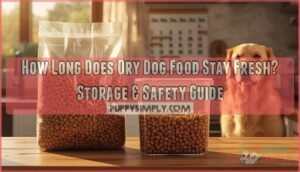
Unopened dry dog food usually stays fresh for 12 to 18 months in cool, dry conditions below 80°F, while canned varieties often last up to 24 months when stored away from heat and light.
How do I dispose of expired dog food?
Toss that bag of kibble past its prime straight into a sealed trash bin—double-bagging prevents odors and pests.
Never compost spoiled food or pour it down drains; proper disposal protects your pipes and pets alike.
Conclusion
Just as you wouldn’t leave fresh produce on a hot porch, where to store dog food at home demands the same thoughtful consideration. Your pantry or climate-controlled cabinet shields nutrition from heat, moisture, and pests that turn quality kibble into a health hazard.
Choose airtight containers, monitor dates diligently, and never compromise on cleanliness. Your dog depends on you to protect every meal—make storage decisions that honor that trust.
- https://www.bestbullysticks.com/blogs/bbs-blog/the-low-down-on-dog-food-storage-tips-tricks-ideas
- https://www.allamericanpestcontrol.com/blog/post/how-to-keep-pests-out-of-pet-food
- https://www.fda.gov/animal-veterinary/animal-health-literacy/proper-storage-pet-food-treats
- https://www.aafco.org/resources/startups/product-handling-safety/
- https://www.earthbornholisticpetfood.com/blog/dog-cat-tips/the-ultimate-guide-to-dog-food-storage-containers/