This site is supported by our readers. We may earn a commission, at no cost to you, if you purchase through links.
A professional groomer’s clipper blades can handle thousands of cuts before showing wear, but a home groomer working with one shaggy doodle might need replacement after just a few sessions. The difference isn’t just frequency—it’s blade quality, coat type, and maintenance practices working in concert.
Steel blades dull faster on coarse, matted coats, while ceramic options maintain their edge longer but chip more easily under stress.
Most groomers miss the early warning signs: slight tugging that seems normal, a barely noticeable increase in motor noise, or grooming sessions that take just a few minutes longer than usual. Recognizing these subtle indicators, understanding what causes blade degradation, and knowing when sharpening no longer makes economic sense will help you maintain clean cuts, protect your dog’s comfort, and avoid the frustration of mid-groom blade failure.
Table Of Contents
- Key Takeaways
- What Factors Affect Dog Clipper Blade Lifespan?
- How to Identify Dull or Worn Clipper Blades
- When Should Dog Clipper Blades Be Replaced?
- Can Dog Clipper Blades Be Sharpened or Reused?
- How to Properly Clean and Maintain Clipper Blades
- Choosing The Right Replacement Clipper Blades
- Best Practices for Extending Blade Lifespan
- Common Mistakes That Shorten Blade Life
- Frequently Asked Questions (FAQs)
- Conclusion
Key Takeaways
- Replace clipper blades when you notice persistent tugging, uneven cuts, or increased motor noise—signs that indicate sharpening can no longer restore performance, typically after 3-5 resharpening cycles or when visible damage like chips and rust appear.
- Home groomers using quality blades on well-maintained coats can expect 6-12 months between replacements, while professional groomers handling multiple dogs daily should plan for replacement every 3-6 months, with coarse or matted coats accelerating wear by up to 50%.
- Extend blade lifespan by cleaning after every session, applying clipper oil every 5-10 minutes during use, and always grooming clean, detangled coats—skipping these maintenance steps or forcing blades through dirty, matted fur causes premature dulling and damage.
- Invest in high-quality steel, ceramic, or coated blades matched to your dog’s specific coat type and verify compatibility with your clipper brand, as material choice and proper attachment directly impact cutting performance and how long blades maintain their edge.
What Factors Affect Dog Clipper Blade Lifespan?
Your clipper blades won’t last forever, but understanding what wears them down helps you get the most from each set. Several key factors determine whether your blades stay sharp for months or need replacement within weeks.
Choosing the right grooming clippers from the start can significantly extend blade life and reduce how often you need replacements.
Let’s break down the main elements that impact blade longevity so you can plan your maintenance and budget accordingly.
Blade Quality and Material
Not all clipper blades are built the same, and that difference shows up fast in edge retention and blade durability. High-quality blades use premium metal composition—stainless steel, tungsten, or ceramic alloys—that resist wear and hold sharpness 40 percent longer than cheaper options. Material science matters: coated blades cut friction and heat, while carbon steel demands diligent blade maintenance to prevent rust and preserve performance.
For pet owners prioritizing low noise alongside lasting sharpness, quiet clippers with quality blades combine both features without sacrificing cutting power.
- Stainless steel blades resist corrosion and maintain sharpness through multiple grooming sessions without frequent blade replacement
- Ceramic or tungsten alloys excel in coarse coats, delivering superior edge retention where standard steel dulls quickly
- Titanium-coated options reduce heat buildup during extended clipping, protecting both blade and skin
- Carbon steel alternatives offer initial sharpness but require strict oiling and storage to avoid premature wear
Frequency of Use
How often you groom directly impacts blade wear and replacement timing. Professional groomers running multiple appointments daily replace blades every 3–6 months, while home users maintaining a single dog stretch that to 6–12 months.
Understanding the key differences between dog and human clippers helps you choose blades designed for your pet’s coat type, which can extend their lifespan.
Usage patterns matter: dense coats dull edges after just 10–20 minutes of continuous cutting, demanding strict maintenance cycles—cleaning and oiling after every session—to preserve performance and delay blade replacement.
Dog Coat Type and Condition
Your dog’s coat texture—whether wire-haired, curly, double-layered, or silky—determines how quickly blades dull, with coarse and matted coats accelerating wear by up to 50% compared to fine, well-maintained fur.
Coat thickness and matting issues demand more cutting force, degrading blade edges faster, while shedding patterns introduce debris that clogs and dulls clipper blade surfaces, requiring earlier dog clipper blade replacement despite consistent canine coat care and grooming schedules.
Understanding how blade sizes affect cutting performance helps groomers choose the right tools and anticipate when specific blades will need replacement based on coat type and grooming frequency.
Maintenance and Storage Practices
Proper clipper maintenance and storage solutions directly determine blade longevity. Clean blades immediately after each grooming session to prevent hair buildup, apply clipper lubrication every 5–10 minutes during use, and sanitize with blade sanitizing spray weekly to eliminate bacteria.
Store blades in dry, dust-free containers with blade protection guards. Establish maintenance schedules for regular inspections, and you’ll delay clipper blade replacement considerably while maintaining peak grooming equipment performance.
How to Identify Dull or Worn Clipper Blades
You won’t always know your clipper blades are dull just by looking at them, which is why recognizing the warning signs during grooming sessions is essential for maintaining both quality results and your dog’s comfort.
Dull or worn blades create specific problems that become obvious once you know what to watch for, from how the clipper feels in your hand to how your dog reacts during the grooming process.
Here are the key indicators that your blades have reached the end of their effective lifespan and need attention.
Difficulty Cutting Through Coat
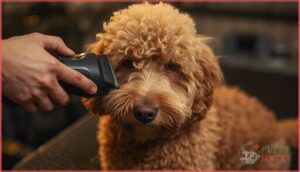
When dog clipper blades struggle with high-density or curly coats, cutting resistance signals declining blade sharpness. You’ll notice increased grooming challenges as dull blades require multiple passes through impacted fur, particularly on breeds with thick undercoats.
Blade sharpening or replacement becomes essential when coat density reveals decreased efficiency, and proper clipper blade maintenance helps you recognize this critical threshold before fur texture complications worsen.
Pulling, Tugging, or Causing Discomfort
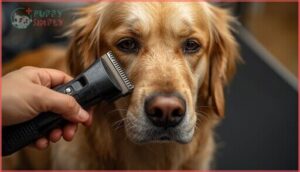
Discomfort signs during grooming reveal blade inefficiency through observable pain indicators: when your dog flinches near sensitive areas, vocalizes during clipping, or displays visible body tension with stiffened posture, clipper pressure exceeds acceptable thresholds.
Tugging causes include dull edges snagging on mats, creating grooming stress that demands immediate clipper blade replacement. Proper blade care prevents these distressing scenarios that compromise both results and your dog’s trust.
Dull blades that snag and tug on mats demand immediate replacement to preserve both grooming quality and your dog’s trust
Uneven or Choppy Grooming Results
Inconsistent cutting patterns signal compromised blade quality through visible grooming flaws: when coat texture shows alternating smooth and rough patches, or cutting depth varies across body regions, blade alignment has deteriorated beyond acceptable standards.
These choppy results stem from uneven blade wear, requiring immediate clipper blade replacement, as continued use degrades both grooming techniques and fur management outcomes despite proper clipper maintenance protocols.
Increased Noise or Vibration
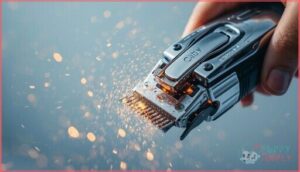
When your clippers start sounding like a struggling motor or vibrating excessively in your hand, you’re dealing with a dull blade. Worn edges force the motor to work harder, creating both noise and lateral play from loose blade mounts.
This motor strain signals an immediate need for blade sharpening or replacement, as continued vibration causes imprecise cuts and compromises your clipper maintenance routine.
When Should Dog Clipper Blades Be Replaced?
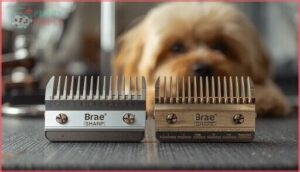
Knowing when to replace your clipper blades isn’t just about picking a random date on the calendar—it’s about understanding the real-world factors that affect how long they’ll hold up under your specific grooming conditions.
Professional groomers who work daily will face different timelines than someone grooming their own dog once a month, and the signs of wear don’t always show up on a predictable schedule.
Let’s break down the replacement timelines, warning signs, and how your grooming frequency should guide your replacement decisions.
Average Replacement Timelines
Your clipper blade replacement schedule depends heavily on grooming frequency and blade quality.
For moderate home use—monthly sessions with regular clipper maintenance—you’ll generally replace blades every six to eight months. Professional groomers working daily should plan for replacement every three to six months.
Dense or curly coats accelerate blade wear patterns, requiring changes within four to six months under heavy use.
Signs It’s Time to Replace
You’ll know it’s time for clipper blade replacement when cutting feels like an uphill struggle, even after proper blade maintenance and cleaning.
Watch for these critical signs of blade wear and dull edges:
- Visible nicks, chips, or rust formation that sharpening won’t fix
- Heat buildup or burning smells during grooming passes
- Persistent tugging despite fresh oil and blade sharpening attempts
Dull blade performance compromises both results and your dog’s comfort.
Professional Vs. Home Grooming Schedules
Your grooming frequency directly impacts dog clipper blade replacement schedules: professional groomers typically swap blades every 1–3 months due to daily clientele demands, while home users can extend replacement to 6–12 months with proper dog grooming maintenance between sessions.
Coat management needs, scheduling tools, and grooming session tips all influence when you’ll need fresh blades for ideal pet wellness and grooming frequency and technique.
Can Dog Clipper Blades Be Sharpened or Reused?
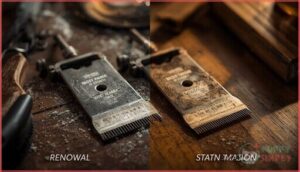
You don’t always need to buy new blades the moment they start to dull, which can save you significant money over time. Sharpening offers a cost-effective alternative to replacement, though it has limitations you should understand before making that choice.
Let’s examine when sharpening makes sense, when it won’t work anymore, and how to decide between professional sharpening services and buying new blades.
Blade Sharpening Frequency and Limits
Generally, professional groomers sharpen blades every 6–8 weeks with regular use, while heavy daily schedules may require sharpening every 2–4 weeks. Home groomers can extend intervals to 3–6 months, depending on clipper speed and coat type.
- Resharpening Cycles: Most manufacturer guidelines limit blades to 3–5 resharpenings before replacement.
- Sharpening Tools: Professional sharpening services maintain ideal blade geometry better than home methods.
- Frequency Limits: High-quality steel holds an edge longer, reducing sharpening intervals.
When Sharpening is No Longer Effective
Even professional sharpening can’t reverse thermal damage or coating wear that occurs from overheating during use. Once blade edge degradation reaches dullness thresholds—usually after 3–5 sharpening cycles—you’ll notice diminishing returns: teeth round off, edge geometry falls outside manufacturer tolerances, and performance drops despite fresh honing.
At this point, clipper blade maintenance shifts from sharpening limits to blade replacement.
Professional Sharpening Vs. Replacement
Once sharpening reaches its practical limit, you face a straightforward decision: send blades to professional refurbishment or purchase replacements. Professional blade resurfacing through authorized sharpening services usually costs $5–$8 per blade with 3–5 day turnaround, making edge restoration economical for high-quality steel blades. However, replacement becomes necessary when:
- Sharpening costs exceed 50% of new blade prices
- Blade material shows corrosion or structural degradation
- Edge restoration can’t achieve factory tolerances
- Sharpening tools can’t correct thermal warping
- Clipper blade care history suggests reduced lifespan potential
How to Properly Clean and Maintain Clipper Blades
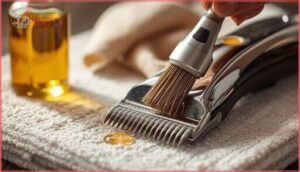
Proper blade maintenance isn’t complicated, but it does require consistency if you want your clippers to perform reliably and last beyond a few grooming sessions.
The three core practices—cleaning, oiling, and storage—work together to prevent rust, reduce friction, and keep your blades cutting smoothly through even the thickest coats.
Here’s how to integrate each step into your grooming routine without adding unnecessary time or effort.
Cleaning After Each Use
After every grooming session, you’ll need to remove hair and debris with a soft brush before applying any liquid cleaners. Wipe your blades with a lint-free cloth dampened with isopropyl alcohol to sanitize them properly.
If your clipper design allows it, rinse metal blades under warm running water, then dry everything thoroughly to prevent rust—blade care starts with consistent cleaning tools and drying techniques.
Oiling for Rust Prevention
Once your blades are clean and dry, regular blade lubrication with clipper oil forms a protective barrier against moisture and corrosion control. Apply a light mineral oiling after each session to preserve your grooming equipment and extend blade life.
- Use a few drops of clipper-specific oil per cutting edge, spreading evenly with a lint-free cloth
- Re-oil weekly when blades sit idle between grooming sessions
- Never apply oil to hot or damp blades, as heat and moisture accelerate rust
- Choose light mineral oil or specialized clipper maintenance products for best blade care
- Make oil application part of your routine clipper maintenance tips to prevent costly replacements
Proper Storage Techniques
After cleaning and oiling, store your clipper blades in a dry, cool location using proper blade case options to shield cutting edges from moisture and damage. Desiccant usage with silica gel packets inside storage containers controls humidity effectively.
Implement storage rotation by tracking blade batches for timely inspection, a grooming equipment maintenance practice that prevents overlooked wear. These clipper maintenance tips preserve blade sharpening and care investments while extending overall blade life.
Choosing The Right Replacement Clipper Blades
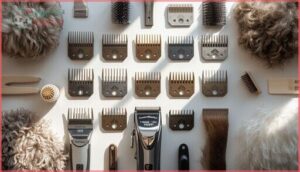
Selecting replacement blades isn’t as simple as grabbing whatever fits your clipper model. You’ll need to match the blade type to your dog’s specific coat texture, consider the material that best suits your grooming routine, and verify compatibility with your clipper brand.
Let’s break down each factor so you can make an informed choice that keeps your grooming sessions smooth and your dog comfortable.
Blade Types for Different Coat Types
You’ll get the best results when your blade selection aligns with coat analysis and fur texture. Different grooming techniques require specific dog clipper blades designed for distinct coat types:
- Fine-tooth blades work best on short, smooth coats, preventing snagging while preserving length.
- Wide-tooth blades efficiently lift dense double coats with proper clipper maintenance.
- Skip-tooth blades reduce friction on sensitive or curly coats.
- Heavy-duty blades handle thick undercoats requiring sustained cutting pressure.
Material Options: Steel, Ceramic, Coated
Your material comparison starts with understanding three core options for replacement blades: steel, ceramic, and coated varieties, each offering distinct advantages depending on your grooming environment and coat challenges.
| Material | Key Advantage | Primary Constraint |
|---|---|---|
| Steel | Affordable, rigid, heat-resistant for quick sessions | Rust risk without proper drying |
| Ceramic | Stays cooler, maintains sharpness in dense coats | Brittle, higher cost, chips if dropped |
| Coated (Teflon/Titanium) | Reduced friction, corrosion resistance | Coating wears off, diminishing performance over time |
Steel properties include high rigidity and compatibility with most clipper brands, making them reliable starter blades. Ceramic benefits shine during extended grooming sessions since ceramic blades resist heat buildup better than steel. Coating types like Teflon reduce drag across thick undercoats, though these coatings eventually degrade.
When selecting high-quality blades, consider blade durability against your typical workload: professional groomers handling multiple dogs daily often prefer ceramic benefits, while occasional home groomers find steel’s affordability sufficient. Dog clipper blades in coated varieties balance performance and price, though you’ll replace them sooner than uncoated steel once the surface treatment wears through.
Compatibility With Clipper Brands
Mismatched hardware can sabotage even premium replacement blades, since blade mounts and screw patterns vary across major brands like Andis, Wahl, and Heiniger, requiring brand-specific matches or clipper adapters for secure attachment.
To guarantee brand compatibility and safe operation:
- Verify your exact clipper model before ordering replacement blades
- Check blade mounts align with your machine’s holder design
- Confirm screw patterns match to prevent wobbling or injury
- Test universal blades cautiously, as tolerances may differ
- Maintain warranty coverage by using manufacturer-approved clipper blades
Best Practices for Extending Blade Lifespan
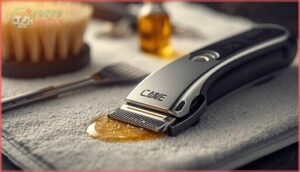
You’ve already invested in quality blades, so protecting that investment comes down to consistent care and smart habits. The good news is that extending blade lifespan doesn’t require hours of extra work—just a few intentional practices built into your grooming routine.
Here are three essential strategies that’ll keep your blades sharp, functional, and ready for hundreds of cuts to come.
Establishing a Maintenance Routine
Consistency is your strongest ally regarding blade care: set a fixed day each week for clipper checks, lubrication, and cleaning, then record these sessions in maintenance logs to track intervals and anticipate replacement blades.
Align routine scheduling with grooming cycles, especially during shedding seasons when clipper maintenance and repair demands increase, ensuring your grooming equipment and clipper parts and accessories remain in prime condition through disciplined grooming tool maintenance.
Using High-Quality Lubricants
Once your maintenance routine is in place, selecting the right clipper oil becomes non-negotiable: formulas designed for clippers reduce friction, prevent rust, and extend blade life far beyond generic alternatives.
Follow these lubrication guidelines to protect your investment:
- Apply clipper blade oil after every few minutes of use, or as your manufacturer specifies, to maintain smooth cutting action.
- Choose mineral oil-based or food-grade lubricants formulated specifically for grooming tool maintenance, avoiding detergent-based products that attract dirt.
- Use only a few drops per application to coat blade surfaces evenly without creating sticky buildup that compromises clipper maintenance quality.
Regular Blade Inspection
Along with proper lubrication, you’ll want to inspect your clipper blades routinely, using a magnifying glass or bright light to catch nicks, burrs, and uneven edges that signal wear. Check blade alignment and monitor cutting performance by gliding blades through a test section, tracking how many passes you need for smooth results. Document each maintenance event—dates matter when scheduling replacements and planning clipper repair.
| Inspection Focus | What to Check |
|---|---|
| Blade surface | Nicks, burrs, uneven edges |
| Alignment & gap | Consistent spacing between parts |
| Heat rise | Temperature beyond normal range |
| Cutting action | Ease of glide, pass count |
Common Mistakes That Shorten Blade Life
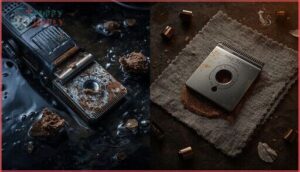
Even the best clipper blades won’t last if you’re making common care mistakes that accelerate wear and damage. Many groomers unknowingly shorten blade life through habits that seem minor but create significant problems over time.
Understanding these pitfalls helps you avoid costly replacements and maintain consistent grooming performance.
Skipping Maintenance Steps
Routine grooming maintenance isn’t optional—it’s what separates blades that last from those that fail prematurely. When you skip essential care steps, you’re accelerating clipper wear and compromising blade performance.
Here are the key issues caused by inconsistent maintenance:
- Skipping lubrication invites rust prevention failures, leading to blade corrosion that diminishes cutting efficiency and increases friction during grooming sessions.
- Neglecting post-use cleaning allows hair, oils, and moisture to accumulate, creating an environment where dull blade signs appear faster than expected.
- Ignoring routine inspections means you’ll miss micro-cracks or nicks until they cause unexpected blade failure mid-groom.
- Inadequate drying before storage promotes corrosion on dog clippers, particularly steel blades vulnerable to moisture damage.
Inconsistent maintenance schedules correlate directly with higher clipper repair costs and more frequent replacements.
Using Blades on Dirty or Matted Coats
Impacted fur creates the perfect storm for clipper damage: embedded debris increases friction, matted sections generate blade overheating, and dense tangles force blades to work exponentially harder than designed.
| Coat Condition | Blade Performance Impact | Mat Removal Tips |
|---|---|---|
| Dirty Coat Impact | 3x faster dulling from debris friction | Pre-bath and brush thoroughly |
| Matted Fur Effects | Blade skipping, uneven cuts, stalling | Detangle before clipping begins |
| Heavy Soiling | Warranty voiding, premature wear | Remove loose hair first |
Always prep your dog’s coat before grooming—cleaning and detangling beforehand protects your clipper blades and ensures safer, more efficient dog grooming sessions.
Improper Blade Attachment and Removal
When you force blades onto the clipper or yank them off carelessly, you’re risking serious Blade Damage that affects everything from Blade Alignment to the Blade Latch and Blade Hinge mechanisms. Improper Attachment Errors bend internal Blade Drive components, while rough Removal Techniques chip teeth and compromise Clipper Safety, often leading to costly clipper repair—always seat and release clipper blades gently, following manufacturer guidelines.
Regular maintenance is vital to prevent common clipper problems and guarantee the longevity of your clippers.
Frequently Asked Questions (FAQs)
What causes clipper blades to overheat during use?
You’ll notice clipper blades heating up when friction between metal surfaces intensifies, often from inadequate lubrication, dull edges forcing the motor to work harder, or cutting through dense, matted coats without proper preparation.
Are expensive blades always worth the investment?
Premium dog clipper blades aren’t automatically better. High-quality blades deliver better durability and cost benefit when you’re grooming frequently, but investment returns depend on maintenance habits, coat types, and your grooming tools’ compatibility.
How do you safely dispose of old blades?
Just as you wouldn’t toss razor blades in household trash, don’t dispose of clipper blades carelessly.
Use sharps containers or rigid bottles labeled clearly, then check local hazardous waste programs for blade recycling and eco-friendly methods.
Can you mix blade brands with different clippers?
Most manufacturers recommend using clipper blades and dog clippers from the same brand system, ensuring proper blade drive alignment and ideal clipper compatibility. Cross branding risks improper fit, reduced performance, and potential clipper repair issues.
Do seasonal changes affect blade performance or longevity?
Seasonal humidity and temperature shifts can accelerate corrosion risk on clipper blades, particularly when moisture isn’t properly addressed during storage.
Adjusting your clipper maintenance routine and storage conditions based on seasonal grooming frequency helps combat these environmental challenges.
Conclusion
Like a chef who wouldn’t attempt dinner service with dull knives, you shouldn’t compromise your dog’s comfort with worn blades. Knowing when to replace dog clipper blades transforms grooming from a frustrating struggle into a smooth, professional process.
Watch for tugging, listen for changes in motor sound, and don’t push blades beyond their functional limit. Sharp blades protect skin, reduce stress, and deliver the clean finish your dog deserves every single session.
- https://x.com/godofprompt/status/1990526288063324577
- https://blog.wordvice.com/formatting-research-paper-headings-and-subheadings/
- https://www.sciencedirect.com/science/article/pii/S0749208123000268
- https://github.com/vinhphunguyen/how-to-write-a-paper/blob/master/how-to-write-paper.out
- https://pmc.ncbi.nlm.nih.gov/articles/instance/9553038/bin/pone.0275964.s005.docx