This site is supported by our readers. We may earn a commission, at no cost to you, if you purchase through links.

Your dog hasn’t been able to put weight on that back leg for weeks now. The surgery you thought would fix everything didn’t work, or maybe you couldn’t afford the $4,000 procedure in the first place. Now you’re watching your once-joyful companion drag themselves across the floor, eyes clouded with confusion and pain.
A torn ACL doesn’t heal on its own, and when conservative treatments fail, you’re left facing a question no pet owner should have to ask: Is it time? The truth is, not every dog with a torn ACL needs to be euthanized—but some reach a point where ending their suffering becomes the kindest choice you can make.
Table Of Contents
- Key Takeaways
- What is a Torn ACL in Dogs?
- Recognizing Signs of Severe ACL Injury
- How a Torn ACL Impacts Quality of Life
- Treatment Options for Dogs With Torn ACL
- When Treatment for Torn ACL Fails
- Assessing Quality of Life in Dogs With ACL Tears
- When to Consider Euthanasia for a Torn ACL
- How Age and Other Health Issues Affect The Decision
- Financial and Emotional Considerations for Owners
- Preparing for Euthanasia: What to Expect
- Frequently Asked Questions (FAQs)
- How successful is surgery for a torn ACL?
- Are there any alternatives to surgery for a torn ACL?
- What are the long-term effects of a torn ACL?
- Are there any preventive solutions for a torn ACL?
- Can ACL tears heal naturally without treatment?
- How long does ACL surgery recovery take?
- Are there preventive exercises for ACL injuries?
- What pain medications are safest for dogs?
- Can dogs live comfortably with untreated ACL tears?
- Conclusion
Key Takeaways
- Not every dog with a torn ACL needs euthanasia—surgical options like TPLO have over 90% success rates, and conservative management works well for smaller dogs, but the decision hinges on whether your dog can still enjoy life between the pain.
- The clearest signs it’s time to consider euthanasia are persistent pain that doesn’t respond to maximum medication, complete inability to walk or stand independently, and loss of basic bodily functions like bladder control or the ability to reach food and water.
- Age and other health conditions dramatically affect recovery—senior dogs with multiple chronic diseases face higher surgical risks and slower healing, making quality-of-life assessments more critical than the ACL tear itself.
- Treatment failure looks like chronic lameness beyond expected recovery timelines, recurring symptom flare-ups despite aggressive therapy, and more bad days than good weeks—when rehabilitation and pain management stop delivering comfort, honest end-of-life conversations honor your dog’s dignity.
What is a Torn ACL in Dogs?
Your dog’s knee works a lot like yours does. The anterior cruciate ligament—or ACL—sits right in the middle of the joint, keeping everything stable when your dog walks, runs, or jumps.
When that ligament tears, the whole knee becomes wobbly and painful, turning even simple movements into a struggle.
How ACL Injuries Affect Mobility

When your dog tears their ACL, mobility takes an immediate hit. You’ll notice they can’t bear weight on that leg within 24 hours—limping becomes the new normal. Joint instability throws off their entire gait, forcing them to compensate with the other leg. Stairs, running, jumping? Suddenly off-limits.
Over time, altered biomechanics can trigger degenerative changes in surrounding joints, compounding mobility loss. Understanding complex language patterns can help describe these changes.
Common Causes of ACL Tears
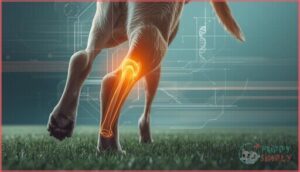
So what actually causes a torn ACL in your dog? Degenerative factors account for about 80 percent of cases—the ligament weakens gradually over time, not from one big incident. Obesity risks are massive, since extra weight puts mechanical stress on that knee joint. Genetic predisposition plays a role too, especially in certain breeds.
Biomechanical stress from limb alignment issues and traumatic incidents during high-energy play round out the common culprits behind cruciate ligament injury. Understanding cruciate ligament disease is essential for effective treatment and management.
Breeds Most at Risk

Breed risk factors matter more than most owners realize. Boerboels, Dogo Canarios, and Dogue de Bordeaux top the genetic predisposition list, with relative risks exceeding seven times the average.
For these high-risk breeds, a quality dog knee brace can help protect vulnerable joints and reduce strain during daily activity.
But large breed issues aren’t the whole story—Labradors account for 21.6 percent of all cases, while small breed concerns include West Highland White Terriers and Yorkshire Terriers. Your dog’s canine anatomy partly determines their fate.
Recognizing Signs of Severe ACL Injury

When your dog tears their ACL, the signs can range from subtle to impossible to miss. Some dogs might soldier on with a slight limp, while others will refuse to bear weight on the leg at all.
Here’s what you need to watch for so you can get help fast.
If you notice stumbling, head tilting, or unusual eye movements, check out this complete guide to ataxia in dogs to understand what might be causing these symptoms.
Limping and Lameness
You’ll likely notice your dog isn’t putting weight on the injured leg—especially right after the ACL tear happens. This non-weight-bearing gait means they’re hopping on three legs or just barely toe-touching.
Over time, you might see the leg muscles start to shrink from disuse, which is a common sign explored in more detail in this guide to torn ACL symptoms in dogs.
Lameness patterns vary: some dogs show sudden, severe limping during activity, while others develop intermittent limping that worsens over time. Joint instability from a torn ACL makes every step painful, so mobility issues become obvious fast.
If your dog is showing any of these signs, check out this guide on diagnosing and treating limping in a dog’s back leg to understand what might be causing it.
Swelling and Pain
Acute inflammatory response causes visible joint swelling in most dogs within the first six weeks after ACL rupture. You’ll see puffy tissue around the knee that displaces the normal contours. Pain manifests when you gently extend your dog’s stifle—they’ll pull away or vocalize.
Chronic suffering develops when pain management fails to control the inflammation, making even basic canine rehabilitation difficult without proper pain relief strategies.
Changes in Behavior or Appetite
Sometimes, chronic pain from a torn ACL triggers subtle behavioral shifts you might mistake for “just getting older.” Watch for social withdrawal—your dog avoiding family time or snapping when touched near the injured leg. Appetite loss often signals emotional distress beyond the joint itself.
If your dog’s pain seems unmanageable despite treatment, consulting your vet about quality of life assessments and compassionate end-of-life options can help you make the most loving decision.
These pain signals matter enormously when evaluating quality of life, because persistent changes in animal behavior indicate suffering that demands honest conversations about pain management or, in severe cases, euthanasia for dog health issues.
How a Torn ACL Impacts Quality of Life

A torn ACL doesn’t just hurt—it reshapes your dog’s entire world. What once brought joy now brings hesitation, and you’ll notice the shift in everything from their morning routine to their evening rest.
Here’s what quality of life really looks like when your dog is dealing with this injury.
Difficulty Walking or Standing
Your dog’s struggle to stand or walk reveals one of the harshest realities of an ACL tear. Joint instability shifts only 20–30% of normal weight onto the injured leg, making every step painful.
You’ll notice gait abnormalities—shortened strides, visible limping, slippery floors becoming obstacles. Muscle atrophy follows quickly.
These mobility issues don’t just limit movement; they steal independence and dignity from your companion.
Loss of Enjoyment in Activities
When your dog stops chasing that tennis ball or turns away from the door when you grab the leash, you’re witnessing activity reduction that cuts deep. Pain threshold shifts their entire world—what once sparked joy now triggers hesitation.
These behavioral changes signal quality of life decline. You’ll see mobility decline transform an enthusiastic companion into a reluctant participant, making quality assessment and pain management discussions with your vet absolutely critical.
Emotional and Physical Distress
Pain assessment reveals what your dog can’t say in words. Chronic suffering manifests as withdrawal, irritability, even snapping when touched—distress signals rooted in fear and anxiety that dogs with orthopedic pain experience more than healthy pets.
Animal welfare hinges on quality metrics beyond limping: is pain management restoring your dog’s comfort, or has the emotional toll made canine rehabilitation feel impossible?
Treatment Options for Dogs With Torn ACL
So your dog has a torn ACL—what now? You’ve got options, and understanding them helps you make the best choice for your companion.
Let’s walk through the main treatment paths available, from surgery to supportive care.
Surgical Interventions (TPLO, TTA)
When your dog tears their ACL, surgical repair can restore mobility. Two proven options exist: TPLO (tibial plateau leveling osteotomy) and TTA (tibial tuberosity advancement). Both reshape the knee mechanics through bone cutting and metal implants.
Here’s what you need to know about surgical repair:
- TPLO Risks include infection, implant complications, and delayed healing
- TTA Outcomes are comparable but with slightly different bone modifications
- Surgical Costs generally range from $3,500 to $7,000 per knee
- Recovery Times span 11 to 15 weeks for full activity return
- Postoperative Care requires strict rest, then gradual canine rehabilitation exercises
Both procedures demand technical skill and commitment.
Non-Surgical Management
Not every dog needs surgery. Conservative management combines weight reduction, exercise modification, and pain management with proven results—especially for smaller dogs under 10 kg or overweight pets.
Studies show about 60 percent of conservatively managed dogs achieve acceptable outcomes when you commit to the protocol.
| Component | Purpose |
|---|---|
| Weight Reduction | Reduces joint strain; 11% loss improves lameness scores |
| NSAIDs + Support | Controls inflammation; bracing adds stability |
| Controlled Activity | Prevents further damage; builds strength gradually |
Physical Therapy and Rehabilitation
Whether your dog had surgery or you’re managing conservatively, physical therapy accelerates healing and prevents muscle loss. In the first 24 hours, ice therapy and passive range of motion exercises reduce swelling.
By weeks 2 to 6, you’ll add sit-to-stand repetitions, balance boards, and hydrotherapy—water reduces weight bearing by 90 percent while rebuilding strength safely.
Bracing and Support
If surgery isn’t an option right now, knee bracing can buy your dog time and comfort.
A well-fitted orthotic limits that tibial thrust—the forward slide that makes a torn ACL so unstable—and gives proprioceptive feedback so your dog bears weight more evenly.
Think of canine orthotics as rehabilitation aids that support joint stabilization during healing, not permanent fixes for serious knee injury.
When Treatment for Torn ACL Fails

Sometimes you do everything right—surgery, rehab, pain meds—and your dog still struggles. Treatment doesn’t always work the way we hope it will.
Here are the warning signs that tell you it’s time to reassess your dog’s care plan.
Chronic Pain Despite Management
Even aggressive multimodal therapy doesn’t always win the battle. Your dog might still show high pain scores on validated pain assessment tools, signaling refractory pain management isn’t enough. When chronic osteoarthritis drives unrelenting discomfort despite NSAIDs, gabapentin, and rehab, you’re facing welfare thresholds that demand honest euthanasia considerations—because quality of life means more than just survival.
When maximum pain therapy fails to deliver comfort, quality of life means more than just survival
- Persistent limping or stiffness between doses
- Reluctance to rise, despite maximum pain relief
- More bad days than good, week after week
Recurring or Worsening Symptoms
Sometimes you’ll watch your dog respond well to treatment, then suddenly regress. Symptom flare-ups signal disease progression—pain escalation despite medication, or mobility decline after initial improvement.
These recurring setbacks with canine orthopedic issues reveal the torn ACL is winning. When chronic suffering becomes the pattern, not the exception, euthanasia discussions honor your dog’s quality of life over hope.
Lack of Mobility Improvement
Progress is what you hope for, but chronic lameness that lingers beyond the expected recovery timeline after dog ACL surgery is a red flag.
If mobility aids, weight management, and rehabilitation techniques don’t help your dog walk comfortably, quality of life drops.
When physical therapy fails and daily movement remains painful, it’s time to discuss euthanasia with your vet.
Assessing Quality of Life in Dogs With ACL Tears

As a vet, I’ve learned that numbers and scales can only tell part of the story. What really matters is whether your dog can still enjoy the basics—the simple things that make life worth living.
Let’s look at the key areas that’ll help you see the full picture of how your dog is really doing.
Appetite, Hydration, and Hygiene
When a dog’s hurting from a torn ACL, you might notice their appetite drops off or they’re drinking less. These changes signal declining quality of life.
Keep an eye on whether they’re eating enough to meet their nutrition needs and maintaining water intake.
Also, watch hygiene practices—if they can’t groom or reach their potty spot, that’s a red flag for pet care and wellness concerns.
Pain Management Effectiveness
Good pain relief is your clearest gauge of whether treatment is working. If your dog reacts to medication options like NSAIDs and shows less limping within weeks, that’s progress.
But when chronic management—including alternative therapies and rehabilitation techniques—fails to ease discomfort, you’re facing a tough reality. Uncontrolled pain dramatically lowers quality of life and may point toward euthanasia discussions with your vet.
Ability to Perform Daily Activities
Can your dog still eat without help, walk to the water bowl, and settle into a comfortable rest position? These basic milestones matter more than any medical test when you’re evaluating quality of life after dog ACL surgery.
Watch for these daily-function red flags:
- Unable to rise or lie down without falling repeatedly
- Can’t reach food, water, or elimination areas independently
- Refuses favorite activities despite pain management attempts
- Shows worsening mobility issues even with physical therapy support
- Displays persistent distress during routine movements
When canine orthopedic issues rob your companion of dignity and comfort in everyday tasks, it’s time for an honest euthanasia conversation with your vet.
When to Consider Euthanasia for a Torn ACL

This is the hardest conversation you’ll ever have with your vet, but knowing when to let go is the final act of love we owe our dogs.
There are specific warning signs that tell us when treatment isn’t enough anymore. Let’s look at the three critical indicators that euthanasia may be the kindest choice for your dog with a torn ACL.
Persistent Unmanageable Pain
When does pain cross the line from manageable to unbearable? If your dog’s pain scores stay high—between 4 and 6 out of 10—despite multiple pain relief strategies, you’re facing chronic suffering that no amount of medication can truly fix.
This is when palliative care conversations shift. Quality of life assessment becomes critical, and the euthanasia decision weighs heavily on effective pain management attempts.
Inability to Walk or Stand
But what happens when your dog can’t even stand anymore? Mobility loss from joint instability often signals that chronic pain has won. If your dog falls repeatedly, can’t reach food or water, or eliminates where they lie, quality assessment becomes straightforward.
Here’s when inability to walk points toward euthanasia:
- Non-weight bearing on both hind legs despite Dog ACL surgery
- Frequent falls when attempting to stand or toilet
- Requires lifting or slinging for every basic movement
- Distressed vocalizations during position changes
Weight management and veterinary care can’t restore function when an ACL tear destroys independence. That’s the heartbreaking moment quality of life tips toward compassionate release.
Loss of Basic Bodily Functions
When bladder control fails or elimination habits become irregular, you’re witnessing pain’s full systemic toll. Appetite suppression, hydration status decline, and inability to reach toileting spots signal that animal welfare has collapsed.
Pain management alone can’t restore dignity when bodily functions fail. At this stage, quality of life assessment points clearly toward euthanasia and end-of-life care as the most ethical choice.
How Age and Other Health Issues Affect The Decision

Age changes everything regarding ACL recovery. A younger dog with no other health problems has a completely different outlook than a senior facing multiple chronic conditions.
Let’s look at how age and existing health issues shape your decision and what you need to think about.
Senior Dogs With Multiple Conditions
Age adds layers of complexity your vet must carefully navigate. When your senior dog tears an ACL while already managing heart disease, kidney issues, or arthritis, the surgical risk increases markedly.
Studies show dogs with two or more chronic conditions face shorter survival times and higher anesthesia complications. Your geriatric companion’s frailty and reduced reserves make recovery from orthopedic surgery much harder to achieve.
Impact of Chronic Diseases on Recovery
Chronic disease introduces metabolic complications that slow healing—diabetes delays post-surgical wound closure, while Cushing’s disease erodes muscle mass your dog needs for recovery. Systemic inflammation from kidney issues limits exercise tolerance during rehabilitation.
These comorbidity effects stack against mobility improvement, making physical therapy sessions exhausting rather than restorative.
When rehabilitation challenges multiply, you’re facing tougher decisions about quality of life and end-of-life care.
Overall Prognosis and Comfort
Recovery time matters more than you might think. Most dogs show meaningful pain relief 6–12 weeks after ACL surgery, with 70–90% regaining solid limb use within a year. But non-surgical routes? Only 20–40% see real improvement.
When postoperative care doesn’t deliver comfort levels you’d hoped for, quality-of-life conversations shift toward animal welfare and ethics—sometimes pointing toward euthanasia and end-of-life care.
Financial and Emotional Considerations for Owners

Let’s be honest—treating a torn ACL isn’t just emotionally draining. It’s expensive.
Before you make any decision about your dog’s future, you need to understand what you’re facing financially, how to balance your own wellbeing with your pet’s needs, and when it’s time to have that difficult conversation with your vet.
Cost of Ongoing Treatment
Surgery costs for dog ACL surgery hit hard—you’re looking at $2,900 to $8,100 per knee for surgical repair like TPLO. Medication expenses, rehabilitation fees, and follow-up visits can add hundreds monthly.
Insurance coverage helps if you enrolled before the ACL tear occurred. Without it, the financial burden of ongoing veterinary medicine becomes real fast.
Weighing Emotional Stress and Pet Welfare
Guilt shadows every euthanasia decision-making conversation—up to 50 percent of you wrestle with whether you’re acting too soon or too late. But here’s what I’ve learned: your emotional support matters, yet pet suffering must guide the call.
- Owner guilt stems from actively ending life rather than witnessing natural death
- Strong bonds can delay euthanasia even when animal welfare demands relief
- Moral distress intensifies when financial limits force choices against your wishes
- Quality of life assessment tools help align your heart with observable pet suffering
- Compassion fatigue affects both owners and veterinary teams managing end-of-life care decisions together
Consulting With Your Veterinarian
Your vet is your lifeline through this—they’ll walk you through diagnostic tools like radiographs, explain treatment plans honestly, and help you weigh medical ethics against your dog’s reality. Communication matters: ask about pain scores, prognosis, and when euthanasia becomes the kindest choice. This shared decision respects both veterinary medicine expertise and your intimate knowledge of your companion’s daily comfort.
| Discussion Topic | What to Ask | Why It Matters |
|---|---|---|
| Pain assessment | “Can you show me a pain scale for my dog?” | Quantifies suffering objectively beyond your observations |
| Treatment ceiling | “What happens if current therapy stops working?” | Clarifies when you’ve exhausted reasonable veterinary care options |
| Prognosis factors | “How do age and other conditions affect recovery odds?” | Frames realistic expectations for mobility and comfort outcomes |
| Quality of life tools | “Which welfare assessment should I track at home?” | Enables you to monitor trends and recognize declining function |
| Euthanasia timing | “How will we know when it’s time?” | Normalizes end-of-life planning as responsible pet owner responsibility |
Preparing for Euthanasia: What to Expect

If you’ve made the decision to let your dog go, the process itself doesn’t have to add more pain to what you’re already feeling. Your veterinarian can walk you through each step and help make this final act of love as peaceful as possible.
Here’s what you need to know about preparing for euthanasia, from that first conversation with your vet to finding comfort in the days that follow.
How to Discuss With Your Vet
This conversation isn’t easy, but your veterinarian wants to hear your concerns honestly. Start by asking about your dog’s medical prognosis and whether pain management is truly working. Here’s what helps the discussion:
- Request a clear timeline for reassessing mobility and comfort
- Ask what benchmarks define treatment failure in your dog’s case
- Discuss financial realities and palliative care options openly
Together, you’ll determine what meets your dog’s welfare best.
Making Your Dog Comfortable
In those final hours, comfort care means everything. Soft orthopedic bedding eases joint support needs, while pain relief medications keep distress at bay. Keep their favorite blanket nearby and offer gentle contact—your presence is the best stress management tool available.
Some dogs benefit from light physical therapy movements to reduce stiffness, but prioritize what feels calming. Quality of life now means warmth, quiet, and your unwavering love.
Coping With Grief and Loss
Saying goodbye hurts deeply—that’s not weakness, it’s love. Nearly a third of pet owners experience grief as intense as losing a family member.
Seek bereavement counseling or pet loss support groups if you’re struggling. Create pet memorials that honor your bond.
Emotional healing takes time, and there’s no “right” way to grieve. Your feelings are valid, and reaching out for grief support shows strength.
Frequently Asked Questions (FAQs)
How successful is surgery for a torn ACL?
Most dogs—over 90 percent—regain near-normal function within a year after TPLO or TTA surgery.
Success rates hover around 93 percent for TPLO, making surgical repair highly effective for restoring mobility despite ACL tears.
Are there any alternatives to surgery for a torn ACL?
Yes—conservative management combining weight reduction, NSAIDs, physical therapy, and bracing can work, especially for smaller dogs.
Around 90% of non-surgical cases use structured rehabilitation exercises to strengthen muscles and improve joint stability.
What are the long-term effects of a torn ACL?
Time reveals the truth: a torn ACL brings progressive osteoarthritis, chronic pain, and muscle atrophy. Even after surgical repair, joint instability persists.
Degenerative changes continue, often affecting the opposite leg within two years.
Are there any preventive solutions for a torn ACL?
While you can’t guarantee your dog won’t tear their ACL, weight management and exercise modification make the biggest difference.
Keeping your pup lean, avoiding high-impact activities, and building muscle through physical therapy greatly reduce risk.
Can ACL tears heal naturally without treatment?
I once saw a Beagle limp into the clinic, barely bearing weight—her owner hoped rest alone would fix everything. Partial ACL tears can improve with conservative care like rest and weight management, but complete tears rarely heal naturally.
The ligament doesn’t regenerate; scar tissue may stabilize the joint somewhat, giving the illusion of spontaneous recovery. Non-surgical outcomes depend heavily on tear severity and your dog’s size—small, inactive dogs respond better to nonsurgical treatment than large, active breeds.
Even with natural healing efforts, the cruciate ligament injury leaves lasting instability. Surgery generally offers better long-term results for canine orthopedic issues, especially in medium and large dogs, because ligament regeneration simply doesn’t happen biologically.
So while conservative care can manage pain and restore some function, it’s not true ACL injury treatment that repairs the damage.
How long does ACL surgery recovery take?
Most dogs undergoing orthopedic surgery like TPLO or TTA start bearing weight within two weeks.
But full recovery—rebuilding muscle, regaining normal movement—usually takes three to six months with structured rehabilitation strategies and careful postoperative care.
Are there preventive exercises for ACL injuries?
Yes. Strength training like sit-to-stands, balance exercises on wobble boards, low-impact aerobics such as swimming, and joint mobility stretches build muscle support and proprioception around your dog’s knee, reducing ACL tear risk markedly.
What pain medications are safest for dogs?
Veterinary-approved NSAIDs like carprofen or meloxicam are safest for canine pain management when monitored by your vet. Gabapentin works well as an adjuvant for chronic discomfort.
Never give human medications—ibuprofen and acetaminophen are toxic to dogs.
Can dogs live comfortably with untreated ACL tears?
Some smaller dogs adapt surprisingly well without surgery, achieving acceptable house-pet function through conservative care.
However, most larger dogs face chronic osteoarthritis, persistent lameness, and progressive joint instability that demands lifelong rehabilitation and pain management.
Conclusion
I once watched a golden retriever named Max chase butterflies three months after his owner chose palliative care over surgery. He lived happily for another year.
But I’ve also held trembling dogs who couldn’t stand anymore, their eyes begging for release. Knowing when to put down a dog with a torn ACL isn’t about the injury itself—it’s about whether your companion can still find joy between the pain. Trust what you see in their eyes.
- https://pmc.ncbi.nlm.nih.gov/articles/PMC10457323/
- https://www.superiorveterinarysurgery.com/conditions-treated/orthopedic/cranial-cruciate-ligament.html
- https://pawsandmorevet.com.au/when-to-put-a-dog-down-with-torn-acl/
- https://www.mylamedogsvet.com/post/does-conservative-management-of-cruciate-ligament-injury-shorten-life-span
- https://hund-kreuzbandriss.de/en/euthanize-a-torn-cruciate-ligament-dog/