This site is supported by our readers. We may earn a commission, at no cost to you, if you purchase through links.

Your eight-week-old puppy has mastered “sit” exactly twice, both times while you fumbled through your pockets for treats, and lost focus when you finally found one stuck to an old receipt. This awkward dance happens because timing is everything in puppy training—rewards need to land within seconds of the desired behavior, or the lesson evaporates.
A treat pouch solves this problem by keeping rewards accessible at your hip, transforming those clumsy pocket searches into smooth, instantaneous reinforcement. The good news? You can start using one the moment you bring your puppy home, usually around eight weeks old, when those first training sessions begin.
Getting the timing right, choosing an appropriate pouch, and understanding how to introduce it properly will set both you and your puppy up for training success that builds positive habits from day one.
Table Of Contents
- Key Takeaways
- When Can Puppies Start Using a Treat Pouch?
- Benefits of Using a Treat Pouch in Training
- Choosing The Right Treat Pouch for Puppies
- Selecting Safe and Healthy Treats for Puppies
- How to Introduce a Treat Pouch to Your Puppy
- Tips for Safe and Effective Treat Pouch Use
- Frequently Asked Questions (FAQs)
- When can you start introducing treats to puppies?
- What is the 10 10 10 rule for puppies?
- What is the 7 7 7 rule for dogs?
- What is the 5 minute rule for puppies?
- Can treat pouches help with leash training walks?
- Should I use different pouches for different training?
- How do I prevent my puppy stealing treats?
- What if my puppy loses interest in treats?
- Can I share a treat pouch between puppies?
- Conclusion
Key Takeaways
- You can introduce a treat pouch as soon as your puppy arrives home at eight weeks old, which aligns perfectly with the start of basic training and their critical socialization period.
- Treat pouches solve the timing problem in puppy training by keeping rewards accessible at your hip, allowing you to deliver reinforcement within one second of the desired behavior instead of fumbling through pockets.
- Choose a pouch with secure closures like durable zippers or magnetic snaps, washable materials that resist oil absorption, and adjustable straps that fit waists from 24 to 46 inches while holding treats without bulging.
- Position your pouch at waist level on your dominant side with the opening slightly forward, and keep treats limited to 10 percent of your puppy’s daily caloric intake using soft, pea-sized, high-value options during training sessions.
When Can Puppies Start Using a Treat Pouch?
You can introduce a treat pouch as soon as your puppy arrives home, usually around eight weeks of age. This timing aligns perfectly with the start of basic training, when your puppy is ready to learn simple commands and house rules.
For best results, pair your pouch with soft, high-value puppy training treats that motivate your pup during those early learning sessions.
The key is understanding when your individual puppy shows readiness, which depends on their attention span, interest in treats, and ability to focus during short training sessions.
Recommended Age for Introducing Treat Pouches
Most puppies can begin using a treat pouch around 8 to 12 weeks of age, right when you’re kicking off basic training sessions. This timeline aligns perfectly with their critical socialization period and puppy development stage, making it ideal for introducing treats as training reinforcement.
Start with short sessions using a lightweight pouch—this prevents distraction during early puppy training while building positive associations with age-appropriate rewards.
Signs Your Puppy is Ready
Your puppy is ready for a treat pouch when you notice key behavioral milestones. Watch for improved attention span—maintaining eye contact for 2 to 3 seconds, sitting still briefly during training drills, and responding to simple cues within seconds.
Progress in house training, combined with social readiness and curiosity about new environments, signals that your pup’s canine development stages support structured behavioral reinforcement with training treats.
Importance of Early Training Routines
Once your pup shows those readiness signs, building a consistent training routine becomes your next winning move.
Daily sessions spaced throughout the morning and evening create predictable learning opportunities that reduce anxiety and speed up habit formation. Short 2–5 minute blocks with your treat pouch deliver immediate behavioral reinforcement, strengthening trust building and impulse control without overwhelming new puppy owners introducing treats for the first time.
Benefits of Using a Treat Pouch in Training

A treat pouch isn’t just another training accessory—it’s a valuable asset for building better habits with your puppy. This simple tool gives you an edge by keeping rewards accessible exactly when your pup needs them most.
Here’s how a treat pouch transforms your training sessions from scattered to smooth.
Consistency and Timing of Rewards
Timing strategies make or break puppy training and socialization. A treat pouch keeps training treats within arm’s reach, letting you deliver immediate feedback—often under one second after your pup sits or stays. That consistent reinforcement builds a positive association between action and reward.
A well-designed training treat pouch for puppies also includes features like clip closures and adjustable belts, so you can move freely during socialization walks without fumbling for rewards.
A treat pouch delivers rewards within one second, building instant positive associations that make or break puppy training success
Reward schedules stay on track when you’re not fumbling through pockets, and your puppy learns faster with every perfectly timed treat. For more on the importance of timely treat reinforcement, consider how it accelerates learning and strengthens your bond.
Enhancing Focus and Engagement
A quick reward from your pouch keeps your puppy locked in during complex cues. Training techniques that pair frequent reinforcement with clear engagement strategies maintain motivation and boost focus enhancement far better than delayed treats.
Your visible reward systems encourage participation, building self-control and eagerness while introducing treats to puppies. Those dog training fundamentals turn every session into a win for motivation methods that actually work.
Hands-Free Convenience for Owners
You’ll appreciate the freedom a belt-worn pouch delivers. Both hands stay free for leash work, hand signals, or agility drills while treat accessibility remains instant.
No more fumbling through pockets mid-session. Lightweight pouch design enhances owner mobility during long walks, and training efficiency jumps when you’re not interrupting practice.
That convenience transforms puppy care into smooth, focused work that respects puppy development at every stage.
Choosing The Right Treat Pouch for Puppies

Not all treat pouches are created equal, especially when you’re training a young puppy.
The right pouch makes training sessions smoother, keeps treats fresh, and grows with your pup as they develop.
Here’s what to look for when choosing a treat pouch that’ll actually work for you and your puppy.
Appropriate Size and Capacity
You’ll want a pouch that holds 8 to 12 small training treats without bulging. A 4 to 5 inch opening fits comfortably on most belts, while a pouch height of 4.5 to 6 inches won’t block your puppy’s view during dog training sessions.
External pockets are handy for a clicker, keeping treat capacity focused on rewards that support puppy development and growth.
Durable, Easy-to-Clean Materials
Your treat pouch should stand up to messy puppy training sessions and daily cleanups. Look for non-porous shells made from stainless steel, high-gloss enamel, or silicone-coated fabrics that won’t absorb oils from puppy treats.
Washable linings let you machine-wash at 60 degrees Celsius, while abrasion-resistant coatings prevent scuffing. These material choices keep introducing treats hygienic, supporting both treat safety and effective dog training routines.
Secure Closures and Adjustable Straps
Your pouch needs closures that won’t pop open mid-training. Durable zippers with anti-snag teeth deliver smooth access, while magnetic snaps and Velcro provide quick reopening during puppy training.
Adjustable buckles with sliding locks fit waists from 24 to 46 inches, holding up to 15 pounds of puppy treats. Reinforced metal D-rings and corrosion-resistant hardware guarantee your secure fasteners withstand daily introducing treats sessions.
Selecting Safe and Healthy Treats for Puppies

Your treat pouch is only as good as what you put inside it. Not all puppy treats are created equal, and the wrong choices can undermine training or even harm your puppy’s health.
Let’s look at how to fill that pouch with treats that are safe, nutritious, and perfectly sized for your growing companion.
Age-Appropriate Treat Types
Your puppy’s developmental needs change fast. During the first six months, stick with soft, bite-sized treats that won’t overwhelm tiny teeth—think pea-sized pieces of cooked chicken or freeze-dried liver.
As your pup matures, introducing treats like small training biscuits aids puppy nutrition while maintaining nutrient balance. Rotate healthy snacks to keep training sessions engaging and confirm treat variety matches your growing puppy’s evolving nutritional needs.
Ingredient Quality and Nutritional Value
Beyond size and texture, what’s inside those puppy treats matters just as much. Look for whole foods with named protein sources as the first ingredient—real chicken beats generic “meat meal” every time.
Healthy fats from fish or poultry support brain development, while natural preservatives like mixed tocopherols keep treats fresh without chemicals.
Quality ingredients guarantee your pup’s nutritional needs are met during training.
Portion Control and Moderation
Quality ingredients mean nothing if you’re overfeeding. Treats for puppies shouldn’t exceed 10 percent of daily caloric intake to maintain nutrient balance. During training sessions, limit portions to two or three small pieces—think pea-sized for tiny breeds.
Treat allocation matters for puppy care and nutrition, so adjust amounts as your pup grows. Track what goes in that pouch to support healthy snacking without sabotaging meal planning or the nutritional needs of puppies.
How to Introduce a Treat Pouch to Your Puppy
Getting your puppy comfortable with a treat pouch doesn’t happen overnight, but it’s simpler than you might think. The key is building a positive connection between the pouch and good things, so your puppy sees it as part of the fun rather than something strange or intimidating.
Here’s how to make that introduction smooth and effective.
Gradual Familiarization Process
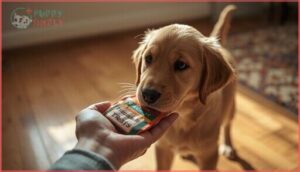
Success in training depends on patience during pouch introduction. Start with 1 to 2 minute sessions so your puppy can sniff and explore the stationary pouch without pressure. Gentle exposure builds trust and aids puppy socialization while establishing training consistency.
Follow these steps for reward timing success:
- Let your puppy touch the pouch with its nose and paws
- Hold it in a neutral position for natural approach
- Monitor for stress signs like yawning or backing away
- End calmly with a puppy treat from the pouch
Associating The Pouch With Positive Experiences

Once your pup explores the pouch comfortably, you’ll want to build strong positive links. Pair every pouch opening with marker words like “yes” and deliver puppy treats within 1 to 2 seconds of correct behavior. This reward timing creates bonding moments and handler focus during dog training sessions.
Consistent pouch use teaches your fluffy bundle of joy that staying near you equals rewards.
| Strategy | Benefit |
|---|---|
| Marker words + pouch sound cues | Links pouch to immediate praise |
| Use during daily routines | Builds environmental links and comfort |
| Pair with gentle petting | Strengthens socialization and bonding |
| Practice in familiar spaces first | Reduces anxiety in puppies |
Using High-Value Treats for Motivation

Palatability Factors like aroma and texture make high-value treats essential for puppy training. Fresh, protein-rich dog treats capture attention faster than plain kibble, especially when learning new commands.
Treat Rotation prevents habituation—alternate flavors to keep motivation high. Use Luring Techniques with soft, chewy puppy treats during early sessions, then fade to praise once behaviors stick.
Motivation Maintenance depends on reserving your best treats for puppies when distractions challenge focus.
Tips for Safe and Effective Treat Pouch Use

Getting your treat pouch routine right isn’t just about clipping it on and heading out the door. You’ll want to pay attention to how you wear it, keep it clean, and watch how your puppy responds during training sessions.
Here are the essential practices that’ll help you make the most of this training tool while keeping your puppy safe and engaged.
Proper Pouch Positioning During Training
Where you clip your treat pouch makes all the difference in smooth puppy training sessions. Position it at waist level on your dominant side—this creates the fastest treat access during cues and prevents awkward twisting that breaks your flow.
Smart pouch angle adjustment keeps training crisp:
- Maintain hip alignment so the opening sits slightly forward, letting you grab treats without disrupting your stance
- Test arm swing clearance by walking and turning to verify straps don’t catch or restrict elbow movement
- Keep two inches between the pouch edge and your outer thigh to prevent interference when you bend or sprint during drills
Treat access optimization means your puppy gets instant rewards right when they nail that sit or come command.
Regular Cleaning and Maintenance
Consistent sanitizing methods protect your puppy’s health and wellness while extending your pouch’s material durability. Wipe the exterior after each session with a damp cloth, then hand wash the interior weekly using mild soap and warm water.
Hygiene protocols matter—disinfect zippers monthly with pet-safe cleaners and inspect seams for fraying. Following these maintenance tips and cleaning schedules prevents bacteria buildup that could compromise puppy treat options and overall pet care quality.
Monitoring Puppy’s Health and Behavior
Think of your treat pouch as a health dashboard—it reveals how training impacts puppy development. Track weekly weight alongside canine nutrition to guarantee growth tracking stays on target.
Watch for behavioral signs like sudden lethargy or appetite changes that warrant veterinary care. Regular health checks, paired with veterinary advice, help you catch issues early and adjust puppy nutrition for peak puppy health.
Frequently Asked Questions (FAQs)
When can you start introducing treats to puppies?
You can start introducing treats to puppies around eight weeks of age. Begin with soft, single-ingredient options in tiny amounts, watching closely for any signs of digestive upset or allergic reactions.
What is the 10 10 10 rule for puppies?
While some trainers debate its origins, the 10-10-10 rule for puppy development guides socialization and training basics: introduce your puppy to 10 people, 10 environments, and 10 experiences before 10 weeks of age.
What is the 7 7 7 rule for dogs?
The 7-7-7 rule emphasizes critical socialization techniques and puppy development milestones.
It includes seven weeks with littermates, seven essential experiences, seven key people, seven novel objects, and seven training basics by seven months.
What is the 5 minute rule for puppies?
Your energetic ball of fur needs boundaries, not marathons.
The 5-minute rule caps structured exercise at five minutes per month of age, twice daily, protecting growing joints during critical puppy development stages.
Can treat pouches help with leash training walks?
Yes, treat pouches simplify leash training by enabling hands-free rewards when your puppy walks calmly beside you. Frequent reinforcement during early walking techniques builds obedience exercises that prevent pulling and strengthen your bond through consistent reward systems.
Additionally, using a treat pouch simplifies that are essential for effective dog training.
Should I use different pouches for different training?
Sometimes the simplest gear change unlocks the biggest training breakthroughs. Using different pouches for different training lets you customize reward systems, manage pouch organization across session planning, and adapt training variety as your puppy’s development progresses.
How do I prevent my puppy stealing treats?
Keep your pouch closed between rewards and position it at hip level on your non-dominant side. Reward immediately after correct behavior, using a cue like “yes” to prevent impulsive snatching.
What if my puppy loses interest in treats?
If your puppy loses interest in treats, rotate high-value options to restore novelty. Shorter training sessions with immediate reward timing maintain engagement during critical puppy development stages.
Dental discomfort or stress can reduce motivation—watch for health signals.
Can I share a treat pouch between puppies?
Sharing one pouch during the same training session creates competition and stress.
For Multi Puppy households, use separate pouches or divided compartments to maintain Reward Systems clarity, support Puppy Socialization, and guarantee proper Treat Distribution.
Conclusion
The moment you clip that treat pouch to your hip is the moment training transforms from chaos to connection. Knowing when to introduce a treat pouch to your puppy—right at eight weeks—means you’re capturing those fleeting seconds when behaviors form and habits stick.
Your puppy won’t remember the fumbling or the frustration, only the instant rewards that taught them what “good” means. That’s not just convenience; that’s building a foundation that lasts a lifetime.