This site is supported by our readers. We may earn a commission, at no cost to you, if you purchase through links.

Picking a dog crate sounds simple until you’re standing in a pet store aisle, faced with wire grids, plastic shells, soft fabric tents, and furniture-style cabinets—all claiming to be safe.
The truth is, not every crate protects your dog equally, and the wrong choice can create real risks, from poor ventilation to escape hazards.
What type of dog crate is safest depends on your dog’s size, temperament, and how you plan to use it.
Understanding the key differences between materials, latch strength, and ventilation design helps you make a confident, informed choice—one that keeps your dog secure whether they’re napping at home or riding in the backseat.
Table Of Contents
- Key Takeaways
- What Type of Dog Crate is Safest?
- Key Safety Features in Dog Crates
- Comparing Common Dog Crate Materials
- Crate Size and Fit for Safety
- Special Safety Considerations for Puppies
- Crate Safety for Travel and Transport
- Maintenance and Safe Use of Dog Crates
- Recommended Safe Dog Crate Brands and Models
- Frequently Asked Questions (FAQs)
- What size crate for shiba inu?
- Do dogs prefer open or closed crates?
- What toys are safe to leave in a dog crate?
- What size crate for a Havanese?
- Can dogs overheat inside a closed crate?
- How long can a dog safely stay crated?
- Are secondhand crates safe for dogs to use?
- Should dogs wear collars while inside their crate?
- What age can puppies start sleeping in crates?
- Conclusion
Key Takeaways
- The safest crate for your dog isn’t about the price tag — it comes down to matching the material, latch strength, and ventilation design to your dog’s size and temperament.
- Secure dual latches, heavy-gauge steel, and at least 16% open surface area for airflow are the three features that separate a truly safe crate from one that just looks the part.
- Sizing matters more than most owners realize — crate that’s too small causes physical stress and anxiety, while one that’s too large undermines potty training and creates entrapment risks.
- For travel, don’t assume your home crate will do the job — crash-tested and airline-approved crates meet specific impact and ventilation standards that standard models simply don’t.
What Type of Dog Crate is Safest?
Not all dog crates are built with the same level of safety in mind, and the differences really do matter.
From wire to soft-sided to heavy-duty plastic, understanding what each style offers helps you pick the right fit—this guide to dog crates for travel breaks down the key differences worth knowing.
Some materials and designs protect your dog better than others, especially if your pup is a chewer, an escape artist, or just a little anxious.
Here are the crate types worth knowing about when safety is your top priority.
Overview of Safe Crate Types
Not all crates are built equal — and the type you choose shapes your dog’s safety from day one.
Wire crates offer strong ventilation and visibility, plastic models earn their keep for travel compliance, and aluminum durability makes heavy‑duty options nearly escape‑proof.
Soft‑sided safety suits calm, trained dogs, while furniture‑style design fits settled home routines.
Matching safe crate types to your dog’s personality is everything.
Ensuring proper ventilation guidelines is key for comfort.
Safety Criteria for Dog Crates
Knowing the type matters, but understanding what makes a crate actually safe is where dog crate selection gets real. Look for these dog crate safety features:
- Latch durability: Metal slide bolts beat plastic snaps every time
- Material tensile strength: Thicker gauge steel resists bending under pressure
- Ventilation percentages: At least 16% open surface area keeps air moving
- Anchor point design and crash-test standards protect dogs during travel
Accurate sizing starts by measure dog length to guarantee comfort.
Key Safety Features in Dog Crates

Regarding crate safety, a few features make all the difference. You want your dog’s space to be secure, comfortable, and easy to maintain.
Let’s look at what matters most for keeping your pup safe inside their crate.
Secure Latches and Locks
Checking the latch is one of the first things I look at when evaluating dog crate safety features.
A solid dual latch design adds real security — if one point gets bumped or shaken loose, the second holds firm.
Look for outside only operation, recessed lock mechanisms that your dog can’t manipulate from inside, rounded edge safety hardware, and an emergency release feature for quick access when it matters.
Sturdy Construction and Materials
Once you’ve checked the latch, pay close attention to the crate’s build.
For tips on what to look for in sturdy travel crates, check out this guide to airline-approved dog crate options for safe pet transport.
Reinforced Frames and Heavy Gauge Wire keep a Metal Dog Crate sturdy, while Impact Resistant Plastic offers safer travel.
Reinforced Corners and Durable Hardware prevent wobble and sagging.
For powerful breeds, a HeavyDuty Dog Crate or Aluminum Crates shine.
Wood Dog Crate designs blend strength with style, too.
Adequate Ventilation
Good ventilation isn’t optional — it’s a cornerstone of dog health and wellness.
Look for a dog crate with cross‑ventilation design, meaning airflow enters and exits from at least two opposite sides. Mesh placement on multiple walls prevents stagnant air, while vent size optimization balances airflow with security.
Environmental positioning matters too: a shaded, centrally located spot helps airflow patterns work at full capacity for real pet comfort.
Comparing Common Dog Crate Materials
The material your dog’s crate is made from affects everything — how safe it feels, how easy it’s to clean, and whether it actually holds up over time.
Each material has its own strengths and trade-offs, so knowing what you’re comparing makes the decision a lot easier. Here’s a closer look at the most common options.
Wire Vs. Plastic Crates

Wire crates win on ventilation and visibility — your dog can watch the household and stay cool.
But plastic crates offer real impact resistance, noise dampening, and travel approval that wire simply can’t match.
Escape risk drops with plastic’s smoother edges and fewer trapped-paw gaps.
Your best move in this crate buying guide? Match the dog crate type and material to your dog’s temperament and lifestyle.
Metal Vs. Soft-Sided Crates
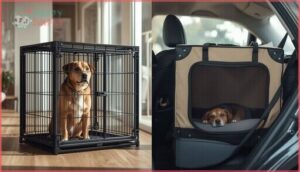
When durability under chewing and crash test performance matter most, metal crates pull ahead — they hold up against powerful dogs and pass 10G impact tests that soft-sided crates simply fail.
Soft-sided crates offer better portability weight and comfort for calm, small breeds, but their zippers give way under pressure. For safety, dog crate types and materials should match your dog’s energy level.
Wood and Furniture-Style Crates

Ever wondered if a crate could double as stylish furniture? FurnitureStyle Crates offer aesthetic integration, but safety depends on chew-resistant design, eco-friendly finishes, and proper ventilation.
For pet safety and security, you’ll want:
- Removable waterproof trays for easy cleaning
- Modular accessories for comfort and function
- Low-VOC finishes to protect indoor air quality
Dog Crate Types and Materials matter—choose wisely.
Crate Size and Fit for Safety
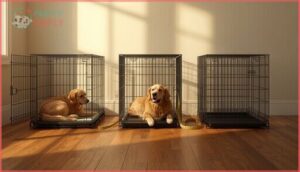
Getting the size right is just as important as picking the right crate material. A crate that’s too big or too small can create real safety and training problems for your dog.
Here’s what you need to know about sizing before you buy.
Choosing The Right Size for Your Dog
Getting the fit right is the foundation of dog safety in any crate. Start with solid measurement techniques: measure your dog’s length from nose to tail base, add 2–4 inches, then measure height from floor to head or ear tips. Weight chart guidance helps narrow options quickly.
| Dog Size | Recommended Crate Length |
|---|---|
| Under 25 lbs | 18–24 inches |
| 25–70 lbs | 30–36 inches |
| 70+ lbs | 42–48 inches |
Breed adjustments matter too — brachycephalic breeds like Bulldogs need extra room for airflow, while Dachshunds need more length than height. For puppies, choosing the right dog crate with puppy growth dividers saves money long‑term. Don’t forget bedding clearance — thick pads reduce interior height, so size up accordingly.
Risks of Incorrect Crate Sizing
Size mismatches cause more problems than most owners expect. A crate too tight leads to muscle stiffness, pressure sores, and real anxiety triggers over time.
Go house soiling becomes your new headache — dogs simply sleep on one side and soil the other.
Entrapment hazards, overcrating duration issues, and setbacks in crate training all trace back to poor fit.
Choosing the right dog crate protects both dog safety and your peace of mind.
The right crate size safeguards your dog’s wellbeing and your own peace of mind
Special Safety Considerations for Puppies
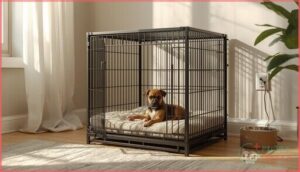
Puppies need extra care regarding crate safety, since they’re curious and still learning about their world. The right setup can make all the difference in keeping them secure and comfortable as they grow.
Here’s what to look for when choosing an enclosure for your puppy.
Adjustable Dividers for Growing Dogs
While your puppy grows, adjustable dividers for dog crates make crate training much easier and safer.
With sturdy divider panel materials and clever adjustment mechanisms, you can track growth and keep the space cozy.
Here’s what to look for:
- Portable divider kits
- Noise reduction features
- Secure adjustment mechanisms
- Durable materials
- Easy growth tracking for dog care and training
Preventing Escape and Injury
Once your divider is set, think about what happens if your pup decides to test the walls. Puppies are curious and persistent, so escape-resistant hardware — like dual latches and corner-mounted locks — makes a real difference.
Look for jaw-safe bar spacing to protect growing mouths, impact-absorbing interiors for squirmy pups, secure anchor points, and non-toxic coatings.
Good crate design turns security into comfort.
Crate Safety for Travel and Transport

Traveling with your dog adds a whole new layer to crate safety. Whether you’re hitting the highway or boarding a flight, the crate you use at home might not cut it. Here are the two main options worth knowing about.
Crash-Tested Travel Crates
Peace of mind is priceless when you’re traveling with your dog.
Crash-tested travel crates use Impact Absorption and Double‑Wall Design to shield your pet, while Crumple Zone Engineering protects everyone in the vehicle.
Secure Anchor Systems keep the crate stable, and Post‑Crash Ventilation ensures your dog can breathe easily.
Safety-driven crate design turns dog travel into a controlled, confident experience.
Airline-Approved Crates
Just as crash‑tested crates protect on the road, airline‑approved dog crates raise the bar for pet safety in the skies.
Look for IATA Certification, sturdy metal fasteners, and four‑sided ventilation standards.
Plastic dog crates must meet strict weight limits, while labeling requirements are non‑negotiable.
Even a softsided dog crate can be rejected if it misses these essential travel and transportation benchmarks.
Maintenance and Safe Use of Dog Crates
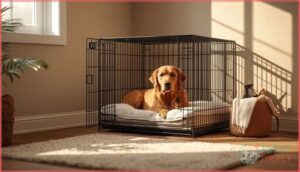
A safe crate isn’t just about what it’s made of — how you use and care for it matters just as much.
Keeping it clean, placing it thoughtfully, and building positive associations all play a big role in your dog’s comfort and well-being**.
Here’s what you need to know to get it right.
Cleaning and Hygiene Practices
A clean crate is a safe crate — it’s that simple. Daily spot cleaning keeps bacteria from taking hold, and wiping accidents immediately with an enzyme‑based cleaner breaks down urine proteins before odors set in.
- Vacuum wire bars and the tray daily to prevent fur buildup
- Remove soiled bedding right away for fresh air circulation
- Wash crate pads weekly in hot water with pet‑safe detergent
- Pull out plastic trays regularly, scrub with dish soap, and dry fully
- Use a diluted vinegar‑water mix or pet‑safe disinfectant every few weeks for deep odor and bacteria prevention
Proper Placement in The Home
Where you place your dog crate matters more than most people realize. Tuck it into a low traffic corner with good light and airflow, away from drafts, direct sunlight, and loud appliances.
A hazard-free zone free of cords, toxic plants, and temperature swings keeps crate training on solid ground. Smart placement is quiet, steady dog owner guidance in action.
Avoiding Negative Associations
Almost always, your dog’s crate becomes a sanctuary when you use Positive Reinforcement and avoid Punishment‑Free Training mistakes. Calm Introductions paired with high-value treats, timed just right, help build trust and erase old fears.
For lasting Pet Safety and successful Dog Crate Training, focus on:
- Reward Timing for voluntary entry
- Treat Pairing for positive association
- Dog Behavior Modification
Recommended Safe Dog Crate Brands and Models

Choosing a safe crate can feel overwhelming with so many options out there.
To help you narrow things down, I’ve gathered some of the most trusted brands and models on the market.
Let’s take a look at which crates stand out for safety and reliability.
Top-Rated Safety Crates in 2026
If you want peace of mind, look for crates that blend Crash‑Tested Ratings with smart design.
In 2026, Gunner G1 leads with Rotomolded Impact protection, while Rock Creek’s metal crate sets a new bar for Dog Safety.
Thule Allax’s European Crate Design and the MidWest Ultima Pro’s Heavy‑Duty Home Safety also stand out for Pet Safety Tips and Airline Compliance Standards.
Product Reviews and Owner Experiences
Real-world Dog Crate Reviews tell you what specs can’t.
Owners praise the Diggs Evolv for Escape Proof latches and Injury Prevention through rounded edges, while MidWest Ultima Pro earns consistent Comfort Experiences with its adjustable divider.
Durability Complaints do surface—wire models rust, and soft‑sided crates tear under strong dogs.
For common owner issues involving high anxiety, the Impact High Anxiety Dog Crate remains a trusted solution.
Frequently Asked Questions (FAQs)
What size crate for shiba inu?
For a Shiba Inu, a 30- to 36-inch crate hits the sweet spot. Given their breed dimensions — usually 15 to 24 pounds — a 36-inch dog crate offers ideal interior space for most adults.
Do dogs prefer open or closed crates?
It depends on the dog. Confident dogs often prefer open wire crates, while anxious ones settle better in covered, den-like setups. Individual adjustment and sensory load matter most.
What toys are safe to leave in a dog crate?
Picture your dog’s crate as a treasure chest—hard rubber puzzles, indestructible chews, soft comfort toys, nylon rubber balls, and interactive treat dispensers
all help promote pet safety, dog health, and positive dog behavior with smart pet care tips
What size crate for a Havanese?
A 24 by 18 by 20 inch dog crate fits most adult Havanese comfortably. For puppies, start smaller and use divider adjustment as they grow into the adult dimensions.
Can dogs overheat inside a closed crate?
Even the coziest den can turn into a sauna.
Dogs absolutely can overheat inside a closed crate, especially without proper Ventilation Strategies, Heat‑Safe Materials, or Temperature Monitoring—making Pet Safety and Canine Care and Comfort essential for Dog Health and Safety.
How long can a dog safely stay crated?
Most dogs do well with 4 to 6 hours, but age-based limits matter. Puppies need breaks every 1 to 2 hours, while seniors cap out around 3 to 4 hours comfortably.
Are secondhand crates safe for dogs to use?
Secondhand dog crates can be safe with a thorough Structural Inspection, close attention to Disease Risk, and checking Hardware Integrity and Material Wear.
If repairs or cleaning outweigh the benefits, a Cost‑Benefit Analysis may point you toward a new crate for Pet Safety.
Should dogs wear collars while inside their crate?
Collars feel routine outside, but inside a dog crate, they become a hazard. For nighttime safety and unsupervised crate training, collar removal is the simplest, smartest step you can take.
What age can puppies start sleeping in crates?
Most puppies can start sleeping in crates at 8 weeks old.
Begin with short sessions, since bladder control milestones are still developing — expect potty breaks every couple of hours through the night.
Conclusion
What type of dog crate is safest isn’t a one-size-fits-all answer—it’s a decision shaped by your dog’s size, behavior, and your daily routine.
A secure latch means nothing if ventilation is poor. A stylish cabinet means nothing if it can’t withstand an anxious chewer.
When you match the right crate to your dog’s actual needs, you’re not just containing them. You’re giving them a space where they can genuinely feel safe.
- https://www.impactdogcrates.com/blogs/puppy-news/how-to-pick-the-best-crate-for-your-dog-plastic-vs-wire-crates
- https://jitsi.cmu.edu.jm/best-crash-tested-dog-crates/
- https://www.continentalpetrelocation.com/airline-pet-travel-crates
- https://www.petmate.com/blogs/petmate-academy/plastic-vs-metal-crates-which-one-is-right-for-your-pet
- https://www.hillspet.com/dog-care/routine-care/dog-crate-sizes-and-types