This site is supported by our readers. We may earn a commission, at no cost to you, if you purchase through links.

Your dog spends hours in their crate each day, yet most pet owners focus on the crate itself while overlooking what’s inside. A poorly chosen crate bed can lead to joint pain, anxiety, and restless nights for your furry friend.
The right bed transforms a simple enclosure into a cozy sanctuary that nurtures your dog’s physical health and emotional well-being. When you know what to look for in a dog crate bed, you’ll find options that balance comfort, safety, and durability.
The difference shows up in how quickly your dog settles down and how eagerly they enter their space each time.
Table Of Contents
- Key Takeaways
- Key Features to Look for in Dog Crate Beds
- Choosing The Right Size Crate Bed
- Best Materials for Dog Crate Beds
- Safety Considerations for Crate Bedding
- Top 3 Dog Crate Bed Products
- Maintenance and Care for Crate Beds
- Durability and Value Considerations
- Additional Crate Comfort Accessories
- Frequently Asked Questions (FAQs)
- Conclusion
Key Takeaways
- Proper crate bed sizing requires measuring your crate’s interior dimensions and selecting a bed 5-10% larger to allow comfortable movement while maintaining that cozy den feeling dogs naturally seek.
- Prioritize memory foam with 1.5-2.5 pcf density for lasting joint support, waterproof fabrics for easy cleanup, and non-toxic CertiPUR-US certified materials to protect your dog’s health.
- Safety features matter more than comfort alone—look for non-skid bottoms to prevent shifting, chew-resistant construction for determined nibblers, and zero strangulation hazards like dangling strings or loose collars.
- Quality stitching with 8-12 stitches per inch and reinforced stress points determines whether your bed survives daily use or falls apart after a few washes, making durability a smarter long-term investment than initial price.
Key Features to Look for in Dog Crate Beds
Not all dog crate beds are created equal, and knowing what to look for can save you time, money, and stress. The right bed keeps your dog comfortable while standing up to daily wear and tear.
For puppies still adjusting to nighttime routines, pairing a cozy crate bed with strategies that help Yorkies sleep through the night can make settling in much easier.
Here are the key features you should prioritize when shopping for a crate bed.
Size and Proper Fit
Start by measuring your dog crate’s interior length, width, and height. You’ll want a crate bed that’s 5 to 10 percent larger than the crate’s dimensions for ideal comfort adjustment. A proper fit lets your furry friend turn around easily without leaving gaps where they could shift or get stuck.
Double-check your crate measurement after removing any dividers, and confirm the bed stays put when the door closes.
Material Quality and Comfort
Once you’ve nailed the fit, focus on what touches your dog’s skin. Look for plush fabrics that feel velvety soft—they reduce pressure points and keep your pet comfortable during long naps.
Orthopedic beds with memory foam cushion support distribute weight evenly, while breathable materials prevent overheating.
A quality crate mat combines textile durability with gentle fabric softness, so your furry friend rests easy without irritation or discomfort. It’s worth noting that material choice profoundly impacts comfort by influencing breathability, softness, and overall well-being.
Durability and Construction
Soft materials matter, but a bed that falls apart in weeks wastes your money. Look for these construction markers:
- Stitch quality – Double-stitched seams and bar tacking at corners prevent unraveling under your dog’s weight shifts.
- Foam density – High-density cores (1.6–2.0 pounds per cubic foot) hold their shape month after month.
- Fabric durability – Abrasion-resistant nylon or canvas withstands scratching and daily wear on orthopedic beds and crate mats alike.
Safety Features
Even durable bedding won’t protect your pup if the crate setup itself poses risks. Strangulation prevention starts with removing collars and tags before crate time—breakaway collars reduce that hazard.
Electrical safety means keeping cords and outlets far from curious paws.
Proper crate placement in low-traffic zones cuts accident minimization worries, so your dog rests safely while you’re away.
Choosing The Right Size Crate Bed
Getting the right size crate bed isn’t just about squeezing something into the space—it’s about making sure your dog actually wants to use it. A bed that’s too small leaves your pup cramped and uncomfortable, while one that’s too large won’t provide that cozy den feeling dogs naturally seek.
The right crate bed size isn’t about fitting the space—it’s about giving your dog the cozy den feeling they crave
Here’s what you need to measure and consider before you buy.
Measuring Your Dog’s Crate
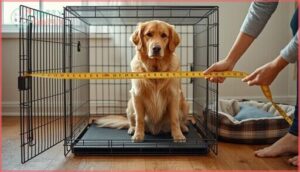
Before you shop for the perfect bed, you’ll need accurate measurements of your dog crate. Use a soft tape measure to capture the crate’s interior length and width—floor to floor. Check the crate design carefully, measuring corner to corner if your crate placement allows.
These dog length measurements guarantee proper fit and dog comfort. Remember, accurate measuring tools prevent costly returns and guarantee your pup’s crate setup provides ideal space optimization techniques. For further details on crate size selection, consult the.
Accounting for Dog Size and Weight
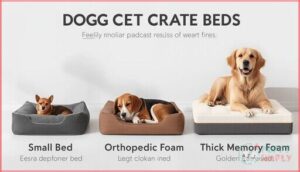
Your dog’s weight and body proportions should guide your bed selection just as much as your crate setup measurements. Weight limits matter—choose a bed rated at least 20 percent above your pup’s current weight, especially for growing puppies.
Larger dogs need thicker foam for proper support needs, while smaller breeds can use lighter options. Check size charts carefully to match your dog’s comfort levels with the right dog bed thickness.
Considering Your Dog’s Sleeping Style
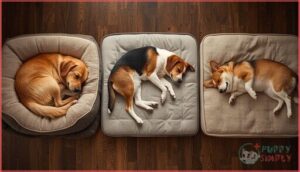
Sleep patterns reveal a lot about your dog’s bedding needs. Curlers who donut into tight balls prefer plush edges and cozy sides, while side sleepers need extra length for stretched-out limbs. Superman nappers and belly-up relaxers thrive on flat, cushioned surfaces that support their entire body.
For winter comfort, check out dog crate beds designed for cold weather that combine insulation with sleep-position support.
Observe your pup’s resting habits to match dog crate beds with their natural sleeping postures for ideal canine comfort and safety.
Best Materials for Dog Crate Beds
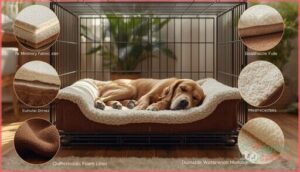
The material you choose for your dog’s crate bed directly impacts their comfort, safety, and how long the bed will last. Different materials offer unique benefits, from pressure relief to easy cleanup after accidents.
Here’s what you need to know about the most common and effective crate bed materials.
Memory Foam for Support
Memory foam provides essential pressure relief for your furry friend by contouring around their body and distributing weight evenly across hips and shoulders. Look for orthopedic crate beds with high foam density—ideally 1.5 to 2.5 pcf—to guarantee lasting support.
Support layers combine firmness with plush comfort, while cooling systems prevent overheating.
These dog beds promote canine care and comfort, especially for senior pets needing extra joint support.
Waterproof and Easy-Clean Fabrics
Accidents happen, especially with puppies or senior dogs, so choosing waterproof materials like PU-coated or PVC-coated fabrics for your dog crate beds protects against moisture damage. These easy-cleaning surfaces wipe down quickly and resist staining, while sealed seams prevent leaks during machine washing.
- Hydrophobic coatings repel water and oils, giving you excellent stain resistance
- Wipeable surfaces handle urine or drool exposure without permanent damage
- Machine washable dog bed covers maintain moisture management through repeated cycles
- DWR finishes shed spills while keeping your pet bed comfort breathable
Non-Toxic Foam Options
Choosing non-toxic foam keeps your furry friend safe from harmful chemicals that can affect their health. Look for CertiPUR-US Certification when selecting your dog crate bed, which guarantees the orthopedic crate bed contains no formaldehyde, phthalates, or heavy metals.
Plant-based foams with low VOC emissions minimize indoor air pollutants, ensuring your dog bed promotes both dog comfort and safety without off-gassing concerns that compromise canine care and comfort.
Breathable and Soft Materials
Beyond non-toxic foam, fabric weave and material breathability directly impact your dog’s comfort and safety. Breathable layers allow moisture wicking to keep your furry friend dry during rest, while soft texture ensures gentle contact with skin and fur.
Look for dog crate beds with looser weaves that promote airflow, preventing heat buildup inside the crate—a simple upgrade that transforms dog bed comfort.
Safety Considerations for Crate Bedding

Your dog’s safety inside the crate should always come first when you’re choosing bedding. The right bed won’t just keep your furry friend comfortable—it’ll also protect them from preventable accidents and injuries.
Here are three essential safety features you’ll want to look for before making your purchase.
Non-Skid Bottoms
A secure dog bed won’t shift around when your furry friend settles down for the night. Look for crate beds with rubberized or silicone grip patterns on the bottom—these non-slip materials create floor grip that prevents sliding on smooth crate surfaces.
Wave textures and small studs offer excellent slip resistance, while raised edges boost bed stability and reduce the risk of injuries during rest.
Chew-Resistant Construction
If your dog loves to chew, you’ll want a bed built to last. Durable fabrics like cordura paired with reinforced seams and heavy duty stitching can withstand gnawing during crate training.
Chew proof materials—think thick nylon covers and bite resistant zippers—protect the bed’s core from determined nibblers.
Offer chew toys alongside the bed to redirect this normal dog behavior and keep your crate safe.
Avoiding Strangulation Hazards
When setting up crate training, remove any items with long strings or loops that could wrap around your pup’s neck. Skip collars with tags inside the crate—they pose serious strangulation risks. Instead, use breakaway safety collars or lay-flat ID tags.
Check that your dog crate beds don’t have loose cords, dangling zippers, or decorative strings that create choking hazards during unsupervised rest time.
Top 3 Dog Crate Bed Products
You’ve learned what makes a safe, comfortable crate bed—now let’s look at three products that can help create a better space for your dog.
These picks aren’t your standard crate beds, but they solve real problems many pet parents face. From customizable comfort to calming anxious pups, here’s what stands out.
1. Molly Mutt Dog Bed Cover
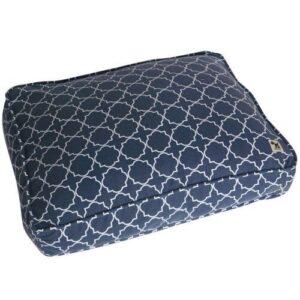
The Molly Mutt cover brings a clever twist to crate bedding—it’s basically a duvet you fill with your own household items like old clothes or towels.
This 100% cotton canvas design measures 22″x27″x5” for small crates and holds up well against daily wear. You can toss it in the washing machine when needed, and the colorfast dyes won’t fade.
What makes this cover special is how it lets you create a bed that carries your scent, which can help anxious dogs feel more secure.
| Best For | Pet owners looking for an eco-friendly, customizable bed solution for small dogs, especially those with anxiety who benefit from familiar scents. |
|---|---|
| Material | 100% Cotton |
| Washable | Machine Washable |
| Brand | Molly Mutt |
| Weight | 15.04 ounces |
| Life Stage | All Life Stages |
| Anxiety Relief | Yes |
| Additional Features |
|
- Sustainable design lets you repurpose old clothes and linens instead of buying new stuffing
- Machine washable cotton cover makes cleaning simple and keeps colors bright
- Helps anxious dogs relax by surrounding them with your familiar scent
- Requires you to provide your own filling materials, which takes extra effort
- Not ideal for large breeds or heavy chewers who might damage the cotton fabric
- You’ll need multiple covers if you want a backup while one’s in the wash
2. Molly Mutt Washable Dog Bed Stuff Sack

This mesh nylon sack works hand-in-hand with the Molly Mutt duvet cover to create your dog’s mattress. You’ll fill it with old clothes, blankets, or pillows that carry your scent—perfect for dogs dealing with separation anxiety.
The zipper design makes loading easy, and the gusseted construction keeps everything from shifting around inside the duvet. At 27″ x 36″ x 5″, it fits medium to large crates.
Best of all, you can toss the whole thing in the wash when it needs freshening.
| Best For | Dog owners looking for an eco-friendly bed solution that helps anxious pets by using familiar-scented items from home. |
|---|---|
| Material | 100% Nylon |
| Washable | Machine Washable |
| Brand | Molly Mutt |
| Weight | 0.2 kilograms |
| Life Stage | All Life Stages |
| Anxiety Relief | Yes |
| Additional Features |
|
- Machine washable design makes cleaning simple and keeps the bed fresh
- Turns old clothes and blankets into a comfortable mattress while providing calming scents
- Gusseted construction prevents filling from bunching up or shifting around
- Not ideal for dogs that aggressively chew nylon materials
- Can get heavy once fully stuffed with clothes or bedding
- Filling with non-washable items like foam can trap odors over time
3. ThunderEase Dog Calming Pheromone Spray
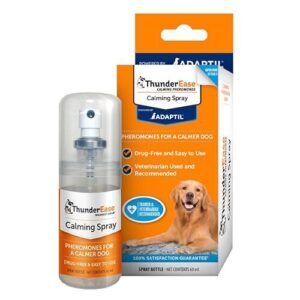
Anxious dogs often benefit from calming aids along with a comfy bed. ThunderEase uses a vet-recommended pheromone analog to reduce stress-related behaviors like barking and hiding. It’s drug-free and mimics the natural calming pheromone mother dogs release.
Spray it on bedding or inside your dog’s crate 15 minutes before stressful events—vet visits, thunderstorms, or crate training sessions. You’ll need to reapply every 4 to 5 hours, and remember not to spray directly on your furry friend. It works best when paired with other calming strategies.
| Best For | Dog owners looking for a drug-free solution to calm their anxious pets during stressful situations like thunderstorms, vet visits, or travel. |
|---|---|
| Material | Liquid Spray |
| Washable | Not Applicable |
| Brand | ThunderEase |
| Weight | 0.09 kilograms |
| Life Stage | All Life Stages |
| Anxiety Relief | Yes |
| Additional Features |
|
- Mimics natural calming pheromones that mother dogs produce, making it a gentle and familiar approach to reducing anxiety
- Versatile for multiple situations including separation anxiety, car rides, and crate training
- Vet-recommended and comes with a 100% satisfaction guarantee
- Requires reapplication every 4-5 hours, which can be inconvenient during longer events
- May not work for all dogs since results vary based on individual anxiety levels
- Can be pricey compared to other calming methods, especially with frequent use
Maintenance and Care for Crate Beds
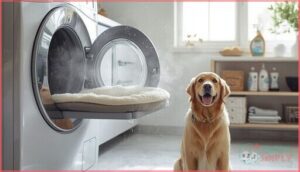
A quality crate bed is only as good as the care you give it. Regular cleaning keeps your dog healthy and your home fresh, but you’ll need to know the right techniques to maintain both comfort and durability.
Here’s what you need to know about washing, drying, and replacing your dog’s crate bed.
Machine-Washable Options
Machine-washable options make life easier when accidents happen. Look for removable covers with zip closures—they’re simple to pull off and toss in the wash. Polyester blends and microfiber fabrics resist wrinkles and dry quickly, cutting downtime between uses.
Most washable dog bed covers handle temperatures up to 60°C, and quality fabric choices stay colorfast after 30-plus wash cycles. Check dog crate bed reviews for real-world durability feedback.
Spot Cleaning and Stain Removal
Between full washes, spot treatment keeps dog crate beds fresh without constant laundering. Blot protein-based stains like urine with cold water and enzyme cleaners designed for fabric care. For grease marks, apply dish soap and let it sit before rinsing.
Always test cleaning products on a hidden area first—this protects your washable dog bed investment and ensures orthopedic crate bed materials won’t fade or weaken with repeated spot cleaning.
Proper Drying Techniques
Drying dog crate beds the right way protects both fabric care and foam restoration after washing. Air drying in a well-ventilated area prevents moisture control issues that can lead to mold, keeping your pet safe during crate training.
Follow these drying times and techniques for optimum results:
- Blot first with clean towels to absorb surface moisture without crushing padding
- Avoid direct heat which damages foam and causes fabric fading
- Flip occasionally to guarantee even drying throughout
- Allow 12-24 hours in moderate humidity before returning to your dog crate
When to Replace Your Crate Bed
Even with proper care, your dog crate beds won’t last forever. Watch for bed wear signs like flattened foam, torn seams, or persistent odors that won’t wash out. Memory foam usually provides 1-2 years of solid support before replacement timing arrives. If your furry friend seems restless or uncomfortable, that’s a clear signal their crate bed needs an upgrade.
| Replacement Indicator | Timeframe | Action Needed |
|---|---|---|
| Memory foam flattening | 1-2 years | Replace with orthopedic crate bed |
| Waterproof layer fails | 6-12 months | Upgrade to durable option |
| Fabric tears or frays | As noticed | Immediate replacement for safety |
| Persistent odor remains | After 3+ washes | Replace dog bed completely |
Durability and Value Considerations
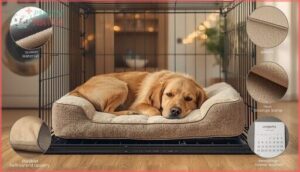
You want your dog’s crate bed to last through countless naps, washes, and maybe a little chewing. A well-made bed won’t fall apart after a few weeks, which saves you money and keeps your furry friend comfortable.
Let’s look at what separates a bed that holds up from one that doesn’t.
Quality Stitching and Construction
Strong stitching determines whether your dog’s crate bed survives daily use or falls apart after a few washes. Look for even stitch density—around 8 to 12 stitches per inch—on all seams, which prevents fraying and keeps the pet bed comfort intact.
Seam reinforcement at stress points, like corners and edges, uses techniques such as bartacking to resist your dog’s weight and movement inside the dog crate.
Fill Material Longevity
Fill retention matters more than you might think. Memory foam retains about 25 to 30 percent of its original elasticity after 18 months of regular use, while polyester fiber fill holds 60 to 80 percent loft after 60 washing cycles.
High density foam blocks compress less than 10 percent over 12 hours, maintaining support your dog needs in their orthopedic crate bed.
Balancing Cost and Quality
When comparing dog bed options for crate training, check the cost over months of use rather than just the initial price tag.
A budget analysis reveals that quality metrics like waterproof covers and double-stitched seams deliver real cost savings by lasting longer.
Smart price comparison focuses on value assessment for your pet care investment, ensuring canine comfort doesn’t break the bank.
Additional Crate Comfort Accessories
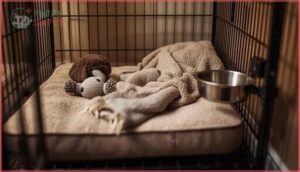
A quality crate bed is just the starting point for creating a comfortable space your dog actually wants to spend time in. Adding the right accessories can make a world of difference in how your furry friend feels about their crate.
Let’s look at three simple additions that can boost comfort and help anxious dogs settle in more easily.
Crate Pads Vs Dog Beds
When you’re choosing between a crate pad and a dog bed for your furry friend, understanding the key differences helps you create the ideal sleep space. Crate pads offer practical Crate Bedding Options that address common concerns during crate training:
- Snug fit: Crate pads are designed to fit standard dog crates measuring 24 to 48 inches, reducing bunching and movement
- Low-profile design: Thinner construction prevents your dog from wedging underneath while maximizing crate space
- Easy maintenance: Machine-washable covers simplify cleanup after accidents, supporting Pet Comfort Levels
- Secure placement: Non-skid bottoms and corner tie-downs keep the dog crate bed stable during use
- Water protection: Waterproof fabrics shield foam cores from moisture, extending the life of your investment
Dog beds provide plush comfort but can bunch or shift inside a dog crate, creating gaps that disrupt your dog’s rest. Meanwhile, crate pads sit flat on the crate floor, allowing even weight distribution—especially important for larger dogs.
For Canine Sleep Preferences focused on containment and cleanliness, a well-fitted crate pad often delivers enhanced Crate Pad Benefits compared to bulkier Dog Bed Alternatives.
Washable Blankets for Extra Warmth
Adding a washable dog bed blanket to your dog crate boosts Cold Weather Comfort when temperatures drop. Plush Blanket Materials like fleece provide Thermal Insulation and Fabric Softness your pet will love, while machine-friendly Wash Cycle options keep crate bed hygiene simple.
Choose rectangular styles that fit snugly on the pet bed comfort surface, with non-slip backing to prevent shifting and reinforced edges that survive repeated cleaning without fraying.
Calming Aids for Anxious Dogs
Anxiety in dogs responds well to Pheromone Therapy diffusers that mimic maternal signals, helping with Anxiety Triggers like storms or separation. Calming Supplements containing L-theanine or melatonin support Stress Management when vet-approved.
Calming aids like pressure vests and Canine Massage tools promote relaxation, while white noise paired with puzzle toys encourages healthy dog behavior modification. These additions improve crate safety and support effective canine behavior training.
Frequently Asked Questions (FAQs)
Is it good to put a dog bed in a crate?
Picture your pup curled nose-to-tail, snoozing peacefully. A dog bed transforms a bare crate into a genuine comfort zone, supporting joints while honoring your dog’s natural den preferences and making crate training feel safe and inviting.
Can I use a crate bed for outdoor kennels?
Yes, you can use a crate bed for outdoor kennels if you choose weather-resistant, water-repellent materials with proper ventilation.
Verify the bed fits securely, resists mold, and provides comfort in varying temperatures for ideal canine care.
How do different breeds affect bed choice?
Breed size matters when selecting a dog crate bed, as does coat type and sleeping style. Small breeds prefer snug beds, while large breeds need ample space. Senior dogs benefit from orthopedic support.
Are heated or cooling beds safe for crates?
Heated beds are safe when they include low-voltage elements, auto-shutoff, and chew-resistant cables. Cooling beds offer thermal safety without electrical risks, making both excellent options for maintaining your dog’s comfort zones in crates.
Should puppies have different beds than adult dogs?
Puppies need softer padding for developing joints and non-toxic materials safe for exploration, while adult dogs require firmer support.
A proper puppy bed should accommodate growth and simplify cleanup during accidents.
Can I reuse old bedding as crate padding?
You can repurpose old towels and fleece blankets as crate bed padding after washing them thoroughly.
Just inspect for loose threads or buttons first—these become chewing hazards your dog doesn’t need.
Conclusion
Your dog’s crate shouldn’t feel like a holding area—it should be their personal retreat. When you know what to look for in a dog crate bed, you’re choosing more than padding. You’re selecting joint support, emotional security, and restful sleep.
Measure carefully, prioritize safety features, and invest in quality materials that withstand daily use. The right bed doesn’t just fill space—it creates a haven where your dog willingly relaxes, recovers, and feels protected.