This site is supported by our readers. We may earn a commission, at no cost to you, if you purchase through links.

It takes only a handful of grapes to send a healthy dog into kidney failure. Chocolate, something you might snack on without a second thought, can trigger seizures or even stop a dog’s heart.
The list of what foods kill dogs isn’t just long—it’s full of everyday ingredients you probably have in your kitchen right now.
Most owners find out about these dangers the hard way, after a close call or a frantic midnight trip to the vet. Knowing which foods pose a real threat lets you protect your dog before a mistake turns into an emergency.
Table Of Contents
Key Takeaways
- A small amount of grapes, xylitol, or dark chocolate can trigger kidney failure, seizures, or cardiac arrest in dogs — life‑threatening risks most owners underestimate.
- Each toxic food harms through a distinct chemical pathway: theobromine blocks the heart, tartaric acid destroys kidneys, and xylitol floods the bloodstream with insulin within 30 minutes.
- Symptoms vary widely in timing — xylitol strikes within an hour while grape toxicity can take 72 hours to surface, so never wait for signs before calling a vet.
- Cooking doesn’t neutralize these dangers, since heat‑stable toxins like theobromine and allium compounds remain just as deadly in cooked form as they are raw.
What Foods Can Kill Dogs?
Some everyday foods that seem completely harmless can actually be deadly for your dog.
Before you start cooking for your pup, check out this guide to safe homemade food options for Great Danes so you know exactly what to include—and what to leave out.
The list below covers the most dangerous ones — foods that can cause kidney failure, seizures, or worse, even in small amounts.
Knowing what to keep away from your dog is one of the most important things you can do as an owner.
Chocolate and Caffeine

Chocolate is one of the most dangerous foods your dog can get into. It contains theobromine, a compound dogs metabolize with a metabolic half-life of 17.5 hours — nearly six times slower than humans.
That slow clearance lets toxins build up fast. Symptoms timeline starts within two hours: vomiting, tremors, seizures.
Theobromine levels vary widely — dark chocolate hits hardest. Keep it out of reach.
Chocolate toxicity is among the top ten poison calls to the Animal Poison Control Center.
Grapes and Raisins

Grapes and raisins are among the most deceptive toxic foods in canine health — they look harmless, yet trigger a kidney failure mechanism that is still not fully understood. Even a few raisins can exceed toxic dose thresholds for small dogs. Dog food safety starts with awareness:
- Vomiting begins within 6–24 hours
- Early vomiting induction and activated charcoal treatment are standard emergency responses
- Survivors need long-term kidney monitoring
Keep both completely away from your dog. Prompt gastrointestinal decontamination is essential for effective treatment.
Onions, Garlic, Chives, and Leeks

What makes onions and garlic especially dangerous isn’t just what they are — it’s how little it takes.
These Allium family members, including chives and leeks, cause oxidative damage to your dog’s red blood cells, triggering red blood cell destruction and hemolytic anemia.
Breed sensitivity matters too: Akitas and Shiba Inus face higher risk.
Dose thresholds are low, and kidney complications can follow.
Xylitol (Artificial Sweetener)
If onions work slowly, xylitol hits fast.
This sugar substitute triggers an insulin surge in dogs three to seven times greater than normal, causing rapid hypoglycemia onset — dangerously low blood sugar — within 30 minutes.
Higher doses cause liver toxicity within 48 hours. Product sources include sugar-free gum, peanut butter, and vitamins.
Even one stick of gum can become a veterinary emergency for small dogs.
Macadamia Nuts and Walnuts

Two nuts, two very different dangers — but both belong nowhere near your dog’s bowl.
Macadamia nuts are toxic at just 2.2 grams per kilogram of body weight, triggering neurological symptoms like hindlimb weakness, tremors, and hyperthermia within 12 hours. Moldy walnuts introduce a second threat: penitrem A, a mycotoxin type capable of causing seizures.
Watch for:
- Sudden hind-leg weakness or inability to stand
- Vomiting with visible nut pieces
- Uncontrolled tremors or seizures
- Fever and disorientation
Treatment protocols generally include IV fluids and antiemetics, with most dogs recovering in 24–48 hours. For storage safety, keep all nuts sealed and well out of reach — trail mix included.
Avocado
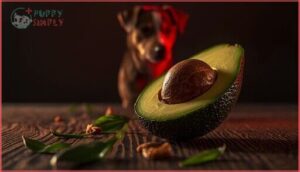
Avocado sits in a gray zone — not as immediately lethal as grapes, but far from safe.
Persin toxicity from the skin, leaves, and pit poses real canine health risks, while the flesh’s high fat content can trigger pancreatitis or gradual weight gain.
Pit obstruction alone can demand veterinary emergency care.
Safe serving size, if any, stays minimal — most vets recommend avoiding avocado entirely for pet safety.
Cherries and Stone Fruit Pits

Cherries look harmless sitting on your counter, but the pits, stems, and leaves carry cyanogenic glycoside — a cyanogenic glycoside that breaks down into hydrogen cyanide inside your dog’s body. That’s a serious canine health risk hiding behind something innocent‑looking.
The cyanide mechanism is straightforward and alarming:
- Cyanide blocks oxygen use at the cellular level
- Intestinal blockage can develop from swallowed whole pits
- Dental fracture risk is real when dogs bite hard pits
- Safe pit removal before serving protects against both hazards
- Portion guidelines suggest no more than 3 pitted cherries for medium dogs
Peach, plum, and apricot pits carry identical toxic substances — treat all stone fruits the same way for reliable pet safety.
Alcohol and Raw Dough

Most people know alcohol is off‑limits, but raw yeast dough is just as dangerous — sometimes more so.
Fermentation toxicity hits dogs on two fronts: yeast gas expansion causes gastric distention risk as dough swells inside the warm stomach, while ethanol metabolism from fermented sugars poisons the bloodstream.
Emergency treatment protocols are critical here. Keep both alcohol and raw yeast dough completely away from your dog.
Moldy or Spoiled Foods
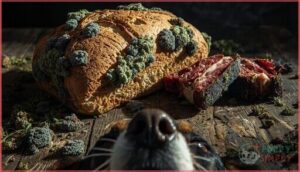
That forgotten loaf or moldy compost scrap can quietly become a serious threat to your dog’s health.
- Tremorgenic mycotoxin symptoms — seizures, tremors, dangerously high fever — can hit within minutes
- Botulism from rotten meat causes creeping paralysis, starting in the hind legs
- Bacterial spoilage toxicity and moldy grain risks, including aflatoxin exposure, silently destroy liver function
Don’t underestimate food toxicity in dogs.
High-Salt Foods
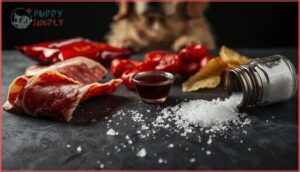
Salt is hiding in places most owners never suspect. Processed meats, salty snacks, even homemade play dough — all carry food toxicity risks that escalate fast.
Rock salt hazards, sea water intake, and soy sauce make the list too. For dog health and pet safety, the threshold is dangerously low.
| Toxic Food | Salt Content Risk | Effect on Dogs |
|---|---|---|
| Processed Meats | Very High | Rapid sodium overload |
| Salty Snacks | High | Triggers salt toxicosis |
| Play Dough | Extremely High | Life-threatening hypernatremia |
Why Are These Foods Toxic to Dogs?

You might wonder why your dog can’t just eat what you eat — after all, it’s the same food, right?
The answer lies in how differently a dog’s body processes certain compounds compared to ours.
Here’s what’s actually happening beneath the surface.
Differences in Canine and Human Metabolism
Your dog’s body processes food like a completely different machine. Four key metabolic gaps explain why:
- Theobromine Clearance Rate — dogs eliminate it in 17–18 hours; humans clear it in a few.
- Xylitol Insulin Surge — their pancreas floods the bloodstream with insulin; yours barely reacts.
- CYP450 Profiles — canine liver enzyme isoforms like CYP3A12 differ sharply from human equivalents, slowing breakdown of certain toxic foods for dogs.
- Enzyme Isoform Variability — some dogs lack specific enzymes entirely, making pet health risks unpredictable breed to breed.
Unlike humans, dogs’ Protein‑Fat Metabolism dominates — carbohydrate-processing pathways are simply weaker, leaving them vulnerable to substances we tolerate easily.
Specific Toxins in Common Foods
Each toxic food harms through a distinct chemical pathway.
The Theobromine Mechanism in chocolate blocks adenosine receptors, triggering cardiac arrhythmias. Xylitol’s Insulin Surge floods your dog’s bloodstream within 30 minutes. Tartaric Acid Nephrotoxicity from grapes destroys kidney tissue within 72 hours. Persin Lung Damage from avocado causes fluid buildup in the chest. Onions and garlic drive Mycotoxin Seizure Risk through red blood cell destruction.
| Toxin | Primary Harm |
|---|---|
| Theobromine (Chocolate) | Cardiac arrest |
| Tartaric Acid (Grapes) | Kidney failure |
| N-Propyl Disulfide (Onions/Garlic) | Hemolytic anemia |
Dose-Dependent Toxicity in Dogs
Knowing the specific toxin matters, but dose-dependent toxicity in dogs is just as important.
Threshold Levels shift dramatically with Body Weight Impact — a toy breed hits dangerous chocolate doses far faster than a Lab.
Individual Sensitivity adds another layer; two dogs, same weight, can react very differently.
Time-Course Effects and Cumulative Exposure mean a dog can seem fine initially, then crash hours later.
Dangerous Symptoms After Ingesting Toxic Foods

When a dog eats something toxic, their body usually sends out warning signals fast — and knowing what to look for can make all the difference.
Some symptoms show up within minutes, while others take hours to become obvious.
Here are the key signs that something is seriously wrong.
Vomiting and Diarrhea
Vomiting and diarrhea are your dog’s body sounding the alarm — and onset timing matters.
Chocolate triggers vomiting within 2 to 6 hours; grapes and onions cause diarrhea within 6 to 12 hours.
Fluid loss escalates fast, making veterinary emergency care critical before dehydration sets in.
Don’t wait for symptoms to pass on their own — food poisoning in dogs rarely resolves without professional support.
Weakness and Collapse
Collapse isn’t just dramatic — it’s a countdown. Xylitol drives blood sugar so low that hypoglycemia signs appear within 30 minutes, while kidney failure lethargy from grapes can quietly build over 72 hours.
Collapse is not drama — it is a countdown your dog’s body has already started
Watch for:
- Sudden inability to stand
- Muscle tremor onset and hindlimb weakness
- Electrolyte imbalance from salt toxicity
- Neurological depression after macadamia ingestion
Veterinary emergency care can’t wait.
Seizures and Tremors
Seizures and tremors aren’t interchangeable — knowing the difference shapes how fast you act.
Pre-ictal signs like pacing or clinginess often warn you before chocolate or caffeine triggers full convulsions 6–12 hours post‑ingestion.
Xylitol moves faster, causing tremors within 30 minutes.
Post-ictal recovery — disorientation, temporary blindness — can last hours.
Grapes and onions follow slower timelines, but the neurological damage is just as real.
Rapid Heartbeat and Pale Gums
Your dog’s heart and gums tell a story you can’t ignore. Tachycardia triggers like chocolate and caffeine can push heart rate past 140 beats per minute within 6–12 hours, while blood oxygen deficiency from onion‑induced anemia turns healthy pink gums ghostly white. Watch for these cardiac toxicity signs requiring Emergency Cardiac Assessment:
- Rapid heartbeat after chocolate or caffeine exposure
- Pale or white gums following grape or onion ingestion
- Blue-tinged gums signaling severe circulatory failure
- Elevated heart rate paired with weakness or collapse
Drooling or Foaming
Thick, sudden drooling is your dog’s body sounding the alarm.
Nausea‑Induced Drooling from Chocolate, Grapes, Onions, or Garlic floods salivary glands before vomiting even starts. Xylitol and similar toxins can escalate to Seizure‑Related Foaming, where jaw clamping whips saliva into frothy bubbles.
Oral Irritation Triggers like onion compounds cause constant dripping that soaks the chest.
Any of these Toxic Saliva Indicators demand an immediate Emergency Drool Assessment — don’t wait.
How to Prevent Accidental Food Poisoning

Prevention starts at home, and the good news is that most accidents are avoidable with a few simple habits.
You don’t need to overhaul your entire routine — just make some smart, consistent changes. Here’s what actually works to keep your dog safe.
Dog-Proofing Your Kitchen and Home
Your kitchen is ground zero for canine toxicology risks — and a few simple changes make all the difference. Secure trash bins with locking lids, and consider baby gate installation across kitchen doorways during meal prep. Counter surface management matters too: clear food after cooking, every time.
- Use cabinets or locks for chemical storage solutions
- Apply supervision training techniques like "leave it" for dropped food
- Keep trash inaccessible — dogs learn pedal-operated lids fast
Safe Food Storage Practices
store food matters just as much as what you feed your dog. airtight containers and high-shelf placement for chocolate, nuts, and xylitol products — these toxic substances for dogs are worth taking seriously.
Childproof locks on low pantry doors and secure trash lids close off two of the most common access points. Labeling dates on leftovers helps you quickly discard anything containing onions, garlic, or alcohol sauces before they become a food hazard for dogs.
Educating Family and Guests
Even the safest kitchen won’t protect your dog if guests don’t know the rules.
House Rules and Visual Reminders — like a toxic food list posted on the fridge — close that gap fast.
- Set clear Guest Guidelines before parties
- Teach Child Safety with simple "this hurts dogs" framing
- Share Emergency Info with babysitters
- Build Toxic food awareness through posted reminders
Checking Ingredients in Snacks and Treats
Family rules cover who’s in the room — but what about what’s in the bag?
Hidden Xylitol hides in "sugar-free" peanut butter, Artificial Sweeteners lurk in energy bars, and Allium Powder appears as "natural flavors" in crackers.
Ingredient Order matters too: Chocolate, Grapes, Onions, and Garlic listed early mean higher amounts.
Moldy Nuts in trail mix add another layer of risk.
Always read the full panel.
What to Do if Your Dog Eats Something Toxic

Even the most careful dog owner can face a moment of panic when their dog gets into something they shouldn’t.
What you do in those first few minutes can genuinely make a difference in how things turn out.
Here’s exactly what to do — and what to avoid — when that moment hits.
Immediate Steps to Take
The moment you suspect your dog ate something toxic, act — don’t freeze. Secure your dog away from the source, then assess breathing and alertness right away.
Document timing and estimate how much they consumed; that detail shapes veterinary care decisions. Gather evidence like packaging or wrappers.
Pet safety often hinges on these first two hours, so every second matters for your dog’s health.
When to Call The Vet or Animal Poison Control
Once you’ve gathered the evidence, don’t wait for symptoms to decide whether to call. Time‑Sensitive Ingestion is real — veterinary care is most effective within two hours of exposure. Dose Assessment matters too; small breeds, puppies, and seniors face higher risk from even minor amounts.
- Call your vet immediately after any known toxic food ingestion
- Contact Animal poison control (ASPCA, 24/7) for Repeated Exposure or Medication Interactions
- Seek Emergency veterinary help if symptoms appear — don’t monitor overnight
What Information to Provide in an Emergency
When you call emergency veterinary or Poison Control, every detail counts. Have your dog’s breed, age, and weight ready — these directly affect toxicity calculations.
Describe the toxic food, the exact amount, and when ingestion happened. Mention current medications and any pre-existing conditions. The more precise your ingestion timeline, the faster professionals can act to protect your dog’s health and safety.
What Not to Do Without Veterinary Guidance
When panic sets in, the instinct to act fast can backfire. These five mistakes make toxic food situations far worse:
- Inducing vomiting without vet approval risks aspiration pneumonia
- Human medication use — ibuprofen and acetaminophen cause organ failure in dogs
- Unsafe home remedies like salt or milk don’t neutralize poisonous substances
- Delay professional care — organ damage begins before symptoms appear
- Improper follow-up — skipping bloodwork misses hidden kidney injury
Always prioritize veterinary care first.
Frequently Asked Questions (FAQs)
What is the number one killer for dogs?
Cancer is the silent thief of a dog’s years — causing 23 to 30 percent of all dog deaths.
Early detection and knowing your dog’s genetic risk, especially in high‑risk breeds, genuinely saves lives.
What are 13 human food toxic to dogs?
Thirteen human foods pose serious toxic threats to dogs: chocolate, grapes, raisins, onions, garlic, xylitol, macadamia nuts, avocado, cherries, alcohol, raw dough, moldy foods, and high-salt snacks — each carrying distinct canine toxicity risks.
Are some dog breeds more sensitive to toxins?
Yes — breed and body size genuinely change the risk picture.
Genetic susceptibility, like the MDR1 mutation in Collies or CYP2B11 deficiency in Greyhounds, and size-related risk in small breeds, means canine health isn’t one-size-fits-all.
How long after ingestion do symptoms appear?
Symptoms depend on the toxin, dose, and your dog’s size. Fast-acting substances like xylitol show early hour signs within 60 minutes, while delayed effects from grapes can take 24–72 hours.
Does cooking change the toxicity of harmful foods?
Cooking doesn’t make toxic foods safe for your dog.
Heat‑stable toxins like theobromine, xylitol, and allium compounds survive heat fully intact, meaning cooked versions remain just as dangerous as raw ones.
Are puppies more vulnerable to food poisoning than adults?
Puppies are considerably more vulnerable.
Their immature liver, lower gut barrier maturity, and smaller body weight mean dose per kilogram spikes fast — rapid dehydration and behavioral curiosity make every food hazard far more dangerous.
Conclusion
The kitchen can be a minefield—and regarding what foods kill dogs, the danger hides in plain sight. Grapes on the counter, gum in a bag, chocolate left within reach: small oversights carry serious consequences.
You don’t need to fear every meal, but you do need to stay informed, stay vigilant, and act fast when something goes wrong. That knowledge isn’t just useful—it’s the difference between a scare and a tragedy.
- https://animalemergencyservice.com.au/blog/toxic-foods-for-dogs-cats/
- https://www.aspca.org/pet-care/aspca-poison-control/people-foods-avoid-feeding-your-pets
- https://gsvs.org/blog/xylitol-poisoning-dogs-emergency/
- https://www.bluecross.org.uk/advice/dog/foods-poisonous-to-dogs
- https://www.akc.org/expert-advice/nutrition/fruits-vegetables-dogs-can-and-cant-eat/