
This site is supported by our readers. We may earn a commission, at no cost to you, if you purchase through links.
Most dog owners wouldn’t think twice about grabbing any old container to store their pet’s kibble, yet the wrong material choice can quietly introduce toxic chemicals like BPA, heavy metals, and oxidation byproducts directly into your dog’s daily meals.
Chemical leaching from unsuitable plastics and reactive metals poses documented health risks that worsen with heat exposure and time, turning a seemingly practical storage solution into a slow-acting hazard.
The container material you select matters just as much as the food quality itself, since even premium kibble loses nutritional value when stored in porous, reactive, or degraded vessels.
Stainless steel, food-grade glass, and specific BPA-free plastics offer proven safety profiles, but understanding the science behind material selection, airtight sealing, and proper placement ensures you’re protecting your dog’s health rather than unknowingly compromising it.
Table Of Contents
- Key Takeaways
- Key Factors in Dog Food Storage Safety
- Safe Plastic Containers for Dog Food
- Stainless Steel: a Top Choice for Safety
- Glass Containers for Dog Food Storage
- Ceramic Containers: Pros and Cons
- Airtight Features for Preserving Freshness
- Container Size and Placement Considerations
- Cleaning and Maintenance Best Practices
- Top Dog Food Storage Containers Reviewed
- 1. Yamazaki Pet Food Storage Container
- 2. Van Ness Pet Food Container
- 3. Kurgo Portable Dog Food Carrier Bag
- 4. Ruffwear Dog Food Travel Bag
- 5. Gamma2 Pet Food Storage Container
- 6. Gamma2 Vittles Vault Pet Food Container
- 7. Gamma2 Dog Food Storage Container
- 8. Iris Usa Pet Food Storage Container
- 9. Iris Airtight Pet Food Storage Container
- Frequently Asked Questions (FAQs)
- What is the safest container for dog food?
- What is the best container to store homemade dog food in?
- Can I store wet dog food in these containers?
- Are recycled materials safe for dog food storage?
- Do container colors affect food safety or freshness?
- How long can dog food stay in a container?
- Are there eco-friendly options for dog food containers?
- Conclusion
Key Takeaways
- Stainless steel and food-grade glass represent the safest storage materials because they’re non-porous, non-reactive, and won’t leach chemicals into your dog’s food, unlike plastics that can degrade over time and release harmful compounds like BPA or heavy metals.
- Chemical leaching from unsuitable containers introduces documented health risks—particularly when heat, acidic ingredients, or aging plastics accelerate the migration of toxins, oxidation byproducts, and endocrine disruptors directly into your pet’s daily meals.
- Airtight seals matter as much as material selection since even premium containers fail to preserve nutritional integrity when moisture, oxygen, and pests can infiltrate through compromised gaskets or improperly secured lids.
- Regular cleaning and proper placement in temperature-controlled, low-humidity environments prevent bacterial colonization, mold growth, and fat rancidity that compromise food safety regardless of how safe your container material might be.
Key Factors in Dog Food Storage Safety
When you’re choosing how to store your dog’s food, you’re not just picking a container—you’re making decisions that directly affect your pet’s health and safety.
Knowing how to store dog food properly means understanding which containers keep nutrients fresh and which materials can actually leach harmful chemicals into your pet’s meals.
The wrong storage material can introduce toxins, harbor bacteria, or allow nutrients to degrade before your dog ever takes a bite. Let’s walk through the critical safety factors you need to understand before investing in any dog food storage solution.
If you’re transitioning to raw dog food for beginners, proper storage becomes even more critical to prevent contamination and preserve freshness.
The wrong storage material can poison your dog’s food with toxins, bacteria, and nutrient loss before the first bite
Chemical Leaching and Toxicity Risks
Chemical leaching poses real dangers when selecting storage containers, as harmful substances can migrate into your dog’s food over time. Here’s what you need to monitor to guarantee material safety and contamination control:
Investing in high-quality dog food storage containers for travel helps protect against chemical exposure while keeping meals fresh during trips.
- Heavy metals like lead, cadmium, and chromium can leach from degraded containers, especially when acidic ingredients are present
- BPA and substitutes migrate from non-food-grade or damaged plastics, requiring BPA-free, nontoxic alternatives
- Reactive metals catalyze fat oxidation in kibble, producing harmful compounds that reduce nutritional quality
- Heat exposure accelerates chemical migration rates, particularly affecting flexible plastics and coated metal surfaces
- Long-term low-level exposure may impact your dog’s liver, kidney, and nervous system function depending on the toxic substance involved
Notably, factors such as material type and cooking conditions can substantially influence the risk of into food.
For example, cooked chicken bones become brittle and splinter easily, making them particularly dangerous for pets, as detailed in this guide on cooked chicken bone risks for dogs.
Porosity and Contamination Concerns
Beyond leaching, porosity determines how materials trap contaminants within microscopic voids, complicating storage hygiene. Porous plastics harbor bacteria and moisture despite cleaning, while pore size analysis reveals stainless steel and glass remain effectively nontoxic and nonporous.
For contamination risk reduction and toxicity prevention, choose airtight containers made from appropriate container materials that resist microbial buildup, ensuring moisture control and food safety through smart material selection.
Reactivity With Dog Food Ingredients
Dog food ingredients don’t just sit passively in containers—they interact with storage materials in ways that affect food safety and nutrient preservation.
Protein interactions can trigger fat oxidation when exposed to reactive surfaces, while moisture control failures accelerate chemical migration from non-food-grade plastics.
You’ll want BPAfree, foodgrade container materials that prevent toxicity and support proper storage conditions for your dog’s health. It’s also important to understand the impact of unsafe dog food ingredients when evaluating overall safety for your pet.
Impact on Freshness and Nutrition
When you choose the right storage container materials, you’re protecting nutrient preservation and extending shelf life beyond expiration dates.
Airtight containers slow lipid oxidation and vitamin degradation by controlling oxygen exposure, while non-porous surfaces prevent moisture migration that triggers mold growth. Storage conditions like temperature stability and light protection directly influence food safety, ensuring your dog’s kibble retains its nutritional value and palatability throughout use.
Safe Plastic Containers for Dog Food
Plastic containers remain one of the most popular choices for dog food storage, but not all plastics are created equal in terms of your pet’s safety.
Look for dog food storage containers that are specifically labeled BPA-free and designed with airtight seals to keep kibble fresh and safe.
If you’re considering plastic, you’ll need to understand which types protect your dog from harmful chemical exposure and which materials maintain their integrity over time. Let’s examine the key factors that separate safe plastic options from those that pose potential health risks.
Food-grade and BPA-free Plastics
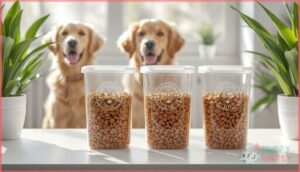
When you’re choosing plastic containers for your pup’s kibble, food-grade and BPA-free options offer the safest bet against chemical migration.
Polypropylene and HDPE—common BPA-free polymers—exhibit low reactivity with fats and acids in dog food, minimizing leaching risks while meeting regulatory compliance standards for food contact.
Airtight containers crafted from these materials help preserve freshness without introducing endocrine-disrupting chemicals, ensuring your dog’s nutrition stays protected from plastic safety concerns.
How to Identify Safe Plastics
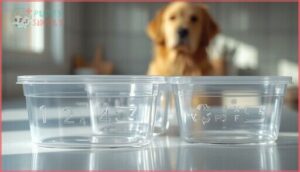
You can identify safe plastics for pet food storage by checking the recycling code on the bottom of containers—look for numbers 1, 2, 4, or 5, which indicate materials with strong chemical resistance and lower toxicity levels.
Verify that product labels explicitly state food grade and BPAFree plastic, confirming the container meets food safety and handling standards through proper material testing before you trust it with your dog’s nutrition.
Potential Risks of Plastic Degradation
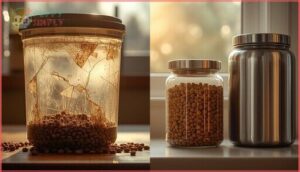
Over time, plastic breakdown introduces chemical contamination risks that threaten pet food storage safety, even in BPA-Free plastic containers.
Material degradation accelerates leaching effects through several pathways:
- Heat fluctuations release plasticizers and stabilizers into fatty dog foods at detectable concentrations
- Micro-scratches harbor bacteria and create porous networks that compromise food safety and handling
- UV exposure generates reactive byproducts that degrade vitamins and accelerate rancidity
- Aging barriers allow moisture ingress, shortening shelf life and increasing toxic exposure to your dog
Stainless Steel: a Top Choice for Safety
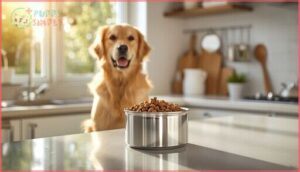
Stainless steel containers stand out as one of the safest materials you can choose for storing your dog’s food, offering a combination of durability and non-reactive properties that protect both freshness and health.
Unlike porous materials that can harbor bacteria or reactive surfaces that may leach chemicals, stainless steel provides a consistently safe storage environment that won’t compromise your pet’s nutrition. Here’s what makes stainless steel a top-tier option for conscientious dog owners.
Non-porous and Non-reactive Properties
Stainless steel storage containers stand apart because their non-reactive properties prevent chemical interactions with fats, proteins, or moisture in your dog’s food. You won’t see leaching, flavor changes, or odor absorption over time. The impermeable coatings on quality stainless steel create a barrier that moisture and oxygen simply can’t penetrate, protecting nutritional integrity meal after meal.
| Property | Stainless Steel Advantage |
|---|---|
| Chemical Resistance | No leaching into dog food |
| Surface Durability | Maintains airtight seal integrity |
| Material Safety | Food-grade, BPA-free by design |
| Reactivity Testing | Passes regulatory standards consistently |
| Impermeability | Blocks moisture and oxygen transfer |
Durability and Resistance to Odors
Unlike plastic, stainless steel storage containers offer outstanding material durability that keeps your dog’s food fresh without absorbing lingering smells. The non-porous surface acts as a natural odor barrier, preventing fatty kibble residues from embedding into the metal. You’ll appreciate how airtight seals with rubber gaskets lock in freshness preservation while blocking moisture and pest intrusion.
- Steel’s impermeability means you won’t battle persistent food odors even after years of daily use
- Airtight containers with quality gaskets maintain odor resistance through countless washing cycles
- Non-porous surfaces eliminate the need for plastic liners that can harbor bacteria and smells
Cleaning and Maintenance Tips
You’ll find that stainless steel‘s non-porous surface makes cleaning ease a standout feature for storage hygiene. Sanitizing methods are straightforward—wash with hot, soapy water weekly, then rinse thoroughly to maintain freshness preservation.
For odor removal, use white vinegar or baking soda monthly. Establishing cleaning schedules ensures airtight containers stay bacteria-free, while their durable container materials prevent the rancid coating issues common in porous storage containers.
Glass Containers for Dog Food Storage
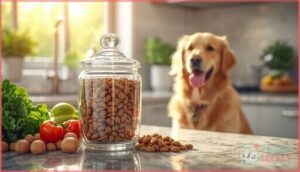
Glass containers offer a chemically inert solution for dog food storage, ensuring that no substances will leach into your pet’s food over time. While they’re heavier and more fragile than other options, their non-porous surface prevents bacterial growth and odor absorption, making them an excellent choice for health-conscious pet owners.
Here’s what you need to know about using glass containers safely and effectively.
Non-toxicity and Non-porosity
Glass stands out among safe materials for pet food storage because it won’t leach chemicals into your dog’s kibble, even after years of use. When you choose food-grade glass containers with an airtight seal, you’re protecting your pet’s nutrition from toxic free compounds found in lower-quality container materials.
- Glass surfaces remain completely non-porous, preventing bacterial colonization between cleanings
- BPA-free plastic alternatives exist, but stainless steel and glass offer better chemical safety
- Non-toxicity ensures fresh storage without hormonal disruptors or reactive compounds contaminating meals
Advantages and Disadvantages
While glass storage offers exceptional storage safety and food freshness for your dog’s nutrition, you’ll need to weigh its benefits against practical drawbacks. Clear containers let you monitor kibble levels at a glance, and the non-porous surface maintains an effective airtight seal without chemical transfer—unlike some container materials.
However, glass lacks the container durability of stainless steel options, making it heavier and prone to shattering if dropped during daily feeding routines.
Preventing Breakage and Safe Handling
Given glass’s fragility, you’ll want to master safe lifting and proper handling tips to protect both yourself and your investment in quality storage containers. Always use two hands when moving full dog food storage containers, keeping the load close to your body for better balance and breakage prevention.
Smart storage safety practices include:
- Place heavier glass containers on lower shelves where falls cause less damage
- Install non-slip mats underneath to prevent sliding during daily access
- Inspect airtight seals and rims regularly for hairline cracks that compromise container durability
Ceramic Containers: Pros and Cons
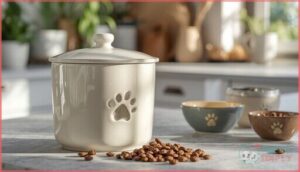
Ceramic containers offer an attractive, non-toxic storage option that many dog owners overlook when selecting materials for their pet’s food. While these containers can provide a safe environment for dry kibble, they come with unique considerations regarding durability and long-term use.
Understanding the specific properties of food-safe ceramic glazes, along with the practical challenges of chipping and maintenance, will help you determine whether this material suits your storage needs.
Safety of Food-safe Ceramic Glazes
When evaluating ceramic containers for pet nutrition and health, you should focus on glaze chemistry to minimize toxic leaching and food contamination.
Food-safe ceramic glazes form a stable, non-porous matrix that prevents bacteria from colonizing the surface, which directly impacts food storage and preservation.
Look for containers with clear or white interior liners, since these reduce colorant migration and maintain ceramic safety through consistent glaze durability and minimal reactivity with stored kibble.
Durability and Risk of Chipping
Ceramic containers can chip or crack when dropped, especially at edges and rims where material strength is lower. While thick ceramic shows better chip resistance than thin-walled designs, impact testing reveals that stoneware and porcelain still lag behind stainless steel in edge durability.
You’ll want to inspect storage containers regularly for crack propagation, since chips can harbor bacteria and compromise dog food storage containers’ safety over time.
Cleaning and Care Considerations
You should hand-wash ceramic containers with mild, pet-safe dish soap after each refill to maintain storage hygiene and prevent odor buildup. Sanitation methods for these materials include monthly vinegar rinses to eliminate lingering smells, while regular container maintenance involves inspecting glazed surfaces for cracks that trap residue.
Easy cleaning depends on smooth interior finishes, so follow consistent cleaning schedules to guarantee food safety and preservation without harsh scrubbing that damages protective coatings.
Airtight Features for Preserving Freshness
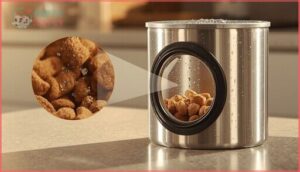
Your dog’s food stays fresh only when air, moisture, and pests can’t get inside the container, which means the seal matters more than you might think.
Even the safest materials won’t protect your dog’s nutrition if the lid doesn’t create a true barrier against environmental threats. Here’s what you need to know about airtight features and how they directly affect the quality of the food your dog eats.
Importance of Airtight Seals
Your dog’s food is only as fresh as the airtight seal protecting it. Airtight food storage and proper air tightness prevent oxidation that degrades fats and nutrients, while seal durability directly impacts freshness preservation over time.
When evaluating dog food storage containers, you’ll notice that container security through effective airtight seals blocks volatile compound loss, preserving palatability and nutritional integrity. Container materials and features must work together to maintain consistent moisture control and food quality.
Moisture and Pest Prevention
Moisture levels above 50 percent relative humidity create a breeding ground for mold in dog food storage containers, so you’ll want to use a dehumidifier in damp areas. Effective humidity control and pest barriers work together in airtight food storage to protect your dog’s meals.
- Seal cracks around doors and baseboards to block ants and beetles
- Install weather stripping to prevent outdoor pest entry
- Screen vents against flying insects accessing food
- Keep containers off floors in moisture-prone rooms
- Maintain storage sanitation through weekly exterior wiping
Proper airflow management and storage containers with latching tops provide essential food safety and preservation.
How Airtightness Impacts Shelf Life
Airtight storage slows oxidation of fats and vitamins by reducing oxygen ingress through container seals, which directly extends shelf life beyond what loose lids provide. You’ll preserve nutrient profiles longer when oxygen levels stay low, since aerobic microbial growth and enzymatic breakdown slow considerably in properly sealed dog food storage containers.
Food freshness depends on consistent gas barriers that maintain stable internal conditions, protecting food safety and preservation through high-quality container materials.
Container Size and Placement Considerations
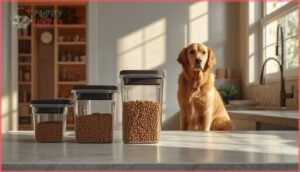
Selecting the appropriate container size and storing it in the right location are decisions that directly affect your dog food’s safety and longevity. The capacity you need depends on your dog’s size, eating habits, and how frequently you purchase food, while placement involves balancing accessibility with environmental protection.
Let’s examine the key factors that will help you make informed choices about container capacity, storage location, and the environmental conditions that impact food quality.
Choosing The Right Capacity
You can’t just eyeball container capacity and hope for the best—freshness control demands precision in capacity planning. Start by estimating your dog’s weekly intake from the feeding label, then add a 10 to 15 percent buffer for variability.
- Match container sizing to a 14 to 21 day supply for ideal freshness
- For multiple dogs, multiply daily servings and include extra headroom
- Choose stackable dog food storage containers to make the most of space
- Prioritize food-grade materials with integrated measuring scoops for portion accuracy
Where to Store Dog Food Containers
Once you’ve nailed capacity, placement makes or breaks your storage strategy. Keep your dog food storage containers in a pantry storage area or closet organization system where you can control conditions—these kitchen storage solutions protect kibble from light exposure and fluctuating temperatures.
Avoid basement placement or garage solutions where moisture accumulates, and never use kitchen counters, which invite heat damage and compromise pet food storage integrity.
Environmental Factors (temperature, Humidity)
Temperature control and humidity levels directly influence food quality in your storage container. When conditions swing above 30°C or relative humidity climbs past 60 percent, you’re inviting rancidity, mold, and nutrient loss—climate effects that undermine food preservation methods no matter how strong your seal is.
- Warm air meeting cool container walls creates condensation, breeding mold on kibble surfaces
- Consistent room temperatures around 18–21°C stabilize fats and vitamins, extending shelf life
- Low humidity with good moisture management slows microbial activity without desiccating food
Target stable storage conditions in a dry pantry with minimal temperature swings, and you’ll preserve freshness far longer than erratic garage or basement placement ever could.
Cleaning and Maintenance Best Practices
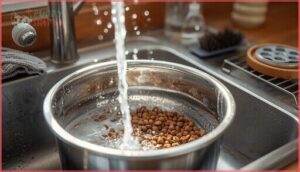
Even the safest storage container won’t protect your dog’s food if you don’t clean it properly, since residual oils and moisture create the perfect environment for bacteria, mold, and rancidity to develop.
Regular maintenance isn’t just about hygiene—it’s about preserving the nutritional integrity of your dog’s food and preventing contamination that could lead to serious health issues. Let’s examine the essential cleaning practices, timing, and handling techniques you need to implement for ideal food safety.
Cleaning Frequency and Methods
Consistent maintenance routines protect your dog’s health and extend storage container lifespan. You should wash food bowls and nearby surfaces daily, deep-clean storage containers weekly, and perform monthly sanitation of the entire cabinet area with food-safe cleaning products.
Below is a practical sanitation schedule to maintain storage hygiene and odor control:
| Frequency | Task | Purpose |
|---|---|---|
| Daily | Wash bowls and surfaces | Remove fresh residues |
| Weekly | Deep-clean containers | Eliminate dried particles |
| Monthly | Sanitize cabinet area | Minimize cross-contamination |
| Seasonally | Inspect for damage | Prevent spoilage and leaks |
Use warm water with mild dish soap for dog food storage containers, rinse thoroughly to prevent residue, then apply food-safe sanitizer at recommended dilution. Air-dry completely before refilling to avoid moisture-driven contamination. Replace worn seals during cleaning to maintain effectiveness. For odor control between full cleanings, wipe interiors with a 1:1 vinegar solution and store dry food away from strong-smelling substances.
Keep dedicated cleaning brushes and separate drying towels to prevent cross-contamination with household tools, replacing sponges every one to two weeks. Always wash your hands for at least twenty seconds before and after handling pet food storage tips, and sanitize counters before each cleaning session to guarantee proper food storage and handling practices.
Preventing Mold and Bacteria Growth
Regular sanitation alone won’t stop mold and bacteria if humidity climbs above 60 percent in your storage area.
You’ll need to control moisture by fixing leaks within 24 to 48 hours, using a dehumidifier in warm climates to maintain 40–50 percent relative humidity, and ventilating storage rooms with fans that promote air movement and reduce damp pockets where microbes thrive.
Safe Handling of Storage Containers
You minimize handling precautions by washing your hands before you touch storage containers, wearing clean gloves when you scoop kibble, and never setting bins on floors where pathogens accumulate.
Lift containers by their base rather than the lid to prevent seal damage, and rotate stock by placing new bags behind older ones so you maintain proper storage hygiene and safeguard food safety.
Top Dog Food Storage Containers Reviewed
Now that you understand the best practices for maintaining your dog’s food storage containers, it’s time to look at specific products that meet these safety standards.
The following nine containers have been evaluated based on material safety, airtight sealing capabilities, durability, and ease of cleaning. Each option offers distinct advantages depending on your storage needs, budget, and the size of your dog.
1. Yamazaki Pet Food Storage Container
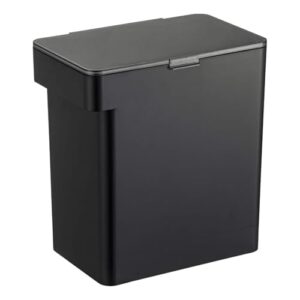
The Yamazaki Pet Food Storage Container offers a compact, polypropylene design that prioritizes freshness through its airtight construction. You’ll appreciate the transparent lid, which allows you to monitor kibble levels without compromising the seal—a feature that reduces unnecessary air exposure.
Holding up to 3.2 gallons or approximately 15 pounds of dry food, this BPA-free option includes a measuring cup for portion control. The container’s dimensions (7.76 x 12.09 x 12.28 inches) fit standard pantry shelves, while its food-grade materials minimize chemical leaching risks that can compromise nutritional integrity.
| Best For | Pet owners with small to medium-sized dogs or cats who want an airtight container that keeps food fresh while fitting neatly on pantry shelves. |
|---|---|
| Material | Polypropylene/ABS |
| Capacity | 15 lbs |
| Airtight Seal | Yes |
| BPA-Free | Yes |
| Color | Black |
| Portable | Handle included |
| Additional Features |
|
- Airtight seal keeps kibble fresh and prevents moisture from spoiling food
- Transparent lid lets you check food levels at a glance without breaking the seal
- Includes a measuring cup for consistent portion control at feeding time
- Lid may become loose or fall off after extended use due to hinge wear
- Actual capacity can vary depending on kibble size and shape
- Higher price point compared to basic storage bins with similar capacity
2. Van Ness Pet Food Container
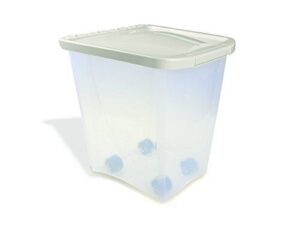
The Van Ness Pet Food Container combines FDA-approved plastic construction with a Fresh-Tite seal that audibly clicks when secured, giving you confidence that moisture and pests won’t compromise your dog’s kibble.
Holding 25 pounds of dry food, this BPA-free rectangular bin features four inline wheels for easy transport, though you may need to tilt the container to access the last servings due to its elevated base.
The clear siding allows you to monitor food levels without breaking the airtight seal, which helps preserve nutritional quality between feedings.
| Best For | Pet owners who buy dog or cat food in bulk and want an airtight, mobile storage solution that keeps kibble fresh while making it easy to check food levels at a glance. |
|---|---|
| Material | BPA-free plastic |
| Capacity | 25 lbs |
| Airtight Seal | Yes |
| BPA-Free | Yes |
| Color | White/Clear |
| Portable | Four wheels |
| Additional Features |
|
- Fresh-Tite seal clicks audibly when properly closed, preventing moisture and pests from getting in
- Clear sides let you see how much food is left without opening the lid
- Four wheels make it easy to move around, even when full
- Wheels may not always rotate smoothly, making it tricky to navigate tight spots
- Getting the last bit of food out can be awkward because of the raised wheel base
- Lid seal may need occasional tweaking to maintain proper closure
3. Kurgo Portable Dog Food Carrier Bag
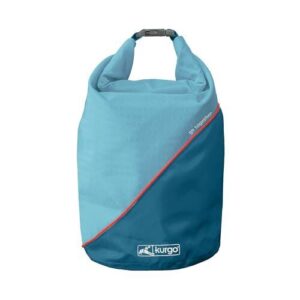
When road trips and hiking trails call, the Kurgo Kibble Carrier delivers portable food storage with its 5-pound capacity and roll-top closure, built from durable ripstop fabric that weighs just 4.2 ounces.
You’ll appreciate the food-safe PEVA liner that prevents kibble oils from seeping through, while the hexagonal weave construction resists tears during outdoor adventures. The bag compresses as you use food, includes a zippered side pocket for treats, and features a bottom stash compartment for collapsible bowls, though its heat-sealed seams won’t withstand extended exposure to high humidity or extreme weather conditions.
| Best For | Weekend adventurers and campers with small to medium dogs who need lightweight, packable food storage for short trips. |
|---|---|
| Material | Ripstop fabric |
| Capacity | 5 lbs |
| Airtight Seal | Roll-top closure |
| BPA-Free | Yes |
| Color | Coastal Blue |
| Portable | Lightweight design |
| Additional Features |
|
- Ultralight at 4.2 ounces with thoughtful features like treat pocket and bowl storage compartment
- Roll-top closure adapts to remaining food volume, making it ideal for multi-day trips
- Ripstop fabric and food-safe liner prevent tears and kibble oil leakage during travel
- Limited 5-pound capacity won’t work for large dogs or extended trips
- Not fully waterproof and struggles with high humidity or extreme weather exposure
- Roll-top seal could be stronger with a reinforced rim to prevent accidental opening
4. Ruffwear Dog Food Travel Bag
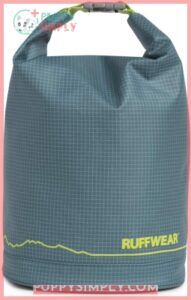
The Ruffwear Haul Bag offers 37 liters of organized storage with waterproof materials that protect kibble during car camping and weekend getaways. You’ll find multiple interior pockets that separate food from bowls and toys, preventing cross-contamination, while exterior compartments keep waste bags accessible.
The wide-mouth opening and removable shoulder strap make loading and transport straightforward, though at 16.5 x 11.8 x 12.5 inches, it’s sized for short trips rather than extended travel. The abrasion-resistant fabric wipes clean quickly after muddy adventures.
| Best For | Dog owners who take frequent camping trips or road adventures and need a durable, waterproof bag that keeps kibble fresh and organized for short getaways. |
|---|---|
| Material | Polyester |
| Capacity | 42 cups |
| Airtight Seal | Roll-down closure |
| BPA-Free | Yes |
| Color | Slate Blue |
| Portable | Lightweight design |
| Additional Features |
|
- Waterproof liner and odor-sealing design keeps food fresh and protected from moisture during outdoor trips
- Easy-pour spout and roll-down closure make serving meals mess-free and simple
- Lightweight at 8 ounces with adjustable volume, so it’s easy to carry and adapts to different trip lengths
- More expensive than standard dog food storage containers
- 10L capacity may not be enough for longer trips or multiple large dogs
- Can feel bulky when fully packed, making it less convenient for minimalist travelers
5. Gamma2 Pet Food Storage Container
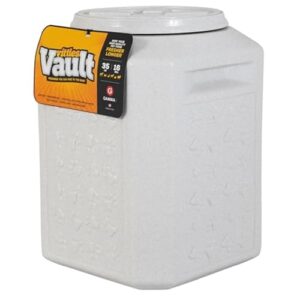
The Gamma2 Pet Food Storage Container delivers 35-pound capacity in a 12 x 12 x 16.75-inch footprint, balancing substantial storage with compact dimensions you can fit on pantry shelves.
You’ll appreciate the Gamma Seal Technology that threads a locking lid with double gaskets around the rim, creating an airtight barrier that excludes moisture and common pantry pests like ants and beetles.
The BPA-free HDPE plastic resists impacts without cracking, and four side grips simplify lifting when you’re relocating containers during routine cleaning or seasonal reorganization.
| Best For | Pet owners who need reliable, airtight storage for dry food in climate-controlled spaces and want easy access without wrestling with stubborn lids. |
|---|---|
| Material | HDPE plastic |
| Capacity | 35 lbs |
| Airtight Seal | Yes |
| BPA-Free | Yes |
| Color | Off-white |
| Portable | Handles on 4 sides |
| Additional Features |
|
- Gamma Seal Technology with double gaskets keeps food fresh while blocking pests and odors
- Four-sided handles make it easy to lift and move, even when full
- Compact 12 x 12 x 16.75-inch size fits on shelves without taking up excessive floor space
- Not stackable (unless you opt for the larger 40-pound or 60-pound models)
- Threaded lid can be tough to twist for some users
- Works best indoors or in covered areas—not ideal for exposed outdoor storage
6. Gamma2 Vittles Vault Pet Food Container
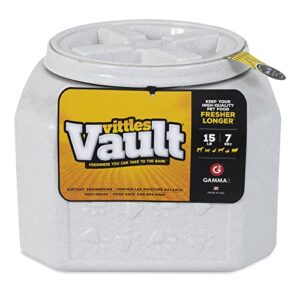
If you’re feeding smaller portions or keeping food near the kitchen, the Vittles Vault offers a 10- to 15-pound capacity in a 12 x 12 x 10-inch container that tucks into cabinets without monopolizing counter space.
You’ll find the same Gamma Seal threading system with double gaskets that lock out humidity and curious noses, while the BPA-free HDPE construction resists scratches that harbor bacteria.
The wide opening simplifies scooping, and regular hand-washing prevents oil buildup that accelerates rancidity between refills.
| Best For | Pet owners with smaller dogs or cats who need a compact, airtight container that fits neatly in kitchens or pantries without taking up too much space. |
|---|---|
| Material | HDPE plastic |
| Capacity | 25 lbs |
| Airtight Seal | Yes |
| BPA-Free | Yes |
| Color | Gray |
| Portable | Handles on 4 sides |
| Additional Features |
|
- Gamma Seal lid with double gaskets keeps food fresh and locks out pests and moisture effectively
- Compact 10-15 pound capacity fits easily in cabinets or on countertops without dominating space
- Wide opening makes scooping kibble quick and mess-free during feeding time
- Smaller capacity means more frequent refills if you have multiple pets or larger dogs
- Not stackable like the larger 40- and 60-pound versions, limiting vertical storage options
- Requires regular washing to prevent oil absorption that can make stored food go rancid faster
7. Gamma2 Dog Food Storage Container
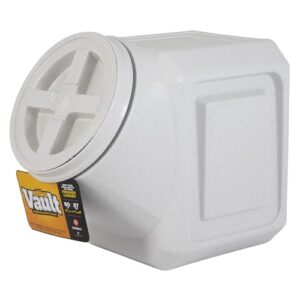
For households managing 60 pounds of kibble, the stackable Gamma2 container offers 14.5 x 22 x 19-inch dimensions that accommodate bulk purchases without requiring additional floor space.
You’ll encounter the same Gamma Seal Technology with threaded locks and dual gaskets that exclude moisture and rodents, while food-grade HDPE resists deformation under weight.
The absence of grips complicates repositioning when full, and some users report alignment challenges during lid closure, so you should verify the seal audibly clicks into place after each refill to maintain freshness.
| Best For | Pet owners who buy kibble in bulk and need a space-saving stackable design that keeps 60 pounds of food fresh and pest-free. |
|---|---|
| Material | HDPE plastic |
| Capacity | 10-15 lbs |
| Airtight Seal | Yes |
| BPA-Free | Yes |
| Color | Gray |
| Portable | Handle included |
| Additional Features |
|
- Gamma Seal Technology with threaded locks and double gaskets keeps moisture and pests out effectively
- Stackable design saves floor space while storing up to 60 pounds of dry pet food
- Durable food-grade HDPE plastic resists deformation and is easy to clean
- No handles make it difficult to move when full
- Lid alignment can be tricky and requires checking for an audible click to ensure proper sealing
- May not fit entire 40-50 pound bags depending on kibble size and shape
8. Iris Usa Pet Food Storage Container
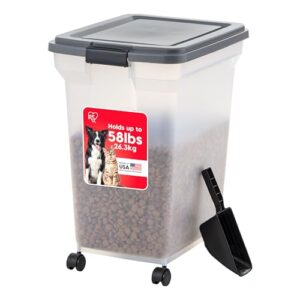
When you’re balancing cost and capacity, the Iris USA container holds up to 58 pounds in a 19.25 x 14.63 x 23.18-inch footprint with BPA-free plastic and snap-lock latches. You’ll appreciate the attachable wheels that simplify repositioning between pantry and feeding stations, though some users report locking mechanisms that fail under load.
The translucent panel lets you monitor food levels without breaking the seal, but moisture ingress occurs when the lid doesn’t snap completely—always verify audible closure to prevent rancidity in stored fats.
| Best For | Pet owners who buy dry food in bulk and need a mobile storage solution with decent capacity at a budget-friendly price point. |
|---|---|
| Material | HDPE plastic |
| Capacity | 60 lbs |
| Airtight Seal | Yes |
| BPA-Free | Yes |
| Color | Gray |
| Portable | No handles |
| Additional Features |
|
- Holds up to 58 pounds of food with a translucent panel so you can see when you’re running low
- Attachable wheels make it easy to move between storage and feeding areas without lifting
- Includes a scoop for portioning and uses BPA-free plastic for safe food storage
- Wheels can be flimsy and don’t always lock securely, making it unstable when fully loaded
- The airtight seal isn’t completely reliable—moisture can get in if the lid doesn’t snap shut properly
- The lid feels cheap and sometimes doesn’t close securely, which can compromise food freshness
9. Iris Airtight Pet Food Storage Container
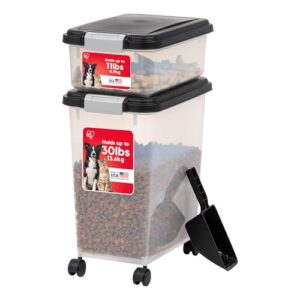
For smaller setups, the Iris Airtight combo pairs a 12-quart unit holding roughly 10 pounds with a 33-quart container storing about 25 pounds of kibble in translucent BPA-free plastic.
You’ll find snap-lock latches compressing foam seals to block moisture and pests, though you must confirm audible closure—incomplete latching allows humidity infiltration that degrades fat-soluble vitamins.
The included casters enable repositioning, but check durability on uneven surfaces, and clean with warm soapy water to prevent residue accumulation along the seal perimeter.
| Best For | Pet owners with limited floor space who need a compact two-tier storage system that keeps kibble fresh while allowing quick visibility of food levels. |
|---|---|
| Material | BPA-free plastic |
| Capacity | 58 lbs |
| Airtight Seal | Yes |
| BPA-Free | Yes |
| Color | Dark Gray/Clear |
| Portable | Attachable wheels |
| Additional Features |
|
- Snap-lock latches with foam seals create an airtight barrier that blocks moisture and pests from spoiling your pet’s food
- Translucent design lets you check remaining food at a glance without opening the containers
- Included casters make it easy to roll the stacked units around for cleaning or repositioning
- Lids may not seal perfectly on every unit, requiring you to double-check for that audible click to prevent humidity damage
- Wheels can get stuck or turn poorly on uneven floors or carpeted surfaces
- Latches can be tricky to operate at first, and the top sticker is notoriously difficult to remove cleanly
Frequently Asked Questions (FAQs)
What is the safest container for dog food?
Stainless steel and glass containers offer the highest safety margins because they’re non-porous, resist chemical leaching, and don’t absorb odors or harbor bacteria, making them ideal for preserving your dog’s food quality.
What is the best container to store homemade dog food in?
Regarding your pup’s meals, an ounce of prevention is worth a pound of cure.
You’ll want glass or stainless steel containers with airtight seals to preserve homemade food’s freshness and nutritional integrity.
Can I store wet dog food in these containers?
Yes, you can store wet dog food in food-grade plastic, stainless steel, or glass containers with airtight lids. Refrigerate opened wet food promptly, and wash containers thoroughly between uses to prevent bacterial growth.
Are recycled materials safe for dog food storage?
Food-grade recycled plastics with BPA-free certification can work, but you’ll want to verify strict sourcing standards.
Recycled materials may harbor residual additives or develop porosity that compromises freshness, so choose carefully approved options.
Do container colors affect food safety or freshness?
Container color doesn’t directly impact chemical safety or shelf life, but lighter shades help you spot contamination quickly. Dark interiors can hide mold or residue, delaying important inspections.
How long can dog food stay in a container?
Under ideal conditions—cool, dry, and sealed tight—dry kibble maintains peak freshness for six to twelve weeks after opening.
Watch for off odors, unusual textures, or visible mold, and discard immediately if detected.
Are there eco-friendly options for dog food containers?
You’ll find several sustainable choices, including stainless steel canisters, borosilicate glass jars, and bamboo-fiber containers paired with silicone seals—all offering durability and recyclability while protecting your dog’s food from contamination.
Conclusion
Material matters more than marketing when you’re selecting what container material is safe for dog food, since chemical leaching, porosity, and reactivity directly determine whether your storage choice protects or compromises your pet’s health. Stainless steel and food-grade glass deliver proven safety, while BPA-free plastics require vigilant inspection for degradation.
Pair the right material with airtight seals, proper placement, and consistent cleaning protocols, and you’ll transform storage from a potential hazard into a reliable safeguard for nutritional integrity and long-term wellbeing.