This site is supported by our readers. We may earn a commission, at no cost to you, if you purchase through links.
Most first-time groomers grab whatever blade came with their clippers and wonder why their Poodle looks patchy or their Golden Retriever ends up nearly shaved. The numbers stamped on clipper blades—#10, #7F, #4—aren’t random. They directly control how much coat you remove with each pass, and picking the wrong one can turn a simple trim into a grooming disaster.
Understanding what blade sizes mean for dog clippers transforms you from someone nervously hacking at fur into a confident groomer who knows exactly which blade will leave a Schnauzer’s legs at the perfect length or take a matted Shih Tzu down to a manageable start.
Once you grasp the numbering system and match blades to coat types, you’ll handle everything from summer cuts to breed-specific trims without second-guessing every stroke.
Table Of Contents
- Key Takeaways
- What Do Dog Clipper Blade Sizes Mean?
- Types of Dog Clipper Blades
- How Blade Size Affects Your Dog’s Coat
- Selecting The Right Blade Size for Your Dog
- Using Clipper Guide Combs With Blades
- Safety Tips When Using Dog Clipper Blades
- Maintaining and Caring for Clipper Blades
- Frequently Asked Questions (FAQs)
- Conclusion
Key Takeaways
- Clipper blade numbers work backward—higher numbers like #10 cut shorter (1/16 inch), while lower numbers like #4 leave longer hair (3/8 inch), so matching the right blade to your dog’s coat type prevents patchy results and accidental over-shaving.
- Different coat types demand specific blade choices: curly coats need 5F blades for fluff, double coats require 7F or 5F to preserve insulation, and matted fur calls for skip-tooth blades or a #10 to cut through tangles without pulling.
- Guide combs let you leave more length without switching blades, turning a #10 blade into cuts up to 25mm, but they only work on clean, brushed coats—use the blade alone for close hygiene clips or heavy matting.
- Proper blade maintenance means oiling every 15 minutes during use, cleaning after every session, and replacing blades every 6-18 months when you notice tugging, heat buildup, or uneven cuts that signal dullness.
What Do Dog Clipper Blade Sizes Mean?
Dog clipper blade sizes tell you how much hair the blade will leave on your dog after cutting. The numbers work backward—higher numbers cut shorter, while lower numbers leave more length.
Choosing the right grooming clippers helps you match blade size to your dog’s coat type and desired finish.
Dog clipper blade numbers work backward—higher numbers cut shorter, while lower numbers leave more length
Understanding this system helps you choose the right blade for your dog’s coat and avoid grooming mistakes.
Pairing the right blade with a deshedding vacuum can make cleanup faster and keep your home fur-free between grooming sessions.
How Blade Numbers Relate to Hair Length
Understanding blade numbers is simpler than you’d think. Lower blade numbers leave longer hair—a #4 blade leaves about 1/2 inch, while a #10 leaves just 1/16 inch.
For beginners still getting comfortable with blade sizes, checking out top-rated grooming clippers designed for first-time users can make choosing the right blade much easier.
Here’s what matters most when choosing your clipper blade size:
If you’re also considering what traits to look for in your pup’s lineage, checking out reputable German Shepherd breeders near you can give you insight into coat types that may influence your grooming needs.
- Blade number systems vary by manufacturer, so always check the blade size chart
- Hair type considerations affect which cutting length variations work best
- Clipper blade materials influence heat and durability during longer sessions
- Blade length charts prevent surprises and guarantee consistent clipper blade selection
Common Blade Size Chart and Measurements
Most professional groomers rely on a standard clipper blade chart that shows blade numbers alongside their cutting lengths. You’ll find sizes ranging from #3 (leaves 13mm or 1/2 inch) down to #50 (leaves just 1/50 inch for ultra-fine work).
Here’s a quick reference for the most common clipper blade sizes:
| Blade Size | Hair Length Left |
|---|---|
| #4 | 3/8″ (9.5mm) |
| #7 | 1/8″ (3.2mm) |
| #10 | 1/16″ (1.6mm) |
These blade measurement standards help you achieve consistent results every time.
Why Blade Size Matters for Grooming
Picking the wrong clipper blade size can turn a routine trim into a grooming disaster. You risk clipper blade safety issues like nicks, irritation, or clipper burn when you use a blade that’s too short for your dog’s coat length management needs.
Pet hair texture also plays a big role—thick double coats need different blade sizes than silky single coats to prevent snagging and guarantee smooth, efficient grooming techniques. Understanding the right clipper blade types is vital for a safe and effective grooming experience.
Types of Dog Clipper Blades
Not all clipper blades are built the same, and choosing the right type makes a real difference in how your grooming session goes. You’ll encounter different tooth styles, blade materials, and specialty designs depending on what you’re working with.
Let’s break down the main types you need to know.
Skip-Tooth Vs. Fine-Tooth Blades

Skip-tooth blades have wider tooth spacing, making them perfect for coarse trimming and thick fur. They power through matted coats without pulling. You’ll find skip-tooth blades reduce clipper noise and strain on your dog.
Fine-tooth blades feature closer tooth spacing for precision work on thin, soft hair. They give you smoother finishes on silky coats.
Choosing the right blade thickness depends on your dog’s coat type—understanding the difference between dog and human clippers helps you pick tools designed specifically for their needs.
Trimming ease depends entirely on matching tooth spacing to your dog’s fur texture.
Steel Vs. Ceramic Blade Materials
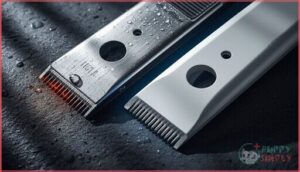
Choosing between steel and ceramic blade materials comes down to heat, longevity, and durability. Ceramic blades run up to 75 percent cooler than steel, preventing clipper burn during long sessions. They stay sharper 5 to 10 times longer, offering exceptional blade sharpness.
Steel blades resist impact better and cost less upfront. Ceramic offers excellent corrosion resistance but chips if dropped, while steel rusts without proper oiling.
Wide/T-Blades and Their Uses
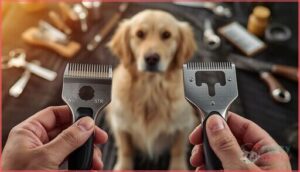
Wide blades cover about 35 percent more area than standard clipper blade sizes, cutting body clipping time on large dogs. Their broader geometry boosts cutting efficiency but generates extra heat, demanding frequent clipper maintenance.
T blade uses include precision work around ears and paws where tight contours limit standard blade geometry.
You’ll need both types—wide blades for speed, T blades for detail.
How Blade Size Affects Your Dog’s Coat

Your dog’s coat isn’t one-size-fits-all, and neither are clipper blades. The blade size you choose directly determines how much hair you’ll remove and how your dog’s coat will look afterward.
Let’s break down how to match blade sizes to different coat lengths, textures, and conditions so you can get the results you’re aiming for.
Choosing Blade Sizes for Different Coat Lengths
Your clipper blade selection starts with understanding three key coat length categories: short, medium, and long. Each range calls for specific blade numbers to get the finish you want without accidentally shaving your dog down to skin or leaving too much bulk behind.
- Short coats (3.2–4 mm): Use a #7 blade for close body clips while still protecting skin from sun and abrasion
- Medium coats (6–10 mm): Choose #4 or #5 blades for plush pet trims that balance easy maintenance with insulation
- Long coats (13+ mm): Reach for #3 blades or longer specialty sizes when you need a teddy-bear finish with maximum protection
- Direction matters: Clipping against the grain cuts shorter than with the grain, so adjust your blade size accordingly.
Blade size charts list measurements based on clipping against coat growth, meaning a #7 blade leaves roughly 3.2 mm when you work against the fur direction. If you clip with the grain instead, you’ll get nearly double that length—closer to 6 mm—with the same blade. That’s why groomers deliberately choose their clipping direction to control the final look: against the grain for crisp definition, with the grain for a softer finish.
I especially like starting home groomers on medium-length blades such as #4 or #5, because these sizes forgive mistakes while still delivering a noticeably shorter coat. You won’t accidentally expose skin the way a #10 blade might, yet you’ll cut enough hair to reduce matting and make brushing easier between sessions.
For dogs spending time outdoors, leave at least 12–13 mm of coat to shield against ultraviolet radiation and insect bites. In hot climates, resist the urge to shave down to surgical lengths; a 6–10 mm medium clip balances heat dissipation with continued sun protection. High-activity dogs or those running through brush benefit from that same moderate range—it sheds debris without the skin exposure that invites scrapes and irritation.
Older dogs and those with thin skin need gentler clipper blade selection. Swap your usual #7 for a longer #5 or even attach a guide comb over a #10 blade to avoid pressure points and abrasions. Seasonal temperature, lifestyle, and your dog’s individual coat all factor into the right choice, so use your clipper blade chart as a starting point and adjust based on what you see and feel under your hands.
Matching Blade Sizes to Coat Types (Curly, Double, Silky, Etc.)
Each dog coat type demands its own clipper blade selection strategy. Curly and wool coats hold their pattern best with 5F blades, leaving 6–13 mm for that signature fluffy appearance. Double-coat management on Samoyeds or Keeshonds calls for 7F or 5F sizes to strip bulk while preserving insulation. Silky hair tips point toward 5F for smooth flow, and thick coat solutions often land on 3 or 5F blades—short enough to reduce brushing but long enough to protect skin.
| Coat Type | Recommended Blade Size |
|---|---|
| Curly/Wool (Poodles, Doodles) | 5F (6–13 mm) |
| Double Coat (Samoyeds, Keeshonds) | 7F or 5F |
| Silky/Fine (Silky Terriers) | 5F (3/8 inch) |
Mixed texture guidance becomes critical on designer crosses: start with a 3 blade for scissor-friendly length, then adjust based on density. Grooming for different coat types means checking undercoat thickness before your first pass—impacted fur may need one size shorter. Dog breed specific grooming charts offer baselines, but you’ll adjust your clipper blade size by feel and visual assessment during each session.
Blade Choices for Matted or Thick Fur
Matted coat solutions begin with skip-tooth blades—alternating long and short teeth cut through dense tangles without jamming. For severe cases, drop to a 10 blade (1.5–1.8 mm) to clear mats sitting against the skin. Wide tooth spacing manages bulk efficiently on Golden Retrievers and Newfoundlands, while grooming for different coat types may require conservative lengths on thin skin. Fur texture management improves when you pair the right clipper blade size with your dog’s mat severity.
Thick fur techniques follow this sequence:
- Initial pass: Skip-tooth 7 or 10 for dematting strategies
- Post-bath refining: Switch to 7F finish blade for smoothness
- Clipper maintenance and care: Oil every fifteen minutes to prevent overheating
Selecting The Right Blade Size for Your Dog
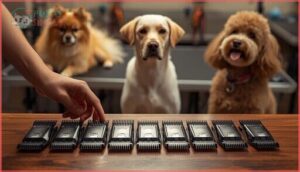
You can’t just pick any blade and expect good results. Your dog’s breed, coat condition, and even age all play a role in which blade will work best.
Let’s walk through the key factors that’ll help you make the right choice.
Considering Breed-Specific Needs
Your dog’s breed shapes every clipper blade decision you’ll make. Single-coated breeds like Poodles handle shorter blades well, while double-coated Golden Retrievers need longer lengths to protect their undercoat. Coat typing drives blade selection—close cuts on thick northern breeds risk post-clipping alopecia and temperature regulation issues.
| Coat Category | Breed Examples | Safe Blade Range |
|---|---|---|
| Single Coat | Poodles, Bichons | #7–#30 body work |
| Double Coat | Huskies, Retrievers | #7 max, sanitary only |
| Fine/Sparse | Toy breeds, Greyhounds | #10–#15 prevent burn |
Blade Recommendations for Popular Breeds
I’ve worked with hundreds of breeds over the years, and these blade combinations consistently deliver professional results without guesswork.
Poodles take a #7 blade for crisp body work—I especially like how it shows scissoring definition. Golden Retrievers need a #4 for fuller coat preservation.
Afghan Hounds with matted dog coats require 7F blades. Bichon Frises respond best to 5F or 4F for breed-specific grooming standards.
Factors: Coat Condition, Age, and Health
Beyond breed standards, your dog’s current coat condition, age, and overall health determine which blade size will work safely and effectively. Consider these critical factors before choosing your clipper blade sizes:
- Matted or damaged coats require shorter blades (#7F or #10) to cut through without pulling
- Senior dogs need gentler blade passes with longer guards to protect thinning skin
- Health issues like skin allergies demand cooler ceramic blades to prevent irritation during canine grooming
Using Clipper Guide Combs With Blades
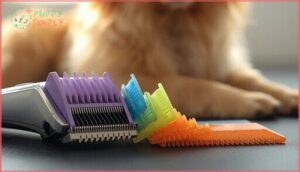
Guide combs attach to your clipper blades and let you leave more coat length without switching blades. They’re practical tools that expand your grooming options, but they won’t work in every situation.
Here’s what you need to know about using them effectively with your blades.
How Guide Combs Change Cutting Length
Snap-on attachments transform your clipper blade chart into a much longer range of options. A standard No. 10 clipper blade leaves about 1.6 mm, but add a No. 4 guard comb and you’ll leave approximately 13 mm of coat.
Comb size variations run from No. 1 (3 mm) to No. 8 (25 mm), giving you adjustable trimming options and cutting length precision without switching blade size constantly.
When to Use Guide Combs Vs. Blades Alone
Choose guard combs when you want longer, fluffy pet trimming on clean, dematted coats—perfect for teddy-bear finishes on bichons and doodles.
Use your dog clipper blade alone for close hygiene clips on paws, belly, and groin, or when tackling heavy matting where a comb can’t glide through.
For proper clipper maintenance and blade safety, match your clipper blade size and grooming techniques to your dog’s actual fur length and coat condition.
Tips for Smooth, Even Cuts
Start every guide-comb pass on fully dry, brushed-out fur—your clipper technique depends on coat preparation free of mats.
Overlap strokes lightly, moving with the grain at a steady speed to avoid track lines. Let the clipper’s weight do the work; extra pressure creates divots.
After your first pass, back-brush and re-clip high spots for a smooth finishing that erases visible seams.
Safety Tips When Using Dog Clipper Blades
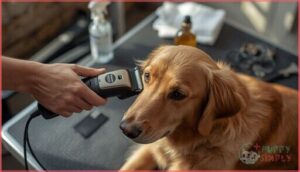
Safety matters more than speed when you’re working with sharp blades near your dog’s skin. Even experienced groomers can cause nicks, burns, or irritation if they rush or use poor technique.
Here’s what you need to know to keep your dog comfortable and injury-free during every grooming session.
Preventing Nicks and Skin Irritation
You can prevent most nicks by selecting the right clipper blade—longer blades like a 5F leave more coat cushioning over the skin than a 40. Always clip with the hair growth, not against it, and keep the blade flat rather than digging in.
Prep matters too: bathe your dog first and brush out any mats before running clippers over sensitive areas like armpits and flanks.
Avoiding Clipper Burn and Overheating
Heat buildup is the silent saboteur of safe grooming. Keep your clipper blade cool by applying lubricant every fifteen minutes and using coolant spray between passes—this clipper maintenance prevents friction and burn prevention starts here.
Watch for redness or excessive licking after grooming; those signal clipper burn. If your dog clipper blade feels hot to touch, stop immediately, let it cool, and check your blade tension and cleaning routine.
Proper Handling and Direction
Your clipper angle and blade direction determine whether you’ll get a smooth finish or an accidental nick. Master these handling methods and safety precautions to protect your dog’s skin.
- Position the blade parallel to the skin—angling away slightly near sensitive areas prevents cuts and maintains even clipper blade sizes across the coat.
- Move with the hair growth using short, controlled strokes—this cutting technique reduces tugging and keeps your grooming tool maintenance on track.
- Apply minimal pressure and let the blade do the work—forcing it increases clipper burn risk and uneven lines.
Maintaining and Caring for Clipper Blades

Your clipper blades won’t stay sharp or safe without regular maintenance. Proper care extends blade life, prevents rust, and keeps cuts smooth session after session.
Here’s what you need to do after every grooming appointment and how to know when it’s time for a replacement.
Cleaning and Oiling After Each Use
You can’t skip this step if you want blades that actually work. After every grooming session, unplug your clipper and brush off hair debris with a soft brush—blade sanitizing starts here.
Apply 2–3 drops of dedicated clipper oil to the top and back edges, run briefly to distribute, then wipe excess. This grooming tool maintenance prevents rust and keeps your clipper blade cutting smoothly for years.
When to Sharpen or Replace Blades
Your blade is telling you something when it tugs or snags mid-cut—that’s the first Blade Wear Sign.
Here’s your Maintenance Schedule guide:
- Dull Blade Effects: visible tugging signals you need Blade Sharpening within days, not weeks
- Sharpening Techniques: professional services cost $5–8 per Blade Type and restore performance for 6–12 months
- Replacement Costs: chips or heat discoloration mean it’s time for a new Clipper Blade—Blade Size doesn’t matter when safety’s compromised
Smart Clipper Blade Selection means knowing when sharpening won’t cut it.
Storage Tips to Prevent Rust and Damage
Once you’ve decided whether to sharpen or replace, Dry Storage Tips become your next priority. Store your Clipper Blade indoors away from humidity—sheds and garages promote rust fast. Oil each blade before tucking it into an airtight Storage Container with a desiccant pack. Here’s my Rust Prevention and Blade Protection routine:
| Storage Containers | Rust Prevention Method | Clipper Maintenance Benefit |
|---|---|---|
| Airtight plastic box | Desiccant pack inside | Blocks moisture exposure |
| Original blister pack | Light oil coating | Protects metal surfaces |
| Sealed zip‑lock bag | Paper wrap with oil | Prevents corrosion long‑term |
| Blade guard case | Indoor warm location | Extends Blade Sizes lifespan |
That simple step keeps your Grooming Tools and Pet Grooming Tools ready season after season without the headache of corroded edges or expensive replacements tied to neglected Blade Sharpening schedules.
Frequently Asked Questions (FAQs)
Can I use human clippers on my dog?
You shouldn’t rely on human clippers for pet grooming. They overheat faster and lack the specialized blade geometry needed for canine coats, increasing the risk of skin irritation and accidental cuts during dog grooming sessions.
Do clipper blades fit all clipper brands?
Like fitting a square peg in a round hole, most dog clipper blades don’t fit across brands. Andis, Wahl, and Oster use different blade mount types, limiting cross-brand compatibility and creating safety considerations and warranty implications.
How often should I replace clipper blades?
Replace your clipper blades every 6 to 12 months for professional use, or 12 to 18 months for home grooming.
Watch for dull blade effects like snagging, heat buildup, and uneven cuts—these blade wear signs mean it’s time.
What causes blades to dull quickly?
Your clipper blades lose their edge from material wear, heat buildup, and friction damage during use. Without proper oiling, edge retention drops by 20–40%, requiring more frequent sharpening across all clipper blade sizes.
Are cordless clippers less powerful than corded?
Cordless clippers don’t match corded models’ peak torque for thick coats or matted fur.
Modern brushless-motor cordless designs offer impressive Battery Life and Motor Technology, but corded units deliver uninterrupted power for heavy-duty grooming sessions.
Conclusion
I’ve seen groomers transform nervous first-timers into confident trimmers in a single afternoon once they understand what blade sizes mean for dog clippers. The difference between a #10 and a #7F isn’t trivial—it’s the line between a smooth summer cut and an accidental buzz.
Match your blade to your dog’s coat type, check for heat buildup every few minutes, and clean your blades after each session. You’ll handle any grooming challenge that comes your way.
- https://www.pdga.online/blog/dog-grooming-blade-length-and-chart
- https://oneisall.com/blogs/all/dog-clipper-blade-sizes-chart-ultimate-guide
- https://www.abkgrooming.com/blogs/grooming/why-pet-clipper-blades-vary-for-different-fur-types
- https://www.petedge.com/blade-usage-guide
- https://christiesdirect.com/groom-professional-blade-length-chart.html