This site is supported by our readers. We may earn a commission, at no cost to you, if you purchase through links.
Your dog circles the new bag of food you’ve just brought home, tail wagging with anticipation, but dumping it straight into their bowl tonight could send you both on a week-long journey of upset stomachs, midnight bathroom breaks, and veterinary bills.
Switching dog food safely isn’t just about avoiding the immediate mess—it’s about protecting the delicate ecosystem of bacteria, enzymes, and digestive processes that keep your dog healthy. A dog’s gastrointestinal system thrives on consistency, and abrupt changes can trigger everything from mild diarrhea to more serious inflammatory responses that unmask hidden food sensitivities.
The good news: a structured seven-day switch schedule gives your dog’s digestive system the time it needs to adapt, maintaining gut health while minimizing discomfort and stress for both of you.
Table Of Contents
- Key Takeaways
- Why Gradual Dog Food Transition Matters
- The 7-Day Dog Food Transition Schedule
- Monitoring Your Dog During Food Transition
- Special Transition Situations and Adjustments
- Choosing The Right New Food
- Frequently Asked Questions (FAQs)
- How to properly transition your dog to new food?
- How long after transitioning my dog food can I expect changes?
- Can I mix multiple new foods during transition?
- How often should I change my dogs food?
- Does water intake change with new food?
- Should I adjust exercise during food transition?
- Can treats interfere with the transition process?
- Conclusion
Key Takeaways
- A gradual seven-day transition schedule—moving from 25% new food to 100% in measured increments—protects your dog’s digestive enzymes and gut bacteria from the upset stomach, vomiting, and diarrhea that sudden dietary changes trigger.
- Your dog’s gastrointestinal system thrives on consistency because abrupt food switches overwhelm digestive enzymes and can unmask hidden food allergies or sensitivities that weren’t previously apparent.
- Monitoring stool quality using a fecal scoring chart (targeting scores of 3-4) gives you the clearest window into whether your dog’s digestive system is adapting successfully or if you need to slow down the transition timeline.
- Puppies, senior dogs, and those with sensitive stomachs or medical conditions often need extended 10-14 day transitions instead of the standard seven days, with smaller portions and closer veterinary guidance throughout the process.
Why Gradual Dog Food Transition Matters
Switching your dog’s food isn’t as simple as swapping one bag for another, and understanding why can save both you and your pup from unnecessary discomfort. Your dog’s digestive system needs time to adjust to new ingredients, proteins, and nutrient profiles without triggering upset.
If you’re feeding a smaller breed, choosing the right best dog foods for small breeds means finding formulas that match their faster metabolisms and unique nutritional needs.
Let’s look at the key reasons a gradual switch protects your dog’s health and keeps mealtime stress-free.
Preventing Gastrointestinal Upset and Digestive Issues
Rushing the adjustment period often triggers gastrointestinal upset because your dog’s digestive enzymes need time to adjust to new protein sources and nutrient profiles. Abrupt switches can lead to nausea, vomiting, and diarrhea, while also potentially unmasking food allergies that weren’t previously apparent.
Abrupt food switches overwhelm your dog’s digestive enzymes, triggering nausea, vomiting, diarrhea, and hidden food allergies
A gradual approach aids gut health by allowing beneficial bacteria to adapt, maintaining digestive health without the stomach-soothing medications that veterinary advice often recommends only as a last resort.
Understanding the importance of persistent gastrointestinal symptoms is vital for preventing long-term digestive issues during diet changes.
Understanding Your Dog’s Digestive System
To appreciate why gradual food changes protect your dog’s digestive health, you need a working understanding of canine nutrition and gut microbiome function.
Your dog’s stomach churns food with acid and enzymes before the small intestine absorbs nutrient uptake through specialized villi, while the large intestine hosts beneficial bacteria that support enzyme functions and prevent gastrointestinal upset.
This complex system requires consistency to maintain ideal dogs digestive health and stomach anatomy balance. For a more detailed look at the anatomy of the canine digestive system, you can explore how each organ contributes to overall digestive health.
When You Need to Switch Foods
Once you grasp how your dog’s stomach and gut bacteria work together, you’ll recognize the legitimate reasons that prompt dietary changes. Your dog’s health requirements shift across life stages and medical circumstances, making switching food a necessary part of responsible pet nutrition rather than a casual choice.
Here are five common situations that require a gradual adjustment period:
- Puppy graduating to adult formula when growth needs stabilize around twelve months
- Food allergies or stomach issues confirmed through veterinary diagnosis and elimination trials
- Senior-specific diets that address age-related metabolic and joint health changes
- Prescription formulas managing kidney disease, diabetes, or gastrointestinal conditions
- Discontinued brands forcing you to find comparable alternatives with similar nutritional profiles
The 7-Day Dog Food Transition Schedule
The most reliable way to switch your dog’s food is to follow a structured schedule that gradually increases the proportion of new food while decreasing the old. This methodical approach gives your dog’s digestive system time to adjust to the new ingredients and formulation without triggering stomach upset.
If your puppy has a sensitive stomach, choosing puppy food brands formulated for digestive health can make the transition smoother and reduce the risk of upset.
Here’s exactly how to execute each phase of the switch.
Days 1-2: 25% New Food, 75% Old Food

Starting with the right Initial Mix Ratio sets the foundation for a smooth Dog Food Introduction. During Days 1-2, combine 25 percent new food with 75 percent old food. This facilitates gradual introduction while promoting stomach adjustment and digestive balance.
This measured approach during the introduction period minimizes food sensitivity reactions and helps your dog’s digestive enzymes adapt to the new formula without overwhelming their system.
| Day | New Food | Old Food | Key Focus | What to Watch |
|---|---|---|---|---|
| Day 1 | 25% | 75% | Gradual introduction begins | Stool consistency, appetite |
| Day 2 | 25% | 75% | Digestive balance maintained | Energy levels, water intake |
| Monitor | Throughout | Throughout | Food sensitivity signs | Vomiting, soft stools, refusal to eat |
| Action | If issues appear | Return to 100% old | Allow 1-2 days recovery | Restart slower if needed |
| Success | No symptoms | Normal behavior | Continue food introduction | Move to 50/50 mix next |
Days 3-4: 50% New Food, 50% Old Food

By Days 3-4, you’ll shift to an equal 50-50 food mixing ratio, which promotes Digestive Balance as your dog’s Gut Health adjusts to the dietary changes.
This Transition Pace allows gut enzymes to recalibrate while maintaining consistent Meal Portions. Monitor stool quality closely during this adjustment period—if your dog tolerates the gradual change well, their bowel movements should stabilize within 24 to 72 hours of this food change benchmark.
Days 5-6: 75% New Food, 25% Old Food
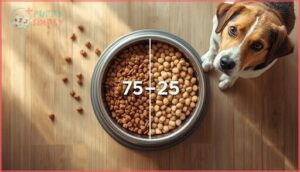
During this critical two-day phase, your Feeding Strategies shift to 75 percent new food and 25 percent old, reinforcing Food Acceptance while observing key Digestive Signals like firm stools and steady appetite.
This Gradual Pace facilitates Nutrient Balance as your dog’s system adjusts to the dietary changes for dogs, and maintaining consistent portion sizes throughout the food transition schedule helps guarantee your gradual transition stays on track.
Day 7: 100% New Food
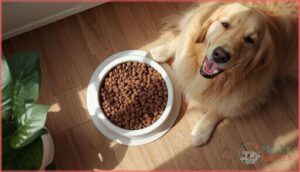
By day seven, your dog should receive 100 percent of the new food with no old formula remaining, marking the completion of this gradual switch and the beginning of full diet adjustment.
This final step confirms stomach acclimation and digestive stability, allowing you to observe new food benefits while ensuring nutrition optimization through the entire adjustment period as your dog gets used to these dietary changes for dogs.
Monitoring Your Dog During Food Transition

Even with a careful switch, you’ll need to watch for signs that tell you whether your dog is adjusting well or struggling with the new food. Some changes during the switch are perfectly normal, while others signal that you should pump the brakes or call your vet.
Knowing what to look for—and when to take action—can make the difference between a smooth switch and a stressful setback.
Normal Signs Vs. Warning Symptoms
During the adjustment period, you’ll want to recognize what’s normal versus what signals trouble with your dog’s digestive health. Healthy signs of successful food adjustments include:
- Well-formed stool quality within 24 to 48 hours after each adjustment
- Consistent appetite and energy levels throughout mealtimes
- Normal water intake and urination patterns
- Smooth, shiny coat condition
- Minimal gas without abdominal discomfort
However, warning symptoms like persistent vomiting, bloody diarrhea, skin reactions suggesting food allergies or food intolerance, sudden weight changes, or lethargy require immediate attention—these adverse food reactions indicate potential gastro issues that need veterinary evaluation to protect your dog’s gastrointestinal health and overall canine nutrition needs.
Using Fecal Scoring to Track Progress
Think of fecal score tracking as your window into your dog’s digestive health during the adjustment period.
Using a fecal scoring chart, you’ll rate stool quality on a standardized scale—ideal scores fall between 3 and 4, indicating solid gut stability and proper gastrointestinal health.
Record scores daily throughout the dog food switch, and consult your vet if abnormal fecal analysis patterns persist beyond three days.
When to Slow Down The Transition
Recognizing when your dog’s system feels overwhelmed by dietary changes allows you to adjust the conversion schedule before problems escalate.
If you notice frequent loose stools, reduced appetite lasting beyond 48 hours, or three or more vomiting episodes during the food switch period, extend each stage by two extra days.
Slowing pace benefits digestion and helps you catch subtle overwhelmed digestion signs early.
Signs That Require Veterinary Attention
While minor digestive adjustments are normal, certain symptoms signal serious adverse food reactions or gastrointestinal issues in dogs requiring emergency care.
Contact your veterinarian immediately if vomiting persists beyond 24 hours, if you observe bloody stools indicating severe diarrhea, or if breathing difficulties, pale gums, or suspected poison symptoms appear. Food allergies and other concerning reactions demand prompt veterinary guidance to protect your dog’s health.
Special Transition Situations and Adjustments

Not every dog follows the standard seven-day adaptation timeline, and that’s completely normal.
Puppies, senior dogs, and those with health issues often need adjustments to the schedule, while switching between food types or handling emergencies requires a different approach altogether.
Here’s how to adapt the adjustment process when your dog’s situation calls for something beyond the typical plan.
Transitioning Puppies and Senior Dogs
Age introduces unique vulnerability to dietary changes, so puppies and senior dogs often need extra care during their adjustment period. Your veterinarian can help tailor a diet planning approach that promotes canine wellness at both ends of the life spectrum.
Puppy nutrition and senior health considerations:
- Start with 25% new dog food and increase every two days to let developing or aging digestive systems adapt to dietary changes for dogs
- Monitor stool consistency closely since puppies and seniors show gastrointestinal upset more quickly than adults
- Extend your adjustment schedule to 10-14 days if you notice refusal to eat or mild digestive symptoms
- Consider feeding strategies like separate bowls and quiet feeding zones to reduce stress and facilitate successful adaptation
Switching Between Wet and Dry Food
Switching between wet and dry food requires attention to moisture levels and food texture, since wet food contains 75 to 80 percent water while dry food holds only about 10 percent.
Begin with 25 percent of the new format mixed with 75 percent of the old, then increase by 10 to 15 percentage points every two to three days to support palatability factors and hydration needs while protecting digestive safety throughout your dog food conversion period.
Dogs With Sensitive Stomachs or Medical Conditions
Dogs with sensitive stomachs or medical conditions often need a longer adjustment period—ten to fourteen days instead of seven—to prevent gastrointestinal issues and food allergies. Your veterinarian can recommend medical diets with hydrolyzed proteins or limited ingredients that support gut health, and may suggest probiotic support or dietary therapy alongside careful veterinary guidance to address specific needs like inflammatory bowel disease or pancreatic insufficiency.
- Extend the adjustment to 10–14 days for dogs prone to digestive upset
- Watch for vomiting, persistent diarrhea, or abdominal discomfort during the switch
- Use prescription hypoallergenic formulas if food allergies are suspected
- Add vet-approved probiotics to support gut flora and stool consistency
- Feed smaller, more frequent meals to ease nutrient processing
Quick Transitions in Emergency Situations
In rare crisis situations—natural disasters, food recalls, or sudden health diagnoses—you may need a rapid switch without the luxury of a seven-day adjustment period.
Contact your veterinarian immediately for emergency feeding protocols, then use easily digestible formulas with single protein sources while monitoring stool consistency closely. Offer small, frequent meals rather than large portions, and keep plain boiled chicken with rice as a digestive care backup if intolerance appears within forty-eight hours.
Choosing The Right New Food

The food you choose matters just as much as how you switch to it, since even a perfect schedule won’t prevent issues if the new diet doesn’t meet your dog’s nutritional requirements.
Your dog’s age, health status, and individual needs should guide your selection, and understanding what makes a diet truly complete can save you from switching foods multiple times. Here’s what you need to think about when selecting the right new food for your dog.
Matching Food to Life Stage and Health Needs
Your dog’s nutritional needs aren’t one-size-fits-all, which is why Life Stage Nutrition and Health Condition Diets matter so much during any period of change.
Puppies need 22 to 32 percent protein for growth, while senior dogs thrive on 14 to 22 percent to protect kidney function. If your dog has allergies, obesity, or chronic illness, your veterinarian can recommend Age Specific Formulas or a prescription diet that caters to Dietary Restrictions while maintaining proper Nutrient Balance throughout dietary changes for dogs.
Understanding Complete and Balanced Diets
Before your introductory period begins, you’ll want to confirm that any new dog food meets Nutrient Requirements for canine health through clear Dietary Labels stating “complete and balanced diet.”
Balanced Nutrition depends on:
- Complete proteins delivering all essential amino acids for tissue repair
- Healthy fats including omega-3 and omega-6 for Digestive Health
- Complex carbohydrates and fiber supporting steady stool patterns
- Vitamins and minerals matching your dog’s life stage
- Transparent Food Allergens information guiding nutrition planning during dietary changes
Consulting Your Veterinarian for Guidance
Your veterinarian becomes your best partner when managing a dog food switch, offering Guidance tailored to your dog’s age, health status, and chronic conditions. During a Vet Consultation, they’ll review your pet’s medical history to identify nutrient gaps, provide evidence-based Dietary Advice for specific life stages, and establish Health Monitoring protocols including warning signs that require immediate veterinary guidance.
Bring a complete medication list and recent stool observations to optimize Pet Nutrition planning during your veterinary advice session.
Frequently Asked Questions (FAQs)
How to properly transition your dog to new food?
You’ll need to blend old and new food gradually over a one-week transition period, normally following a 25-50-75-100 percent schedule.
While monitoring appetite stimulation, hydration needs, and stool quality throughout the diet transition.
How long after transitioning my dog food can I expect changes?
Most dogs show stool quality changes within two to five days as digestive adjustment begins, while energy level shifts and improved nutrient absorption usually emerge during the seven-to-ten-day adjustment period.
Can I mix multiple new foods during transition?
Mixing multiple new items simultaneously increases the risk of stomach upset and complicates food allergy testing.
Introduce one food at a time, spacing each by several days so you can clearly identify which ingredient causes adverse reactions.
How often should I change my dogs food?
Most healthy adult dogs benefit from rotating among three to four high-quality foods over the course of a year, with typical switch cycles every two to four months to maintain digestive health and nutrient balance.
Does water intake change with new food?
Yes, water balance often shifts when your dog’s digestive system adjusts to new moisture levels in the diet, so fluid intake may rise or fall depending on hydration needs during the food adjustment.
Should I adjust exercise during food transition?
You can maintain moderate activity during the changeover, but reduce exercise intensity on days when new food is introduced to support digestive health and desired stool quality throughout the process.
Can treats interfere with the transition process?
Treats can disrupt a food shift by introducing unknown allergens, adding inconsistent calories that interfere with portion control, and masking appetite changes that signal digestive stress during dietary changes for dogs.
Conclusion
Your dog’s digestive system isn’t a magic cauldron that instantly accepts whatever you toss in—it’s a carefully balanced environment that deserves your patience and attention.
Switching dog food safely through this seven-day schedule protects that balance, sparing both of you from preventable discomfort while supporting long-term gut health. When you invest a single week in doing this right, you’re choosing your dog’s wellbeing over convenience, and that choice matters more than you might realize.