
This site is supported by our readers. We may earn a commission, at no cost to you, if you purchase through links.

Your Border Collie used to sprint circles around the backyard until dusk—now she’s dragging her paws halfway through your morning walk. A tired out dog after a good romp is perfectly normal, but recognizing the difference between healthy fatigue and something more concerning can be tricky.
Dogs naturally need 12-14 hours of sleep daily, and high-energy breeds often require thoughtful exercise strategies to channel their drive without pushing them into exhaustion. The challenge isn’t just about wearing your dog out; it’s about doing it safely while staying alert to signs that fatigue has crossed into territory worth investigating.
Understanding what normal tiredness looks like, compared to lethargy that signals potential health issues, helps you keep your companion both happy and healthy.
Table Of Contents
- Key Takeaways
- Signs Your Dog is Tired Out
- Tiredness Vs. Lethargy in Dogs
- Common Causes of Excessive Fatigue
- When to Worry About a Tired Dog
- Safe Ways to Tire Out Your Dog at Home
- Outdoor Activities for High-Energy Dogs
- Balancing Rest and Activity for Wellness
- Supporting Recovery After Exercise
- Frequently Asked Questions (FAQs)
- Conclusion
Key Takeaways
- Normal dog tiredness resolves within 1-2 hours after exercise with quick recovery of interest and energy, while lethargy persists beyond 24 hours and often signals underlying health conditions requiring veterinary evaluation.
- Dogs need 12-14 hours of daily sleep (puppies and seniors require 16-20 hours), and tracking baseline patterns in sleep duration, appetite, and play interest helps you distinguish healthy fatigue from concerning behavioral changes before symptoms escalate.
- High-energy breeds benefit most from balanced exercise routines that combine physical activity with mental stimulation through puzzle toys, scent games, and structured training—avoiding overexertion while maintaining consistent daily schedules reduces fatigue incidents by 15-25%.
- Warning signs demanding immediate veterinary attention include collapse, pale gums, persistent vomiting, lethargy lasting over 48 hours paired with appetite loss, or any abdominal pain—these symptoms often indicate serious conditions like hypothyroidism, anemia, or gastric dilation.
Signs Your Dog is Tired Out
Knowing when your dog has had enough is one of the most important skills you’ll develop as a pet owner. A tired dog isn’t just about a nap on the couch—there are specific behavioral cues that tell you when your companion needs rest.
Let’s look at the key signs that indicate your dog is genuinely tired out.
Sleep Patterns and Resting Habits

Generally, your dog needs 12-14 hours of sleep daily, with puppies and seniors requiring even more—often 16-20 hours. Healthy rest quality involves both REM and non-REM sleep cycles, supporting dream activity and recovery.
Watch for these nap patterns:
- Multiple short naps rather than one long stretch
- Comfortable, undisturbed resting postures
- Consistent daily sleep-wake rhythms
- Quiet breathing without restlessness
Disrupted rest quality can signal fatigue management issues or early lethargy in dogs.
Changes in Activity Levels

Beyond sleep itself, you’ll notice shifts in your dog’s energy levels throughout the day. Regular activity tracking shows a 20% reduction in fatigue signs when you maintain consistent routines. High-energy dogs may suddenly slow during walks or skip their usual zoomies—clear fatigue signs.
Watch recovery time after exercise: healthy dogs bounce back within 1-2 hours, while prolonged sluggishness could signal overexertion or early lethargy requiring attention. Understanding AP study guides can help you create structured routines for your dog’s exercise and rest.
Interest in Play and Walks

When your dog’s enthusiasm for play and walks drops, something’s off. Fatigue naturally follows exertion, but notice if your pup suddenly ignores favorite toys or drags behind during normally exciting outings. Research shows dogs with structured playtime demonstrate 15–20% higher engagement during walks—a good baseline for comparison.
Watch for these interest shifts:
- Reluctance at leash grab time – your high-energy dog now hesitates instead of bouncing toward the door
- Shortened play sessions – tug-of-war ends after two minutes instead of ten
- Reduced social engagement – skipping dog socialization opportunities they’d normally love
- Minimal exploration behavior – walking straight without sniffing, lacking mental stimulation from their environment
Exercise variety and walk routine consistency matter for dog behavior and health. Studies indicate scent-based enrichment increases exploration time by roughly 9 minutes per walk, highlighting playtime benefits for physical exercise readiness. If reduced interest persists beyond 24 hours despite adequate rest, consider veterinary evaluation rather than dismissing it as simple tiredness.
Tiredness Vs. Lethargy in Dogs

After a good play session, it’s normal for your dog to slow down and rest—that’s just healthy tiredness. But lethargy is different, and knowing how to tell them apart can help you catch potential health problems early.
Let’s look at what normal fatigue looks like, the warning signs that suggest something’s wrong, and how to keep track of your dog’s everyday behavior.
Normal Fatigue After Exercise
After a good run or play session, your dog’s body needs time to bounce back—and that’s completely normal. Most healthy dogs recover from moderate physical exercise within 30 to 60 minutes, showing improved canine endurance with consistent routines. Understanding main topic organization is essential for creating informative content about dog health and exercise.
| Post-Workout Care Timeline | What You’ll See |
|---|---|
| 0–30 minutes | Panting slows; heart rate drops toward baseline; mild physical exhaustion evident |
| 30–60 minutes | Energy returns; your dog reacts to cues; normal interest in water and interaction |
| 1–4 hours | Increased resting after intense activity; appetite intact; no lingering fatigue signs |
| Next day | Full recovery; keen for walks; exercise recovery complete without stiffness |
| 24–48 hours | Any mild soreness resolves; routine movements easy; dog behavior returns to normal |
High-energy dogs may rest longer initially but remain easily rousable—a key distinction when monitoring dog health issues.
Warning Signs of Lethargy
Vigilance becomes your strongest ally when distinguishing normal rest from concerning lethargy in dogs. While fatigue fades within hours, true lethargy symptoms persist beyond 24 hours and signal potential health monitoring needs. Recognizing symptoms of lethargy early can prevent serious complications in lethargic dogs.
| Lethargy Symptoms | Duration | When to Seek Veterinary Care |
|---|---|---|
| Reduced responsiveness to calls | >12 hours | If paired with vomiting or collapse |
| Reluctance to rise or walk | >24 hours | Immediate if unable to stand |
| Sleep exceeding 50% of day | Persistent | When appetite loss accompanies |
| Facial signs of pain when touched | Multiple days | Urgent if with pale gums or jaundice |
Dog behavior changes—like mental dullness, decreased curiosity, or social withdrawal—distinguish dog lethargy from simple tiredness. Your dog won’t bounce back after rest alone when underlying issues require veterinary care.
Monitoring Your Dog’s Behavior
Consistent activity tracking transforms you from guessing into knowing when something’s wrong. Record your dog’s sleep duration, appetite, and play interest daily—this baseline reveals subtle shifts before symptoms escalate. Recognizing symptoms of lethargy demands attention to dog behavior and body language: pinned ears, tucked tail, or glazed eyes signal distress requiring veterinary attention.
Track your dog’s sleep, appetite, and play daily—subtle shifts in behavior reveal distress before symptoms escalate
| Behavioral Cues | Normal Tired Dog | Lethargic Dog Requiring Care |
|---|---|---|
| Response to favorite toy | Interested after rest | Ignores even after recovery |
| Greeting behavior | Tail wag within minutes | Minimal acknowledgment persists |
| Eating patterns | Returns to baseline | Appetite decline continues |
| Social engagement | Seeks interaction soon | Withdrawn beyond 24 hours |
| Eye contact quality | Alert and responsive | Dull or avoids gaze |
Pet observation skills improve with practice. Canine body language and dog emotional states become clearer when you track patterns rather than isolated moments—your dog’s health and wellness depend on this vigilance.
Common Causes of Excessive Fatigue

When your dog seems more tired than usual, it’s easy to chalk it up to a long play session or busy day. Excessive fatigue can stem from factors beyond just physical activity—some you can address at home, and others that need your vet’s attention.
Let’s look at the most common culprits so you can better understand what might be affecting your dog’s energy levels.
Physical Overexertion
Pushing your high-energy dog too hard can backfire quickly. Over half of overexertion incidents happen when dogs don’t get adequate rest between intense sessions, creating physical strains that compromise dog health rather than improve it.
Watch for these overexertion signs during physical activity:
- Excessive panting that doesn’t ease within 15 minutes
- Stumbling gait or reluctance to stand immediately after exercise
- Sudden disinterest in continuing play or walks
- Muscle trembling or unusual stiffness
Recognizing exercise limits prevents injury risks and keeps physical exercise safe.
Underlying Health Conditions
Sometimes fatigue masks something deeper—chronic diseases like hypothyroidism, anemia, or diabetes can quietly drain your dog’s energy. These medical conditions reduce stamina by 30–40%, making even routine walks exhausting.
If lethargy persists beyond 48 hours or coincides with appetite loss, health screening and veterinary care become urgent. Medical diagnostics catch symptoms of lethargy early, allowing effective disease management before complications worsen.
Age and Breed Factors
Your dog’s breed and age shape exercise tolerance more than you might expect. Working breeds like Border Collies maintain aerobic capacity 1.5–2.0 L/min, resisting fatigue far longer than small breeds, which tire within 5–8 minutes of intense play.
Age-related fatigue typically emerges after 7–9 years, with senior dogs showing 20–40% reduced endurance—so adjust activity levels accordingly for ideal canine health and wellness.
When to Worry About a Tired Dog

Most tired dogs bounce back after some rest and water, but sometimes exhaustion signals something more serious. Knowing when fatigue crosses into dangerous territory can mean the difference between a simple recovery and a medical emergency.
Let’s look at the specific warning signs that should send you straight to your veterinarian.
Symptoms Requiring Immediate Vet Attention
Certain symptoms demand immediate veterinary attention—they’re red flags you shouldn’t ignore. Sudden collapse, inability to stand, or pale gums signal a vet emergency.
Rapid vomiting (more than two episodes in 12 hours), severe diarrhea with blood, or distended abdomen require urgent care.
Seizures, difficulty breathing, or inability to urinate also indicate critical conditions needing prompt diagnosis and treatment for your dog’s safety.
Persistent Lethargy and Appetite Loss
When your dog’s low energy stretches beyond 48 hours—especially paired with skipped meals—it’s time for veterinary attention. Studies show appetite loss occurs in 28% of fatigued dogs, and this combination often signals underlying conditions like hypothyroidism or anemia.
Don’t wait if lethargy persists past a week; fatigue diagnosis through blood work can reveal treatable medical interventions before symptoms worsen.
Accompanying Signs Like Vomiting or Pain
While fatigue alone might resolve with rest, vomiting or abdominal pain changes everything. Clinical data shows 5–10% of tired dogs vomit after strenuous activity, and 2–8% develop serious conditions like gastric dilation or pancreatitis.
Watch for these fatigue warning signs requiring immediate health checks:
- Restlessness, whining, or guarding the abdomen
- Recurrent vomiting within 24 hours
- Reluctance to rise or stiff gait
- Lethargy in dogs combined with these pain symptoms
Prompt veterinary care for dogs prevents life-threatening complications when treating lethargy in dogs alongside these symptoms of lethargy in dogs.
Safe Ways to Tire Out Your Dog at Home

You don’t need a big backyard or fancy equipment to give your dog a satisfying workout. Simple indoor activities can challenge both body and mind, leaving your pup happily tired without the wear and tear of intense outdoor exercise.
Here are three practical ways to exercise your dog safely at home.
Indoor Fetch and Tug-of-War
Your home can be a surprisingly effective exercise venue when you choose the right canine exercise activities. Fetch techniques work best with soft-furred toys—they reduce bite force exposure by 28% and promote tug toy safety during playroom design.
Structured sessions of tug-of-war paired with rest periods help prevent overexertion while building physical exercise tolerance, supporting overall dog health and positive pet care routines.
Hide-and-Seek and Scent Games
When your pup masters fetch and tug-of-war, scent training and hide techniques offer outstanding canine enrichment. These olfactory games boost mental stimulation by engaging natural sniffing instincts—hide-and-seek increases canine sniffing duration by 45% during play sessions.
Three to four rounds maintain engagement while supporting dog behavior development. Pair these interactive toys with dog training sessions to improve both canine mental and physical health, creating well-rounded enrichment your companion will love.
Puzzle Toys and Brain Challenges
Cognitive stimulation through puzzle toys delivers measurable mental exercise without straining joints. Dogs engaged with puzzle toys for an average of 12.5 minutes show 32% higher exploratory behaviors, while daily sessions reduced barking by 15% in high-energy breeds.
Effective brain game strategies include:
- Starting with low-difficulty puzzles for 5-minute sessions
- Pairing scent-based elements with food rewards
- Rotating toys weekly to maintain novelty
- Monitoring for frustration signs like lip-licking
These interactive games support canine mental health alongside dog training routines.
Outdoor Activities for High-Energy Dogs
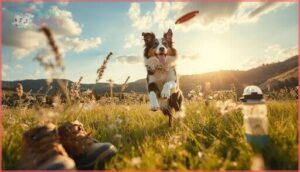
When your high-energy dog needs more than indoor games can offer, the great outdoors becomes your best training ground. Fresh air, open space, and new environments challenge both body and mind in ways that keep even the most spirited dogs satisfied.
Here are three outdoor activities that’ll help you safely channel all that boundless energy.
Local Trails and Parks
Local trails and parks offer some of the best outdoor activities for dogs, blending physical activity with mental stimulation. When planning your dog walk, prioritize trail safety by checking park rules and practicing proper dog etiquette—most urban walkers prefer well-maintained green spaces within 20 minutes of home.
Water stations at trailheads reduce outdoor hazards, supporting dog health and exercise while you explore together.
Agility Training and Obstacle Courses
Agility benefits your high-energy dog through structured obstacle courses that build canine conditioning while challenging both body and mind. Start with tunnels, jumps, and weave poles in 20–30 minute sessions, three to four times weekly.
Training techniques using positive reinforcement improve cue responsiveness within eight weeks, reducing bored behaviors by 40%.
Course safety demands gradual progression and proper warm-ups to protect joints and prevent overexertion.
Socialization With Other Dogs
Dog socialization strengthens canine social skills and pack dynamics, but timing matters—58% of tired dogs lose interest in unfamiliar companions within 30 minutes post-exercise. Watch for lethargy in dogs, as fatigued pets initiate play 28% less often than rested peers.
- Schedule dog park visits when your companion feels fresh and engaged
- Observe puppy interactions closely; tired dogs may appear withdrawn or irritable
- Apply proper dog behavior cues and dog park etiquette to prevent miscommunication
- Pet owners should recognize that social learning declines when physical reserves deplete
Balance exercise with adequate rest to support healthy canine health and best-possible socialization outcomes.
Balancing Rest and Activity for Wellness

Finding the sweet spot between activity and rest isn’t about following a rigid formula—it’s about tuning into your dog’s individual needs and responses. Just like us, dogs thrive on predictable rhythms that honor both their energy and their need for downtime.
Let’s look at three essential strategies that’ll help you create a sustainable wellness routine customized to your companion.
Establishing a Consistent Routine
Think of a consistent routine as your dog’s internal compass—it brings energy balance and reduces overexertion by 15–25%. Daily schedules built around regular exercise planning and feeding times help your dog’s body anticipate activity and rest.
Activity tracking through routine monitoring lets you spot shifts in physical exercise tolerance early, supporting both canine care and nutrition choices while strengthening your dog’s health and wellness foundation.
Monitoring for Signs of Overexertion
Your dog’s body speaks volumes during and after activity—watch for panting that extends past 5–15 minutes, a key fatigue sign pointing to possible physical exhaustion.
Canine stress emerges through disinterest in play dropping by roughly 40%, while overexertion risks increase when recovery time stretches beyond expected windows.
Recognizing lethargy in dogs means distinguishing normal tiredness from persistent low energy lasting over 24 hours, guiding you toward appropriate treatment for lethargy when exercise limits are exceeded.
Adjusting Exercise for Age or Health
As your dog ages past six, trim continuous sessions by 2–5 minutes yearly to honor age-related fitness shifts.
Senior dog care demands low-impact canine rehabilitation approaches—swimming and water treadmills yield 25–35% endurance gains while managing lethargy in dogs with joint disease.
Health considerations like arthritis or hypothyroidism require exercise modifications: shorter, frequent walks paired with veterinary medicine protocols guarantee dog health and wellness without triggering medical treatment needs.
Supporting Recovery After Exercise

After a good workout, your dog’s body needs the right support to bounce back strong. What you do in those first hours after exercise can make all the difference in preventing soreness and keeping your pup healthy long-term.
Let’s look at three key ways to help your dog recover properly.
Hydration and Nutrition Tips
After exercise, your dog’s water intake becomes critical—aim for around 50–60 ml per kilogram daily, adjusted for heat and activity. Hydration strategies like providing multiple water stations prevent dehydration and aid pet wellness during recovery nutrition phases.
Electrolyte balance aids faster recovery, so consider formulations with controlled sodium and potassium.
Nutrition timing matters too: offer easily digestible protein and carbs within 1–2 hours post-exercise to replenish glycogen stores.
Creating a Calm Resting Environment
Your dog’s recovery space matters just as much as water and nutrition. Designate quiet spaces away from household traffic where your dog can decompress without interruption—this fosters pet wellness and prevents stress-related canine health issues.
Soft bedding in peaceful areas, combined with calming techniques like gentle music or dim lighting, creates soothing environments that signal relaxation. These methods help distinguish normal tiredness from lethargy in dogs while promoting ideal animal behavior during recovery.
Recognizing Delayed Fatigue Signs
Even after providing proper rest, you should watch for fatigue patterns that emerge hours later. About 58% of owners notice slowed recovery within 24 hours, while resting heart rates climb 12% in dogs experiencing canine exhaustion.
If your dog sleeps 1.5 to 2.5 hours longer than usual or shows reluctance to rise beyond typical recovery time, these health symptoms warrant health monitoring to distinguish delayed tiredness from lethargy in dogs.
Frequently Asked Questions (FAQs)
Can certain medications make my dog more tired?
Like a dimmer switch on your pup’s energy, certain medications can indeed cause drowsiness. Sedatives, antihistamines, pain relievers, and behavioral drugs frequently trigger fatigue—sometimes affecting up to 45% of treated dogs depending on formulation.
How much sleep does a healthy dog need?
A typical adult dog needs about 12-14 hours of sleep daily, while puppies and seniors often require 18-20 hours.
Sleep quality matters—watch for comfortable rest periods and minimal nighttime restlessness.
Do weather conditions affect my dogs energy levels?
Yes, weather greatly affects your dog’s energy levels. Temperature above 85°F and humidity over 60% can reduce exercise tolerance, causing fatigue within 10–30 minutes compared to cooler conditions.
Should I adjust exercise for pregnant or nursing dogs?
Yes—pregnant dogs need 20–30% less exercise, favoring short walks over intense activity. Nursing dogs require gentle routines for at least 4–6 weeks postpartum to support lactation and recovery.
What supplements help boost canine energy and stamina?
A rising tide lifts all boats—and when your dog’s energy seems to lag, certain supplements may support stamina and vitality under veterinary guidance. These include L-Carnitine, Omega Fatty acids, B Vitamins, CoQ10 Supplements, and MCT Oil.
Conclusion
That old saying “a tired dog is a happy dog” holds true only when exhaustion comes from balanced, mindful activity rather than unsafe overexertion. Your tired-out dog should wake refreshed, not sluggish.
Watch for the subtle shifts—persistent lethargy, disinterest in favorite activities, changes in appetite—that separate healthy fatigue from emerging health concerns.
Trust your observations, maintain consistent routines, and never hesitate to consult your veterinarian when something feels off. Your attentiveness protects their wellbeing.
- https://veterinarypartner.vin.com/default.aspx?pid=19239&id=11692001
- https://www.alltrails.com/parks/us/arkansas/pinnacle-mountain-state-park
- https://www.arkansas.com/little-rock/outdoor-recreation/two-rivers-park
- https://crystalbridges.org/nature-trails/
- https://www.akc.org/expert-advice/training/mentally-stimulated-happy-dog/