This site is supported by our readers. We may earn a commission, at no cost to you, if you purchase through links.

A puppy that misses out on proper socialization before 16 weeks may struggle with fear and reactivity for life. That narrow window explains why group classes have become the benchmark for raising confident dogs.
Socializing puppies in group classes gives them controlled exposure to other dogs, unfamiliar people, and novel environments—all under the watchful eye of a professional trainer who can spot trouble before it starts. The structure matters as much as the exposure itself. Sessions that balance supervised play with real-world scenarios teach your puppy how to read social cues, handle new experiences calmly, and recover from mild stress.
Understanding what happens in these classes and how to make the most of each session sets your puppy up for success both during training and long after graduation.
Table Of Contents
Key Takeaways
- Puppies need socialization before 16 weeks to avoid lifelong fear and reactivity, making group classes the gold standard for building confidence through controlled exposure to dogs, people, and environments.
- Effective classes run 45-60 minutes with structured activities including supervised play rotations every 5-7 minutes, exposure to varied stimuli, and real-time trainer feedback that helps you recognize stress signals and reinforce calm behavior.
- Safety depends on close monitoring of body language like tucked tails or lip licking, keeping groups small with 1:5 supervision ratios, and using gradual exposure techniques that pair new experiences with positive reinforcement.
- Most puppies show behavioral improvements within 2-6 weeks of consistent attendance, but lasting results require ongoing socialization through community events, social walks, and daily handling sessions that extend beyond formal classes.
What Happens in Puppy Socialization Classes
Puppy socialization classes follow a structured format designed to build your puppy’s confidence in a safe environment. Each session includes activities that expose your puppy to new experiences while trainers guide interactions and offer tailored feedback.
Here’s what you can expect during a typical class.
Typical Class Activities and Structure

Most puppy socialization classes follow a clear rhythm that keeps your pup engaged without overwhelming them. Each session usually runs 45 to 60 minutes and includes: Classes typically meet once or twice weekly, giving puppies time to practice new skills between sessions while building on the social and behavioral benefits of regular group interaction.
- Brief trainer introductions and class warmups to help puppies settle in
- Short instructional segments explaining goals and safety guidelines
- Puppy rotations through social stations targeting different skills
- Activity transitions with minimal downtime to maintain focus
- End-of-class recap with practical take-home tips
This structure makes group classes predictable and effective for puppy socialization and development. Understanding language patterns can also help trainers create engaging instructional content.
Supervised Play and Interaction

After the structured activities wrap up, it’s time for the heart of puppy socialization classes: supervised play and interaction. Trainers maintain a 1:5 supervision ratio during these sessions, rotating play partners every 5 to 7 minutes so your pup experiences different play styles.
This structure teaches social cues and guarantees play safety, with trainers stepping in within 2 to 3 seconds if things escalate. The trainers also apply a methodological rigor approach to guarantee the sessions are effective.
Exposure to New People and Environments
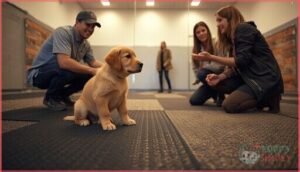
Beyond romping with furry friends, your puppy needs to learn that people and places aren’t scary. Classes introduce puppies to individuals wearing hats, coats, or uniforms while exploring different surfaces and lighting. This novelty exposure builds environmental adaptation and social tolerance through controlled human interaction.
- Men, women, and children approach with gentle petting
- Unfamiliar handlers practice grooming and restraint techniques
- Floors change from carpet to tile, expanding sensory development
- Lighting and scents shift to mirror real-world scenarios
- Trainers guide reactions, reducing fear responses over time
Trainer Feedback and Guidance

Once your puppy meets new faces and spaces, trainers step in with real-time feedback techniques. They’ll point out when your pup shows calm body language or needs redirection, using positive reinforcement to shape responses. Guidance methods include plain-language explanations, scripted phrases for home practice, and clear next steps. This trainer support turns observation into action, helping you recognize stress signals and celebrate small wins. Many owners wonder about outdoor environments during training, especially when considering whether German Shepherds can live outside while maintaining consistent socialization routines.
Trainers customize advice based on your puppy’s temperament, setting short-term goals you can reach in two to four weeks. They document adjustments after each dog training and socialization session, so you stay consistent. You’ll also get chances to ask questions and confirm you understand each training technique before heading home.
| Feedback Type | When It’s Given | What You’ll Learn |
|---|---|---|
| Verbal cues | During play sessions | Recognize body-language signals early |
| Demonstrations | After stressful events | Handle puppies calmly in tough moments |
| Progress notes | End of each class | Track milestones and adjust strategies |
| Home practice scripts | Between sessions | Reinforce behaviors outside puppy socialization classes |
| Safety debriefs | After incidents | Prevent rough interactions and injuries |
Ensuring Safe and Effective Socialization

Group classes offer great socialization opportunities, but they only work when your puppy feels safe and supported. You’ll need to watch interactions closely and know when to step in. If you’re considering a German Shepherd mix for your home, starting group classes early helps them build confidence around other dogs and people.
Here’s how to create a positive experience that builds confidence without overwhelming your pup. Start with puppy classes that focus on positive reinforcement and early social skills, especially if you’re working with a Beagle mix or other breed with specific temperament traits.
Monitoring Puppy Interactions
You can’t rely on good intentions alone when puppies meet—you need to watch what’s actually happening.
During puppy socialization classes, observe puppy body language like tucked tails, stiff posture, or ears back to spot discomfort early. Track engagement versus retreat, and note any signs of stress like yawning or lip licking.
This careful monitoring ensures puppy interactions stay positive and safe.
Gradual Exposure Techniques
The best socialization plans use exposure ladders—a step-by-step approach that starts simple and builds slowly. You’ll introduce your puppy to new sights, sounds, and experiences only after they show calm signals like relaxed body language.
The best socialization uses exposure ladders, introducing puppies to new experiences gradually once they show calm, relaxed body language
Pair each step with positive reinforcement to create positive associations. Track stress levels throughout, and adjust your pace based on what your puppy tells you through social learning.
Preventing Rough Play and Injuries
Good supervision is the backbone of injury prevention in puppy socialization classes. Trainers keep groups small—around four to six puppies per instructor—so they can watch for signs of rough play and step in quickly.
Short play sessions with breaks every one to two minutes help prevent arousal from escalating. Pairing puppies by size and energy level creates safer interactions and reduces the risk of accidental injuries during socialization.
Managing Puppy Stress and Comfort
Puppy calming starts with recognizing stress signals like yawning, lip licking, or turning away. Gentle handling and positive reinforcement help puppies feel secure while learning socialization techniques.
Keep sessions short—under fifteen minutes—and respect comfort zones during exposure. Gradual introductions reduce anxiety and support fear prevention in puppy socialization classes.
When you notice tension, give your puppy space to regroup before continuing.
Tracking Progress and Long-Term Outcomes

You’ll want to keep an eye on how your puppy reacts to group classes so you can celebrate the wins and adjust when needed. Most owners start noticing changes within a few weeks, but the timeline varies depending on your puppy’s temperament and consistency.
Let’s look at what progress actually looks like and how to keep the momentum going long after class ends.
Signs of Improved Social Skills
You’ll notice your puppy reading social cues more clearly during play initiation—tails relax, bodies soften, and interactions flow without constant interruptions. Impulse control improves as they wait their turn instead of barging in. Calm behavior becomes the norm, not the exception.
Cooperative learning emerges when your puppy mimics polite greetings from classmates. These shifts show that puppy socialization classes are strengthening social skills and preventing behavioral issues through positive reinforcement.
How Long to See Behavioral Changes
Your puppy’s behavioral timeline varies by age and temperament, but you’ll generally see early progress within two to six weeks of consistent puppy socialization classes. Training outcomes depend on several factors that shape how quickly social learning takes root.
Here’s what influences your puppy’s progress tracking during the socialization period:
- Puppy development stages: Younger puppies (8–12 weeks) often show faster socialization benefits
- Class frequency: Weekly attendance accelerates behavioral issue prevention
- Home reinforcement: Practice between sessions consolidates new skills
- Individual temperament: Shy puppies may need eight to twelve weeks for noticeable changes
Ongoing Socialization Beyond Classes
Once you see those first behavioral changes, keep building on the foundation from puppy socialization classes. Regular social walks with other dogs reinforce leash training and reduce reactivity.
Take your puppy to community events where they’ll encounter public encounters with diverse people, sounds, and surfaces. Schedule home visits with friends who have calm dogs, and maintain daily handling sessions to extend socialization benefits through consistent social learning.
Support From Trainers and Community
You won’t navigate this journey alone. Trainers in group classes offer ongoing feedback customized to your puppy’s social learning pace, while community support from fellow owners provides practical tips and reassurance.
Professional guidance helps you interpret behavioral cues and adjust dog training techniques.
This owner engagement, combined with positive reinforcement from instructors, creates a safety net as your puppy socialization class experience extends into everyday life.
Frequently Asked Questions (FAQs)
What age should puppies start group classes?
Most experts agree that seven to twelve weeks is the sweet spot for puppy socialization class enrollment.
Your pup needs at least two core vaccine rounds first, plus a clean health check before joining group sessions.
How much do puppy socialization classes typically cost?
Enrollment fees for group training generally range from $100 to $250 for multi-week programs.
Budget planning should account for cost factors like class pricing variations, though some trainers offer financial aid or sliding-scale options.
Can shy or fearful puppies attend group classes?
The most anxious puppies often need group classes most—yet they’re the hardest to enroll. Shy or fearful puppies can attend when trainers use gentle training, gradual exposure, and distance management to reduce anxiety while building confidence.
What vaccinations are required before enrolling puppies?
Your puppy needs core vaccines—distemper, parvovirus, and adenovirus—plus a rabies shot before joining dog training classes.
Bring vaccination records from your veterinarian, showing dates and vaccine types, to satisfy the puppy socialization checklist requirements.
How do I choose between group and private training?
The best training path isn’t always the busiest one. Group classes offer cost comparison advantages and peer socialization, while private training tailors dog training methods to your puppy’s temperament and specific training goals.
Conclusion
Patient practice pays off when socializing puppies in group classes. The interactions your puppy experiences now shape how they’ll respond to the world for years to come.
Each session builds confidence, teaches boundaries, and strengthens their ability to adapt.
Stay consistent with attendance, trust your trainer’s guidance, and keep exposing your dog to new experiences outside of class. The work you put in today creates a well-adjusted companion tomorrow.