This site is supported by our readers. We may earn a commission, at no cost to you, if you purchase through links.
Pick the wrong coat type for your lifestyle, and you’ll spend years fighting a losing battle—lint rollers on every surface, grooming sessions that feel like a part-time job, or a dog shivering through winters, your climate dishes out.
The difference between smooth and rough coat dogs runs deeper than looks. It shapes how much time you spend brushing, how your dog copes with a cold morning walk, and even how easily a vet spots a skin problem hiding beneath the fur.
Whether you’re choosing a breed or trying to understand the one already sleeping on your couch, knowing what each coat type actually means makes every care decision cleaner.
Table Of Contents
Key Takeaways
- Smooth coats need just 5–15 minutes of brushing a week, while rough coats demand 30-plus minutes two to three times weekly, so your lifestyle honestly matters more than breed preference when picking a dog.
- Rough coats act like a built-in winter jacket, with layered guard hairs and a dense undercoat trapping warmth, while smooth coats shed heat efficiently, but struggle in cold or wet conditions without a jacket.
- Your dog’s coat is an early warning system—smooth coats make skin problems easy to spot, while rough coats can hide redness, fleas, and lesions under dense fur until things get worse.
- What your dog eats shows up in their coat within six to eight weeks, and a balanced omega-3 to omega-6 ratio is one of the most direct ways to improve coat health from the inside out.
Smooth Vs Rough Coat Basics
Before choosing a dog, it helps to understand what you’re actually signing up for regarding coat care.
Different coat types come with very different grooming demands, so browsing goldendoodle haircut styles and coat guides can give you a realistic sense of the upkeep involved before you commit.
Smooth and rough coats look different, feel different, and need very different levels of attention. Here’s what sets them apart.
What Defines a Smooth Coat
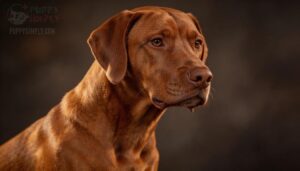
A smooth coat is built on simplicity. The Hair Shaft Structure is uniform and lies flat, kept glossy by active Sebaceous Gland Activity beneath the skin.
Guard Hair Count stays low, so there’s no wiry bulk. Coat Density Level remains moderate-to-high, giving that sleek silhouette.
Shine Reflectivity is the giveaway — light bounces cleanly off a smooth-coated dog’s fur.
| Feature | Smooth Coat Detail | Why It Matters |
|---|---|---|
| Hair Shaft Structure | Uniform, flat-lying | Less tangling, easier brushing |
| Sebaceous Gland Activity | Naturally high | Maintains coat texture and shine |
| Guard Hair Count | Low | Reduces frizz and bulk |
What Defines a Rough Coat
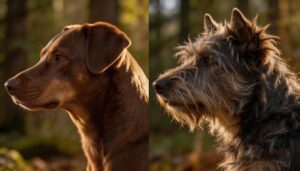
Where rough coats prioritize toughness over minimalism, their defining feature is guard hair stiffness. These coarse outer hairs stand erect, creating a rugged texture that serves as a natural weather barrier against wind and debris. Rough coat genetics engineer a double-layered structure: stiff guard hairs dominate the top layer, while a dense undercoat provides insulation.
| Rough Coat Feature | What It Means for Your Dog |
|---|---|
| Guard hair stiffness | Natural weather barrier against wind and debris |
| Undercoat insulation | Traps warmth in cold climates |
| Texture rosettes | Hair grows in multiple directions, creating uneven patterns |
| Breed standard criteria | Coat must stay harsh, never soft or woolly |
| Double-layered structure | Requires more grooming attention than single coats |
This specialized design demands specific care. The double-layered structure necessitates regular grooming to prevent matting and maintain functionality. Breed standards strictly enforce a harsh texture, rejecting softness or woolliness. Additionally, the insulating undercoat ensures warmth in cold environments, while the guard hairs’ stiffness provides physical protection.
Key Texture and Length Differences
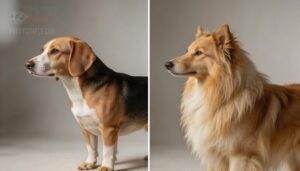
Beyond stiffness, texture contrast tells the full story.
smooth coat sits flat at 1–2 cm, with barely any feathering near the ears or paws.
rough coats push guard hair density outward, often exceeding 3 cm with visible feathering on the legs and sides.
| Feature | Smooth vs. Rough |
|---|---|
| Coat length | 1–2 cm vs. 3+ cm |
| Feathering presence | Minimal vs. prominent |
Single Coat Vs Double Coat Impact
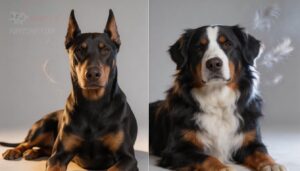
Coat layers matter more than you might think. A singlecoat has one layer — simple, light, faster-drying.
A doublecoat adds undercoat density beneath the guard hairs, boosting weather resistance and rain protection but increasing shedding during seasonal blowouts.
| Feature | Single Coat | Double Coat |
|---|---|---|
| Undercoat | None | Dense underlayer |
| Shedding | Steady, low volume | Seasonal, heavy blowouts |
| Coat Layer Benefits | Easy maintenance | Insulation, weather resistance |
Common Breeds With Smooth Coats

When picking a smooth coat dog, size and temperament traits vary widely — but the care routine stays refreshingly simple. Beagles, Italian Greyhounds, Boxers, and Whippets all wear that short, sleek look.
| Breed | Size |
|---|---|
| Beagle | Medium |
| Italian Greyhound | Toy |
| Boxer | Large |
Jack Russell Terriers also appear frequently in show standard rings for their classic smooth coat form.
Their smooth coats, while show-ring perfect, offer limited insulation—so it’s worth understanding how short-coated dogs handle cold weather exposure before leaving them outdoors for long.
Common Breeds With Rough Coats
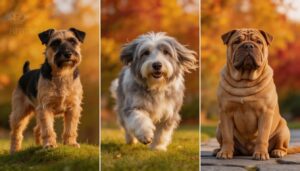
Rough coated breeds span a wide range of sizes and origins. The Airedale Terrier and Border Terrier carry that signature wiry texture, while the Briard and Old English Sheepdog lean toward longer, shaggy versions of a rough coat. Rough Collies and the Chinese Shar-Pei round out a diverse group.
| Breed | Coat Style |
|---|---|
| Airedale Terrier | Wiry, dense |
| Old English Sheepdog | Long, shaggy |
| Chinese Shar-Pei | Short, rough |
Grooming and Maintenance Needs
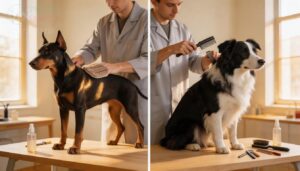
Grooming a dog isn’t one-size-fits-all — and coat type makes a bigger difference than most people expect. Whether your dog has a sleek smooth coat or a dense rough one, the time, tools, and effort involved can vary quite a bit.
Here’s what you need to know about keeping each coat type in good shape.
Weekly Brushing Needs for Smooth Coats
Even smooth coats need a weekly brush schedule — don’t let the short hair fool you. Brushing once a week, using a section-by-section technique from head to tail, removes loose hair, promotes coat shine enhancement, and spreads natural skin oils.
Bump that to two or three times weekly during shedding seasons.
Post-bath dry brushing also helps with hair-loss monitoring and keeps skin clean.
Brushing Tools for Rough Coats
The right tools make all the difference when managing a rough coat. Here’s what your grooming kit should include:
- Slicker Brush Selection — Choose a slicker brush with a 9–14 cm wide head for thorough coverage during regular brushing sessions.
- Pin Brush Tips — Use flexible pin brushes to glide through hair and lift loose debris gently.
- Undercoat Rake Design — Long‑pinned undercoat rakes reach deep into the coat to extract trapped fluff.
- Ergonomic Handle Features — Look for cushioned grips to reduce wrist strain during longer brushing sessions for dogs.
- Detangler Spray Use — Spritz before using a mat comb to soften knots without pulling.
For detailed coat‑type recommendations, consult the vet‑recommended brush guide.
Preventing Mats and Tangles
Mats don’t appear overnight — they build quietly in high-risk zones like behind the ears, armpits, and under the collar.
A mat prevention routine makes all the difference.
Rotate your brush types for dogs based on coat density, use detangling sprays before combing, and practice sectional drying after baths.
Regular brushing every few days keeps tangles manageable before they harden into knots.
Bathing Frequency by Coat Type
How often your dog needs a bath depends less on habit and more on coat actually traps. Here’s a simple starting framework:
- Smooth coat dogs do well with bathing every 4–6 weeks, based mostly on odor management.
- Rough coat dogs usually need a bath every 4–8 weeks, especially after outdoor play.
- Both coat types can stretch to 8–12 weeks indoors with good grooming frequency.
Your shampoo choice matters too — overbathing strips natural oils regardless of coat type. For drying techniques, rough coats need thorough drying to prevent trapped moisture, while smooth coats air-dry faster.
Keep your bathing schedule consistent, and adjust seasonally as needed.
When Professional Grooming Helps
Professional grooming pays off most when home care hits its limits.
For rough coats, a groomer’s high-velocity dryer, undercoat rake, and dematting tools handle what a standard brush can’t. Specialty drying prevents trapped moisture, while seasonal trimming keeps the coat manageable.
Smooth coat dogs benefit from professional coat conditioning and health screening, where groomers spot early skin issues you might miss.
At-home Care Time and Effort
Once you’re past professional appointments, the daily reality comes down to time.
Smooth coats only need a quick brushing schedule — about 5 to 15 minutes weekly. Rough coats demand 30-plus minutes, two to three times a week, for mat management and shedding control.
Add a bathing routine every four to twelve weeks depending on coat type, plus regular skin inspection during grooming, and your weekly commitment becomes clear, fast.
Shedding, Weather, and Insulation
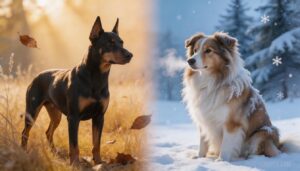
Coat type does more than shape your grooming routine — it also determines how your dog deals with the seasons, the rain, and a cold snap.
Whether your dog sheds a little all year or dumps a full coat twice a season depends largely on what’s underneath.
Here’s what you need to know about shedding patterns, weather tolerance, and when your dog might actually need a little extra help.
Year-round Shedding Vs Seasonal Shedding
Smooth coat dogs shed steadily year-round, so you’ll find loose hair on your furniture in July just as much as November. Rough coat dogs follow a different rhythm, driven by Seasonal Hormone Shifts that trigger two heavy blow-out periods.
For Year-round Coat Maintenance, track these three shedding patterns:
- Smooth coats release hair consistently with low Shedding Volume Metrics monthly
- Rough coats spike heavily in spring and fall
- Climate-controlled Home Tips like stable indoor temperatures can soften seasonal shedding peaks
How Undercoats Affect Loose Hair
That steady vs. seasonal pattern connects directly to what’s happening beneath the surface. Double-coated dogs have a Seasonal Undercoat Cycle where dense undercoat protection traps air close to the skin — the Undercoat Airflow layer.
During shedding, the Guard Hair Catch holds loose strands in place, so hair releases gradually even after brushing. An Undercoat Rake Effect pulls those Trapped Hair Release strands out before they hit your sofa.
Cold-weather Protection in Rough Coats
Rough coats work like a built-in winter jacket. The double-layered structure creates Air Pocket Insulation between guard hairs and the undercoat, giving your dog real undercoat protection against wind and cold.
Facial Wind Guard hairs shield the muzzle, while Moisture Repellent Conditioning preserves the coat’s weather resistance.
Watch for Snow Clump Management and Ice Buildup Prevention during outdoor walks to keep the insulation properties of the double coat performing well.
Heat Tolerance in Smooth-coated Dogs
Unlike rough coats, a smooth coat offers minimal thermal insulation in dogs, so your dog loses shade-seeking behavior, its first real defense in hot weather.
Panting efficiency matters most here — dogs cool down through evaporation in the mouth and airways, not sweating.
Keep hydration needs top of mind, watch for heatstroke signs, like excessive drooling and lethargy, and limit sun exposure during peak hours.
Drying Time After Rain or Baths
After a bath or rainy walk, your dog’s coat type makes a big difference in drying duration. Smooth coat dogs dry faster because water runs off with minimal absorption, while rough coat dogs trap moisture deep in wiry layers near the skin.
- Use towel blotting (not rubbing) to lift water without tangling
- Apply airflow separation with a blow dryer on a warm setting to reach the undercoat
- Humidity impact slows drying indoors, so good ventilation speeds coat maintenance
When Dogs May Need a Jacket
Not every dog needs a jacket, but some genuinely do.
Smooth coat dogs with little undercoat lose heat fast in cold, wet conditions — wet-weather chilling is a real risk.
Senior dogs managing arthritis pain relief, those in post-surgery recovery, or breeds with hypothyroidism insulation deficits all struggle in the cold.
If your dog shivers or tucks its tail, a dog jacket isn’t optional.
Skin, Allergies, and Coat Health

Your dog’s coat does more than just look good — it’s a window into what’s going on beneath the surface.
Your dog’s coat is more than appearance — it’s a window into their inner health
Whether your dog has a smooth or rough coat, each type comes with its own set of health and allergy considerations worth knowing.
Here’s what to keep in mind regarding skin, dander, and coat condition.
How Coat Type Affects Skin Checks
Your dog’s coat type shapes how quickly you catch skin problems.
Smooth coats make lesion visibility and early redness detection almost simple — flea spotting is easier too, since flea dirt shows clearly against short, flat hair.
Rough coats demand a hands-on hand-feel examination, parting dense fur to reach the skin. Skin sensitivity detection simply takes longer when texture and debris can mask what’s brewing underneath.
Dander and Allergy Considerations
Here’s something worth knowing: it’s not the hair that triggers sneezing — it’s the proteins in dander, saliva, and urine.
Dander Transmission happens with any coat type, but Allergen Accumulation is likely to be higher in rough coats, since textured fur holds more residue.
For allergy sufferers, HEPA Filtration, regular brushing outdoors, and establishing Pet-Free Zones reduce Clothing Transfer and overall exposure substantially.
Moisture and Debris Trapped in Rough Coats
Rough coats hold more than allergens — they trap moisture and debris too. Guard hair traps grass seeds, burrs, and mud in ways a smooth coat simply doesn’t.
Watch for these problem zones:
- Leg Debris Build-up around the inner legs and armpits
- Ear Dampness along the muzzle and chin after wet walks
- Hot Spot Prevention requires prompt drying to stop irritation
Moisture retention under matting and tangling accelerates bacterial growth fast.
Signs of Poor Coat Health
Trapped moisture and debris don’t just cause odor — they set the stage for visible coat decline. Matted fur, greasy coat texture, and excessive itching are early signs worth catching fast.
| Warning Sign | What It Indicates |
|---|---|
| Flaky scaling | Skin imbalance or infection |
| Loss of luster | Debris buildup or poor skin health |
| Persistent redness | Inflammation from dog coat troubles |
| Patchy coat loss | Long-term matting or skin allergies in dogs |
Regular coat health assessment keeps small problems from becoming bigger ones.
Nutrition and Omega Fatty Acids
What dog eats shows up in their coat. Omega-3 sources like fish oil and flaxseed benefit both coat conditioning and skin inflammation.
The omega-6 ratio matters too — too much drives pro‑inflammatory signals.
Anti-inflammatory nutrients from omega-3 and omega-6 work best in balance.
Nutritional influence on coat health is real: expect visible improvement in six to eight weeks with consistent dog nutrition for coat health.
When Coat Changes May Signal Illness
Good nutrition lays the groundwork, but your dog’s coat also tells you when something’s wrong inside. Watch for these five warning signs:
- Gloss loss — sudden dullness often signals fever or systemic illness
- Matting spikes — rapid tangling can mean skin irritation or pain
- Hair loss spikes — patchy shedding outside normal cycles suggests disease
- Itch escalation — daily worsening scratching warrants a vet evaluation
- Lesion emergence — crusts, redness, or sores paired with lethargy need prompt attention
Choosing The Best Coat Type
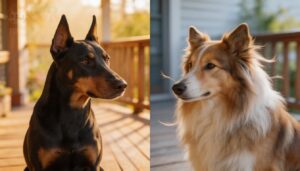
Picking the right coat type comes down to knowing yourself as much as knowing the dog. Your lifestyle, climate, and honestly, how much dog hair you can live with all play a role.
Here’s what to think through before you decide.
Best Coat Type for Low-maintenance Owners
If your time is short and your patience for grooming even shorter, smooth coat dogs are your answer.
With weekly brushing under 10 minutes, a minimal tool set, and budget grooming costs that run roughly 30% less than rough coat breeds, they’re genuinely travel-ready coats built for busy lives.
steady, predictable shedding also makes them ideal indoor friendly coats for low-maintenance grooming routines.
Matching Coat Type to Climate
Your dog’s coat and your climate need to be a good match.
- Alpine Climate Fit: rough coats excel in cold mountain zones
- Desert Heat Management: smooth coats handle high temperatures more efficiently
- Coastal Humidity Effects: rough coats trap moisture longer in wet air
- Mountain Wind Protection: dense guard hairs block wind-driven chill effectively
- Seasonal Temperature Shifts: insulation properties of double coat adjust with undercoat cycling
Choosing Based on Shedding Tolerance
How much dog hair can you honestly live with? Think of it as a shedding tolerance quiz for your lifestyle. Smooth coats shed lightly year-round; rough coats spike heavily in spring and fall.
| Shedding Level | Coat Type | Household Cleaning Plan |
|---|---|---|
| Low | Smooth, single-layer | Weekly vacuum schedule, occasional lint roller |
| Moderate | Smooth, double-layer | Bi-weekly vacuuming, air filtration system |
| High | Rough, double-layer | Daily hair collection tools, HEPA vacuum schedule |
Allergy considerations for dog coat types matter too — rough coats trap more dander, impacting sensitive households.
Grooming Costs to Expect
Grooming costs add up faster than most owners expect. Here’s a realistic breakdown by coat type:
- Home Grooming Supplies run $20–$40 for smooth coats; rough coats need specialized grooming tools for dogs, pushing that to $30–$60.
- Professional Service Fees average $30–$60 per smooth‑coat visit versus $50–$120 for rough coats.
- Seasonal Cost Variations spike 10–30% during shedding peaks.
- Mobile Groomer Premium adds $10–$30 per visit.
Lifestyle Factors Before Choosing a Breed
Your lifestyle shapes this choice more than anything else.
Before picking a breed, think honestly about your daily routine, budget, and home setup.
| Lifestyle Factor | Smooth Coat | Rough Coat |
|---|---|---|
| Daily Exercise Needs | 30–60 min/day | 45–90 min/day |
| Family Dynamics | Easier for busy families | Better for active households |
| Living Space | Suits apartments well | Prefers more room |
| Travel Lifestyle | Low-maintenance on the go | Needs consistent grooming access |
| Financial Commitment | Lower grooming costs | Higher long-term investment |
Which Coat Type Suits Your Home Best
Your home environment is the final piece of the puzzle.
Smooth coat breeds shed fine, flat hairs that vacuum up easily, meaning lower cleaning frequency and less furniture wear.
Rough coat dogs bring more debris indoors, affecting floor surface fit and pet interaction routines.
Allergy Impact also differs — rough coats trap more dander.
Match your tolerance for grooming requirements and shedding differences to your actual living space.
Frequently Asked Questions (FAQs)
What is the 7 7 7 rule for dogs?
Ever wonder how to build a grooming habit that actually sticks?
The 7 7 7 rule breaks dog coat grooming recommendations into three seven-day phases: Initial Inspection, Adjustment Phase, and Maintenance Cycle for consistent coat care.
What country loves their dogs the most?
The United States stands out, with around 69 million pet dogs and billions spent annually on food, grooming, and veterinary care — reflecting some of the strongest dog ownership rates and pet spending worldwide.
Can smooth coat dogs compete in dog shows?
Yes, smooth coat dogs can compete in dog shows.
Eligibility Rules are based on breed standards and registration status, not coat type.
Judging Criteria focus on how well your dog’s coat matches its breed standard.
How does coat type affect a dogs lifespan?
Coat type doesn’t directly shorten a dog’s life — but it shapes the conditions that can.
Genetic Longevity Influence starts at the follicle level, where coat traits connect to Follicle Tumor Risk and skin disease probability.
Are rough coat dogs harder to train than smooth?
Rough coat dogs aren’t harder to train by nature. Temperament and high energy levels matter far more.
That said, grooming time impact and handling comfort can quietly affect your consistency and owner commitment over time.
Which coat type handles water activities better?
Smooth coats win on water repellency and rapid drying. Rough coats offer cool water performance and a buoyancy advantage.
Your dog’s swim gear fit and coat texture should guide the choice.
Conclusion
Imagine your dog’s coat as a trusted ally, not a constant challenger. By understanding smooth vs rough coat dogs, you’ll access a world of customized care, from brushing to bathing, and even climate considerations.
A well-suited coat means less stress and more snuggles. With this knowledge, you’ll confidently choose the perfect breed or improve your current companion’s care.
Your dog’s coat is more than a characteristic – it’s a key to a harmonious life together, every day.
- https://www.orvis.com/labrador-retriever
- https://kgp.vfh.mybluehost.me/website_45b58b68/grooming-tools-for-whippet-jack-russell-mixes/
- https://www.frontiersin.org/articles/10.3389/frym.2021.601068/pdf
- https://pmc.ncbi.nlm.nih.gov/articles/PMC9892774/
- https://www.explorationpub.com/Journals/ent/Article/1004107