This site is supported by our readers. We may earn a commission, at no cost to you, if you purchase through links.
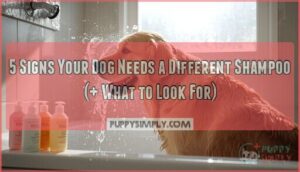
You scrub your dog clean, towel them dry, and hours later they smell like they just rolled through a swamp. That’s not normal—and it’s not your dog’s fault. When bath time stops working, the culprit is usually sitting right there in your caddy.
Most owners assume all dog shampoos do the same job, but the wrong formula can actually make skin problems worse, trap odors instead of removing them, and leave coats looking lifeless no matter how thoroughly you rinse. Your dog’s scratching, dullness, or lingering funk isn’t a hygiene issue—it’s a mismatch between their needs and what’s in the bottle.
Recognizing these signs early means you can switch to a formula that actually works.
Table Of Contents
Key Takeaways
- Persistent odor after bathing indicates your shampoo isn’t removing odor-causing bacteria and oils—it’s either masking the smell with fragrance or leaving residue that attracts dirt and disrupts your dog’s skin balance.
- A dull, greasy coat signals product buildup or uneven oil stripping from harsh cleansers, which means the shampoo formula doesn’t match your dog’s pH needs or coat type.
- Redness, scratching, flaky skin, or hot spots appearing after baths point to skin irritation from the wrong ingredients—switching to hypoallergenic or medicated formulas prevents these reactions.
- Different coat types require specific shampoo formulations: smooth coats need moisture protection, short double coats need deep cleansing for trapped oils, and long coats demand extra conditioning to prevent matting and breakage.
Your Dog Still Smells After Bathing
You just gave your dog a bath, and within hours, that wet-dog smell is back. This isn’t about your technique—it’s a clear signal that your current shampoo isn’t doing its job.
Choosing the right shampoo formulated for dogs helps maintain their skin’s natural pH balance and prevents recurring odor issues.
Here’s what’s actually happening when the odor won’t go away.
Shampoo Isn’t Removing Odor-Causing Buildup
Your dog’s shampoo ingredients should break down trapped oils and bacteria that create that persistent wetdog smell. If buildup removal isn’t happening, odor-causing microbes thrive in the coat and disrupt skin balance.
If your dog’s shampoo can’t break down trapped oils and bacteria, odor-causing microbes will thrive and disrupt skin balance
Look for dog shampoo formulated with deeper cleansing agents that target microbial balance, not just surface dirt. Residue prevention and proper scalp health depend on thorough odor control from the start.
Fragrance is Masking, Not Cleaning
A floral scent that vanishes in hours is a red flag. Masking agents cover odors temporarily without neutralizing the bacteria creating them. Your dog might smell fresh post-bath, but underlying microbial activity continues unchecked.
Here’s how fragrance-heavy shampoos fail:
- Scent perception tricks your nose without addressing odor-causing microbes
- Fragrance chemistry can interact with oils, creating new smells
- Sulfates and parabens irritate skin while masking problems
- Fragrance-free, hypoallergenic shampoo prevents skin allergies through proper cleaning mechanisms
Residue is Being Left Behind
Beyond masking, some shampoos create their own problems. Residue buildup from film forming agents and emollient issues leaves a tacky coating on fur. You’ll notice scent reversion within hours as mineral deposits from hard water interact with shampoo ingredients. This residue attracts dirt faster, disrupting skin balance and coat health.
| What You See | What’s Actually Happening |
|---|---|
| Greasy feel hours after bathing | Emollients and conditioners didn’t rinse fully |
| Visible gloss in certain light | Film forming agents clinging to fur fibers |
| Dirt reappears quickly | Residue attracts dust and debris |
| Slick or sticky texture | Mineral deposits from water hardness |
| Dull, weighed-down appearance | Product buildup masks natural coat texture |
Check your dog shampoo label. Clarifying formulas without heavy conditioning agents rinse cleaner, preventing these residue-related issues.
Understanding what makes a good dog shampoo helps you choose formulas that clean effectively without leaving buildup on your dog’s coat.
The Coat Looks Dull or Feels Greasy
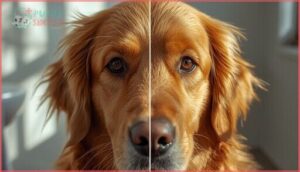
A healthy coat should catch the light and move freely when your dog shakes or runs.
If you’re seeing a dull, flat appearance or feeling an oily film after bath time, the shampoo is likely causing more problems than it’s solving. Here’s what’s happening beneath the surface.
Shampoo is Leaving Product Residue
If your dog’s coat feels tacky or looks flat even after a thorough rinse, shampoo ingredients like silicones and heavy conditioners can leave product buildup. This film formation weighs down coat health and dulls shine.
Poor residue removal disrupts skin balance, sometimes causing scalp irritation. Choose a dog shampoo formulated for clean rinsing—your shampoo selection directly affects how light and resilient the coat feels.
Maintaining proper coat care also involves understanding the importance of removing product residues to promote healthier skin and fur.
Natural Oils Are Being Stripped Unevenly
Harsh cleansers disrupt oil balance by removing natural sebum unevenly across your dog’s coat. Some areas end up greasy while others become brittle and dry—an issue that affects scalp health and coat texture simultaneously.
- pH levels in harsh shampoo ingredients can thin the skin’s protective barrier
- Coat conditioning suffers when oils are stripped from high-porosity zones first
- Canine hygiene requires dog shampoo formulated for balanced cleansing
- Dog bathing frequency impacts how quickly oils redistribute naturally
- Grooming tips include choosing gentle products that preserve even oil coverage
Using shampoos with solvents similar to chemicals that strip natural oils can further exacerbate dryness and irritation.
The Coat Lacks Movement and Shine
A healthy dog coat should bounce when brushed and reflect light evenly. If your dog’s fur feels stiff, shows uneven shine enhancement, or lacks natural luster, you’re likely dealing with coat texture issues from residue buildup or harsh cleansers.
Using the wrong product can worsen these problems, which is why choosing between puppy and adult dog shampoo matters for maintaining proper coat pH and texture.
Hair shaft damage from inadequate fur conditioning prevents proper coat health maintenance. Switching to a dog shampoo formulated for your dog’s coat type restores movement and canine hygiene fundamentals.
Your Dog Has Skin Irritation or Itching
If your dog’s skin reacts badly to bath time, the shampoo is likely part of the problem.
Irritation doesn’t always show up immediately—sometimes it takes a few hours or even a day for symptoms to appear. Here’s what to watch for after you’ve dried your dog off.
Redness and Inflammation After Baths
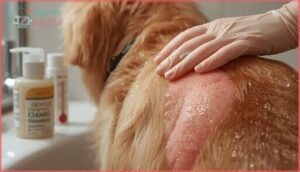
If your dog’s skin turns red or inflamed right after bath time, that’s not normal—it signals skin irritation from bath water temperature that’s too warm, shampoo allergies, or a fragrance sensitivity.
Redness prevention starts with gentle rinsing using lukewarm water and switching to medicated shampoos or formulas designed for sensitive skin. Persistent inflammation often points to underlying skin conditions requiring targeted treatment.
Excessive Scratching or Paw Licking
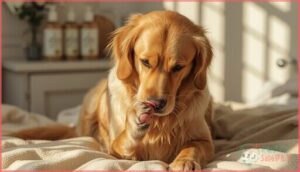
Scratching that persists days after bathing or concentrated paw licking signals your shampoo isn’t addressing skin irritation signs—or it’s causing them.
Paw licking causes range from allergies to residue buildup, while canine anxiety triggers and excessive grooming habits often worsen when harsh formulas strip protective oils.
Switch to medicated shampoos or hypoallergenic options that treat canine paw irritation and redness without aggravating dog skin conditions and treatment needs, plus check for itchy paw remedies containing soothing ingredients like oatmeal or aloe.
Dry, Flaky Skin or Hot Spots
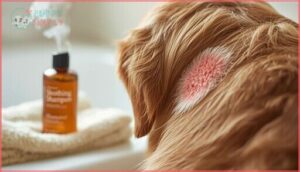
Flaky patches or moist, inflamed hot spots tell you your dog shampoo isn’t supporting skin pH balance—it’s disrupting it.
Dry patch causes often trace back to formulas that strip oils or leave residue, worsening irritation prevention efforts. Switch to medicated shampoos or hypoallergenic shampoos for flake removal and hot spot treatment, especially if your dog has sensitive skin requiring barrier repair.
The Shampoo Doesn’t Match Your Dog’s Coat Type
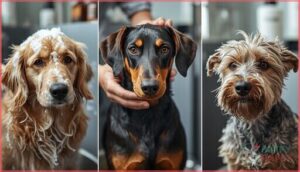
Not all dog coats are created equal, and using the wrong shampoo for your dog’s specific coat type can do more harm than good.
A formula that works wonders for one breed might leave another looking flat, greasy, or damaged. Here’s what you need to know about matching shampoo to coat type.
Smooth Coats Need Moisture Protection
Breeds like Greyhounds and Boxers have short, flat fur that lies close to the skin—that means every bath can strip moisture fast.
You’ll want a gentle cleansing formula designed for smooth coat hydration and shine enhancement. Look for hypoallergenic shampoos with pH balance and softening treatments that protect canine skin care without leaving residue.
Moisture balance keeps the coat soft, not brittle.
Short Coats Require Deep Cleansing
Basset Hounds and Pugs have dense, two-layered fur that traps oil, dirt, and moisture close to the skin—that’s why deep cleansing dog shampoo is non-negotiable for short coat breeds.
You’ll need a formula that targets odor removal and residue buildup without stripping skin comfort:
- Use clarifying agents to break down compacted oils near the follicles
- Rinse thoroughly to prevent leftover product from dulling coat texture
- Choose sulfate-free options that support fur hygiene and canine skin care between baths
Long Coats Demand Extra Conditioning
Afghan Hounds and Collies need dog shampoo paired with conditioners—long coat health depends on fiber care that prevents matting and promotes coat moisture. Your conditioning routines should include detangling tips like applying leave-in formulas to problem areas.
Without proper coat health maintenance, you’ll face breakage and lost shine. Long coat breeds require this extra step as part of regular dog grooming tips, not as an occasional add-on.
Signs You Need a Specialized Shampoo Formula
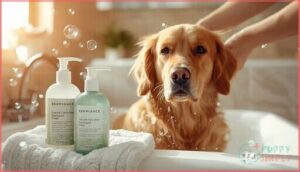
Sometimes a general shampoo won’t cut it, and your dog’s coat or skin tells you that loud and clear. If you’re bathing regularly but certain problems stick around, it’s a sign you need something more targeted.
Here are three situations where switching to a specialized formula makes all the difference.
Persistent Shedding Despite Regular Bathing
If your dog keeps shedding heavily even with regular baths, the problem isn’t always the bathing schedule—it’s often the dog shampoo itself. Standard pet shampoo formulas don’t address the root shedding causes tied to skin renewal and coat health.
Here’s what drives persistent shedding despite grooming:
- Undercoat buildup: Bathing alone won’t remove trapped loose fibers without proper grooming tools
- Stripped protective oils: Harsh shampoos trigger faster skin turnover and increased hair loss
- Seasonal or environmental factors: Dry air accelerates shedding cycles regardless of bath frequency
- Underlying skin conditions: Allergies demand specialized formulas for coat health maintenance
A deshedding or moisturizing formula paired with consistent dog grooming tips can make the difference.
Matting and Tangling Won’t Improve
Chronic mats and tangles mean your dog shampoo isn’t supporting coat texture properly. Low-quality grooming products leave residue that causes hair breakage and clumping—proper mat removal becomes impossible without the right formula.
You need moisture-rich conditioning paired with effective tangle prevention. For canine skin care and coat health maintenance, switch to shampoos formulated with coconut oil or shea butter. These grooming techniques matter more than frequency alone.
Seasonal Allergies or Skin Conditions Appear
Redness around your dog’s nose and eyelids during pollen exposure signals allergies that standard shampoo can’t address. When dermatitis treatment becomes necessary, hypoallergenic formulas provide itch relief without fragrance or harsh chemicals.
Canine skin care for allergy symptoms requires gentle cleansing that promotes barrier function—look for ceramide-rich options that soothe inflammation while removing environmental allergens from the coat.
Frequently Asked Questions (FAQs)
Do different dogs need different shampoos?
Yes. Different dog breeds have unique coat types and skin pH balance requirements.
A Greyhound’s single coat needs gentler formulas than a German Shepherd’s double coat, which requires deeper cleansing to reach the undercoat.
How often should I bathe my dog?
Bathing frequency depends on coat type and lifestyle. Most healthy canines benefit from bathing only when dirty or smelly.
Skin health, grooming tips, and proper dog hygiene maintain coat maintenance better than rigid schedules.
Can I use human shampoo on my dog?
Human shampoo disrupts pH balance and can dry out canine skin care.
Dog shampoo ingredients are formulated for sensitive skin and coat health.
Following vet recommendations protects against irritation when choosing the right dog shampoo for grooming.
What ingredients should I avoid in dog shampoo?
Skip sulfates and harsh chemicals that strip natural oils. Avoid artificial fragrances, toxic preservatives, and parabens. Choose fragrance-free formulas with natural ingredients for sensitive skin, allergies, and skin conditions.
Do puppies need different shampoo than adult dogs?
Puppies have thinner skin than adults, so gentle formulas with pH balance closer to young dog grooming needs prevent irritation.
Standard dog shampoos often contain detergents too harsh for puppy skin care.
Should I use conditioner after shampooing my dog?
Yes, use conditioner after shampooing if your dog has a long or dry coat. Conditioner benefits include improved coat moisture and easier detangling, but rinse thoroughly to prevent residue buildup.
Conclusion
The difference between a shampoo that works and one that doesn’t shows up fast—clear skin versus red patches, soft coats versus greasy buildup, fresh smells versus lingering funk.
When you recognize these signs your dog needs a different shampoo, you’re not guessing anymore. You’re diagnosing the problem and choosing a formula that matches their actual needs.
Your dog can’t tell you what’s wrong with their skin, but their coat will.