This site is supported by our readers. We may earn a commission, at no cost to you, if you purchase through links.
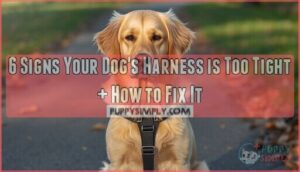
When your dog starts slowing down mid-walk or refusing to move forward, the culprit might be hanging right around their chest. A vest that’s too tight can transform what should be a comfortable walking aid into a source of constant irritation, restricting breathing and rubbing skin raw with every step.
The signs the vest is too tight on dog aren’t always obvious at first glance—your pup won’t tell you in words that the straps are digging in or that they can’t take a full breath. Instead, you’ll notice subtle changes: matted fur where the chest strap sits, reluctance to go on walks they once loved, or strange stiffness in their gait.
Recognizing these warning signals early protects your furry friend from unnecessary pain and prevents minor discomfort from escalating into serious skin damage or breathing problems.
Table Of Contents
- Key Takeaways
- Why Proper Harness Fit Matters
- Key Signs Your Dog’s Harness is Too Tight
- How to Check Harness Fit at Home
- Common Mistakes When Fitting a Harness
- Movement Tests for Harness Comfort
- Breed and Size Considerations in Harness Fit
- What to Do if The Harness is Too Tight
- When to Seek Professional Help
- Frequently Asked Questions (FAQs)
- Is my dog’s harness too tight?
- How do I know if a harness is too tight?
- Can a tight harness hurt a dog?
- What are signs a harness doesn’t fit right?
- Can a tight harness affect my dogs digestion?
- How often should I replace my dogs harness?
- Do different harness styles fit tighter than others?
- Can weather conditions affect how tight harnesses feel?
- Should harness tightness change for different walking speeds?
- Conclusion
Key Takeaways
- A harness that’s too tight causes breathing restriction, skin chafing, hair loss, and mobility issues—watch for red marks, indentations, excessive panting, stiff movement, or reluctance to walk as early warning signs.
- Use the two-finger rule at three key points (behind front legs, across chest, around girth) to verify proper fit, and check your dog’s body language during buckling for signs of discomfort like leaning away or backward glances.
- Common fitting mistakes include ignoring breed-specific body proportions, over-tightening straps for perceived security, and failing to adjust for puppy growth spurts or adult weight changes that occur every few months.
- If adjustments don’t resolve persistent chafing, breathing problems, or movement restrictions, switch to adjustable models with independent strap control or seek professional help from a vet or certified trainer before skin damage worsens.
Why Proper Harness Fit Matters
A collar that’s too tight won’t just annoy your dog—it can lead to real physical problems that affect their health and happiness. When the straps dig in or restrict movement, you’re setting your furry friend up for breathing issues, skin damage, and even long-term mobility concerns.
That’s why understanding the difference between a collar and harness for dogs can help you choose the safest option for your pup’s neck and breathing.
A too-tight collar can cause breathing problems, skin damage, and long-term mobility issues that go far beyond simple annoyance
Getting the fit right protects your dog in three essential ways.
Preventing Injuries and Discomfort
Leash safety isn’t just about control—it’s about protecting your dog’s body from real harm. A too-tight fit can cause chafing, restrict breathing, and compress the chest during walks, leading to long-term skeletal issues.
By recognizing discomfort signals early and using leash fit assessment methods like the two-finger rule, you’ll prevent leash-related injuries while keeping your furry friend comfortable on every adventure.
Ensuring Safe Outdoor Activities
When you’re hiking trails or exploring new parks, a proper fit becomes even more important for outdoor safety tips.
Active adventures mean your dog will run, jump, and twist—movements that can cause a poorly fitted vest to shift, rub, or restrict natural motion. Ensuring dog safety and comfort through proper vest adjustment before any activity protects against chafing and breathing issues when excitement runs high.
Supporting Healthy Canine Mobility
Beyond injury prevention, the right fit promotes your dog’s overall canine mobility and pet exercise physiology. A proper fit means your furry friend can move with a natural gait, protecting canine joint health over time.
Here’s how material safety and correct adjustment promote healthy movement:
- Unrestricted stride – Straps positioned above the sternum prevent shoulder hitching during walks
- Even pressure distribution – Balanced fit reduces strain on muscles and joints
- Full range of motion – Your dog can sit, turn, and stretch without catching or binding
For more on supporting your pet’s long-term health, be aware of.
Key Signs Your Dog’s Harness is Too Tight
Your dog can’t tell you when their collar is pinching or restricting their movement, so you’ll need to watch for physical and behavioral clues.
Some signs are visible right away, like red marks or matted fur, while others show up in how your dog moves or acts during walks. Here are six clear indicators that the collar needs loosening or replacing.
Skin Chafing or Redness
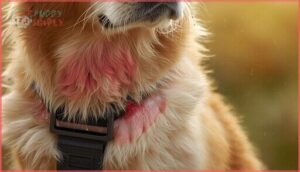
Check your dog’s chest, neck, and shoulders after every walk—redness signals friction from a collar that’s too tight. You’ll often see a warm, pink-to-red rash where straps contact skin, especially if moisture builds up under the material. Breathable, hypoallergenic materials reduce chafing risk, while adjusting pressure points prevents skin irritation and keeps your furry friend comfortable on every adventure.
Learn more about the causes and treatments for.
| Sign of Skin Irritation | What It Means |
|---|---|
| Diffuse pink or bright red patches | Friction from rubbing straps or fabric |
| Warm, tender skin at contact zones | Heat buildup from continuous pressure |
| Redness worsening with moisture | Sweat trapped under tight collar material |
Indentations or Deep Marks
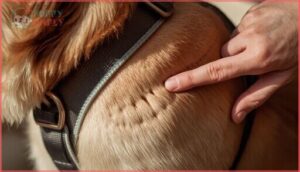
After you remove the vest, run your fingers along your dog’s chest and shoulders—grooves or deep marks that linger signal excessive compression at vest pressure points. These indentations reveal signs of tightness that can escalate into skin irritation if you don’t adjust the fit.
Proper fit and indentation prevention start with breathable vest material and regular checks for deep mark removal at every contact zone.
Hair Loss at Contact Points
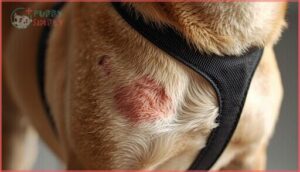
Thinning fur along your dog’s chest, shoulders, or behind the front legs is a telltale sign of tightness—repetitive friction breaks hair shafts and triggers skin irritation at vest pressure points.
Switching to dog shampoos formulated for long hair can help soothe irritated skin and restore moisture to areas damaged by harness friction.
Watch for these friction prevention signals:
- Straight or curved lines of hair thinning that follow the strap path
- Small scabs or crusts appearing with hairless patches
- Warm skin at contact zones during or after activity
- Persistent redness that outlasts the walk
Prompt saddle adjustment and wider, padded straps help distribute pressure, preventing chafing and pressure sores while supporting healthy coat regrowth.
Trouble Breathing or Excessive Panting
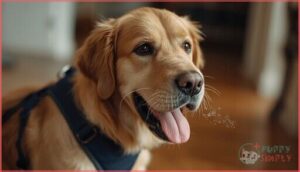
Respiratory issues emerge when chest straps compress the ribcage, limiting expansion and triggering breathing difficulties. If your dog pants heavily during calm moments or shows breathlessness signs without heat stress or canine anxiety, the vest may be restricting airflow.
Dogs breathing with effort, gulping air, or displaying persistent panting causes concern—loosen straps immediately to restore respiratory health and prevent long-term breathing restriction.
Limited Movement or Stiffness
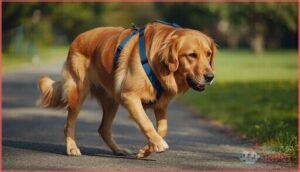
Gait changes and joint restriction reveal vest-induced discomfort, often manifesting as shortened strides or reluctance to move freely. Watch for these signs of tightness:
- Stiff walking or hesitation to start after you put the vest on
- Shoulder mobility decreases by 10 to 20 degrees during movement
- Weight shifts away from the vested side, altering posture impact
- Muscle tension builds where straps cross the chest
Restricted movement signals the need for immediate vest adjustment—loosening or adjusting the straps restores natural stride and comfort.
Whining or Restlessness During Walks
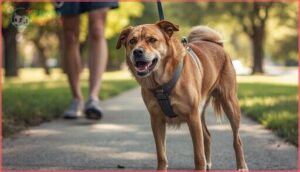
If your dog suddenly starts vocalizing or pacing during walks, that’s a red flag for vest-related discomfort. Overstimulation or anxiety can trigger whining, but when paired with restlessness or pulling away from you, tightness is often the culprit.
Here’s what to watch for:
| Whine Triggers | Restlessness Signs |
|---|---|
| Leash pressure on chest | Pacing or circling |
| Strap contact irritation | Frequent direction changes |
| Restricted breathing | Trying to paw vest off |
| Limited shoulder movement | Reluctance to continue walking |
| Overstimulation plus discomfort | Seeking close body contact |
Walk anxiety and leash stress diminish once you loosen the straps, restoring canine comfort and your dog’s natural stride.
How to Check Harness Fit at Home

You don’t need fancy tools or a vet visit to check if your dog’s collar fits properly.
A few simple at-home tests can reveal whether the fit is just right or causing hidden discomfort. Here’s how to assess your dog’s collar in three straightforward ways.
The Two-Finger Rule Explained
Checking vest fit doesn’t require a measuring tape—just your fingers. Slide two fingers between the strap and your dog’s chest; if they fit snugly, you’ve nailed it. This simple comfort metric confirms adjustable straps aren’t cinched too tight while preventing escape-artist slips.
Test it at three key spots:
- Behind the front legs where chafing often starts
- Across the chest where breathing matters most
- Around the girth strap for secure, balanced support
Inspecting for Pressure Points
After confirming the two-finger fit, look beyond quick checks to spot vest pressure points. Inspect your pup’s chest and armpit area for redness—early signs of tightness often hide there.
Check for girth indentations that linger after you remove the vest, and examine shoulder areas for thinning hair where straps make repeated contact. These physical clues reveal chafing before it becomes painful.
Observing Your Dog’s Body Language
Beyond physical signs, watch how your furry friend acts when you clip on the vest. Tail signals, ear postures, and eye cues reveal physical discomfort before skin shows damage.
If your dog’s mouth tension increases or they lean away during buckling, you’re seeing behavioral cues that matter. Dogs’ behavior shifts when gear pinches—watch for reluctance to move forward or frequent backward glances at straps, identifying saddle discomfort early through these dog behavior and saddle issues.
Common Mistakes When Fitting a Harness
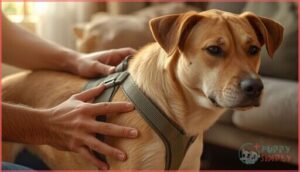
Even when you’re trying to do right by your dog, it’s surprisingly easy to get collar fitting wrong. A few common mistakes can turn a helpful piece of gear into a source of discomfort or even injury.
Let’s look at the most frequent missteps dog owners make, so you can avoid them with your furry friend.
Ignoring Breed and Body Shape
Assuming all breeds share identical body proportions is a mistake that compromises your dog’s comfort and safety. Chest girth varies dramatically across breed variations, and a vest that ignores these differences creates pressure points, chafing, and restricted movement.
Proper sizing relies on actual measurements of your dog’s body, not breed labels alone. When gear adjustments don’t account for canine anatomy, even custom fitting becomes guesswork rather than precision.
Over-Tightening Straps
While proper body shape measurements set the foundation, pulling straps too snug creates immediate problems. When adjusting the straps, you might think tighter means more secure, but excessive pressure causes skin chafing, restricted breathing, and stiff movement.
Apply the two-finger rule during strap adjustment: you should slide two fingers comfortably between the strap and your dog’s body. This simple check ensures pressure relief while maintaining control, respecting canine anatomy without compromising safety.
Not Adjusting for Growth or Weight Changes
Even the best initial fit won’t last forever, especially during growth spurts or weight changes. Puppies may outgrow harnesses every two to four months as their chest girth expands, and seasonal weight fluctuations affect strap tension.
Monitor regularly by performing monthly fit routines—slide two fingers under the chest strap after any noticeable size changes. Adjusting the straps promptly prevents discomfort and keeps your furry friend safe.
Movement Tests for Harness Comfort
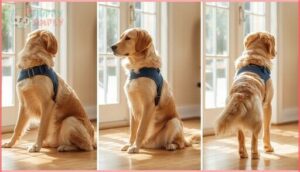
A properly fitted vest shouldn’t restrict your dog’s natural movements, so testing their range of motion gives you immediate feedback on comfort and safety. If your dog struggles with everyday actions like sitting, walking, or turning their head, the vest is likely too tight or poorly positioned.
Here are three simple movement tests you can perform at home to guarantee your furry friend can move freely and comfortably.
Walking and Trotting Freely
A restraint that restricts movement shows up fast when your dog walks or trots—watch for shortened stride length, stiff gait mechanics, or hesitation to pick up speed. Before you head out, start with a warm five-minute walk to check if adjustable straps are limiting joint health and comfort and safety.
- Look for signs of tightness like bunching at the shoulders during each step
- Notice if your furry friend avoids trotting or keeps a choppy, uneven rhythm
- Check that the chest area doesn’t lift or bind when your dog extends their front legs
Sitting and Lying Down Easily
Your furry friend should drop into resting postures without hesitation—stiff lowering or reluctance often signals vest fit issues affecting joint support and spinal alignment. Watch for restricted shoulder movement or signs of tightness around the chest when your dog settles down.
| Position | What to Check |
|---|---|
| Sitting | Straps don’t bunch or dig into armpits |
| Lying on side | Chest panel lies flat without lifting |
| Belly-down rest | Muscle relaxation occurs naturally, no fidgeting |
| Rising | Dog stands smoothly without shaking off discomfort |
| Comfort variations | Individual dogs may shift postures to ease pressure |
Use the two-finger rule and observe behavior—if your dog keeps repositioning or avoids lying down completely, try adjusting the straps for better spinal alignment and overall ease.
Turning Head and Reaching Back
When your dog can’t glance smoothly to the side or peek back at you, the collar is likely restricting head rotation and neck flexibility. A proper fit allows full shoulder mobility and back reach without pressure points at the base of the neck.
Watch for stiffness or hesitation during turns—these are clear signs of tightness. Adjusting the straps restores movement freedom, ensuring comfort and safety on every walk.
Breed and Size Considerations in Harness Fit

Not every dog wears a vest the same way, and what fits a Chihuahua won’t work for a Great Dane. Your dog’s breed, size, and age all play a role in how a vest should sit and feel on their body.
Let’s look at some key considerations to help you find the right fit for your furry friend.
Adjusting for Small Breeds Vs. Large Breeds
Breed size matters more than you might think in terms of harness adjustment. Small breeds benefit from narrow straps that reduce chest compression, while large breeds need wider panels to distribute force evenly across their bigger frames.
- Small dogs wear lightweight materials that prevent tugging on delicate fur
- Large dogs require reinforced hardware to handle strong pulling without stretching
- Toy breeds need customizable buckle locations for precise sternum alignment
- Big dogs benefit from ventilated mesh to manage heat during outdoor activity
Special Needs for Deep-Chested Dogs
Chest protection becomes critical when your pup has deep chests like Greyhounds or Great Danes, since these breeds face elevated bloat risk under pressure.
You’ll want vests with wide chest panels that support deep breathing without compressing the ribcage, plus adjustable straps that accommodate their unique canine anatomy.
Exercise modification matters too—choose breathable vest materials that distribute weight evenly during activity.
Harness Fit for Puppies and Seniors
Age plays a big role in vest fit assessment methods. Puppies need adjustable straps that expand as their chest grows, preventing constant replacements while ensuring dog comfort and safety.
Meanwhile, seniors benefit from lightweight designs that reduce strain on aging joints. Both stages require frequent vest fit checks, since puppy growth spurts and senior weight shifts can compromise canine wellbeing and create pressure points overnight.
What to Do if The Harness is Too Tight

If you’ve spotted any of those warning signs, don’t worry—fixing a too-tight leash is easier than you might think.
You have a few practical options, from making quick adjustments to upgrading your gear entirely. Let’s walk through the solutions that’ll get your furry friend back to comfortable, safe walks.
Adjusting or Replacing The Harness
Start by loosening all straps, then work your way back to a properly fitted vest using the two-finger rule. Check that webbing lies flat without twisting, and tighten chest straps evenly to prevent discomfort.
- Replace frayed or stretched webbing immediately to maintain safe load-bearing integrity
- Swap out damaged buckles for corrosion-resistant metal parts like stainless steel
- Conduct regular fit checks after your dog moves, sits, or lies down to confirm comfort testing confirms proper adjustment
Switching to Custom-Fit or Adjustable Models
If adjustments don’t solve the problem, an adjustable vest with independent strap control or a custom fit tailored to your dog’s measurements may be the answer. Modern fit technology includes sliding adjusters, elastic panels, and modular designs that adapt to unique body shapes, ensuring a properly fitted vest every time.
| Feature | Adjustable Models | Custom-Fit Options |
|---|---|---|
| Strap Control | Independent tensioning on chest and shoulders | Pre-calibrated to exact girth and torso length |
| Comfort Features | Stretch mesh panels, locking buckles | Hypoallergenic fabric, removable padding |
| Best For | Growing puppies, weight fluctuations | Deep-chested breeds, chronic skin sensitivity |
When vest fit remains too tight despite following the two-finger rule, these systems give you precision that off-the-rack designs can’t match.
Choosing Breathable, Hypoallergenic Materials
Beyond structure and size, fabric choice plays a major role in preventing chafing and skin irritation.
Breathable materials like bamboo, cotton, and mesh panels wick moisture away, keeping your furry friend cooler and reducing friction.
Hypoallergenic fabrics with antimicrobial properties resist bacteria buildup, while chemical-free options avoid synthetic dyes that trigger reactions—especially important for dogs with sensitive skin or chronic discomfort.
When to Seek Professional Help
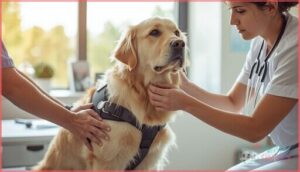
Sometimes a tight restraint creates problems that go beyond a simple adjustment, and that’s when it’s time to bring in an expert. Your vet or a certified trainer can spot issues you might miss, especially if your dog shows ongoing discomfort or physical changes.
Let’s look at the specific situations where professional guidance becomes essential for your dog’s health and safety.
Persistent Discomfort or Skin Problems
If your dog keeps scratching collar contact points or you notice red skin that won’t clear up, it’s time to take action.
Persistent discomfort signs like ongoing chafing, hair thinning, or pressure sores mean the collar fit is causing real harm. Don’t wait for ulcer prevention to become treatment—these skin irritation issues can worsen quickly when a too tight collar stays in place.
Consulting a Veterinarian or Trainer
When collar fitting becomes confusing or your furry friend shows ongoing discomfort, veterinary guidance paired with trainer advice can make all the difference.
A veterinary consultation for pet gear helps rule out underlying conditions, while a dog trainer provides hands-on leash fitting expertise. Don’t hesitate to consult a vet or seek expert opinion—canine consultation ensures your pup stays comfortable and healthy on every adventure.
Signs Requiring Immediate Attention
Urgent care becomes necessary when you spot open wounds, ulcers, or blue-tinged skin irritation at restraint pressure points—emergency signs that circulation is compromised.
Canine distress including severe chafing, red skin with visible swelling, labored breathing, or sudden collapse demands immediate veterinary attention. Don’t wait if you notice restraint malfunction paired with signs of discomfort like persistent whining, trembling, or refusal to move.
Frequently Asked Questions (FAQs)
Is my dog’s harness too tight?
Something that should feel secure can quickly become harmful.
If you notice redness, indentations, or labored breathing after walks, your dog’s vest is probably too tight and needs immediate strap adjustments for canine wellness.
How do I know if a harness is too tight?
Check if you can slip two fingers between the strap and your dog’s body—that’s the two-finger rule.
Watch for chafing, indentations, labored breathing, or stiff movement during fit checks to identify dog vest discomfort.
Can a tight harness hurt a dog?
Yes, an ill-fitting collar causes real harm. Excessive pressure restricts breathing, damages soft tissue, and creates painful friction that leads to raw skin, hair loss, and long-term discomfort affecting your dog’s overall wellness and mobility.
What are signs a harness doesn’t fit right?
Watch for red patches, chafing, or hair loss where the collar sits.
If your dog shows labored breathing, stiff movement, or you can’t slip two fingers under the straps, fit issues need immediate attention.
Can a tight harness affect my dogs digestion?
A tight vest can indeed affect your dog’s digestion. Vest pressure on the abdomen may restrict diaphragmatic movement, increase abdominal stress during activity, and alter breathing patterns that influence gut health and canine nutrition timing.
How often should I replace my dogs harness?
Replacement schedules depend on usage patterns and equipment materials. Daily wear usually needs replacement every 6 to 12 months, while occasional use gear lasts 1 to 3 years with proper maintenance and regular inspections.
Do different harness styles fit tighter than others?
Absolutely—saddle style dramatically affects fit. Back-clip models often squeeze chests tighter than front-clip designs, while step-in vests can compress broad shoulders.
H-style chest plates create uniform pressure that feels snugger than Y-split configurations on identical dogs.
Can weather conditions affect how tight harnesses feel?
Yes, weather affects saddle fit. Temperature effects cause fabric contraction in cold, while humidity impact allows webbing to absorb moisture and shift.
Wind chill factor and snow accumulation can alter saddle pressure points, affecting your dog’s comfort noticeably.
Should harness tightness change for different walking speeds?
A well-fitted vest shouldn’t require constant tweaking, but speed adjustments matter.
During brisk pace variations, make certain adjustable straps maintain comfort zones—equipment materials should allow natural movement without restricting your dog’s breathing or stride.
Conclusion
Like a knight adjusting armor before battle, you need to check your dog’s gear before every adventure. The signs the dog’s vest is too tight on dog—chafing, stiffness, labored breathing—aren’t just minor annoyances but red flags demanding immediate action.
Run the two-finger test regularly, watch for behavior changes, and don’t hesitate to loosen straps or switch models. Your dog’s comfort directly determines whether walks remain joyful bonding experiences or become dreaded ordeals neither of you enjoys.