
This site is supported by our readers. We may earn a commission, at no cost to you, if you purchase through links.
You won’t find the Siberian Husky German Shepherd mix in any kennel club registry, but breeders created this crossbreed for a reason: combining the Shepherd’s legendary trainability with the Husky’s endurance produces an athletic, intelligent dog that excels at everything from agility courses to backcountry hiking.
These dogs—commonly called Shepskies or Gerberian Shepskies—emerged in North America during the 1980s and quickly gained traction among owners seeking a high-drive companion that could keep pace with an active lifestyle. Expect a 45-to-90-pound dog with striking facial features, heterochromatic eyes in many cases, and an energy level that demands 60-90 minutes of daily exercise minimum.
Shepskies aren’t beginner dogs; they inherit the Husky’s independent streak alongside the Shepherd’s protective instincts, requiring consistent training and firm leadership from day one.
Table Of Contents
- Key Takeaways
- What is a Siberian Husky German Shepherd Mix?
- Physical Characteristics of The Shepsky
- Typical Temperament and Personality
- Exercise and Activity Needs
- Training a German Shepherd Husky Mix
- Grooming and Maintenance Requirements
- Common Health Issues in Shepskies
- Nutrition and Feeding Guidelines
- Ideal Home and Lifestyle for Shepskies
- Finding and Choosing a Shepsky Puppy
- Frequently Asked Questions (FAQs)
- What is a Siberian Husky German shepherd mix?
- Is a German Shepherd Husky a good mix dog?
- What is a German Shepherd husky mix made of?
- How big is a German Shepherd husky mix?
- Are Siberian Husky & German Shepherd the same dog?
- Is a German Shepherd Husky mix a good dog?
- What are the pros and cons of the Shepsky?
- How big will a husky German Shepherd mix get?
- Are shepsky high maintenance?
- How do Shepskies handle being alone at home?
- Conclusion
Key Takeaways
- The Shepsky demands 90 to 120 minutes of daily vigorous exercise and consistent training from experienced owners—first-timers typically underestimate the energy and independence this 45-to-90-pound working hybrid requires.
- Hip dysplasia and elbow dysplasia, as well as inherited eye conditions like progressive retinal atrophy, appear frequently in this mix, making OFA clearances and genetic health testing non-negotiable when selecting a breeder.
- Early socialization between 3 and 14 weeks is your only window to prevent fear-based reactivity and guarding behaviors—skip it and you’ll fight uphill against a dog hardwired to protect territory and distrust strangers.
- This crossbreed sheds relentlessly year-round with two intense seasonal coat blows, requiring brushing 3 to 4 times weekly minimum and daily sessions during spring and fall to prevent matting and furniture burial.
What is a Siberian Husky German Shepherd Mix?
You’ve probably heard them called a Shepsky, a Gerberian Shepsky, or just a German Shepherd Husky mix. All three names point to the same crossbreed—a deliberate pairing of two iconic working dogs with very different histories.
If you’re drawn to Poodle mixes but want something a bit different, the Australian Goldendoodle offers a unique blend of intelligence and energy.
Before you decide if this mix fits your life, you need to understand where it comes from, why breeders created it, and what makes it so popular right now.
Breed Origins and History
Ancient Roots meet modern ambition when you look at the German Shepherd Husky Mix. The Gerberian Shepsky emerged as deliberate hybrid breeding took off in North America during the 1980s and 1990s, blending the Siberian Husky’s 3,000-year sled-dog legacy with the German Shepherd’s late-1800s working origins.
Breed Development followed this timeline:
- Chukchi people shaped the Husky line in Arctic Siberia over millennia
- Captain Max von Stephanitz standardized the German Shepherd in 1899
- Breeders launched intentional Shepsky crosses in the late 20th century
- Hybrid Origins remained mostly undocumented outside designer-dog registries
- Genetic Legacy now drives demand for adaptable working and family companions
For more details about the breed’s loyalty, intelligence, and care requirements, see this.
Historical Significance centers on function—both parent breeds earned reputations as tireless workers before anyone thought to cross them.
Common Names (Gerberian Shepsky, Shepsky)
You’ll see Gerberian Shepsky on breeder sites—the name blends “German” and “Siberian” into one hybrid label—while Shepsky contracts “Shepherd” and “Husky” for everyday use.
Other nickname variations include German Husky, Husky Shepherd, and plain “German Shepherd Husky Mix.” None carry official breed recognition from major kennel clubs, so these hybrid labels remain marketing shortcuts rather than standardized naming conventions.
Purpose and Popularity of The Mix
This intelligent, loyal dog gained traction among people who wanted a working companion role without committing to purebred drive—breeders marketed the Gerberian Shepsky as a balanced mix offering stamina and problem-solving in one package.
Mixed breed appeal grew through viral photos of blue-eyed puppies, and family dog popularity rose when owners shared videos of gentle, energetic Shepskies thriving alongside active kids.
Designer dog trend pricing ranges from 400 to 1,500 dollars, though rescue presence remains high when energy needs overwhelm unprepared homes. Prospective owners should be aware of potential Gerberian Shepsky health issues including hip and elbow dysplasia.
Physical Characteristics of The Shepsky
The Shepsky’s appearance reflects both parent breeds in unpredictable ways. Some puppies lean toward the Shepherd’s stature, while others favor the Husky’s build—you won’t know until they mature.
Here’s what to expect regarding size, coat, facial structure, and eye color.
Size and Weight Range
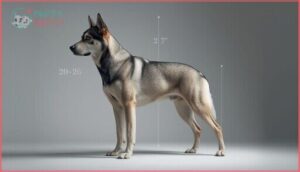
You’re looking at a medium-to-large powerhouse when you bring home a Siberian Husky German Shepherd Mix. Weight variability runs wide—most adults land between 45 and 90 pounds, though some push past 100. Males usually outweigh females by 5 to 10 pounds.
Breed characteristics blend unpredictably:
- Height ranges from 20 to 26 inches at the shoulder, taller than many Huskies.
- Growth stages peak around 9 to 12 months for height, then muscle fills in until age two.
- Genetic influence from either parent means littermates can finish at vastly different sizes.
- Body proportions favor a rectangular, athletic build with deep chest and long legs.
Size classification depends less on the scale and more on body condition—you should feel ribs easily and see a defined waist.
Coat Type, Color, and Shedding
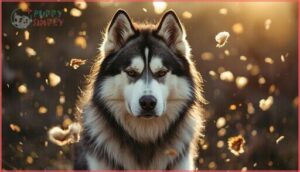
You’ll battle hair everywhere—this mix rocks a thick double coat designed for Arctic work. The undercoat sits dense and plush, while the topcoat runs medium-length and straight, creating that signature fluffy look that sheds relentlessly year-round.
| Coat Feature | What You’re Getting |
|---|---|
| Structure | Dense undercoat + weather-resistant guard hairs |
| Colors | Black, white, gray, tan, sable, red—often in striking combinations |
| Shedding cycle | Constant light shed, plus two intense seasonal blows per year |
Inherited coat colors vary wildly between littermates. Some Shepskies show classic German Shepherd saddle patterns on Husky-thick fur, while others lean white-and-gray with high contrast. Expect heavy grooming demands and furniture covered in loose fur during spring and fall coat blows.
Distinctive Facial and Body Features
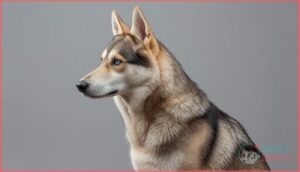
A Shepsky’s head shape runs wedge-like and wolf-worthy, tapering from a broad skull to a long, straight muzzle that splits the difference between both parents. Erect triangular ears stand alert, framing a muscular face with a defined stop and strong jaw line.
The body stretches slightly longer than tall—20 to 25 inches at the shoulder, 50 to 100 pounds—with a deep chest, straight back, and bushy tail reaching the hock.
Eye Color Variations
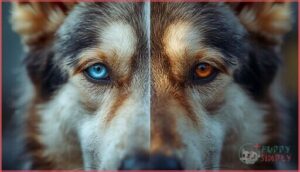
You’ll spot three main iris shades in this hybrid dog. Brown dominates—inherited from the German Shepherd side—appearing in roughly 60 percent of these dogs. Blue eyes trace directly to Husky genetics, present in about 40 percent.
Heterochromia (one blue, one brown) occurs in 5 to 10 percent of Shepskies. Eye genetics settle between 6 and 12 weeks, determining final color patterns and pupil size.
Typical Temperament and Personality
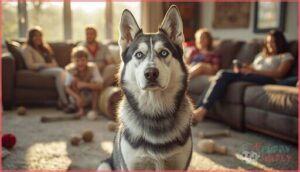
A Shepsky’s personality is where both parent breeds collide—sometimes harmoniously, sometimes with friction.
You’re getting a dog that’s whip-smart and intensely loyal, but also stubborn, high-energy, and occasionally defiant.
Here’s what to expect when living with this crossbreed.
Intelligence and Trainability
Both parent breeds rank among the most intelligent dog breeds, so you’re working with serious cognitive firepower. Your Shepsky can learn basic commands in just a few training sessions when you pair clear cues with high-value rewards. That sharp mind solves puzzles, cracks latches, and remembers routines—ideal traits if channeled properly.
Trainability Tips and Learning Strategies:
- Run short, upbeat sessions (10–15 minutes) to match their attention span and prevent boredom from killing motivation.
- Use positive reinforcement immediately after correct behavior—mark it, reward it, and watch how fast they connect the dots.
- Rotate puzzle toys weekly to satisfy their problem-solving drive and reduce destructive habits born from understimulation.
- Start impulse-control games early—waiting at doors or sitting before meals builds focus that pays off in real-world obedience.
- Stay calm and consistent; harsh corrections backfire with this mix, triggering shutdown or sneaky resistance instead of honest effort.
Their working intelligence blends the German Shepherd’s task focus with the Husky’s independence. Some lean eager-to-please, while others only engage when the task feels worth their time. Keep training interesting, and you’ll release reliable performance.
Loyalty and Protective Instincts
You’ll earn rock-solid loyalty from this mix, but it’s earned through consistent bonding mechanisms—daily feeding, structured training, and shared routines. That devotion runs deep, expressed through close physical proximity, protective placement near unfamiliar visitors, and vocal alerts when someone approaches your territory. German Shepherd genes fuel brave, watchful guarding behavior, while socialization shapes whether that instinct stays balanced or slides into overprotection.
| Loyalty Factor | How It Shows | What You Should Do |
|---|---|---|
| Bonding with primary caregiver | Follows you room to room, intense greeting rituals | Feed, train, and walk consistently to deepen trust |
| Family defense instinct | Stands between you and strangers, stays alert during play | Reward calm behavior around guests, set clear boundaries |
| Protective traits at home | Patrols doors and fences, barks at unfamiliar sounds | Channel alertness with “quiet” cues, avoid harsh corrections |
| Territorial guarding behavior | Stiffens or vocalizes near property lines | Socialize early with positive stranger experiences |
| Attachment-driven loyalty | Paces or whines when routines change, distress if left alone | Build daily structure, provide mental engagement before departures |
Proper temperament development requires exposing your German Shepherd Husky Mix to diverse people, places, and situations before six months of age. Skip that window, and natural wariness can harden into reactive guarding behavior that’s tough to reverse.
Energy Levels and Playfulness
This is a high-energy dog built for motion, not for sitting still. You’re looking at 90 to 120 minutes of solid daily activity—runs, fetch, or fast-paced games that actually tire the dog out. Exercise needs go beyond a simple walk; mental stimulation through puzzle toys and nose work keeps the brain as engaged as the body.
- Fast-paced fetch and frisbee let them sprint in wide circles and stretch their legs fully
- Rough-and-tumble wrestling satisfies their love of body-contact play
- Chase-style games tap into natural pursuit instincts in safe, fenced spaces
- Job-oriented play like carrying toys or weaving obstacles blends work with fun
- Multiple daily sessions (morning run, afternoon walk, evening play) match their stamina better than one long outing
Without proper energy burn, you’ll see pacing, whining, and restless behavior indoors. Young active dogs under two need high-intensity bursts—sprints, tug games—not just calm leash time. Play patterns in this mix are persistent; they’ll bring toys back repeatedly, turning brief sessions into long interactive routines that demand your participation.
Potential Behavioral Challenges
That same intensity turns problematic without structure. Separation anxiety surfaces as pacing, howling, or destructive chewing when you leave.
Prey drive issues trigger sudden lunges at squirrels or cats, making off-leash freedom risky. Stubborn behavior and excessive barking stem from Husky independence meeting German Shepherd vigilance.
Guarding instincts can escalate into reactivity toward strangers. Early socialization and consistent dog training shape canine behavior before these patterns harden.
Exercise and Activity Needs
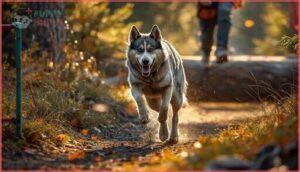
A Shepsky won’t thrive on a quick walk around the block. This breed combines the endurance of a sled dog with the work drive of a herding dog, so your daily routine needs to match that reality.
Here’s what you need to plan for to keep your dog physically and mentally sound.
Daily Exercise Requirements
Your Shepsky won’t settle for a quick lap around the block. Adult dogs from this mix demand 90 minutes to 2 hours of daily exercise split across multiple sessions to stay balanced and avoid destructive outlets. High-energy lines often sit closer to the two-hour mark.
Here’s what your week should include:
- About 11 miles of total walking distance spread across seven days
- At least one 45- to 60-minute solid exercise block on busy days
- Moderate walks mixed with vigorous bursts like running or fast fetch
- Variety in routes and surfaces to keep engagement high
- Mental work sessions of 10 to 20 minutes counting toward daily exercise totals
Recommended Activities and Sports
Channeling all that energy into structured work keeps your high-energy dog’s body and mind satisfied. Agility training sharpens focus through tunnels, jumps, and weaving poles—many mixed breeds qualify for United States Dog Agility Association trials.
Urban mushing on bikes or scooters taps natural pulling instincts via bikejoring gear. Hiking adventures over varied terrain build stamina, while scent work and canine sports like rally obedience round out exercise needs without maxing joints.
Mental Stimulation for Shepskies
Physical workouts tire the legs, but brain game activities prevent restlessness in breeds with serious trainability and intelligence.
Food dispensing puzzle toys stretch a five-minute bowl meal into twenty minutes of canine enrichment strategies. Scent work training—hiding treats for your dog to locate—channels hunting drive into calm focus.
Interactive feeding through snuffle mats or treat puzzles gives your German Shepherd Husky Mix structured mental stimulation between runs.
Training a German Shepherd Husky Mix
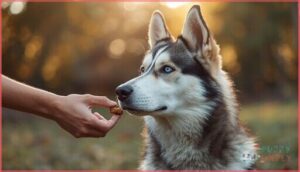
Training a Shepsky demands consistency and smart strategy, not brute force. These dogs are sharp and can outsmart sloppy methods in under a week.
Shepskies are whip-smart and will outsmart sloppy training methods in under a week, so consistency and strategy beat brute force every time
Below are proven techniques, socialization tactics, and the obstacles you’re likely to face.
Effective Training Techniques
You can’t train a Shepsky the same way you’d train a beagle—reward-based methods work best with this high-drive mix. Positive reinforcement through treats, toys, or praise teaches faster and builds trust without shutting down their independent streak.
- Clicker training marks exact behaviors, speeding up learning for this intelligent cross
- Short 5–10 minute sessions repeated daily prevent frustration while building obedience foundations
- Mental stimulation games like scent work or puzzle feeders satisfy their working-dog intelligence between physical exercise
Socialization Best Practices
Early puppy socialization between 3 and 14 weeks isn’t optional—it’s your window to prevent stranger danger and fear-based reactivity. Expose your Shepsky to varied people, vaccinated dogs, and new environments during this critical period using positive reinforcement with treats and calm praise to build confidence.
| Socialization Priority | Key Action |
|---|---|
| Canine interactions | Supervised playdates with stable adult dogs teach bite inhibition and play signals |
| Environmental exposure | Walk on grass, gravel, pavement; introduce vacuums, doorbells, car rides gradually |
| Handling desensitization | Touch paws, ears, mouth daily with food rewards for cooperative vet and grooming visits |
Common Training Challenges
Expect your Shepsky to ignore known cues when distractions spike—many act deaf outdoors despite perfect recall inside.
Leash training often stalls because pulling feels rewarding, and housebreaking tips must account for their stubborn streak.
Obedience issues multiply without daily energy outlets; behavior modification demands high-value rewards and micro-sessions under 15 minutes.
Socialization techniques and consistent household rules prevent selective hearing from becoming permanent.
Grooming and Maintenance Requirements
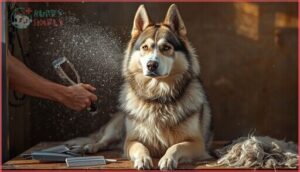
That thick double coat doesn’t manage itself. Shepskies shed heavily year-round and require consistent grooming to keep their fur under control and their skin healthy.
Here’s what you need to know about maintaining your Gerberian Shepsky’s coat and overall hygiene.
Brushing and Shedding Management
Your Shepsky’s double coat demands serious attention—this isn’t a low-maintenance breed. Brushing 3 to 4 times weekly keeps shedding under control, though daily sessions are non-negotiable during seasonal coat blows.
Essential grooming tools include:
- Slicker brush for reaching dense undercoat layers
- Undercoat rake for peak shedding periods
- Deshedding tool for efficient hair management
Work in the direction of hair growth to prevent discomfort.
Bathing, Nail Care, and Ear Cleaning
Bathing every 2 to 3 months protects skin oils—overwashing strips protection from your double coat dog, triggering dry skin and irritation. Use lukewarm water and dog-specific shampoo free of sulfates.
Trim nails every 6 to 7 weeks to prevent clicking or curling. Check ears weekly for dirt buildup that invites infections; clean with vet-approved solution to avoid moisture-related problems after baths.
Seasonal Grooming Considerations
Your Shepsky’s double coat shifts gears twice a year—spring and fall bring heavy shedding cycles tied to daylight, not just temperature. Adjust your grooming and hygiene routine to match these seasonal demands:
- Spring Coat Blow: Brush several times weekly with an undercoat rake to pull loose fur before it mats
- Summer Heat Care: Never shave—the double coat insulates against heat and prevents sunburn
- Fall Prep: Remove dead hair before snow arrives to avoid moisture trapping against skin
- Winter Coat Protection: Skip clipping; dense undercoat and topcoat block wind and freezing temps
- Seasonal Skin Adjustments: Watch for dry, flaky skin in winter from indoor heating; humidifiers help
Common Health Issues in Shepskies
Shepskies inherit health vulnerabilities from both parent breeds, and you need to know what you’re up against before you commit.
Hip and elbow dysplasia top the list, but eye conditions and degenerative diseases also show up with enough frequency to warrant serious attention.
Here’s what to watch for and how to stay one step ahead.
Hip and Elbow Dysplasia
Joint health challenges top the list of genetic concerns for your Shepsky. Hip dysplasia and elbow dysplasia both stem from abnormal joint development—the ball-and-socket structures don’t align properly, triggering arthritis over time.
German Shepherds carry elevated risk, with roughly one-fifth to nearly half affected in some populations. Canine orthopedics offers surgical options ranging from early pelvic adjustments to total hip replacement for severe cases.
Eye Conditions and Genetic Risks
Beyond the joints, vision problems lurk in your German Shepherd Husky Mix through inherited traits from both lines. Eye diseases cluster at alarming rates—hereditary cataracts, progressive retinal atrophy, and pannus each steal light from your dog’s world. Genetic testing before breeding catches many carriers, but crossbred puppies still face risk.
- Juvenile cataracts cloud the lens before age one, progressing to blindness by two or three years.
- Progressive retinal atrophy starts with night blindness, then erodes day vision until total loss occurs.
- Pannus spreads inflammatory plaques across the cornea, especially in sunny climates or high altitudes.
- Corneal dystrophy creates hazy deposits inherited from Huskies, though most cases cause minimal pain.
- Blue eyes offer less UV protection, slightly raising sensitivity to sun-related corneal issues.
Vision loss creeps in quietly. Regular veterinary eye exams spot early changes—clouding, blood vessels, pigment shifts—before permanent damage locks in. Surgical lens replacement restores sight in cataract cases if the retina stays healthy. Pannus needs lifelong anti-inflammatory drops and sun avoidance. No cure exists for progressive retinal atrophy, but genetic diversity through careful breeding reduces the odds your pup inherits faulty genes from both parents.
Preventative Health Care Tips
You block most health issues before they start. Vaccine schedules protect against distemper and parvo from six weeks onward, with annual boosters keeping immunity strong.
Parasite control stops heartworm, ticks, and fleas year-round. Joint supplements and lean weight reduce hip stress.
Dental hygiene through regular brushing prevents gum disease. Nutrition planning customized to age and activity fuels canine health and wellness, giving your Shepsky the best shot at a long life.
Nutrition and Feeding Guidelines

Your Shepsky’s diet isn’t something you can wing—it directly impacts energy, joint health, and longevity.
What you feed, how much, and when all shift as your dog grows from puppy to adult.
Here’s how to fuel a high-energy hybrid without overfeeding or cutting nutritional corners.
Nutritional Needs by Age and Size
Your Shepsky’s calorie needs shift dramatically as they age—puppy nutrition demands double to triple their resting energy for rapid growth, while adult feeding usually settles around 1100 to 1900 calories daily based on their 45 to 80 pound frame. Senior diets drop further, often landing near 1000 to 1200 calories.
Calorie calculation and growth monitoring prevent joint damage:
- Puppies under four months burn energy at fever pitch
- A 50-pound adult averages roughly 1165 calories per day
- Active 70-pounders may hit 1500 to 1900 calories
- Seniors need 20 percent less than their prime years
- Controlled calcium protects developing hips and elbows
Adjust portions by 10 percent when your dog’s body condition score changes—canine health and wellness depend on matching dog nutrition to life stage, not guessing.
Choosing The Right Dog Food
Look for a named animal protein—chicken, lamb, or salmon—as the first ingredient to fuel lean muscle in your active Shepsky. Foods with glucosamine and chondroitin sulfate support joint health, while controlled calcium and phosphorus protect growing bones.
Avoid vague terms like “meat by-product.” If your dog shows food allergies or digestive issues, trial a limited-ingredient formula with a single novel protein like duck.
Feeding Schedules and Portion Control
Nearly always, you should split your Shepsky’s daily nutrition into two set meals—morning and evening—using a portion size guided by current body weight and the food’s feeding chart.
Adjust for body condition, calorie needs, and activity level. Stay alert: a lean waist means nutrient balance is on track, but overfeeding quietly stacks the odds against long-term health.
Ideal Home and Lifestyle for Shepskies
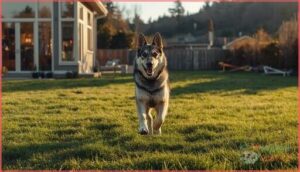
A Shepsky won’t thrive in just any household. These dogs demand space to move, owners who understand their independent streak, and a daily rhythm that keeps both body and mind engaged.
Before bringing one home, you need to honestly assess whether your environment, family dynamics, and lifestyle can meet their non-negotiable needs.
Space and Environment Needs
Your home setup can make or break life with a high-energy dog like this. This mix thrives when indoor space allows room to stretch, outdoor access accommodates exercise needs, and climate control protects that thick double coat from overheating.
- Indoor Space: One medium-to-large room for free movement; open floor plans reduce collision risks during indoor zoomies.
- Outdoor Access: Six-foot secure fencing; structured walks remain essential even with a yard.
- Climate Control: Thrives in cooler climates; needs shade, airflow, and water when temps climb above 80°F.
- Environmental Enrichment: Puzzle feeders, rotating toys, and nose-work games prevent boredom in intelligent, working-dog breeds.
Compatibility With Children and Pets
This mix can gel beautifully with school-aged children and multi-dog households when socialization starts early. Supervise all child interaction—especially during the first three years when play gets physical—and enforce pet safety tips like no tail-pulling and separate feeding zones.
Introduce resident cats slowly on-leash, reward calm behavior around small pets, and expect stronger prey drive toward pocket animals or backyard poultry.
Daily Routine and Owner Commitment
A Shepsky demands more than you might think—budget at least three hours a day for exercise needs, dog training, mental stimulation, and routine pet care. This high-energy dog won’t thrive on autopilot.
Your daily schedules and owner responsibilities usually look like:
- 1.5–2 hours split between morning and evening walks, runs, or off-leash play
- 20–40 minutes of structured training, puzzle toys, or scent games
- Weekly grooming blocks of 30–60 minutes for brushing, nail trims, and coat checks
- Mid-day breaks via family, neighbors, or walkers when you’re gone over four hours
Socialization and time management separate stable Shepskies from destructive ones.
Finding and Choosing a Shepsky Puppy

Getting a Shepsky means making a choice between working with a breeder or going the rescue route—and both paths have their own risks and rewards.
You’ll need to ask the right questions, spot red flags, and verify health records no matter which direction you lean. Here’s how to find a puppy or dog that won’t bring heartbreak or expensive surprises down the road.
Selecting a Responsible Breeder
You’ll face fewer surprises down the road if you vet breeders thoroughly from the start. A responsible breeder shows you OFA hip and elbow clearances, degenerative myelopathy DNA results, and eye certifications before you leave a deposit. They use a written puppy contract covering health guarantees for at least one to two years, a lifetime return clause, and clear spay-neuter or breeding restrictions.
| Red Flag | Green Flag |
|---|---|
| Vague health claims, no certificates | Full OFA, CHIC, thyroid records on hand |
| Pressure to sign contract immediately | Time to read, ask questions, review terms |
| Multiple designer mixes advertised | Focus on one or two breeds, ethical spacing of litters |
Transparency standards matter: ethical breeders invite property visits or live video tours, let you meet the mother, and answer detailed questions about temperament and daily care. They evaluate each puppy’s boldness or sensitivity to match high-energy Shepskies with buyers ready for the commitment. Responsible pet ownership begins with choosing a breeder who prioritizes canine genetics, sound structure, and stable behavior over profit or rare-color hype.
Adoption and Rescue Options
After you’ve vetted breeders, broaden your net—rescue networks and pet adoption and rescue sites list German Shepherd Husky Mix dogs across the country.
Adoption fees hover near USD 200, usually covering core care. The screening process can be rigorous, sometimes including foster-to-adopt programs, home checks, and breed-savvy interviews to confirm you’re up for the demands of a lively canine hybrid.
Frequently Asked Questions (FAQs)
What is a Siberian Husky German shepherd mix?
This designer hybrid pairs a purebred Siberian Husky with a purebred German Shepherd—two legendary working breeds—to create the Gerberian Shepsky, a medium-to-large companion blending sled-dog endurance with protection instincts.
Is a German Shepherd Husky a good mix dog?
This hybrid dog suits active, experienced owners who commit 5 to 2 hours daily to exercise and training.
First-time owners often struggle with the Gerberian Shepsky’s stubborn energy and high maintenance grooming needs.
What is a German Shepherd husky mix made of?
A German Shepherd Husky mix combines one purebred German Shepherd parent with one purebred Siberian Husky parent, creating a first-generation crossbreed that inherits genetic makeup, hybrid traits, and physical characteristics from both working-dog lineages.
How big is a German Shepherd husky mix?
Most Gerberian Shepsky adults stand 20 to 25 inches tall and weigh 45 to 88 pounds. Males usually reach the higher end, while females stay closer to 45 to 60 pounds.
Are Siberian Husky & German Shepherd the same dog?
Think of tool and artist—both are dogs, but each with a different blueprint.
Siberian Husky and German Shepherd are distinct breeds by canine classification, with unique breed characteristics and dog genetics—separate species, not carbon copies.
Is a German Shepherd Husky mix a good dog?
This dog breed thrives with experienced owners who provide 1–2 hours of daily exercise, consistent training, and secure space.
First-time owners often struggle with their stubbornness and energy, making family suitability dependent on commitment level.
What are the pros and cons of the Shepsky?
Pros: this crossbreed bonds deeply, learns fast, and offers loyal protection.
Cons: the Gerberian Shepsky sheds heavily, demands 60–90 minutes of daily exercise, and can show stubborn or anxious Shepsky behavior without consistent training and owner experience.
How big will a husky German Shepherd mix get?
A Husky German Shepherd Mix reaches 20 to 26 inches tall and weighs 45 to 90 pounds at maturity. Growth Patterns plateau around 12 to 18 months, though muscle development continues until two years.
Are shepsky high maintenance?
Most families underestimate the reality: shepskies demand 90–120 minutes of vigorous exercise daily, plus year-round grooming for heavy shedding. Without consistent training and mental challenges, this high-energy dog becomes destructive fast.
How do Shepskies handle being alone at home?
Most Shepskies tolerate four to six hours alone with proper training, but their strong bonds and working-breed roots make them prone to separation anxiety, destructive behavior, and vocal protests without adequate exercise needs and mental stimulation beforehand.
Conclusion
Owning a Siberian Husky German Shepherd mix isn’t like adopting a couch companion—it’s signing up for a full-time partnership with a dog that demands every ounce of your commitment. You’ll invest hours in training, miles on trails, and constant vigilance over their independent tendencies.
But nail the fundamentals—structured exercise, firm leadership, consistent socialization—and you’ll earn a fiercely loyal adventure partner built for whatever terrain life throws your way.
- https://dogacademy.org/breeds/german-shepherd-husky-mix
- https://the-pup-md.myshopify.com/blogs/main/what-is-a-gerberian-shepsky-the-german-shepherd-husky-mix-guide
- https://goofytails.com/pages/gerbian-shepsky
- https://www.innovetpet.com/blogs/news/the-complete-guide-on-the-german-shepherd-husky-mix
- https://petventuresbook.com/blogs/blog/german-shepherd-husky-mix-facts-temperament-and-care-guide