This site is supported by our readers. We may earn a commission, at no cost to you, if you purchase through links.

Your neighbor’s new puppy turns heads every time they walk past—a tiny, fluffy companion with soulful eyes and a coat that doesn’t leave tumbleweeds of fur across your pant legs. That’s the magic of a Shih Tzu Poodle mix, a designer crossbreed that’s captured hearts across apartments and family homes alike.
Born from the union of the loyal Shih Tzu and the whip-smart Poodle, these pint-sized dogs pack both personality and practicality into a frame that rarely exceeds 18 pounds. But don’t let their teddy bear appearance fool you—these affectionate companions come with specific needs, from daily coat brushing to consistent companionship that keeps separation anxiety at bay.
Understanding what makes this hybrid tick will help you determine if a Shih Poo belongs curled up on your couch.
Table Of Contents
- Key Takeaways
- What is a Shih Tzu Poodle Mix?
- Physical Characteristics of Shih Poos
- Shih Poo Temperament and Personality
- Are Shih Poos Good Family Pets?
- Shih Poo Socialization and Behavior
- Training Needs for Shih Tzu Poodle Mixes
- Exercise Requirements for Shih Poos
- Grooming and Coat Maintenance
- Common Health Issues in Shih Poos
- Is a Shih Tzu Poodle Mix Right for You?
- Frequently Asked Questions (FAQs)
- What is a Shih Tzu and Poodle mix called?
- How big will a poodle Shih Tzu mix get?
- How expensive is a Shihpoo?
- Is a Shihpoo a good dog?
- Do Shih Poos get along well with other pets?
- What size home is best for a Shih Poo?
- How long can Shih Poos be left alone?
- Are Shih Poos good with young children?
- Which generation of Shih Poo makes the best pet?
- Can Shih Poos be left alone during the day?
- Conclusion
Key Takeaways
- Shih Poos weigh 8-18 pounds and require daily brushing plus professional grooming every 4-6 weeks to prevent painful matting, making them far from the low-maintenance companions they’re often marketed as.
- These designer dogs inherit sharp Poodle intelligence but also stubborn Shih Tzu traits, thriving best with owners who can provide near-constant companionship since separation anxiety strikes hard when they’re left alone for more than 4-6 hours.
- Expect to budget $2,200-$4,500 upfront for a puppy, plus $85-$200 monthly and $600-$1,000 yearly for grooming alone, with their 10-18 year lifespan demanding long-term financial commitment for veterinary care and maintenance.
- While their hypoallergenic reputation attracts allergy-sensitive families, Shih Poos still produce dander and commonly suffer from dental disease, joint issues like patellar luxation, and respiratory problems inherited from their brachycephalic Shih Tzu lineage.
What is a Shih Tzu Poodle Mix?
You’ve probably heard names like Shih Poo or Shih-Poo tossed around at the dog park, but what exactly are you getting when you bring home one of these adorable crossbreeds? This designer dog combines the loyal, affectionate Shih Tzu with the intelligent, low-shedding Poodle to create a companion that fits beautifully into apartments, family homes, and just about anywhere in between.
Many families looking for similar low-maintenance coats also consider the Australian Goldendoodle, another Poodle cross that brings together hypoallergenic qualities with a gentle temperament.
Let’s break down where this mix came from, why it’s considered a designer breed, and what people actually call these little bundles of joy.
Breed Origins and History
Your Shih Tzu Poodle Mix—often called a ShihPoo—traces its ancient roots to a fascinating genetic heritage blending two time-honored companions. This designer dog breed emerged in North America during the late 1980s and early 1990s, when breeders intentionally paired these purebreds:
- Shih Tzus: Asian royal lap dogs dating back to around 600 AD
- Toy Poodles: European water retrievers miniaturized in the 18th century
- Hybrid Development: Combining trainability with affection in one compact crossbreed
Despite its historical significance, the ShihPoo lacks formal breed recognition from major kennel clubs. For more background, you can explore their coat texture and appearance in greater depth.
Designer Dog Status
Your fluffy companion sits in a unique position as a designer dog breed—recognized by hybrid organizations like the American Canine Hybrid Club yet excluded from major kennel clubs such as the AKC.
This crossbreed status means your Shih Poo won’t compete in purebred conformation shows, but it doesn’t diminish their value as beloved companions.
Market trends reflect this appeal, with puppies usually costing $2,200 to $4,500. To better understand the full range of Shih Poo purchase price factors, potential owners should review detailed pricing guides online.
Common Names (Shih Poo, Shih-Poo)
You’ll encounter several names for this hybrid dog, with Shih Poo being the most popular spelling convention. Registry listings also feature Shih-poo and Shihpoo—all describing the same Shih Tzu Poodle mix.
Pronunciation is generally heard as “ship-oo,” not “shee-poo,” keeping the traditional Shih Tzu emphasis. Naming trends also include playful variants like Pootzu, though these remain less common in veterinary records and designer breed databases.
Physical Characteristics of Shih Poos
When you picture a Shih Poo, you’re likely imagining a pint-sized companion with an irresistibly soft face and a coat that begs to be touched. These little dogs pack a lot of personality into a compact frame, and their appearance can vary quite a bit depending on which parent they take after.
Let’s break down what you can expect regarding their size, coat, and those distinctive features that make them instantly recognizable.
Size and Weight Range

When you’re considering a Shih Tzu Poodle Mix, you’ll find most adults settle between 8 and 18 pounds, though size variance can push a few individuals to 20 pounds or more depending on whether a Toy Poodle or Miniature Poodle parent contributed genes.
Adult height usually ranges from 8 to 15 inches at the shoulder, making this small dog breed easy to handle and carry.
Coat Types and Colors

Your Shih Poo’s coat texture can range from straight and silky to wavy or tightly curled, depending on which parent genes dominate. Most are low-shedding and often suit allergy-sensitive households, though no dog is completely hypoallergenic. Regular coat care—brushing every few days—prevents mats and keeps dander under control, making grooming needs manageable with the right routine.
Color Variations and Coat Features:
- Solid shades include black, cream, apricot, silver, chocolate, and white, often with dark eye rims for contrast
- Multi-color patterns like parti (white patches) or sable create unique, eye-catching looks
- Curly coats trap dander effectively, boosting hypoallergenic traits for sensitive owners
- Puppy-to-adult transitions may lighten or silver the coat over 18–24 months
- Grooming tips: clip every 6–8 weeks and brush daily during coat changes to avoid painful tangles
Distinctive Facial Features

Those wide, dark eyes draw you in first—large and round, sitting prominently on the face like a plush toy come to life. Eye shape ranges from the Shih Tzu’s slightly protruding style to softer Poodle roundness.
Muzzle length varies from flat to defined, while nose color usually stays black. Ear set frames the cheeks perfectly, and jaw line often shows that signature undershot bite, creating their irresistible, doll-like expression that hypoallergenic dog lovers can’t resist.
Shih Poo Temperament and Personality

You can’t judge a book by its cover, and the same goes for the Shih Poo—this little dog packs a surprisingly complex personality that pulls from both the loyal Shih Tzu and the clever Poodle.
Understanding what makes them tick emotionally will help you decide if their temperament matches your lifestyle and household. Let’s break down the key personality traits you’ll see in most Shih Tzu Poodle mixes.
Blend of Parent Breed Traits
Your Shih Poo’s personality emerges from a fascinating genetic lottery. The intelligence blend from Poodle genes delivers sharp problem-solving skills, while the Shih Tzu side softens that drive with calm contentment.
This crossbreed’s temperament reflects three key parent breed influences:
- Quick learning paired with stubborn independence
- Moderate energy balanced between playful bursts and couch cuddles
- Shadow-dog attachment style craving constant human connection
Individual trait expression varies widely even within litters.
Affectionate and Social Behavior
Your Shih Poo thrives on human connection—these companion dogs often follow you room to room, seeking constant proximity.
Their sociability shines through enthusiastic door greetings and willingness to accept gentle strangers within minutes. Most display affection by nudging hands for pets, climbing onto laps, and rolling for belly rubs.
This playful interaction style, combined with natural canine empathy, makes them outstanding emotional support animals and adaptable family pets.
Sensitivity and Emotional Intelligence
These sensitive canines pick up on your stress and emotions with exceptional emotional awareness, often seeking you out when household tension rises. Their companion dog nature means they mirror social cues and adjust behavior to match your mood.
Their behavior is indicative of their emotional intelligence, as evidenced by the following signs:
- Lowered ears or tucked tails appear when voices escalate, signaling their sensory issues with loud conflict
- They’ll press against your leg during emotional strain, demonstrating strong attachment styles
- Refusing food when you’re upset shows deep empathy training isn’t always necessary—it’s built in
- Pacing or whining emerges after routine changes, highlighting their need for predictable structure
This ShihPoo temperament and personality trait backs their role as therapy animals, though sociability paired with emotional reactivity requires gentle handling to maintain balanced trainability.
Are Shih Poos Good Family Pets?
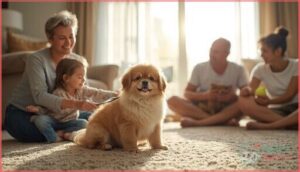
One of the biggest questions you’ll ask yourself is whether a Shih Poo fits into your household. These small companions can thrive in many different family setups, but their success depends on who’s welcoming them home.
Let’s look at how Shih Poos interact with children, seniors, and first-time dog owners.
Compatibility With Children
Your Shih Poo can make a wonderful companion dog for families with school-aged kids, but child safety tips matter here.
These family dogs weigh just 8 to 18 pounds, so gentle playtime under parental guidance prevents injuries.
Their kid-friendly traits shine when children understand soft handling, and strong family dynamics develop once you teach respectful boundaries that protect this delicate ShihPoo breed.
Interaction With Seniors
Older adults often fall in love with Shih Poos because these companion dogs deliver emotional support without demanding marathon walks. Gentle exercise like 30-minute strolls matches many seniors’ stamina, and their lap-friendly size makes safe handling simple.
Senior companionship thrives when you consider:
- Steady routines around feeding and grooming provide comforting structure
- Apartment dwellers appreciate their adaptable dog temperament and moderate space needs
- Social benefits bloom as pet ownership encourages daily interaction and purpose
Suitability for First-Time Owners
Stepping into pet ownership for the first time feels less overwhelming when your dog matches your learning curve. Shih Poos offer beginner-friendly temperament and personality traits—affectionate without being high-strung—but they come with real beginner challenges around grooming schedules and time commitment.
| Owner Preparation Need | Beginner Challenge Level | Lifestyle Adaptation Required |
|---|---|---|
| Dog training consistency | Moderate (stubbornness) | Daily 10-minute sessions |
| Pet budgeting for grooming | High (every 4-8 weeks) | $300-$800 yearly salon visits |
| Time commitment for companionship | High (separation anxiety) | Arrange midday check-ins |
| ShihPoo breed overview study | Low (simple care basics) | Research coat types early |
Before you commit, map out your weekly routine—these companion dogs thrive when you’re home often and ready for hands-on care.
Shih Poo Socialization and Behavior

Your Shih Poo’s social behavior shapes daily life more than you might expect, from neighborhood walks to quiet evenings at home. Understanding how these little companions interact with other animals, respond to unfamiliar sounds, and protect their territory helps you set realistic expectations.
Let’s look at three key behavioral patterns you’ll notice in your Shih Tzu Poodle mix.
Getting Along With Other Pets
Your Shih Poo’s friendly temperament makes multi-pet homes workable when you handle canine introductions and feline coexistence thoughtfully. Their adaptable personality fosters household harmony, though their small size means you’ll need to supervise encounters with larger animals.
- Early pet socialization before 16 weeks builds confidence around other dogs and cats
- Neutral territory introductions prevent resource guarding and territorial disputes
- Separate feeding zones and high cat perches reduce stress between pets
- Baby gates and gradual contact let animals adjust safely to shared spaces
Barking Tendencies
Beyond their social nature with other animals, you’ll notice your Shih Poo vocalizes more than many small breeds—a trait rooted in their Shih Tzu heritage. They bark at doorbells, movement outside windows, and during playtime excitement, though their voices stay softer than larger dogs.
Early training methods that reward quiet behavior help shape manageable barking patterns, especially since these dogs quickly learn which vocalizations earn your attention.
Aggression and Watchdog Ability
Most Shih Poos don’t show true aggression—their bold barking strategies serve as alerts rather than threats. Fear responses and protective instincts appear when they feel cornered, but watchdog training paired with proper dog training and socialization reshapes these behavioral traits into calmer reactions.
Managing Common Challenges:
- Redirect anxiety-driven behaviors through positive reinforcement during trigger moments
- Expose puppies to varied people and environments early
- Avoid punishment that amplifies fear responses
- Provide daily mental exercise to prevent frustration
- Consult professionals when aggression escalates unexpectedly
Training Needs for Shih Tzu Poodle Mixes

Training a Shih Tzu Poodle mix can be a rewarding experience because these dogs inherit sharp intelligence from their Poodle side, though they can also bring a stubborn streak from the Shih Tzu parent.
You’ll find that consistency and positive reinforcement work best, but you’ll also need to navigate a few breed-specific quirks along the way. Here’s what you should know about their learning style, the methods that get results, and the challenges you might face.
Intelligence and Trainability
Thanks to the Poodle side, your Shih Poo brings impressive canine cognition and problem-solving skills to the table. Many master basic commands within weeks when you use consistent, reward-based learning strategies.
Their intelligence means they’ll figure out puzzle toys quickly and may even test boundaries when bored. Daily mental stimulation through short training sessions keeps their sharp minds engaged and prevents unwanted behaviors from taking root.
Effective Training Methods
Reward systems work best with your Shih Poo because they blend intelligence with a people-pleasing spirit. Focus on these proven dog training methods:
- Positive reinforcement delivers treats, toys, or praise the moment they obey
- Clicker training marks correct behaviors with precision
- Short five-minute sessions prevent frustration and boredom
- Consistent housebreaking tips include crate routines and scheduled potty breaks
- Obedience commands like sit, stay, and come build reliability
Gentle, reward-based approaches strengthen your bond while shaping calm, confident behavior.
Common Behavioral Challenges
Separation anxiety tops the list for ShihPoo behavior and training issues—many become distressed when left alone, leading to destructive chewing and indoor accidents.
Excessive barking at sounds, attention-seeking jumping, and resource guarding over toys can emerge without early boundaries. Consistent housebreaking tips and positive dog training methods address these dog behavior challenges while respecting your ShihPoo temperament and personality.
Exercise Requirements for Shih Poos

Shih Poos don’t need marathon runs or intense agility courses, but they do need consistent daily movement to stay healthy and happy.
Your pup’s compact size makes exercise manageable, yet their playful poodle genes and social shih tzu nature mean they’ll get restless without enough activity.
Let’s look at what your Shih Poo needs to thrive physically and mentally.
Daily Activity Needs
Your Shih Poo’s exercise needs fall somewhere between couch potato and marathon runner—about 30 minutes of daily movement keeps them balanced. Consider these key factors for safe, effective activity:
- Walk Duration: Two 15-minute neighborhood strolls usually satisfy their moderate energy levels
- Exercise Intensity: Gentle, steady pacing beats high-intensity sprints for this small companion
- Age Factors: Puppies need short bursts; seniors thrive on leisurely 15-minute outings
- Weather Limits: Schedule walks during cooler morning or evening hours to prevent overheating
Monitor recovery time—healthy Shih Poos bounce back within minutes after appropriate exercise.
Playtime and Mental Stimulation
Physical exercise alone won’t satisfy your Shih Poo’s bright mind—mental stimulation matters just as much. Rotate 4 to 6 interactive toys weekly to spark curiosity, and introduce puzzle feeders that turn mealtime into a 10 to 20 minute problem-solving session.
Scent games like “find it” tap into natural tracking instincts, while short training blocks strengthen focus. Calming chews provide a soothing outlet after energetic play, balancing your dog’s playfulness with contentment.
Apartment and Urban Living
Apartment living suits Shih Poos beautifully—their 8 to 18 pound frame and low-shedding, hypoallergenic coat make them ideal for apartment dwellers and small dog breeds enthusiasts alike. Urban Noise Management starts with early exposure to sirens and street sounds, while City Pet Etiquette includes consistent leash use near traffic.
Consider these Apartment Safety Tips:
- Secure balcony gaps to prevent falls
- Use Urban Dog Parks for off-leash socialization
- Schedule Small Space Exercise with hallway fetch sessions
Grooming and Coat Maintenance

Your Shih Poo’s coat care demands more attention than you might expect from such a small dog.
Without regular brushing and professional trims, that soft, curly fur can quickly turn into a tangled mess that pulls at the skin and hides irritation.
Let’s break down the grooming essentials you’ll need to master to keep your pup comfortable and looking their best.
Brushing and Shedding Levels
Your Shih Poo’s coat maintenance centers on daily brushing—usually 5 to 15 minutes—to prevent mats from forming behind the ears and armpits. These low-shedding dogs trap loose hair in their coat rather than dropping it on furniture, which helps with shedding control but requires consistent grooming.
While often marketed as hypoallergenic, they still produce dander that can trigger allergies in sensitive individuals.
Professional Grooming Frequency
Beyond home brushing, your Shih Poo’s grooming needs include salon visits every 4 to 6 weeks to manage continuous hair growth and prevent tight mats.
Dogs with curlier coat textures often need appointments closer to the 4-week mark, while straighter-coated pups can stretch to 8 weeks with diligent home coat care. Professional groomers keep coat maintenance manageable and spot emerging skin issues early.
Nail, Ear, and Dental Care
While coat upkeep tops most grooming needs, your Shih Poo’s paw maintenance, ear care, and dental hygiene demand equal attention to prevent painful health checkups down the road. Dog grooming isn’t complete without these essentials:
- Nail trimming every 4 to 6 weeks keeps nails from clicking on floors
- Weekly ear cleaning prevents infections in floppy, hair-lined canals
- Daily tooth brushing cuts tartar by 60 percent
- Post-bath ear drying stops moisture-related skin care issues
- Regular paw checks catch early dental problems and injuries
Common Health Issues in Shih Poos

You love your Shih Poo, and keeping them healthy means knowing what conditions show up most often in this mixed breed.
Both parent breeds carry certain genetic tendencies, so your pup can inherit health challenges from either the Shih Tzu or Poodle side. Let’s walk through the main health concerns you’ll want to watch for and discuss with your veterinarian.
Dental and Joint Concerns
Two major health battles your Shih Poo may face are dental problems and orthopedic issues that can quietly drain your budget.
Periodontal disease strikes early in these small mouths, often requiring professional cleanings by age three, while patellar luxation and hip dysplasia cause joint pain that may need surgery.
Pet insurance helps manage veterinary costs, especially when dental care and orthopedic corrections add up quickly.
Allergies and Skin Problems
Scratching, licking, and red hot spots often signal environmental or food allergies in your Shih Poo, despite their hypoallergenic reputation.
Pollen, dust mites, and certain proteins trigger chronic itching on paws, belly, and ears, sometimes breaking the skin barrier and inviting infection.
Allergy testing, medicated shampoos, and prescription itch management become essential for dermatitis care and long‑term comfort in allergy-friendly dogs.
Eye and Respiratory Conditions
Cataracts and brachycephalic syndrome top the list of eye problems and respiratory issues in many Shih Poos, making regular vet checkups essential for cataract prevention and early vision loss detection.
- Cloudiness signals cataracts that progress to vision loss if untreated
- Shortened muzzles cause noisy breathing and heat intolerance
- Dry eye leads to teary eyes and painful eye infections
- Soft palate surgery may correct severe airway compromise
Is a Shih Tzu Poodle Mix Right for You?

Bringing home a Shih Poo isn’t just about falling for their teddy bear looks—it’s about knowing if their needs fit your daily life and long-term plans.
You’ll want to think through your living space, the years you’ll spend together, and the financial commitment that comes with quality care. Let’s break down what you should consider before making this adorable crossbreed part of your family.
Ideal Living Situations
You’ll find Shih Poos thrive in apartment living thanks to their modest size and weight, usually 7 to 20 pounds.
Their hypoallergenic coats and moderate energy levels make them perfect for families seeking a companion that fits into close quarters without demanding constant outdoor activity. Urban homes with climate control suit their sensitivity to temperature extremes, while indoor spaces meet their exercise requirements better than yards.
Lifespan and Long-Term Commitment
Bringing a Shih Tzu Poodle mix into your life isn’t a fling—it’s a decade-plus partnership. With a lifespan reaching 10–18 years, your commitment covers every stage: puppy playfulness, adult agility, and the slower Aging Process of a beloved senior.
Owning a Shih Poo means committing to a 10–18 year partnership that spans every stage from playful puppy to cherished senior companion
Proper Health Monitoring, proactive Senior Care, and honest Emotional Planning are non-negotiable for supporting ShihPoo health, longevity, and happiness.
Cost of Ownership and Care
Owning a Shih Poo means budgeting for more than the purchasing price—you’re covering a full spectrum of pet costs that stretch across their lifetime.
Costs Associated with Pet Ownership:
- Initial Costs: Expect $600–$4,500 for the pup, plus $790–$2,025 for setup gear.
- Monthly Expenses: Food and supplies run $85–$200 monthly.
- Grooming Costs: Professional sessions every 4–6 weeks add $600–$1,000 yearly.
- Veterinary Care: Routine annual cost sits near $700–$1,500.
- Emergency Funds: Set aside reserves; dog maintenance can spike unexpectedly.
Frequently Asked Questions (FAQs)
What is a Shih Tzu and Poodle mix called?
Most people call this designer cross a Shih Poo, though you’ll also see Shihpoo, Shoodle, or Shipoo depending on where you look—all names describing the same Shih Tzu and Poodle mix.
How big will a poodle Shih Tzu mix get?
Most adult Shih Tzu Poodle Mixes reach 8 to 18 pounds and stand 8 to 15 inches tall at the shoulder, with growth patterns largely complete by 10 to 12 months of age.
How expensive is a Shihpoo?
Adoption fees start around $50 to $300, while ShihPoo breed information shows breeder puppies often cost $2,200 to $4, Monthly expenses usually run $200 to $600, making budget planning essential for this lifetime commitment.
Is a Shihpoo a good dog?
A Shihpoo is an excellent companion for people who want an affectionate, indoor-focused pet that thrives on daily interaction.
Their intelligence, moderate exercise needs, and adaptability make them wonderful family dogs.
Do Shih Poos get along well with other pets?
These friendly canine companions usually thrive in multi-pet homes when you introduce them calmly to other dogs and cats.
Their gentle temperament and compact size support peaceful dog socialization across most household settings.
What size home is best for a Shih Poo?
You don’t need a mansion for this breed. Their compact build and modest exercise demands mean Shih Tzu Poodle Mixes thrive anywhere from studio apartments to sprawling suburban houses with yards.
How long can Shih Poos be left alone?
You can expect an adult to handle about four to six hours alone before separation anxiety kicks in.
Puppies need shorter stretches, doggy daycare helps, and crate training eases solo activities for this companion breed.
Are Shih Poos good with young children?
Before smartphones existed, toddlers learned gentle handling through stuffed animals—your ShihPoo deserves the same patience.
These tiny dogs thrive with school-age kids who respect supervised interactions, understand family dynamics, and practice child safety tips during playtime.
Which generation of Shih Poo makes the best pet?
No single generation guarantees the best pet. F1 Shih Poos offer predictability, F1b suits allergy-sensitive owners, while F2 brings variety.
Your lifestyle, grooming commitment, and allergy needs determine the ideal match.
Can Shih Poos be left alone during the day?
Most healthy adult Shih Poos handle four to six hours alone if their exercise and mental stimulation needs are met beforehand, though their people-focused temperament makes them vulnerable to separation anxiety during extended daily absences.
Conclusion
Ironically, this breed marketed as “low-maintenance” demands your consistent presence—a Shih Tzu Poodle mix won’t forgive long workdays or sporadic attention.
But if you’re home often, ready for daily brushing sessions, and craving a velcro companion who reads your moods like a seasoned therapist, you’ve found your match. These 8-to-18-pound shadows don’t just occupy space—they infiltrate routines, claim laps, and quietly insist that your life now revolves around theirs. That’s the unspoken contract.
- https://simplysouthernpups.com/shih-poo-puppies-for-sale
- https://wellnesswag.com/blog/shihpoo
- https://happytailpuppies.com/blogs/news/life-expectancy-for-shih-poo-dogs-what-every-owner-should-know
- https://www.metlifepetinsurance.com/blog/breed-spotlights/shih-poo/
- https://www.petmd.com/dog/breeds/shih-poo