
This site is supported by our readers. We may earn a commission, at no cost to you, if you purchase through links.

A Shih Tzu’s eyes do more than melt your heart—they’re also magnets for trouble. With their short snouts and lush facial hair, these dogs face a higher risk of eye irritation and infection than most breeds. A missed cleaning or a stray hair can quickly turn into redness, discharge, or even vision loss.
But here’s the good news: small daily habits make a big difference. Practical Shih Tzu eye care tips, backed by clinical experience, can help you spot issues early and keep your dog comfortable. Let’s get into the routines and tools that protect those soulful eyes for years to come.
Table Of Contents
- Key Takeaways
- Why Shih Tzu Eye Care is Essential
- Daily Cleaning Tips for Shih Tzu Eyes
- How to Safely Trim Hair Near The Eyes
- Preventing Tear Stains and Eye Discharge
- Recognizing Common Shih Tzu Eye Problems
- Symptoms of Eye Issues to Watch For
- Preventing Eye Infections in Shih Tzus
- When to Seek Veterinary Care
- Choosing Effective Eye Care Products
- Long-Term Benefits of Consistent Eye Care
- Frequently Asked Questions (FAQs)
- Conclusion
Key Takeaways
- Daily gentle cleaning and regular trimming of hair around your Shih Tzu’s eyes help prevent irritation, infection, and tear stains.
- Using natural, fragrance-free wipes and safe cleaning solutions protects sensitive eye tissue and lowers the risk of discomfort.
- Watch for warning signs like redness, swelling, discharge, or squinting, and seek prompt veterinary care if these symptoms appear.
- Consistent eye care routines improve your dog’s comfort, reduce the chance of chronic eye disease, and allow early detection of serious problems.
Why Shih Tzu Eye Care is Essential
Your Shih Tzu’s big, beautiful eyes are one of their most charming features—but they’re also one of their biggest vulnerabilities. Their unique facial structure puts them at higher risk for irritation, infection, and long-term complications that can affect their comfort and vision.
Understanding why eye care matters so much for this breed helps you protect your pup from preventable problems.
Breed-Specific Eye Vulnerabilities
Your Shih Tzu’s brachycephalic facial structure creates real challenges for canine eye health. That flattened face means their corneas get more exposure than other breeds—up to 20% of brachycephalic dogs experience ocular irritation. The breed predisposition to pigmentary keratitis affects 15-40% of similar toy breeds, while their eye anatomy makes them vulnerable to cherry eye and tear film problems. These Shih Tzu health issues stem directly from how they’re built.
Understanding the importance of a thorough literature review process can help identify key factors in breed-specific health issues.
Risks of Neglected Eye Care
When daily eye care slips, you’re opening the door to real trouble—think eye infection risks, stubborn tear stains, and even vision loss. It’s not just about comfort; neglect can lead to corneal damage and irritation, sometimes ending in blindness.
Here’s what can happen:
- Persistent eye infections
- Chronic eye irritation
- Corneal ulcers
- Severe tear staining
- Vision loss.
Proper study guide resources can help students understand the importance of regular care.
Benefits of a Daily Eye Care Routine
Letting eye care slip invites problems, but sticking to a daily routine brings real rewards. You’ll notice fewer tear stains and less redness—your Shih Tzu’s eyes stay clear and comfortable.
Regular eye cleaning lowers infection risk by nearly half and helps you spot changes early. Think of it as giving your dog the gift of lasting vision improvement and comfort.
Daily Cleaning Tips for Shih Tzu Eyes
Keeping your Shih Tzu’s eyes clean doesn’t have to be complicated. A few simple habits each day can make a big difference in their comfort and health.
Here’s what you’ll want to focus on when caring for the area around their eyes.
Using Natural Pet Grooming Wipes
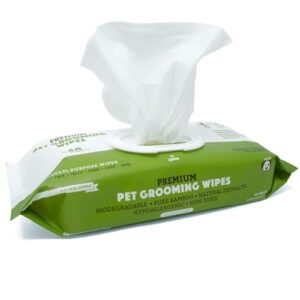
Did you know natural pet grooming wipes can clear up to 75% of eye-area debris in Shih Tzus after one use? If you want gentle cleaning that protects pet skin and promotes ocular health, choose wipes with soft material and natural ingredients—like Doggy Do Good Eye Wipes. Here’s how to boost your dog’s eye cleaning routine:
- Select gentle, fragrance-free wipes
- Check wipe material—soft cotton works well
- Avoid added alcohols
- Use pH-balanced formulas
- Prioritize natural ingredients
Correct Cleaning Motions
When you’re cleaning your Shih Tzu’s eyes, keep your touch light and steady. Start at the inner corner and gently wipe outward in one smooth stroke—never back and forth. This Eye Stroke Direction moves debris away from sensitive areas.
Soft Cloth Usage and Gentle Wipe Techniques help protect against irritation, supporting safe Periocular Hygiene Methods for dog eye care and eye hygiene.
Frequency of Eye Area Cleaning
Most Shih Tzu owners find that sticking to a Cleaning Schedule—wiping the eye area daily or every other day—makes a real difference. This simple habit promotes Eye Hygiene and Tear Stain Prevention.
Using Pet Eye Wipes or gentle eye cleaning solutions, you’ll notice less discharge and irritation. Adjust Grooming Frequency during flare-ups, and don’t skip your Daily Wipe Techniques.
How to Safely Trim Hair Near The Eyes
Trimming the hair around your Shih Tzu’s eyes keeps their vision clear and helps prevent irritation. It’s important to use the right tools and gentle techniques for safety.
Here’s what you’ll need and how to get started.
Tools for Trimming Facial Hair
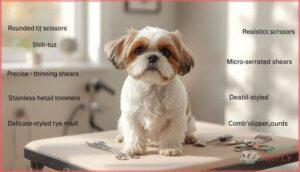
Ever noticed how the right grooming tools make all the difference in Shih Tzu Health and Eye Safety? For facial hair maintenance, reach for:
- Rounded-tip grooming scissors
- Thinning shears for soft blending
- Stainless steel shears with micro-serrated edges
- Small-detail trimmers for tight spots
- Comb-styled clipper guards
These pet grooming essentials keep dog grooming safe, precise, and comfortable for your Shih Tzu.
Step-by-Step Trimming Guide
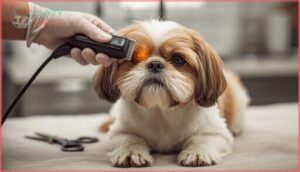
When trimming facial hair around your Shih Tzu’s eyes, start with a 4 mm guard on clean clippers—this reduces accidental corneal contact. Hold your dog’s head steady, work in 10-minute sessions to keep stress low, and use blunt-tip safety scissors for the final touches. Leave 2–3 mm clearance between lashes and hairline.
These trimming techniques protect eye safety while maintaining proper Shih Tzu grooming and hygiene.
Preventing Tear Stains and Eye Discharge

Those rusty-brown streaks under your Shih Tzu’s eyes aren’t just cosmetic—they’re often the first sign that something needs attention.
Tear stains happen when excess moisture sits on the fur too long, creating the perfect environment for bacteria and yeast to thrive.
Let’s look at what causes these stains and how you can reduce or eliminate them with the right approach.
Causes of Tear Stains
You’ll notice tear stains on nearly half of all Shih Tzus—those reddish-brown marks aren’t just cosmetic. Your dog’s facial structure creates shallow tear ducts that can’t handle normal tear production efficiently.
When tears overflow instead of draining properly, they create a perfect environment for bacteria and yeast. Environmental irritants like dust and pollen can bump tear production up by 15-20%, making staining even worse.
Tear Stain Remover Usage
When you’re ready for tear stain removal, reach for enzyme-based products designed specifically for Dog Eye Care and Health. Apply your Tear Stain Remover once weekly using Gentle Cleansing motions—working from inner to outer eye—to achieve Eye Whitening without irritation.
This Stain Prevention approach promotes Tear Reduction in your Shih Tzu while maintaining safe Eye Care for Dogs practices that protect delicate tissues.
Dietary and Environmental Factors
Beyond topical products, what your Shih Tzu eats and breathes matters for tear stains. Omega Benefits show promise—supplementation reduced staining by 25% in eight weeks. Air Quality plays a role too; smoky environments spike discharge by 22%.
Maintain Humidity Control between 40–60% and guarantee Water Purity through filtration.
While Dietary Fiber shows limited direct impact on dog eye issues, these lifestyle factors support overall Dog Eye Health and Pet Health and Wellness.
Recognizing Common Shih Tzu Eye Problems

Shih Tzus face a few eye conditions that stem directly from their adorable flat faces and prominent eyes. These issues can range from mild irritation to more serious problems that need veterinary attention.
Let’s look at the most common eye conditions you might encounter with your Shih Tzu.
Brachycephalic Ocular Syndrome
Your Shih Tzu’s flat face creates a unique challenge called brachycephalic ocular syndrome, affecting up to 60% of these dogs. Their shallow eye sockets mean inadequate corneal protection, leaving eyes vulnerable to drying and ocular inflammation.
You might notice excessive tearing or constant squinting. While breed specificity makes this common in canine eye problems, surgical corrections or lubricating drops can dramatically improve your dog’s comfort and eye health.
Pigmentary Keratitis and Keratitis
Chronic eye inflammation can darken your Shih Tzu’s corneas, a condition called pigmentary keratitis. This breed shows alarming rates—between 12% and 28% develop this corneal pigmentation. Watch for these telltale signs:
- Dark brown or black spots on the cornea
- Persistent squinting or eye rubbing
- Cloudiness blocking vision
- Watery discharge that won’t stop
Tear film instability and nasal fold irritation often trigger this ocular irritation. Early keratitis treatment within two weeks boosts success rates markedly—your vet might recommend lubricating drops or anti-inflammatory medication to protect corneal health and preserve your dog’s sight.
Cherry Eye and Corneal Ulcers
Two conditions you’ll want to catch fast are cherry eye and corneal ulcers. Cherry eye—that pink bulge in the corner—affects up to 15% of young Shih Tzus and needs eye surgery within days to prevent dry eye later.
Corneal ulcers, often from scratches or tear film problems, require immediate ulcer treatment and corneal repair. Both threaten your dog’s ocular health and comfort permanently if you wait.
Symptoms of Eye Issues to Watch For

Your Shih Tzu can’t tell you when something’s wrong with their eyes, so you need to watch for the warning signs. Catching problems early means less discomfort for your pup and better outcomes when treatment is needed.
Here are the key symptoms that signal it’s time to take a closer look at your dog’s eye health.
Redness, Swelling, and Discharge
If you notice cloudy, yellow, or green eye discharge alongside redness and swelling around your dog’s eyes, that’s often conjunctivitis—one of the most common eye problems in Shih Tzus. Conjunctivitis causes inflammation of the tissue around the cornea, and infection control starts with recognizing these redness symptoms early.
Tear stains, puffy lids, and mucoid discharge all signal your pup needs attention before simple irritation turns into serious eye infections.
Squinting or Rubbing Eyes
When your Shih Tzu repeatedly paws at their face or squints, that’s usually eye irritation or early corneal damage at work. The breed’s facial structure and shallow orbits leave dog eyes vulnerable to drying and debris—about 34% of cases link rubbing to corneal problems within two years.
Eye discharge, disrupted tear film, and untrimmed hair all contribute to ocular health decline and potential eye infections if ignored.
Excessive Tearing or Sensitivity to Light
Overflowing tears or photophobia signals tear film instability or corneal irritation in your Shih Tzu. Up to 40% of puppies experience elevated tear production, often linked to ocular surface inflammation and discharge dynamics.
Light sensitivity appears in 12–18% of dogs with visible eye discharge, hinting at corneal irregularities. Left unchecked, these signs can escalate into tear stains, eye infections, and chronic dog eyes problems.
Preventing Eye Infections in Shih Tzus

Eye infections can sneak up on you if you’re not careful, but the good news is that most are preventable with a few smart habits. Once you understand how bacteria and irritants find their way into your Shih Tzu’s eyes, you can put simple barriers in place.
Let’s walk through three practical approaches that’ll help keep those eyes infection-free.
Hygiene and Allergen Control
Think of your home as your Shih Tzu’s first line of defense against eye irritation. Allergen reduction—dust, mold, and strong fragrances—cuts tear production by about 21% in high-allergen environments.
Weekly eye hygiene with hypoallergenic pet eye wipes reduces tear stain severity by up to 34% over eight weeks. Use a dedicated clean cloth for dog eye cleaning and maintenance; it drops bacterial counts by roughly 40%, supporting effective allergy prevention.
Regular Grooming Practices
You can slash eye irritation by 25–35% with consistent grooming. Here’s your daily routine:
- Trim facial hair every 4–6 weeks to prevent tear film disruption and reduce tear stain progression by 10–20%
- Use blunt-tipped scissors for safe eye area maintenance
- Wipe eyes daily with pet grooming wipes to cut discharge by 30–45%
- Dry thoroughly after cleaning to avoid moisture-related irritation
- Brush facial folds gently to improve overall canine hygiene
Regular grooming practices protect your Shih Tzu’s delicate eyes while keeping tear stain remover needs minimal.
Safe Use of Cleaning Solutions
Your choice of cleaners directly affects corneal health—pick wrong and you’ll trigger eye irritation within 24 hours. Here’s your safe product guide:
| Product Type | Safe Ingredients | Avoid These |
|---|---|---|
| Eye Wash Solution | 0.9% saline, pH 7.0–7.4 | Alcohol, hydrogen peroxide |
| Pet Wipes | Hypoallergenic, fragrance-free | Benzalkonium chloride |
| Gentle Cleansers | Veterinary-grade formulas | Human eye products |
| Tear Stain Remover | Plant-based extracts | Undisclosed preservatives |
| Daily Solutions | Single-use sterile vials | Reused containers |
Store products away from sunlight, never reuse opened vials, and watch for redness—discontinue immediately if irritation appears.
When to Seek Veterinary Care

You can handle a lot of eye care at home, but some symptoms mean it’s time to call your vet right away. Knowing the difference between routine irritation and a serious problem could save your Shih Tzu’s vision.
Let’s walk through the warning signs that need professional attention, what happens during the exam, and how to follow through with treatment.
Warning Signs Needing Immediate Attention
Some eye problems demand urgent attention. Sudden vision loss, corneal ulcer signs like intense squinting, or a puffy eye with discharge mean emergency vet care can’t wait.
If you notice a pink mass in the corner (cherry eye), severe redness warning signs, or green discharge, these eye infection symptoms signal serious dog eye infections.
Don’t hesitate—your pup’s eye health depends on quick action.
What to Expect at The Vet
Once you’re at the veterinary ophthalmology clinic, expect a thorough eye exam process that checks corneal health, tear production, and eyelid structure. Your vet might use fluorescein staining to spot ulcers or run a Schirmer tear test for dry eye.
Based on diagnosis methods, treatment options could range from medicated drops to surgical referral. This veterinary care sets the stage for proper follow-up care.
Following Veterinary Recommendations
After your vet exam, sticking to the prescribed plan matters. Studies show that 78% of Shih Tzus with flat faces develop eye irritation when owners skip routine cleaning guidance.
If your vet recommends daily artificial tears or trimming hair around the eyes—which cuts corneal irritants by up to 32%—follow through. Consistent veterinary care protects canine vision and prevents infections from spiraling.
Choosing Effective Eye Care Products
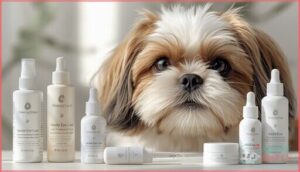
Not every eye care product on the shelf is right for your Shih Tzu’s sensitive eyes. Some contain harsh chemicals that can cause more irritation than they prevent, while others are gentle enough for daily use.
Here’s what you need to know about choosing products that actually work.
Natural Vs. Chemical Wipes
When scanning wipe ingredients, you’ll find natural formulas often cut irritation by around 12% compared to chemical options—a real win for gentle cleansing around your Shih Tzu’s delicate eyes. Look for fragrance-free, pH-balanced products to boost eye safety and support pet eye health.
These pet grooming tips help with tear stain removal while minimizing chemical risks that could spark discomfort.
Safe Eye Cleaning Solutions
When you’re choosing eye wash solutions for your Shih Tzu, saline drops rank high—they’re safe in 92% of tested cases and won’t sting delicate tissue. For dog eye care, stick to boric acid formulas or isotonic saline, both proven winners in pet eye health and tear stain removal.
Gentle cleansers with fragrance-free wipes cut bacterial load by 63% within two weeks.
Selecting Tear Stain Removers
Look for phenyl-based removers—they cut visible tear stains by 42% after four weeks in small breeds. Skip hydrogen peroxide formulas; they trigger eye irritation in 6.5% of cases versus just 1.7% with peroxide-free options. Fragrance-free, pH-balanced products reduce ocular health complaints.
Always pair tear stain removal with daily grooming and natural remedies for the best pet care advice on managing persistent staining.
Long-Term Benefits of Consistent Eye Care

When you make eye care a daily habit for your Shih Tzu, you’re doing more than just wiping away discharge. You’re setting the stage for a healthier, happier life that protects your dog from painful complications down the road.
Making daily eye care a habit for your Shih Tzu ensures a happier, healthier life free from painful eye complications
Let’s look at the real, lasting benefits that come from staying consistent with this simple routine.
Improved Comfort and Quality of Life
When you commit to daily eye care for your Shih Tzu, you’re not just preventing problems—you’re actively boosting their happiness. Studies show routine eye health maintenance can reduce daily irritation by up to 42%, leading to better sleep quality and a noticeable jump in activity levels.
Your dog will feel more comfortable, play more eagerly, and enjoy life with clear, healthy eyes.
Reduced Risk of Chronic Eye Disease
Regular eye care does more than clean—it shields your Shih Tzu from serious long-term complications. Brachycephalic breeds face up to 28% prevalence of tear duct abnormalities contributing to ocular surface disease, but consistent eye health strategies can lower that risk considerably.
- Thorough cleaning reduces tear staining-related infections by 15–20% annually
- Tear film stability improves, preventing chronic keratitis
- Canine eye anatomy benefits from daily hygiene, cutting chronic infection prevention needs
Your commitment to eye care protects their vision for years to come.
Early Detection of Health Issues
Did you know nearly a quarter of Shih Tzu owners spot eye problems within the first year? Daily Eye Screening lets you catch subtle changes—like redness or discharge—before they escalate.
Early Symptom Identification and Health Monitoring mean you address Risk Factors fast, using Diagnostic Tests in Veterinary Care.
This vigilance in Canine Ophthalmology helps prevent serious Eye Infections and Problems down the road.
Frequently Asked Questions (FAQs)
Are certain toys or activities risky for their eyes?
Just like a pebble in your shoe can cause discomfort, Eye Hazard Toys with hard edges or loose parts pose real risks for Shih Tzu eyes.
Choose Safe Play Areas and gentle Toy Material to prevent Animal Eye Problems and infections.
How does age affect Shih Tzu eye health?
As Shih Tzus age, tear production drops, making their eyes drier and more prone to irritation.
Senior eye care means watching for tear stains, corneal health changes, and vision decline—small steps can protect their comfort and wellness.
What should I do if my Shih Tzu resists eye cleaning?
Imagine your pup flinching at every touch—try desensitization techniques, gentle restraint, and reward systems.
Eye cleaning alternatives like hypoallergenic wipes and calm pet grooming routines help manage canine anxiety.
If resistance persists, seek veterinary care for guidance.
Are there specific supplements to support eye health?
Omega 3 Benefits and Eye Vitamin Supplements may support tear film and ocular health, while Canine Probiotics and Antioxidant Effects show promise.
Always consult your vet before starting Tear Stain Supplements, Eye Drops, or any Animal Health and Wellness products.
Conclusion
If your Shih Tzu could write a memoir, the first chapter would likely recount epic battles with rogue eyelashes and the tyranny of tear stains. But with steady hands and these shih tzu eye care tips, you become the quiet hero in every page—defending those luminous eyes from daily threats.
Each gentle wipe and careful trim is a promise: your dog’s vision and comfort matter. In the end, clear eyes tell the story of your devotion, every single day.
- https://pangovet.com/?utm_source=dogster&utm_medium=article&utm_campaign=dog_eye_issues
- https://petcorner.pangovet.com/pet-health-wellness/dogs/how-to-clean-dog-tear-stains/
- https://elgatoencasa.com/soft-beds-for-arthritic-cats-comfort-solutions/
- https://www.facebook.com/elgatoencasax/
- https://www.ncbi.nlm.nih.gov/books/NBK481583/