This site is supported by our readers. We may earn a commission, at no cost to you, if you purchase through links.

Most puppies experience at least one traumatic greeting before 16 weeks, and those first impressions often shape how they’ll react to other dogs for years to come. You can’t undo a frightening encounter where a well-meaning stranger’s overexcited Lab bowled your ten-week-old over, or when an off-leash dog rushed your puppy at the park.
Safe puppy meeting strategies aren’t about bubble-wrapping your new companion, they’re about building confidence through controlled, positive experiences during the narrow window when your puppy’s brain is most receptive to learning.
When you understand how to set up successful introductions, choose appropriate playmates, and read early warning signs of stress, you transform socialization from a risky guessing game into a foundation for a well-adjusted adult dog.
Table Of Contents
- Key Takeaways
- Why Safe Puppy Meetings Matter
- Preparing for Your Puppy’s First Meeting
- How to Introduce Puppies Safely
- Managing The Meeting Environment
- Guiding Safe Off-Leash Puppy Play
- Top 9 Pet Strollers for Safe Outings
- 1. Smug Pet Stroller for Small Pets
- 2. Pet Stroller For Small Dogs And Cats
- 3. Zoosky Medium Dog Stroller
- 4. Zoosky Large Pet Stroller
- 5. BestPet Pet Stroller For Dogs And Cats
- 6. Sweetcrispy Pet Stroller For Dogs And Cats
- 7. Ojcme Large Dog Stroller
- 8. Roodo Pet Stroller For Dogs And Cats
- 9. Magshion Pet Stroller For Small Dogs
- Teaching Children Safe Puppy Greeting Rules
- Frequently Asked Questions (FAQs)
- Conclusion
Key Takeaways
- Puppies build lifelong confidence or fear patterns during the critical 3-16 week socialization window, making early controlled introductions essential for preventing anxiety and behavioral problems that can last their entire lives.
- Safe greetings start at 20+ feet with loose leashes, brief 3-5 second interactions, and immediate separation when stress signals appear—tight leashes, prolonged contact, or ignoring warning signs like tucked tails and whale eye can turn positive experiences into traumatic ones.
- Matching puppies with calm, fully vaccinated dogs of similar energy levels in neutral spaces protects developing brains from overwhelming encounters, while short play sessions of 3-5 minutes with regular body language check-ins prevent overstimulation.
- Teaching children to stand still, ask permission, let puppies approach first, and never disturb dogs during meals or sleep cuts bite risk dramatically, since more than half of dog bite victims are kids who unknowingly trigger fear or guarding behaviors.
Why Safe Puppy Meetings Matter
The way your puppy meets other dogs, people, and new environments during their first few months shapes their entire life. Those early interactions don’t just teach basic manners—they literally wire your puppy’s brain to handle stress, build confidence, and respond calmly when the unexpected happens.
Understanding juvenile puppy social behavior helps you recognize when your pup is learning versus when they’re feeling overwhelmed.
Your puppy’s first few months of meetings literally wire their brain for confidence, stress management, and lifelong calm responses
Getting these first meetings right protects your dog from developing fear, anxiety, and behavioral problems that can last a lifetime.
Early exposure is especially important for aggressive dog breeds, which need positive experiences during this critical window to build lifelong confidence.
Building Confidence Through Positive Experiences
Trust forms when puppies associate new faces and places with positive feelings during the socialization period. Each calm meeting becomes a building block for lifelong confidence, and positive reinforcement helps your puppy embrace the world with curiosity instead of hesitation.
Structured puppy class interaction techniques give owners practical ways to guide their dogs through unfamiliar scenarios while reinforcing relaxed, friendly responses.
- Short greetings with friendly dogs teach puppies that canine behavior follows predictable, safe patterns
- Gentle handling during calm environments makes vet visits and grooming feel normal, not scary
- Pairing treats with new sights turns puppy socialization into positive social learning experiences
- Letting puppies choose their pace builds trust and shows them they’ve control over interactions
Many owners succeed by adopting positive reinforcement strategies for socialization that are supported by expert trainers and veterinarians.
Preventing Fear and Anxiety Issues
Those positive early meetings do more than build confidence—they protect your puppy from lifelong fear and anxiety.
Early exposure to new people, places, and sounds helps you build a fearless, confident dog that handles life’s surprises with ease.
When socialization tips focus on calm environments and stress management during the socialization period, you’re actively preventing anxiety before it takes root. Positive reinforcement paired with canine socialization helps your puppy learn that new experiences aren’t threats, which stops fear prevention from becoming an uphill battle later.
For more details on the benefits of early socialization techniques, see expert recommendations.
Critical Socialization Window (3-16 Weeks)
Your puppy’s brain is wired to absorb the world between 3 and 16 weeks—the critical socialization window when fear imprint period patterns lock in. During this puppy development phase, especially around 10 to 12 weeks, canine emotional growth peaks, and puppy brain development is wide open.
Socialization techniques you use now, adapted to breed specific socialization needs, shape how your puppy sees strangers, dogs, and everyday life forever. The socialization process can’t wait.
Long-term Behavioral Health Benefits
Well-socialized puppies grow into dogs with stronger emotional stability and behavioral resilience. Safe meetings during the socialization period create social competence that lasts a lifetime, reducing behavioral issues like separation anxiety by teaching confidence building and self-regulation.
Learning how to properly socialize your puppy during these critical early weeks helps prevent fear-based reactions and establishes a foundation for lifelong adaptability.
Positive reinforcement during these early experiences shapes social learning, turning anxiety prevention into a developmental skill your dog carries forward, protecting long-term quality of life and sustained behavioral health.
Preparing for Your Puppy’s First Meeting

A successful first meeting doesn’t happen by accident—it requires thoughtful preparation before your puppy ever encounters another dog. You’ll need to think about who your puppy meets, what you bring along, where the meeting takes place, and whether the timing aligns with your puppy’s health needs.
These four elements work together to create a safe experience that builds your puppy’s confidence rather than triggering fear or stress.
Choosing The Right Meeting Partners
Your puppy’s first friendship doesn’t happen by chance. Look for fully vaccinated dogs with calm temperaments, similar energy levels, and positive social histories.
Breed compatibility matters less than matching play styles and handler control during introductions. These socialization strategies build positive associations early, setting your pup up for strong dog friendships and successful relationship building throughout life.
What to Bring for Success
Pack a small bag with the right gear, and you’ll turn any dog introduction into a calmer, safer experience. Thoughtful preparation helps you guide neutral territory meetings with confidence while building positive associations through every interaction.
- Treat Options: Soft, pea-sized chicken or cheese pieces hold your puppy’s focus without long chewing breaks.
- Leash Choices: A 4- to 6-foot flat leash gives control during dog meetings while allowing relaxed sniffing.
- Comfort Items: A familiar towel or mat creates a calm resting spot when your puppy feels overwhelmed.
- Safety Gear: Poop bags, water, and a secure vest keep loose leashes manageable and outings stress-free.
Selecting a Neutral Location
Choose a quiet park or empty sidewalk where neither puppy has spent time—neutral territory keeps introductions on equal footing.
Look for space layout with wide-open areas and clear sight lines so you can maintain safe distance with loose leashes during dog meetings.
Avoid tight corners, heavy noise levels, and areas cluttered with toys or food bowls that trigger guarding behaviors.
Timing and Vaccination Considerations
Coordinating vaccination timing with early socialization feels like walking a tightrope, but veterinary guidance makes it manageable. Most puppies can begin controlled meetings around 8 weeks once their first core vaccine has had about 7 to 10 days to work.
- Stick to clean, private spaces with healthy, fully vaccinated dogs until your puppy completes the series at 14 to 16 weeks
- Skip dog parks and public dog areas where disease risk runs high
- Balance socialization windows with vaccine schedules by choosing safe partners rather than avoiding contact entirely
How to Introduce Puppies Safely
The moment your puppy meets another dog sets the tone for how they’ll interact with canines throughout their life, so getting it right from the start matters more than you might think. A successful first introduction isn’t about rushing two puppies together and hoping for the best—it’s about following a careful, step-by-step process that protects both dogs from feeling scared or overwhelmed.
Let’s walk through the essential techniques that help puppies meet safely, starting with distance, leash handling, timing, and reading the signals your pup is sending you.
Starting at Proper Distance (20+ Feet)

Starting dog introductions at least 20 feet apart gives both puppies breathing room to notice each other without feeling crowded or rushed. This distance control lets you watch their body language, reward calm encounters, and adjust the gap before moving closer. By using neutral territory and maintaining that initial buffer, you set the stage for safe introductions and positive associations that support lifelong dog socialization confidence.
| Distance | What You’ll See |
|---|---|
| 20–30 feet | Relaxed observation, soft eyes, loose bodies signal comfort and curiosity |
| 15–20 feet | Play bows, bouncy movement mean puppies may be ready for closer greetings |
| 10–15 feet | Brief sniffs, then handlers step back to prevent arousal from climbing too high |
| Under 10 feet | Close contact reserved only for puppies showing consistently calm, friendly signals |
| Increasing gap | Stiff posture, hard stares, tucked tails call for more space immediately |
Using Loose Leashes Correctly

A tight leash during dog introductions can turn friendly curiosity into frustration, so keeping that line slack is one of the most powerful dog training techniques you can master. Leash control starts with a 4 to 6 foot standard leash paired with a front clip vest, giving you gentle guidance while your puppy explores neutral territory.
- Hold the leash close to your body with both hands instead of reaching forward, which helps you relax your grip and avoid sudden tension when puppies sniff.
- Let the leash hang in a loose “J” shape between you and your dog, a simple visual cue that your puppy has freedom to curve its approach naturally.
- Stand sideways to the other dog and take small side steps as your puppy moves, keeping handler position relaxed and preventing the line from pulling tight like a tug of war rope.
When both handlers agree to keep leashes loose, you create space for safe introductions and positive associations that build confidence instead of stress.
Keeping Initial Interactions Brief

Just because your leash is loose doesn’t mean you should let puppies sniff endlessly. Brief greetings of three to five seconds give you time to watch body language and decide if another calm encounter makes sense, while short meetings prevent the adrenaline spikes that push gentle intros into chaos.
These quick interactions on neutral territory build the foundation for confident dog socialization without overwhelming your pup’s developing brain.
Recognizing Warning Signs of Stress

Even when greetings start well, your puppy’s body language tells you whether the interaction stays positive or turns stressful. Watch for these fear recognition techniques and stress signal identification clues in canine behavior:
- Sudden yawning, lip licking, or panting without physical exertion
- Whale eye (whites visible), pinned-back ears, or dilated pupils
- Freezing, tucking the tail, or crouching low to the ground
- Tight mouth closure, soft whining, or warning growls
- Hiding behind you, trying to leave, or refusing to engage
Recognizing puppy anxiety signs early through canine body language helps you apply calming strategies before fear and aggression develop, supporting strong anxiety prevention and healthy dog behavior for life.
Managing The Meeting Environment

Once you’ve nailed the introduction itself, the next step is making sure the environment sets your puppy up for success.
The space where you hold the meeting matters just as much as how you handle the leashes, and a few smart adjustments can prevent most problems before they start.
Here’s how to create a setting that keeps everyone calm, safe, and ready to make a good first impression.
Ensuring Enough Space to Move
Without room to move freely, your puppy can’t use natural dog behavior like sniffing the ground or turning away during dog introductions. Cramped buffer zones raise stress and block the positive associations you’re building during the socialization process.
Choose neutral territory with open environmental layout that gives both pups space requirements for movement freedom and distance control—at least a few feet in every direction.
Planning Clear Exit Routes
Space alone won’t save a meeting that’s heading south—you also need a way out. Planning clear exit strategies before your puppy meets another dog means you can guide both animals away smoothly when stress signals appear, protecting the positive associations you’re building on neutral territory.
- Pick spots with two walking paths so either handler can leave without squeezing past the other dog again.
- Position yourself at an angle to the other team instead of face-to-face, keeping your retreat route open.
- Agree beforehand who moves first if either pup shows stiff body language or other anxiety prevention cues.
- Practice gentle 180-degree turns with your puppy before real dog introductions to build leash control skills.
- Identify visual barriers nearby—parked cars, benches, or gates—that create instant safe zones during retreat techniques.
Avoiding Resource-Heavy Areas
When you choose neutral meeting spaces, skip locations where bowls, toys, or chew remnants linger—puppies and resident dogs often guard these items, triggering resource guarding even in otherwise calm animals.
Kitchens, dining rooms, and cluttered yards packed with dog gear sabotage safe introduction tips by adding stress reduction challenges.
Instead, use freshly cleared sidewalks or open grass to support positive associations through smart environment control during dog introductions.
Controlling External Distractions
During the first five minutes of dog introductions, your environmental calibration can make or break positive associations, so apply these distraction management essentials:
- Silence doorbells, alarms, and media to achieve noise reduction that prevents startle responses
- Position visual barriers between the meeting space and street traffic or shopping crowds
- Maintain scent control by avoiding strong cleaners near neutral territory
- Redirect wandering attention with high-value treats to support socialization techniques and steady dog behavior and training focus
Guiding Safe Off-Leash Puppy Play

Once your puppy shows calm, comfortable body language during on-leash greetings, you can consider letting them play off-leash with well-matched dogs.
Off-leash play offers wonderful opportunities for socialization, but it requires close supervision and a clear understanding of healthy play behavior.
The following strategies will help you create safe, positive play experiences that build your puppy’s confidence without overwhelming them.
Keeping Play Sessions Short
Even playful pups need limits. Your puppy’s boundless energy can mask fatigue, so structure play session limits at 3 to 5 minutes to prevent overstimulation. End each bout with calm transitions like gentle petting for 2 to 3 minutes, reinforcing positive reinforcement throughout the socialization period. Limit sessions to 2 or 3 per day, watching for yawning or tucked tails that signal it’s time for a break.
| Session Length | Rest Period | Daily Frequency |
|---|---|---|
| 3 to 5 minutes | 2 to 3 minutes | 2 to 3 times |
| Brief, controlled | Gentle petting | Prevents overload |
| Ends on calm note | Builds routine | Aids growth |
| Monitors fatigue | Reassures puppy | Safe socialization |
Matching Energy Levels Between Dogs
Pairing a bouncing terrier with a laid-back senior is like mixing oil and water—one gets overwhelmed while the other never finds their groove. Energy balance during dog introductions keeps play safe and builds authentic dog friendship and relationship building through canine communication and body language, not forced interactions.
To ensure successful dog interactions, consider the following key strategies:
- Match intensity and pace: Choose playmates whose excitement level sits within one step of your puppy’s energy, preventing overstimulation while teaching effective socialization and training methods.
- Consider breed compatibility and size matters: A 60-pound wrestler may frighten a 10-pound pup even when both show high energy, so pair similar builds for physical safety.
- Align play style preferences: Chase-loving dogs thrive with sprinters, while gentle stop-and-go players need partners who mirror their moderate tempo.
- Monitor arousal levels continuously: High-energy puppies tip from playful to frantic quickly, so rotate active play with sniffing breaks using dog training and introduction techniques.
- Separate extreme energy gaps: Structured playgroups that divide very intense dogs from calmer ones reduce scuffles and support positive early experiences.
Regular Body Language Check-ins
You can’t trust a single glance to tell the whole story—body language shifts second by second during off-leash play. Pause every three to five minutes to assess canine nonverbals, calming signals recognition, and puppy facial expressions that reveal comfort or mounting tension.
| Body Part | Comfortable Signals | Warning Signals |
|---|---|---|
| Ears | Soft, forward position | Pinned flat backward |
| Tail | Loose wag, mid-height | Tucked under, rigid high |
| Eyes | Soft gaze, normal pupils | Wide whites showing, staring |
| Mouth | Relaxed, open slightly | Closed tight, lips curled |
| Posture | Playful bow, loose muscles | Stiff stance, cowering low |
Regular check-ins during dog introductions help you catch tail signal meaning, body language cues, and canine communication shifts before excitement turns into fear, supporting effective socialization and training methods that build healthy dog behavior and development patterns.
When to Pause or End Play
Play Pause Signs appear when your puppy stops listening to their name or starts biting harder—both signal that Overstimulation Prevention is needed right now. Puppy Fatigue shows through flopping down or slower movements, requiring an immediate calm shift to rest.
Master Stress Recognition during dog introductions by watching body language shifts that indicate anxiety prevention needs, protecting dog communication skills while supporting long-term aggression prevention through thoughtful, measured play breaks.
Top 9 Pet Strollers for Safe Outings
A pet stroller can be a lifesaver when you’re working on socializing your puppy, especially during those early weeks when they’re not fully vaccinated or when they tire easily during outings. These strollers let you safely expose your pup to new sights, sounds, and environments without risking infection or overwhelming their small bodies.
Here are nine reliable options that make socialization outings safer and more manageable for puppies of different sizes.
1. Smug Pet Stroller for Small Pets
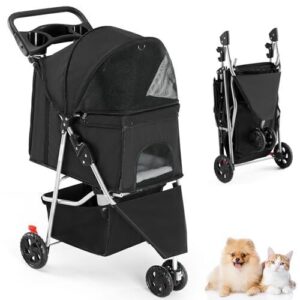
Lightweight stroller designs let you transport small pets during early socialization outings without risking on-ground dog introductions before your puppy’s vaccination series is complete. The Smug Pet Stroller fits pets up to 12 pounds and features waterproof materials, mesh panels for breathability, and 360° swivel wheels that navigate crowded sidewalks with ease.
You’ll appreciate the foldable design for quick storage, built-in cup holder for treats during training sessions, and secure restraint clips that prioritize pet stroller safety.
Regular stroller maintenance—wiping mesh panels and checking wheel locks—ensures your small pet transport option stays reliable for controlled socialization techniques throughout those critical early weeks.
| Best For | Pet owners who need to safely transport small dogs or cats (up to 12 pounds) during walks, vet visits, or socialization outings—especially for puppies not yet fully vaccinated. |
|---|---|
| Weight Capacity | Not specified |
| Frame Material | Metal |
| Foldable Design | Yes |
| Storage Basket | Yes |
| Mesh Canopy | Yes |
| Brakes | Reliable brakes |
| Additional Features |
|
- Mesh canopy and panels keep your pet cool and visible while the waterproof materials protect against light rain
- 360° swivel wheels and lightweight foldable frame make it easy to navigate tight spaces and store in your car or closet
- Storage basket and cup holder give you room for treats, toys, and essentials during longer outings
- Front wheel can detach easily and the bottom pad may shift around, requiring occasional adjustments
- Small front window might cause pets to press forward and strain to see out
- Thin material and reports of scratches suggest it may not hold up well to heavy or frequent use
2. Pet Stroller For Small Dogs And Cats
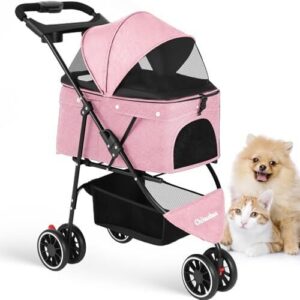
When you need more carrying capacity for socialization outings, the Pet Stroller For Small Dogs And Cats accommodates pets up to 39 pounds while maintaining cat comfort and dog transport stability.
Its 300D linen fabric with waterproof coating protects your companion during unpredictable weather, and dual safety straps improve pet stroller safety during controlled dog introductions.
The breathable mesh canopy ensures proper airflow on warm days, while dual rear brakes provide instant stopping power when you pause for safe pet introduction and meeting strategies with passing dogs.
| Best For | Pet owners with small to medium dogs or cats (up to 39 lbs) who want a reliable stroller for daily walks, vet visits, or outdoor adventures. |
|---|---|
| Weight Capacity | 39 lbs |
| Frame Material | Alloy Steel |
| Foldable Design | Yes |
| Storage Basket | Yes |
| Mesh Canopy | Yes |
| Brakes | Dual rear brakes |
| Additional Features |
|
- Waterproof 300D linen fabric with breathable mesh canopy keeps pets protected from weather while staying cool
- Smooth maneuverability with 360° swivel front wheels and dual rear brakes for safe stops during walks or pet introductions
- Foldable design with storage basket and cup holders makes it practical for travel and easy to store at home
- Hard bottom requires extra cushioning for pet comfort during longer rides
- Safety clips and side seals may not be strong enough to prevent escape for jumpy or aggressive pets
- Assembly instructions can be unclear and difficult to follow
3. Zoosky Medium Dog Stroller
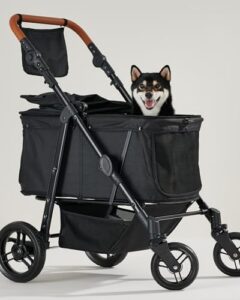
For medium-sized companions who need controlled socialization exposure, the Zoosky Medium Dog Stroller accommodates pets up to 66 pounds with outstanding wheel quality and stroller safety features. Its alloy steel frame provides stability during dog introductions in parks, while the 180-degree convertible canopy offers pet comfort in varying conditions.
The foldable design fits typical trunks for storage space efficiency, and mesh panels maintain airflow during extended dog behavior management sessions. Though the undercarriage basket sits low, this stroller facilitates effective socialization techniques when building dog friendship through gradual pet introduction strategies.
| Best For | Pet owners with medium to large dogs (up to 66 lbs) who have mobility issues, need controlled outdoor exposure, or want to bring their pets along on longer walks and outings. |
|---|---|
| Weight Capacity | 66 lbs |
| Frame Material | Alloy Steel |
| Foldable Design | Yes |
| Storage Basket | Yes |
| Mesh Canopy | Yes |
| Brakes | Standard brakes |
| Additional Features |
|
- Extra-large back wheels and sturdy alloy steel frame provide smooth movement across different terrains like grass, gravel, and pavement
- Dual sun shades with 180-degree convertible canopy protect your pet from sun and weather while maintaining good airflow through mesh panels
- Easy to fold down for compact storage and transport, making it practical for trips and everyday use
- No cup holder included, which can be inconvenient during longer walks
- Storage basket underneath is positioned low and hard to reach while the stroller is in use
- Brakes could be more reliable and higher quality for better safety control
4. Zoosky Large Pet Stroller
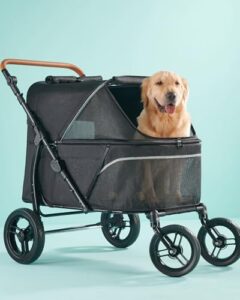
For larger companions weighing up to 110 pounds, the Zoosky Large Pet Stroller expands your outdoor pet adventures with a generous 33″ x 20″ x 12″ interior that accommodates safe dog introductions without cramping multiple pets. Its 1680D Oxford construction withstands regular use, while dual mesh windows maintain visibility during pet introduction and meeting strategies.
The low-entry design reduces lifting strain, building social confidence in mobility-challenged dogs. Though stroller maintenance tips include inspecting seams regularly, this pet transport option delivers large breed comfort and pet stroller safety for dog friendship building sessions at parks.
| Best For | Pet owners with large dogs (up to 110 lbs) or multiple pets who need a durable stroller for walks, hikes, and outdoor adventures, especially helpful for pets with mobility issues. |
|---|---|
| Weight Capacity | 110 lbs |
| Frame Material | Alloy Steel |
| Foldable Design | Yes |
| Storage Basket | Yes |
| Mesh Canopy | Yes |
| Brakes | Standard brakes |
| Additional Features |
|
- Heavy-duty 1680D Oxford construction holds up to 110 pounds with a spacious 33″ x 20″ x 12″ interior
- Low-entry design makes it easy for pets to get in and out without heavy lifting
- All-terrain wheels and adjustable handlebar (5 height settings) make it comfortable to push on different surfaces
- Large size requires more storage space and may need folding or disassembly to fit in smaller vehicles
- Some customers reported missing assembly parts like clips
- Higher price point compared to standard pet strollers
5. BestPet Pet Stroller For Dogs And Cats
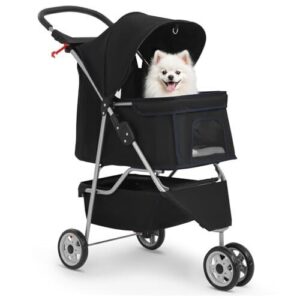
At 11 pounds, the BestPet Pet Stroller for Dogs and Cats combines pet stroller safety with smooth handling during dog introductions and socialization techniques. Its foldable design collapses quickly for car transport, while mesh panels maintain pet comfort and visibility throughout training sessions.
The 360° swivel wheels navigate park paths smoothly, though stroller maintenance includes checking wheel alignment after heavy use.
With its water-resistant Oxford fabric and undercarriage storage for pet accessories, this budget-friendly option assists dog owners practicing controlled meeting strategies without the premium price tag of specialty transport gear.
| Best For | Pet owners with small to medium-sized dogs or cats who need an affordable, portable stroller for daily walks and outings. |
|---|---|
| Weight Capacity | 39 lbs |
| Frame Material | Alloy Steel |
| Foldable Design | Yes |
| Storage Basket | Yes |
| Mesh Canopy | Yes |
| Brakes | Dual rear brakes |
| Additional Features |
|
- Lightweight at 11 lbs with a foldable design that makes storage and travel incredibly easy
- Smooth maneuverability with 360° swivel front wheels and 6.3″ wheels that handle various terrains
- Budget-friendly at $39.99 while offering practical features like mesh panels, water-resistant fabric, and storage basket
- Front wheels may get stuck or become unlevel with heavy use, requiring regular maintenance checks
- Zippers can be difficult to operate when your pet is inside the stroller
- Quality concerns reported by some users, including damaged products upon delivery and durability issues compared to higher-end models
6. Sweetcrispy Pet Stroller For Dogs And Cats
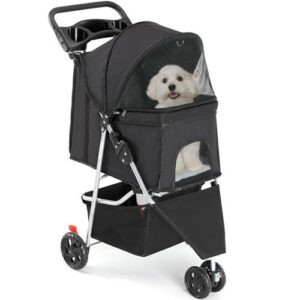
Weighing just 9.15 pounds, the Sweetcrispy Pet Stroller for Dogs and Cats aids puppy socialization during the critical socialization period with its breathable mesh panels and plush padding that boost pet comfort features. Its aluminum frame and foldable designs make outdoor adventures manageable, while lockable wheels provide pet stroller safety during dog introductions at parks or sidewalks.
The storage basket holds training treats for dog safety reinforcement, though regular stroller maintenance of zippers and wheel locks helps guarantee reliable performance throughout your dog training sessions and controlled socialization outings.
| Best For | Pet owners with small to medium-sized dogs or cats who want a lightweight, portable stroller for neighborhood walks and socialization outings. |
|---|---|
| Weight Capacity | Not specified |
| Frame Material | Alloy Steel |
| Foldable Design | Yes |
| Storage Basket | Yes |
| Mesh Canopy | Yes |
| Brakes | Standard brakes |
| Additional Features |
|
- Super lightweight at just 9.15 pounds with a foldable design that makes it easy to transport and store
- Breathable mesh panels and plush padding keep pets comfortable during walks and outings
- Comes with practical features like lockable wheels for safety, storage basket for treats and supplies, and adjustable handlebars
- Struggles on rough or uneven terrain, limiting where you can take it
- Assembly instructions are unclear and some users report issues with zippers, fabric quality, and wheel locks
- Cup holders are too shallow for most containers and the overall build feels somewhat flimsy
7. Ojcme Large Dog Stroller
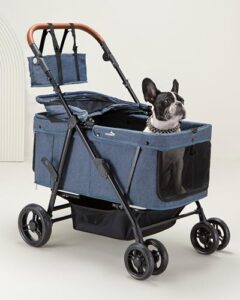
Built with a reinforced steel frame supporting up to 132 pounds, the Ojcme Large Dog Stroller accommodates multiple small dogs or one large breed during puppy socialization outings.
The spacious 30-inch cabin and 180° foldable design offer dog comfort while you navigate dog introductions at neutral locations, and mesh windows provide airflow during the critical socialization period.
You’ll appreciate owner convenience features like adjustable handle height and a storage basket for dog training treats, though the undercarriage can be tricky to access during active socialization sessions focused on dog safety.
| Best For | Pet owners with large dogs or multiple small dogs who need a sturdy, spacious stroller for walks, vet visits, and socialization outings. |
|---|---|
| Weight Capacity | Not specified |
| Frame Material | Metal |
| Foldable Design | Yes |
| Storage Basket | Yes |
| Mesh Canopy | Yes |
| Brakes | Lockable wheels |
| Additional Features |
|
- Reinforced steel frame holds up to 132 lbs with a roomy 30″L x 15.75″W cabin that fits larger breeds comfortably
- Adjustable handle height (27-41 inches) and foldable design make it easy to customize and store
- Mesh windows and 180° canopy provide great ventilation and visibility for your dog
- The bottom of the carriage can feel flimsy and might need extra reinforcement for heavier dogs
- Undercarriage storage basket is hard to reach when you need quick access to treats or supplies
- Not suitable for beach trips or deep sand terrain
8. Roodo Pet Stroller For Dogs And Cats

The Roodo Pet Stroller’s one-finger folding mechanism makes portable pet travel during the critical socialization period nearly easy, especially when you’re balancing puppy training sessions at multiple neutral locations. Its aluminum frame holds pets up to 30 pounds, and the 360-degree swiveling front wheel helps you navigate tight spaces where positive reinforcement opportunities arise.
The cushioned bottom pad and mesh ventilation ensure pet comfort features work together during those vital 3-16 week socialization windows, though you’ll want to check the zippered enclosure regularly for dog safety and prevention during busy outings.
| Best For | Pet owners with small dogs or cats (under 30 lbs) who want an easy-to-fold stroller for walks, vet visits, or socializing young puppies in different environments. |
|---|---|
| Weight Capacity | 132 lbs |
| Frame Material | Alloy Steel |
| Foldable Design | Yes |
| Storage Basket | Yes |
| Mesh Canopy | Yes |
| Brakes | Standard brakes |
| Additional Features |
|
- One-finger folding mechanism makes it super portable and easy to store in your car or home
- 360-degree swiveling front wheels and tool-free assembly mean you can set it up quickly and maneuver through crowded spaces
- Mesh ventilation on multiple sides and a cushioned bottom keep your pet comfortable during longer outings
- 30-pound weight limit rules out medium to large dogs
- Push bar height may be uncomfortable for taller users over 5’7″
- Plastic wheels might not hold up as well as rubber ones on rough terrain or over time
9. Magshion Pet Stroller For Small Dogs
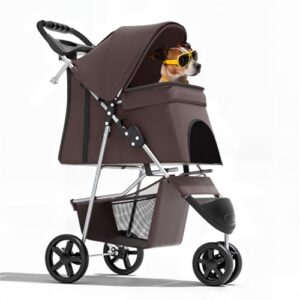
The Magshion’s 33-pound weight capacity and coffee-colored alloy steel frame create a reliable small breed comfort zone for puppies experiencing their socialization process at the dog park. 360-degree swivel wheels and a foot-activated brake are essential for controlled puppy training environments, though assembly requires patience.
Breathable mesh windows support proper pet stroller safety during positive reinforcement sessions, while the cup holder and storage basket hold treats for rewarding calm behavior.
Regular stroller maintenance checks on those rear wheels prevent issues during critical pet travel tips journeys to neutral dog transport locations.
| Best For | Pet owners with small dogs under 33 pounds who need a lightweight, maneuverable stroller for walks, vet visits, or traveling with elderly or mobility-limited pets. |
|---|---|
| Weight Capacity | 30 lbs |
| Frame Material | Alloy Steel |
| Foldable Design | Yes |
| Storage Basket | Yes |
| Mesh Canopy | Yes |
| Brakes | Rear wheel brake |
| Additional Features |
|
- 360° swivel front wheels and foot brake make it easy to steer and control on walks or in crowded areas
- Foldable and lightweight (11 pounds) design makes storage and transport simple
- Breathable mesh windows and padded interior keep your pet comfortable and safe during outings
- Some users report rear wheels can come loose or fall off during use
- Assembly can be tricky and may take some patience to get right
- 33-pound weight limit means it won’t work for medium or larger dogs
Teaching Children Safe Puppy Greeting Rules

More than half of all dog bite victims are children, so teaching kids the right approach makes a real difference in keeping both puppies and young people safe. When children learn a few simple rules about greeting puppies, they’re far less likely to startle or overwhelm a dog that’s still figuring out the world.
Here are the key safety guidelines every child should know before meeting a new puppy.
Standing Still and Asking Permission
Teaching your child to stand still and ask permission before greeting a puppy lays the foundation for calm interactions and safe greetings throughout their life. These permission basics protect both kids and dogs during the critical socialization period while supporting healthy puppy development through positive reinforcement and social learning.
Four Essential Steps for Child Education:
- Ask “May I pet your dog?” and wait for clear verbal permission – Some puppies are fearful, in training, or simply don’t enjoy strangers, so you’re teaching respect for puppy body language and owner boundaries.
- Stand like a tree with feet together and hands folded low – This calm posture prevents triggering chase or jump behaviors, since movement naturally excites young dogs during puppy socialization.
- Keep your body angled sideways, not head-on – A side profile feels less threatening, helping puppies stay relaxed during greetings.
- Focus your eyes on your feet while standing still – You’ll naturally avoid direct eye contact, which some dogs find challenging or worrying.
Kids as young as two and a half can learn these steps with regular coaching, and even familiar dogs deserve this courtesy since mood and health change day to day.
Letting The Puppy Approach First
After your child asks permission and stands still, the next step makes all the difference: wait for the puppy to come to you. Puppy initiation gives the puppy control over distance and creates gentle interactions that support healthy puppy development during the socialization period.
When children practice this patience in calm environments, they’re respecting safe boundaries, reducing bite risk, and using positive reinforcement to build the puppy’s confidence through social learning.
Avoiding Puppies During Meals and Sleep
Once your puppy feels comfortable approaching on its own terms, you’ll want to teach your children a protective household rule: never disturb a puppy during meals or sleep. These meal time boundaries and sleep protection practices prevent resource guarding and startling reactions that can derail puppy socialization and canine behavior development during the critical socialization period.
Here’s how to keep everyone safe:
- Feed your puppy in a quiet, separate area away from household traffic, using baby gates or closed doors to create clear physical boundaries children can understand and follow.
- Create a designated sleep zone like a crate or bed in a low-traffic corner, teaching kids the simple message “When the puppy eats or sleeps, we give space.”
- Teach children to call from a distance and wait for the puppy to fully wake up and come over on its own, rather than touching or shaking a sleeping dog.
These puppy safety practices support healthy puppy development and reduce bite risk in families with young kids.
Recognizing When Not to Approach
Beyond mealtime and sleep, your child needs to recognize puppy warning signs in real time. Teach them to spot body language signals like a tucked tail, raised hackles, or rapid lip licking—these fear signals and stress indicators mean the puppy feels unsafe.
If a puppy backs away, freezes, or growls, maintaining safe distance protects both child and dog during the socialization period.
Frequently Asked Questions (FAQs)
How do I socialize puppies during bad weather?
Rain or snow shouldn’t freeze progress during those vital 3-to-16-week socialization windows. Indoor games, puzzle feeders, weatherproof strollers, and short playdates maintain positive reinforcement while protecting puppy development when outdoor exposure isn’t safe.
Can puppies meet adult dogs before full vaccination?
Yes, puppies can meet fully vaccinated adult dogs before completing their vaccination schedule, generally after core vaccines begin around 6-8 weeks, following your veterinarian’s guidance on safe socialization timing and disease prevention strategies.
What if my puppy refuses all treats?
Ironically, the puppy who won’t touch treats is telling you the truth—they’re too stressed to eat.
Step back, increase distance, or switch to non-food rewards like play until they relax.
How many new dogs weekly is too many?
Most puppies thrive meeting two to three new dogs weekly during the critical socialization window. Exceeding this risks puppy overexposure, triggering canine stress that undermines social learning and healthy puppy development throughout the socialization period.
Should shy puppies meet confident dogs first?
Confident dogs can act as calming role models during the socialization period, helping shy puppies learn safe canine interaction and positive reinforcement through observation.
This process fosters healthy puppy development and fear prevention, allowing puppies to grow in a supportive environment.
Conclusion
Like building a house one brick at a time, safe puppy meeting strategies lay the foundation for your dog’s lifelong social confidence. Every controlled introduction, every well-matched playmate, every moment you read stress signals correctly adds another layer of resilience.
You’re not just preventing problems—you’re actively creating a dog who moves through the world with assurance, greeting new friends with curiosity instead of fear, because you invested in getting those critical early experiences right.
- https://www.astroloyalty.com/6-tips-for-introducing-a-new-puppy-to-your-dog/
- https://www.kimsk9.com/post/new-puppy-at-home-how-to-introduce-them-to-other-pets-kids-and-babies-safely
- https://www.whole-dog-journal.com/puppies/how-to-supervise-good-puppy-play/
- https://www.malmlegal.com/blog/mistakes-children-make-with-dogs/
- https://avsab.org/socialization-mere-exposure/